 Purdue University - Extension - Forestry and Natural Resources
Got Nature? Blog
In this edition of ID That Tree, Purdue Extension forester Lenny Farlee introduces you to a rebel of the oak family, the shingle oak. Unlike its relatives, the shingle oak’s shiny leaves do not feature any lobes and have a complete margin. Learn more about this oddity and other ways to identify this species inside.
If you have any questions regarding wildlife, trees, forest management, wood products, natural resource planning or other natural resource topics, feel free to contact us by using our Ask an Expert web page.
Resources
Shingle Oak, Native Trees of Indiana River Walk, Purdue Fort Wayne
Quercus imbricaria, The Purdue Arboretum Explorer
ID That Tree, Purdue Extension – Forestry & Natural Resources Playlist
A Woodland Management Moment, Purdue Extension – Forestry & Natural Resources Playlist
Investing in Indiana Woodlands, The Education Store
Forest Improvement Handbook, The Education Store
Lenny Farlee, Sustaining Hardwood Extension Specialist
Purdue University Department of Forestry and Natural Resources
In this edition of ID That Tree, Purdue Extension forester Lenny Farlee introduces you to the white oak group. In addition to identifying four common varieties of white oak by their leaves and acorns, he also explains how to differentiate them from their cousins, the red oaks.
If you have any questions regarding trees, forests, wildlife, wood products or other natural resource topics, feel free to contact us by using our Ask an Expert web page.
Resources
White Oak, The Education Store, Purdue Extension – Forestry and Natural Resources
FNR Hardwood – White Oak, The Purdue Arboretum Explorer
White Oak, Native Trees of Indiana River Walk, Purdue – Fort Wayne
ID That Tree, Playlist, Purdue Extension – Forestry and Natural Resources Youtube Channel
A Woodland Management Moment, Playlist, Purdue Extension – Forestry and Natural Resources Youtube Channel
Investing in Indiana Woodlands, The Education Store
Forest Improvement Handbook, The Education Store
Lenny Farlee, Sustaining Hardwood Extension Specialist
Purdue University Department of Forestry and Natural Resources
In this edition of ID That Tree, Purdue Extension forester Lenny Farlee introduces a whole family of trees, the red oak group. He identifies four common species and shows how to differentiate between them as well as how to keep the red and white oak groups separated.
If you have any questions regarding trees, forests, wildlife, wood products or other natural resource topics, feel free to contact us by using our Ask an Expert web page.
Resources
Red Oak, The Education Store, Purdue Extension – Forestry and Natural Resources
FNR Hardwood – Red Oak, The Purdue Arboretum Explorer
Red Oak, Native Trees of Indiana River Walk, Purdue – Fort Wayne
ID That Tree, Playlist, Purdue Extension – Forestry and Natural Resources Youtube Channel
A Woodland Management Moment, Playlist, Purdue Extension – Forestry and Natural Resources Youtube Channel
Investing in Indiana Woodlands, The Education Store
Forest Improvement Handbook, The Education Store
Lenny Farlee, Sustaining Hardwood Extension Specialist
Purdue University Department of Forestry and Natural Resources
Did you know that pecan is a relative of the native bitternut hickory? Purdue Extension forester Lenny Farlee shares more about this species, which features relatively narrow leaflets, strong sulphur yellow colored elongated buds and a tight light gray colored bark with small interlacing ridges.
If you have any questions regarding trees, forests, wildlife, wood products or other natural resource topics, feel free to contact us by using our Ask an Expert web page.
Resources
Carya cordiformis, The Purdue Arboretum Explorer
Hickory and Pecan Species, Education Store, Purdue Extension resource center
Bitternut Hickory, Native Trees of Indiana River Walk, Purdue – Fort Wayne
ID That Tree, Playlist, Purdue Extension – Forestry and Natural Resources Youtube Channel
A Woodland Management Moment, Playlist, Purdue Extension – Forestry and Natural Resources Youtube Channel
Investing in Indiana Woodlands, The Education Store
Tree Appraisal and the Value of Trees, The Education Store
Forest Improvement Handbook, The Education Store
Lenny Farlee, Sustaining Hardwood Extension Specialist
Purdue University Department of Forestry and Natural Resources
 Illinois-Indiana Sea Grant: Freedom Seekers were environmentalists who learned to navigate the land as they escaped slavery. Songs like “Wade in the Water” and “Follow the Drinking Gourd” remind us that history has always been connected to the land we occupy. The lessons featured in this free curriculum, Freedom Seekers: The Underground Railroad, Great Lakes, and Science Literacy Activities, acknowledge the enslaved Africans who had to rely on environmental science principles in their quest for life, liberty and the pursuit of happiness. These lessons provide educators with cross-curricular teaching opportunities for middle and high school students.
“I didn’t realize that the Great Lakes were linked to the Underground Railroad at all,” said Megan Gunn, aquatic education specialist with Illinois-Indiana Sea Grant and Purdue University Forestry and Natural Resources. Gunn worked with partners across the region to finalize the curriculum. “I grew up near Lake Michigan and never learned how my cultural roots were so closely connected to the natural world, so I’m excited for the next generation to have this educational opportunity.”
The Freedom Seekers curriculum is a collaborative project between several organizations and schools throughout the Great Lakes. It is part of a professional development effort for educators to increase their knowledge of the Great Lakes and environmental issues while incorporating Environmental Justice Education (EJE) approaches to K-12 teaching. These EJE approaches leverage cross-curricular connections that focus on increasing the awareness of local issues and history in the Great Lakes region.
Resources
Center For Great Lakes Literacy (CGLL), Website
Ask An Expert: Hot and Cold, Video, Purdue Extension – Forestry and Natural Resources YouTube channel
Diets of Lake Michigan Salmonids, The Education Store, Purdue Extension resource center
Informing the Development of the Great Lakes Region Decision Support System, The Education Store
Salmon and Trout of the Great Lakes: A Visual Identification Guide, The Education Store
New website: Eat Midwest Fish, Got Nature? Blog, Purdue Extension – Forestry and Natural Resources
Scientists bring the Great Lakes to students learning from home, Got Nature? Blog
ID That Tree: Alternate Leaved Dogwood, Got Nature? Blog
Illinois-Indiana Sea Grant (IISG)
Some trees just don’t follow the rules. Case in point, the alternate leaved dogwood. As Purdue Extension forester Lenny Farlee explains, this native tree has an alternate leaf arrangement unlike its dogwood cousins in North America, which have an opposite leaf arrangement. It is still recognizable, however, by the venation running parallel to the outside edge of the leaf, and very large, egg-shaped leaves. It also has clusters of small white flowers in the spring.
If you have any questions regarding wildlife, trees, forest management, wood products, natural resource planning or other natural resource topics, feel free to contact us by using our Ask an Expert web page.
Resources
Cornus alternifolia, The Purdue Arboretum Explorer
ID That Tree, Purdue Extension – Forestry & Natural Resources Playlist
A Woodland Management Moment, Purdue Extension – Forestry & Natural Resources Playlist
Tree Appraisal and the Value of Trees, The Education Store
Investing in Indiana Woodlands, The Education Store
Forest Improvement Handbook, The Education Store
Lenny Farlee, Sustaining Hardwood Extension Specialist
Purdue University Department of Forestry and Natural Resources
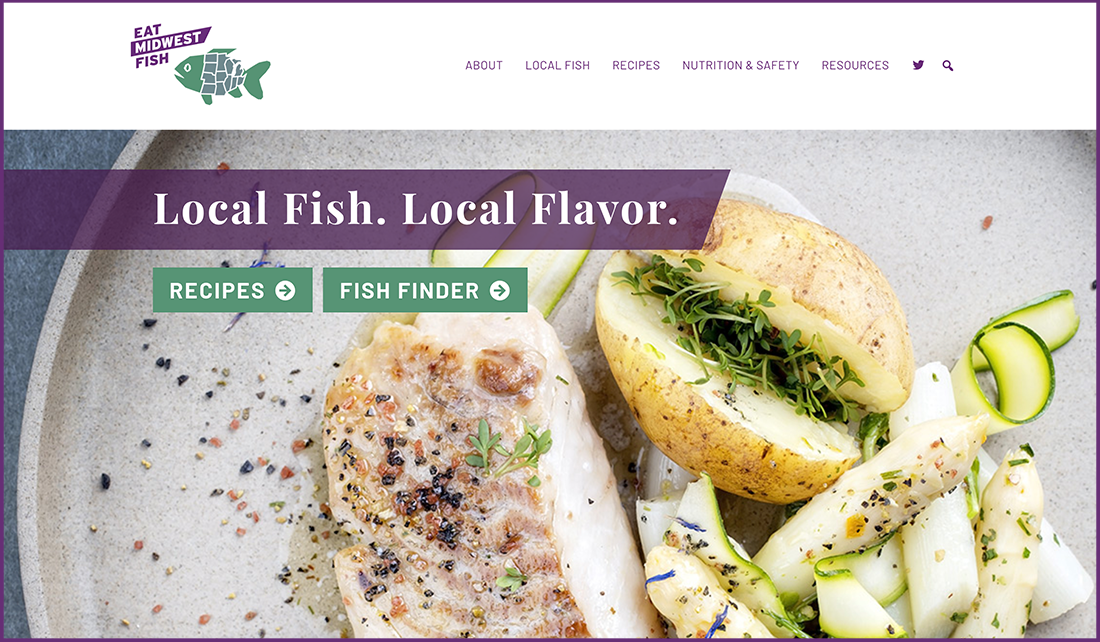 Eat Midwest Fish is an online resource hub that educates consumers about sustainable aquaculture in the Midwest. Consumers have a lot of questions about water farming and farm-raised fish products. Eat Midwest Fish provides resources to inform and inspire consumers to eat more fish and shellfish, including resources focused on where to find locally grown products, what types of products are available, how to source and cook these products, and how farmers are growing both freshwater and marine animals in the Midwest. Information is provided on aquaculture and farm-raised products from the twelve states in the North Central Region: Illinois, Indiana, Iowa, Kansas, Michigan, Minnesota, Missouri, Nebraska, North Dakota, Ohio, South Dakota, and Wisconsin.
Eat Midwest Fish’s mission is to support safe and sustainable seafood through extension, education, and fostering connections. It is a collaborative project involving Illinois-Indiana Sea Grant, North Central Regional Aquaculture Center, Purdue University Extension, University of Illinois Extension, and the Great Lakes Sea Grant Network. This project is supported by the United States Department of Agriculture project number 2016-38500-25753.
Resources
Fish: Healthy Protein Handout, The Education Store, Purdue Extension resource center
Walleye Farmed Fish Fact Sheet: A Guide for Seafood Consumers, The Education Store
Best Practices Guide for Charter Fishing and COVID-19, The Education Store
Fish Cleaning with Purdue Extension County Extension Director, Got Nature? Blog, Purdue Extension – Forestry and Natural Resources
Aquatics & Fisheries, Playlist, Purdue Extension – Forestry and Natural Resources
Aquaculture and Aquatics, Website, Purdue Extension – Forestry and Natural Resources
Eat Midwest Fish website launches fresh fish finder, Illinois – Indiana Sea Grant
Amy Shambach, Aquaculture Marketing Outreach Associate
Purdue Department of Forestry and Natural Resources/Illinois Indiana Sea Grant Program
 Fish is part of a healthy, balanced diet, but it is sometimes difficult to find fish locally as well as know what to look for and how to cook it. Illinois-Indiana Sea Grant (IISG) has added this new free pdf downloadable quick guide, Fish-Healthy Protein For a Balanced Diet, to their many resources providing easy tools to help as we increase fish in our diets.
Check out the new website Eat Midwest Fish which includes a fish finder map that shows users where fresh seafood is produced near their location, recipes submitted by IISG staff to inspire creativity in the kitchen, how-to cooking videos, nutrition information, an introduction to aquaculture and more.
Resources
Walleye Farmed Fish Fact Sheet: A Guide for Seafood Consumers, The Education Store, Purdue Extension resource center
Best Practices Guide for Charter Fishing and COVID-19, The Education Store
Pond Management: Managing Fish Populations, The Education Store
Pond and Wildlife Management website, Purdue Extension
Natural Resources University Podcasts, Collaboration with Mississippi, Florida, Iowa and Indiana Extension Services
Fish Cleaning with Purdue Extension County Extension Director, Got Nature? Blog, Purdue Extension – Forestry and Natural Resources
Aquatics & Fisheries, Playlist, Purdue Extension – Forestry and Natural Resources
Amy Shambach, Aquaculture Marketing Outreach Associate
Purdue Department of Forestry and Natural Resources/Illinois Indiana Sea Grant Program
A variety of different types of regeneration openings can be created on properties to provide different structures and species of plants that are suitable to a wide variety of wildlife species. In this episode of Woodland Stewardship for Landowners, Purdue Extension forester Lenny Farlee talks about two types of regeneration openings – clearcuts and shelterwoods. These two techniques produce an even-aged forest, where all the plants regenerating in that area are approximately of the same age.
If you have any questions regarding wildlife, trees, forest management, wood products, natural resource planning or other natural resource topics, feel free to contact us by using our Ask an Expert web page.
Resources
Woodland Stewardship for Landowners, Playlist, Purdue Extension – Forestry and Natural Resources (FNR) YouTube Channel
Woodland Management Moment, Purdue Extension – FNR Playlist
Woodland Stewardship for Landowners: Single Tree and Patch-Cut Harvesting, Purdue Extension – FNR Video
Hardwood Ecosystem Experiment: Uneven-aged Management, Purdue Extension – FNR Video
Hardwood Ecosystem Experiment: Even-aged Management, Purdue Extension – FNR Video
Finding help from a professional forester, Indiana Forestry & Woodland Owners Association
Forest Improvement Handbook, The Education Store, Purdue Extension resource center
Lenny Farlee, Sustaining Hardwood Extension Specialist
Purdue University Department of Forestry and Natural Resource
Browsing by deer on planted and naturally regenerated hardwood seedlings is one of the greatest obstacles to seedling establishment in many parts of the central hardwood region. In this Woodland Stewardship For Landowners, Purdue Wildlife Extension Specialist Brian MacGowan talks about different types of deer damage and how landowners could mitigate the damage.
If you have any questions regarding wildlife, trees, forest management, wood products, natural resource planning or other natural resource topics, feel free to contact us by using our Ask an Expert web page.
Resources
Woodland Stewardship For Landowners, Playlist, Purdue Extension – Forestry and Natural Resources YouTube Channel
Woodland Management Moment, Purdue Extension – FNR Playlist
A Woodland Management Moment – Deer Fencing, Purdue Extension – FNR Video
Wildlife Habitat Hint: Exclusion Cage, Purdue Extension – FNR Video
How to Build a Plastic Mesh Deer Exclusion Fence, The Education Store, Purdue Extension resource center
Forest Improvement Handbook, The Education Store
Finding help from a professional forester, Indiana Forestry & Woodland Owners Association
Brian MacGowan, Wildlife Extension Specialist & Extension Coordinator
Purdue Department of Forestry and Natural Resources

Recent Posts
- Purdue Extension: Empowering Indiana Through Innovation, Education and Community Impact
Posted: January 28, 2026 in Community Development, How To, Invasive Insects, Invasive Plant Species, Natural Resource Planning, Woodlands - Forest Landowners: Share Your Experience with Regeneration and Restoration
Posted: January 27, 2026 in Forestry, How To, Timber Marketing, Woodlands - It’s Not Too Late to Order Trees for Spring Planting
Posted: January 13, 2026 in Forestry, How To, Plants - Now Is The Time To Control Non-Native Bush Honeysuckle
Posted: October 30, 2025 in Forestry, How To, Invasive Plant Species, Woodlands - October Is Firewood Month: Protect Indiana’s Forests by Making Smart Choices
Posted: October 13, 2025 in Forestry, Forests and Street Trees, How To, Invasive Insects, Urban Forestry - ID That Tree: Smooth Sumac
Posted: October 2, 2025 in Forestry, How To, Wildlife - ID That Tree: Wild Grape Vine
Posted: August 12, 2025 in Forestry, How To, Urban Forestry, Wildlife - Publication – Sericea Lespedeza Control
Posted: July 7, 2025 in Forestry, How To, Invasive Plant Species, Wildlife - How to ID Asian Jumping Worms, Purdue Landscape Report
Posted: July 2, 2025 in How To, Invasive Insects, Wildlife - Alert – Water Your Trees, Watch Video
Posted: June 20, 2025 in Alert, Drought, Forests and Street Trees, How To, Urban Forestry, Wildlife, Woodlands
Archives
Categories
- Alert
- Aquaculture/Fish
- Aquatic/Aquaculture Resources
- Ask the Expert
- Christmas Trees
- Community Development
- Disease
- Drought
- Forestry
- Forests and Street Trees
- Gardening
- Got Nature for Kids
- Great Lakes
- How To
- Invasive Animal Species
- Invasive Insects
- Invasive Plant Species
- Land Use
- Natural Resource Planning
- Nature of Teaching
- Plants
- Podcasts
- Ponds
- Publication
- Safety
- Spiders
- Timber Marketing
- Uncategorized
- Urban Forestry
- Webinar
- Wildlife
- Wood Products/Manufacturing
- Woodland Management Moment
- Woodlands