 Purdue University - Extension - Forestry and Natural Resources
Got Nature? Blog
The classic and trusted book “Fifty Common Trees of Indiana” by T.E. Shaw was published in 1956 as a user-friendly guide to local species. Nearly 70 years later, the publication has been updated through a joint effort by the Purdue Department of Forestry and Natural Resources, Indiana 4-H, and the Indiana Department of Natural Resources, and reintroduced as “An Introduction to Trees of Indiana.”
The full publication is available for download for $7 in the Purdue Extension Education Store. The field guide helps identify common Indiana woodlot trees.
Each week, the Intro to Trees of Indiana web series will offer a sneak peek at one species from the book, paired with an ID That Tree video from Purdue Extension forester Lenny Farlee to help visualize each species as it stands in the woods. Threats to species health as well as also insight into the wood provided by the species, will be provided through additional resources as well as the Hardwoods of the Central Midwest exhibit of the Purdue Arboretum, if available. 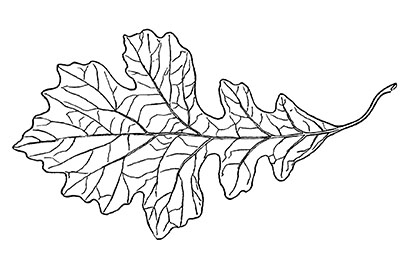
This week, we take a look at the second of our oak varieties in Indiana, the Bur Oak or Quercus macrocarpa.
The bur oak has rounded lobes on the end of the leaves, which have deep sinuses and are very broad across the top. Leaves are typically dark green that turn yellow or brown in the fall.
The bark on bur oak is medium to dark gray in color with heavy ridges and plates, often so thick that it is often fire resistant and resistant to damage from burning. Bur oak may have terminal buds that include small hairs and resemble bear claws.
The fruit of the bur oak is an acorn with a large cap that features a hairy fringe forming a burr along the outside edge. The acorns vary in size, but average one inch in length, and the cap covers half to two thirds of the acorn.
Bur oaks, which grow to 70-80 feet tall and up to five feet wide, are common in both bottomlands and prairie regions, and can tolerate many different sites. Bur oaks can be found in nearly any county and any habitat type in Indiana. The natural range of bur oak is the eastern Great Plains from the Dakotas to Ohio to the eastern Appalachians, except through the southeastern United States. The range also extends into southern Canada.
Lumber from the white oak group, which includes bur oak, is among the heaviest next to hickory, weighing in at 45 pounds per cubic foot. It is very resistant to decay and is one of the best woods for steam bending. Bur oak, however, is somewhat weaker than other species in the white oak group.
For full article with additional photos view: Intro to Trees of Indiana: Bur Oak
If you have any questions regarding wildlife, trees, forest management, wood products, natural resource planning or other natural resource topics, feel free to contact us by using our Ask an Expert web page.
Other Resources:
ID That Tree: Bur Oak
ID That Tree: White Oak Group
ID That Tree: Alternate Leaf Arrangement – Honey Locust/Bur Oak
Hardwood Lumber and Veneer Series: White Oak Group
Morton Arboretum: Bur Oak
Fifty Common Trees of Indiana
An Introduction to Trees of Indiana
Native Trees of the Midwest, The Education Store
Shrubs and Woody Vines of Indiana and the Midwest, The Education Store
Investing in Indiana Woodlands, The Education Store
Forest Improvement Handbook, The Education Store
ID That Tree, Purdue Extension-Forestry & Natural Resources (FNR) YouTube playlist
Woodland Management Moment , Purdue Extension-FNR YouTube playlist
Bur Oak, Native Trees of Indiana River Walk, Purdue-Fort Wayne
Wendy Mayer, FNR Communications Coordinator
Purdue University Department of Forestry and Natural Resources
Lenny Farlee, Sustaining Hardwood Extension Specialist
Purdue University Department of Forestry and Natural Resources
The new USDA-Natural Resources Conservation Service (NRCS) website is designed for farmers, ranchers and forest landowners who use NRCS conservation programs, and our partners who help us deliver the conservation mission.
You will find information that includes:
- Conservation Basics: find soil health, soil science, water, air, plants, animals, land, energy, climate, wildlife habitat and invasive species and pests
- Getting Assistance: find your local service center
- Programs & Initiatives
- Resources
- News & Events
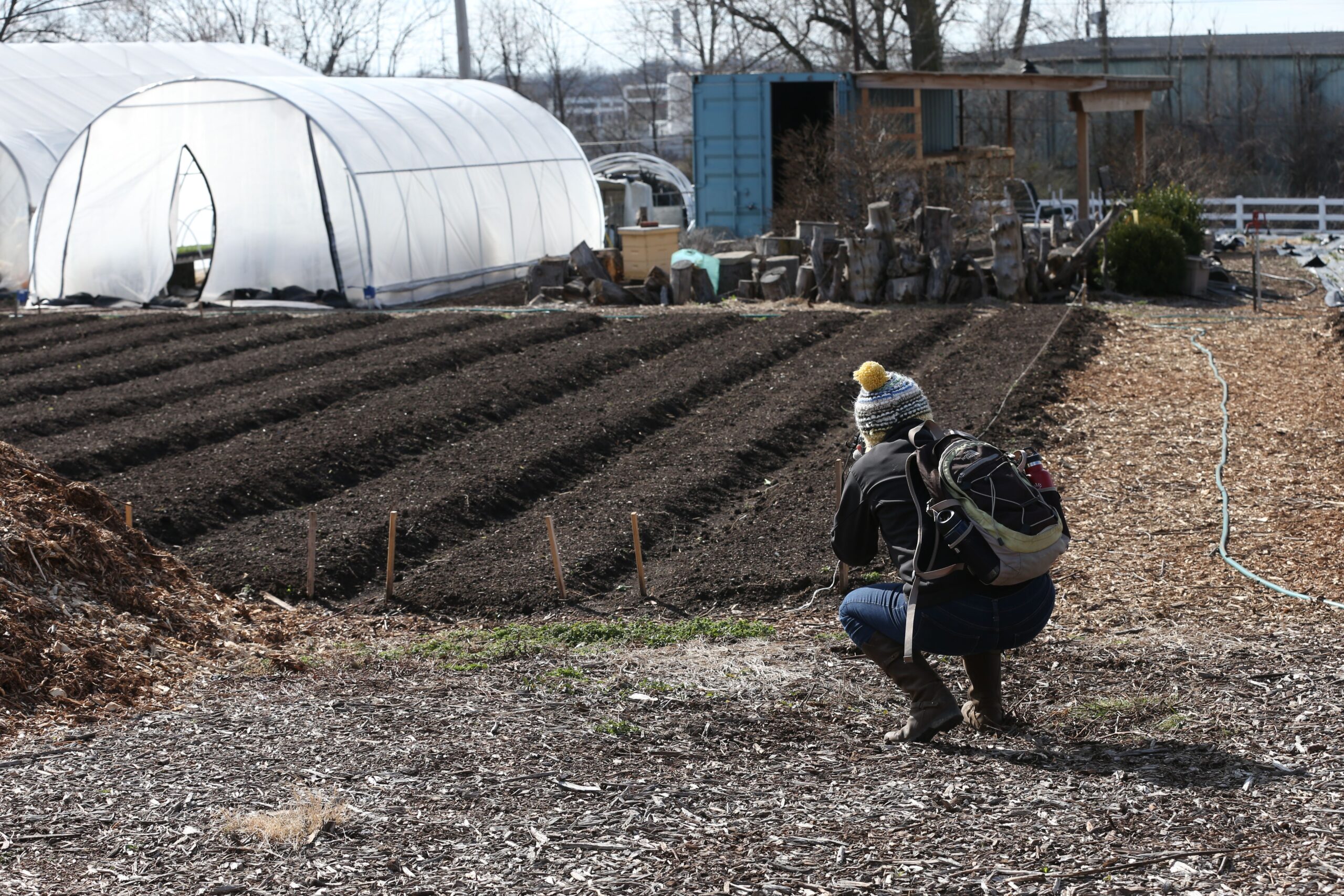
For more than 80 years, NRCS has helped people make investments in their operations and local communities to keep working lands working, boost rural economies, increase the competitiveness of American agriculture, and improve the quality of our air, water, soil, and habitat.
As the USDA’s primary private lands conservation agency, NRCS generates, manages, shares data, technology and standards that enable partners and policymakers to make decisions informed by objective, reliable science.
Resources:
Consumer Horticulture: Collecting Soil Samples for Testing, The Education Store , Purdue Extension resource center
Soil Sampling Guidelines, The Education Store
Soil Testing for Lawns, The Education Store
Certified Soil Testing Laboratories, Purdue Extension – Master Gardener Program
Lawn to Lake Midwest, Illinois-Indiana Sea Grant Program
Forest Improvement Handbook, The Education Store
Frost Seeding Native Grasses and Forbs with a Drone (UAV), Purdue Extension-Forestry & Natural Resources (FNR)
Hardwood Ecosystem Experiment – Wildlife Responses to Timber Harvesting, The Education Store
Invasive Plants: Impact on Environment and People, The Education Store
Urban Forestry, Playlist, Purdue Extension – FNR YouTube Channel
USDA-Natural Resources Conservation Service (NRCS)
Wild Bulletin, IN DNR Fish and Wildlife: Indiana’s coyotes start to put on their winter fur this time of year. While this makes them look large and fluffy, they weigh in at less than your average sleepy beagle. Coyotes can be helpful to people by feasting on mice that invade homes in winter and voles that raid crops and stored feed. Most coyotes live near people, pets, and livestock, and never cause any problems. 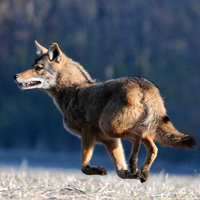
People can help ensure problems remain few and far between in a few ways. Licensed hunters and trappers can help maintain healthy coyote populations through regulated harvest, and people can also take steps around their homes and livestock to prevent coyotes from causing problems. Find a wealth of resources on the IN DNR Fish and Wildlife coyote page.
Resources:
Coyotes (PDF), Wildlife Conflicts, Department of Entomology, Purdue University
Should I Be Worried About Coyotes in My Yard?, Purdue Extension – Forestry & Natural Resources (FNR) Got Nature? Blog
Coexisting With Coyotes, Wild Bulletin, Indiana Department of Natural Resources, Division of Fish and Wildlife
Ask the Expert: Coexisting with Coyotes , Purdue Extension – FNR Got Nature? Blog
Urban Coyotes – Should You Be Concerned?, Purdue Extension – FNR Got Nature? Blog
Pets Disappearing? The Cause May Be Coyotes, Purdue Extension – FNR Got Nature? Blog
Question: Which is the correct species of coyotes I have on my land here in Indiana, coyote or coywolf?, Purdue Extension – FNR Got Nature? Blog
Permitted Wildlife Rehabilitators, Indiana Department of Natural Resources
How do you eliminate a nuisance animal on your property?, Indiana Department of Natural Resources (IN DNR)-Fish and Wildlife
Urban Coyote Research Center, Urban Coyote Ecology & Management, Cook County, Illinois
Indiana Department of Natural Resources
On this episode of A Moment in the Wild, Purdue wildlife technician Zach Truelock introduces the southern leopard frog, which is found in the southern half of Indiana. Learn how to tell them apart from the northern leopard frog and plains leopard frogs in the state, how to identify their calls and their mating habits.
If you have any questions regarding wildlife, trees, forest management, wood products, natural resource planning, or other natural resource topics, feel free to contact us by using our Ask an Expert web page.
Resources:
Sounds of Frogs & Toads, Purdue Extension – Forestry and Natural Resources (FNR)
Frogs & toads of Indiana, The Education Store, Purdue Extension resource center
Salamanders of Indiana Book, The Education Store
Amphibians: Frogs, Toads, and Salamanders, Purdue Nature of Teaching
The Nature of Teaching: Adaptations for Aquatic Amphibians, The Education Store
Hellbender ID, Playlist, Purdue Extension – FNR YouTube Channel
A Moment in the Wild, Playlist, Purdue Extension – FNR YouTube Channel
Amphibian Photos & Sounds, Purdue Nature of Teaching
Zach Truelock, Hellbender Technician
Purdue Forestry and Natural Resources
Rod Williams, Assistant Provost for Engagement/Professor of Wildlife Science
Purdue University Department of Forestry and Natural Resources
In this Moment in the Wild, Purdue wildlife technician Zach Truelock introduces you to the green tree frog. Learn about where this species lives, its physical characteristics, its call, and its breeding habits.
If you have any questions regarding wildlife, trees, forest management, wood products, natural resource planning, or other natural resource topics, feel free to contact us by using our Ask an Expert web page.
Resources:
Sounds of Frogs & Toads, Purdue Extension – Forestry and Natural Resources (FNR)
Frogs & toads of Indiana, The Education Store, Purdue Extension resource center
Salamanders of Indiana Book, The Education Store
Amphibians: Frogs, Toads, and Salamanders, Purdue Nature of Teaching
The Nature of Teaching: Adaptations for Aquatic Amphibians, The Education Store
Hellbender ID, Playlist, Purdue Extension – FNR YouTube Channel
A Moment in the Wild, Playlist, Purdue Extension – FNR YouTube Channel
Zach Truelock, Hellbender Technician
Purdue Forestry and Natural Resources
Rod Williams, Assistant Provost for Engagement/Professor of Wildlife Science
Purdue University Department of Forestry and Natural Resources
The classic and trusted book “Fifty Common Trees of Indiana” by T.E. Shaw was published in 1956 as a user-friendly guide to local species. Nearly 70 years later, the publication has been updated through a joint effort by the Purdue Department of Forestry and Natural Resources, Indiana 4-H, and the Indiana Department of Natural Resources, and reintroduced as “An Introduction to Trees of Indiana.”
The full publication is available for download for $7 in the Purdue Extension Education Store. The field guide helps identify common Indiana woodlot trees.
Each week, the Intro to Trees of Indiana web series will offer a sneak peek at one species from the book, paired with an ID That Tree video from Purdue Extension forester Lenny Farlee to help visualize each species as it stands in the woods. Threats to species health as well as also insight into the wood provided by the species, will be provided through additional resources as well as the Hardwoods of the Central Midwest exhibit of the Purdue Arboretum, if available.
This week, we introduce the red mulberry or Morus rubra.
Red mulberry has variable leaves, which can come without lobes (entire) or with two (mitten), three or even five lobes. Regardless of shape, the leaves have serrated margins and pointed tips and are arranged alternately on the twigs. The topside of the dark green leaves is sandpapery to the touch and has a matte or flat finish. The dark green leaves turn a golden yellow in the fall.
Basswood has leaves similar to the unlobed variety of red mulberry, but those leaves are smooth to the touch and have finely toothed margins. White mulberry, which is not native to Indiana, also has similar leaves to its cousin red mulberry, but those leaves are typically bright green and smooth, have more rounded teeth on the margins and feature a shinier upper leaf surface.
The bark of red mulberry is gray or brown in color with long flaky ridges, but may show some orange or tan peeking through the fissures in the bark.
The fruit of red mulberry, which hangs individually only the twig, resembles a small blackberry, with a dark purple or almost black color when ripe, that is favored by both birds and humans. Mulberry fruit is typically produced from mid-June to July.
Red mulberry, which is often found under the canopy of other hardwood trees in moist areas such as river bottoms as well as along wooded slopes, wood’s edges and shady roadways, are typically small understory trees, but can grow between 40 and 60 feet tall. Red mulberries are becoming less common on the landscape than the invasive white mulberry, but can be found growing throughout the eastern United States.
The Morton Arboretum warns that red mulberry is susceptible to a variety of pests, including leaf spots, witches brooms, canker diseases, powdery mildew, spider mites and scale insects.
For full article with additional photos view: Intro to Trees of Indiana: Red Mulberry
If you have any questions regarding wildlife, trees, forest management, wood products, natural resource planning or other natural resource topics, feel free to contact us by using our Ask an Expert web page.
Other Resources:
FNR Know Your Tree Series: Red and White Mulberry in Indiana
Morton Arboretum: Red Mulberry
Red Mulberry, Native Trees of Indiana River Walk, Purdue Fort Wayne
Fifty Common Trees of Indiana
An Introduction to Trees of Indiana
Native Trees of the Midwest, The Education Store
Shrubs and Woody Vines of Indiana and the Midwest, The Education Store
Investing in Indiana Woodlands, The Education Store
Forest Improvement Handbook, The Education Store
ID That Tree, Purdue Extension-Forestry & Natural Resources (FNR) YouTube playlist
Woodland Management Moment , Purdue Extension-FNR YouTube playlist
Wendy Mayer, FNR Communications Coordinator
Purdue University Department of Forestry and Natural Resources
Lenny Farlee, Sustaining Hardwood Extension Specialist
Purdue University Department of Forestry and Natural Resources
The classic and trusted book “Fifty Common Trees of Indiana” by T.E. Shaw was published in 1956 as a user-friendly guide to local species. Nearly 70 years later, the publication has been updated through a joint effort by the Purdue Department of Forestry and Natural Resources, Indiana 4-H, and the Indiana Department of Natural Resources, and reintroduced as “An Introduction to Trees of Indiana.”
The full publication is available for download for $7 in the Purdue Extension Education Store. The field guide helps identify common Indiana woodlot trees.
Each week, the Intro to Trees of Indiana web series will offer a sneak peek at one species from the book, paired with an ID That Tree video from Purdue Extension forester Lenny Farlee to help visualize each species as it stands in the woods. Threats to species health as well as also insight into the wood provided by the species, will be provided through additional resources as well as the Hardwoods of the Central Midwest exhibit of the Purdue Arboretum, if available.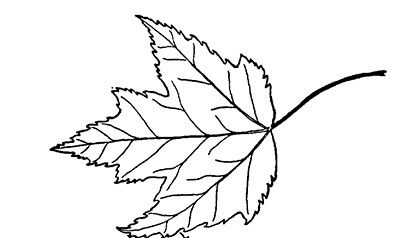
This week, we introduce the red maple or Acer rubrum.
Red maple has simple three to five-lobed leaves with relatively shallow, v-shaped divisions between the lobes. The oppositely held leaves may resemble sugar maple but the V shaped shallow divisions stand in contrast to sugar maple’s deep u-shaped sinuses. In the early spring, it is one of the earliest native trees to flower, producing clusters of reddish flowers as well as reddish colored pairs of winged seeds/fruit. In the fall, foliage typically turns a bright red to maroon color.
The bark is gray and smooth in young trees and may become flaky in older trees.
Red maple, which is a popular ornamental and street tree selection, is one of Indiana’s soft maples alongside silver maple. It also can be found in Indiana woodlands in both moist and dry sites and in bottomlands and uplands.
Red maple, grow 50 to 80 feet tall and are found growing throughout the eastern United States including the coastal regions.
The Morton Arboretum warns that red maple was display chlorosis symptoms of pale green leaves with dark green veins in high pH soil and drought conditions. The species also does not tolerate heavy pollution.
For full article with additional photos view: Intro to Trees of Indiana: Red Maple
If you have any questions regarding wildlife, trees, forest management, wood products, natural resource planning or other natural resource topics, feel free to contact us by using our Ask an Expert web page.
Other Resources:
Hardwoods of the Central Midwest: Soft Maple
Hardwood Lumber and Veneer Series, The Education Store: Soft Maple
Morton Arboretum: Red Maple
Red Maple, Native Trees of Indiana River Walk, Purdue Fort Wayne
Fifty Common Trees of Indiana
An Introduction to Trees of Indiana
Native Trees of the Midwest, The Education Store
Shrubs and Woody Vines of Indiana and the Midwest, The Education Store
Investing in Indiana Woodlands, The Education Store
Forest Improvement Handbook, The Education Store
ID That Tree, Purdue Extension-Forestry & Natural Resources (FNR) YouTube playlist
Woodland Management Moment , Purdue Extension-FNR YouTube playlist
Wendy Mayer, FNR Communications Coordinator
Purdue University Department of Forestry and Natural Resources
Lenny Farlee, Sustaining Hardwood Extension Specialist
Purdue University Department of Forestry and Natural Resources
In this episode of A Moment in the Wild, meet the Pickerel Frog, a small to medium sized frog, which has thick white folds on both sides of its back, differentiating it from other species. Learn about its poisonous nature, its breeding habits and more inside.
If you have any questions regarding wildlife, trees, forest management, wood products, natural resource planning, or other natural resource topics, feel free to contact us by using our Ask an Expert web page.
Resources:
Sounds of Frogs & Toads, Purdue Extension – Forestry and Natural Resources (FNR)
Frogs & toads of Indiana, The Education Store, Purdue Extension resource center
Salamanders of Indiana Book, The Education Store
Amphibians: Frogs, Toads, and Salamanders, Purdue Nature of Teaching
The Nature of Teaching: Adaptations for Aquatic Amphibians, The Education Store
Hellbender ID, Playlist, Purdue Extension – FNR YouTube Channel
A Moment in the Wild, Playlist, Purdue Extension – FNR YouTube Channel
Zach Truelock, Hellbender Technician
Purdue Forestry and Natural Resources
Rod Williams, Assistant Provost for Engagement/Professor of Wildlife Science
Purdue University Department of Forestry and Natural Resources
The classic and trusted book “Fifty Common Trees of Indiana” by T.E. Shaw was published in 1956 as a user-friendly guide to local species. Nearly 70 years later, the publication has been updated through a joint effort by the Purdue Department of Forestry and Natural Resources, Indiana 4-H, and the Indiana Department of Natural Resources, and reintroduced as “An Introduction to Trees of Indiana.”
The full publication is available for download for $7 in the Purdue Extension Education Store. The field guide helps identify common Indiana woodlot trees.
Each week, the Intro to Trees of Indiana web series will offer a sneak peek at one species from the book, paired with an ID That Tree video from Purdue Extension forester Lenny Farlee to help visualize each species as it stands in the woods. Threats to species health as well as also insight into the wood provided by the species, will be provided through additional resources as well as the Hardwoods of the Central Midwest exhibit of the Purdue Arboretum, if available.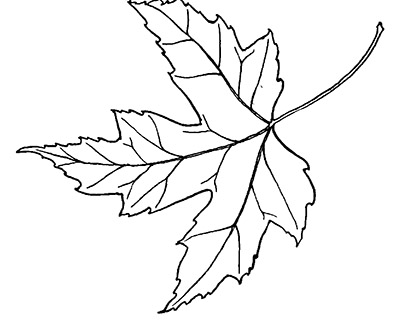
This week, we introduce the silver maple or Acer saccharinum.
Silver maple has simple, typically five-lobed leaves with deeply cut divisions, or sinuses, between the lobes, with narrow lobes at the base. The leaves, which are silvery on the underside, are held oppositely on long leaf stems coming off the twigs. The bark on young trees is smooth and light gray, and darker and scaly on older trees.
Silver maple, which is commonly found in swamps and overflow bottomlands, is one of Indiana’s soft maples alongside red maple. It flowers early and sheds its large winged seed in the spring, typically by late May.
Silver maples, which prefer moist or well-drained soil, grow 50 to 80 feet tall and are found growing from the Great Plains eastward, excluding the Gulf and Atlantic coastal region. Most silver maple lumber is produced in the Mississippi Delta and central states region.
The Morton Arboretum warns that without proper and frequent pruning, high winds and ice can cause limbs to break on silver maple trees due to its weak wood and branch structure. These species is also drought sensitive, so be careful to provide supplemental water during dry periods.
For full article with additional photos view: Intro to Trees of Indiana: Sugar Maple
If you have any questions regarding wildlife, trees, forest management, wood products, natural resource planning or other natural resource topics, feel free to contact us by using our Ask an Expert web page.
Other Resources:
Hardwoods of the Central Midwest: Silver Maple
Hardwood Lumber and Veneer Series, The Education Store: Soft Maple
Morton Arboretum: Silver Maple
Fifty Common Trees of Indiana
An Introduction to Trees of Indiana
Native Trees of the Midwest, The Education Store
Shrubs and Woody Vines of Indiana and the Midwest, The Education Store
Investing in Indiana Woodlands, The Education Store
Forest Improvement Handbook, The Education Store
ID That Tree, Purdue Extension-Forestry & Natural Resources (FNR) YouTube playlist
Woodland Management Moment , Purdue Extension-FNR YouTube playlist
Wendy Mayer, FNR Communications Coordinator
Purdue University Department of Forestry and Natural Resources
Lenny Farlee, Sustaining Hardwood Extension Specialist
Purdue University Department of Forestry and Natural Resources
The classic and trusted book “Fifty Common Trees of Indiana” by T.E. Shaw was published in 1956 as a user-friendly guide to local species. Nearly 70 years later, the publication has been updated through a joint effort by the Purdue Department of Forestry and Natural Resources, Indiana 4-H, and the Indiana Department of Natural Resources, and reintroduced as “An Introduction to Trees of Indiana.”
The full publication is available for download for $7 in the Purdue Extension Education Store. The field guide helps identify common Indiana woodlot trees.
Each week, the Intro to Trees of Indiana web series will offer a sneak peek at one species from the book, paired with an ID That Tree video from Purdue Extension forester Lenny Farlee to help visualize each species as it stands in the woods. Threats to species health as well as also insight into the wood provided by the species, will be provided through additional resources as well as the Hardwoods of the Central Midwest exhibit of the Purdue Arboretum, if available.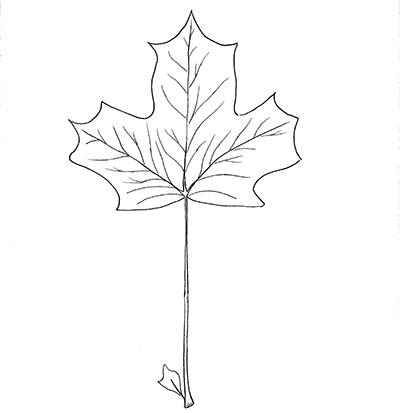
This week, we introduce the black maple or Acer nigrum.
Black maple is easily confused with its cousin, the sugar maple, but there are a few key identifying characteristics to tell them apart. Black maple commonly has stipules, or miniature leaves, at the base of the leaf stem. This species features mottled gray stems and black pointed buds oppositely arranged on the stems. The lobed leaves are darker green and tend to droop down at the edges as the summer goes on.
The bark is lighter gray and smooth in young trees and features flakes or plates in older trees.
The seed or fruit of black maple is a winged seed which occurs in pairs and turns from green to brown when mature, similar to sugar maple.
Black maples, frequently found on moist or bottomland sites, grow 60 to 75 feet tall and can be 40 to 50 feet wide, providing excellent shade with their full foliage.
The Morton Arboretum warns again pruning maps in the spring as they are ‘bleeders’ and will lose large amounts of sap. This species also is susceptible to leaf scorch, verticillium wilt, tar spot and anthracnose and can be affected by borers and cottony maple scale. Black maple suffers from salt, drought and air pollution.
“Don’t be confused by the similarities. Use the tiny stipule (leaf) at the base of the stem, the drooping edges of the dark leaf and its dark buds on gray mottled stems to tell this native apart from its cousin sugar maple. Can you ID this native tree? Meet black maple or Acer nigrum.”
For full article with additional photos view: Intro to Trees of Indiana: Sugar Maple
If you have any questions regarding wildlife, trees, forest management, wood products, natural resource planning or other natural resource topics, feel free to contact us by using our Ask an Expert web page.
Other Resources:
Morton Arboretum: Black Maple
Fifty Common Trees of Indiana
An Introduction to Trees of Indiana
Native Trees of the Midwest, The Education Store
Shrubs and Woody Vines of Indiana and the Midwest, The Education Store
Investing in Indiana Woodlands, The Education Store
Forest Improvement Handbook, The Education Store
ID That Tree, Purdue Extension-Forestry & Natural Resources (FNR) YouTube playlist
Woodland Management Moment , Purdue Extension-FNR YouTube playlist
Black Maple, Native Trees of Indiana River Walk, Fort Wayne, Purdue University
Wendy Mayer, FNR Communications Coordinator
Purdue University Department of Forestry and Natural Resources
Lenny Farlee, Sustaining Hardwood Extension Specialist
Purdue University Department of Forestry and Natural Resources

Recent Posts
- Purdue Extension: Empowering Indiana Through Innovation, Education and Community Impact
Posted: January 28, 2026 in Community Development, How To, Invasive Insects, Invasive Plant Species, Natural Resource Planning, Woodlands - Forest Landowners: Share Your Experience with Regeneration and Restoration
Posted: January 27, 2026 in Forestry, How To, Timber Marketing, Woodlands - It’s Not Too Late to Order Trees for Spring Planting
Posted: January 13, 2026 in Forestry, How To, Plants - Now Is The Time To Control Non-Native Bush Honeysuckle
Posted: October 30, 2025 in Forestry, How To, Invasive Plant Species, Woodlands - October Is Firewood Month: Protect Indiana’s Forests by Making Smart Choices
Posted: October 13, 2025 in Forestry, Forests and Street Trees, How To, Invasive Insects, Urban Forestry - ID That Tree: Smooth Sumac
Posted: October 2, 2025 in Forestry, How To, Wildlife - ID That Tree: Wild Grape Vine
Posted: August 12, 2025 in Forestry, How To, Urban Forestry, Wildlife - Publication – Sericea Lespedeza Control
Posted: July 7, 2025 in Forestry, How To, Invasive Plant Species, Wildlife - How to ID Asian Jumping Worms, Purdue Landscape Report
Posted: July 2, 2025 in How To, Invasive Insects, Wildlife - Alert – Water Your Trees, Watch Video
Posted: June 20, 2025 in Alert, Drought, Forests and Street Trees, How To, Urban Forestry, Wildlife, Woodlands
Archives
Categories
- Alert
- Aquaculture/Fish
- Aquatic/Aquaculture Resources
- Ask the Expert
- Christmas Trees
- Community Development
- Disease
- Drought
- Forestry
- Forests and Street Trees
- Gardening
- Got Nature for Kids
- Great Lakes
- How To
- Invasive Animal Species
- Invasive Insects
- Invasive Plant Species
- Land Use
- Natural Resource Planning
- Nature of Teaching
- Plants
- Podcasts
- Ponds
- Publication
- Safety
- Spiders
- Timber Marketing
- Uncategorized
- Urban Forestry
- Webinar
- Wildlife
- Wood Products/Manufacturing
- Woodland Management Moment
- Woodlands