 Purdue University - Extension - Forestry and Natural Resources
Got Nature? Blog
The classic and trusted book “Fifty Common Trees of Indiana” by T.E. Shaw was published in 1956 as a user-friendly guide to local species. Nearly 70 years later, the publication has been updated through a joint effort by the Purdue Department of Forestry and Natural Resources, Indiana 4-H, and the Indiana Department of Natural Resources, and reintroduced as “An Introduction to Trees of Indiana.”
The full publication is available for download for $7 in the Purdue Extension Education Store. The field guide helps identify common Indiana woodlot trees.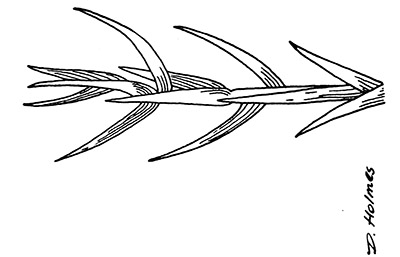
Each week, the Intro to Trees of Indiana web series will offer a sneak peek at one species from the book, paired with an ID That Tree video from Purdue Extension forester Lenny Farlee to help visualize each species as it stands in the woods. Threats to species health as well as also insight into the wood provided by the species, will be provided through additional resources as well as the Hardwoods of the Central Midwest exhibit of the Purdue Arboretum, if available.
This week, we meet Eastern red cedar or Juniperus virginiana, one of the most common coniferous trees in Indiana.
This evergreen tree, also known as aromatic cedar, is unique in that it has both scale-like and sharp-pointed leaves. The foliage can be soft to the touch on mature trees or be quite sharp in seedlings and younger trees. The foliage turns from green to blueish green in spring to red or brown in winter.
The red cedar features a shreddy bark on both the trunk and branches, which is gray brown in color. It is slow growing but may live longer than 450 years.
The fruit of red cedar is a small cone, which resembles and is often referred to as a berry, that is blue in color and features a whitish bloom on the surface. The fruit is preferred by birds and wildlife of many varieties and is thus spread to roadsides, old pastures and other locations with plenty of sun and disturbed soil. It can be found in forest understories, but prefers direct sunlight.
For full article with additional photos view: Intro to Trees of Indiana: Eastern Red Cedar, Forestry and Natural Resources’ News.
If you have any questions regarding wildlife, trees, forest management, wood products, natural resource planning or other natural resource topics, feel free to contact us by using our Ask an Expert web page.
Other Resources:
ID That Tree: Eastern Red Cedar
Morton Arboretum: Eastern Red Cedar
Fruit Diseases: Cedar Apple and Related Rusts on Apples in the Home Landscape
Diseases of Landscape Plants: Cedar Apple and Related Rusts on Landscape Plants
Purdue Arboretum Explorer
The Woody Plant Seed Manual, U.S. Forest Service
Fifty Common Trees of Indiana
An Introduction to Trees of Indiana
Native Trees of the Midwest, The Education Store
Shrubs and Woody Vines of Indiana and the Midwest, The Education Store
Investing in Indiana Woodlands, The Education Store
Forest Improvement Handbook, The Education Store
ID That Tree, Purdue Extension-Forestry & Natural Resources (FNR) YouTube playlist
Woodland Management Moment , Purdue Extension-FNR YouTube playlist
Eastern Redcedar, Purdue Fort Wayne
Wendy Mayer, FNR Communications Coordinator
Purdue University Department of Forestry and Natural Resources
Lenny Farlee, Extension Forester
Purdue University Department of Forestry and Natural Resources
Kara Salazar has been promoted to Assistant Program Leader for Purdue Extension Community Development. She has served in this role part-time but will now be fully dedicated to this program area. Kara will maintain her 25% appointment with Illinois-Indiana Sea Grant (IISG) and serve on the Agriculture Natural Resources (ANR) Extension Advisory Committee. She will still be located in the Forestry Building (FORS 308) and affiliated with the Department of Forestry and Natural Resources (FNR).
Working with multidisciplinary teams, Kara oversees the development and delivery of programs to support environmental planning, community development, and sustainable development strategies in communities across Indiana and the Great Lakes states. Kara provides leadership to the Purdue Extension Community Development Program and serves as a liaison between Illinois-Indiana Sea Grant and Purdue Extension.
Kara has a B.S. in public affairs and environmental science and a M.P.A. in natural resources management and nonprofit management from the Indiana University School of Public and Environmental Affairs. She also received a M.S. Ed . degree from the IU School of Education at Indiana University-Purdue University Indianapolis (IUPUI) with concentrations in community building and science education. Additionally, she is a Ph.D. candidate in Natural Resources Social Science at Purdue University. Kara is a member of the American Institute of Certified Planners (AICP), a Climate Change Professional (CC-P), and a Professional Community and Economic Developer (PCED) with credentials from LEED AP Neighborhood Development, the National Green Infrastructure Certification Program (NGICP), and the National Charrette institute.
Congratulations to Kara in her new position as she continues to move Purdue Extension and IISG forward with her expertise and team building.
Check out Kara’s lead role in the following programs and learn about the vast resources available:
Purdue Extension Community Development – strengthens the capacity of local leaders, residents, businesses, and organizations to build resilient, inclusive and sustainable communities through research-based resources and processes. Examples of a few of the programs and resources available include: Leadership and Civic Engagement, Community and Organizational Planning, Economic and Business Development.
Illinois-Indiana Sea Grant (IISG) – utilizes research, outreach, and education to bring the latest science to Great Lakes communities and their residents. By connecting decision-makers with science, we help strengthen and preserve ecosystems and communities in southern Lake Michigan and beyond.
Agriculture & Natural Resources (ANR), Purdue Extension – ANR Educators serve as research based, unbiased information source for county and state constituents on a variety of topics including: crops, ag business, livestock, natural resource, horticulture, small farms, urban ag, pesticide use, and land conservation.
Purdue Extension – a leader in providing relevant, high-impact educational programs that transform he lives and livelihoods of individuals and communities in Indiana and the world. Purdue Extension – Forestry & Natural Resources (FNR) is a branch of the Cooperative Extension Service/Purdue Extension. FNR Extension provides resources for aquaculture, fish management, urban and forestry management, natural re source planning, wildlife, and sustainable biomaterials. We encourage you to browse, download free publications, utilize our Ask an Expert, subscribe to Got Nature? newsletter and view upcoming workshops.
More Resources including Kara’s publications and videos:
Implementation Examples of Smart Growth Strategies in Indiana, The Education Store, Purdue Extension’s resource center
Conservation Through Community Leadership, The Education Store
Climate Change and Sustainable Development, The Education Store
Climate Change: Are you preparing for it?, The Education Store
Enhancing the Value of Public Spaces, The Education Store
Enhancing the Value of Public Spaces: Creating Healthy Communities, The Education Store
One Water Approach to Water Resources Management, The Education Store
Rainscaping Education Program, Purdue Extension
Community Development, Purdue Extension
Community Planning Playlist, Purdue Extension-Forestry & Natural Resources (FNR) YouTube Channel
Rainscaping and Rain Gardens, Purdue Extension YouTube Channel
Conservation through Community Leadership, Purdue Extension You Tube Channel
Enhancing the Value of Public Spaces Program, Purdue Extension YouTube Channel
Indiana Creek Watershed Project – Keys to Success, Partnerships and People, Purdue Extension You Tube Channel
Subscribe to Purdue Extension – Forestry and Natural Resources YouTube Channel
Diana Evans, Extension and Web Communication Specialist
Purdue University Department of Forestry and Natural Resources
The classic and trusted book “Fifty Common Trees of Indiana” by T.E. Shaw was published in 1956 as a user-friendly guide to local species. Nearly 70 years later, the publication has been updated through a joint effort by the Purdue Department of Forestry and Natural Resources, Indiana 4-H, and the Indiana Department of Natural Resources, and reintroduced as “An Introduction to Trees of Indiana.”
The full publication is available for download for $7 in the Purdue Extension Education Store. The field guide helps identify common Indiana woodlot trees.
Each week, the Intro to Trees of Indiana web series will offer a sneak peek at one species from the book, paired with an ID That Tree video from Purdue Extension forester Lenny Farlee to help visualize each species as it stands in the woods. Threats to species health as well as also insight into the wood provided by the species, will be provided through additional resources as well as the Hardwoods of the Central Midwest exhibit of the Purdue Arboretum, if available.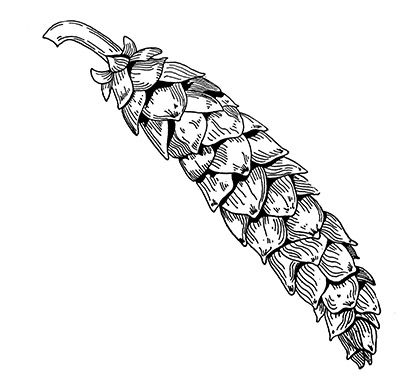
This week, we meet the eastern white pine or Pinus strobus, which historically was one of the tallest trees in the eastern United States.
This conifer is the only five-needled pine native to Indiana, meaning that the bundles of needles coming off the branches in one location, also called fascicles, include five needles per bundle. These needles are typically between two and four inches long and are blue green in color. Needles remain on the tree for two to three years before dropping in the fall.
The bark on younger trees is dark and relatively smooth, and becomes quite furrowed in older trees. The eastern white pine adds a ring of side branches and a terminal shoot yearly with age.
The cones of this species are up to eight inches long, have relatively thin scales and are often covered with quite a bit of white sap or pitch. Cones remain on the tree for two years.
Eastern white pine trees typically grow to between 65 and 100 feet tall, but can exceed 150 feet tall in old growth forests. This species prefers acidic, moist and well-drained soil, but can tolerate alkaline soils. Eastern white pine is native to the central and eastern United States and Canada. Its range extends as far west as Arkansas, Missouri, Iowa and Minnesota in the U.S. and Manitoba in Canada. Its distribution reaches south through the Great Lakes states and in the Appalachian Mountains into northern Georgia as well as east along the Atlantic seaboard.
For full article with additional photos view: Intro to Trees of Indiana: Eastern White Pine, Forestry and Natural Resources’ News.
If you have any questions regarding wildlife, trees, forest management, wood products, natural resource planning or other natural resource topics, feel free to contact us by using our Ask an Expert web page.
Other Resources:
ID That Tree: Eastern White Pine
Morton Arboretum: Eastern White Pine
Tree Diseases: White Pine Decline in Indiana
White Pine and Salt Tolerance
U.S. Forest Service Database – Eastern White Pine
Purdue Arboretum Explorer
The Woody Plant Seed Manual, U.S. Forest Service
Fifty Common Trees of Indiana
An Introduction to Trees of Indiana
Native Trees of the Midwest, The Education Store
Shrubs and Woody Vines of Indiana and the Midwest, The Education Store
Investing in Indiana Woodlands, The Education Store
Forest Improvement Handbook, The Education Store
ID That Tree, Purdue Extension-Forestry & Natural Resources (FNR) YouTube playlist
Woodland Management Moment , Purdue Extension-FNR YouTube playlist
Wendy Mayer, FNR Communications Coordinator
Purdue University Department of Forestry and Natural Resources
Lenny Farlee, Extension Forester
Purdue University Department of Forestry and Natural Resources
While earthworms in the spring are a happy sight for gardeners, an invasive worm species is wreaking havoc for landowners and gardeners in southern Indiana.
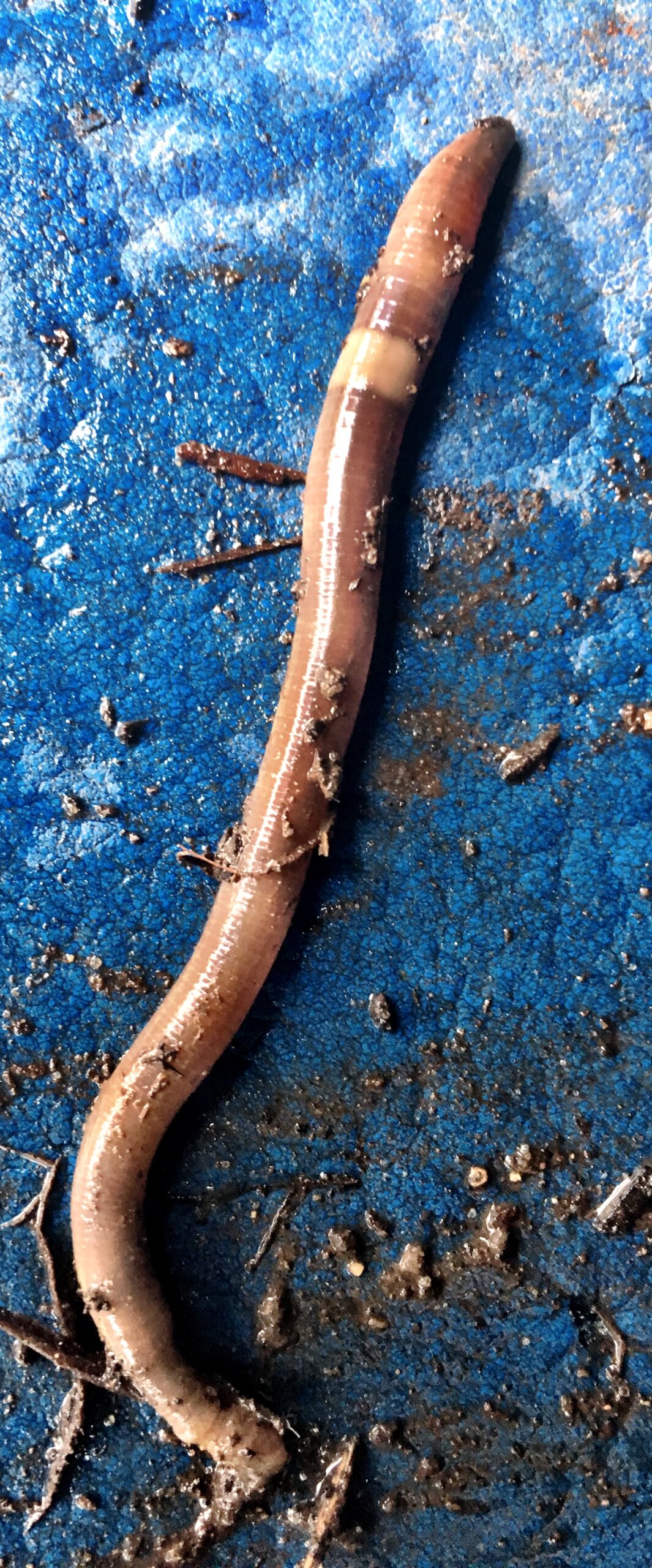
Robert Bruner, Purdue Extension’s exotic forest pest specialist, describes jumping worms, an invasive species to North America in the genus Amynthas: “Traditionally, when we see earthworms, they are deep in the ground and a little slimy. The jumping worms are a little bit bigger, kind of dry and scaly, and tend to thrash around much like a snake does.”
While worms have a reputation as a helpful species found in the soil ecosystem, invasive jumping worms do not live up to that standard, Bruner explained. Jumping worms will consume all organic material from the top layer of soil, leaving behind a coffee ground-like waste with no nutrients for plants or seeds.
Since jumping worms stay within the first few inches of topsoil, they are not creating channels for water and air the way earthworms do, disrupting water flow to plant roots.
“So basically, they’re just very nasty pests that ruin the quality of our soil, and the only thing that can really grow in soil like that are essentially invasive plants, or species that are meant to survive really harsh conditions,” Bruner said.
Currently, the worms are being found in cities around southern Indiana, he said, particularly in Terre Haute. There is still much to learn about jumping worms, making eradication efforts difficult. One thing that is known, Bruner said, is they aren’t a migrating species.
“This is the kind of invasive pest that is moved almost entirely through human activity. They don’t crawl superfast,” he explained. “So, when they move, that means they’re moving because we’re transferring soil, say, from someone’s plants or someone’s compost and we’re bringing them to a new area.”
Any invasive species sightings should be reported to the Indiana Department of Natural Resources at depp@dnr.in.gov or by calling 1-866-663-9684.
For full article with additional photos view: Gardeners asked to be vigilant this spring for invasive jumping worms, Purdue College of Agriculture News.
Other Resources:
Fall webworms: Should you manage them?, Purdue Landscape Report
Mimosa Webworm, The Education Store, Purdue Extension resource center
Sod Webworms, Turf Science at Purdue University
Bagworm caterpillars are out feeding, be ready to spray your trees, Purdue Extension Forestry & Natural Resources (FNR) Got Nature? Blog
Purdue Plant Doctor App Suite, Purdue Extension-Entomology
Landscape & Ornamentals: Bagworms, The Education Store
What are invasive species and why should I care? (How to report invasives.), Purdue Extension – FNR Got Nature? Blog
Indiana Invasive Species Council
Report Invasive Species, Purdue Invasive Species
The GLEDN Phone App – Great Lakes Early Detection Network
EDDMaps – Early Detection and Distribution Mapping System
Indiana Department of Natural Resources: Invasive Species
Indiana Invasive Species Council
Cooperative Invasive Species Management Area (CISMA)
Ask An Expert, Purdue Extension-Forestry & Natural Resources
Jillian Ellison, Agricultural Communication
Purdue College of Agriculture
Bob Bruner, Exotic Forest Pest Educator
Purdue Department of Entomology
In this webinar hosted by Indiana Forestry & Woodland Owners Association, author Doug Tallamy discusses his book “The Nature of Oaks” and how Oaks sustain a complex and fascinating web of wildlife. Doug has also written Bringing Nature Home: How Native Plants Sustain Wildlife in Our Gardens which was awarded the silver metal in 2008 by the Garden Writers Association, Living Landscape, and Nature’s Best Hope. Tallamy has also founded Homegrown National Parks, a grassroots call-to-action to regenerate biodiversity and ecosystem function by planting native plants and creating new ecological networks.
Join IFWOA for their upcoming webinar that will be recorded and placed on their YouTube Channel:
- April 12, 2023 – Magnificent Trees of Indiana
Check out their Indiana Forestry & Woodland Association YouTube Channel for videos including: What is IFWOA?; A New Carbon Program for Hardwood Landowners Webinar, 202 Charles Deam Forest Stewardship Award and much more.
The Indiana Forestry & Woodland Owners Association (IFWOA) was founded in 1977 and is a non-profit organization dedicated to conservation and sustainable management of woodlands in Indiana. IFWOA advocates for scientific best practices for management to achieve objectives of clean water, wildlife habitat, soil protection, native species diversity, timber production, recreation, carbon sequestration and many others.
IFWOA is an affiliate of the National Woodland Owners Association. IFWOA is a partner, collaborator or is represented on leading National and State organizations. These memberships or collaborations are selected to advance Indiana Woodland owner’s interests. IFWOA monitors and influences legislation and economic trends impacting Indiana woodlands and landowners for our members. Membership in IFWOA provides a valuable network linkage to information and resources at the leading edge of science, industry and politics impacting Indiana woodlands.
Resources:
Find an Indiana Professional Forester, Indiana Forestry & Woodland Owners Association (IFWOA)
Purdue Arboretum Explorer
Native Trees of the Midwest, The Education Store
Shrubs and Woody Vines of Indiana and the Midwest, The Education Store
Investing in Indiana Woodlands, The Education Store
Forest Improvement Handbook, The Education Store
ID That Tree, Purdue Extension-Forestry & Natural Resources (FNR) YouTube playlist
Woodland Management Moment , Purdue Extension-FNR YouTube playlist
Diana Evans, Extension and Web Communication Specialist
Purdue University Department of Forestry and Natural Resources
Liz Jackson, Engagement Lead
Indiana Forestry & Woodland Association
The classic and trusted book “Fifty Common Trees of Indiana” by T.E. Shaw was published in 1956 as a user-friendly guide to local species. Nearly 70 years later, the publication has been updated through a joint effort by the Purdue Department of Forestry and Natural Resources, Indiana 4-H, and the Indiana Department of Natural Resources, and reintroduced as “An Introduction to Trees of Indiana.”
The full publication is available for download for $7 in the Purdue Extension Education Store. The field guide helps identify common Indiana woodlot trees. 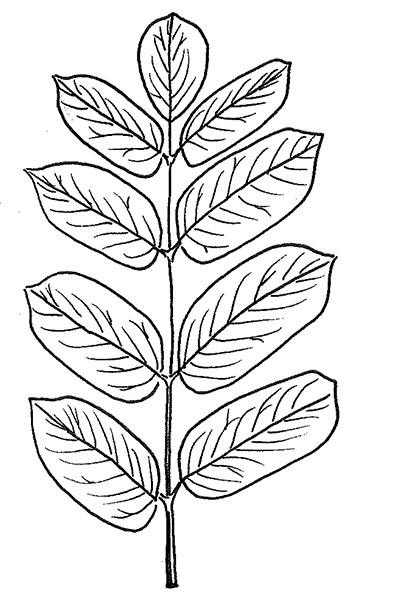
Each week, the Intro to Trees of Indiana web series will offer a sneak peek at one species from the book, paired with an ID That Tree video from Purdue Extension forester Lenny Farlee to help visualize each species as it stands in the woods. Threats to species health as well as also insight into the wood provided by the species, will be provided through additional resources as well as the Hardwoods of the Central Midwest exhibit of the Purdue Arboretum, if available.
This week, we meet Butternut or Juglans cinerea.
Also known as white walnut, this species has slowly disappeared from the landscape due to a fungal disease. Butternut canker can cause large dead spots on the tree and can even girdle the tree and kill it before it can produce fruit.
Butternut has alternately held compound leaves that can be between one and two feet long, resembling a black walnut leaf with pairs of leaflets, but butternut often has a terminal leaflet. The toothed leaflets are green in the summer and yellow in the fall.
The bark is light gray and relatively smooth, but it may become furrowed with age, silver on top and darker between the fissures. Butternut twigs are light tan in color and have an elongated terminal bud. The leaf scar resembles the face of a monkey and it has a “hairy eyebrow” above the leaf scar/below the bud.
The fruit is a lemon-shaped edible nut approximately two inches in diameter with sharp ridges on the nut inside the husk. When they are green, the husk is sticky and clammy to the touch, unlike the smooth, thick skin of its cousin black walnut.
Butternuts, which grow 40 to 60 feet tall, prefer moist, well-drained, loamy soils, found in ravines and coves, but it can also grow on drier, rocky soil, especially that of limestone origin. It is usually scattered in the forest and associated with other species that prefer upland sites.
For full article with additional photos view: Intro to Trees of Indiana: Butternut, Forestry and Natural Resources’ News.
If you have any questions regarding wildlife, trees, forest management, wood products, natural resource planning or other natural resource topics, feel free to contact us by using our Ask an Expert web page.
Other Resources:
ID That Tree: Butternut
Hardwoods of the Central Midwest: Butternut
Hardwood Lumber and Veneer Series: Butternut
Morton Arboretum: Butternut
Identification of Butternuts and Butternut Hybrids, The Education Store
Conservation and Management of Butternut Trees, The Education Store
The Plight of the Butternut
HTIRC Seed Propagation Protocol for Purdue and Hybrid Butternut
Purdue Arboretum Explorer
Butternut, Native Tree of Indiana River Walk, Purdue Fort Wayne
The Woody Plant Seed Manual, U.S. Forest Service
Fifty Common Trees of Indiana
An Introduction to Trees of Indiana
Native Trees of the Midwest, The Education Store
Shrubs and Woody Vines of Indiana and the Midwest, The Education Store
Investing in Indiana Woodlands, The Education Store
Forest Improvement Handbook, The Education Store
ID That Tree, Purdue Extension-Forestry & Natural Resources (FNR) YouTube playlist
Woodland Management Moment , Purdue Extension-FNR YouTube playlist
Wendy Mayer, FNR Communications Coordinator
Purdue University Department of Forestry and Natural Resources
Lenny Farlee, Sustaining Hardwood Extension Specialist
Purdue University Department of Forestry and Natural Resources
 The classic and trusted book “Fifty Common Trees of Indiana” by T.E. Shaw was published in 1956 as a user-friendly guide to local species. Nearly 70 years later, the publication has been updated through a joint effort by the Purdue Department of Forestry and Natural Resources, Indiana 4-H, and the Indiana Department of Natural Resources, and reintroduced as “An Introduction to Trees of Indiana.”
The full publication is available for download for $7 in the Purdue Extension Education Store. The field guide helps identify common Indiana woodlot trees.
Each week, the Intro to Trees of Indiana web series will offer a sneak peek at one species from the book, paired with an ID That Tree video from Purdue Extension forester Lenny Farlee to help visualize each species as it stands in the woods. Threats to species health as well as also insight into the wood provided by the species, will be provided through additional resources as well as the Hardwoods of the Central Midwest exhibit of the Purdue Arboretum, if available.
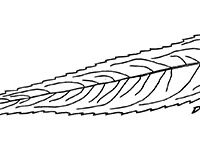
This week, we meet Black willow or Salix nigra. The black willow is one of several species of willow in Indiana, but it is the only tree-sized willow in the state.
This species has long, narrow leaves with short leaf stems, which are held alternately on slender, flexible twigs. Willows have a single scale covering the bud, which helps differentiate them from other species. The finely toothed leaves are medium green in the spring, changing to yellow-green in the fall.
The bark on young trees is smooth, but may be warty or feature some flaking. In old trees, the bark features prominent, light gray vertical flakes.
Black willows, which grow 50 to 70 feet tall, prefer moist or wet soils and often are found growing along streams or in other wetland areas. This species can tolerate alkaline soil, clay soil, occasional flooding and road salt.
For full article with additional photos view: Intro to Trees of Indiana: Black Willow, Forestry and Natural Resources’ News.
If you have any questions regarding wildlife, trees, forest management, wood products, natural resource planning or other natural resource topics, feel free to contact us by using our Ask an Expert web page.
Other Resources:
ID That Tree: Black willow
Hardwoods of the Central Midwest: Black willow
Hardwood Lumber and Veneer Series: Black willow
Morton Arboretum: Black willow
Purdue Arboretum Explorer
Black Willow, Native Trees of Indiana River Walk, Purdue Fort Wayne
The Woody Plant Seed Manual, U.S. Forest Service
Native Trees of the Midwest, The Education Store
Shrubs and Woody Vines of Indiana and the Midwest, The Education Store
Investing in Indiana Woodlands, The Education Store
Forest Improvement Handbook, The Education Store
ID That Tree, Purdue Extension-Forestry & Natural Resources (FNR) YouTube playlist
Woodland Management Moment , Purdue Extension-FNR YouTube playlist
Fifty Common Trees of Indiana
An Introduction to Trees of Indiana
Wendy Mayer, FNR Communications Coordinator
Purdue University Department of Forestry and Natural Resources
Lenny Farlee, Sustaining Hardwood Extension Specialist
Purdue University Department of Forestry and Natural Resources
The Help the Hellbender Project is a joint project involving partners from across the country. The conservation outreach continues as the team shares how important it is that our household and farm management practices are aiming to help keep our rivers and streams clean.
 The Help the Hellbender conservation efforts will continue expanding as the U.S. Department of Agriculture (USDA) announced it is awarding $197 million for 41 locally led conservation projects through the Regional Conservation Partnership Program (RCPP). RCPP is a partner-driven program that leverages partner resources to advance innovative projects that address climate change, enhance water quality, and address other critical challenges on agricultural land. The “Farmers Helping Hellbenders” project, led by Dr. Rod Williams and Purdue Extension wildlife specialist/Help the Hellbender project coordinator Nick Burgmeier, is among the projects set to receive funding through the RCCP Classic fund, which uses NRCS contracts and easements with producers, landowners and communities in collaboration with project partners. To view article and the fourteen contributing partners in the article USDA Awards Farmers Helping Hellbenders Project $2.7 Million in Funding.
Help the Hellbender Recent Team Awards
- The team was honored by the Hoosier Outdoor Writers group with its 2022 Bayou Bill Conservation Award. The annual conservation award is given in memory of the legendary Crothersville, Indiana, outdoor writer Bayou Bill Scifres, who was a founding member of HOW in 1969, and had his outdoors column published in The Indianapolis Star newspaper for 50 years. View full article on the Purdue Forestry and Natural Resources’ News: Help the Hellbender Program Receives Hoosier Outdoor Writers Conservation Award.
- The team recently received the Budd Denneman Partners in Conservation Excellence Award, Indiana Department of Natural Resources, Division of Fish & Wildlife
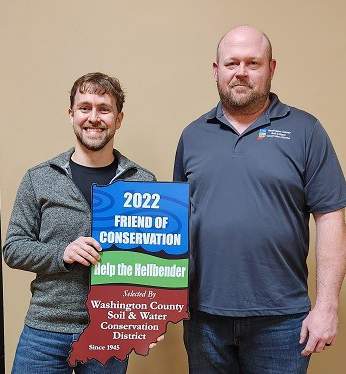
- Awarded the Friends of Conservation Award from the Washington County Soil and Water
The Help the Hellbender website is full of resources, activities, photos, posters, coloring pages and publications for homeowners, farmers, teachers and kids.
Resources:
Help the Hellbender Facebook page
Ask the Expert: Learn All About Hellbenders and Take a Tour, Subscribe Purdue Extension – Forestry & Natural Resources (FNR) YouTube Channel
Ask the Expert video: Help the Hellbender – Dr. Stephen Spear of The Wilds, Purdue Extension – FNR YouTube Channel
Ask the Expert video: Live with Mesker Park Zoo and Botanical Gardens – Hellbenders, Purdue Extension – FNR YouTube Channel
A Moment in the Wild video: Hellbender Hide, Purdue Extension – FNR YouTube Channel
A Moment in the Wild video: Release Moment of Hellbenders,
How Anglers and Paddlers Can Help the Hellbender video, Purdue Extension – FNR YouTube Channel
Eastern Hellbender ID Video, Purdue Extension – FNR YouTube Channel
Hellbenders Rock!, The Education Store, Purdue Extension’s resource center
Help the Hellbender, North America’s Giant Salamander, The Education Store
How Our Zoos Help Hellbenders, The Education Store
The Nature of Teaching: Adaptations for Aquatic Amphibians, The Education Store
Healthy Water, Happy Home – Lesson Plan, The Education Store
Purdue Expert: Hellbender Salamander, Purdue University News YouTube Channel
FNR Assists in First Natural Breeding of Eastern Hellbender in Captivity, Purdue FNR News & Stories
Helping the Hellbender: Mesker Park Zoo Begins Captive Breeding Efforts, Purdue Agriculture News
Diana Evans, Extension and Web Communication Specialist
Purdue University Department of Forestry and Natural Resources
The full publication is available for download for $7 in the Purdue Extension Education Store. The field guide helps identify common Indiana woodlot trees.
Each week, the Intro to Trees of Indiana web series will offer a sneak peek at one species from the book, paired with an ID That Tree video from Purdue Extension forester Lenny Farlee to help visualize each species as it stands in the woods. Threats to species health as well as also insight into the wood provided by the species, will be provided through additional resources as well as the Hardwoods of the Central Midwest exhibit of the Purdue Arboretum, if available. 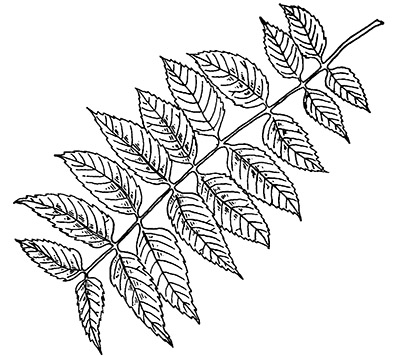
This week, we meet Black walnut or Juglans nigra.
Also known as American black walnut or eastern black walnut, this species has compound leaves with several pairs of leaflets along the individual leaf stems. The leaves, which are arranged alternately on the twigs, can be between one to two feet long. They are green in summer and turn yellow in the fall. The terminal and lateral buds are fuzzy and tan and can resemble suede.
The bark has long, strong running ridges and in older trees can resemble alligator hide. Under the surface of the bark is a dark, chocolate brown color.
Black walnut trees produce nuts, which are ridged and rounded with very heavy shells. Nuts are encased in a thick yellow-green husk, which can leave a dark brown stain on skin. The nut shells require a heavy hammer hit or sharp animal teeth or claws to break open. The nut meat has a very strong aromatic flavor.
Black walnuts, which grow 50 to 75 feet tall, prefer to grow in sunshine and in high quality soils that are deep and well-drained. This species is often found as one of the tallest in the woodlands where they grow. The best quality trees are frequently found on flood free ledges just above stream banks. This species will live on poorer soils, but growth is slow and the wood quality is generally poor.
The natural range of the black walnut is the from the east coast west through the Great Plains. It ranges from Texas and Georgia north to central Minnesota, Wisconsin, Michigan and southern Ontario.
For full article with additional photos view: Intro to Trees of Indiana: Black Walnut, Forestry and Natural Resources’ News.
If you have any questions regarding wildlife, trees, forest management, wood products, natural resource planning or other natural resource topics, feel free to contact us by using our Ask an Expert web page.
Other Resources:
ID That Tree: Black Walnut
Hardwoods of the Central Midwest: Black Walnut
Hardwood Lumber and Veneer Series: Black Walnut
Morton Arboretum: Black walnut
Facts About Black Walnut, The Education Store
Purdue Arboretum Explorer
Black Walnut, Native Trees of Indiana River Walk, Purdue Fort Wayne
The Woody Plant Seed Manual, U.S. Forest Service
Fifty Common Trees of Indiana
An Introduction to Trees of Indiana
Native Trees of the Midwest, The Education Store
Shrubs and Woody Vines of Indiana and the Midwest, The Education Store
Investing in Indiana Woodlands, The Education Store
Forest Improvement Handbook, The Education Store
ID That Tree, Purdue Extension-Forestry & Natural Resources (FNR) YouTube playlist
Woodland Management Moment , Purdue Extension-FNR YouTube playlist
Wendy Mayer, FNR Communications Coordinator
Purdue University Department of Forestry and Natural Resources
Lenny Farlee, Sustaining Hardwood Extension Specialist
Purdue University Department of Forestry and Natural Resources
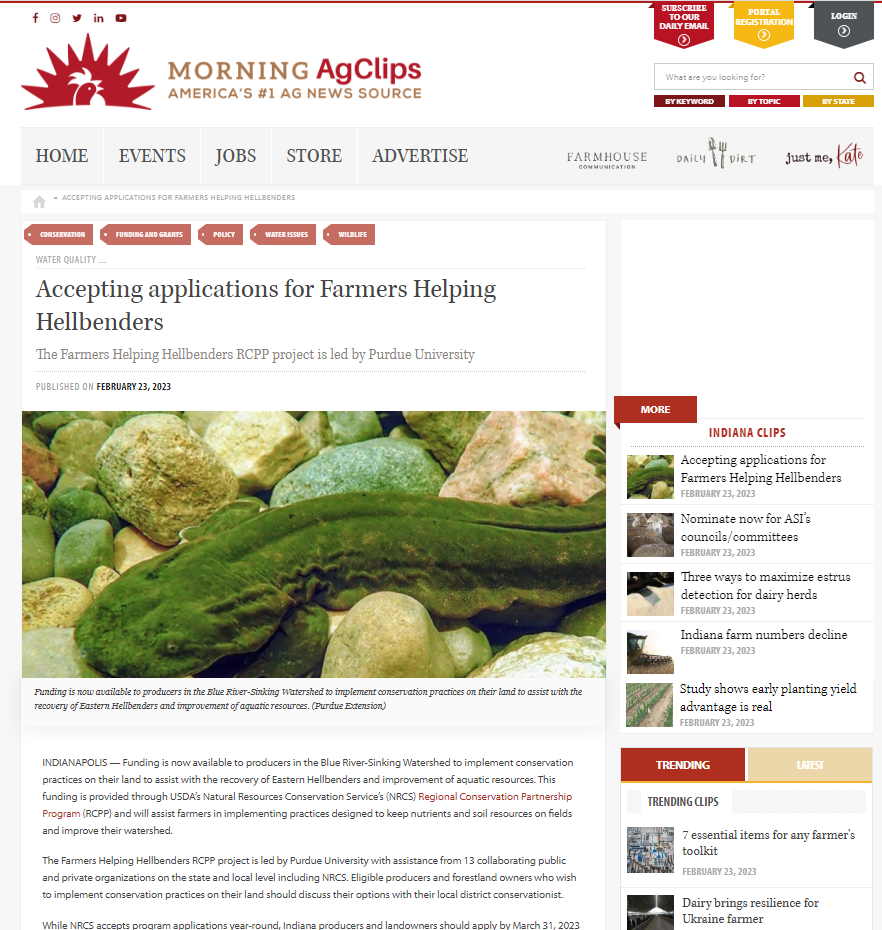 Morning AgClips, Indianapolis, Accepting Applications for Farmers Helping Hellbenders — Funding is now available to producers in the Blue River-Sinking Watershed to implement conservation practices on their land to assist with the recovery of Eastern Hellbenders and improvement of aquatic resources. This funding is provided through USDA’s Natural Resources Conservation Service’s (NRCS) Regional Conservation Partnership Program (RCPP) and will assist farmers in implementing practices designed to keep nutrients and soil resources on fields and improve their watershed.
The Farmers Helping Hellbenders RCPP project is led by Purdue University with assistance from 13 collaborating public and private organizations on the state and local level including NRCS. Eligible producers and forestland owners who wish to implement conservation practices on their land should discuss their options with their local district conservationist.
While NRCS accepts program applications year-round, Indiana producers and landowners should apply by March 31, 2023 to be considered for the current RCPP-Hellbender funding cycle. Applications received after March 31 will automatically be considered during the next funding cycle. For more information or to submit an application, contact your local district conservationist by visiting Farmers.gov/Service-locator.
The goals of the Farmers Helping Hellbenders project include improved water quality due to decreases in runoff, improved aquatic habitat due to decreases in sedimentation, increases in Hellbender and other aquatic wildlife populations due to improved habitat and water quality, increases in riparian and pollinator habitat due to implementation of riparian buffers and pollinator-friendly species, and increased protection of karst due to reduced runoff into sinkholes.
“The Farmers Helping Hellbenders RCPP project enables us to leverage partnerships to make a lasting positive impact on the habitat of the Eastern Hellbender salamander,” said Acting State Conservationist Dan Hovland. “This project will enable Indiana farmers and forestland owners to conserve the vital natural resources on their land while also protecting the habitat for hellbenders and other aquatic animals. It is a win-win.”
The total financial assistance to landowners over the three-year project is more than $1.9 million and is available for agricultural lands in portions of Washington, Harrison, Crawford, and Floyd counties, the only remaining area in Indiana where the Eastern Hellbender can be found and is currently being actively managed.
“This project is the perfect opportunity for land managers to help an imperiled species, while maintaining productive working lands,” said Brianne Lowe, Indiana NRCS state biologist. “Hellbenders are particularly susceptible to sedimentation in the water. Farmers and forest landowners that implement conservation practices can help improve water quality by keeping soil on the land and protecting aquatic nesting beds for the hellbender.”
Indiana eligible practices for farmers in the Blue River-Sinking Watershed for this funding period include conservation cover, grassed waterways, wildlife habitat planting, and nutrient management, riparian buffers and many others. Eligible farmers are encouraged to contact their local NRCS office before March 31 to apply for the current funding cycle. This funding will enable producers to improve the health and productivity of their operations.
Visit https://www.nrcs.usda.gov/indiana/RCPP to learn more about RCPP or click visit www.farmers.gov/working-with-us/service-center-locator find your local USDA-NRCS service center.
USDA Natural Resources Conservation Service

Recent Posts
- Purdue Extension: Empowering Indiana Through Innovation, Education and Community Impact
Posted: January 28, 2026 in Community Development, How To, Invasive Insects, Invasive Plant Species, Natural Resource Planning, Woodlands - Forest Landowners: Share Your Experience with Regeneration and Restoration
Posted: January 27, 2026 in Forestry, How To, Timber Marketing, Woodlands - It’s Not Too Late to Order Trees for Spring Planting
Posted: January 13, 2026 in Forestry, How To, Plants - Now Is The Time To Control Non-Native Bush Honeysuckle
Posted: October 30, 2025 in Forestry, How To, Invasive Plant Species, Woodlands - October Is Firewood Month: Protect Indiana’s Forests by Making Smart Choices
Posted: October 13, 2025 in Forestry, Forests and Street Trees, How To, Invasive Insects, Urban Forestry - ID That Tree: Smooth Sumac
Posted: October 2, 2025 in Forestry, How To, Wildlife - ID That Tree: Wild Grape Vine
Posted: August 12, 2025 in Forestry, How To, Urban Forestry, Wildlife - Publication – Sericea Lespedeza Control
Posted: July 7, 2025 in Forestry, How To, Invasive Plant Species, Wildlife - How to ID Asian Jumping Worms, Purdue Landscape Report
Posted: July 2, 2025 in How To, Invasive Insects, Wildlife - Alert – Water Your Trees, Watch Video
Posted: June 20, 2025 in Alert, Drought, Forests and Street Trees, How To, Urban Forestry, Wildlife, Woodlands
Archives
Categories
- Alert
- Aquaculture/Fish
- Aquatic/Aquaculture Resources
- Ask the Expert
- Christmas Trees
- Community Development
- Disease
- Drought
- Forestry
- Forests and Street Trees
- Gardening
- Got Nature for Kids
- Great Lakes
- How To
- Invasive Animal Species
- Invasive Insects
- Invasive Plant Species
- Land Use
- Natural Resource Planning
- Nature of Teaching
- Plants
- Podcasts
- Ponds
- Publication
- Safety
- Spiders
- Timber Marketing
- Uncategorized
- Urban Forestry
- Webinar
- Wildlife
- Wood Products/Manufacturing
- Woodland Management Moment
- Woodlands