 Purdue University - Extension - Forestry and Natural Resources
Got Nature? Blog
Purdue Landscape Report: While fungi are responsible for many of our foliar disease problems, different fungal pathogens present as problems throughout the country, depending upon the host plant grown and the environmental conditions. This is a brief overview of several common types of fungal leaf diseases that occur in Indiana and throughout North America (and Europe). Recognizing the symptoms and signs is an important first step to diagnose a disease problem, followed by how to manage these diseases by combining cultural and chemical controls.
Common fungal leaf diseases of deciduous trees and shrubs
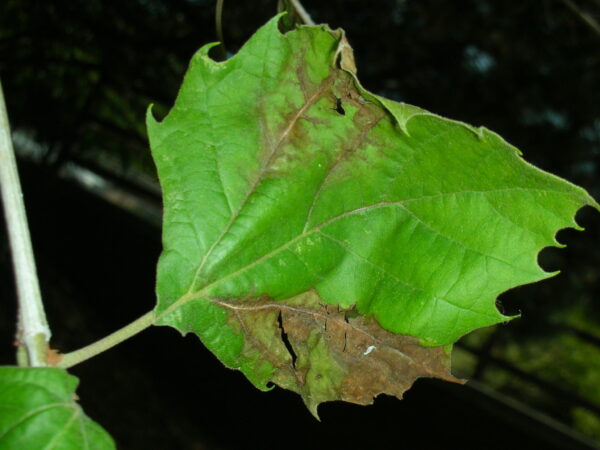
Figure 1. Anthracnose is a yearly problem on sycamore in the Midwest. Photo by Janna Beckerman.
Anthracnose. Anthracnose diseases probably are the best-known foliar fungal diseases of deciduous trees. They affect many ornamental trees including major shade-tree genera such as sycamore (Platanus spp.), oak (Quercus spp.), maple (Acer spp.), elm (Ulmus spp.) and ash (Fraxinus spp.) (Fig. 1). Anthracnose actually is a general term describing symptoms such as dead irregular areas that form along and between the main vein of the leaf. The leaves may also become curled and distorted and twigs may die back. The fungus overwinters in infected twigs and the petioles of fallen leaves, and the spores disseminate in the spring by wind and splashing rain. The disease, while unsightly, rarely results in the tree’s death. Sycamores and other trees often withstand many years of partial defoliation. However, one anthracnose disease is more serious. Dogwood anthracnose (Discula destructiva) is a devastating problem on the Eastern seaboard, but has not been a significant issue here in Indiana.
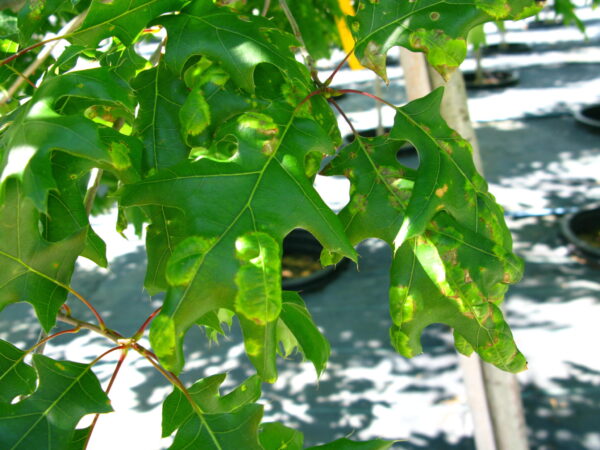
Figure 2. Leaf blister on oak. Photo by Janna Beckerman
Leaf blisters result in the blistering, curling and puckering of leaf tissue. Oak leaf blister (Taphrina caerulescens) is a common blister disease of oaks (Fig. 2)., particularly the red oak subgenus, which includes Northern red oak (Q. rubra) and pin oak (Q. palustris) among others. The symptoms begin as a slight yellowing of the infected leaf followed by round, raised blisters. These turn brown, and the infected leaves fall prematurely. This fungus overwinters as spores on the buds.
Leaf spot is a general symptom caused by a multitude of pathogens and infect all deciduous trees and shrubs, and include dead spots with a defined boundary between living and dead tissue. The dead tissue often separates from the surrounding living tissue creating a “shot-hole” appearance on the infected leaves. Common hosts include dogwood, maples, hydrangea, rose, holly, and Indian-hawthorn.
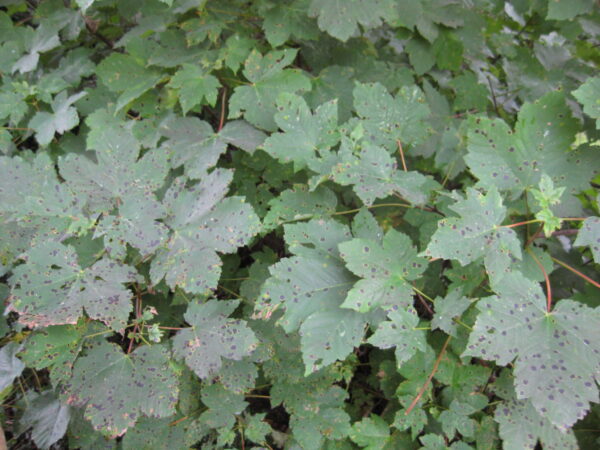
Figure 3. Tar spot is increasing in incidence and severity in Indiana. Photo by Janna Beckerman.
Tar spot (Rhytisma spp.) is a leaf disease with initial symptoms similar to leaf spot. The disease is most common on red (Acer rubrum) and silver maple (A. saccharinum) (Fig.3), but it can occur on a wide range of maple species from sugar (A. saccharum) and Norway (A. platanoides) to bigleaf maple (A. macrophyllum). The symptoms begin in the spring as small greenish-yellow spots on the upper leaf surface that, by mid-summer, progress to black tar-like spots about 0.5 inch in size. The disease is not fatal to the tree, but the appearance of the tar spots alarms some tree owners. A major outbreak in New York about 10 years ago left many maples completely defoliated by mid-August.
Resources:
Diplodia Tip Blight of Two-Needle Pines, The Education Store, Purdue Extension resource center
Boxwood Blight, The Education Store
Disease of Landscape Plants: Cedar Apple and Related Rusts on Landscape Plants, The Education Store
Planting Your Tree Part 1: Choosing Your Tree, Purdue Extension – Forestry & Natural Resources (FNR) YouTube Channel
Tree Planting Part 2: Planting a Tree, Purdue Extension – FNR YouTube Channel
Find a Certified Arborist, Trees are Good-International Society of Arboriculture (ISA)
Video: Step by Step to Find an Arborist, Trees are Good-International Society of Arboriculture (ISA)
Professional Forester, Indiana Forestry Woodland Owners Association
District Forester, Indiana Department of Natural Resources, 10+ acres
Trees and Storms: Understanding Damage, Risk and Recovery – Got Nature? Blog, Purdue Extension – FNR
Why Is My Tree Dying? – Got Nature? Blog, Purdue Extension – Forestry and Natural Resources
Tree Risk Management – Got Nature? Blog, Purdue Extension – FNR
Tree Pruning Essentials, Publication & Video, The Education Store
Tree Wound and Healing, Got Nature? Blog, Purdue Extension – FNR
What are Invasives Species and Why Should I Care?, Got Nature? Blog, Purdue Extension – FNR
Subscribe – Purdue Extension-FNR YouTube Channel
Janna Beckerman, Professor of Plant Pathology
Purdue Department of Botany and Plant Pathology
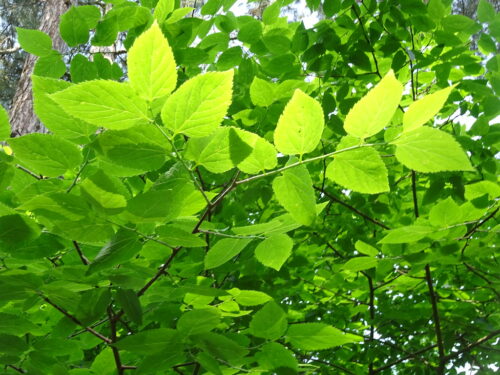 Question: My hackberry trees are dropping leaves for no apparent reason. The leaves look fine, no bugs or mold spots or discoloration of any kind. Do you have any idea what might be causing the leaf drop?
Answer: The loss of leaves on hackberries in spring is an occasional phenomenon in the Midwest. The exact cause has never been determined. In past years, no association was found between the leaf drop and insects or diseases. The most popular theory is that cold spring temperatures may have damaged the leaf buds or newly developing leaves, causing the leaf drop. Remember that blast of winter in April!? It’s likely the loss of leaves in spring is temporary. In past years, affected hackberries quickly developed new leaves and recovered completely. Just be patient and wait for the reflush of growth.
Leaves may be falling from your maple trees right now. This is a common spring issue caused by the maple petiole borer. Look closely at the fallen leaves for abnormally short petioles and examine the tree canopy for broken petioles that have remained attached. Although sugar maples are generally preferred, other maples may occasionally be infested. Fortunately, while the leaf drop may appear dramatic, the actual impact on the overall health of affected trees is minimal, so controls are not necessary. Also, a re-flush of leaves may be expected.
Resources:
Will My Tree Recover After Losing Their Leaves, Purdue Landscape Report
Planting Your Tree Part 1: Choosing Your Tree, Purdue Extension YouTube Channel
Planting Your Tree Part 2: Planting A Tree, Purdue Extension YouTube Channel
Tree Installation: Process and Practices, The Extension Store, Purdue Extension resource center
Ask an Expert: Tree Selection and Planting, Purdue FNR Extension YouTube Channel
Find a Certified Arborist, International Society of Arboriculture (ISA)-Trees Are Good
Lindsey Purcell, Urban Forestry Specialist
Purdue Department of Forestry and Natural Resources
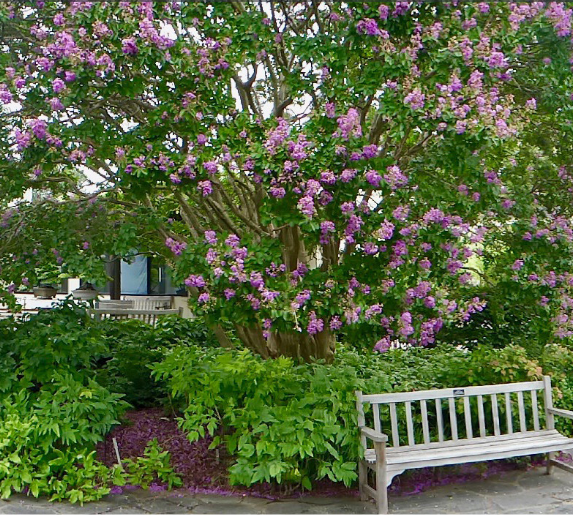 Question: We live near the Amazon Fulfillment Center in the Jeffersonville/Charlestown area. We have significant wind most days. We planted a dogwood tree in our front yard 2 years ago. It struggled through last spring and this year half is not going to make it. Is there a better, preferred tree for this area that we might choose to replace it? We prefer a short stature tree vs one that may reach 20 to 30 feet.
Answer: Dogwood trees can be a challenge to sustain in the landscape due to its environmental requirements. Cornus florida is a “woods edge” tree that like moist, well-drained soil. Most importantly, these trees require protection and at least partial shade to guard against the wind and sun. Recommended publication: Tree Selection, Tree Installation.
Resources
Tree Selection, The Education Store, Purdue Extension resource center
Ask an Expert: Tree Selection and Planting, Purdue Extension – FNR YouTube Channel
Tree Installation, The Education Store
Tree Pruning Essentials, Publication & Video The Education Store
Tree Selection, Tree Installation & Tree Pruning for Landscape, Webinars, Purdue Extension – Forestry and Natural Resources YouTube channel
Planting Problems: Trees Planted Too Deep, Purdue Extension – FNR YouTube Channel
ID That Tree, Purdue Extension – FNR Playlist
Lindsey Purcell, Urban Forestry Specialist
Purdue University, Department of Forestry and Natural Resources
Video series adds “spring bloom” to aid in the identification of different trees. With vivid pictures sharing what to look for regarding the leaves, bark and bloom, Purdue Extension Forester Lenny Farlee identifies these six trees and what to look for in the spring.
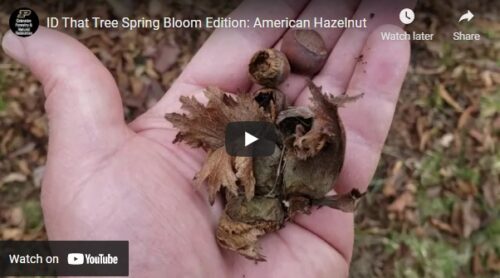 ID That Tree Spring Bloom: American Hazelnut
Did you know that the American hazelnut has male and female flowers? Learn about them and more about this Indiana shrub that produces a tasty treat for humans and wildlife alike in this edition of ID That Tree with Purdue Extension forester Lenny Farlee.
 ID That Tree Spring Bloom: American Plum
In this edition of ID That Tree, Purdue Extension forester Lenny Farlee introduces you to one of our beautiful spring bloomers, the American Plum. Learn how to identify this great alternative to the invasive callery pear by getting to know this species, which can be classified as a small tree or large shrub.
 ID That Tree Spring Bloom: Ohio Buckeye
On this edition of ID That Tree, learn about one of the first native trees to leaf out, the Ohio buckeye. This understory tree is know by its palmate leaves and clusters of yellow/green flowers. Learn more from Purdue Extension Lenny Farlee inside.
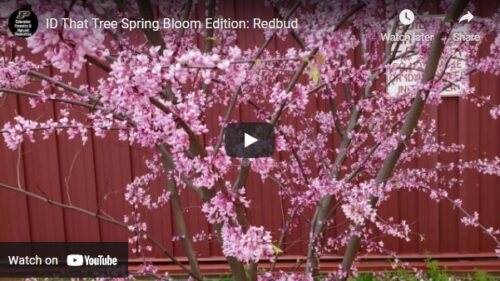 ID That Tree Spring Bloom: Redbud
In this edition of ID That Tree, Purdue Extension forester Lenny Farlee introduces you to the redbud in all of its spring glory. This native Indiana species is known for its pink, lavender and even red and white flowers, which bloom in early spring.
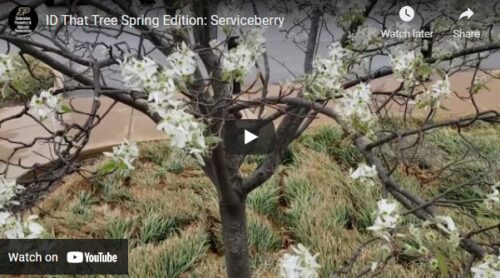 ID That Tree Spring Bloom: Serviceberry
In this spring edition of ID That Tree, Purdue Extension forester Lenny Farlee introduces you to the serviceberry, or juneberry tree. This small native tree is known by its tiny white, or pink, flowers and by its smooth gray bark. Learn more inside.
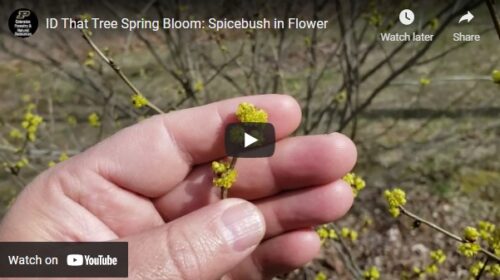 ID That Tree Spring Bloom: Spicebush in Flower
On this episode of ID That Tree, Purdue Extension forester Lenny Farlee introduces the Spicebush, a large native-Indiana shrub that brings early spring color with its clusters of small yellow flowers. This species prefers moist, high-quality soils and is common in forest understories, and brings an aromatic odor when its leaves are crushed or twigs are scraped.
If you have any questions regarding wildlife, trees, forest management, wood products, natural resource planning or other natural resource topics, feel free to contact us by using our Ask an Expert web page.
Resources:
The Education Store, Purdue Extension resource center for publications, videos and apps
The Purdue Arboretum Explorer
Shrubs and Woody Vines of Indiana and the Midwest, Purdue University Press
Native Trees of the Midwest, Purdue University Press
Investing in Indiana Woodlands, The Education Store
Forest Improvement Handbook, The Education Store
Lenny Farlee, Sustaining Hardwood Extension Specialist
Purdue University Department of Forestry and Natural Resources
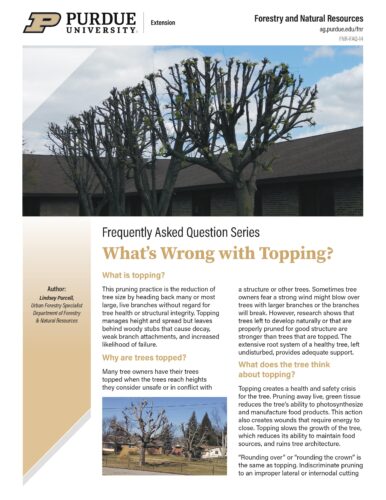 As trees grow and reach heights which many consider to be unsafe, tree owners would often top their trees by reducing the tree size. This is by heading back most of the large, live branches from the tree. However, topping trees proves to be more damaging than beneficial.
Topping trees can cause decay, weak branch attachments, and an increased likelihood of failure. If we do not top our trees and leave them to develop naturally, the structural strength of the trees is stronger than those that are not topped. The extensive root system, when left undisturbed, provides adequate support for the trees.
This publication titled What’s Wrong with Topping goes in-depth on the implications of topping and provides better alternatives to topping.
To view other urban forestry publications and video resources, check out Purdue Extension’s The Education Store website.
Resources:
Planting Your Tree Part 1: Choosing Your Tree, Purdue Extension YouTube Channel
Tree Planting Part 2: Planting a Tree, Purdue Extension YouTube Channel
Tree Selection for the “Un-natural” Environment, The Education Store, Purdue Extension resource center
Tree Installation: Process and Practices, The Education Store
Tree Pruning Essentials Video, Purdue Extension YouTube Channel
Lindsey Purcell, Urban Forestry Specialist
Purdue Department of Forestry and Natural Resources
Spring is here! It is the time of year for some of us to be planting new trees. In this Ask an Expert session, we welcome Lindsey Purcell, urban forestry specialist, as he teaches us how to plant and properly care for our trees. He goes over the tree selection process, including which invasive species trees we should avoid, and how to continue to take care of our trees once planted.
If you have any questions regarding wildlife, trees, forest management, wood products, natural resource planning, or other natural resource topics, feel free to contact us by using our Ask an Expert web page.
Resources:
Planting Your Tree Part 1: Choosing Your Tree, Purdue Extension YouTube Channel
Tree Planting Part 2: Planting a Tree, Purdue Extension – Forestry and Natural Resources YouTube Channel
Indiana Invasive Plant List, Indiana Invasive Species Council, Purdue Entomology
Alternatives to Burning Bush for Fall Color, Purdue Landscape Report
Invasive Plant Species: Callery Pear, Youtube, Purdue Extension
Equipment Damage to Trees, Purdue FNR Extension
Landscape Report Shares Importance of Soil Testing, Purdue FNR Extension
Lindsey Purcell, Urban Forestry Specialist
Purdue Department of Forestry and Natural Resources
Join Lenny Farlee, Purdue FNR Extension Forester, as he explains why the typical thinking of what is a tree and what is a shrub isn’t always simple as far as looking for the “single” trunk to call it a tree. There is some crossover. Lenny shares the different ways to identify if it is a shrub and then the various species in Indiana.
If you have any questions regarding wildlife, trees, forest management, wood products, natural resource planning, or other natural resource topics, feel free to contact us by using our Ask an Expert web page.
Resources:
Shrubs and Woody Vines of Indiana and the Midwest, Purdue University Press
Native Trees of the Midwest, Purdue University Press
101 Trees in Indiana, Amazon
ID That Tree, Purdue Extension – Forestry and Natural Resources YouTube Playlist
Lenny Farlee, Sustaining Hardwood Extension Specialist
Purdue Department of Forest and Natural Resources
Join Lenny Farlee, Purdue FNR Extension Forester, as he goes over the different principles used to identify various trees in Indiana. Lenny will provide examples of species to practice using those principles for identification.
If you have any questions regarding wildlife, trees, forest management, wood products, natural resource planning, or other natural resource topics, feel free to contact us by using our Ask an Expert web page.
Resources:
Shrubs and Woody Vines of Indiana and the Midwest, Purdue University Press
Native Trees of the Midwest, Purdue University Press
101 Trees in Indiana, Amazon
ID That Tree, Purdue Extension – Forestry and Natural Resources YouTube Playlist
Lenny Farlee, Sustaining Hardwood Extension Specialist
Purdue Department of Forest and Natural Resources
Curious about the upcoming cicada emergence? What is different about this species than the ones you see every summer? What effect can they have on wildlife or on your trees and shrubs? Find out from Purdue Extension wildlife specialist Jarred Brooke, forester Lenny Farlee and Purdue Entomology’s Elizabeth Barnes. Don’t miss the question and answer time with our experts discussing “all things cicadas”.
If you have any questions regarding wildlife, trees, forest management, wood products, natural resource planning or other natural resource topics, feel free to contact us by using our Ask an Expert web page.
Resources:
17-year Cicadas Are Coming: Are You Ready?, Purdue Landscape Report
17 Ways to Make the Most of the 17-year Cicada Emergence, Purdue College of Agriculture
Periodical Cicada in Indiana, The Education Store, Purdue Extension resource center
Cicada Killers, The Education Store
Purdue Cicada Tracker, Purdue Extension-Master Gardener Program
Dr. Elizabeth Barnes, Exotic Forest Pest Educator
Purdue Department of Entomology
Lenny Farlee, Sustaining Hardwood Extension Specialist
Purdue Forestry and Natural Resources
Jarred Brooke, Wildlife Extension Specialist
Purdue Forestry and Natural Resources
In this edition of ID That Tree, Purdue extension forester Lenny Farlee explains how to identify shellbark hickory without the help from its leaves. He also shares about how to distinguish this native Indiana species from its close cousin, the shagbark hickory.
If you have any questions regarding wildlife, trees, forest management, wood products, natural resource planning or other natural resource topics, feel free to contact us by using our Ask an Expert web page.
Resources
Hickory and Pecan Species, The Education Store, Purdue Extension resource center
Shellbark Hickory, Native Trees of Indiana River Walk, Purdue Fort Wayne
Shellbark Hickory, The Purdue Arboretum Explorer
ID That Tree Fall Color Edition: Shagbark Hickory, Video, Got Nature? Blog, Purdue Extension – Forestry and Natural Resources
ID That Tree, Playlist, Purdue Extension-FNR YouTube Channel
A Woodland Management Moment, Playlist, Purdue Extension-FNR YouTube Channel
Investing in Indiana Woodlands, The Education Store
Forest Improvement Handbook, The Education Store
Lenny Farlee, Sustaining Hardwood Extension Specialist
Purdue University Department of Forestry and Natural Resource

Recent Posts
- Opportunities for Prescribed and Wildland Fire Training
Posted: November 4, 2026 in Forestry, How To, Wildlife, Woodlands - Wildlife Issues and Solutions: A New Online Series
Posted: in Forestry, How To, Wildlife, Woodlands - Burning for Benefits: Where Fire Belongs in Indiana
Posted: in Forestry, Safety, Wildlife, Woodlands - Residents, Alumni Invited to Share Indiana Natural Resource, Spaces, Species Memories
Posted: in Forestry, Forests and Street Trees, Gardening, Urban Forestry, Wildlife - Now Is The Time To Control Non-Native Bush Honeysuckle
Posted: October 30, 2026 in Forestry, How To, Invasive Plant Species, Woodlands - Help Strengthen the Future of Indiana Maple Syrup
Posted: October 29, 2026 in Forestry, How To, Woodlands - Popular Landscape Shrub is Invasive
Posted: October 15, 2026 in Alert, Forestry, Forests and Street Trees, Invasive Plant Species, Plants, Woodlands - Purdue Extension’s Regional Teams Are Here: Connecting Communities with Expertise and Opportunity
Posted: October 14, 2026 in Community Development, Forestry, Forests and Street Trees, Gardening, How To, Timber Marketing, Urban Forestry, Wildlife, Woodlands - Why Do Our Trees Go From Green Leaves to Different Colors?
Posted: in Forestry, Forests and Street Trees, Urban Forestry, Woodlands - Distinguishing Dogwoods
Posted: October 13, 2026 in Forestry, Urban Forestry, Wildlife, Woodlands
Archives
Categories
- Alert
- Aquaculture/Fish
- Aquatic/Aquaculture Resources
- Ask the Expert
- Christmas Trees
- Community Development
- Disease
- Drought
- Forestry
- Forests and Street Trees
- Gardening
- Got Nature for Kids
- Great Lakes
- How To
- Invasive Animal Species
- Invasive Insects
- Invasive Plant Species
- Land Use
- Natural Resource Planning
- Nature of Teaching
- Plants
- Podcasts
- Ponds
- Publication
- Safety
- Spiders
- Timber Marketing
- Urban Forestry
- Webinar
- Wildlife
- Wood Products/Manufacturing
- Woodland Management Moment
- Woodlands