 Purdue University - Extension - Forestry and Natural Resources
Got Nature? Blog
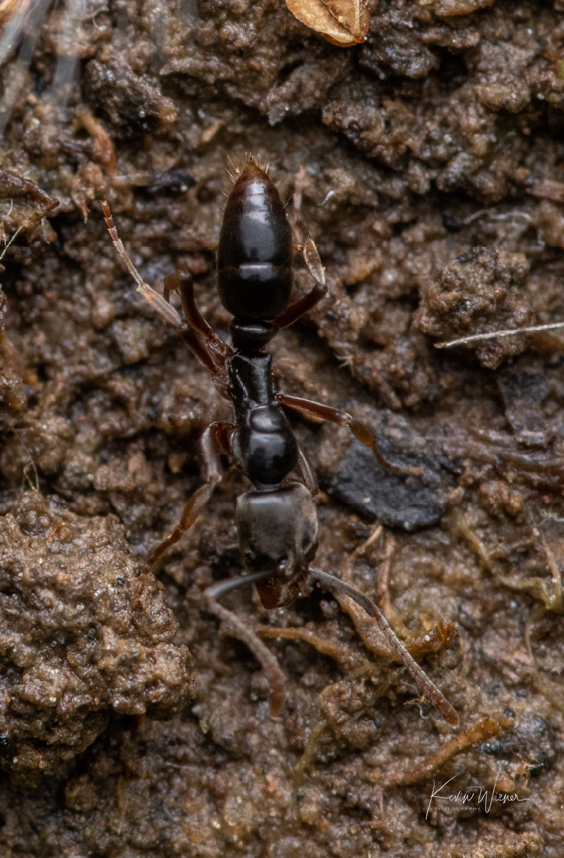
Asian needle ant in
natural setting. Photo by Kevin Weiner, Evansville, IN.
It is official. The Asian needle ant is our newest invasive insect pest and has now become a permanent resident, stinging ant. Two ant specimens taken from a wooded area in southern Indiana by an astute amateur entomologist, who observed their appearance and behavior as ‘out of the ordinary’, was submitted to the Indiana Department of Natural Resources and to the Purdue University Plant and Pest Diagnostic Laboratory for species identification in February, 2022. Both were confirmed to be Formicidae: Brachyponera chinensis, commonly known as the Asian needle ant, not previously recorded from Indiana.
Asian needle ants (ANAs), originally from Eastern Asia (China, Japan, and Korea), were first discovered in the United States in the early 1930s, but only recognized as a pest since 2006. They have been officially established in several states in the U.S. including North Carolina, South Carolina, Alabama and Georgia and, have been anecdotally reported as far north and west as New York, Tennessee and Kentucky.
Note that stings to humans will be moderately painful (potentially causing severe allergic reactions to susceptible individuals) much like fire ant or bee stings, but fortunately because these ants are much less aggressive in protecting their nests, the number of stings per encounter will be less.
The First Report of the Invasive Asian Needle Ant in Indiana pdf provides more details on their identification and biology.
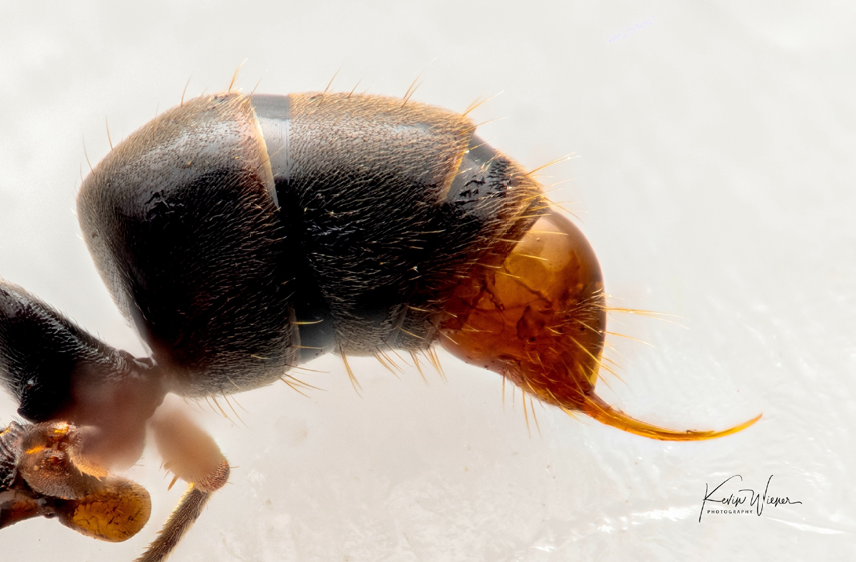
Asian needle ant stinger extended. Photo by Kevin Weiner, Evansville, IN.
If you want to confirm a sighting of the Asian needle ant please contact the Purdue University Plant and Pest Diagnostic Laboratory at this time. More information will be presented as experts monitor the spread.
Resources:
Thousand Cankers Disease, Indiana Department of Natural Resources
Thousand Cankers Disease: Indiana Walnut Trees Threatened, The Education Store, Purdue Extension’s resource center
Indiana Walnut Council
Spotted lanternfly: Everything You Need to Know in 30 Minutes, Video, Emerald Ash Borer University
Emerald Ash Borer, EAB Information Network
Report Invasive Species, Purdue Invasive Species
The GLEDN Phone App – Great Lakes Early Detection Network
EDDMaps – Early Detection and Distribution Mapping System
Indiana Department of Natural Resources: Invasive Species
Indiana Invasive Species Council
Cooperative Invasive Species Management Area (CISMA)
Invasive plants: impact on environment and people, The Education Store
Woodland Management Moment: Invasive Species Control Process, Video, Purdue Extension – Forestry and Natural Resources (FNR) YouTube Channel
Invasive Species, Playlist, Purdue Extension – FNR YouTube Channel
What are invasive species and why should I care?, Got Nature? Blog, Purdue Extension – Forestry and Natural Resources
Report Invasive
Indiana Department of Entomology and Plant Pathology
Tim Gibb, Insect Diagnostician and Extension Specialist
Purdue Department of Entomology
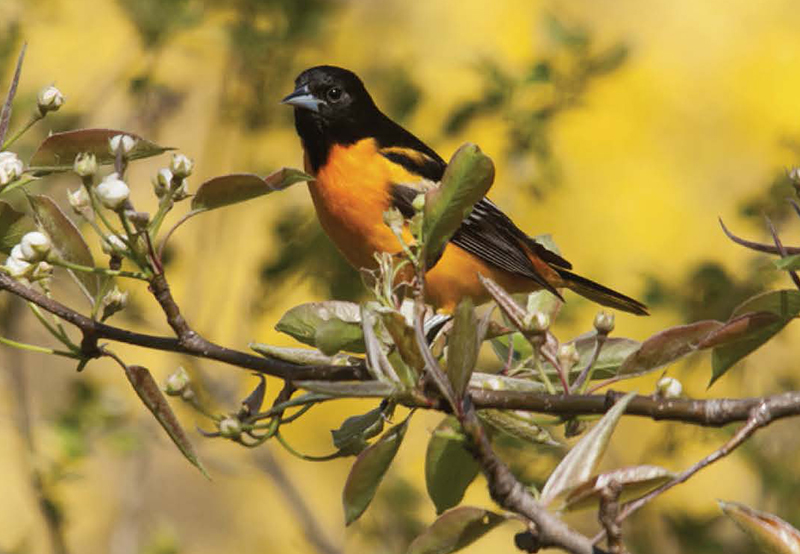 Question: Is there any risk of becoming infected with highly pathogenic avian influenza virus by feeding backyard birds or cleaning a bird feeder?
Answer: There is currently no evidence that suggests you could become infected with highly pathogenic avian influenza virus by feeding backyard birds. Generally, songbirds, or perching birds, (Passeriformes) are the primary type of birds at feeders, and they are usually not affected by HPAI. Most wild birds traditionally associated with avian influenza viruses are waterfowl, shorebirds and scavengers. It is unlikely that bird feeders will contribute to an outbreak among songbirds, but if someone also has backyard poultry, then we recommend removing bird feeders during the outbreak. Songbirds are susceptible to other avian diseases. Therefore, we recommend that people without backyard poultry who feed birds routinely, clean their feeders and bird baths, and anyone who comes in direct contact with bird droppings should thoroughly wash their hands with soap and water.
Additional information:
Indiana Department of Natural Resources (IN DNR) – Fish and Wildlife, Avian Flu: What is the risk to people? Very few types of AI can infect humans. The Centers for Disease Control and Prevention (CDC) considers the risk to people from AI viruses to be low. To date, no human AI infections have been detected in the United States. The U.S. has a strong AIV surveillance program that has been in place for many years.
Cornell Bird Lab: Avian Influenza Outbreak: Should You Take Down Your Bird Feeders?
Utah Division of Wildlife Resources: Is there any risk of becoming infected with highly pathogenic avian influenza virus by feeding backyard birds or cleaning a bird feeder?
Resources:
The National Audubon Society
Birds and Residential Window Strikes: Tips for Prevention, The Education Store, Purdue Extension resource center
Breeding Birds and Forest Management: the Hardwood Ecosystem Experiment and the Central Hardwoods Region, The Education Store
Putting a Little Wildlife in Your Backyard This Spring, The Education Store
It’s For the Birds, Indiana Yard and Garden-Purdue Consumer Horticulture
Managing Woodlands for Birds Video, Purdue Extension-Forestry and Natural Resources YouTube Channel
Brian MacGowan, Wildlife Extension Specialist
Purdue Forestry and Natural Resources
MyDNR Email Newsletter: DNR recently updated its recommendations related to the bird disease outbreak. Based on the data received from reports submitted by Indiana residents, it appears that the bird illness is consistently affecting specific areas. Find which counties are continuing to be affected by this outbreak on our website.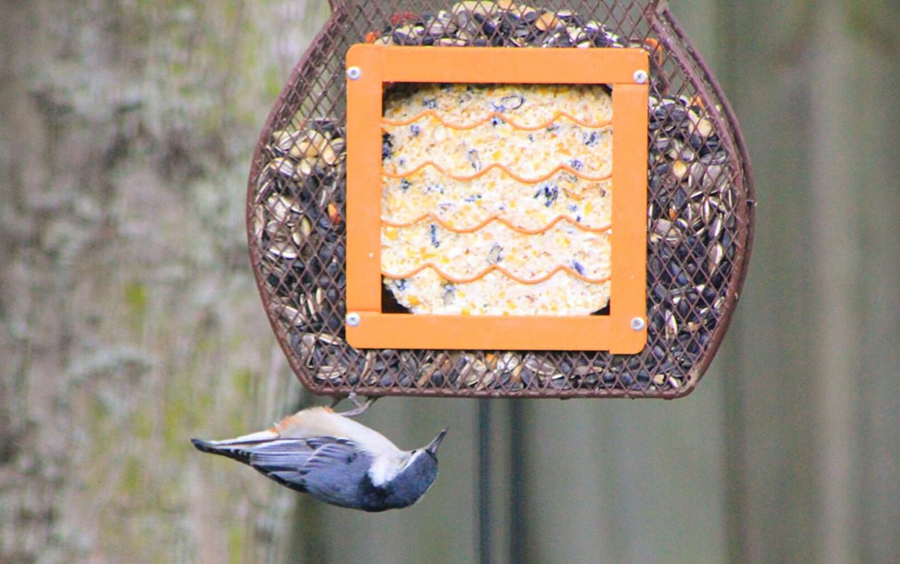
One of the simplest and most effective ways residents can help wild birds is by regularly cleaning bird feeders. Seed and suet feeders should be cleaned at least once every two weeks, and hummingbird feeders should be cleaned at least once a week. Bird feeders can be a breeding ground for disease if not properly cleaned. Help your feathered visitors stay healthy year-round by scrubbing feeders with soap and water, followed by a short soak in a 10% bleach solution.
Resources:
Cause of Songbird Deaths Remains a Mystery, Purdue Extension-Forestry and Natural Resources, Got Nature? Blog
Birdfeeder tips, The National Audubon Society
Birds and Residential Window Strikes: Tips for Prevention, The Education Store, Purdue Extension resource center
Breeding Birds and Forest Management: the Hardwood Ecosystem Experiment and the Central Hardwoods Region, The Education Store
Managing Woodlands for Birds Video, Purdue Extension-Forestry and Natural Resources YouTube Channel
Indiana Department of Natural Resources
MyDNR Newsletter, Indiana Department of Forestry and Natural Resources (IDNR): DNR biologists have confirmed a black bear sighting that occurred in northeast Vanderburgh County June 21st. The closest town to the location is Elberfeld, in Warrick County.
Biologists confirmed the bear from photos taken by the landowner.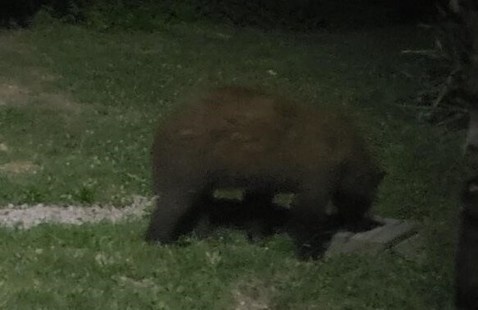
“This is Indiana’s fourth confirmed black bear,” said Brad Westrich, DNR mammalogist. “With expanding bear populations in neighboring states, this is expected.”
“Human-bear conflicts can be avoided if you remove or secure potential food sources from your yard. Bears can smell food from more than a mile away.”
Black bears are rarely aggressive toward humans.
If you see a black bear:
- Do not feed it.
- Observe it from a distance.
- Do not climb a tree.
- Advertise your presence by shouting and waving your arms and backing slowly away.
- Report bear sightings to the Indiana Division of Fish & Wildlife here.
Most problems that occur with bears arise when bears associate food sources with humans and lose their fear of people.
More guidelines for reducing or eliminating the potential for bear-human conflicts:
- Remove bird feeders and bird food if a bear is reported in your area.
- Clean and store away grills after use.
- Eliminate food attractants by placing garbage cans inside a garage or shed.
- Pick ripe fruits and vegetables as soon as possible or place an electric fence around them to ensure bears cannot reach them.
- Consolidate beehives you may have and place an electric fence around them.
- Don’t leave pet food outside overnight.
- Don’t add meat or sweets to a compost pile.
- Don’t climb a tree if you encounter a bear; wait in a vehicle or building for the bear to leave the area.
To view all DNR news releases, please see dnr.IN.gov.
Resources:
Wildlife, Playlist, Purdue Extension – Forestry and Natural Resources YouTube Channel
Black Bears, Indiana Department of Natural Resources (IDNR)
Report a Black Bear Sighting, Indiana Department of Natural Resources (IDNR)
Unexpected Plants and Animals in Indiana: Black Bear, College of Agriculture – Forestry and Natural Resources
Indiana Department of Natural Resources
Starting in May, the Indiana Department of Natural Resources (DNR) began to receive reports of sick and dying songbirds from several counties around the state. As of now, the cause of the illness remains a mystery although submitted specimens have tested negative for avian influenza and West Nile virus according to the DNR. Affected birds have white crust and discharge around the eyes and damage to their nervous system. Reports of sick birds have expanded to many more counties in Indiana.
Several diseases that affect songbirds are transmitted from one animal to another. Bird feeders can increase the likelihood of disease transmission by facilitating close contact among birds. Even though the disease and its mode of transmission in this case is unknown, the DNR is recommending all Hoosiers remove their birdfeeders.
Officials recommend the following steps:
- Use the DNR sick/dead wildlife reporting tool at on.IN.gov/sickwildlife to alert DNR staff.
- Stop feeding birds until the mortality event has concluded.
- Clean feeders and baths with a 10% bleach solution.
- Avoid handling birds. If you need to handle birds, wear disposable gloves.
- When removing dead birds, wear disposable gloves and place birds and gloves in a sealable plastic bag to dispose with household trash.
- Keep pets away from sick or dead birds as a precaution.
- Proper care of bird feeders and seed is an important part of preventing disease transmission at birdfeeders.
The Audubon Society recommends the following best practices:
- Clean feeders monthly using one part bleach to nine parts warm water. Soak the feeder in the solution for a few minutes, rinse, and air dry.
- If uneaten food is accumulating in or under feeders, consider using less food or switch to a seed more to the birds’ liking.
- If birds are fighting over space at a feeder, consider adding more feeders to alleviate the congestion that can potentially be responsible for the rapid spread of disease.
- Avoid throwing large amounts of food on the ground or alternate ground feeding areas so that uneaten food does not accumulate and develop bacteria or mold.
Resources:
DNR recommends removal of birdfeeders statewide – June 25, Indiana Department of Natural Resources
Birdfeeder tips, The National Audubon Society
Birds and Residential Window Strikes: Tips for Prevention, The Education Store, Purdue Extension resource center
Breeding Birds and Forest Management: the Hardwood Ecosystem Experiment and the Central Hardwoods Region, The Education Store
Managing Woodlands for Birds Video, Purdue Extension-Forestry and Natural Resources YouTube Channel
Brian MacGowan, Wildlife Extension Specialist
Purdue University, Department of Forestry and Natural Resources
Curious about the upcoming cicada emergence? What is different about this species than the ones you see every summer? What effect can they have on wildlife or on your trees and shrubs? Find out from Purdue Extension wildlife specialist Jarred Brooke, forester Lenny Farlee and Purdue Entomology’s Elizabeth Barnes. Don’t miss the question and answer time with our experts discussing “all things cicadas”.
If you have any questions regarding wildlife, trees, forest management, wood products, natural resource planning or other natural resource topics, feel free to contact us by using our Ask an Expert web page.
Resources:
17-year Cicadas Are Coming: Are You Ready?, Purdue Landscape Report
17 Ways to Make the Most of the 17-year Cicada Emergence, Purdue College of Agriculture
Periodical Cicada in Indiana, The Education Store, Purdue Extension resource center
Cicada Killers, The Education Store
Purdue Cicada Tracker, Purdue Extension-Master Gardener Program
Dr. Elizabeth Barnes, Exotic Forest Pest Educator
Purdue Department of Entomology
Lenny Farlee, Sustaining Hardwood Extension Specialist
Purdue Forestry and Natural Resources
Jarred Brooke, Wildlife Extension Specialist
Purdue Forestry and Natural Resources
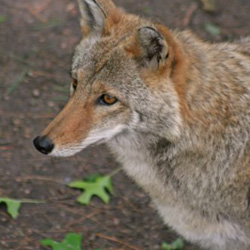 MyDNR Newsletter, Indiana Department of Forestry and Natural Resources (IDNR): Indiana residents are more likely to see coyotes during wintertime, but sightings are no cause for alarm. Coyotes become more active during winter as young coyotes leave their families to find a new home and coyotes begin breeding. Coyotes may look larger than they are due to their thick winter coats, but the average coyote only weighs 20-30 pounds.
General characteristics
- The coyote closely resembles a German shepherd dog in height and shape but it carries its tail below the level of its back instead of curved upward and is generally half the weight of a German shepherd.
- Coyotes have a long slender snout and large, pointed ears.
- The upper body is a grizzled gray or buff, with a reddish brown or gray muzzle and legs. The belly is white, cream-colored or reddish yellow.
- The coyote has a bushy tail, which it carries below the level of its back.
- Coyotes average 25 pounds (ranging from 20 to 50 pounds), and they measure 40 to 50 inches long from nose to tail tip.
- Coyotes are elusive and normally avoid humans.
- They can be active day or night, but are typically most active at dawn and dusk.
- The coyote communicates by barking, yipping and howling.
Distribution and abundance
Coyotes are present in all sections of the state. There are records of coyotes in Indiana as early as 1816, though they likely inhabited Indiana well before that time. Bounties were in place in Indiana on coyotes from at least 1849 through the late 1960s. Despite this persecution by early European settlers, coyotes persisted in Indiana. Historically, coyote populations were limited in range to the prairie regions of the state, and expansion may have partially been limited because wolves suppress coyote populations, and both red and gray wolves were once abundant in Indiana. However, with the eradication of wolves and conversion of habitat to farmland, coyotes have been able to expand and adapt to new habitats. Statewide coyote abundance has slowly increased as coyotes continued to expand into previously unoccupied habitat. Today, coyotes occupy all of Indiana, no matter the habitat type or amount of development.
Detour Coyote
If you see a coyote and want it to go away, try to make it uncomfortable:
- Yell.
- Wave your arms.
- Spray it with a hose.
- Throw tennis balls or small stones at it, but don’t throw anything that could be food, like apples.
- Carry a jar of coins to shake or a small air horn to make noise.
For more information, please visit Indiana Department of Forestry and Natural Resources (IDNR).
To subscribe for the monthly newsletter view: MyDNR Email Newsletter.
Resources
Coyotes, IN DNR
Coyotes (PDF), Wildlife Conflicts, Department of Entomology, Purdue University
Should I Be Worried About Coyotes in My Yard?, Purdue Extension – Forestry & Natural Resources (FNR) Got Nature? Blog
Coexisting With Coyotes, Wild Bulletin, Indiana Department of Natural Resources, Division of Fish and Wildlife
Ask the Expert: Coexisting with Coyotes , Purdue Extension – FNR Got Nature? Blog
Urban Coyotes – Should You Be Concerned?, Purdue Extension – FNR Got Nature? Blog
Pets Disappearing? The Cause May Be Coyotes, Purdue Extension – FNR Got Nature? Blog
Question: Which is the correct species of coyotes I have on my land here in Indiana, coyote or coywolf?, Purdue Extension – FNR Got Nature? Blog
Indiana Department of Forestry and Natural Resources
In this edition of Wildlife Habitat Hint, Purdue wildlife extension specialist Jarred Brooke shares methods to control the invasive sericea lespedeza. This plant species, though was once used for erosion control and mineland reclamation, is too invasive and of little wildlife value.
If you have any questions regarding wildlife, trees, forest management, wood products, natural resource planning or other natural resource topics, feel free to contact us by using our Ask an Expert web page.
Resources
Sericea Lespedeza: Plague on the Prairie, Purdue Extension
Wildlife Habitat Hint, Playlist, Purdue Extension – Forestry and Natural Resouces
Invasive Species, Playlist
A Woodland Management Moment, Playlist
Woodland Stewardship for Landowners, Playlist
Habitat Help LIVE Q&A – Native Grasses and Forbs for Wildlife, Video, Purdue Extension – Forestry and Natural Resources Youtube channel
Renovating Native Warm-Season Grass Stands for Wildlife: A Land Manager’s Guide, The Education Store, Purdue Extension resource center
Jarred Brooke, Wildlife Extension Specialist
Purdue Department of Forestry and Natural Resources
Purdue Landscape Report: Have you noticed large, messy webs on trees? You may have seen a colony of fall webworms. These caterpillars hatch in mid-July but tend to become more noticeable as the summer progresses. They often eat branches bare of leaves but are they a threat to tree health?
What do they look like?
Fall webworms are small, fuzzy pale-yellow caterpillars (figure 1) that build large, conspicuous white webs in trees in the late summer (figure 2). Their webs stretch over tree branches and grow over the course of the summer. When disturbed, the caterpillars will violently thrash back and forth in a bid to ward off predators.
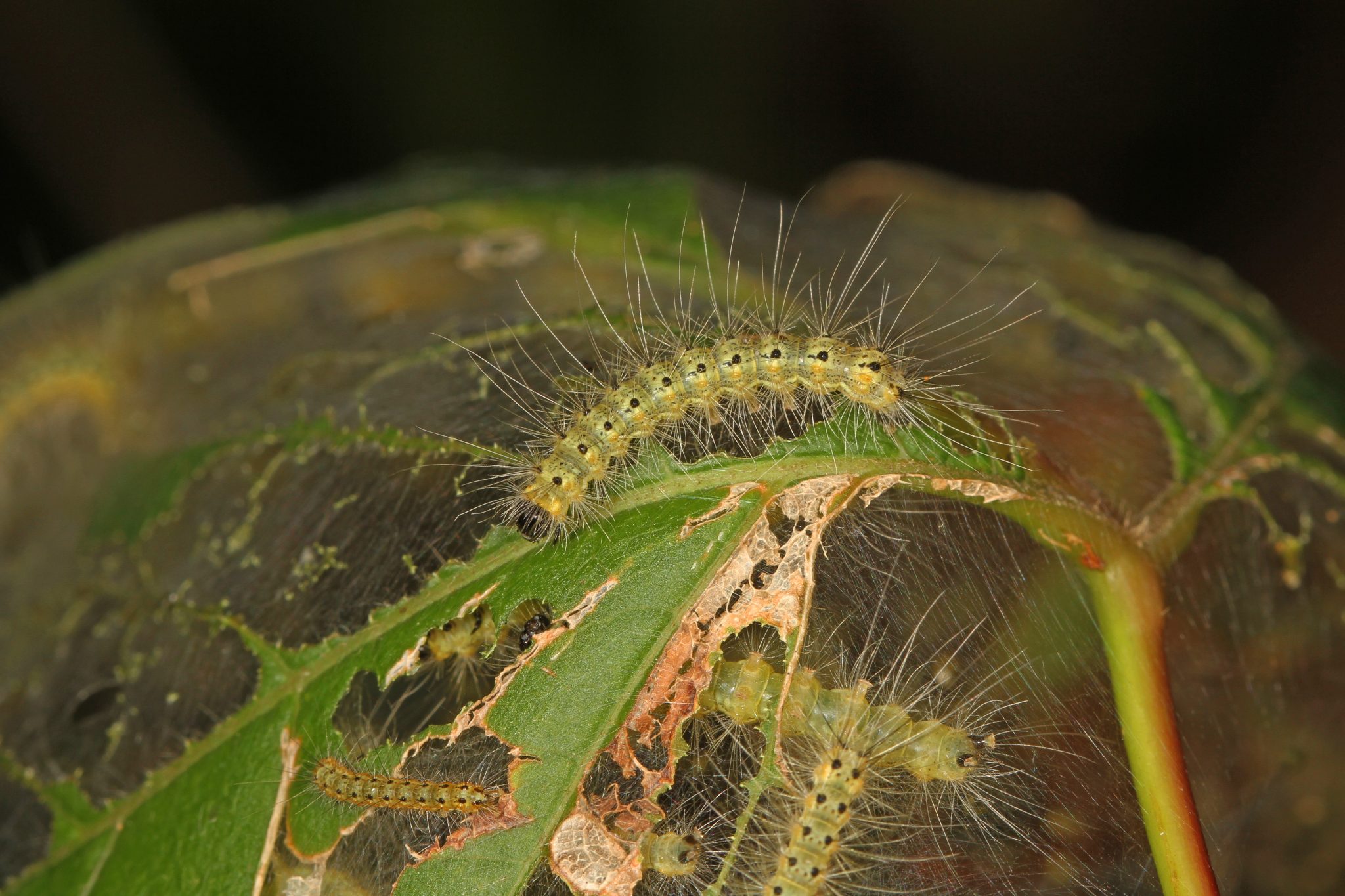
Fig1. A colony of fall webworm caterpillars feeding on a leaf. Note that the web covers the leaves they are currently eating. Photo by Judy Gallagher.
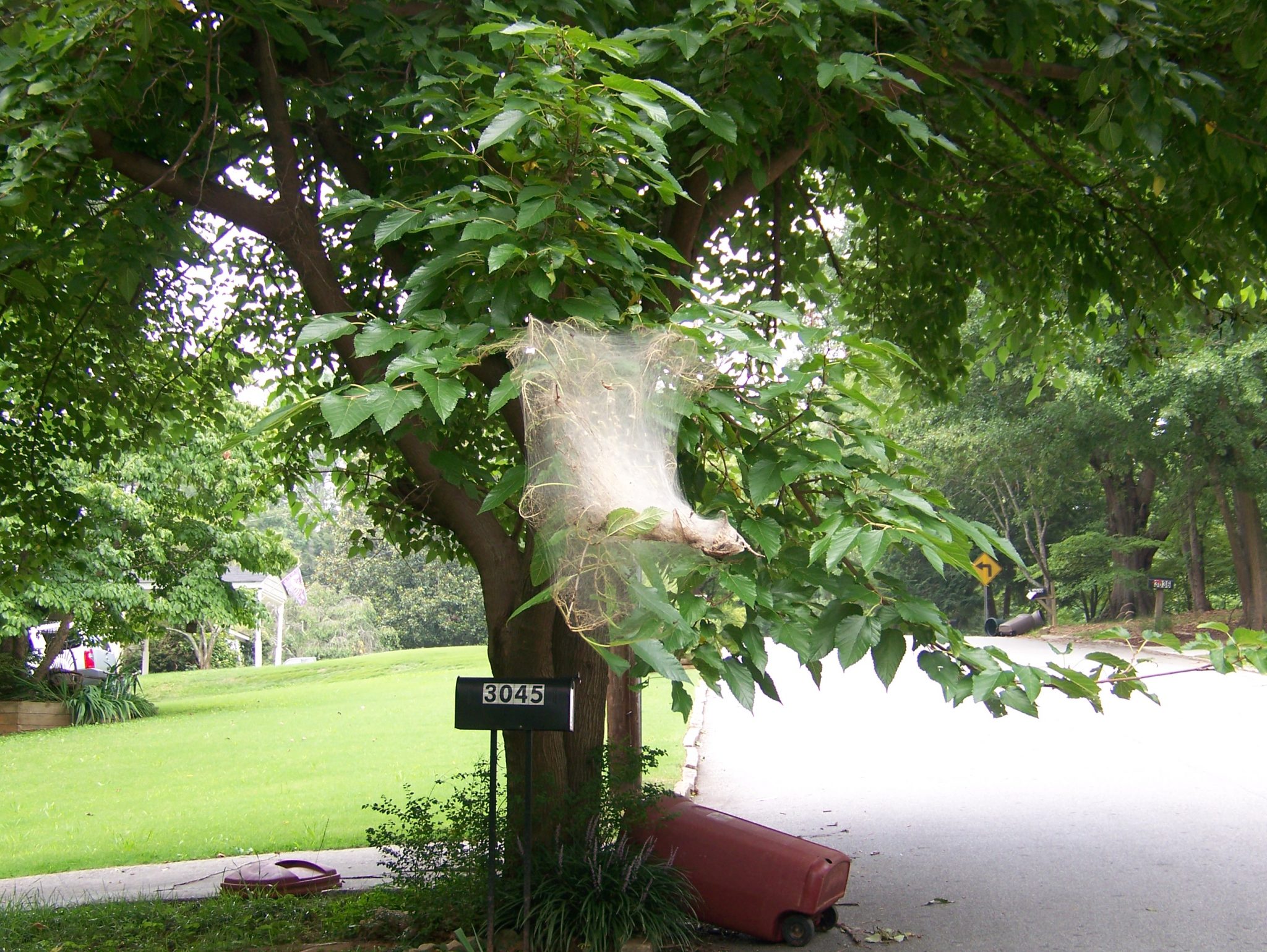
Fig2. Trees will often have multiple fall webworm webs on them. This photo shows a typical number of webs for a large tree. Notice that the webs tend to be on the ends of branches and that the leaf damage is concentrated close to each web. Photo by Ken Gibson.
What kind of damage do they cause?
Fall webworms eat the leaves of many species of deciduous trees and bushes. This damage occurs late in the summer shortly before the trees normally drop their leaves for fall. Therefore, fall webworms very rarely do serious damage to trees. In most cases the trees will grow their leaves back the following spring. On rare occasions, a tree that is already highly stressed may be further weakened by fall webworm damage. However, most trees, even heavily infested trees, are minimally affected and show no signs of damage the following spring.
Do they need to be managed?
Fall webworm damage generally looks much worse than it is. In general, trees only need to be managed for fall webworm if the owner is concerned about aesthetics. In that case, the easiest means of management is pulling the web off the tree by hand and putting it in a bucket of soapy water or freezing it. Some people may be sensitive to the caterpillars’ hairs so gloves should be worn to prevent contact.
In cases where the webs are too high up to be reached, they can be managed through insecticides. Further instructions can be found here.
Cover image by Photo by msumuh on Flickr.
Resources
Fall Webworm Bulletin, Purdue Extension -Entomology
Which Web is Which, Purdue Landscape Report
Will My Trees Recover After Losing Their Leaves?, Purdue Landscape Report
Safe Caterpillar Control, Purdue Landscape Report
Mimosa Webworm, The Education Store, Purdue Extension resource center
Sod Webworms, Turf Science at Purdue University
Bagworm caterpillars are out feeding, be ready to spray your trees, Purdue Extension – Forestry and Natural Resources
Elizabeth Barnes, Exotic Forest Pest Educator
Purdue University Department of Entomology
Purdue Landscape Report: Now that we’ve reach midsummer, many people tending to small plants and bushes may notice small odd round grey objects attached to their plants that are made by potter wasps. Do you need to do anything about them? Do these nests help or harm your plants? And are they dangerous to people?
What do they look like?
You are more likely to notice the nests of potter wasps than the adults. Potter wasp nests often look, like the name suggests, like a small grey pot (figure 1). They are rounded with a small opening that looks like the neck of a vase and are about the size of a cherry tomato. These wasps will attach their nests to many different surfaces but tend to prefer plant and bush stems. Potter wasp nests are often found hidden behind foliage in bushes.
Potter wasp adults come in a variety of colors but all of them look like small hornets. The most common species found in Indiana are mostly black with pale yellow bands around their abdomen (figure 2).
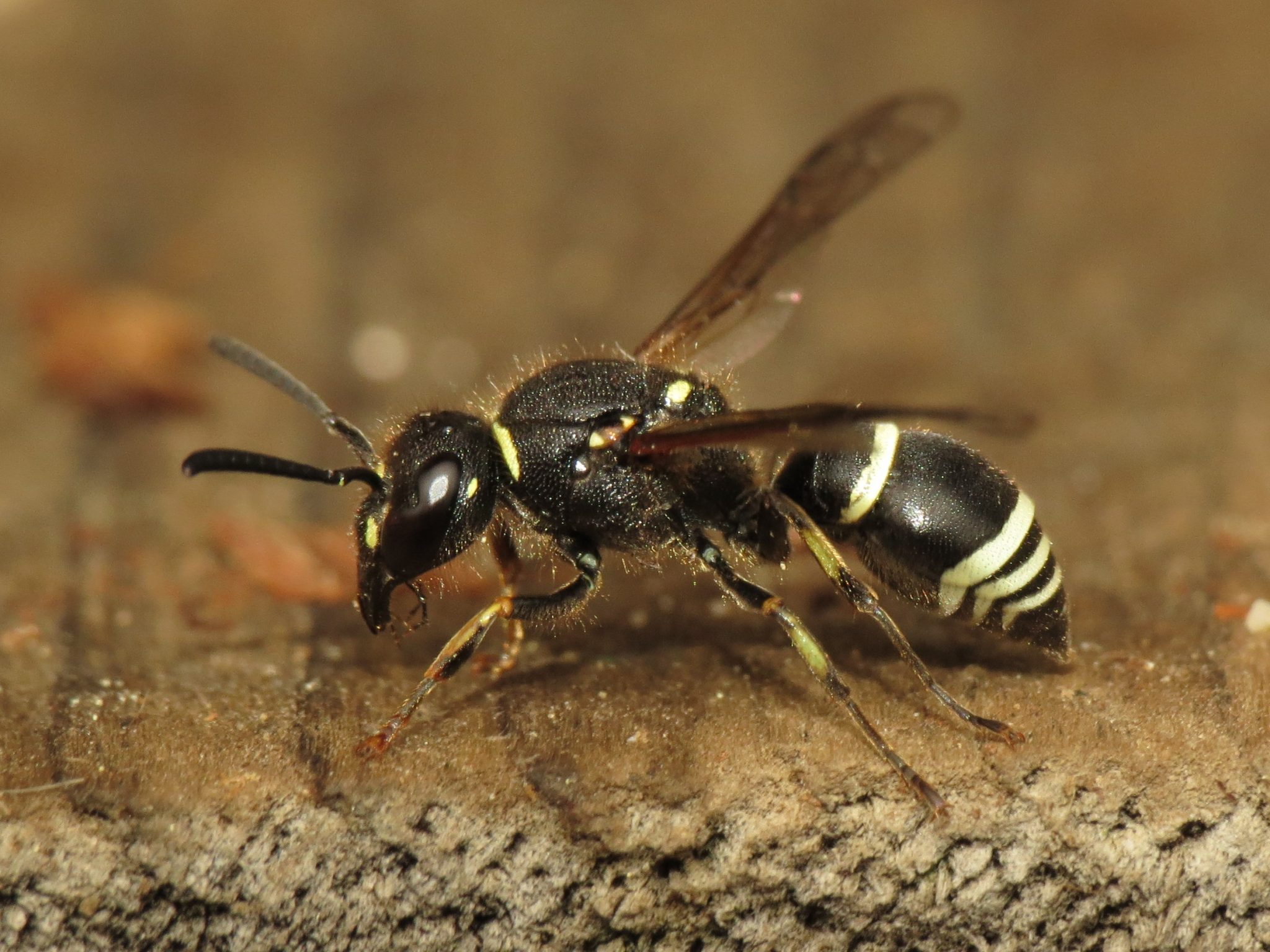
Figure 2. An adult potter wasp resting. This is just one of many different species of potter wasps. Photo by Fyn Kynd on flickr
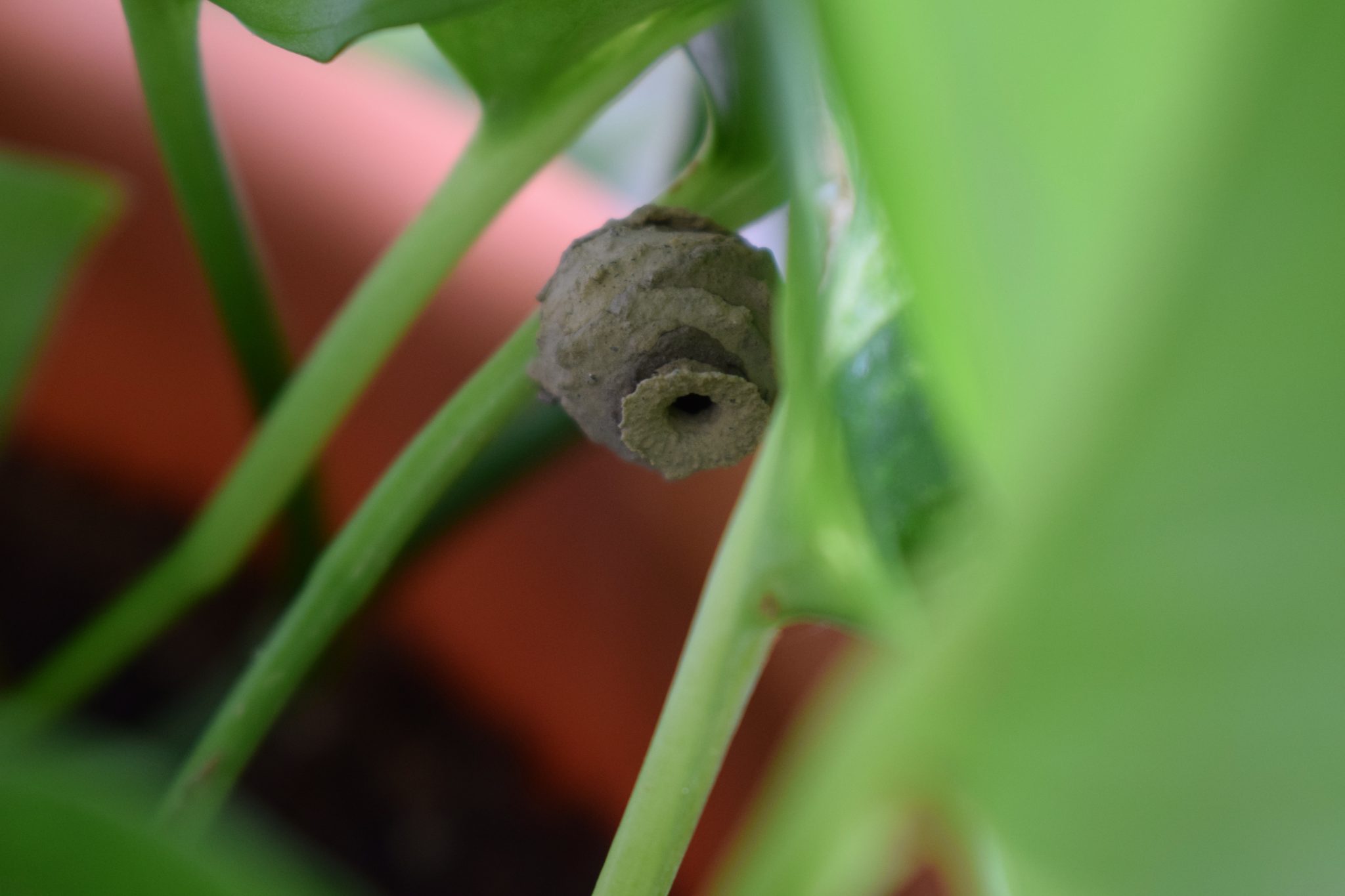
Figure 1. Close up of a potter wasp nest attached to the stem of a house plant. Photo by Elizabeth Barnes, Department of Entomology, Purdue University.
How do they help plants?
Each “pot” that the wasps build is a tiny nursery for a single wasp. Adult potter wasps lay a single egg in each “pot” and then fill it with paralyzed caterpillars and small beetle larvae. When the wasp egg hatches it has all the food it needs to develop into an adult contained in the pot. Each wasp does a small part to keep down the number of caterpillars in the landscape which can reduce the amount of leaf damage on nearby plants.
Will they hurt me?
Probably not! Potter wasps don’t defend their nests and are generally not aggressive. Unless you actively try to bother them they will probably not bother you. If you need to remove one of their nests, you can simply pull it off the plant or object that it’s attached to. However, since they help with pest control, you may want to either leave the nest be or relocate it to a different section of the landscape.
Does anything else look like the “pots”?
Although the “pots” have a very distinct shape there are a few other things that could be confused with them at first glance. Mantis egg masses (ootheca) and some types of galls are both about the same size as potter wasp nests and also often grey. However, they both lack the vase neck-like opening that potter wasp nests have.
What should I do if I see one?
Let it be! Since these wasps rarely sting and help keep caterpillar populations down leave them alone so that they can continue to act as biocontrol agents. If you think you’ve seen a potter wasp or one of their nests and would like help identifying it, take a picture and either upload it to a community science project like iNaturalist or send a picture to the author of this article.
Resources
Social Bees and Wasps, The Education Store, Purdue Extension resource center
Parasitic Wasps, The Education Store
Mud Daubers, The Education Store
Cicada Killers, The Education Store
Industrial, Institutional, Structural and Health-Related Pest Management, The Education Store
Elizabeth E Barnes, Exotic Forest Pest Educator
Purdue University Department of Entomology

Recent Posts
- Alert – Water Your Trees, Watch Video
Posted: June 20, 2025 in Alert, Drought, Forests and Street Trees, How To, Urban Forestry, Wildlife, Woodlands - IN DNR Deer Updates – Epizootic Hemorrhagic Disease Detected in Several Areas in Indiana
Posted: October 16, 2024 in Alert, Disease, Forestry, How To, Wildlife, Woodlands - 2024 Turkey Brood Count Wants your Observations – MyDNR
Posted: June 28, 2024 in Alert, Community Development, Wildlife - Spongy Moth in Spring Time – Purdue Landscape Report
Posted: June 3, 2024 in Alert, Forestry, Forests and Street Trees, How To, Invasive Insects, Urban Forestry - MyDNR – First positive case of chronic wasting disease in Indiana
Posted: April 29, 2024 in Alert, Disease, How To, Safety, Wildlife - Report Spotted Lanternfly – Purdue Landscape Report
Posted: April 10, 2024 in Alert, Forestry, Invasive Insects, Plants, Wildlife, Woodlands - Declining Pines of the White Variety – Purdue Landscape Report
Posted: in Alert, Disease, Forestry, Plants, Wildlife, Woodlands - Are you seeing nests of our state endangered swan? – Wild Bulletin
Posted: April 9, 2024 in Alert, Forestry, How To, Wildlife - 2024-25 Fishing Guide now available – Wild Bulletin
Posted: April 4, 2024 in Alert, Aquaculture/Fish, Aquatic/Aquaculture Resources, How To, Ponds, Wildlife - Look Out for Invasive Carp in Your Bait Bucket – Wild Bulletin
Posted: March 31, 2024 in Alert, Aquaculture/Fish, Aquatic/Aquaculture Resources, Invasive Animal Species, Wildlife
Archives
Categories
- Alert
- Aquaculture/Fish
- Aquatic/Aquaculture Resources
- Ask the Expert
- Christmas Trees
- Community Development
- Disease
- Drought
- Forestry
- Forests and Street Trees
- Gardening
- Got Nature for Kids
- Great Lakes
- How To
- Invasive Animal Species
- Invasive Insects
- Invasive Plant Species
- Land Use
- Natural Resource Planning
- Nature of Teaching
- Plants
- Podcasts
- Ponds
- Publication
- Safety
- Spiders
- Timber Marketing
- Uncategorized
- Urban Forestry
- Webinar
- Wildlife
- Wood Products/Manufacturing
- Woodland Management Moment
- Woodlands