Silica Dust Hazards
Construction Safety, Abatement and Remidiation
It ‘s a Must to Control That Dust
Silica dust is a serious health and safety hazard that can result from activities such as cutting, grinding, drilling or crushing concrete, masonry, brick, and other stone materials. Common tasks like mortar repair and tuck-pointing can release silica particles into the air, posing significant risks to both workers and bystanders.
Due to the abrasive nature of the micro-particles, inhalation can lead to long-term health effects. In addition to the health risks, silica dust can also damage sensitive mechanical and ventilation equipment, impacting campus operations.
Best Practices
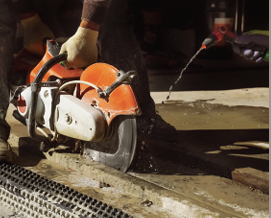
- When workers are cutting concrete, means of dust control must be employed by using wet-cutting, HEPA vacuums or a combination of both.
- Personal protective equipment (PPE) is to be worn at all times when cutting materials such as hearing protection and safety glasses
- Any time work is being done on campus, bystanders should avoid the area. In most instances, alternate routes of travel will be posted to minimize exposure.
- Contact EHS with any concerns related to silica dust and associated safety measures on campus.
Contact
Ryan Tyson
rmtyson@purdue.edu
765-494-1019