Skip to content
Purdue University Home Environmental Health and Safety
  • Home
  • Safety
    • Employee Safety
      • Medical Facilities
      • Report an Injury
      • Report a Near Miss
      • Report a Safety Concern
      • Return to Work
    • Personal Safety
      • Animal Bite and Scratch Exposure
      • Bloodborne Pathogens
      • Ergonomics
      • Food Safety
      • Minors in Labs and Other Hazardous Areas
      • Personal Protective Equipment
      • Pregnancy and Radiation
      • Presidential Safety Award
      • Situational Awareness
    • Building Safety
      • Asbestos Management Program
      • Excavation Safety
      • Indoor Air Quality
      • Indoor Water Quality
      • Lead Testing of Paint
      • Refrigerant Compliance Program
      • Silica
      • Slips, Trips and Falls
    • Lab and Equipment Safety
      • Autoclave Testing
      • Biosafety Cabinets and Clean Benches
      • Chemical Fume Hoods
      • Confined Space
      • Control of Hazardous Energy
      • Electrical Safety
      • Eyewashes and Safety Showers
      • Hazard Clearance and Declaration
      • Laser Safety
      • Mercury Thermometers
      • Mobile Elevating Work Platforms
      • Personal Protective Equipment
      • Researcher’s Guide
      • Scanning Electron Microscope
      • X-Ray Machines
  • Hazardous Waste and Materials 
    • Hazardous Materials
      • Biological Materials
      • Chemical Hygiene Plan
      • Chemical Materials
      • Controlled Substances
      • Hazard Communication
      • Laboratory Decommissioning
      • Laboratory Moves
      • Shipping Hazardous Materials
      • Standard Operating Procedures
      • Radioactive Materials
      • Worker Protection Standard
    • Hazardous Waste
      • Battery Disposal
      • Biological Waste
      • Chemical Waste Storage
      • Empty Container Disposal
      • Hazardous Waste Disposal
      • Household Hazardous Waste and E-Waste
      • HPLC Waste
      • Radioactive Waste
      • Universal Waste
      • Unknown Chemicals
      • Waste Containers
      • Waste Minimization
    • Spills
      • Blood Spills
      • Chemical Spills
      • Mercury Spills
      • Radioactive Materials Spills
  • ISP
    • ISP Certified Programs
    • Safety Committees
  • Compliance Programs
  • Environmental Programs
    • ECAD
    • Safe and Sustainable Labs Program 
  • About
    • Environmental Health
    • Environmental Safety Services
    • Hazardous Materials Management 
    • Industrial Hygiene
    • Occupational Safety
    • Radiation and Laser Safety
Environmental Health and Safety
  • Home
  • Safety
    • Employee Safety
      • Medical Facilities
      • Report an Injury
      • Report a Near Miss
      • Report a Safety Concern
      • Return to Work
    • Personal Safety
      • Animal Bite and Scratch Exposure
      • Bloodborne Pathogens
      • Ergonomics
      • Food Safety
      • Minors in Labs and Other Hazardous Areas
      • Personal Protective Equipment
      • Pregnancy and Radiation
      • Presidential Safety Award
      • Situational Awareness
    • Building Safety
      • Asbestos Management Program
      • Excavation Safety
      • Indoor Air Quality
      • Indoor Water Quality
      • Lead Testing of Paint
      • Refrigerant Compliance Program
      • Silica
      • Slips, Trips and Falls
    • Lab and Equipment Safety
      • Autoclave Testing
      • Biosafety Cabinets and Clean Benches
      • Chemical Fume Hoods
      • Confined Space
      • Control of Hazardous Energy
      • Electrical Safety
      • Eyewashes and Safety Showers
      • Hazard Clearance and Declaration
      • Laser Safety
      • Mercury Thermometers
      • Mobile Elevating Work Platforms
      • Personal Protective Equipment
      • Researcher’s Guide
      • Scanning Electron Microscope
      • X-Ray Machines
  • Hazardous Waste and Materials 
    • Hazardous Materials
      • Biological Materials
      • Chemical Hygiene Plan
      • Chemical Materials
      • Controlled Substances
      • Hazard Communication
      • Laboratory Decommissioning
      • Laboratory Moves
      • Shipping Hazardous Materials
      • Standard Operating Procedures
      • Radioactive Materials
      • Worker Protection Standard
    • Hazardous Waste
      • Battery Disposal
      • Biological Waste
      • Chemical Waste Storage
      • Empty Container Disposal
      • Hazardous Waste Disposal
      • Household Hazardous Waste and E-Waste
      • HPLC Waste
      • Radioactive Waste
      • Universal Waste
      • Unknown Chemicals
      • Waste Containers
      • Waste Minimization
    • Spills
      • Blood Spills
      • Chemical Spills
      • Mercury Spills
      • Radioactive Materials Spills
  • ISP
    • ISP Certified Programs
    • Safety Committees
  • Compliance Programs
  • Environmental Programs
    • ECAD
    • Safe and Sustainable Labs Program 
  • About
    • Environmental Health
    • Environmental Safety Services
    • Hazardous Materials Management 
    • Industrial Hygiene
    • Occupational Safety
    • Radiation and Laser Safety
Helpful links
  • CURRENT STUDENTS
  • FACULTY AND STAFF
  • Give
  • Events Calendar
  • Shop
  • News

Universal Waste

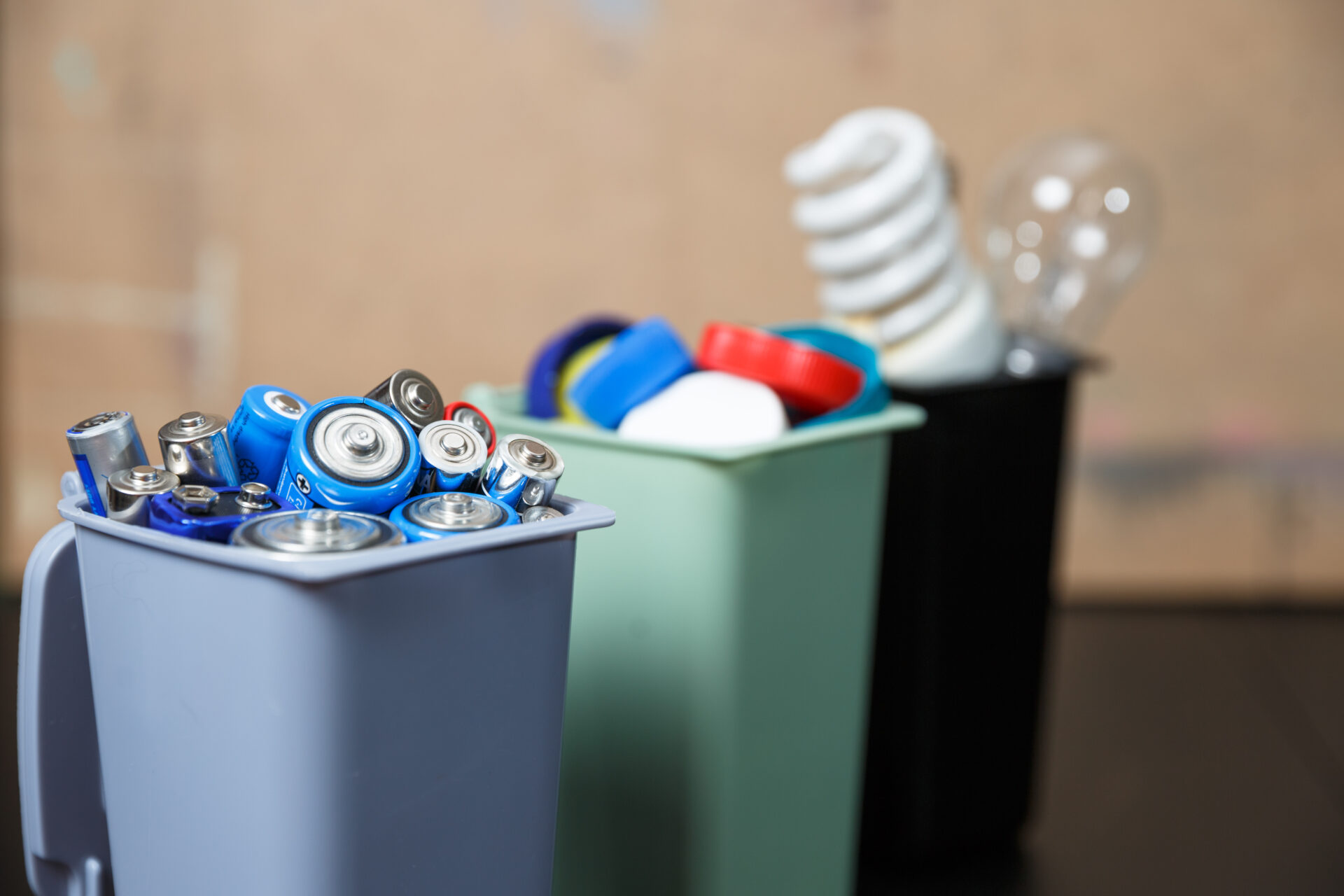
Universal wastes are waste streams that meet the definition of a hazardous waste but are very common and can be easily recycled. Universal waste includes:

  • Batteries
  • Pesticides
  • Mercury-containing equipment
  • Light bulbs (lamps)

Because universal waste streams are so common and widely generated, the Environmental Protection Agency (EPA) has eased the regulatory burden to encourage the development of municipal and commercial recycling programs. The following subsections describe the waste collection procedures for these waste streams.

Universal waste can be brought to the universal waste trailer on Ahlers Drive. Batteries and bulbs used in research environments can be submitted on a Hazardous Materials Disposal Pickup Request form.

Batteries that are regulated by the EPA as a universal waste include:

  • Lead-Acid
  • Nickel-Cadmium
  • Lithium and Lithium Ion
  • Mercury (mercuric oxide or mercury cell)
  • Nickel-Metal Hydride
  • Any other rechargeable battery

Universal waste batteries should be inventoried on a Hazardous Materials Pickup Request Form and sent to Environmental Health and Safety (EHS) for proper recycling. Alkaline batteries are not considered universal waste because they contain no EPA regulated hazardous constituents and can legally be discarded in the trash.

Purdue does not manage pesticide waste as universal waste. All pesticide waste should be inventoried on a Hazardous Materials Pickup Request Form and sent to EHS for proper disposal.

Purdue does not manage mercury-containing equipment waste as universal waste. All mercury-containing equipment waste should be inventoried on a Hazardous Materials Pickup Request Form and sent to EHS for proper disposal.

Light bulbs regulated as universal waste include:

  • Fluorescent
  • Compact fluorescent light bulbs
  • High-intensity discharge
  • Ultraviolet
  • Flood lamps

Incandescent light bulbs are not considered universal waste because they contain no EPA regulated hazardous constituents and can legally be discarded in the trash.

Note: Broken Fluorescent lamps must be managed as hazardous waste. Submit a completed Hazardous Waste Pickup Request for proper disposal.

Requesting Bulb and Ballast Pickup

Purdue personnel can submit a notification requesting pickup of bulbs/ballasts. Please indicate in this email the quantity (number of boxes, buckets or bins), type of material (bulbs or ballasts), location (building loading dock) of the pickup, and contact information for any questions.

The work order will be routed to the respective zone and a zone lighting technician will come to pick up the material.

Important Reminders:

  • University personnel can bring bulbs/ballasts from their buildings/shops to the trailer located near HMMT on Ahlers Road.
  • Training is mandatory for all personnel that handles used fluorescent bulbs.
  • All lamp containers must be closed and labeled with the words “Universal Waste Bulbs.”

Electrical ballasts are not regulated by the EPA as hazardous waste. However, EHS manages them in a similar fashion. All ballasts can be brought directly to the EHS Laboratory Materials Storage Building (LMSB) (address listed below) for proper recycling; submitting a Hazardous Materials Pickup Request Form is not necessary. When bringing waste to HMMT, all personnel must sign in at the front desk and will receive further instructions.

Electrical ballasts are not regulated by the EPA as hazardous waste. However, EHS manages them in a similar fashion. All ballasts can be brought directly to the EHS Laboratory Materials Storage Building (LMSB) (address listed below) for proper recycling; submitting a Hazardous Materials Pickup Request Form is not necessary. When bringing waste to HMMT, all personnel must sign in at the front desk and will receive further instructions.

All electronic waste (e-waste) is regulated by IDEM and must be disposed of properly. IDEM’s definition of e-waste is extremely broad and includes (329 IAC 16-2-1):

  • A circuit board in a computer or electronic device that holds integrated circuits and other electronic components
  • An electronic component such as a diode, resistor, capacitor, or coil
  • Display device such as a cathode ray tube, liquid crystal display screen, or other such display device
  • A computer
  • An electronic device, which is a device that has its primary functions provided by electronic circuitry and components

No e-waste should be thrown away in the trash. All e-waste must be sent to Purdue Warehouse and Surplus where it will be processed for proper recycling. Contact the Purdue Warehouse and Surplus Store personnel at 765-496-2222 for more detailed waste disposal instructions.

Purdue Logo

Purdue University
610 Purdue Mall
West Lafayette, IN 47907

765-494-4600

Systemwide options

Follow Us

  • Facebook
  • Instagram
Systemwide options

  • West Lafayette Map
  • Careers
  • Center for Healthy Living
  • Colleges and Schools
  • Directory
  • Entrepreneurship and Commercialization
  • Human Resources
  • Libraries

  • Ethics and Compliance
  • Events
  • Give
  • Lost and Found
  • Office of Engagement
  • President
  • Tuition Calculator

  • BoilerConnect
  • Brightspace
  • Current Students
  • Faculty and Staff
  • myPurdue
  • Office 365
  • OneCampus Portal
  • Outlook

  • Annual Security Report
  • Construction
  • Emergency
  • Information Technology
  • Marketing and Communications
  • Purdue News
  • Purdue Hotline
  • Timely Warnings

Last modified: June 4, 2026

Copyright © 2026 Purdue University. All Rights Reserved. Trademark Statement.
Accessibility | EA/EO University | Integrity Statement | Free Expression | College Scorecard (ed.gov) | Privacy Policy | Contact Us