Skip to content
Purdue University Home Environmental Health and Safety
  • Home
  • Safety
    • Employee Safety
      • Medical Facilities
      • Report an Injury
      • Report a Near Miss
      • Report a Safety Concern
      • Return to Work
    • Personal Safety
      • Animal Bite and Scratch Exposure
      • Bloodborne Pathogens
      • Ergonomics
      • Food Safety
      • Minors in Labs and Other Hazardous Areas
      • Personal Protective Equipment
      • Pregnancy and Radiation
      • Presidential Safety Award
      • Situational Awareness
    • Building Safety
      • Asbestos Management Program
      • Excavation Safety
      • Indoor Air Quality
      • Indoor Water Quality
      • Lead Testing of Paint
      • Refrigerant Compliance Program
      • Silica
      • Slips, Trips and Falls
    • Lab and Equipment Safety
      • Autoclave Testing
      • Biosafety Cabinets and Clean Benches
      • Chemical Fume Hoods
      • Confined Space
      • Control of Hazardous Energy
      • Electrical Safety
      • Eyewashes and Safety Showers
      • Hazard Clearance and Declaration
      • Laser Safety
      • Mercury Thermometers
      • Mobile Elevating Work Platforms
      • Personal Protective Equipment
      • Researcher’s Guide
      • Scanning Electron Microscope
      • X-Ray Machines
  • Hazardous Waste and Materials 
    • Hazardous Materials
      • Biological Materials
      • Chemical Hygiene Plan
      • Chemical Materials
      • Controlled Substances
      • Hazard Communication
      • Laboratory Decommissioning
      • Laboratory Moves
      • Shipping Hazardous Materials
      • Standard Operating Procedures
      • Radioactive Materials
      • Worker Protection Standard
    • Hazardous Waste
      • Battery Disposal
      • Biological Waste
      • Chemical Waste Storage
      • Empty Container Disposal
      • Hazardous Waste Disposal
      • Household Hazardous Waste and E-Waste
      • HPLC Waste
      • Radioactive Waste
      • Universal Waste
      • Unknown Chemicals
      • Waste Containers
      • Waste Minimization
    • Spills
      • Blood Spills
      • Chemical Spills
      • Mercury Spills
      • Radioactive Materials Spills
  • ISP
    • ISP Certified Programs
    • Safety Committees
  • Compliance Programs
  • Environmental Programs
    • ECAD
    • Safe and Sustainable Labs Program 
  • About
    • Environmental Health
    • Environmental Safety Services
    • Hazardous Materials Management 
    • Industrial Hygiene
    • Occupational Safety
    • Radiation and Laser Safety
Environmental Health and Safety
  • Home
  • Safety
    • Employee Safety
      • Medical Facilities
      • Report an Injury
      • Report a Near Miss
      • Report a Safety Concern
      • Return to Work
    • Personal Safety
      • Animal Bite and Scratch Exposure
      • Bloodborne Pathogens
      • Ergonomics
      • Food Safety
      • Minors in Labs and Other Hazardous Areas
      • Personal Protective Equipment
      • Pregnancy and Radiation
      • Presidential Safety Award
      • Situational Awareness
    • Building Safety
      • Asbestos Management Program
      • Excavation Safety
      • Indoor Air Quality
      • Indoor Water Quality
      • Lead Testing of Paint
      • Refrigerant Compliance Program
      • Silica
      • Slips, Trips and Falls
    • Lab and Equipment Safety
      • Autoclave Testing
      • Biosafety Cabinets and Clean Benches
      • Chemical Fume Hoods
      • Confined Space
      • Control of Hazardous Energy
      • Electrical Safety
      • Eyewashes and Safety Showers
      • Hazard Clearance and Declaration
      • Laser Safety
      • Mercury Thermometers
      • Mobile Elevating Work Platforms
      • Personal Protective Equipment
      • Researcher’s Guide
      • Scanning Electron Microscope
      • X-Ray Machines
  • Hazardous Waste and Materials 
    • Hazardous Materials
      • Biological Materials
      • Chemical Hygiene Plan
      • Chemical Materials
      • Controlled Substances
      • Hazard Communication
      • Laboratory Decommissioning
      • Laboratory Moves
      • Shipping Hazardous Materials
      • Standard Operating Procedures
      • Radioactive Materials
      • Worker Protection Standard
    • Hazardous Waste
      • Battery Disposal
      • Biological Waste
      • Chemical Waste Storage
      • Empty Container Disposal
      • Hazardous Waste Disposal
      • Household Hazardous Waste and E-Waste
      • HPLC Waste
      • Radioactive Waste
      • Universal Waste
      • Unknown Chemicals
      • Waste Containers
      • Waste Minimization
    • Spills
      • Blood Spills
      • Chemical Spills
      • Mercury Spills
      • Radioactive Materials Spills
  • ISP
    • ISP Certified Programs
    • Safety Committees
  • Compliance Programs
  • Environmental Programs
    • ECAD
    • Safe and Sustainable Labs Program 
  • About
    • Environmental Health
    • Environmental Safety Services
    • Hazardous Materials Management 
    • Industrial Hygiene
    • Occupational Safety
    • Radiation and Laser Safety
Helpful links
  • CURRENT STUDENTS
  • FACULTY AND STAFF
  • Give
  • Events Calendar
  • Shop
  • News

Situational Awareness

One of the most common reasons injuries happen in the workplace is because employees lose sight of situational awareness, which means they do not know what is around them and if any hazards or potential hazards exist. This can easily happen while performing a routine task, working under pressure or against a deadline, talking with others or directing attention elsewhere.

Your Role in Enhancing Situational Awareness


If you can remember “SLAM,” you are already on your way to increasing your own situational awareness. SLAM stands for “Stop, Look, Assess, Manage” and is a helpful tool to be mindful of hazards that may be present at work. What does that mean?

Applying this approach will not only make the workplace safer for you but for those around you, too. Be sure to check out the other information included in this section of the website for more tips about increasing safety within AO.

S.L.A.M.

STOP

and engage your mind before your hands. Focus on the current task, even if it has become routine.

LOOK

at your workspace for hazards or issues that could become hazards. If any are identified, immediately report the finding(s) to your supervisor.

ASSESS

the effects of the hazard for yourself, others, the workplace and equipment. Alongside your crew chief or supervisor, determine if the task can be completed safely.

MANAGE

with effective controls and advise others. If you feel there is a safety concern, stop working and inform your coworkers and supervisor of the condition.

SLAM Cards
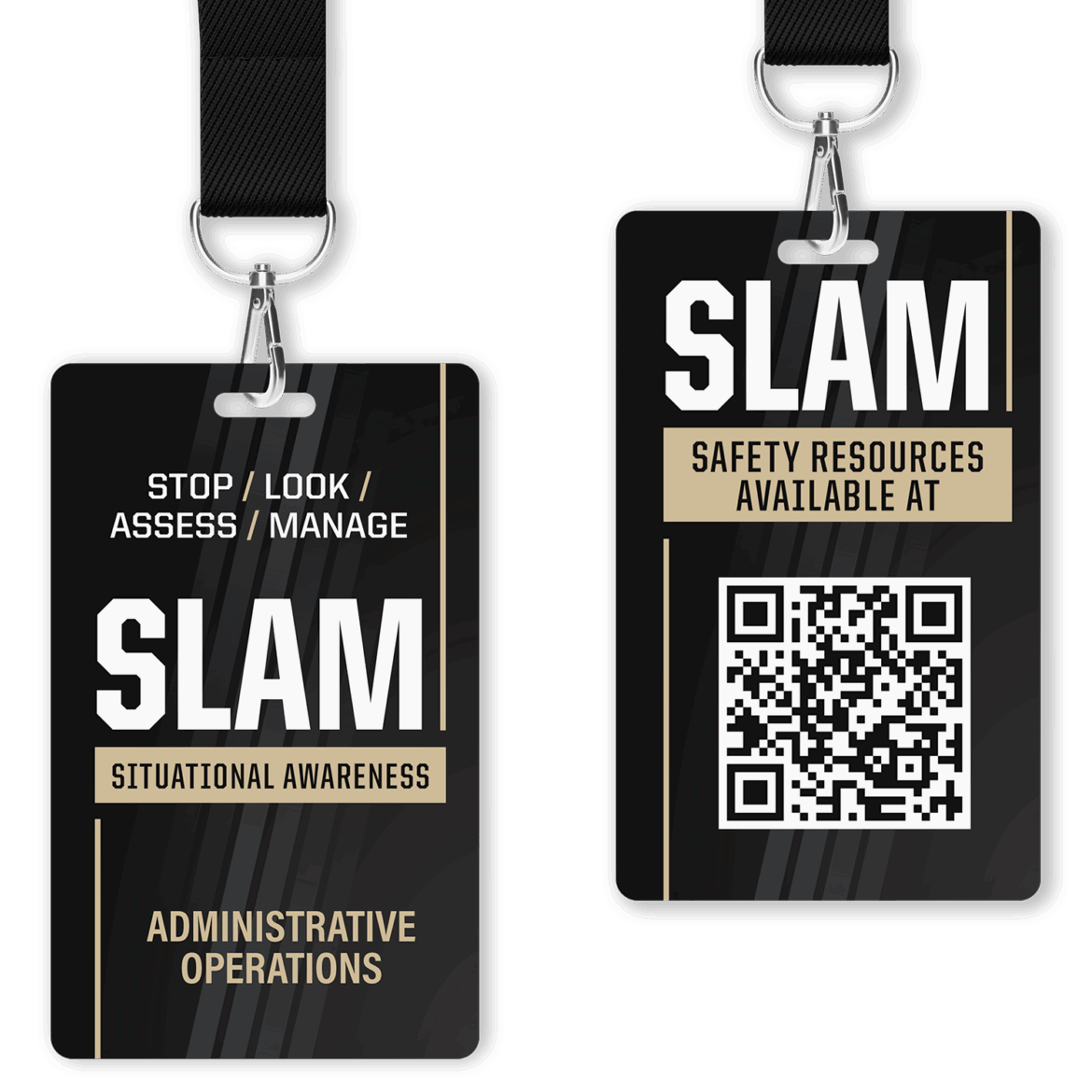
SLAM Card plastic badge mockup

Hard plastic SLAM cards that can be attached to a lanyard are available for any AO employee who would like one. With the SLAM phrase on one side and a QR code to relevant information on the AO Intranet on the other, this serves as a reminder and resource to keep safety at the forefront while on the job.

Contact Mike Silanskis at msilansk@purdue.edu to request a card. 

Purdue Logo

Purdue University
610 Purdue Mall
West Lafayette, IN 47907

765-494-4600

Systemwide options

Follow Us

  • Facebook
  • Instagram
Systemwide options

  • West Lafayette Map
  • Careers
  • Center for Healthy Living
  • Colleges and Schools
  • Directory
  • Entrepreneurship and Commercialization
  • Human Resources
  • Libraries

  • Ethics and Compliance
  • Events
  • Give
  • Lost and Found
  • Office of Engagement
  • President
  • Tuition Calculator

  • BoilerConnect
  • Brightspace
  • Current Students
  • Faculty and Staff
  • myPurdue
  • Office 365
  • OneCampus Portal
  • Outlook

  • Annual Security Report
  • Construction
  • Emergency
  • Information Technology
  • Marketing and Communications
  • Purdue News
  • Purdue Hotline
  • Timely Warnings

Last modified: March 19, 2026

Copyright © 2026 Purdue University. All Rights Reserved. Trademark Statement.
Accessibility | EA/EO University | Integrity Statement | Free Expression | College Scorecard (ed.gov) | Privacy Policy | Contact Us