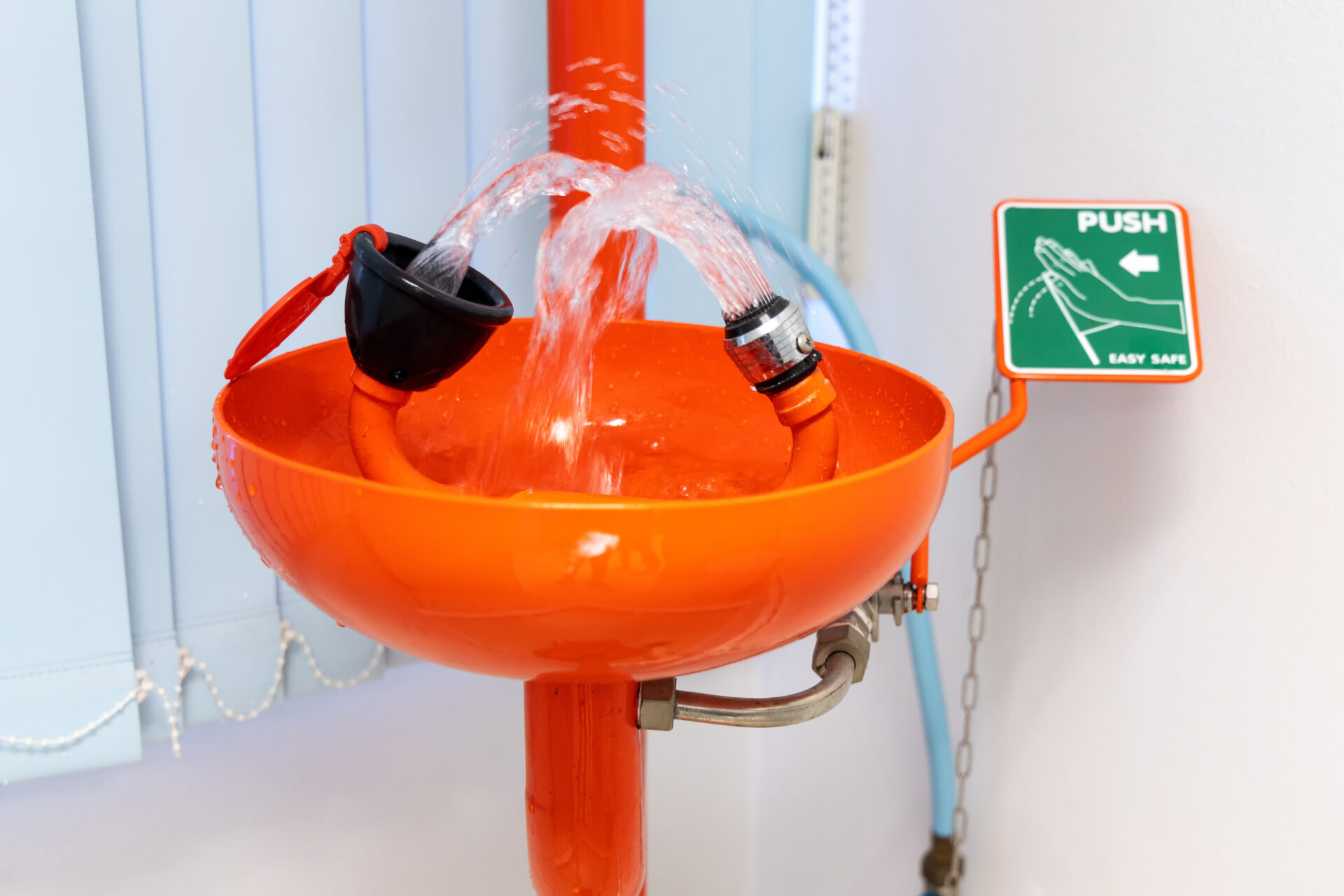
Eyewashes and Safety Showers
Shortcuts:
This resource provides information to employees and students whose laboratories, rooms or hallways contain eyewash units or safety showers. Purdue University has more than 1,500 units, and units are being added as construction proceeds on the campus. After reading through the following sections, you will have a better understanding of how your unit works and possible solutions to any problems that you may come across.
Eyewashes

To maintain your eyewash, there are just a few simple tasks:
Flush your eyewash weekly:
- Direct water into the floor drain if one is available, use a plastic bag to catch the water if your drain pipe does not extend to the floor drain or connect directly to an outgoing pipe.
- Protect surroundings from over spray, ensure electrical equipment is kept dry.
- When the water runs clear, you are finished.
Using your eyewash:
- If something gets into your eyes, get to the nearest eyewash station as quickly and safely as possible.
- Turn the eyewash on and use your hands to keep your eyes open.
- Have someone call 911 while you are flushing.
- Flush eyes thoroughly for at least 15 minutes and seek professional medical attention.
Safety Showers
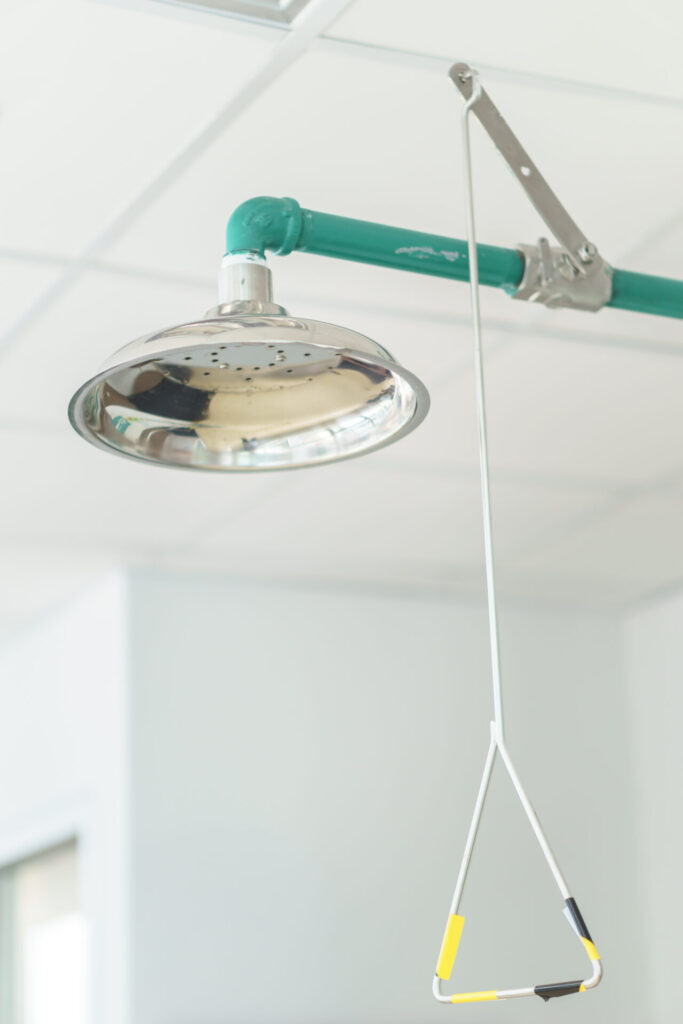
Things to keep in mind when using a safety shower:
- Know exactly where the shower’s water shut-off valve is located.
- Avoid placing any electrical equipment near the unit.
- If your clothing is contaminated with chemicals, remove them before getting under the shower. Chemicals will stay on the body longer if clothing is not removed.
- Continue under the shower for at least 15 minutes before seeking medical attention.
Troubleshooting
During the summer an eyewash/safety shower crew from Environmental Health and Safety (EHS) examines over 1,500 units on campus making repairs and adjustments as needed. In the meantime, here are some solutions to problems that you might encounter with your eyewash or safety shower units.
| Problem | Solution |
|---|---|
| 1. I can’t get to the shower. | 1. Keep pathway to shower open. |
| 2. Eyewash basin is full. | 2. Remove items from eyewash basin. |
| 3. Electrical equipment is stored near unit. | 3. Relocate all electrical equipment and components. |
| 4. Eyewash spray is erratic. | 4. Fill out Form 18-A. |
| 5. Eyewash/ safety shower is leaking. | 5. Fill out Form 18-A. |
| 6. Eyewash water is discolored. | 6. Flush eyewash until water runs clear. |
| 7. Eyewash/ safety shower is needed. | 7. Contact the Safety Section at EHS. |