Skip to content
Purdue University Home Environmental Health and Safety
  • Home
  • Safety
    • Employee Safety
      • Medical Facilities
      • Report an Injury
      • Report a Near Miss
      • Report a Safety Concern
      • Return to Work
    • Personal Safety
      • Animal Bite and Scratch Exposure
      • Bloodborne Pathogens
      • Ergonomics
      • Food Safety
      • Minors in Labs and Other Hazardous Areas
      • Personal Protective Equipment
      • Pregnancy and Radiation
      • Presidential Safety Award
      • Situational Awareness
    • Building Safety
      • Asbestos Management Program
      • Excavation Safety
      • Indoor Air Quality
      • Indoor Water Quality
      • Lead Testing of Paint
      • Refrigerant Compliance Program
      • Silica
      • Slips, Trips and Falls
    • Lab and Equipment Safety
      • Autoclave Testing
      • Biosafety Cabinets and Clean Benches
      • Chemical Fume Hoods
      • Confined Space
      • Control of Hazardous Energy
      • Electrical Safety
      • Eyewashes and Safety Showers
      • Hazard Clearance and Declaration
      • Laser Safety
      • Mercury Thermometers
      • Mobile Elevating Work Platforms
      • Personal Protective Equipment
      • Researcher’s Guide
      • Scanning Electron Microscope
      • X-Ray Machines
  • Hazardous Waste and Materials 
    • Hazardous Materials
      • Biological Materials
      • Chemical Hygiene Plan
      • Chemical Materials
      • Controlled Substances
      • Hazard Communication
      • Laboratory Decommissioning
      • Laboratory Moves
      • Shipping Hazardous Materials
      • Standard Operating Procedures
      • Radioactive Materials
      • Worker Protection Standard
    • Hazardous Waste
      • Battery Disposal
      • Biological Waste
      • Chemical Waste Storage
      • Empty Container Disposal
      • Hazardous Waste Disposal
      • Household Hazardous Waste and E-Waste
      • HPLC Waste
      • Radioactive Waste
      • Universal Waste
      • Unknown Chemicals
      • Waste Containers
      • Waste Minimization
    • Spills
      • Blood Spills
      • Chemical Spills
      • Mercury Spills
      • Radioactive Materials Spills
  • ISP
    • ISP Certified Programs
    • Safety Committees
  • Compliance Programs
  • Environmental Programs
    • ECAD
    • Safe and Sustainable Labs Program 
  • About
    • Environmental Health
    • Environmental Safety Services
    • Hazardous Materials Management 
    • Industrial Hygiene
    • Occupational Safety
    • Radiation and Laser Safety
Environmental Health and Safety
  • Home
  • Safety
    • Employee Safety
      • Medical Facilities
      • Report an Injury
      • Report a Near Miss
      • Report a Safety Concern
      • Return to Work
    • Personal Safety
      • Animal Bite and Scratch Exposure
      • Bloodborne Pathogens
      • Ergonomics
      • Food Safety
      • Minors in Labs and Other Hazardous Areas
      • Personal Protective Equipment
      • Pregnancy and Radiation
      • Presidential Safety Award
      • Situational Awareness
    • Building Safety
      • Asbestos Management Program
      • Excavation Safety
      • Indoor Air Quality
      • Indoor Water Quality
      • Lead Testing of Paint
      • Refrigerant Compliance Program
      • Silica
      • Slips, Trips and Falls
    • Lab and Equipment Safety
      • Autoclave Testing
      • Biosafety Cabinets and Clean Benches
      • Chemical Fume Hoods
      • Confined Space
      • Control of Hazardous Energy
      • Electrical Safety
      • Eyewashes and Safety Showers
      • Hazard Clearance and Declaration
      • Laser Safety
      • Mercury Thermometers
      • Mobile Elevating Work Platforms
      • Personal Protective Equipment
      • Researcher’s Guide
      • Scanning Electron Microscope
      • X-Ray Machines
  • Hazardous Waste and Materials 
    • Hazardous Materials
      • Biological Materials
      • Chemical Hygiene Plan
      • Chemical Materials
      • Controlled Substances
      • Hazard Communication
      • Laboratory Decommissioning
      • Laboratory Moves
      • Shipping Hazardous Materials
      • Standard Operating Procedures
      • Radioactive Materials
      • Worker Protection Standard
    • Hazardous Waste
      • Battery Disposal
      • Biological Waste
      • Chemical Waste Storage
      • Empty Container Disposal
      • Hazardous Waste Disposal
      • Household Hazardous Waste and E-Waste
      • HPLC Waste
      • Radioactive Waste
      • Universal Waste
      • Unknown Chemicals
      • Waste Containers
      • Waste Minimization
    • Spills
      • Blood Spills
      • Chemical Spills
      • Mercury Spills
      • Radioactive Materials Spills
  • ISP
    • ISP Certified Programs
    • Safety Committees
  • Compliance Programs
  • Environmental Programs
    • ECAD
    • Safe and Sustainable Labs Program 
  • About
    • Environmental Health
    • Environmental Safety Services
    • Hazardous Materials Management 
    • Industrial Hygiene
    • Occupational Safety
    • Radiation and Laser Safety
Helpful links
  • CURRENT STUDENTS
  • FACULTY AND STAFF
  • Give
  • Events Calendar
  • Shop
  • News

Time-Sensitive Chemicals 

Shortcuts:
  • Peroxide Forming Solvents
  • Compressed Gas Cylinders
  • References

Many chemicals have a shelf-life and can become more hazardous as time goes on. This webpage discusses two classes of time-sensitive hazardous chemicals: peroxide forming solvents and certain compressed gas cylinders. It is extremely important that these chemicals are identified and managed properly. If any time-sensitive chemicals are found to be past the manufacturer’s expiration date, they must be submitted to Environmental Health and Safety (EHS) for hazardous waste disposal immediately.

It is important to note that the time-sensitive chemicals listed on this webpage are not comprehensive. Researchers should always review the material safety data sheets for information regarding time-sensitive chemicals and expiration dates.

Peroxide Forming Solvents

Autoxidation in common laboratory solvents can lead to unstable and potentially explosive peroxide formation. The reaction can be initiated by exposure to air, heat, light or contaminants. Most of these solvents are available with inhibitors to slow the peroxide formation. Examples of inhibitors include BHT (2,6-di-tert-butyl-4-methyl phenol) and Hydroquinone. There are three categories of peroxide formers:

Group A chemicals are those which form explosive levels of peroxides after prolonged storage, especially after exposure to air without concentration. Test these for peroxide formation before using and discard 3 months after opening. 

ButadieneDivinylacetyleneTetrafluoroethylene
ChloropreneIsopropyl etherVinylidene chloride

Group B chemicals form peroxides that are hazardous only on concentration by distillation or evaporation. Test these before distillation and discard after 12 months.

AcetalDicyclopentadieneMethyl isobutyl ketone
AcetaldehydeDiethyl ether4-Methyl-2-pentanol
Benzyl alcoholDiethylene glycol dimethyl ether2-Pentanol
2-ButanolDioxane4-Penten-1-ol
CumeneEthylene glycol dimethyl ether1-Phenylethanol
Cyclohexanol4-Heptanol2-Phenylethanol
2-cyclohexen-1-ol2-Hexanol2-Propanol
CyclohexeneMethylacetyleneTetrahydrofuran
Decahydronaphthalene3-Methyl-1-butanolTetrahydronaphthalene
DiacetyleneMethylcyclopentaneVinyl ether

Group C chemicals consists of monomers which form peroxides that can initiate explosive polymerization. Inhibited monomers should be tested before use and discarded after 12 months. Uninhibited monomers should be discarded 24 hours after opening.

Acrylic acidMethyl methacrylateVinyl chloride
AcrylonitrileStyreneVinyl pyridine
ButadieneTetrafluoroethyleneVinyladiene chloride
ChloropreneVinyl acetate 
ChlorotrifluoroethyleneVinyl acetylene

General Guidelines

  • Solvents containing inhibitors should be used whenever possible.
  • All peroxide forming solvents should be tested prior to distillation.
  • Peroxide forming solvents should be purchased in limited quantities.
  • Peroxide forming solvents should be marked with the purchase date and the date opened.
  • Peroxide forming solvents should be sealed tightly and stored away from light and heat.
  • Periodic testing should be done on opened containers and the results marked on the containers.

Testing

  • Obtain test strips for the range of 0-100 ppm peroxide.
  • Record the test results on the bottle.
  • If the test results are 100 ppm or greater, arrange for EHS disposal.

Time-Sensitive Compressed Gas Cylinders

  • Hydrogen Fluoride, Anhydrous
  • Hydrogen Bromide, Anhydrous
  • Hydrogen Sulfide, Anhydrous
  • Hydrogen Cyanide, Anhydrous
  • Hydrogen Chloride, Anhydrous

The compressed gases listed above have a shelf-life provided by the manufacturer that must be strictly followed. There have been numerous incidents involving these compounds related to storage past the expiration date. For example, Hydrogen fluoride (HF) and Hydrogen bromide (HBr) cylinders have a shelf-life of one to two years, depending on the vendor. Over time, moisture can slowly enter the cylinder, which initiates corrosion. As the corrosion continues, HF and/or HBr slowly react with the internal metal walls of the cylinder to produce Hydrogen. The walls of the cylinder weaken due to the corrosion, while at the same time the internal pressure increases due to the Hydrogen generation. Ultimately, these cylinders fail and create extremely dangerous projectiles and a toxic gas release (Figure 1).

General Guidelines

  • Acquire gases in the smallest quantity and concentration necessary.
  • Record the date the compressed gas was received. The shelf-life vendor recommendation must be strictly followed. Once a compressed gas cylinder has exceeded its expiration date, arrange disposal through EHS.
  • Routinely inspect gas cylinders for evidence of deterioration or elevated pressure.
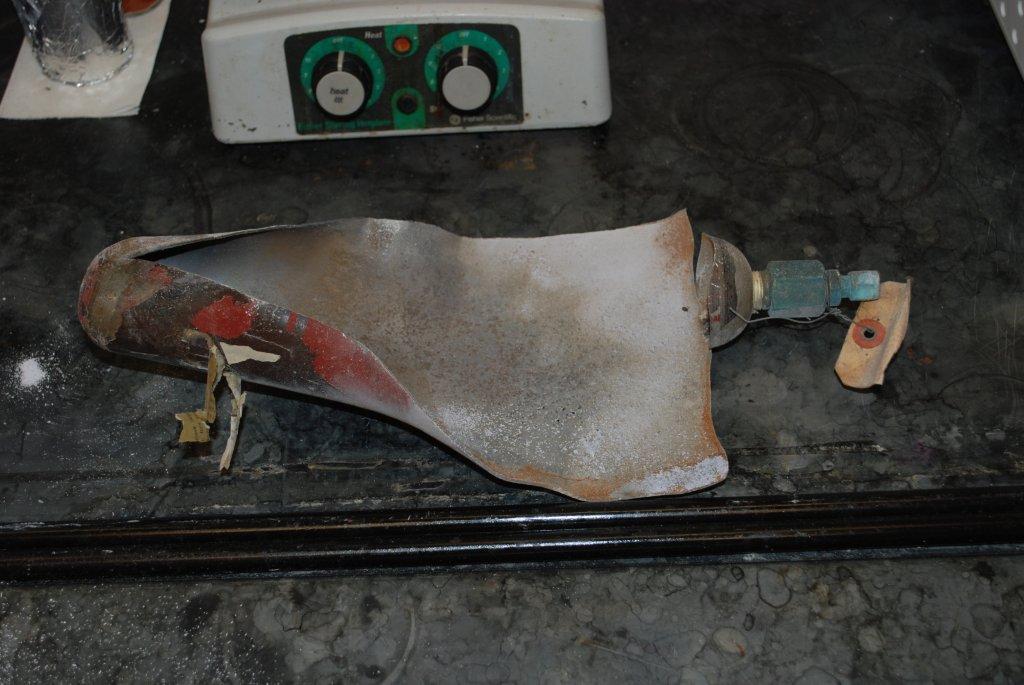
Figure 1: 30-year old HF cylinder that exploded at Purdue in 2011

References

Chemical Health and Safety, Vol. No. 3, No. 5, “Review of Safety Guidelines for Peroxidizable Organic Chemicals”, September/October 1996, pp. 28-36

Purdue Logo

Purdue University
610 Purdue Mall
West Lafayette, IN 47907

765-494-4600

Systemwide options

Follow Us

  • Facebook
  • Instagram
Systemwide options

  • West Lafayette Map
  • Careers
  • Center for Healthy Living
  • Colleges and Schools
  • Directory
  • Entrepreneurship and Commercialization
  • Human Resources
  • Libraries

  • Ethics and Compliance
  • Events
  • Give
  • Lost and Found
  • Office of Engagement
  • President
  • Tuition Calculator

  • BoilerConnect
  • Brightspace
  • Current Students
  • Faculty and Staff
  • myPurdue
  • Office 365
  • OneCampus Portal
  • Outlook

  • Annual Security Report
  • Construction
  • Emergency
  • Information Technology
  • Marketing and Communications
  • Purdue News
  • Purdue Hotline
  • Timely Warnings

Last modified: March 19, 2026

Copyright © 2026 Purdue University. All Rights Reserved. Trademark Statement.
Accessibility | EA/EO University | Integrity Statement | Free Expression | College Scorecard (ed.gov) | Privacy Policy | Contact Us