Chemical Fume Hoods
Research Safety
Proper Use, Maintenance and Guidelines
Chemical fume hoods help protect researchers by capturing and exhausting hazardous vapors, gases and particulates.
To ensure proper ventilation and safe operation:
- Keep the sash fully closed when the hood is not in use.
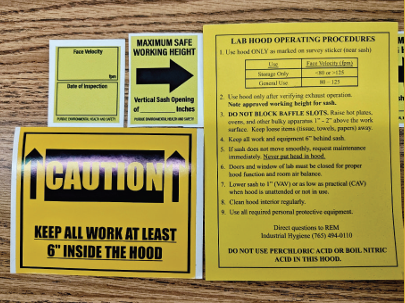
- Perform work at least six inches inside the hood.
- Keep the sash below the posted operating height.
- Verify the airflow indicator or face velocity is within the acceptable range before use.
Do not use fume hoods for:
- Highly hazardous substances
- Spray painting
- Biological or microbial materials
- Evaporation of waste chemicals
Environmental Health and Safety (EHS) provides guidance and signage on each hood and conducts annual performance testing. The yellow “Face Velocity – fpm” sticker shows certification status and contact information.
A hood may be taken out of service if:
- It fails annual testing
- It is damaged (e.g., cracked or misaligned sash, cannot close, airflow path blocked)
- It does not meet airflow requirements
- Out-of-service hoods will be marked “Do Not Use” until repaired and recertified by EHS.
Users should never:
- Block rear baffles
- Ignore airflow alarms
Report issues or concerns directly to EHS using the number listed on the yellow certification sticker.
Contact
Environmental Health and Safety
researchsafety@purdue.edu
765-494-6371