 Purdue University - Extension - Forestry and Natural Resources
Got Nature? Blog
Once the leaves have fallen and the landscape is dominated by shades of brown and gray, bright colors like red catch our attention. There are several red fruits that we may encounter in the late fall and winter here in Indiana that add some color to the landscape. These fruits are retained on trees and shrubs for a variety of reasons. Some are not as palatable to wildlife, so they are eaten later in the season. Some are more resistant to freeze damage and thus cling to branches longer than delicate fruits. There may also be an advantage to their appearance. Many of these plants have seeds dispersed by wildlife like birds, which eat the seeds and excrete them later, providing an opportunity to produce new plants away from the parent. Many birds can see much of the same color spectrum we do, plus enhanced vision in the ultra-violet bands. Brightly-colored seeds with waxy skins may reflect more ultra-violet light and be more noticeable to the birds.
What are some of those red fruits?
One family of plants accounts for several red fruit we can see in late fall and winter, the rose family. This family includes apples, plums, cherries, hawthorns, pears and others as well as the roses. In Indiana we have several hawthorns (Crataegus species) that produce a fruit resembling a tiny apple. These vary in size by species but are typically ¼ to ½ inch diameter and often held in clusters. Hawthorns are typically small trees and may have long thin thorns on the twigs.

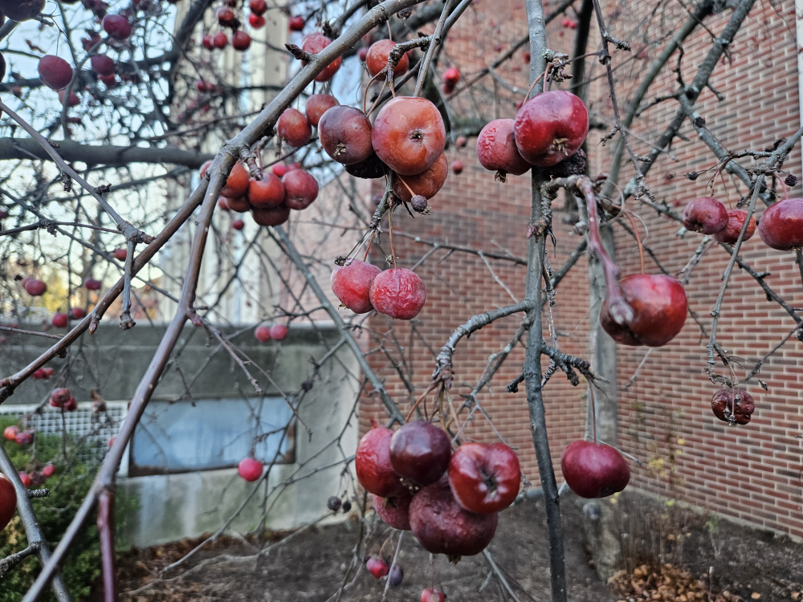
Another rose family member are the apples and crabapples with some small native trees like sweet crabapple, Malus coronaria, and several varieties of fruit-bearing apples and ornamental crabapples planted but sometimes escaping to natural areas. While our native crabapples are usually about 1-2 inches diameter and green to yellow, the domesticated apples and crabapples often have red fruit in various sizes from large apples to ½ inch diameter crabapples.

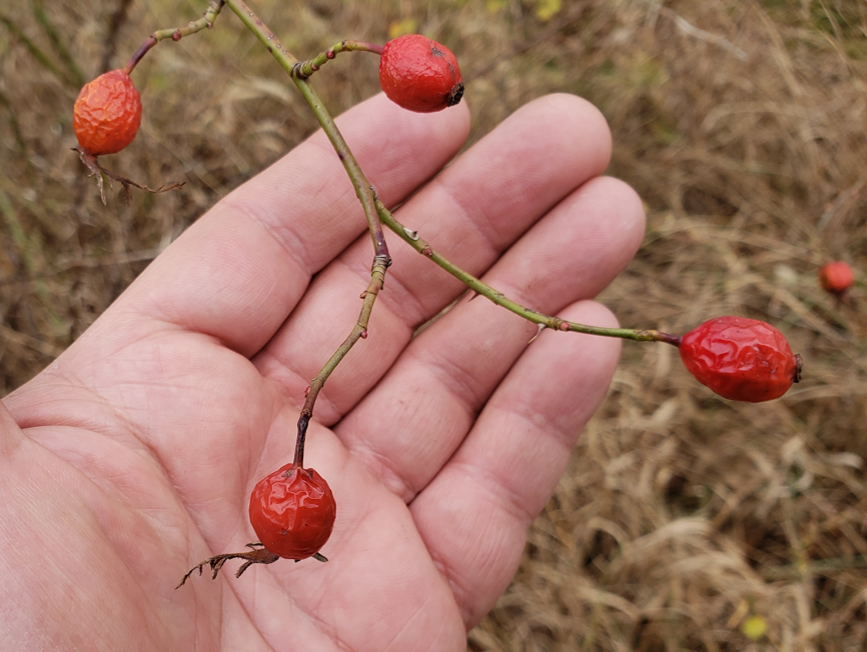
We also have several beautiful native roses in Indiana, and a particularly problematic exotic invasive rose in multiflora rose. Unfortunately, you are more likely to encounter multiflora rose with small ¼ inch clusters of red fruit. Our native roses typically have larger fruit and fewer fruit per cluster.

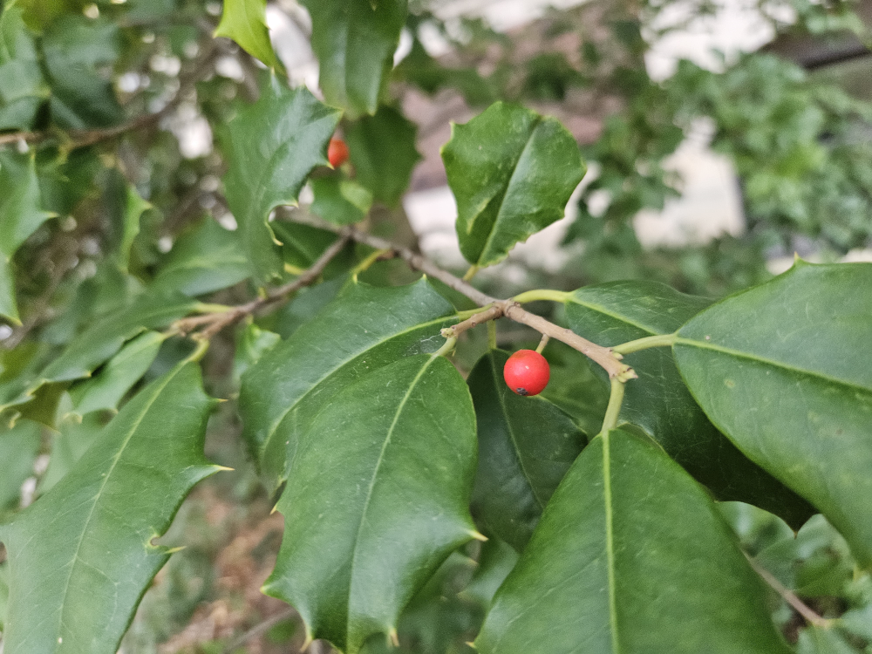
Holly is also noted for red fruit and some being evergreen as well. Our native Indiana hollies are all deciduous, losing their leaves in the fall but often retaining the red fruit on the female plants into winter. The most widespread species is winterberry, Ilex verticillate, a shrub which is seeing more use ornamentally due to its striking red fruit held past Christmas most years. American holly, an evergreen broadleaved tree, is well-known for its glossy, spiny foliage and red fruit on the female trees. Although not native to Indiana, it is spreading from plantings into natural areas. Several evergreen hollies from Europe and Asia are also common in ornamental plantings and may escape into natural areas.
Not only are these late-season showy fruit attractive, but they also provide some important nourishment for wildlife when the many other fruits are long-gone.
Resources:
Ask An Expert: Holidays in the Wild, Purdue Extension – Forestry and Natural Resources (FNR) YouTube Channel
Selecting a Real Christmas Tree, Got Nature? Blog Post, Purdue Extension – FNR
Tips on How You Can Recycle Your Christmas Tree, Got Nature? Blog Post, Purdue Extension – FNR
ID That Tree, Playlist, Purdue Extension – FNR YouTube Channel
ID That Tree: Prickly Ash, Purdue Extension – FNR YouTube Channel
A Woodland Management Moment, Playlist, Purdue Extension – FNR YouTube Channel
Shrubs and Woody Vines of Indiana and the Midwest, The Education Store, Purdue Extension Resource Center
Native Trees of the Midwest, The Education Store
Investing in Indiana Woodlands, The Education Store
Forest Improvement Handbook, The Education Store
Tree Installation: Process and Practices, The Education Store
Tree Planting Part 1: Choosing a Tree, video, The Education Store
Lenny Farlee, Extension Forester
Hardwood Tree Improvement and Regeneration Center
Purdue Department of Forestry & Natural Resources
Welcome to ID That Tree! In this episode, Purdue Extension Forester Lenny Farlee introduces us to a familiar and useful native shrub, the Blackberry. Commonly found along woodland edges, open fields and roadsides across Indiana, this hardy plant is easy to spot in summer thanks to its features. Learn how to identify Blackberry by its stems, leaves and growth pattern. Whether you’re a forager, landowner, or someone who simply enjoys exploring nature, this video offers a quick and engaging look at how to recognize Blackberry and appreciate its role in Indiana’s natural landscapes.
If you have any questions regarding wildlife, trees, forest management, wood products, natural resource planning or other natural resource topics, feel free to contact us by using our Ask an Expert web page.
Resources:
ID That Tree – Video Playlist, Purdue Extension – Forestry and Natural Resources (FNR) YouTube Channel
Purdue Arboretum Explorer
Conservation Tree Planting: Steps to Success, Purdue Extension – FNR YouTube Channel
A Woodland Management Moment, Playlist, Purdue Extension – FNR YouTube Channel
Woodland Stewardship for Landowners, Playlist, Purdue Extension – FNR YouTube Channel
Fifty Common Trees of Indiana, Purdue Extension – FNR
Indiana Invasive Species Council
Cooperative Invasive Species Management Area (CISMA)
Report Invasive, Purdue Extension
Habitat University, Episode 12 – Exploring the challenges of Invasive Species, Habitat University-Natural Resource University
Shrubs and Woody Vines of Indiana and the Midwest, Purdue University Press
Native Trees of the Midwest, Purdue University Press
Professional Forester, Indiana Forestry Woodland Owners Association
District Forester, Indiana Department of Natural Resources, 10+ acres
Find an Arborist, International Society of Arboriculture
Forest Improvement Handbook, The Education Store
Lenny Farlee, Extension Forester
Hardwood Tree Improvement and Regeneration Center
Purdue Department of Forestry & Natural Resources
Welcome to ID That Tree! In this episode, Purdue Extension Forester Lenny Farlee introduces us to multiflora, a non-native invasive shrub that has become widespread across Indiana. Once planted for practical purposes, it now creates big challenges for landowners and natural areas. Learn where you’re most likely to encounter it, why it spreads so aggressively and what makes it stand out on the landscape. Whether you’re a student, nature enthusiast or land manager, this video gives you a quick introduction to one of Indiana’s most troublesome invasive plants.
If you have any questions regarding wildlife, trees, forest management, wood products, natural resource planning or other natural resource topics, feel free to contact us by using our Ask an Expert web page.
Resources:
ID That Tree – Video Playlist, Purdue Extension – Forestry and Natural Resources (FNR) YouTube Channel
Purdue Arboretum Explorer
Conservation Tree Planting: Steps to Success, Purdue Extension – FNR YouTube Channel
A Woodland Management Moment, Playlist, Purdue Extension – FNR YouTube Channel
Woodland Stewardship for Landowners, Playlist, Purdue Extension – FNR YouTube Channel
Fifty Common Trees of Indiana, Purdue Extension – FNR
Indiana Invasive Species Council
Cooperative Invasive Species Management Area (CISMA)
Report Invasive, Purdue Extension
Habitat University, Episode 12 – Exploring the challenges of Invasive Species, Habitat University-Natural Resource University
Shrubs and Woody Vines of Indiana and the Midwest, Purdue University Press
Native Trees of the Midwest, Purdue University Press
Professional Forester, Indiana Forestry Woodland Owners Association
District Forester, Indiana Department of Natural Resources, 10+ acres
Find an Arborist, International Society of Arboriculture
Forest Improvement Handbook, The Education Store
Lenny Farlee, Extension Forester
Hardwood Tree Improvement and Regeneration Center
Purdue Department of Forestry & Natural Resources
Welcome to ID That Tree! In this episode, Purdue Extension Forester Lenny Farlee introduces us to a widespread native shrub called smooth sumac. Found in open fields, roadsides and woodland edges across Indiana, this shrub is easily identified by its recognizable stems and leaves. Watch the video to learn about these characteristics, along with the differences in smooth sumac through the different seasons. For example, in summer, this shrub has flowers that turn into fruit heads! Whether you’re a student, naturalist or simply curious about native plants, this video offers a quick and helpful guide to identifying smooth sumac in the wild.
If you have any questions regarding wildlife, trees, forest management, wood products, natural resource planning or other natural resource topics, feel free to contact us by using our Ask an Expert web page.
Resources:
ID That Tree – Video Playlist, Purdue Extension – Forestry and Natural Resources (FNR) YouTube Channel
Purdue Arboretum Explorer
Conservation Tree Planting: Steps to Success, Purdue Extension – FNR YouTube Channel
A Woodland Management Moment, Playlist, Purdue Extension – FNR YouTube Channel
Woodland Stewardship for Landowners, Playlist, Purdue Extension – FNR YouTube Channel
Fifty Common Trees of Indiana, Purdue Extension – FNR
Indiana Invasive Species Council
Cooperative Invasive Species Management Area (CISMA)
Report Invasive, Purdue Extension
Habitat University, Episode 12 – Exploring the challenges of Invasive Species, Habitat University-Natural Resource University
Shrubs and Woody Vines of Indiana and the Midwest, Purdue University Press
Native Trees of the Midwest, Purdue University Press
Professional Forester, Indiana Forestry Woodland Owners Association
District Forester, Indiana Department of Natural Resources, 10+ acres
Find an Arborist, International Society of Arboriculture
Forest Improvement Handbook, The Education Store
Lenny Farlee, Extension Forester
Hardwood Tree Improvement and Regeneration Center
Purdue Department of Forestry & Natural Resources
Purdue Landscape Report: Spring is finally here! Everywhere you look, one can find some spring color around. Some of the first plants to peek out of the ground are spring-flowering bulbs like crocus, daffodil and tulip. But there are some beautiful spring time shrubs that are Indiana native plants you can add to your yard to be the first in the neighborhood with spring interest. Below, you’ll find a top 10 list of spring-flowering shrubs (in order of flower appearance).
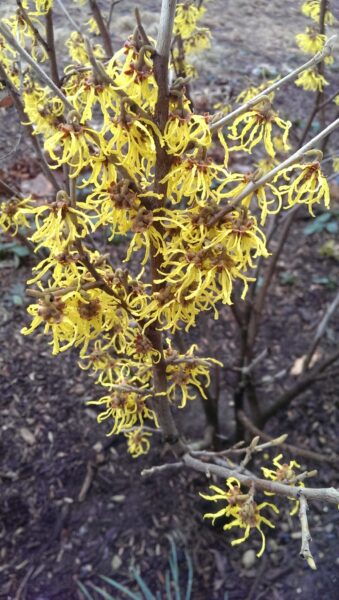
Figure 1. Witch-hazel is one of the first shrubs to bloom in the spring. Though similar to forsythia, it typically flowers a couple of weeks earlier.
Witch-hazel (Hamamelis x intermedia) Perhaps even earlier-flowering than Forsythia, is ‘Arnold Promise’ witch-hazel. This shrub can flower starting in late winter (unless we have unusually cold winter weather like polar vortices) and keep going all the way into spring. Bright flowers are yellow with red tinges, though there are red-flowering cultivars available. Witch-hazel can be grown as a shrub or a small tree and offers some yellow/orange/red fall color. It’s native!
Forsythia (Forsythia x intermedia) Forsythia is the traditional first-flowering plant in the spring. Hardy plants, their bright yellow blooms can catch your eye anywhere. There are new cultivars out.
Quince (Chaenomeles speciosa) In mid spring, you’ll find these shrubs covered with flowers. There are several cultivars and you may see white-flowering plants (‘Jet Trails’), red-flowering plants (‘Texas Scarlet’) or even large, double, fluffy, peach-pink flowers (‘Cameo’). After the show, this plant tends to fade into the background, but it’s a great native addition.
Korean Spice Viburnum (Viburnum carlesii) Korean spice viburnum blooms in late April with blooms that are pink/red while they are still in buds, opening to white flowers that are each a half inch wide. The flowers are presented on dense 2-3 inch groupings called cymes (semi-snowball) and very pleasantly fragrant. And luck of all luck, they have nice, clean leaves in the summer and great fall color. Can’t beat that in a multi-season shrub.
Flowering Almond (Prunus glandulosa) Here’s a small plant that grows well in full sun and its lovely. Flowering almond, particularly the cultivar ‘Rosea Plena’ has tons of pink flowers (double—lots of petals). Some cultivars have white flowers, and all present in mid to late spring.
Shadblow Serviceberry (Amelanchier canadensis) A multi-season-interest plant, serviceberry offers white flowers on 2-3 inch long inflorescences in April, which leads to sweet, juicy black fruit in the summer. Some plants can also have decent fall color (yellow with hints of orange and red). Serviceberry grows by suckering so it’s perhaps not a great choice for a small yard.

Figure 2. Lilac is most commonly a beautiful shade of purple.
Lilac (Syringa vulgaris). The beautiful purple flowers (many, many colors are available, but purple is most common) are wonderfully fragrant in most of spring. They may only bloom for 2 weeks, but man those 2 weeks are worth having a lilac in your garden! Takes me straight back to my childhood.
Black Chokeberry (Aronia melanocarpa) An adaptable species, this plant is known for long-lasting black fruit in the fall and wine-red fall color. Spring flowers are white, presented in groups of 9-20 resulting in 1 to 1.5 inch groupings covering the plant in May. This species can spread and colonize large areas, which makes for a striking mass effect in the spring. Small plant (under 5 feet) thrives in part shade to full sun.
Mock Orange (Philadelphus coronarius) Fans of mock orange are serious about their use in the landscape. These plants can take care of themselves and they’ll reward you every May/June with white, fragrant flowers that are 1 to 1.5 inches wide.
Siberian Peashrub (Caragana arborescens) Granted, this is a great shrub for harsh sites (poor soils, drought, alkaline soil, cold, wind), but it’s unusual and doesn’t take much care. Leaves are pea-green and emerge with the yellow flowers in May. Later in the summer the fruit of the flowers, a narrow pod, makes a popping sound when it opens.
Remember, plants with more than one season of interest are like hitting the landscape jackpot. So, if you’ve chosen one of these plants because you love the flowers in the spring, just be aware that it may need to fade into the background for the rest of the year. Having said that, plants that usher in the new season are anticipated, loved and enjoyed. Make sure you’ve got some of these in your neighborhood for a dose of early spring joy.
This was adapted from Horticulture Newsletter – Cheryl Boyer – Kansas Extension. All plants listed in this article are native species of Indiana.
Read the original article posted in the Purdue Landscape Report April 2025 Newsletter: Top 10 Spring Flowering Shrubs.
Subscribe and receive the newsletter: Purdue Landscape Report Newsletter.
Resources:
Spring Tree Preparations, Purdue Extension Forestry and Natural Resources (FNR) Got Nature? Blog
Celebrate Pollinator Week with Flowers of June Tour, Got Nature? Blog, Purdue Extension – FNR
Tracking the Bloom, Got Nature? Blog, Purdue Extension – FNR
Indiana’s Native Orchids, Indiana Forestry & Woodlands Association (IFWOA) Webinar
Wildflowers and Ferns of Indiana Forests: A Field Guide, Google Books
ID That Tree Spring Bloom Edition: Bladdernut, Got Nature? Blog, Purdue Extension – FNR
ID That Tree, Purdue Extension-FNR YouTube playlist
Alternative Options for Invasive Landscape Plants (pdf), Purdue Extension – Purdue Horticulture and Landscape Architecture
Landscape Uses of Native Plants, Indiana Native Plant Society
Find an Arborist video, Trees are Good-International Society of Arboriculture (ISA)
Tree Installation: Process and Practices, The Education Store, Purdue Extension resource center
Tree Planting Part 1: Choosing a Tree video, Purdue Extension
Tree Wound and Healing, Got Nature? Blog, Purdue Extension – FNR
Shrubs and Woody Vines of Indiana and the Midwest, Purdue University Press
Ask an Expert: Tree Selection and Planting, Purdue Extension-FNR YouTube playlist
Recommended Indiana-native Plants for Attracting Pollinators (pdf), Purdue Extension – Entomology
Gardening for Pollinators, Purdue Garden Articles
Subscribe Purdue Extension-FNR YouTube Channel
Amanda Bailey, Extension Educator – Ag and Natural Resources
Purdue Extension – Warrick County
Trees offer many functional and aesthetic benefits, but one of the most common is shade. Because of this, one of the most important aspects of tree selection and planting is placement. Improper placement of trees can diminish the value of the tree on the site. The tree can actually become a liability if it conflicts with infrastructure or just does not providing any useful function at all. It’s important to consider and energy efficient design to obtain shade where it’s needed most such as south or west facing structures.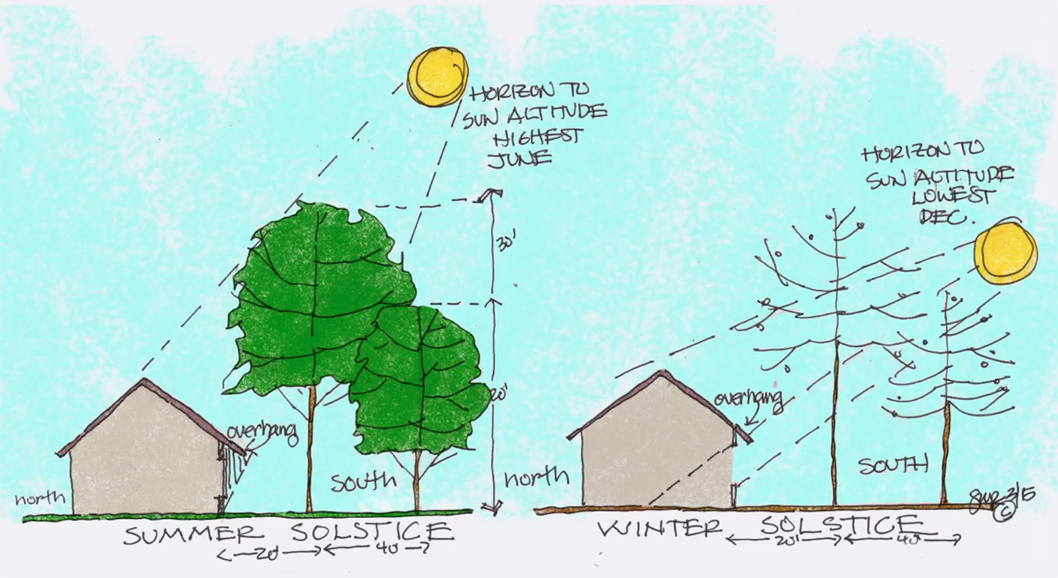
In this hemisphere, the sun is in the south and the source of cold weather is in the north. Whenever possible, place openings for sunlight and radiant heat primarily on the southern exposure, then on the west and east. For energy efficiency in winter, use the low arc of the sun to capture the maximum amount of warmth through east-, west-, and south-facing windows. Windows with a northern exposure are a source of cool air from prevailing winds during the hot months. So, give the north minimum exposure and maximum natural protection in the winter.
When selecting trees for energy efficiency, don’t plant evergreen trees near the house on southern exposures. Trees may provide some shade and screening but will also block out the warming effects of the sun during winter months. When choosing trees for shade and solar gain, choose larger, deciduous-canopy trees, which provide an advantage year-round. This means shade in the summer, blocking the sun’s energy. In the winter, after leaves have dropped, the sun’s energy can pass through the tree and into the window.
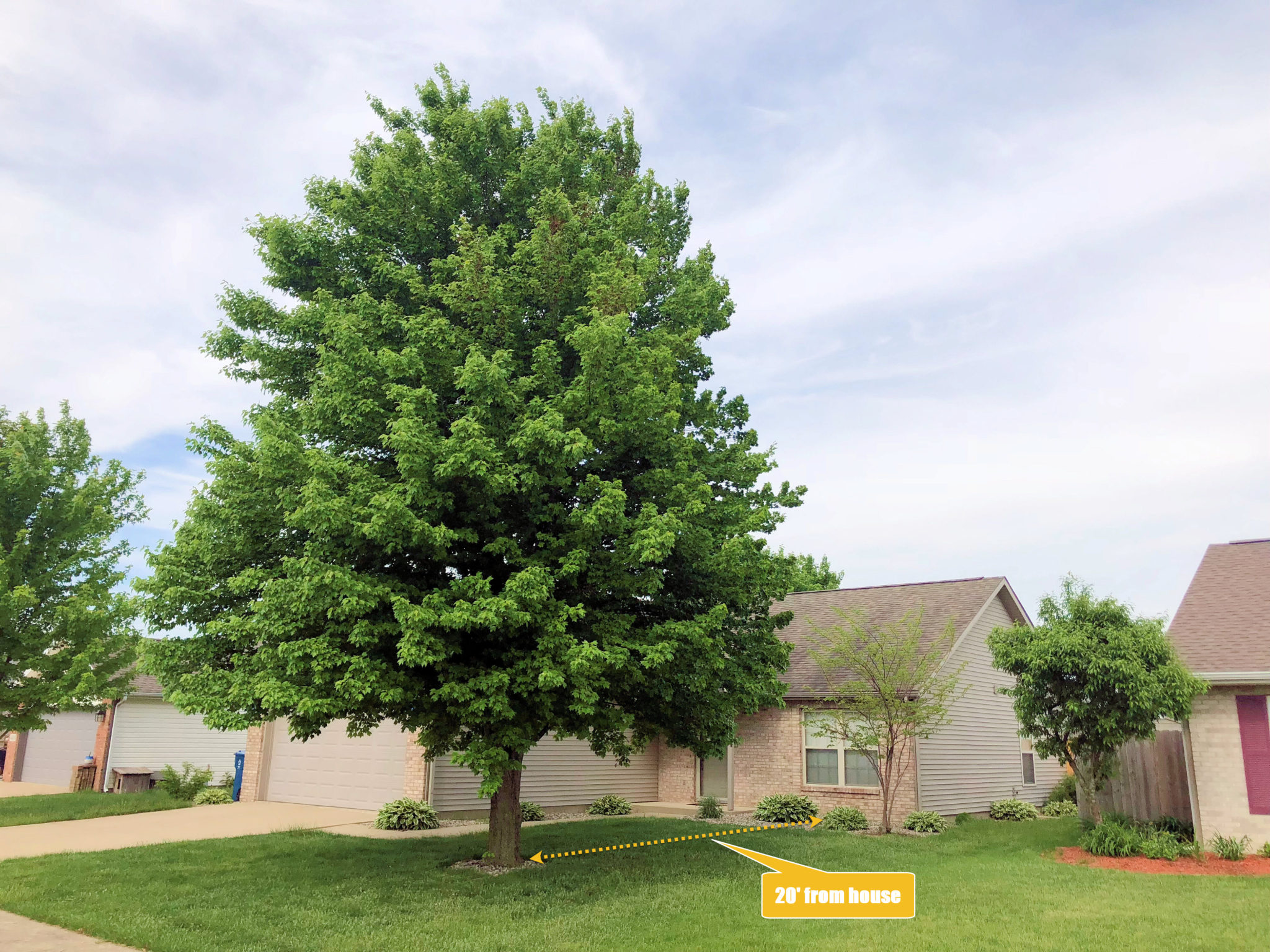
Figure 1. Protection from the summer sun.
Select good quality trees from a reputable source that are suitable for your location. The old adage, “you get what you pay for” goes for nursery stock as well. Correct placement is critical for an energy-efficient design and reduced maintenance as the tree grows and matures. Be certain the mature height and spread fit the location before purchase and planting the tree. This allows the tree freedom to spread into the design space naturally without excessive pruning needed to prevent conflicts with the home. However, the tree still must be close enough to the house for the canopy to provide shade. A good rule of thumb to begin placing the tree at least 20 feet from the house. For larger shade trees, you may need to plant as far as 40 feet from the house to insure room for growth (Figure 1).
Trees provide many benefits besides shade which includes cleaner air and increased property values. These ecosystem services are the reason why we plant trees, besides beautifying our landscape.
The functional benefits of shading help make homes energy-efficient by creating a cooling effect during the hot summer months and by allowing passive solar gain during cold winter months. However, proper selection and placement is critical to make the tree work for your site. Choose wisely, plant properly.
Full article from Purdue Landscape Report.
Resources:
Tree Selection for the “Un-natural” Environment, The Education Store – Purdue Extension resource center
Planting Your Tree Part 1: Choosing Your Tree (Youtube video), Purdue Extension-FNR
Tree Installation: Process and Practices , The Education Store
Tree Planting Part 2: Planting a Tree (Youtube video), Purdue Extension-FNR
Top 5 List for Tree Selection and Planting, Got Nature?, Purdue Extension-FNR
Lindsey Purcell, Urban Forestry Specialist
Purdue University, Department of Forestry and Natural Resources

Recent Posts
- Restoring Roots to Save the Salamanders, USDA – Natural Resources Conservation Service
Posted: May 6, 2026 in Aquaculture/Fish, Forestry, Wildlife - Spring Storms Are Coming: How to Reduce Tree Damage and Risk
Posted: May 1, 2026 in How To, Urban Forestry, Wildlife, Woodlands - Cryptocline Leaf Spot (Anthracnose) of Elm, Purdue Landscape Report
Posted: April 30, 2026 in Disease, Forestry, Woodlands - Mechanical Damage to Trees: Mowing and Maintenance Equipment
Posted: April 24, 2026 in Forestry, Forests and Street Trees, Urban Forestry - A Woodland Management Moment: Growing Quality Black Walnut in Openings
Posted: April 20, 2026 in Urban Forestry, Woodland Management Moment, Woodlands - Spring Into Bloom With ID That Tree
Posted: in Forests and Street Trees, Urban Forestry, Woodlands - Question: Have Whippoorwill Birds Declined in Numbers?
Posted: in Ask the Expert, Wildlife - Invasive Species in Eastern Forests, Webinar Series
Posted: in Invasive Insects, Invasive Plant Species, Urban Forestry, Wildlife - Tree Risk Management: What Every Property Owner Needs to Know
Posted: April 17, 2026 in Forests and Street Trees, Wildlife, Woodlands - As the spring wildflowers emerge, so do the woodland invaders
Posted: April 16, 2026 in Forestry, Forests and Street Trees, Invasive Plant Species
Archives
Categories
- Alert
- Aquaculture/Fish
- Aquatic/Aquaculture Resources
- Ask the Expert
- Christmas Trees
- Community Development
- Disease
- Drought
- Forestry
- Forests and Street Trees
- Gardening
- Got Nature for Kids
- Great Lakes
- How To
- Invasive Animal Species
- Invasive Insects
- Invasive Plant Species
- Land Use
- Natural Resource Planning
- Nature of Teaching
- Plants
- Podcasts
- Ponds
- Publication
- Safety
- Spiders
- Timber Marketing
- Urban Forestry
- Webinar
- Wildlife
- Wood Products/Manufacturing
- Woodland Management Moment
- Woodlands