 Purdue University - Extension - Forestry and Natural Resources
Got Nature? Blog
On this edition of ID That Tree, Purdue Extension forester Lenny Farlee introduces you to the willow family, especially the black willow. The black willow is the only tree sized willow in Indiana. This species features a single scale covering the bud and thin flexible twigs, and is often found near wetland sites.
If you have any questions regarding wildlife, trees, forest management, wood products, natural resource planning or other natural resource topics, feel free to contact us by using our Ask an Expert web page.
Resources:
ID That Tree, Playlist, Purdue Extension – Forestry and Natural Resources YouTube Channel
A Woodland Management Moment, Playlist, Purdue Extension – FNR YouTube Channel
Native Trees of the Midwest, The Education Store
Investing in Indiana Woodlands, The Education Store
Forest Improvement Handbook, The Education Store
Lenny Farlee, Sustaining Hardwood Extension Specialist
Purdue University Department of Forestry and Natural Resources
This week on ID That Tree, Purdue Extension forester Lenny Farlee introduces you to another Indiana conifer, one that is found natively on dry hillsides in two southern counties near the Ohio River, the Virginia Pine. The Virginia pine is easily identified by its needle clusters that feature twisted two-needle groupings and its cones, which feature spikes at the end of the scales. Learn more about this tree often used for reforestation inside.
If you have any questions regarding wildlife, trees, forest management, wood products, natural resource planning or other natural resource topics, feel free to contact us by using our Ask an Expert web page.
Resources:
ID That Tree, Playlist, Purdue Extension – Forestry and Natural Resources YouTube Channel
A Woodland Management Moment, Playlist, Purdue Extension – FNR YouTube Channel
Shrubs and Woody Vines of Indiana and the Midwest, The Education Store, Purdue Extension Resource Center
Native Trees of the Midwest, The Education Store
Investing in Indiana Woodlands, The Education Store
Forest Improvement Handbook, The Education Store
Virginia Pine, Native Trees of IN River Walk, Purdue University Fort Wayne
Lenny Farlee, Sustaining Hardwood Extension Specialist
Purdue University Department of Forestry and Natural Resources
In this episode of ID That Tree, Purdue Extension forester Lenny Farlee introduces you to a native Indiana conifer typically found in sandy soils near Lake Michigan, the Jack pine. This tree is differentiated from other Indiana conifers by its short two-needle clusters often found in a V formation, as well its closed cones, and open crown.
If you have any questions regarding wildlife, trees, forest management, wood products, natural resource planning or other natural resource topics, feel free to contact us by using our Ask an Expert web page.
Resources:
ID That Tree, Playlist, Purdue Extension – Forestry and Natural Resources YouTube Channel
A Woodland Management Moment, Playlist, Purdue Extension – FNR YouTube Channel
Shrubs and Woody Vines of Indiana and the Midwest, The Education Store, Purdue Extension Resource Center
Native Trees of the Midwest, The Education Store
Investing in Indiana Woodlands, The Education Store
Forest Improvement Handbook, The Education Store
Jack Pine, Native Trees of Indiana River Walk, Fort Wayne, Purdue University
Lenny Farlee, Sustaining Hardwood Extension Specialist
Purdue University Department of Forestry and Natural Resources
In this edition of ID That Tree, meet a rarely found native tree that is closely related to the black walnut, the butternut. The butternut has been plagued by fungal disease, but can be identified by large lemon-shaped nuts, very sharp ridges on the nut inside the husk, a “hairy eyebrow” above the leaf scar/below the buds, and long compound leaves with a terminal leaflet intact.
If you have any questions regarding wildlife, trees, forest management, wood products, natural resource planning or other natural resource topics, feel free to contact us by using our Ask an Expert web page.
Resources:
ID That Tree, Playlist, Purdue Extension – Forestry and Natural Resources YouTube Channel
A Woodland Management Moment, Playlist, Purdue Extension – FNR YouTube Channel
Shrubs and Woody Vines of Indiana and the Midwest, The Education Store, Purdue Extension Resource Center
Native Trees of the Midwest, The Education Store
Investing in Indiana Woodlands, The Education Store
Forest Improvement Handbook, The Education Store
Butternut, Native Trees of Indiana River Walk, Purdue Fort Wayne
Indiana Walnut Council, Industry Representatives include 45 states and 3 foreign countries
Lenny Farlee, Sustaining Hardwood Extension Specialist
Purdue University Department of Forestry and Natural Resources
In this edition of ID That Tree, meet a non-native tree originally planted for fence rows, the Osage Orange, also known as a hedge apple. This tree is known by its gray bark with orange undertones and its large yellowish fruit, which has a milky center.
If you have any questions regarding wildlife, trees, forest management, wood products, natural resource planning or other natural resource topics, feel free to contact us by using our Ask an Expert web page.
Resources:
ID That Tree, Playlist, Purdue Extension – Forestry and Natural Resources YouTube Channel
A Woodland Management Moment, Playlist, Purdue Extension – FNR YouTube Channel
Shrubs and Woody Vines of Indiana and the Midwest, The Education Store, Purdue Extension Resource Center
Native Trees of the Midwest, The Education Store
Investing in Indiana Woodlands, The Education Store
Forest Improvement Handbook, The Education Store
Pin Oak, Native Trees of Indiana River Walk, Purdue Fort Wayne
Lenny Farlee, Sustaining Hardwood Extension Specialist
Purdue University Department of Forestry and Natural Resources
On this edition of ID That Tree, meet the black locust, which is recognizable by its small, rounded pinnate leaflets; gray bark with rough, long running ridges with orange undertones; and paired thorns where the buds and leaves originate.
If you have any questions regarding wildlife, trees, forest management, wood products, natural resource planning or other natural resource topics, feel free to contact us by using our Ask an Expert web page.
Resources:
ID That Tree, Playlist, Purdue Extension – Forestry and Natural Resources YouTube Channel
A Woodland Management Moment, Playlist, Purdue Extension – FNR YouTube Channel
Shrubs and Woody Vines of Indiana and the Midwest, The Education Store, Purdue Extension Resource Center
Native Trees of the Midwest, The Education Store
Investing in Indiana Woodlands, The Education Store
Forest Improvement Handbook, The Education Store
Black Locust, Native Trees of Indiana River Walk, Purdue Fort Wayne
Lenny Farlee, Sustaining Hardwood Extension Specialist
Purdue University Department of Forestry and Natural Resources
On this edition of ID That Tree, Purdue Extension forester Lenny Farlee shows you the differences between two non-native species commonly found in Indiana in decorative capacities, and especially during the holiday season, firs and spruces. Learn the differences in needles, cones and twigs so you can tell these species apart.
If you have any questions regarding wildlife, trees, forest management, wood products, natural resource planning or other natural resource topics, feel free to contact us by using our Ask an Expert web page.
Resources:
ID That Tree, Playlist, Purdue Extension – Forestry and Natural Resources YouTube Channel
A Woodland Management Moment, Playlist, Purdue Extension – FNR YouTube Channel
Shrubs and Woody Vines of Indiana and the Midwest, The Education Store, Purdue Extension Resource Center
Native Trees of the Midwest, The Education Store
Investing in Indiana Woodlands, The Education Store
Forest Improvement Handbook, The Education Store
Pin Oak, Native Trees of Indiana River Walk, Purdue Fort Wayne
Lenny Farlee, Sustaining Hardwood Extension Specialist
Purdue University Department of Forestry and Natural Resources
It’s not holly, but it will help you keep holiday cheer long into the winter, meet Winterberry. On this edition of ID That Tree, Purdue Extension forester Lenny Farlee explains the difference between winterberry and holly, as well as how to identify this deciduous plant.
If you have any questions regarding wildlife, trees, forest management, wood products, natural resource planning or other natural resource topics, feel free to contact us by using our Ask an Expert web page.
Resources:
ID That Tree, Playlist, Purdue Extension – Forestry and Natural Resources YouTube Channel
A Woodland Management Moment, Playlist, Purdue Extension – FNR YouTube Channel
Shrubs and Woody Vines of Indiana and the Midwest, The Education Store, Purdue Extension Resource Center
Native Trees of the Midwest, The Education Store
Investing in Indiana Woodlands, The Education Store
Forest Improvement Handbook, The Education Store
Pin Oak, Native Trees of Indiana River Walk, Purdue Fort Wayne
Lenny Farlee, Sustaining Hardwood Extension Specialist
Purdue University Department of Forestry and Natural Resources
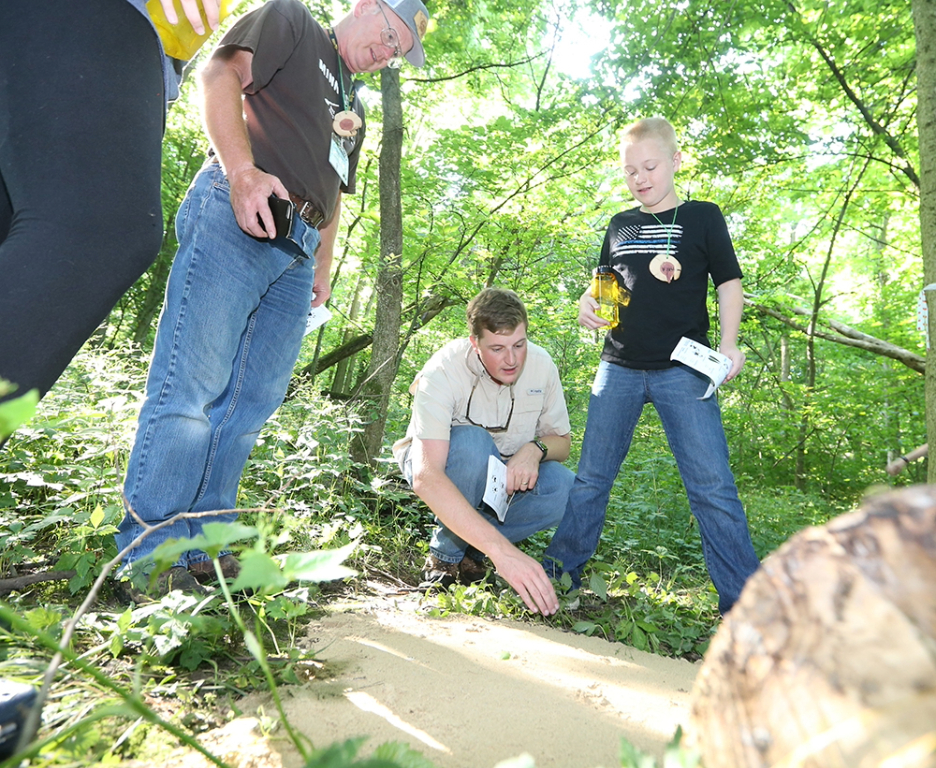 Purdue Extension wildlife specialist Jarred Brooke has been named as a recipient of the Purdue Cooperative Extension Specialists’ Association (PUCESA) Early Career Award, which recognizes an Extension specialist with less than 10 years of service.
Recipients must demonstrate Extension leadership; excellence in delivering public education programs; innovative approaches to program development and delivery; outreach efforts to county Extension educators; research that benefits Extension clientele through practical application; or through demonstrated collaboration with county educators, agencies or community leaders.
“I am truly grateful to be honored by my peers with this award, but most of my extension work would not have been possible without the wonderful people I work with both inside and outside of Purdue,” Brooke said. “I am indebted to them.”
Brooke, a 2012 wildlife science alum, returned to his alma mater in August 2016 as an Extension wildlife specialist after completing his master’s degree in wildlife management from the University of Tennessee in 2015. Over the past five years, Brooke has become a productive and effective extension specialist and has taken on multiple leadership roles, collaborated with partners in an outside of Extension, conducted applied research and worked to deliver impactful and innovative extension programming.
Brooke was honored with the PK-12 Outreach and Engagement Excellence Staff Award in April 2021 for his work with the 4H-Academy, the Wildlife Habitat Education Program and The Nature of Teaching.
Outside of Extension, Brooke helped form the Indiana Prescribed Fire Council, of which he has served as chair since 2018. He also is currently the Past President of the Indiana Chapter of the Wildlife Society, and served on the continuing education committee for the group. In these roles, Brooke collaborates with other natural resources professionals to plan and deliver natural resource-based programming to other professionals and landowners throughout Indiana.
Resources:
Jarred Brooke Receives PK-12 Council Staff Excellence Award, Got Nature? Blog, Purdue Extension-FNR
Brooke’s Prescribed Fire Videos Utilized in Global USFS Efforts, Got Nature? Blog, Purdue Extension-FNR
Pond and Wildlife Management, Purdue Extension-Forestry and Natural Resources
Natural Resources University, Deer, Fire, Pond and Habitat Podcasts
Creating a Wildlife Habitat management Plan for Landowners, Got Nature? Blog, Purdue Extension-FNR
A Template for Your Wildlife Habitat Management Plan, Got Nature? Blog, Purdue Extension-FNR
Subscribe to Purdue Extension – Forestry and Natural Resources YouTube Channel and view Jarred Brooke’s deer, fire and other wildlife videos.
Wendy Mayer, FNR Communications Coordinator
Purdue University Department of Forestry and Natural Resources
Jarred Brooke, Wildlife Extension Specialist
Purdue Forestry and Natural Resources
On this edition of ID That Tree, meet umbrella magnolia, a small tree easily identified by the clusters of long simple leaves at the end of the twigs, which form an umbrella shape, and by its beautiful white blossoms in the spring.
If you have any questions regarding wildlife, trees, forest management, wood products, natural resource planning or other natural resource topics, feel free to contact us by using our Ask an Expert web page.
Resources:
ID That Tree, Playlist, Purdue Extension – Forestry and Natural Resources YouTube Channel
A Woodland Management Moment, Playlist, Purdue Extension – FNR YouTube Channel
Shrubs and Woody Vines of Indiana and the Midwest, The Education Store, Purdue Extension Resource Center
Native Trees of the Midwest, The Education Store
Investing in Indiana Woodlands, The Education Store
Forest Improvement Handbook, The Education Store
Pin Oak, Native Trees of Indiana River Walk, Purdue Fort Wayne
Lenny Farlee, Sustaining Hardwood Extension Specialist
Purdue University Department of Forestry and Natural Resources

Recent Posts
- Opportunities for Prescribed and Wildland Fire Training
Posted: November 4, 2026 in Forestry, How To, Wildlife, Woodlands - Wildlife Issues and Solutions: A New Online Series
Posted: in Forestry, How To, Wildlife, Woodlands - Burning for Benefits: Where Fire Belongs in Indiana
Posted: in Forestry, Safety, Wildlife, Woodlands - Residents, Alumni Invited to Share Indiana Natural Resource, Spaces, Species Memories
Posted: in Forestry, Forests and Street Trees, Gardening, Urban Forestry, Wildlife - Now Is The Time To Control Non-Native Bush Honeysuckle
Posted: October 30, 2026 in Forestry, How To, Invasive Plant Species, Woodlands - Help Strengthen the Future of Indiana Maple Syrup
Posted: October 29, 2026 in Forestry, How To, Woodlands - Popular Landscape Shrub is Invasive
Posted: October 15, 2026 in Alert, Forestry, Forests and Street Trees, Invasive Plant Species, Plants, Woodlands - Purdue Extension’s Regional Teams Are Here: Connecting Communities with Expertise and Opportunity
Posted: October 14, 2026 in Community Development, Forestry, Forests and Street Trees, Gardening, How To, Timber Marketing, Urban Forestry, Wildlife, Woodlands - Why Do Our Trees Go From Green Leaves to Different Colors?
Posted: in Forestry, Forests and Street Trees, Urban Forestry, Woodlands - Deer and Turkey Archery Seasons Opening Soon, MyDNR
Posted: October 13, 2026 in Alert, Safety, Wildlife
Archives
Categories
- Alert
- Aquaculture/Fish
- Aquatic/Aquaculture Resources
- Ask the Expert
- Christmas Trees
- Community Development
- Disease
- Drought
- Forestry
- Forests and Street Trees
- Gardening
- Got Nature for Kids
- Great Lakes
- How To
- Invasive Animal Species
- Invasive Insects
- Invasive Plant Species
- Land Use
- Natural Resource Planning
- Nature of Teaching
- Plants
- Podcasts
- Ponds
- Publication
- Safety
- Spiders
- Timber Marketing
- Urban Forestry
- Webinar
- Wildlife
- Wood Products/Manufacturing
- Woodland Management Moment
- Woodlands