 Purdue University - Extension - Forestry and Natural Resources
Got Nature? Blog
The White Oak Initiative – Landowners for Oaks series is now available! This series, made up of 11 publications, is geared toward landowners engaged in upland oak management with a focus on white oak. Three of the publications provide information on the importance of oaks, their biology, and an overview of common management practices to enhance oak regeneration and growth. Eight publications provide landowners with basic information on common upland oak species, how to identify them and important management and utilization information. All factsheets in the series are available for free download at Landowner Resources – White Oak Initiative.
Landowners for Oaks Series: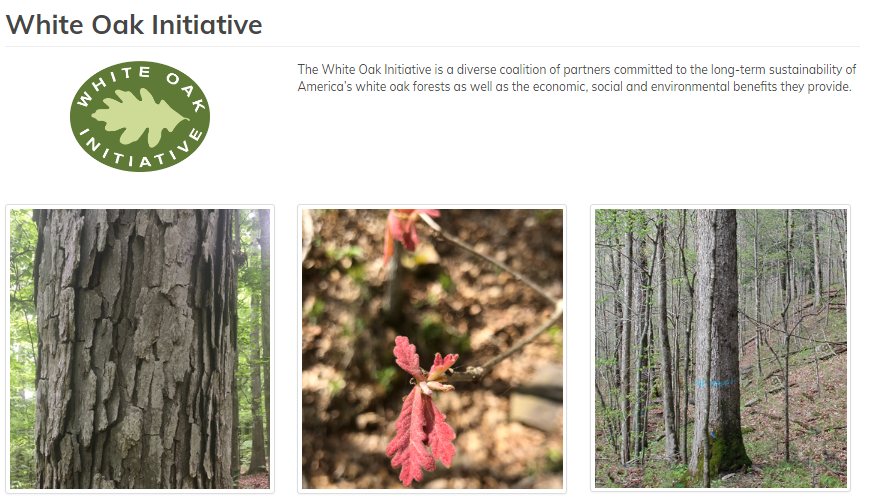
- Landowners Guide to – Challenges of Upland Oak Regeneration
- Landowners Guide to – Sustainable Oak Management Practices
- Landowners Guide to – Understanding the Importance of White Oak
Landowners Guide to Identification and Characteristics Series:
- Landowners Guide to Identification and Characteristics – Black Oak
- Landowners Guide to Identification and Characteristics – Chestnut Oak
- Landowners Guide to Identification and Characteristics – Chinkapin Oak
- Landowners Guide to Identification and Characteristics – Northern Red Oak
- Landowners Guide to Identification and Characteristics – Post Oak
- Landowners Guide to Identification and Characteristics – Scarlet Oak
- Landowners Guide to Identification and Characteristics – Southern Red Oak
- Landowners Guide to Identification and Characteristics – White Oak
University of Kentucky Department of Forestry & Natural Resources/Extension authors:
- Darren Morris, Forestry Extension Associate Senior
- Laurie T. Thomas, Extension Forester
- Jeffrey W. Stringer, Ph.D., Chairman, Department of Forestry and Natural Resources
Mike Saunders, associate professor of silviculture for Purdue Forestry & Natural Resources, continues adding his expertise with the white oak publications. “Personally, I think these are great resources for enlightening the public regarding the serious concerns natural resource managers have regarding the future of oak-hickory forests in the eastern U.S. They set a great tone in describing a complex issue. The impacts from the decades-long, persistent lack of oak regeneration are not easy for most to understand. For example, one may look up and see all the mature, large trees and think “hey, this is a healthy forest”. But the true future of the forest is at their feet, and whether they see it or their grandkids see it, that future is not great. There will be a dramatic shift to maple-dominance in our forests, something that will have profound, and potentially negative, impacts on all the values we associate with the forest (wildlife, water, recreation and timber),” states Dr. Saunders.
The White Oak Initiative is a diverse coalition of partners committed to the long-term sustainability of America’s white oak forests as well as the economic, social and environmental benefits they provide.
Resources:
Sustaining Our Oak-Hickory Forests – Hardwood Ecosystem Experiment, The Education Store
“The Nature of Oaks” Webinar With Author Doug Tallamy, Indiana Forestry & Woodland Owners Assocaition
Indiana Forestry and Wildlife: The Hardwood Ecosystem Experiment, The Education Store
Native Trees of the Midwest, The Education Store
Shrubs and Woody Vines of Indiana and the Midwest, The Education Store
Investing in Indiana Woodlands, The Education Store
Forest Improvement Handbook, The Education Store
ID That Tree, Purdue Extension-Forestry & Natural Resources (FNR) YouTube playlist
Woodland Management Moment , Purdue Extension-FNR YouTube playlist
Indiana Woodland Steward, promoting wise use of Indiana’s forest resources
Diana Evans, Extension and Web Communication Specialist
Purdue University Department of Forestry and Natural Resources
Purdue Landscape Report, Using Pneumatic Digging Equipment to Correct Root Deformations, Deep Planting, and Compaction on Established Trees: When transplanting trees, it is important to consider the long-term viability. Since the typical life span of an urban tree is 7-20 years (USDA), proper establishment techniques are very important to decrease this mortality rate. When a tree becomes established, it is much more difficult to correct below ground problems.
Root deformations can occur for many reasons in established trees, but the most common are due to not making corrections prior to transplanting. Plants that have girdling and circling roots must 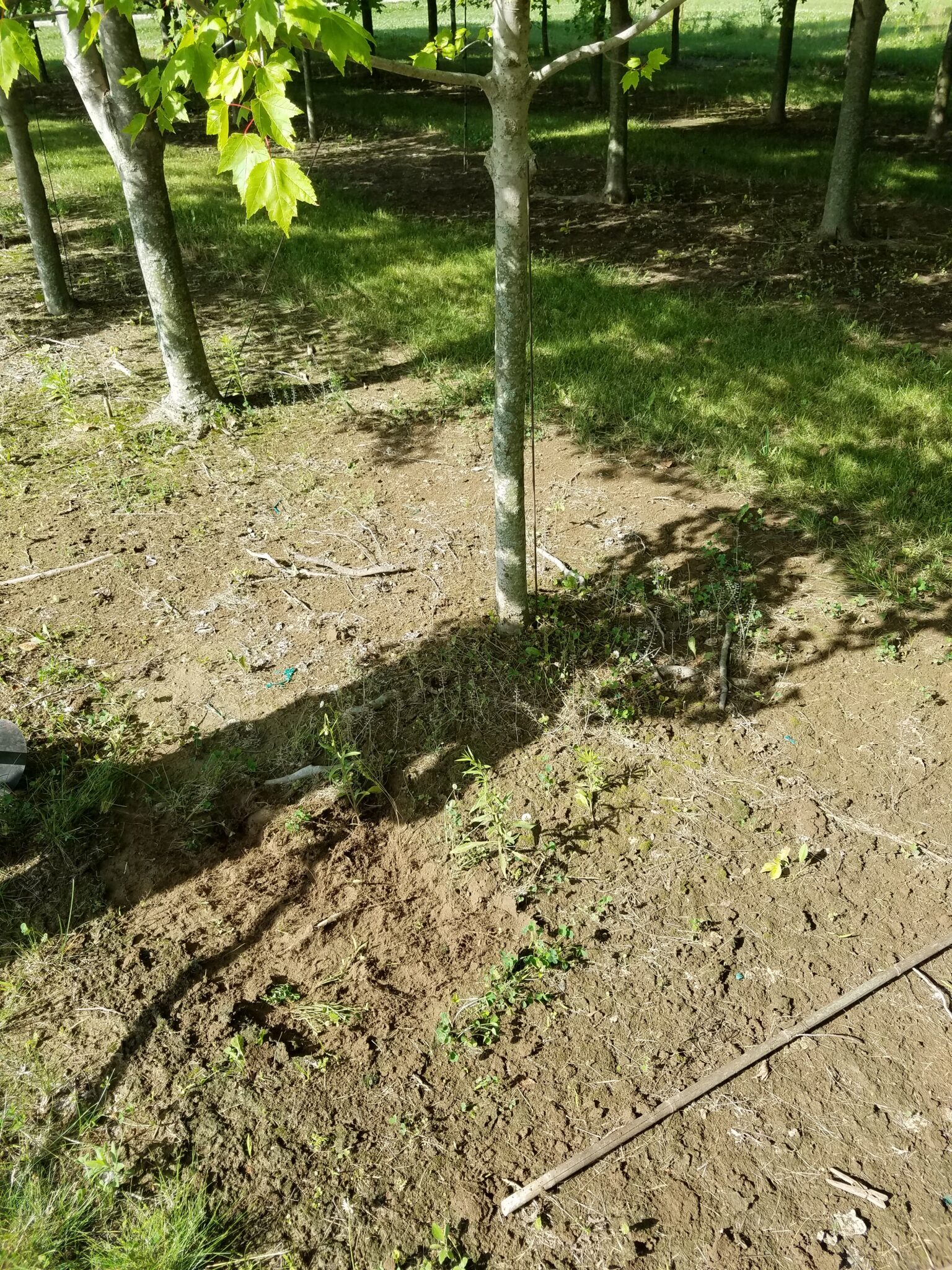 be addressed at the time of planting. If this issue is not addressed many problems may ensue when the tree is established, which includes decline, tree failure, blow-overs, and more.
Another common problem that occurs at transplanting is deep planting. In the past, plants were often planted deep in the nursery for two main reasons: 1) cold protection of the roots and root flare and 2) prevent the use of staking. In fields that are cultivated, the soil often mounds around the trees which can increase the depth of the root flare. Additionally, when planting into the landscape, trees can be planted too deep, exacerbating the problems associated with planting too deep.
Deep planting can cause an increase in disease, insects, decreased tolerance to flooded soils, adventitious roots, and root circling/girdling. Day and Harris (2008) found that there is significantly more girdled root at 30 cm below grade than at grade or 15 cm below grade. They also found that excavated trees at 30 cm had more girdling roots than non-excavated roots at 30 cm.
Compaction can become an issue when trees are located in high traffic areas. Compaction will cause a decline in trees over time and become more susceptible to increased insect and disease pressure.
Excavating the root system with a pneumatic digger is a method that can be used to correct all of these problems. Removing soil around the tree will allow root deformations to be located and corrected. Removing the soil around the collar to correct planting depth and girdling roots will increase the longevity of the tree. Compaction can be reduced by using a pneumatic digger to remove the soil from the root hairs that are typically located in the top 6 inches of soil for most trees (Morris, et.al., 2009).
To read the full article with additional images and video please visit: Using Pneumatic Digging Equipment to Correct Root Deformations, Deep Planting, and Compaction on Established Trees
For more information on correcting root problems after a tree becomes established:
Stem Girdling Roots
Root Growth on Urban Trees
Tree Root Problems
Air Digging Trench or Loosening Soil
Tree Planted Too Deeply
Roots and the Pneumatic Soil Excavation Tool
Tree Preservation Efforts
Getting Roots Right
Supersonic Air Jets Preserve Tree Roots in Underground Pipeline Installation
More resources:
Root Rot in Landscape Plants, The Education Store
Ask The Expert: Tree Inspection, Purdue Extension- FNR YouTube Channel
Ask The Expert: Tree Selection and Planting, Purdue Extension- FNR YouTube Channel
Surface Root Syndrome, The Education Store, Purdue Extension resource center
The Nature of Teaching: Trees of the Midwest, The Education Store
Tree Appraisal and the Value of Trees, The Education Store
Construction and Trees: Guidelines for Protection, The Education Store
Kyle Daniel, Extension Specialists
Purdue University Department of Forestry and Natural Resources
The precipitous decline in songbird numbers over the past few decades has made national news and generated calls for action to address the issues contributing to this decline. One of the contributing factors to the decline of several North American bird species is the diminishing area of suitable habitat.
 The initial assumption that many people have is this loss of habitat is forests or grasslands being converted into cropland or developments. While this does happen and is a concern in some areas, Indiana has actually been increasing our area of forest over the last several decades. An increasingly common habitat threat to several bird species is changing grassland or forest structure that occur through time in the absence of historic disturbances like fires or land management activities like thinning and harvesting.
The invasion of forests, wetlands, and grasslands by invasive plant species can also degrade or destroy habitat values for birds and other wildlife. Managing areas to reduce invasive species and introducing disturbances like prescribed fires, critical area plantings, thinning, and regeneration activities can improve habitat quality for a variety of declining birds.
The The Nature Conservancy in Indiana, partnering with birders, ornithologists, foresters, and wildlife biologists, has developed the Forestry for the Birds program, modeled from a similar program in Vermont. The goal is to provide strategies that can benefit both forest management and bird communities, facilitating and simplifying the management of bird-friendly forests. “The Birders Dozen” were selected among declining birds that Indiana residents could identify by sight or song and need conservation action through habitat management.
Learn more about Forestry for the Birds, the Birders Dozen, and what you can do to help declining birds and other wildlife in Indiana. Find the Forestry for the Birds Pocket Guide which is a free download.
Resources:
Managing Woodlands for Birds Video, Purdue Extension-Forestry and Natural Resources (FNR) YouTube Channel
Breeding Birds and Forest Management: the Hardwood Ecosystem Experiment and the Central Hardwoods Region, The Education Store
The Birders’ Dozen, Profile: Baltimore Oriole, Indiana Woodland Steward
Ask An Expert, Playlist, Purdue Extension – FNR YouTube channel
It’s For the Birds, Indiana Yard and Garden-Purdue Consumer Horticulture
Birds and Residential Window Strikes: Tips for Prevention, The Education Store, Purdue Extension resource center
No Room at the Inn: Suburban Backyards and Migratory Birds, Education Store, Purdue Extension resource center
Hardwood Ecosystem Experiment – Wildlife Responses to Timber Harvesting, The Education Store
Subscribe, Purdue Extension – FNR YouTube Channel
Lenny Farlee, Sustaining Hardwood Extension Specialist
Purdue University Department of Forestry and Natural Resources
Jessica Outcalt, Agricultural & Natural Resources Educator
Purdue University Department of Forestry and Natural Resources
The Nature Conservancy – Indiana
Healthy trees can improve our quality of life by providing food, cleaner air and water, regulating temperatures, supporting pollination and providing recreational, health and spiritual benefits.
Here are some easy ways in which urban trees and woodlots contribute to making cities more environmentally sustainable and livable:
- Trees can contribute to the increase of local food and nutrition security, providing food such as fruits and nuts for wildlife and human consumption.
- Trees play an important role in increasing urban biodiversity, providing plants and animals with a proper habitat, food and protection.
- A mature tree can absorb up to 350 lbs. of CO2 per year. As a result, trees play an important role in climate change mitigation. In cities with high levels of pollution, trees can improve air quality making cities healthier places to live in.
- Strategic placement of trees in cities can help to cool the air between 30-40o F, thus reducing the urban “heat island” effect, helping reduce extreme heat conditions in summer weather.
- Large trees are great biological filters for urban pollutants and particulate pollution. They absorb pollutant gases (such as carbon monoxide, nitrogen oxides, ozone and Sulphur oxides) and filter fine particulates such as dust, dirt, or smoke out of the air by trapping them on leaves and bark.
- Research shows that living in close proximity of urban green spaces and having access to them, can improve physical and mental health, for example by decreasing high blood pressure and stress. Also, research indicates greatly improved neo-natal health as well. This, in turn, contributes to the well-being of urban communities.
- Mature trees regulate water flow and play a key role in preventing floods and reducing the risk of sewer overflow. Stormwater management is a crucial city infrastructure issue and trees help. A mature tree, for instance, can intercept more than 5,000 gallons of water per year and without trees, every rain would contribute floods.
- Trees also help to reduce carbon emissions by helping to conserve energy. For example, the correct placement of trees around buildings can reduce the need for air conditioning by 30 percent and reduce winter heating bills by 20-50 percent.
- Planning urban landscapes with trees can increase property value, by up to 15 percent, and attract tourism and business.
Planting trees is important, but their maintenance is equally as important. A way for homeowners to ensure their trees stay healthy is by hiring an arborist. Professional, trained arborists know how to properly maintain trees for the safety of the public and the health of the tree.
This brief tutorial shows how to use the Trees Are Good website to find an arborist near you, verify credentials and where to find more information on trees.
View the Indiana Arborist Association website for more certification resources along with planting, maintenance and preservation resources.
Resources:
Find an Arborist website, Trees are Good, International Society of Arboriculture (ISA)
Caring for storm-damaged trees/How to Acidify Soil in the Yard – In the Grow, Purdue Extension
Moist soil and rotten roots makes it easy for trees to come crashing down – Fox 59 News
Tree Risk Management – Got Nature? Blog, Purdue Extension – FNR
Mechanical Damage to Trees: Mowing and Maintenance Equipment – The Education Store
Trees and Electric Lines – The Education Store
Tree Support Systems, The Education Store
Corrective Pruning for Deciduous Trees, The Education Store
Tree Installation: Process and Practices, The Education Store
Lindsey Purcell, Chapter Executive Director
Indiana Arborist Association
Diana Evans, Extension & Web Communications Specialist
Purdue University Department of Forestry and Natural Resources
The classic and trusted book “Fifty Common Trees of Indiana” by T.E. Shaw was published in 1956 as a user-friendly guide to local species. Nearly 70 years later, the publication has been updated through a joint effort by the Purdue Department of Forestry and Natural Resources, Indiana 4-H, and the Indiana Department of Natural Resources, and reintroduced as “An Introduction to Trees of Indiana.”
 The full publication is available for download for $7 in the Purdue Extension Education Store. The field guide helps identify common Indiana woodlot trees.
Each week, the Intro to Trees of Indiana web series will offer a sneak peek at one species from the book, paired with an ID That Tree video from Purdue Extension forester Lenny Farlee to help visualize each species as it stands in the woods. Threats to species health as well as also insight into the wood provided by the species, will be provided through additional resources as well as the Hardwoods of the Central Midwest exhibit of the Purdue Arboretum, if available.
This week, we introduce the Blue Beech or Carpinus caroliniana.
The blue beech, also known as the American hornbeam, musclewood or the water beech, is an understory tree that stands out due to its gray bark and striations that resemble muscles and sinews as well as its doubly toothed leaves.
The small tree, which typically grows to a height of 20 to 35 feet, has oblong leaves with doubly toothed leaf margins, arranged alternately on very fine twigs. Lower leaf veins are seldom forked. The fruit is in clusters, consisting of small, seed-like nuts on small, three-lobed leaves. It’s bark and fruit help differentiate blue beech from its close relative, the ironwood.
Blue beech’s natural range is the majority of the midwestern and eastern United States, reaching as far south as Texas.
For full article and photos view Purdue Forestry and Natural Resources News: Trees of Indiana: Blue Beech.
Other Resources:
Beech – Hardwood Lumber and Veneer Series
Fifty Common Trees of Indiana
An Introduction to Trees of Indiana
Native Trees of the Midwest, The Education Store, Purdue Extension’s resource center
Shrubs and Woody Vines of Indiana and the Midwest
ID That Tree YouTube playlist
Woodland Management Moment YouTube playlist
Investing in Indiana Woodlands, The Education Store
Forest Improvement Handbook The Education Store
Wendy Mayer, FNR Communications Coordinator
Purdue University Department of Forestry and Natural Resources
Lenny Farlee, Sustaining Hardwood Extension Specialist
Purdue University Department of Forestry and Natural Resources
In this HEE Prescribed Fire video, Charlotte Owings, project coordinator on the Hardwood Ecosystem Experiment (HEE) explains the forest management technique of prescribed fire and how it is being utilized on the HEE.
What is HEE?
The focus of forest science is increasingly shifting to the management of forests as complex systems rather than as simple agricultural landscapes—with a much greater appreciation for the interactive ecosystem processes. In addition, now for many forest landowners, the ecological value of their land is at least as important as the economic return. It is, therefore, vital to understand how forest management affects not only timber production, but also the overall function of forested ecosystems.
The Hardwood Ecosystem Experiment (HEE) is a long-term, large-scale experimental study of forest management and its impacts. The project was initiated in 2006 with partners including: Ball State University, Drake University, Indiana State University, Purdue Entomology, Indiana Department of Natural Resources (IN DNR), and the Indiana Chapter of the Ruffed Grouse Society.
For information about study sites, harvesting treatments, sampling design, and more, see our Project Overview and Design page and US Forest Service General Technical Report NRS-P-108, The Hardwood Ecosystem Experiment: A Framework For Studying Responses to Forest Management.
Resources
Hardwood Ecosystem Experiment, Website
Hardwood Ecosystem Experiment (HEE), YouTube Playlist, Purdue Extension–Forestry and Natural Resources (FNR)
Ask an Expert: Hardwood Ecosystem Experiment (HEE) Birds and Salamander Research, Video, Purdue Extension-FNR YouTube Channel
Hardwood Ecosystem Experiment – Wildlife Responses to Timber Harvesting, The Education Store, Purdue Extension’s resource center
The Hardwood Ecosystem Experiment: Indiana Forestry and Wildlife, The Education Store
Charlotte Owings, Hardwood Ecosystem Experiment Project Coordinator
Purdue University, Department of Forestry and Natural Resources
In this edition of ID That Tree, meet another member of the hickory family that can found in upland areas, the pignut hickory. This species is identifiable by its five-leaflet compound leaves, its smooth round nut and partially open husk.
If you have any questions regarding wildlife, trees, forest management, wood products, natural resource planning or other natural resource topics, feel free to contact us by using our Ask an Expert web page.
Resources:
ID That Tree, Playlist, Purdue Extension – Forestry and Natural Resources YouTube Channel
A Woodland Management Moment, Playlist, Purdue Extension – FNR YouTube Channel
Shrubs and Woody Vines of Indiana and the Midwest, The Education Store, Purdue Extension Resource Center
Native Trees of the Midwest, The Education Store
Investing in Indiana Woodlands, The Education Store
Forest Improvement Handbook, The Education Store
Pignut Hickory, Native Trees of Indiana River Walk, Purdue Fort Wayne
Lenny Farlee, Sustaining Hardwood Extension Specialist
Purdue University Department of Forestry and Natural Resources
In this episode of ID That Tree, meet the ash family, with specific focus on the white ash, which is typically found on higher and drier sites than its cohorts. This species, which is in trouble due to the emerald ash borer, an invasive beetle, features opposite leaf arrangement, compound leaves with seven to nine leaflets, and squatty terminal buds as well as a bud that dips down into the leaf scar, resembling a smiley face. The bark is gray and featured an interlacing network of ridges forming a diamond shape.
If you have any questions regarding wildlife, trees, forest management, wood products, natural resource planning or other natural resource topics, feel free to contact us by using our Ask an Expert web page.
Resources:
ID That Tree, Playlist, Purdue Extension – Forestry and Natural Resources YouTube Channel
Emerald Ash Borer (EAB), Purdue Extension-Entomology
A Woodland Management Moment, Playlist, Purdue Extension – FNR YouTube Channel
Shrubs and Woody Vines of Indiana and the Midwest, The Education Store, Purdue Extension Resource Center
Native Trees of the Midwest, The Education Store
Investing in Indiana Woodlands, The Education Store
Forest Improvement Handbook, The Education Store
White Ash, Native Trees of Indiana River Walk, Purdue Fort Wayne
Lenny Farlee, Sustaining Hardwood Extension Specialist
Purdue University Department of Forestry and Natural Resources
The classic and trusted book “Fifty Common Trees of Indiana” by T.E. Shaw was published in 1956 as a user-friendly guide to local species. Nearly 70 years later, the publication has been updated through a joint effort by the Purdue Department of Forestry and Natural Resources, Indiana 4-H, and the Indiana Department of Natural Resources, and reintroduced as “An Introduction to Trees of Indiana.”
The full publication is available for download for $7 in the Purdue Extension Education Store. The field guide helps identify common Indiana woodlot trees.
 Each week, the Intro to Trees of Indiana web series will offer a sneak peek at one species from the book, paired with an ID That Tree video from Purdue Extension forester Lenny Farlee to help visualize each species as it stands in the woods. Threats to species health as well as also insight into the wood provided by the species, will be provided through additional resources as well as the Hardwoods of the Central Midwest exhibit of the Purdue Arboretum, if available.
First up, we introduce the white ash or fraxinus americana.
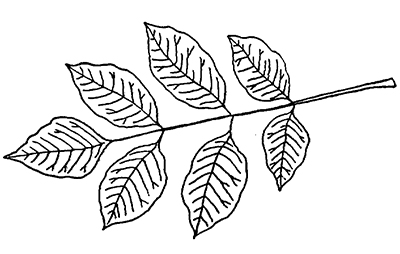
The white ash, which is typically found on higher and drier sites than its cohorts in the ash family, has been threatened due to the invasive beetle called the emerald ash borer. This species features opposite leaf arrangement, compound leaves with seven to nine leaflets, and squatty terminal buds as well as a bud that dips down into the leaf scar, which resembles a smiley face. The bark is gray, has a corky feel, and features an interlacing network of ridges forming a diamond shape.
Among the Hardwoods of the Central Midwest, white ash is the best known and preferred species among the five ash species located throughout the eastern United States. The species is found from the Great Plains east and from southern Canada south, with the exception of the lower Mississippi River Delta and coastal plains areas.
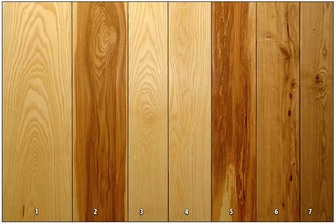
White ash is very hard and firm and with a 12% moisture content, it is comparable to white and red oak as one of the strongest woods. The wood grain appears much like oak, but does not have the large rays seen on the quartered surface of oak.
Ash is used on exposed surfaces in furniture and cabinets and also for millwork and flooring. Due to its high strength in bending and high shock resistance, it is also used in athletic equipment such as baseball bats and tennis rackets.
The history, color and texture and wood properties of white ash are available in more detail on the Hardwoods of the Central Midwest page for the species.
For full article and photos view Purdue Forestry and Natural Resources News.
Other Resources:
Ash (pdf)- Hardwood Lumber and Veneer Series
Fifty Common Trees of Indiana
An Introduction to Trees of Indiana
Native Trees of the Midwest, The Education Store, Purdue Extension’s resource center
Shrubs and Woody Vines of Indiana and the Midwest, The Education Store
ID That Tree, Purdue Extension-Forestry and Natural Resources (FNR) YouTube playlist
Woodland Management Moment, Purdue Extension-FNR YouTube playlist
Investing in Indiana Woodlands, The Education Store
Forest Improvement Handbook, The Education Store
Emerald Ash Borer puts trees on path to functional extinction, Purdue Agriculture News
Emerald Ash Borer, Purdue Entomology
Emerald Ash Borer University, Purdue Entomology
Emerald Ash Borer Management, Purdue Entomology
New tips for managing emerald ash borer, Purdue Landscape Report
Avoid deadly risk of dying ash trees with timely tree removal, Purdue Landscape Report
Wendy Mayer, FNR Communications Coordinator
Purdue University Department of Forestry and Natural Resources
Lenny Farlee, Sustaining Hardwood Extension Specialist
Purdue University Department of Forestry and Natural Resources
This week on ID That Tree, Purdue Extension forester Lenny Farlee introduces you to a non-native conifer that can be found throughout the state, the Red Pine. This species, which enjoys sandy soil, is identifiable by its small, egg-shaped cones, as well as tufts of needle pairs, which can be quite brittle, and orange/reddish bark. Learn more inside.
If you have any questions regarding wildlife, trees, forest management, wood products, natural resource planning or other natural resource topics, feel free to contact us by using our Ask an Expert web page.
Resources:
ID That Tree, Playlist, Purdue Extension – Forestry and Natural Resources YouTube Channel
A Woodland Management Moment, Playlist, Purdue Extension – FNR YouTube Channel
Shrubs and Woody Vines of Indiana and the Midwest, The Education Store, Purdue Extension Resource Center
Native Trees of the Midwest, The Education Store
Investing in Indiana Woodlands, The Education Store
Forest Improvement Handbook, The Education Store
Lenny Farlee, Sustaining Hardwood Extension Specialist
Purdue University Department of Forestry and Natural Resources

Recent Posts
- Opportunities for Prescribed and Wildland Fire Training
Posted: November 4, 2026 in Forestry, How To, Wildlife, Woodlands - Wildlife Issues and Solutions: A New Online Series
Posted: in Forestry, How To, Wildlife, Woodlands - Burning for Benefits: Where Fire Belongs in Indiana
Posted: in Forestry, Safety, Wildlife, Woodlands - Residents, Alumni Invited to Share Indiana Natural Resource, Spaces, Species Memories
Posted: in Forestry, Forests and Street Trees, Gardening, Urban Forestry, Wildlife - Now Is The Time To Control Non-Native Bush Honeysuckle
Posted: October 30, 2026 in Forestry, How To, Invasive Plant Species, Woodlands - Help Strengthen the Future of Indiana Maple Syrup
Posted: October 29, 2026 in Forestry, How To, Woodlands - Popular Landscape Shrub is Invasive
Posted: October 15, 2026 in Alert, Forestry, Forests and Street Trees, Invasive Plant Species, Plants, Woodlands - Purdue Extension’s Regional Teams Are Here: Connecting Communities with Expertise and Opportunity
Posted: October 14, 2026 in Community Development, Forestry, Forests and Street Trees, Gardening, How To, Timber Marketing, Urban Forestry, Wildlife, Woodlands - Why Do Our Trees Go From Green Leaves to Different Colors?
Posted: in Forestry, Forests and Street Trees, Urban Forestry, Woodlands - Deer and Turkey Archery Seasons Opening Soon, MyDNR
Posted: October 13, 2026 in Alert, Safety, Wildlife
Archives
Categories
- Alert
- Aquaculture/Fish
- Aquatic/Aquaculture Resources
- Ask the Expert
- Christmas Trees
- Community Development
- Disease
- Drought
- Forestry
- Forests and Street Trees
- Gardening
- Got Nature for Kids
- Great Lakes
- How To
- Invasive Animal Species
- Invasive Insects
- Invasive Plant Species
- Land Use
- Natural Resource Planning
- Nature of Teaching
- Plants
- Podcasts
- Ponds
- Publication
- Safety
- Spiders
- Timber Marketing
- Urban Forestry
- Webinar
- Wildlife
- Wood Products/Manufacturing
- Woodland Management Moment
- Woodlands