 Purdue University - Extension - Forestry and Natural Resources
Got Nature? Blog
In this “A Moment in the Wild” episode, Nick Burgmeier, Purdue Extension wildlife specialist, talks about the eastern hognose snake, which are often found in areas with sandy soil. They are named hognose, due to an upturned rostrum or nasal area.
If you have any questions regarding wildlife, trees, forest management, wood products, natural resource planning or other natural resource topics, feel free to contact us by using our Ask an Expert web page.
Resources
A Moment in the Wild, Playlist, Purdue Extension – Forestry and Natural Resources
Snakes of Indiana, The Education Store, Purdue Extension resource center
Indiana Amphibian and Reptile ID Package (4 softcover books), The Education Store
When Juvenile Snakes Come Calling, Purdue Extension
Nick Burgmeier, Research Biologist and Wildlife Extension Specialist
Purdue Department of Forestry and Natural Resources
In this “A Moment in the Wild” episode, Nick Burgmeier, Purdue Extension wildlife specialist, talks about how building chutes and dams in rivers and streams affects wildlife habitat and water quality.
If you have any questions regarding wildlife, trees, forest management, wood products, natural resource planning or other natural resource topics, feel free to contact us by using our Ask an Expert web page.
Resources
A Moment in the Wild, Playlist, Purdue Extension – Forestry and Natural Resources
Help the Hellbender, Playlist & Website
The Nature of Teaching: Adaptations for Aquatic Amphibians, The Education Store, Purdue Extension resource center
How Our Zoos Help Hellbenders, The Education Store
Help the Hellbender, North America’s Giant Salamander, The Education Store
Nick Burgmeier, Research Biologist and Wildlife Extension Specialist
Purdue Department of Forestry and Natural Resources
In this webinar, Purdue Extension forester Lenny Farlee talks about methods of controlling invasive plant species, which include: preventing invasions, early detection and rapid response, control techniques, accessing resources and assistance.
Don’t forget to fill out the Invasive Plants Threaten our Woodlands Part 2, Identification survey after watching the video to share your suggestions or other forest topics you would like to see and to help us learn more about you.
Check out Invasive Plants Threaten our Woodlands: Part 1, Identification (video). This video is also available on Purdue Extension – Forestry and Natural Resources Youtube channel.
If you have any questions regarding wildlife, trees, forest management, wood products, natural resource planning or other natural resource topics, feel free to contact us by using our Ask an Expert web page.
Resources
A Woodland Management Moment, Playlist
Invasive Species, Playlist
Report Invasive Species, Purdue Invasive Species
The GLEDN Phone App – Great Lakes Early Detection Network
EDDMaps – Early Detection and Distribution Mapping System (Report Invasives)
Cooperative Invasive Species Management Area (CISMA)
Indiana Department of Natural Resources: Invasive Species
Indiana Invasive Species Council
Woodland Stewardship for Landowners, Playlist
Invasive plants: impact on environment and people, The Education Store, Purdue Extension resource center
Woodland Invaders, Got Nature? Blog
Hardwood Tree Improvement & Regeneration Center (HTIRC)
Lenny Farlee, Extension Forester
Purdue University, Department of Forestry and Natural Resources
Purdue Extension forester Lenny Farlee talks about what woodland management means, defining your goals and objectives, invasive species control, timber stand improvement (TSI) and finding appropriate professional help in this webinar.
Note: evaluation slide at end is incorrect. Follow this link for proper evaluation: https://purdue.ca1.qualtrics.com/jfe/form/SV_3OQLWbE7gfMBjWl
If you have any questions regarding wildlife, trees, forest management, wood products, natural resource planning or other natural resource topics, feel free to contact us by using our Ask an Expert web page.
Resources
A Woodland Management Moment, Playlist, Purdue Extension – Forestry and Natural Resources Youtube Channel
Invasive Species, Playlist
Woodland Stewardship for Landowners, Playlist
Invasive Plant Species Identification, Video
Invasive plants: impact on environment and people, The Education Store, Purdue Extension resource center
A Landowner’s Guide to Sustainable Forestry: Part 7: Managing for a Diversity of Value-Added Forest Products, The Education Store
Investing in Indiana Woodlands, The Education Store
Woodland Invaders, Got Nature? Blog
Lenny Farlee, Sustaining Hardwood Extension Specialist
Purdue University Department of Forestry and Natural Resources
Purdue Landscape Report: Homeowners can easily become injured – often fatally – while attempting to trim trees near overhead electrical wires. Though it is tempting to try to save money with this “do-it-yourself” approach, the potential for electrocution is not worth the risk. It is important to recognize when to call a professional arborist.
Terrible accidents can happen when a homeowner uses any type of cutting tools and/or ladders when attempting to trim backyard trees and shrubs. Overhead wires are often unnoticed and is touched by directly or indirectly, causing injury or death.
Examples include:
- A homeowner climbed a ladder to trim a tree branch that was dropping leaves into his above ground swimming pool and causing a nuisance. A branch came in contact with the power line, shocking the man with a jolt of electricity and sending him into cardiac arrest. He fell 20 feet to the ground but was revived by medics at the scene.
- MATTHEWS, N.C. — A man trimming trees in a neighborhood was shocked Wednesday morning after a limb fell on power lines, authorities said. Nearby resident Margie Owens knows the man and said he does odd jobs around the neighborhood. According to officials, after the limb fell from pruning, the tree continued to be energized by the power line, leaving the man stuck.
- A Charlotte County man was electrocuted trimming trees in a backyard. The victim was part of a landscaping crew and came in direct contact with a utility line.
Preventable Accidents
Tree limbs can conduct electricity. When trees grow near overhead wires, they can contact the wires and become energized. Trees and wires are dangerous, full of electrical power that can injure or kill humans. How do we know which lines are energized? WE DON’T! Assume all are carrying dangerous electrical current and should be avoided when working around them.
A common house switch carries 120 volts, but the electric flow is usually limited to 10, 15 or 20 amps. A common “house drop” (service wire) contains 240 volts and up to 20 amps or more. Given the right set of circumstances, even the shock a person gets from a common light switch can kill, but at the same time, it is easier to break electrical contact while standing inside a house. If a person is climbing a ladder or is in the tree, it may be more difficult to break contact with the energized wire. This means that the service line over a typical yard could easily kill a person.

Utility service providers can help select a tree which is compatible with nearby lines and reduce the need for excessive pruning to maintain safety and reliability

These powerlines could be “energizing” the tree creating a potential shock hazard for anyone touching the tree. Notice the burning on the new growth.
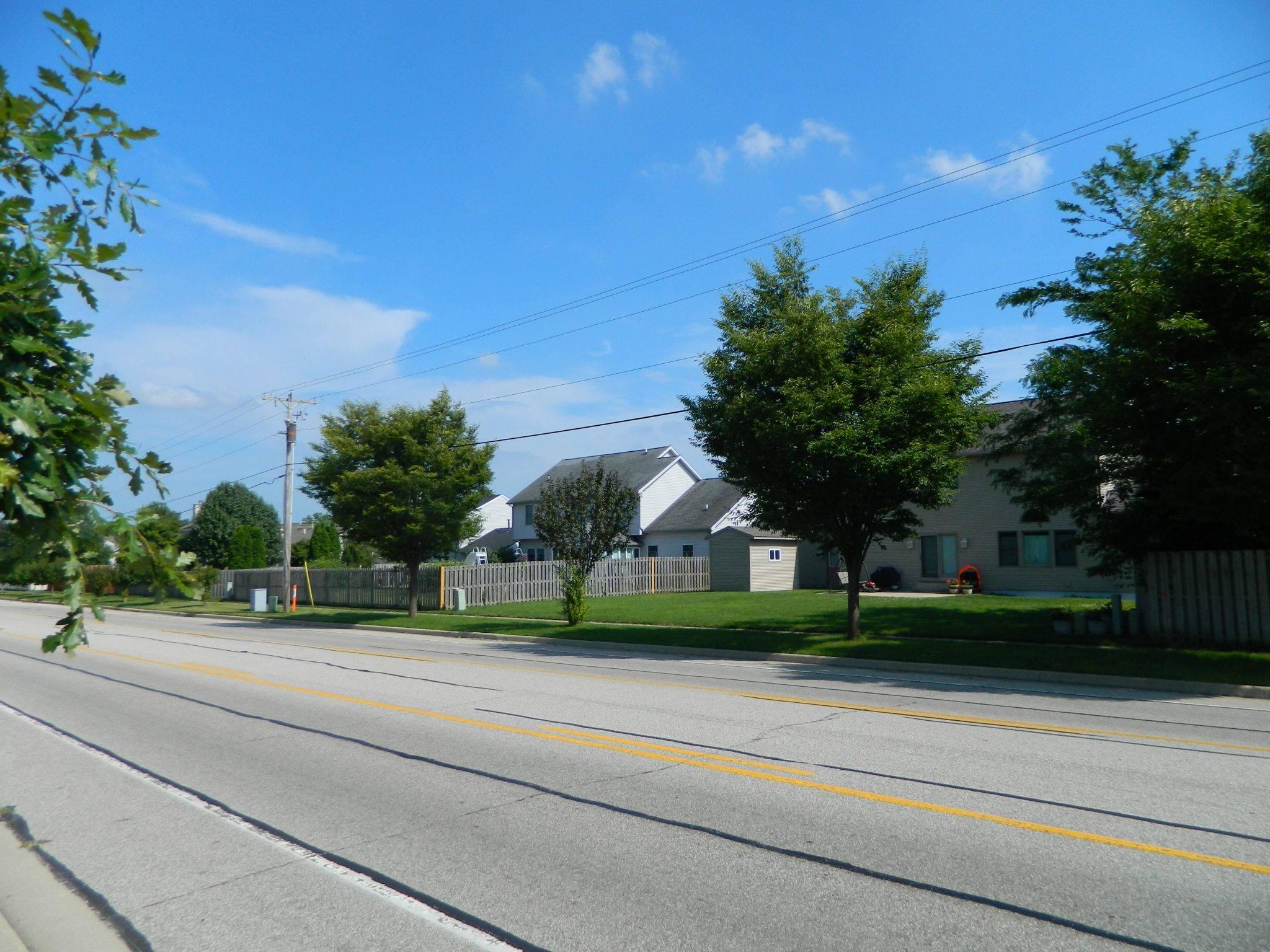
Trees growing into utility lines should be pruned by a qualified arborist.
Here are a few tips to avoid trees in wires:
- Look for power lines before pruning trees and large shrubs. If lines are anywhere near the tree within 10 ft. don’t attempt any tree work. Tree care professionals have the training and equipment needed to perform these tasks safely.
- Never climb a tree in order to prune it. Even if the wires aren’t currently touching the tree, remember that the tree’s branches will shift once you begin climbing or removing limbs.
- Don’t move ladders or long-handled pruning tools around the yard without first looking up. Always read and heed ladder-use safety labels.
Find a professional
Be sure to always hire an insured, tree care professional, preferably and ISA Certified Arborist with the experience, expertise, and equipment to safely take down or prune trees in wires. Require proof of liability insurance to protect yourself as well.
Another easy way to find a tree care service provider in your area is to use the “Locate Your Local Tree Care Industry Association Member Companies” program. For more information refer to the publication Trees and Utilities at the Purdue Education Store.
Find a certified arborist in your area by going to Trees are good website.
Resources:
Tree Pruning for the Landscape, Video, Purdue Extension – Forestry and Natural Resources YouTube Channel
Tree Pruning Essentials, Video & Publication
Tree Appraisal and the Value of Trees, The Education Store, Purdue Extension’s resource center
Tree Pruning: What Do Trees Think?, The Education Store
Mechanical Damage to Trees: Mowing and Maintenance Equipment, The Education Store
Tree Installation Process and Practices, The Education Store
In this edition of ID That Tree, Purdue Extension forester Lenny Farlee introduces you to the Eastern White Pine, Indiana’s only native five-needle pine. This species, which can grow to 150 feet tall, grows a ring of branches as it ages. Learn more inside.
If you have any questions regarding trees, forests, wildlife, wood products or other natural resource topics, feel free to contact us by using our Ask an Expert web page.
Resources
ID That Tree, Playlist, Purdue Extension – Forestry and Natural Resources Youtube Channel
A Woodland Management Moment, Playlist, Purdue Extension – Forestry and Natural Resources Youtube Channel
White Pine and Salt Tolerance, The Education Store, Purdue Extension resource center
Tree Diseases: White Pine Decline in Indiana, The Education Store
Investing in Indiana Woodlands, The Education Store
Tree Appraisal and the Value of Trees, The Education Store
Forest Improvement Handbook, The Education Store
Lenny Farlee, Sustaining Hardwood Extension Specialist
Purdue University Department of Forestry and Natural Resources
Purdue Extension forester Lenny Farlee introduces you to one of Indiana’s most common trees, the sugar maple. This species, which is often used to produce maple syrup, is easily identifiable by its five-lobed leaves, opposite leaf and branch arrangement, and ability to thrive in the understory.
If you have any questions regarding trees, forests, wildlife, wood products or other natural resource topics, feel free to contact us by using our Ask an Expert web page.
Resources
The Story Behind a Sugar Maple Scar, Purdue Extension
Sugar Maple, The Purdue Arboretum
Hard or Sugar Maple, The Education Store, Purdue Extension resource center
Investing in Indiana Woodlands, The Education Store
Tree Appraisal and the Value of Trees, The Education Store
Forest Improvement Handbook, The Education Store
ID That Tree, Playlist, Purdue Extension – Forestry and Natural Resources Youtube Channel
A Woodland Management Moment, Playlist, Purdue Extension – Forestry and Natural Resources Youtube Channel
Lenny Farlee, Sustaining Hardwood Extension Specialist
Purdue University Department of Forestry and Natural Resources
Purdue Extension forester Lenny Farlee tells you where to find and how to identify a species that clings to many of our trees, poison ivy. Protect yourself from the itch by recognizing this species before it is a problem.
If you have any questions regarding trees, forests, wildlife, wood products or other natural resource topics, feel free to contact us by using our Ask an Expert web page.
Resources
Poison Ivy, Purdue Landscape Report
Poison Ivy, Purdue Extension
Poison Ivy, The Education Store, Purdue Extension resource center
Investing in Indiana Woodlands, The Education Store
Tree Appraisal and the Value of Trees, The Education Store
Forest Improvement Handbook, The Education Store
ID That Tree, Playlist, Purdue Extension – Forestry and Natural Resources Youtube Channel
A Woodland Management Moment, Playlist, Purdue Extension – Forestry and Natural Resources Youtube Channel
Lenny Farlee, Sustaining Hardwood Extension Specialist
Purdue University Department of Forestry and Natural Resources
In this “A Moment in the Wild” episode, Nick Burgmeier, Purdue Extension wildlife specialist, talks about the eastern kingsnake, one of three large black snakes found in Indiana.
If you have any questions regarding wildlife, trees, forests, wood products or other natural resource topics, feel free to contact us by using our Ask an Expert web page.
Resources
A Moment in the Wild, Playlist, Purdue Extension – Forestry and Natural Resources
Snakes of Indiana, The Education Store, Purdue Extension resource center
Indiana Amphibian and Reptile ID Package (4 softcover books), The Education Store
When Juvenile Snakes Come Calling, FNR Got Nature? blog
Nick Burgmeier, Research Biologist and Wildlife Extension Specialist
Purdue Department of Forestry and Natural Resources
Join Purdue Extension forester Lenny Farlee as he introduces you to the Sassafras in this edition of ID That Tree. The Sassafras is well known for the tree made from its bark and also for having a variety of shaped leaves from zero to three lobes.
If you have any questions regarding trees, forests, wildlife, or other natural resource topics, feel free to contact us by using our Ask an Expert web page.
Resources
ID That Tree, Playlist, Purdue Extension – Forestry and Natural Resources Youtube Channel
A Woodland Management Moment, Playlist, Purdue Extension – Forestry and Natural Resources Youtube Channel
Sassafras albidum, Purdue Arboretum Explorer
Sassafras, The Education Store, Purdue Extension resource center
Investing in Indiana Woodlands, The Education Store
Tree Appraisal and the Value of Trees, The Education Store
Forest Improvement Handbook, The Education Store
Lenny Farlee, Sustaining Hardwood Extension Specialist
Purdue University Department of Forestry and Natural Resources

Recent Posts
- Urban Tree Spotlight: Planting Deciduous Shade Trees, Purdue Landscape Report
Posted: March 25, 2026 in Forests and Street Trees, Urban Forestry, Woodlands - Beetle that attacks Tree-of-Heaven found in Indiana, Purdue Landscape Report
Posted: March 20, 2026 in Invasive Insects, Wildlife, Woodlands - ID That Tree: Dwarf Chinkapin Oak
Posted: in Forestry, Urban Forestry, Wildlife, Woodlands - IN-PREPared: Essential Resources for Indiana’s Severe Weather Season
Posted: March 11, 2026 in How To, Safety - DNR Hiring for Indiana Conservation Officer Positions, MyDNR
Posted: March 9, 2026 in Urban Forestry, Wildlife, Woodlands - ID That Tree: Shumard Oak
Posted: in Plants, Urban Forestry, Wildlife, Woodlands - A Woodland Management Moment: Windbreak Around Walnut Plantings
Posted: March 3, 2026 in Forestry, Urban Forestry, Woodland Management Moment - Getting Certified as an Indiana Certified Prescribed Burn Manager
Posted: March 2, 2026 in How To, Urban Forestry, Woodlands - Uniting Indiana Residents Against Invasive Species
Posted: February 27, 2026 in Community Development, Invasive Insects, Wildlife - Have You Seen a Soaring Eagle Lately? Morning Ag Clips
Posted: February 25, 2026 in Urban Forestry, Wildlife
Archives
Categories
- Alert
- Aquaculture/Fish
- Aquatic/Aquaculture Resources
- Ask the Expert
- Christmas Trees
- Community Development
- Disease
- Drought
- Forestry
- Forests and Street Trees
- Gardening
- Got Nature for Kids
- Great Lakes
- How To
- Invasive Animal Species
- Invasive Insects
- Invasive Plant Species
- Land Use
- Natural Resource Planning
- Nature of Teaching
- Plants
- Podcasts
- Ponds
- Publication
- Safety
- Spiders
- Timber Marketing
- Uncategorized
- Urban Forestry
- Webinar
- Wildlife
- Wood Products/Manufacturing
- Woodland Management Moment
- Woodlands