 Purdue University - Extension - Forestry and Natural Resources
Got Nature? Blog
In this third of five prescribed fire ignition technique videos, Purdue Extension wildlife specialist Jarred Brooke describes a strip head fire and how this technique differs from other options.
If you have any questions regarding trees, forests, wildlife, wood products or other natural resource topics, feel free to contact us by using our Ask an Expert web page.
Resources
Wildlife Habitat Hint, Playlist, Purdue Extension – Forestry and Natural Resouces YouTube channel
Wildlife Habitat Hint: Late Growing Season Prescribed Fire, Video
Renovating Native Warm-Season Grass Stands for Wildlife: A Land Manager’s Guide, The Education Store, Purdue Extension resource center
Prescribed fire: 6 things to consider before you ignite, Got Nature? Blog, Purdue Extension – 4Forestry and Natural Resources
Jarred Brooke, Wildlife Extension Specialist
Purdue Department of Forestry and Natural Resources
Hickories aren’t often thought of for their fall foliage, with some exceptions. Meet the shagbark hickory and its stunning golden leaves. Learn more in this edition of ID That Tree with Purdue Extension forester Lenny Farlee.
If you have any questions regarding wildlife, trees, forest management, wood products, natural resource planning or other natural resource topics, feel free to contact us by using our Ask an Expert web page.
Resources
ID That Tree, Playlist, Purdue Extension – Forestry and Natural Resources Youtube Channel
Hickory and Pecan Species, The Education Store, Purdue Extension resource center
Shagbark Hickory, Native Trees of Indiana River Walk, Purdue Fort Wayne
Shagbark Hickory, The Purdue Arboretum Explorer
Fall Color Pigments, Video, Purdue Extension – Forestry and Natural Resources Youtube Channel
Investing in Indiana Woodlands, The Education Store
Tree Appraisal and the Value of Trees, The Education Store
Forest Improvement Handbook, The Education Store
Lenny Farlee, Sustaining Hardwood Extension Specialist
Purdue University Department of Forestry and Natural Resources
Purdue Landscape Report: Tubakia leaf spot, caused by the fungus Tubakia, is the disease we find more commonly on oak than any other. Throughout the world, there are 11 species of Tubakia known to infect oak, with Tubakia dryina (previously known as Actinopelte dryina) being the most commonly encountered species in our landscapes. Apple, ash, black gum, chestnut, elm, maple, and redbud are all reported as hosts of Tubakia species, but oaks are the most frequently and severely affected. Among the oaks, the red oak group, specifically red, pin, and black oaks, are reported to be more susceptible to infection compared to those in the white oak group.

Figure 2: Oak leaf with circular shaped Tubakia leaf spots along with extensive veinal necrosis.
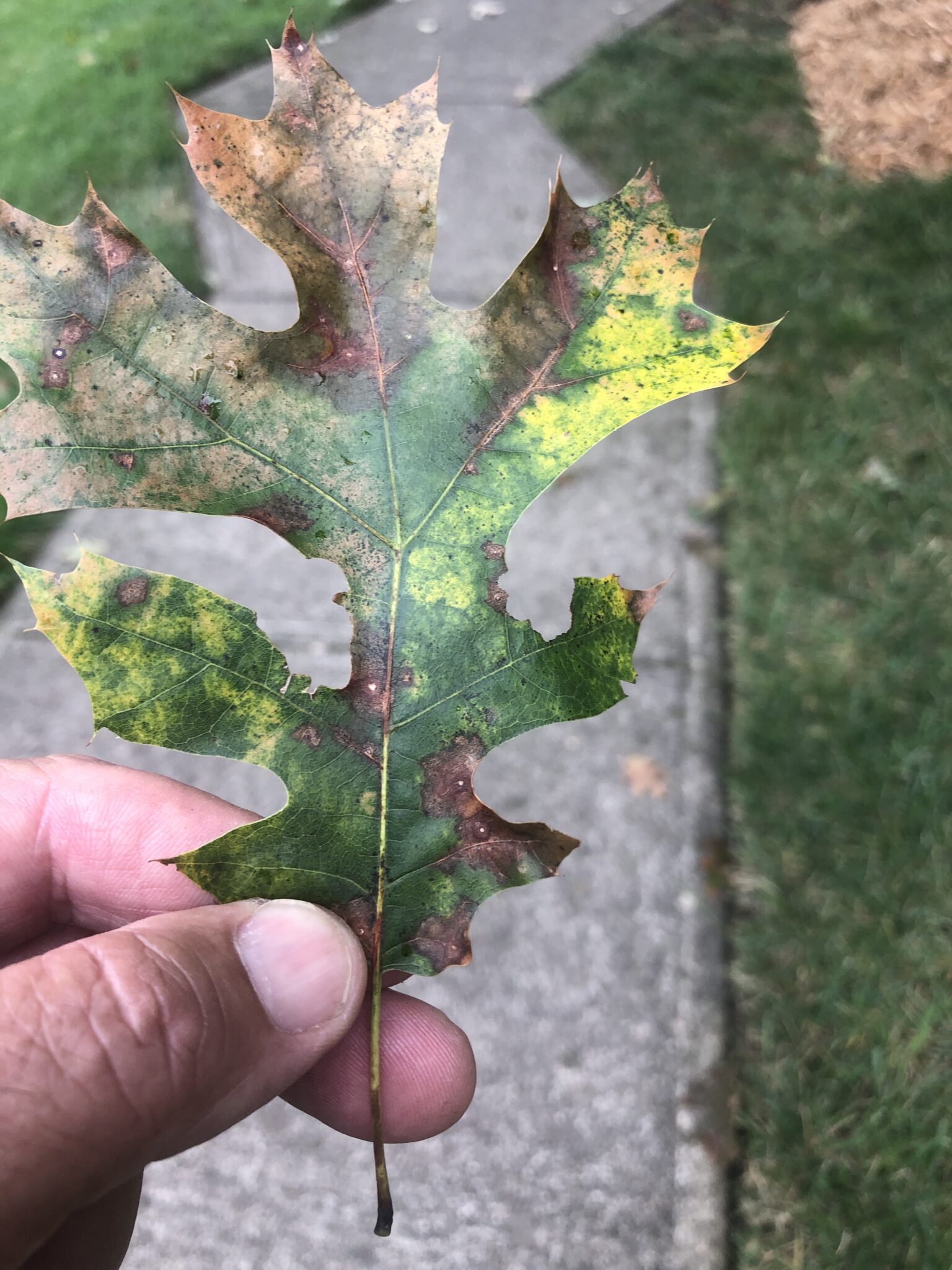
Figure 1: Oak leaf with irregularly shaped Tubakia leaf spots and veinal necrosis.
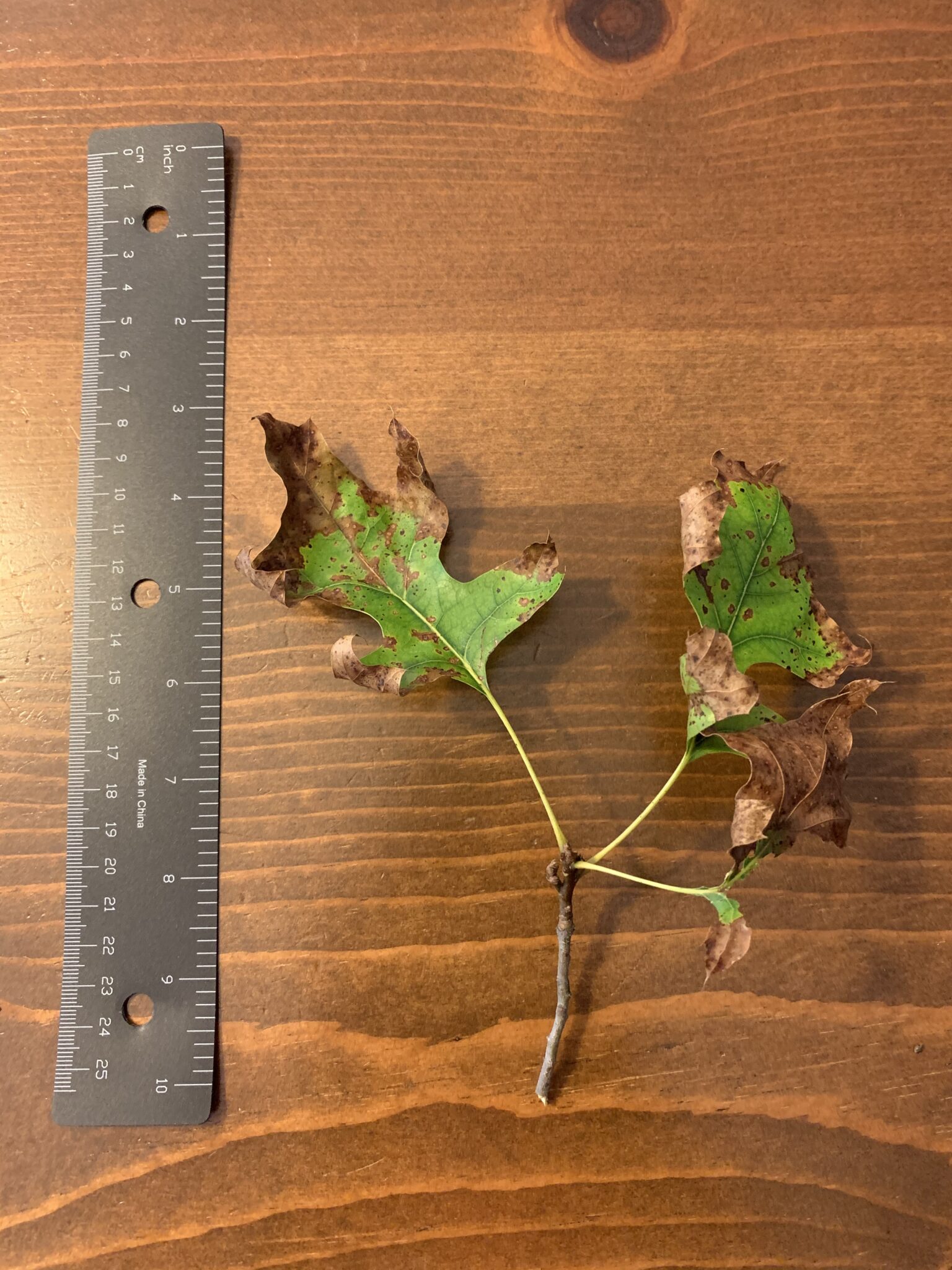
Figure 3: Marginal blighting due to coalescing spots and veinal necrosis.

Figure 5: Blighting of large leaf area caused by veinal infection by Tubakia.

Figure 4: Typical Tubakia leaf spot symptoms illustrating how the fungus spreads along leaf veins.
The pathogen produces conidia within shield shaped structures called pycniothyria (Figure 6) which can be found on both the top or bottom surface of the leaf and along veins (Figure 7). These structures are very small and can only be seen with a 40x or stronger hand lens. The fungus overwinters on fallen leaves and on dead stems which act as the source of inoculum for the next year. During early spring, spores are spread by wind and water splash dispersal (rain) to healthy new foliage. However, it takes time for symptoms to develop throughout the season, depending on tree stress and environmental conditions (warm wet weather favors spread).
For full article view: Purdue Landscape Report, Purdue Landscape Report.
Diseases of Landscape Plants: Leaf Diseases, The Education Store, Purdue Extension resource center
Consumer Horticulture: Fertilizing Woody Plants, The Education Store
Tree Disease; Oak Wilt in Indiana, The Education Store
Diseases of Soybean: Frogeye Leaf Spot, The Education Store
Bur Oak, Purdue Arboretum Explorer
Bur Oak, Native Trees of Indiana River Walk, Purdue Fort Wayne
Find an Arborist, TreesAreGood.org
John Bonkowski, Plant Disease Diagnostician
Purdue Department of Botany and Plant Pathology
Tom C Creswell, Clinical Engagement Professor – PPDL
Purdue Department of Botany and Plant Pathology
Join Purdue Extension forester Lenny Farlee and Dr. Carrie Pike, a forest regeneration specialist with the USDA Forest Service, as they share about conservation tree planting, what species are available to plant, where to get them and more.
If you have any questions regarding trees, forest management, wildlife, wood products or other natural resource topics, feel free to contact us by using our Ask an Expert web page.
Resources
Find An Indiana Forester Website
Reforestation, Nurseries and Genetics Resources Website (RNGR.NET)
A Nursery Guide for the Production of Bare Root Hardwood Seedlings, RNGR.NET
Landowner Information, Hardwood Tree Improvement Regeneration Center (HTIRC)
Ask An Expert, Playlist, Purdue Extension – Forestry and Natural Resources YouTube Channel
A Woodland Management Moment, Playlist
Ask An Expert: Tree Inspection, Video
Planting Forest Trees and Shrubs in Indiana, The Education Store, Purdue Extension resource center
Investing in Indiana Woodlands, The Education Store
Tree Appraisal and the Value of Trees, The Education Store
Forest Improvement Handbook, The Education Store
Lenny Farlee, Sustaining Hardwood Extension Specialist
Purdue University Department of Forestry and Natural Resource
You can improve the taste and enjoyment of your wild venison by following a few important tips that our extension specialists and educators shared in the FNR Facebook LIVE session from November 12th.
Many easy step by step resources are available and were shared in the video including How to Score Your White-tailed Deer to Cutting, Grinding & Packaging. More Purdue Extension – Forestry and Natural resources:
Video Series:
Handling Harvested Game: Episode 1, Field Dressing
Handling Harvested Game: Episode 2, Hanging & Skinning
Handling Harvested Game: Episode 3, Deboning
Handling Harvested Game: Episode 4, Cutting, Grinding & Packaging
Feel free to continue to send in your deer questions to the Ask an Expert web page. If you have any other questions regarding trees, forest management, wildlife, wood products or natural resource be sure to submit those questions by utilizing the Ask an Expert.
Publications and More Videos:
White-Tailed Deer Post Harvest Collection, video, The Education Store, Purdue Extension resource center
Deer Harvest Data Collection, Got Nature? Blog, Purdue Extension-Forestry & Natural Resources (FNR)
Age Determination in White-tailed Deer, video
How to Build a Plastic Mesh Deer Exclusion Fence, The Education Store
Indiana Hunting & Trapping Season 2020-2021 (pdf), Indiana Department of Natural Resources, Department of Fish & Wildlife
Indiana Hunting & Trapping Guide, IN DNR, Department of Fish & Wildlife
Jarred Brooke, Wildlife Extension Specialist
Purdue Department of Forestry and Natural Resources
Jonathan Ferris, Wayne County Extension Director
Purdue Extension
Dave Osborne, County Extension Director
Purdue Extension
Rod N Williams, Professor of Wildlife Science
Purdue University Department of Forestry and Natural Resources
In this first of five prescribed fire ignition technique videos, Purdue Extension wildlife specialist Jarred Brooke describes a backing fire. A backing fire is what we use to start most prescribed fires as it gives a result of a slow moving fire, one with short flame lengths that is easy to control compared to other firing techniques.
If you have any questions regarding wildlife, trees, forest management, wood products, natural resource planning or other natural resource topics, feel free to contact us by using our Ask an Expert web page.
Resources
Wildlife Habitat Hint, Playlist, Purdue Extension – Forestry and Natural Resouces YouTube channel
Wildlife Habitat Hint: Late Growing Season Prescribed Fire, Video
Renovating Native Warm-Season Grass Stands for Wildlife: A Land Manager’s Guide, The Education Store, Purdue Extension resource center
Prescribed fire: 6 things to consider before you ignite, Got Nature? Blog, Purdue Extension – 4Forestry and Natural Resources
Jarred Brooke, Wildlife Extension Specialist
Purdue Department of Forestry and Natural Resources
In this special fall color edition of ID That Tree, Purdue Extension forester Lenny Farlee introduces you to this red beauty, the winged sumac. This species, found in southern Indiana, is recognizable by opposite leaf arrangement, compound leaves with a unique miniature leaf at the end of the stem, as well as drooping clusters of red fruit.
If you have any questions regarding wildlife, trees, forest management, wood products, natural resource planning or other natural resource topics, feel free to contact us by using our Ask an Expert web page.
Resources
Winged Sumac, Purdue Arboretum Explorer
Fall Color Pigments, Video, Purdue Extension – Forestry and Natural Resources Youtube Channel
ID That Tree – Video Playlist, Purdue Extension – Forestry and Natural Resources (FNR) YouTube Channel
Purdue Arboretum Explorer
Conservation Tree Planting: Steps to Success, Purdue Extension – FNR YouTube Channel
A Woodland Management Moment, Playlist, Purdue Extension – FNR YouTube Channel
Woodland Stewardship for Landowners, Playlist, Purdue Extension – FNR YouTube Channel
Fifty Common Trees of Indiana, Purdue Extension – FNR
Indiana Invasive Species Council
Cooperative Invasive Species Management Area (CISMA)
Report Invasive, Purdue Extension
Habitat University, Episode 12 – Exploring the challenges of Invasive Species, Habitat University-Natural Resource University
Shrubs and Woody Vines of Indiana and the Midwest, Purdue University Press
Native Trees of the Midwest, Purdue University Press
Professional Forester, Indiana Forestry Woodland Owners Association
District Forester, Indiana Department of Natural Resources, 10+ acres
Find an Arborist, International Society of Arboriculture
Forest Improvement Handbook, The Education Store
Lenny Farlee, Sustaining Hardwood Extension Specialist
Purdue University Department of Forestry and Natural Resource
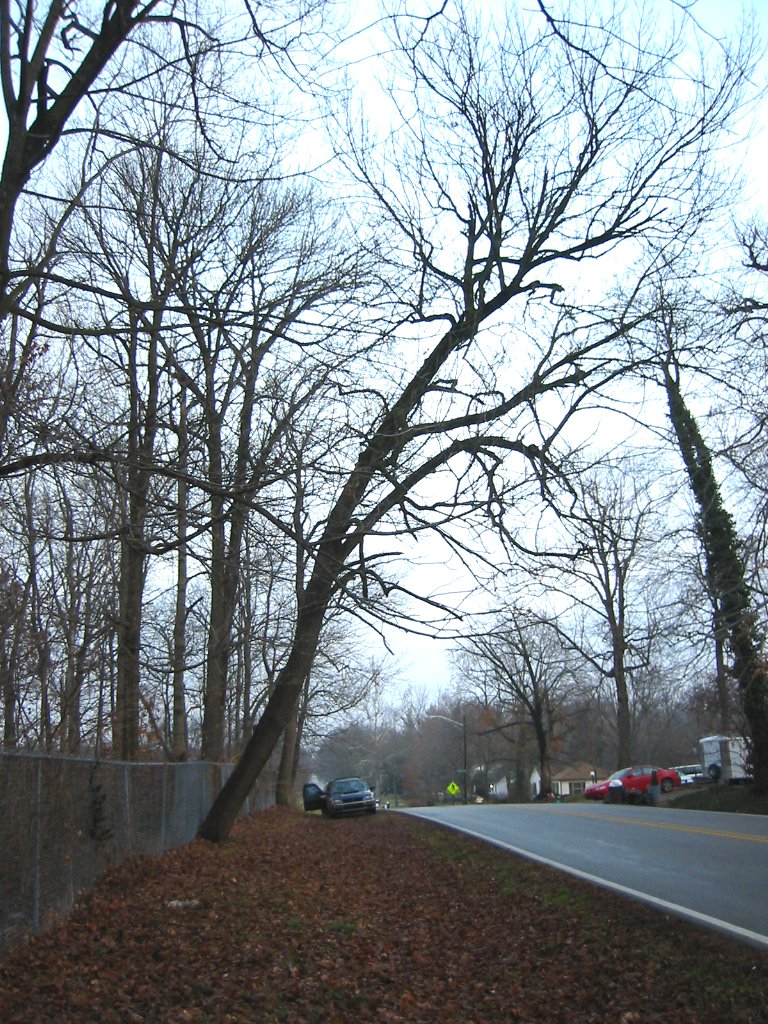
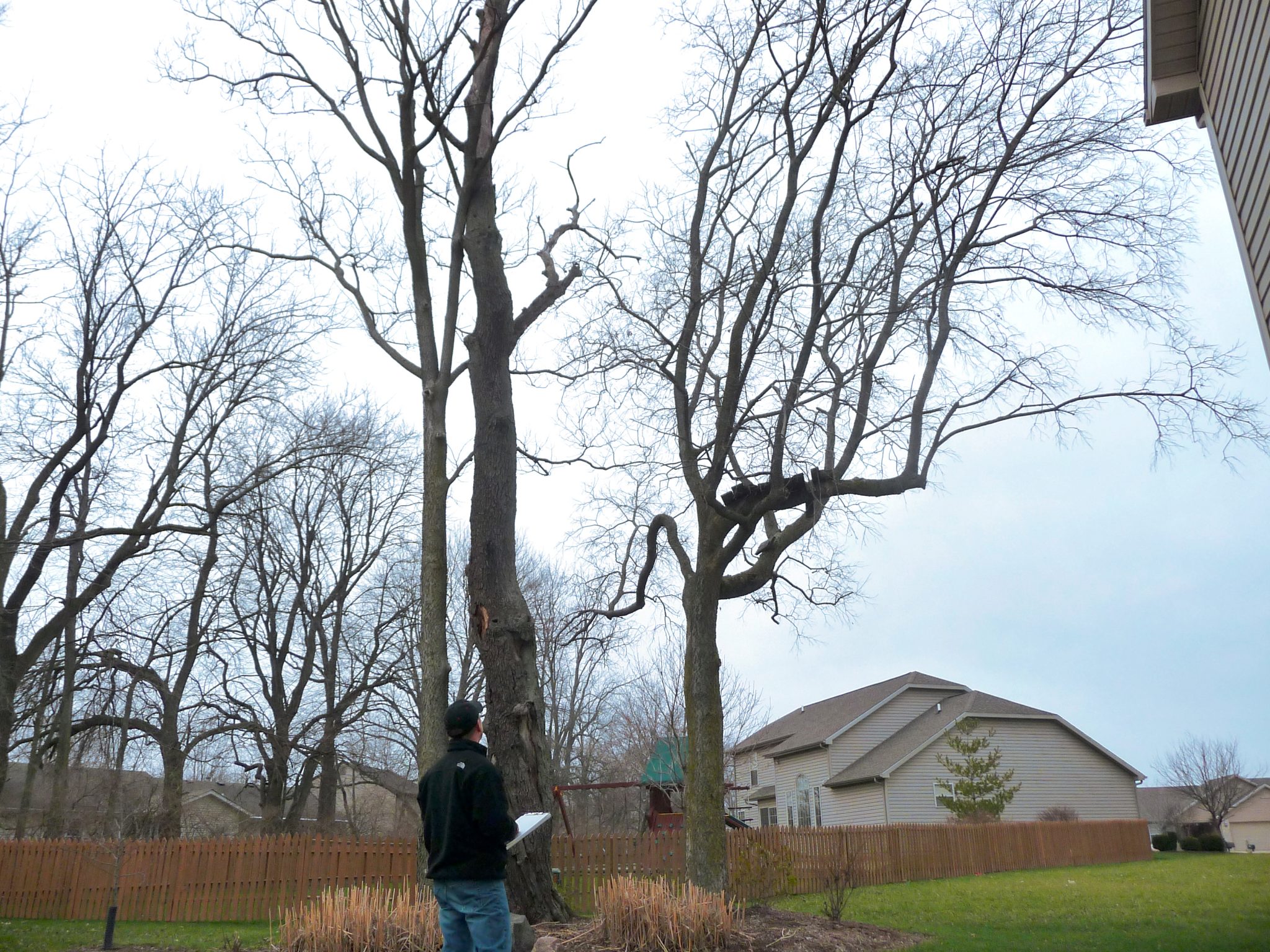
Leaning trees can be a risk to neighboring property owners.
Purdue Landscape Report: I hear this complaint or issue more frequently, “what can I do about the neighbor’s tree?” or “my neighbor just butchered my tree!”. Often, we see issues with a neighboring tree that may threaten safety or appears to be an elevated risk. For example, from the view of your window, you see your neighbor’s tree dropping dead branches all over your driveway. Or, you can’t see a favorable view at all because of that tree or unruly hedge. Or you are certain that the neighbor’s tree will eventually fall onto your garage.
Before you take any action, establish ownership of the tree, and find out if you have rights to work on the offending vegetation. Otherwise, it can land you into a contentious legal situation.
Some questions to consider include:
When tree limbs or even the trunk of the tree crosses property line, are you within your rights to prune or remove it?
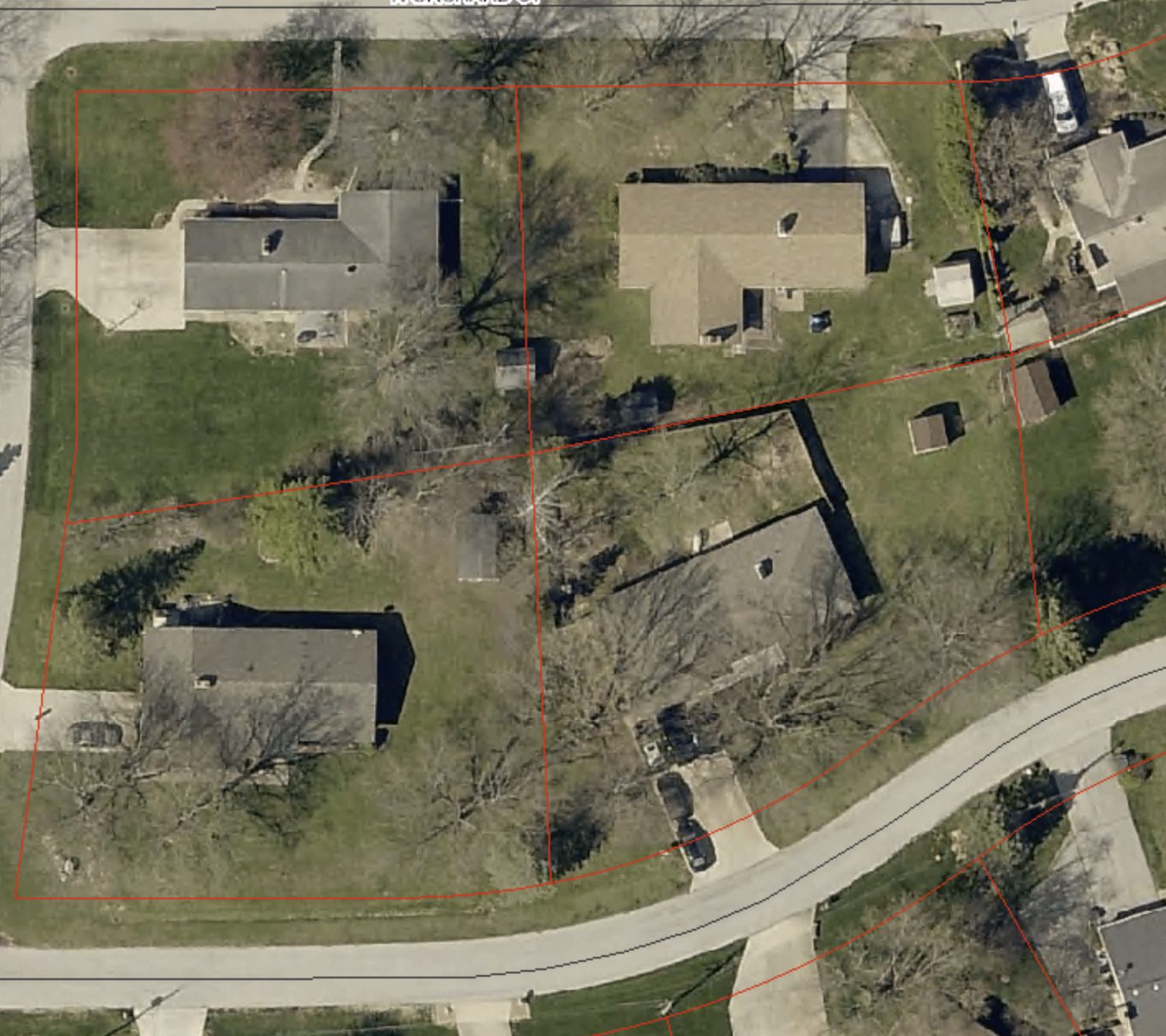
Check with local government websites for property maps which can help identify boundaries.
Boundary laws vary with every state. Often the boundary lines are uncertain or assumed based on local information. However, in contentious situations that may result in major modifications to a tree, it is advised to get a survey to establish exactly who owns the tree.
Rights are determined by who owns the tree. Check with your town, city, county and state municipalities for regulations about trees and property lines. The rights and responsibility for care and maintenance of trees are assigned to its owner, and ownership is determined by the location of the tree’s trunk. If the trunk is located entirely on the neighbor’s land even if its limbs or branches overhang onto your land, the neighbor is the tree’s owner. The neighbor has the sole right to preserve the tree or cut it down. This is true regardless of the neighbor’s motivation or the impact the tree removal would have on your land.
An ISA certified arborist can provide mitigation options that are best for the tree and helpful for the tree owner.
It is always best practice and considerate to first ask your neighbor if you can arrange to have it removed or pruned. They might actually appreciate it.
When tree work is required to remove or prune the tree and neighbor conflict exists, have a qualified tree care provider determine the work specifications on exactly how the tree issue should be mitigated. It is usually a bit more complex than simply stating, “cut limbs back to property line.” The work order must reference the ANSI A300 tree pruning standards to assure the procedures being proposed take into consideration the tree’s future health. Ensure that your tree care provider has a copy of their current liability insurance policy on hand. Check their references as well, not all tree care companies are guaranteed to provide the best results for you or your tree.
The best advice is to hire a tree care professional with the experience, expertise, and equipment to assess and safely prune, remove or otherwise care for your or your neighbors’ trees. Search for a tree care provider in your area. Also, consider hiring an ISA Certified Arborist which can be found here.
According to most attorneys, open-minded communications with the neighbor can result in an acceptable resolution for any situation. This will help to avoid contentious, expensive, time consuming, and unpredictable lawsuits.
Resources
Find An Arborist, Trees are Good
Tree Pruning Essentials, video and publication, The Education Store, Purdue Extension Forestry and Natural Resources
Construction and Trees: Guidelines for Protection, The Education Store
Question: Can tree roots cause damage to a home’s foundation?, Got Nature? Blog, Purdue Extension – Forestry and Natural
Lindsey Purcell, Urban Forestry Specialist
Purdue University, Department of Forestry and Natural Resources
In this special fall color edition of ID That Tree, Purdue Extension forester Lenny Farlee introduces you to the range of colors produced by the sugar maple.
If you have any questions regarding wildlife, trees, forest management, wood products, natural resource planning or other natural resource topics, feel free to contact us by using our Ask an Expert web page.
Resources
Hard or Sugar Maple, The Education Store, Purdue Extension – Forestry and Natural Resources
Sugar Maple, Purdue Arboretum Explorer
Sugar Maple, Native Trees of Indiana River Walk, Purdue – Fort Wayne
Fall Color Pigments, Video, Purdue Extension – Forestry and Natural Resources Youtube Channel
ID That Tree, Playlist
A Woodland Management Moment, Playlist
Investing in Indiana Woodlands, The Education Store
Forest Improvement Handbook, The Education Store
Lenny Farlee, Sustaining Hardwood Extension Specialist
Purdue University Department of Forestry and Natural Resource
The 100 year study, Hardwood Ecosystem Experiment (HEE), brings pertinent forest management data to many in Indiana. HEE Extension publications continue to share topics including: Wildlife Responses to Timber Harvesting, Sustaining our Oak-Hickory Forests, Forest Birds and more.
To learn more about this 100 year forest management plan and see its impacts, check out the Hardwood Ecosystem Experiment (HEE) website.
Resources
Hardwood Ecosystem Experiment (HEE), Playlist, Purdue Extension – Forestry and Natural Resources
A Woodland Management Moment, Playlist
Woodland Stewardship for Landowners, Playlist
The Hardwood Ecosystem Experiment: Indiana Forestry and Wildlife, The Education Store, Purdue Extension resource center
Resources and Assistance Available for Planting Hardwood Seedlings, The Education Store
Charlotte Owings, Hardwood Ecosystem Experiment Project Coordinator
Purdue University, Department of Forestry and Natural Resources

Recent Posts
- Urban Tree Spotlight: Planting Deciduous Shade Trees, Purdue Landscape Report
Posted: March 25, 2026 in Forests and Street Trees, Urban Forestry, Woodlands - Beetle that attacks Tree-of-Heaven found in Indiana, Purdue Landscape Report
Posted: March 20, 2026 in Invasive Insects, Wildlife, Woodlands - ID That Tree: Dwarf Chinkapin Oak
Posted: in Forestry, Urban Forestry, Wildlife, Woodlands - IN-PREPared: Essential Resources for Indiana’s Severe Weather Season
Posted: March 11, 2026 in How To, Safety - DNR Hiring for Indiana Conservation Officer Positions, MyDNR
Posted: March 9, 2026 in Urban Forestry, Wildlife, Woodlands - ID That Tree: Shumard Oak
Posted: in Plants, Urban Forestry, Wildlife, Woodlands - A Woodland Management Moment: Windbreak Around Walnut Plantings
Posted: March 3, 2026 in Forestry, Urban Forestry, Woodland Management Moment - Getting Certified as an Indiana Certified Prescribed Burn Manager
Posted: March 2, 2026 in How To, Urban Forestry, Woodlands - Uniting Indiana Residents Against Invasive Species
Posted: February 27, 2026 in Community Development, Invasive Insects, Wildlife - Have You Seen a Soaring Eagle Lately? Morning Ag Clips
Posted: February 25, 2026 in Urban Forestry, Wildlife
Archives
Categories
- Alert
- Aquaculture/Fish
- Aquatic/Aquaculture Resources
- Ask the Expert
- Christmas Trees
- Community Development
- Disease
- Drought
- Forestry
- Forests and Street Trees
- Gardening
- Got Nature for Kids
- Great Lakes
- How To
- Invasive Animal Species
- Invasive Insects
- Invasive Plant Species
- Land Use
- Natural Resource Planning
- Nature of Teaching
- Plants
- Podcasts
- Ponds
- Publication
- Safety
- Spiders
- Timber Marketing
- Uncategorized
- Urban Forestry
- Webinar
- Wildlife
- Wood Products/Manufacturing
- Woodland Management Moment
- Woodlands