 Purdue University - Extension - Forestry and Natural Resources
Got Nature? Blog
In this episode of A Woodland Management Moment, Purdue Extension forester Lenny Farlee talks about how you can use nuts and seeds left dropped by existing trees, from walnuts to oaks and hickories, to establish new seedlings in other areas of your landscape through a process called direct seeding.
If you have any questions regarding trees, forests, wildlife, wood products or other natural resource topics, feel free to contact us by using our Ask an Expert web page.
Resources:
A Woodland Management Moment, Playlist, Purdue Extension – Forestry and Natural Resources (FNR) YouTube Channel
Shrubs and Woody Vines of Indiana and the Midwest, Purdue University Press
Native Trees of the Midwest, Purdue University Press
Investing in Indiana Woodlands, The Education Store
Forest Improvement Handbook, The Education Store
ID That Tree, Playlist, Purdue Extension – FNR YouTube Channel
Resources and Assistance Available for Planting Hardwood Seedlings, The Education Store
Woodland Stewardship for Landowners Video Series, Playlist, Indiana Department of Natural Resources YouTube Channel
Ask an Expert: Tree Selection and Planting, Purdue Extension – Forestry and Natural Resources (FNR) YouTube Channel
Lenny Farlee, Sustaining Hardwood Extension Specialist
Purdue University Department of Forestry and Natural Resources
South Bend Tribune: Look up the next time you pass a pine tree in Michiana — chances are it’s loaded with cones.
Conditions this season are ripe for an abundance of these woody reproductive organs of pine trees, and they’ll soon fall to the ground in both urban and forested areas.
Why so many? Lindsey A. Purcell, urban forestry specialist with Purdue University’s Forestry and Natural Resources Department, said some of the abundance could be the natural two-year, cone-producing cycle of conifers.
One year there’s few, if any, cones, while the following year the trees go into a seed-producing frenzy.
But more pine cones can also mean the trees are producing more reproductive seeds as a way to deal with the stress of a dry or changing climate.
It’s a matter of survival: The tougher, drier the season, the stronger the urge for the trees to reproduce through seeds so the species can survive.
“Drought conditions creates stress, and a lack of water seems to be an important stressor,” Purcell said.
Central Indiana has drought conditions this season, but northern Indiana areas near South Bend have fared better.
Trees have male and female cones. The males produce the pollen, while the female cones are often seen in the upper portions of conifers and hold the seeds that propagate the species.
Once pollinated, the tree’s female cones develop as the seeds mature, and they are usually conical or round-shaped. The individual plates on the cones, known as scales, keep the seeds safe from weather extremes and hungry animals until it’s warm and dry enough to release them to grow into new trees.
The cones are the protective coatings for the seeds, shielding them from water, wind and harsh conditions.
Most pine cone seeds are edible and not poisonous, but experts say Norfolk Island pine and yew trees are not true pine trees and both are toxic and should be avoided.
Resources:
Find an Arborist, Trees are Good
Tree Wounds and Healing, Got Nature? Blog
Ask an Expert: Tree Selection and Planting, Purdue Extension – Forestry and Natural Resources (FNR) YouTube Channel
Planting Your Tree Part 1: Choosing Your Tree, Purdue extension-FNR YouTube Channel
Tree Installation: Process and Practices, The Education Store
Tree Pruning Essentials, Youtube
Lindsey Purcell, Chapter Executive Director
Indiana Arborist Association (IAA)
South Bend Tribune
Tribune-Star: Both my son and daughter raised rabbits as members of 4-H, so for years our barn served as a makeshift hutch, complete with wire cages, watering and feeding bowls, and fur — lots of fur, some still sticking to the old building’s dusty rafters all this time later.
My brother and sister and I also grew up with rabbits, although it was through the likes of immortal “Bugs Bunny” features, such as “The Rabbit of Seville” (yes, with Bugs massaging Elmer Fudd’s head to the music of Rossini) and “14 Karat Rabbit” (featuring a greedy gold mining “Yosemite Sam”). I plan to share those cartoons with my grandsons, and sure hope they have the opportunity to watch them as we did: on a Saturday morning; not fully dressed; with few cares in the world; preferably, a bowl of cereal in hand.
That being said, I have no predisposed dislike of rabbits at all. But this summer has tested my patience as far as the Eastern Cottontail is concerned; they’ve invaded my property in record numbers. I have never seen so many rabbits short of a show at the fairgrounds, not even in my more innocent Warner Brothers days.
They seem to be everywhere: peeking out from beneath my car when I walk out the door; startled from a flower bed or garden when I reach for a weed to pull; nibbling about in our yard as we watch from our windows in the evenings. Some of them hardly even move now when I show up; I honestly think I could get them to eat out of my hand.
I don’t think our infestation approaches what’s happened in Australia. According to a 2020 “National Geographic” article, European rabbits were introduced to the continent in 1859 (I also read 1788 in another story) so they could be hunted; just 13 were originally brought in. By the turn of the century, the rabbits constituted one of the greatest invasive threats any country has ever experienced. They destroyed crops at prodigious rates, caused erosion, and nearly restructured the continent’s biodiversity. Fences, poisons, traps, even the use of rabbit-sensitive pathogens were used to try to control them; it’s estimated — despite doubled-down efforts with new pathogens — that there are over 200 million feral rabbits there now.
In a summer that has already been a bit out of whack, I have lately begun to wonder if it’s just me, or are there others seeing an uptick in rabbit populations too? And, before I take this any further, I’ll say that I am ruling out eliminating our problem with a shotgun, let alone pathogens. Just a few trips decades ago with a hardcore-hunting grandfather ended my ambitions for putting rabbits on our supper table; I tend to live and let live, and, of course, complain.
Not only did the furry little vandals eat all of the swamp milkweed I was growing for our monarch butterflies, they have gnawed off sunflowers — both planted and volunteer — and have, in particular, eaten many of our late-blooming hostas (nearly ready to flower) that must be particularly tender and tasty.
Purdue University Extension Specialist Jarred Brooke says, “I have received reports of abundant rabbits around the state. There are likely several causes for this, but it is hard to pin down the exact causes. Cottontail populations tend to be cyclical … One year the population may be booming, and then the next you might not see many. And it’s really hard to predict when those cycles will occur.”
Brooke says that things like mild winters — which we have luckily had these past few years — allow cottontails to breed earlier and more often, bring on lush green vegetation, and often allow predators to choose from a more varied menu than in summers following harsh winters.
“It’s hard to say exactly what is going on this year, but it sounds like we are in the increasing phase of their cycle, which is normal, “Brooke says. “Adding in the fact that many cottontail predators in some areas had an easy meal this spring with cicadas certainly doesn’t hurt. With that said, I don’t know any research that has linked rabbit populations with cicadas, but cicadas have been linked to population increases in other mammals, turkeys and songbirds.”
Brian McGowan, Certified Wildlife Biologist through Purdue University’s Department of Forestry and Natural Resources, says it’s nearly impossible to tell when we are having a big rabbit year: “Methods like roadkill surveys or bow hunter surveys provide some information, as well as annual harvest; however, these and other methods have a time lag element to them where they are done once a year and the data is not always immediately analyzed.”
Resources:
Wildlife Habitat Hint, Playlist, Purdue Extension – Forestry and Natural Resources YouTube channel
Considerations for Trapping Nuisance Wildlife with Box Traps, The Education Store, Purdue Extension’s resource center
Preventing Wildlife Damage – Do You Need a Permit? – The Education Store, Purdue Extension resource center
Selecting a Nuisance Wildlife Control Professional, The Education Store
How to Construct a Scent Station, Youtube
Question: How do I properly relocate raccoons from my attic?, Got Nature? Blog, Purdue Extension FNR
Jarred Brooke, Wildlife Extension Specialist
Purdue Forestry and Natural Resources
Brian MacGowan, Extension Wildlife Specialist
Department of Forestry & Natural Resources, Purdue University
On this episode of ID That Tree, Purdue Extension forester Lenny Farlee introduces you to an often overlooked native Indiana species, the red mulberry. This tree, often found in the shade or in river bottom areas, features variable leaves in an alternate arrangement, gray to brown flaky bark and black/dark purple berries, loved by animals and humans alike.
If you have any questions regarding wildlife, trees, forest management, wood products, natural resource planning, or other natural resource topics, feel free to contact us by using our Ask an Expert web page.
Resources:
ID That Tree, Playlist, Purdue Extension – Forestry and Natural Resources Youtube Channel
A Woodland Management Moment, Playlist, Purdue Extension – FNR Youtube Channel
Shrubs and Woody Vines of Indiana and the Midwest, Purdue University Press
Native Trees of the Midwest, Purdue University Press
Investing in Indiana Woodlands, The Education Store
Forest Improvement Handbook, The Education Store
Lenny Farlee, Sustaining Hardwood Extension Specialist
Purdue University Department of Forestry and Natural Resources
Are you interested in learning more abo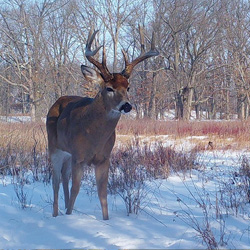 ut the Integrated Deer Management Project? Join us for four separate webinars as we dive deep into this multi-year research project.
The webinars are FREE and you can register by using the links below.
Webinar Topics and Speakers:
September 22, 6-7 PM eastern – Introduction to the Integrated Deer Management Project
Pat McGovern, Deer Project Coordinator, Purdue University
Joe Caudell, Assistant Director, Indiana DNR F&W
September 29, 6-7 PM – Monitoring Deer Populations
Zack Delise, PhD Student, Purdue University
October 6 , 6-7 PM – Monitoring Deer Habitat
R.D. Sample, PhD Student, Purdue University
October 13, 6-7 PM – Human Dimensions of Deer Management
Taylor Stinchcomb, PhD Student, Purdue University
In each webinar, the team will cover the latest updates from the Integrated Deer Management Project.
The Integrated Deer Management Project is a multi-year research project led by the Department of Forestry and Natural Resources at Purdue University in partnership with the Indiana Department of Natural Resources – Division of Fish and Wildlife.
The goal of the Integrated Deer Management Project is to combine deer population and habitat condition information with public perceptions of deer and deer management to better inform white-tailed deer management in Indiana.
Resources:
Ask an Expert, Playlist, Purdue Extension – Forestry and Natural Resources (FNR) YouTube Channel
Deer Exclosures, Video, Purdue Extension – FNR YouTube channel
Wildlife Habitat Hint: Trail Camera Tips and Tricks, Video, Purdue Extension – FNR YouTube channel
Wildlife Habitat Hint, Playlist
Trail camera survey for white-tailed deer, Got Nature? Blog
Handling Harvested Game: Episode 1, Field Dressing, Video
Woodland Stewardship for Landowners: Managing Deer Damage to Young Trees, Purdue Extension-FNR YouTube Channel
Managing Your Woods for White-Tailed Deer, The Education Store, Purdue Extension’s resource center
Patrick McGovern, Project Coordinator
Purdue University, Department of Forestry and Natural Resources
Jarred Brooke, Wildlife Extension Specialist
Purdue Forestry and Natural Resources
On this edition of ID That Tree, meet a range restricted species that is best identified by its bronze to yellowish bark, which often peels off in small flakes. The yellow birch, which is typically found natively in northern Indiana, also has simple finely toothed leaves and twigs that smell like wintergreen when scraped. Learn more from Purdue Extension forester Lenny Farlee inside.
If you have any questions regarding wildlife, trees, forest management, wood products, natural resource planning or other natural resource topics, feel free to contact us by using our Ask an Expert web page.
Resources:
ID That Tree, Playlist, Purdue Extension – Forestry and Natural Resources Youtube Channel
A Woodland Management Moment, Playlist, Purdue Extension – FNR Youtube Channel
Shrubs and Woody Vines of Indiana and the Midwest, Purdue University Press
Native Trees of the Midwest, Purdue University Press
Investing in Indiana Woodlands, The Education Store
Forest Improvement Handbook, The Education Store
Lenny Farlee, Sustaining Hardwood Extension Specialist
Purdue University Department of Forestry and Natural Resources
Purdue Landscape Report: Water covers approximately 71% of Earth’s surface, yet only 3% of the 326 million cubic miles of water on the planet is suitable for growing crops, such as trees. It can be said that water is the single most limiting ecological factor in tree growth and survival. It is a vital “nutrient” that must be available in adequate supply or plants decline and eventually die.
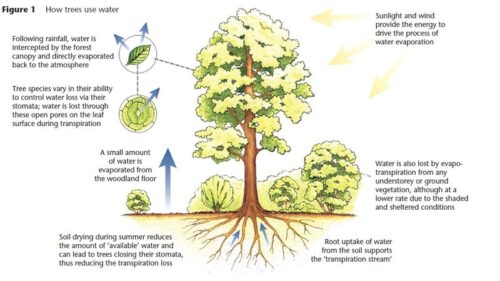
How trees use water is essential to determine water needs.
Trees use or lose water by two separate processes. First, water is taken up by tree roots from the soil and evaporated through the pores or stomata on the surface of leaves. Transpiration is a physiological process responding to soil and atmospheric factors. It is a passive movement of water through the tree system which allows columns of water to move great heights. Water movement through a tree is controlled by the tug-of-war between water availability and water movement in soil versus water loss from leaves. For example, water movement in a ring porous tree like a red oak is 92 ft/hr, in a diffuse porous tree like a basswood is 11 ft/hr, and for a pine tree is 6 ft/hr. Trees can absorb between 10 and 150 gallons of water daily, yet of all the water absorbed by plants, less than 5% remains in the plant for growth. They rely on available water in the soil to “rehydrate” during the nighttime hours, replacing the water loss during the daytime hours.
The second process is the interception of water by the surfaces of leaves, branches and trunks during rainfall, and its following evaporation. Together, these two processes are often referred to as evapotranspiration. Both transpiration and evaporation are strongly affected by the amount of sunlight, the temperature and humidity of the air, as well as wind speed as trees turn water into mist when it releases nearly 95% of the water it absorbs.
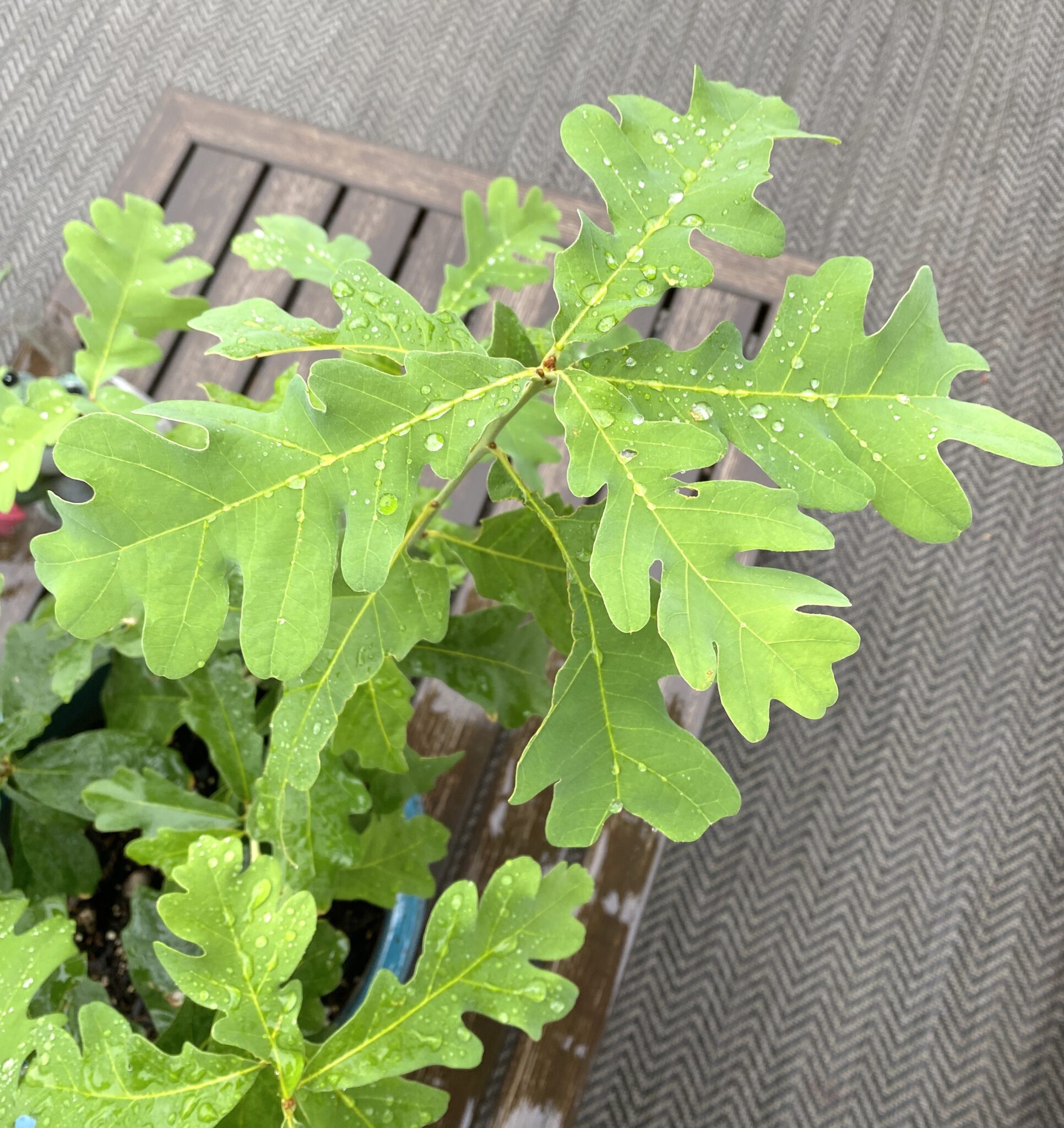
Leaves intercept water to help with stormwater management and cooling.
Just why does a tree need water? Well, nearly every plant process such as photosynthesis, respiration and transpiration rely on water to function properly. Water is an essential element as important if not more than other nutrients because it is required to put all our other elements into a form usable by the plant. Almost all essential elements are ionic forms dissolved in water, giving them the ability to move to stems, branches, and leaves for energy.
The goal of proper tree management is to prevent or reduce the impacts of water loss. If adequate soil moisture is available, water loss will go unnoticed as it is replaced naturally. Typically, we experience prolonged dry periods without rain, resulting in drought. Drought conditions are the result of long periods of time without natural rainfall. During dry conditions, soil moisture content is reduced to the point where tree roots can no longer pull the water molecules from the soil. This results in responses from the plant such as wilting, early fall color, scorching and other symptoms. Anytime there is a week without significant rainfall of at least one inch, most likely trees will need some assistance from us to supply the much-needed water for a healthy tree.
Resources:
Water Your Trees, Purdue Extension-Forestry and Natural Resources (FNR) Got Nature? blog
Summer Tree Care, Purdue Landscape Report
Drought? Don’t Forget the Trees!, The Education Store, Purdue Extension resource center
Extreme Heat, Purdue Extension – IN-PREPared
Drought Information, Indiana Department of Natural Resources
Planting Your Tree Part 1: Choosing Your Tree, Purdue Extension-FNR YouTube Channel
Tree Selection for the “Un-natural” Environment, The Education Store
Tree Pruning Essentials Video, Purdue Extension YouTube Channel
Tree Defect Identification, The Education Store
Surface Root Syndrome, The Education Store
Lindsey Purcell, Chapter Executive Director
Indiana Arborist Association
MyDNR Email Newsletter: DNR recently updated its recommendations related to the bird disease outbreak. Based on the data received from reports submitted by Indiana residents, it appears that the bird illness is consistently affecting specific areas. Find which counties are continuing to be affected by this outbreak on our website.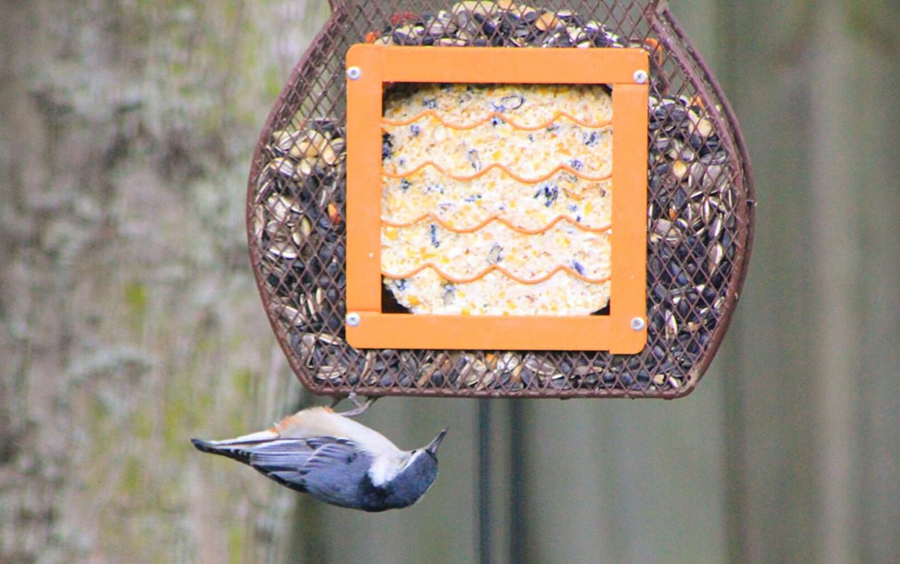
One of the simplest and most effective ways residents can help wild birds is by regularly cleaning bird feeders. Seed and suet feeders should be cleaned at least once every two weeks, and hummingbird feeders should be cleaned at least once a week. Bird feeders can be a breeding ground for disease if not properly cleaned. Help your feathered visitors stay healthy year-round by scrubbing feeders with soap and water, followed by a short soak in a 10% bleach solution.
Resources:
Cause of Songbird Deaths Remains a Mystery, Purdue Extension-Forestry and Natural Resources, Got Nature? Blog
Birdfeeder tips, The National Audubon Society
Birds and Residential Window Strikes: Tips for Prevention, The Education Store, Purdue Extension resource center
Breeding Birds and Forest Management: the Hardwood Ecosystem Experiment and the Central Hardwoods Region, The Education Store
Managing Woodlands for Birds Video, Purdue Extension-Forestry and Natural Resources YouTube Channel
Indiana Department of Natural Resources
On this episode of ID That Tree, meet the Northern Catalpa, native to southern Indiana along the Ohio River bottoms. This species, which provides rot resistant wood great for outdoor usage, features beautiful flower clusters in early summer, huge heart shaped leaves in whirled formation, and long bean-like fruit pods.
If you have any questions regarding wildlife, trees, forest management, wood products, natural resource planning or other natural resource topics, feel free to contact us by using our Ask an Expert web page.
Resources:
ID That Tree, Playlist, Purdue Extension – Forestry and Natural Resources Youtube Channel
A Woodland Management Moment, Playlist, Purdue Extension – FNR Youtube Channel
Shrubs and Woody Vines of Indiana and the Midwest, Purdue University Press
Native Trees of the Midwest, Purdue University Press
Investing in Indiana Woodlands, The Education Store
Forest Improvement Handbook, The Education Store
Northern Catalpa, The Purdue Arboretum Explorer
Lenny Farlee, Sustaining Hardwood Extension Specialist
Purdue University Department of Forestry and Natural Resources
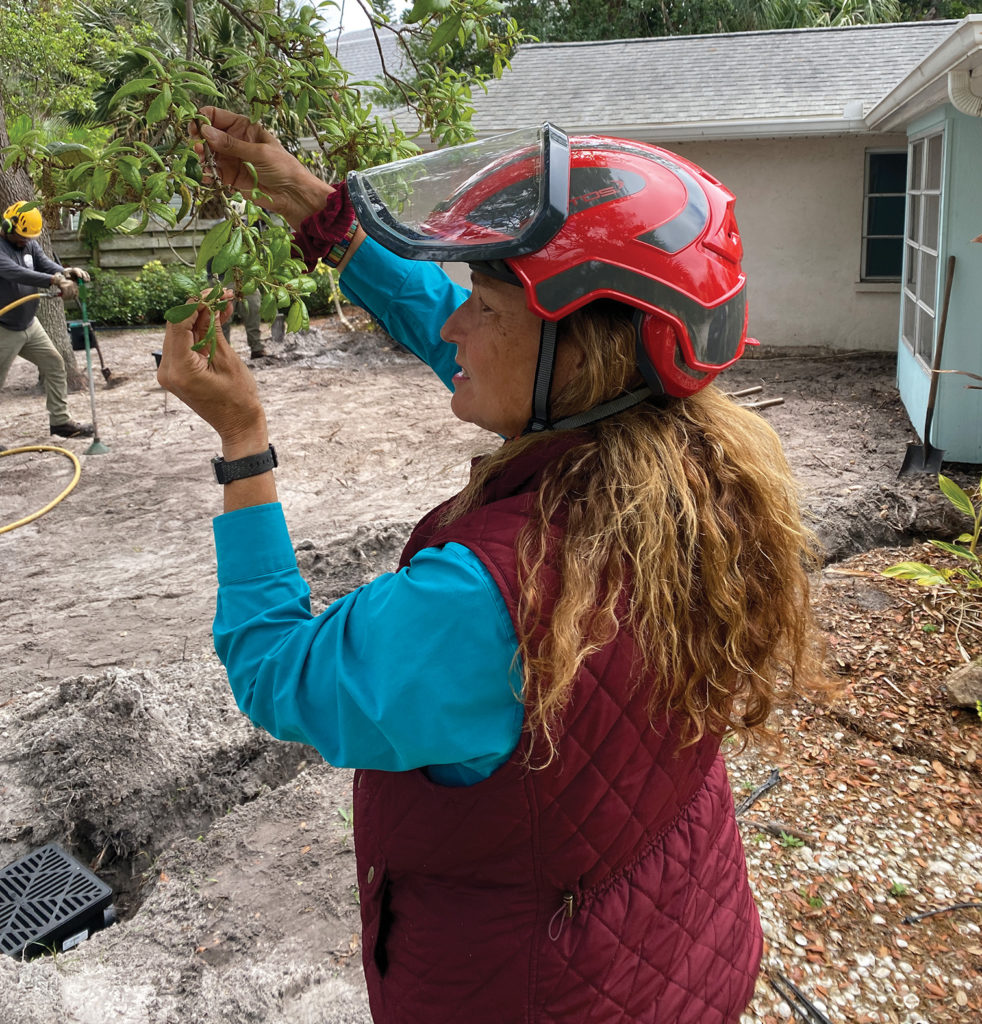
Scouting is the essential first step of an IPM program. Shown here is Tammy Kovar, owner of Biological Tree Services, a nine-year TCIA member company based in Sarasota, Florida. All photos and graphics courtesy of the author.
Tree Care Industry (TCI) Magazine: Plant health care (PHC) is the science and practice of understanding and overcoming the succession of biotic and abiotic factors limiting plants from achieving their full genetic potential in our landscapes and urban forests. Plant health care has been practiced as long as modern arboriculture itself and, as a science-based concept, is an important component in overall integrated pest management (IPM).
Pest management in our urban forests is a moving target and sometimes is overwhelming, especially for those early-career professionals. I remember from my early days in the field the overwhelming thought of needing to know every pest for every tree! I literally had a truckload (back seat of a king cab) of university publications, bulletins and articles ripped out of magazines for reference in the event I couldn’t figure it out quickly and on site. Just that fear of not knowing was often very stressful. Well, that has changed significantly.
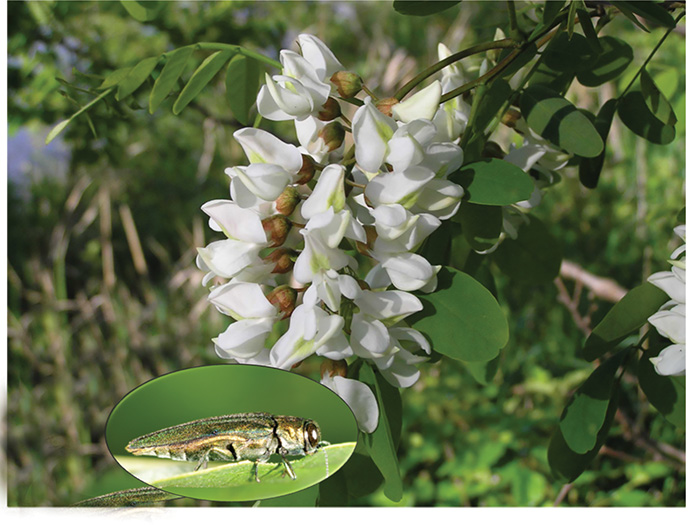
Adult emerald ash borers typically take flight about the same time that black locust trees bloom, indicating a good time for treatment.
The point is that first, you don’t have to know everything, and second, resources now are easily and readily available. Today, the smartphone and computing opportunities available on mobile platforms, apps such as the Purdue Tree Doctor and other web-based apps have improved diagnostics significantly, making it simpler for the technician to get a better idea of their pest issue and easier to find a control strategy.
One of the basic and most important keys when starting a PHC program is just learning to recognize the concerns for common trees already in your care. Tree identification is critically important to determine whether the tree is even a host for any given disease or insect. As a technician, you don’t need to know every tree in North America; just focus on those that are commonly found and that you are called upon to investigate for pest issues with your clients and customers. Few things are as awkward as misidentification of a tree and the corresponding application. Recommendations for treating emerald ash borer on a European mountain ash (Sorbus aucuparia), which is not susceptible to EAB infestation, could be fairly damaging to your credibility and your company!
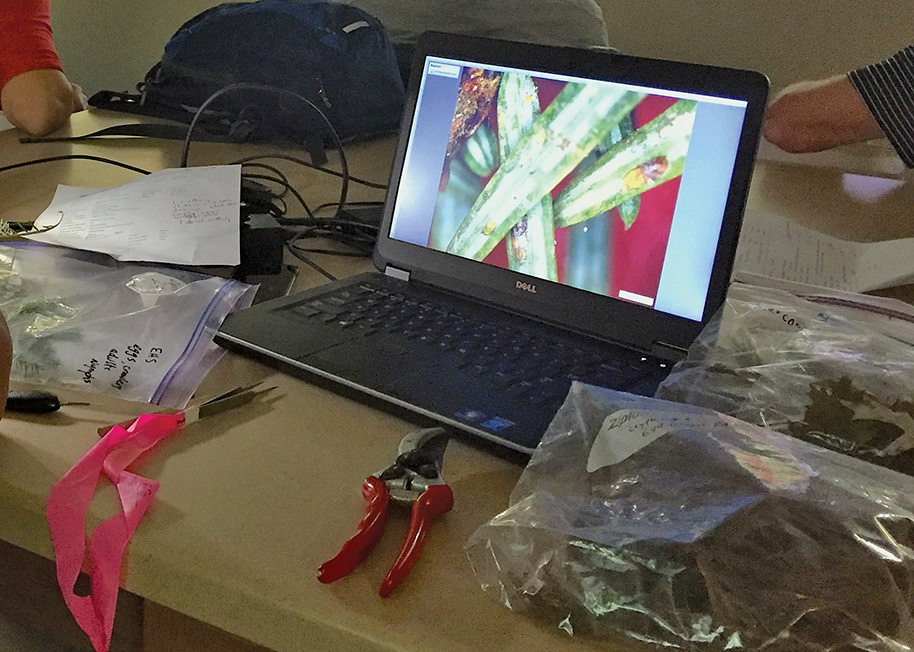
Each state has a land-grant college with resources to assist PHC technicians.
Get some help
All there is to know and what you need to know can be mind-boggling; however, it is more manageable when we are able to discover the resources available. Often overlooked, local extension services from state land-grant colleges provide a tremendous collection of experts trained and educated in pest management. They often have plant and pest diagnostic laboratories assisting with identification of those challenging diseases or insects, usually at a very economical cost, along with the appropriate management strategy to apply for control.
Resources:
Planting Your Tree Part 1: Choosing Your Tree, Purdue Extension YouTube Channel
Tree Installation: Process and Practices, The Extension Store, Purdue Extension resource center
Ask an Expert: Tree Selection and Planting, Purdue FNR Extension YouTube Channel
Webinar: How to Identify Trees in Indiana, Got Nature? Post, Purdue Extension – Forestry and Natural Resources
Shrubs and Woody Vines of Indiana and the Midwest, Purdue University Press
Native Trees of the Midwest, Purdue University Press
ID That Tree, Purdue Extension – Forestry and Natural Resources YouTube Playlist
Purdue Plant and Pest Diagnostic Lab
Emerald Ash Borer Information from Purdue
Lindsey Purcell, Urban Forestry Specialist
Purdue Department of Forestry and Natural Resources

Recent Posts
- Beetle that attacks Tree-of-Heaven found in Indiana, Purdue Landscape Report
Posted: March 20, 2026 in Invasive Insects, Wildlife, Woodlands - ID That Tree: Dwarf Chinkapin Oak
Posted: in Forestry, Urban Forestry, Wildlife, Woodlands - IN-PREPared: Essential Resources for Indiana’s Severe Weather Season
Posted: March 11, 2026 in How To, Safety - DNR Hiring for Indiana Conservation Officer Positions, MyDNR
Posted: March 9, 2026 in Urban Forestry, Wildlife, Woodlands - ID That Tree: Shumard Oak
Posted: in Plants, Urban Forestry, Wildlife, Woodlands - A Woodland Management Moment: Windbreak Around Walnut Plantings
Posted: March 3, 2026 in Forestry, Urban Forestry, Woodland Management Moment - Getting Certified as an Indiana Certified Prescribed Burn Manager
Posted: March 2, 2026 in How To, Urban Forestry, Woodlands - Uniting Indiana Residents Against Invasive Species
Posted: February 27, 2026 in Community Development, Invasive Insects, Wildlife - Have You Seen a Soaring Eagle Lately? Morning Ag Clips
Posted: February 25, 2026 in Urban Forestry, Wildlife - Register for Natural Resources Teacher Institute’s Class of 2026
Posted: February 19, 2026 in Forestry, Wildlife, Woodlands
Archives
Categories
- Alert
- Aquaculture/Fish
- Aquatic/Aquaculture Resources
- Ask the Expert
- Christmas Trees
- Community Development
- Disease
- Drought
- Forestry
- Forests and Street Trees
- Gardening
- Got Nature for Kids
- Great Lakes
- How To
- Invasive Animal Species
- Invasive Insects
- Invasive Plant Species
- Land Use
- Natural Resource Planning
- Nature of Teaching
- Plants
- Podcasts
- Ponds
- Publication
- Safety
- Spiders
- Timber Marketing
- Uncategorized
- Urban Forestry
- Webinar
- Wildlife
- Wood Products/Manufacturing
- Woodland Management Moment
- Woodlands