 Purdue University - Extension - Forestry and Natural Resources
Got Nature? Blog
In this edition of ID That Tree, we’re going to introduce you to a very rare Indiana shrub that’s a relic of the ice age here, and that is Canada yew. It’s only found in Indiana on very steep slopes, rock faces, and cliffs. It’s an evergreen, so it is coniferous. It’s also very palatable to deer, so deer browse has been very hard on this particular shrub.
If you have any questions regarding wildlife, trees, forest management, wood products, natural resource planning or other natural resource topics, feel free to contact us by using our Ask an Expert web page.
Resources:
ID That Tree, Playlist, Purdue Extension – Forestry and Natural Resources (FNR) YouTube Channel (Invasive White Mulberry, Siberian Elm, Tree of Heaven)
Invasive Species Playlist, Playlist, Purdue Extension – FNR YouTube Channel (Asian Bush Honeysuckle, Burning Bush, Callery Pear, Multiflora rose)
A Woodland Management Moment, Playlist, Purdue Extension – FNR YouTube Channel (Against Invasives, Garlic Mustard, Autumn Olive)
Woodland Stewardship for Landowners, Playlist, Purdue Extension – FNR YouTube Channel (Common Buckthorn, Japanese Barberry)
How long do seeds of the invasive tree, Ailanthus altissima remain viable? (Invasive Tree of Heaven), USDA Forest Service
Indiana Department of Natural Resources: Invasive Species
Indiana Invasive Species Council
Cooperative Invasive Species Management Area (CISMA)
Report Invasive, Purdue Extension
Aquatic Invasive Species, Illinois-Indiana Sea Grant (IISG)
Episode 11 – Exploring the challenges of Invasive Species, Habitat University-Natural Resource University
What are invasive species and why should I care?, Got Nature? Blog, Purdue Extension – FNR
Shrubs and Woody Vines of Indiana and the Midwest, The Education Store, Purdue Extension Resource Center
Native Trees of the Midwest, The Education Store
Investing in Indiana Woodlands, The Education Store
Professional Forester, Indiana Forestry Woodland Owners Association
District Forester 10+acres of woodlands, Indiana Department of Natural Resources
Forest Improvement Handbook, The Education Store
Lenny Farlee, Extension Forester
Hardwood Tree Improvement and Regeneration Center
Purdue Department of Forestry & Natural Resources
MyDNR, Indiana’s Outdoor Newsletter: As spring has sprung, so has new wildlife. It may be tempting to cuddle cute, young wildlife, but it’s important to always assess the situation from a safe distance.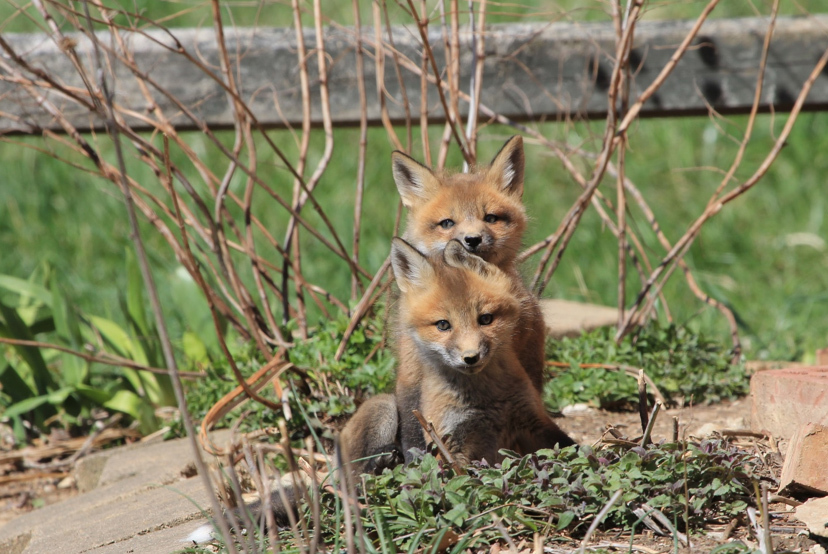
Young wildlife’s best chance of survival is with their mother, and your support can often unintentionally harm wildlife if that support is not needed. If young wildlife have fallen out of a den or nest, you can return them to their home and then leave the area. It is common for a mother to leave her young for long periods of time to forage for her and her young, so don’t linger around wildlife or their homes too long. Doing this can dissuade a mother from returning or alert predators to the young.
If you’re uncertain whether wildlife need assistance, contact a wildlife rehabilitator before picking up wildlife. If wildlife truly need assistance, they must be turned over to a permitted wildlife rehabilitator within 24 hours. Find a list of permitted wildlife rehabilitators on our website.
To learn more, please visit DNR: Fish & Wildlife Resources.
To subscribe to the newsletter visit MyDNR Email Newsletter.
Resources:
Designing Hardwood Tree Plantings for Wildlife – The Education Store
ID That Tree – YouTube Playlist
Forest Management for Reptiles and Amphibians: A Technical Guide for the Midwest, The Education Store
Ask the Expert: Hardwood Ecosystem Experiment – Birds and Salamander Research, Purdue Extension – FNR
A Template for Your Wildlife Habitat Management Plan, The Education Store
Managing Your Woods for White-Tailed Deer, The Education Store
Woodland Stewardship for Landowners, Playlist, Purdue Extension – FNR YouTube channel
Creating a Wildlife Habitat Management Plan for Landowners, The Education Store, Purdue Extension’s resource center
A Template for Your Wildlife Habitat Management Plan, The Education Store
Birds and Residential Window Strikes: Tips for Prevention, The Education Store, Purdue Extension resource center
Managing Woodlands for Birds Video, Purdue Extension-Forestry and Natural Resources (FNR) YouTube Channel
Developing a Wildlife Habitat Management Plan, The Education Store
The Nature of Teaching, YouTube channel
Nature of Teaching: Common Mammals of Indiana, The Education Store
Subscribe to Purdue Extension-Forestry & Natural Resources YouTube Channel, Wildlife Playlist
Indiana Department of Natural Resources
Illinois-Indiana Sea Grant Newsroom: The U.S. Department of State and the Fulbright Foreign Scholarship Board announced earlier this year that Kwamena Quagrainie of Purdue University received a Fulbright Specialist Program award. Through April and May of 2023, Dr. Quagrainie completed a project at Kwame Nkrumah University of Science and Technology, training faculty and graduate students about the economics of aquaculture. The project’s aim was to exchange knowledge and establish partnerships benefiting participants, institutions, and communities both in the U.S. and overseas through a variety of educational and training activities within the field of agriculture.
Dr. Quagrainie is one of over 400 U.S. citizens who share expertise with host institutions abroad through the Fulbright Specialist Program each year. Recipients of Fulbright Specialist awards are selected on the basis of academic and professional achievement, demonstrated leadership in their field, and their potential to foster long-term cooperations between institutions in the U.S. and abroad.
The Fulbright Program is the flagship international educational exchange program sponsored by the U.S. government and is designed to build lasting connections between the people of the United States and the people of other countries. The Fulbright Program is funded through an annual appropriation made by the U.S. Congress to the U.S. Department of State. Participating governments and host institutions, corporations, and foundations around the world also provide direct and indirect support to the Program, which operates in over 160 countries worldwide.
For full article and videos please visit Kwamena Quagrainie receives Fulbright Specialist award to Ghana – IISG
Resources
A Guide to Marketing for Small-Scale Aquaculture Producers, The Education Store
A Guide to Small-Scale Fish Processing Using Local Kitchen Facilities, The Education Store
Marine Shrimp Biofloc Systems: Basic Management Practices, The Education Store
Aquaculture Industry in Indiana Growing, Purdue Today
Walleye Farmed Fish Fact Sheet: A Guide for Seafood Consumers, The Education Store, Purdue Extension resource center
Sustainable Aquaculture: What does it mean to you?, The Education Store
The Benefits of Seafood Consumption The Education Store, Purdue Extension Resource Center
Walleye Farmed Fish Fact Sheet: A Guide for Seafood Consumers, The Education Store, Purdue Extension resource center
Pond and Wildlife Management website, Purdue Extension
Fish Cleaning with Purdue Extension County Extension Director, Got Nature? Blog, Purdue Extension – Forestry and Natural Resources
Aquatics & Fisheries, Playlist, Purdue Extension – Forestry and Natural Resources
Eat Midwest Fish, Illinois-Indiana Sea Grant online resource hub
Illinois-Indiana Sea Grant (IISG)
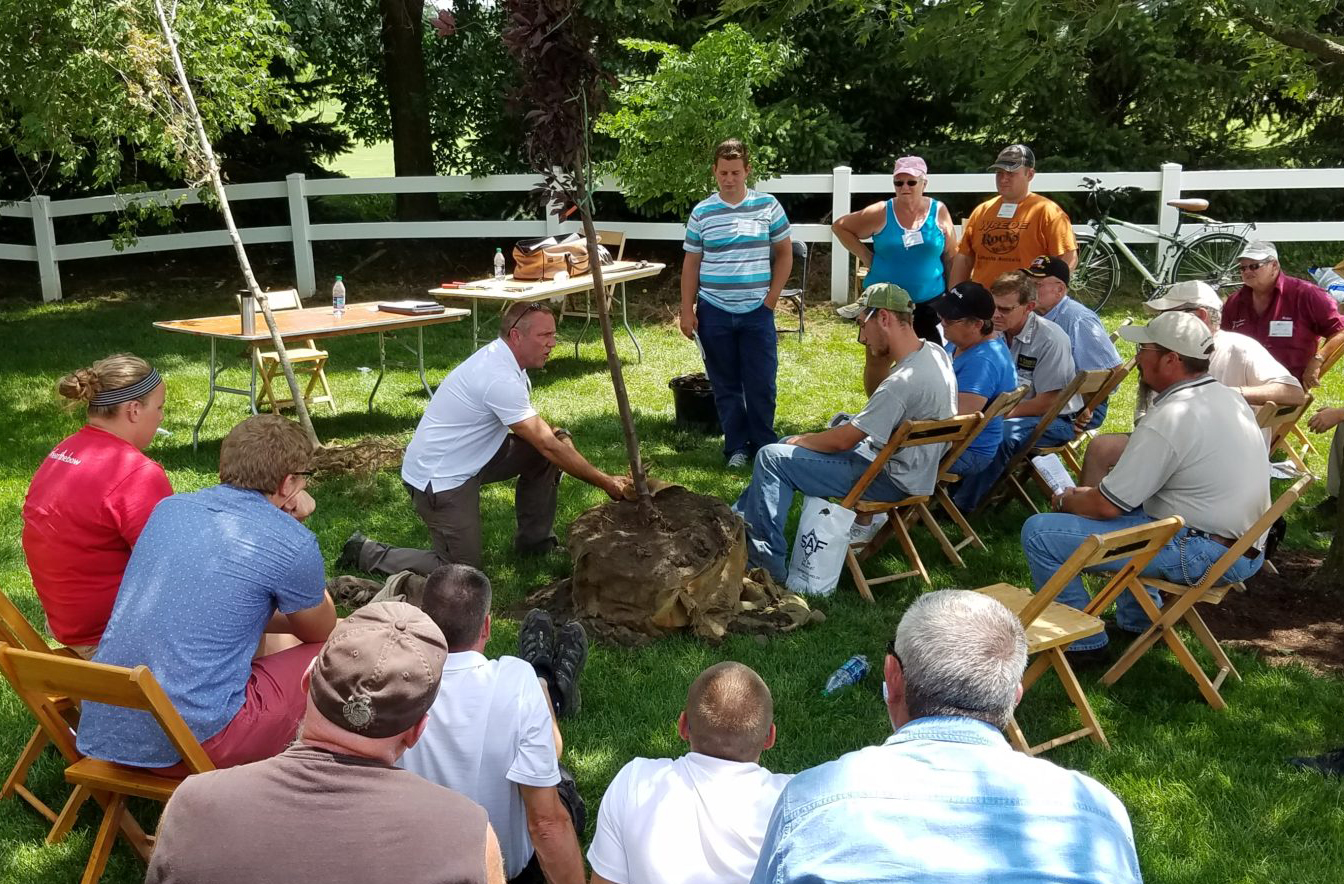 Spring is almost here and we get to wave goodbye to winter. Temperatures are rising, the winds are blowing, and trees are waking up—one of the hot topics every spring is planting. If you missed the chance to get a tree or two (or many more) in the ground this past autumn, then now is the time to start thinking about it again. Look at your planting spaces to see what kind of tree would do well. Think about the tree going in the ground now vs 10 years from now, 30 years, or even 50 years. Will a full-size oak fit in your space or will a smaller redbud work better? Do you have poorly drained soil where a willow or bald cypress will enjoy the excess water or well-drained soil that an American beech or black gum might fare better? Think about what you might want growing in your portion of the ecosystem. Are you looking for spring flowers, shade in the summer, color in the fall, or even different bark types and branch architecture for the winter? Also, once you’ve made your decision and got your new tree make sure you plant it properly to ensure a long happy life and lots of enjoyment.
Don’t forget about the trees you already have in the ground, too. One simple act that you can do to help them out is to re-mulch your current trees. Mulching helps to regulate soil moisture and temperature for the roots of your trees. Grab a rake and work last year’s mulch into the ground a little, then apply enough new mulch to have about a 2–3-inch layer around your tree. Depending on the size of your tree you might need to have a larger mulch ring, but aim for at least a 3-foot diameter, and DO NOT mulch up to the trunk. This is volcano mulching and creates an area of decay in the trunk that can lead to failure. Leave a 2-3-inch ring between the trunk and the mulch.
For more spring tree tips check out the Purdue Extension – Forestry and Natural Resources (FNR) “YouTube Shorts” video, Ben McCallister Offers Spring Tree Tips
If you have any questions about these topics, please check out the links provided on tree selection, planting, and mulching.
Resources:
The Purdue Landscape Report
Tree Installation, The Education Store
Choosing a Tree video, The Education Store
Planting Your Tree video, The Education Store
Mechanical Damage to Trees, The Education Store
Re-Mulch Your Trees, Purdue Landscape Report
Planting Your Tree Part 1: Choosing Your Tree, Purdue Extension YouTube Channel
Summer Tree Care, Purdue Landscape Report
Tree Defect Identification, The Education Store
Tree Wound and Healing, Got Nature? Blog, Purdue Extension – Forestry and Natural Resources
Surface Root Syndrome, The Education Store
Shrubs and Woody Vines of Indiana and the Midwest, The Education Store
Ask an Expert: Tree Selection and Planting, Purdue Extension-Forestry & Natural Resources (FNR) YouTube playlist
ID That Tree, Purdue Extension-FNR YouTube playlist
Subscribe – Purdue Extension-FNR YouTube Channel
Ben McCallister, Urban Forestry Specialist
Purdue Forestry & Natural Resources
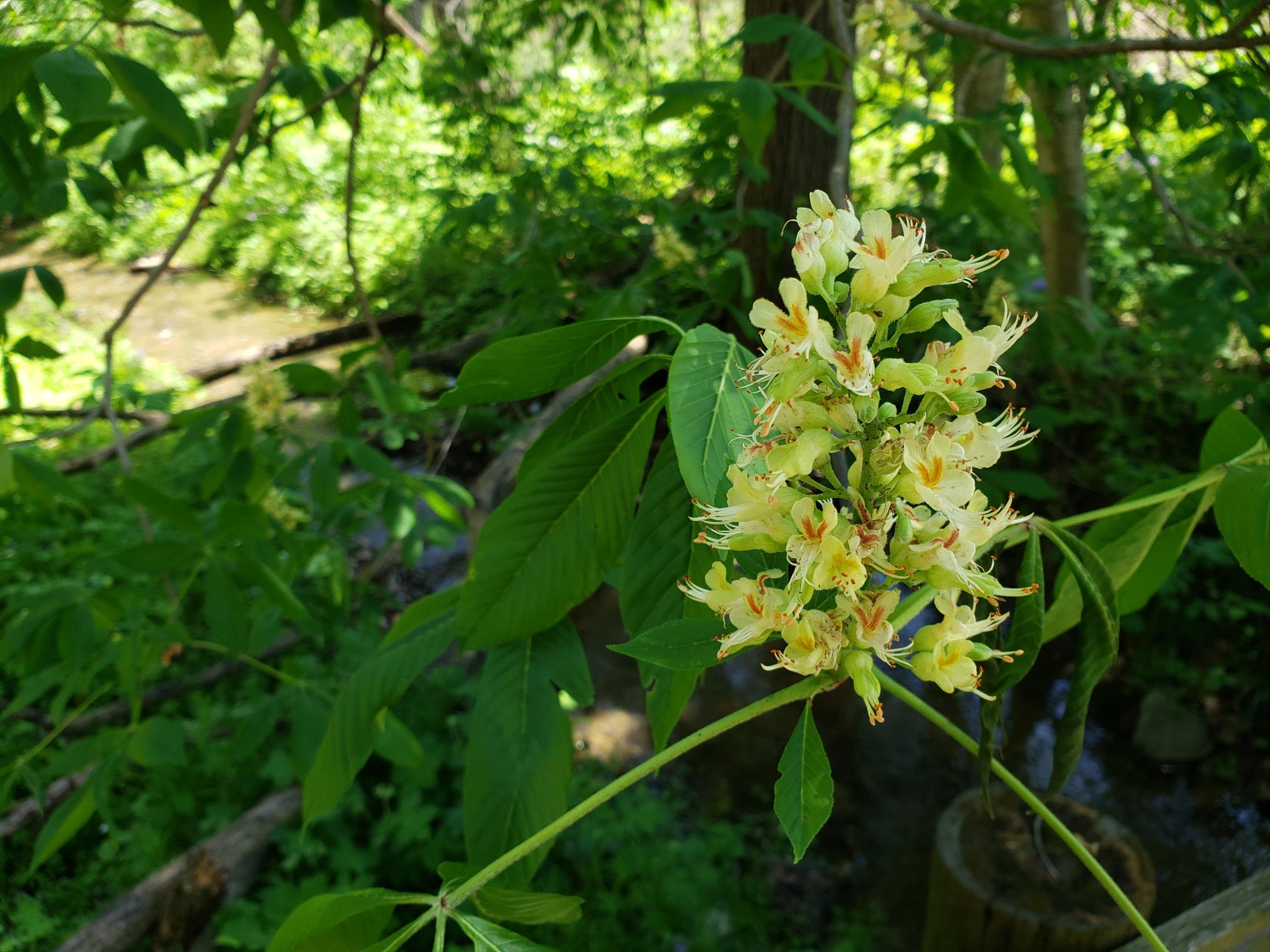
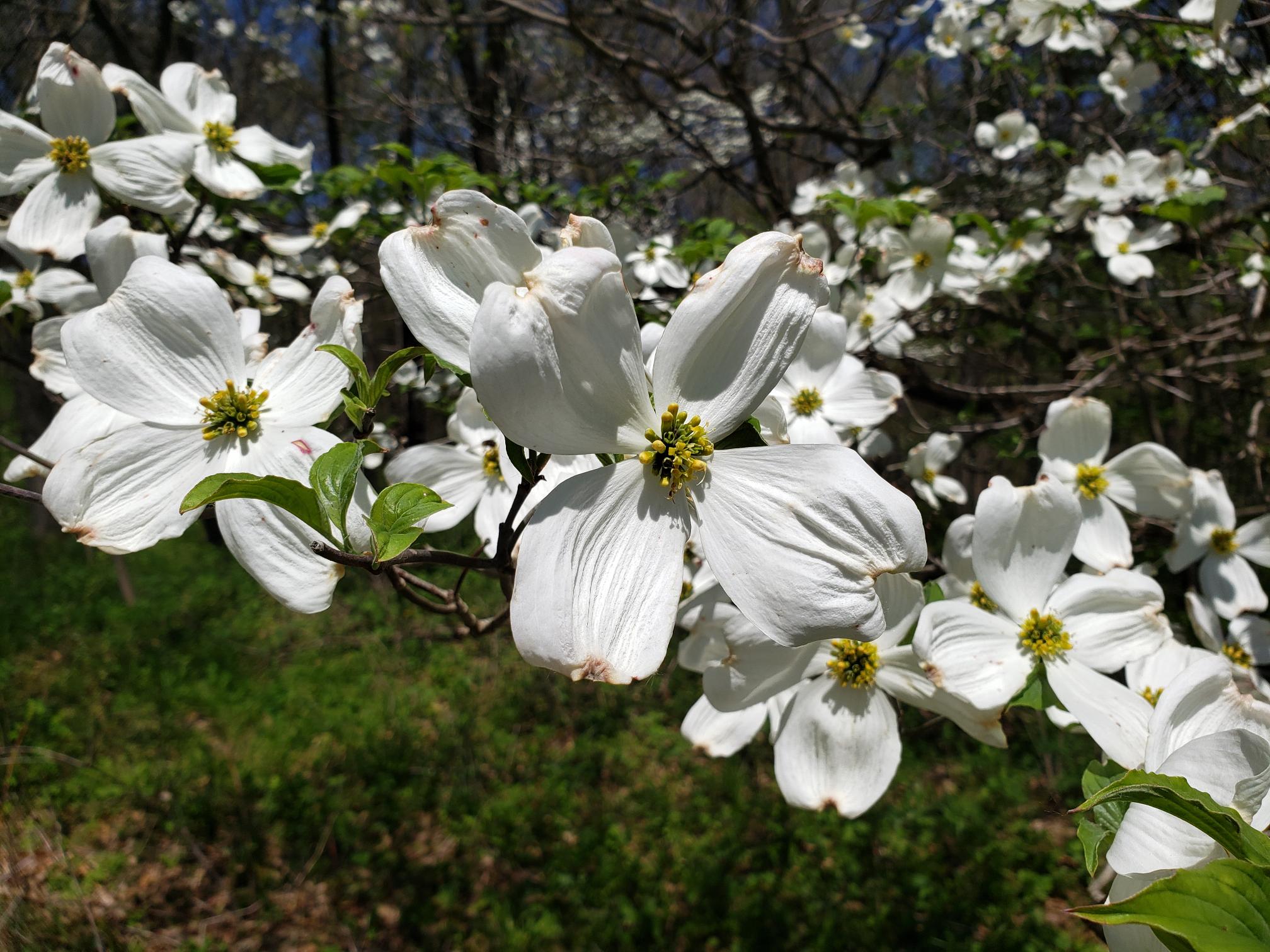
Observing the colors and patterns of blooming plants is an enjoyable spring activity that reinforces the plant world is becoming active after the long pause of winter. Most mature flowering plants produce some sort of flower structure, but some are more noticeable than others. Some of the earliest among native Indiana trees are red and silver maple, the elms, serviceberry and Ohio buckeye. Some of the showiest blooms are found on redbud, flowering dogwood, tuliptree and magnolias. Keeping a journal of when first blooms are sighted or taking date-stamped photos is a good way to track this sign of spring from year to year and give you a hint of when future blooms may happen.

There is also a substantial show on the forest floor. Early-blooming wildflowers emerge and bloom before trees and shrubs expand leaves, allowing them access to sunlight in early spring. Some plants to look for include spring beauty, trilliums, Dutchman’s’ breeches, and bloodroot. Tree, shrub and plant field guides as well as plant ID apps can help you learn the ID features and life histories of these native plants.
Check out our Purdue Extension YouTube Channel to learn from Lenny Farlee, Extension Forester. In this Purdue Extension-FNR “YouTube Shorts” video below you will learn about early blooming trees in the spring time.
Resources:
ID That Tree, Playlist, Purdue Extension – Forestry and Natural Resources (FNR) YouTube Channel
Invasive Species Playlist, Playlist, Purdue Extension – FNR YouTube Channel (Asian Bush Honeysuckle, Burning Bush, Callery Pear, Multiflora rose)
A Woodland Management Moment, Playlist, Purdue Extension – FNR YouTube Channel (Against Invasives, Garlic Mustard, Autumn Olive)
Woodland Stewardship for Landowners, Playlist, Purdue Extension – FNR YouTube Channel (Common Buckthorn, Japanese Barberry)
Indiana Department of Natural Resources: Invasive Species
Indiana Invasive Species Council
Cooperative Invasive Species Management Area (CISMA)
Report Invasive, Purdue Extension
Aquatic Invasive Species, Illinois-Indiana Sea Grant (IISG)
Episode 11 – Exploring the challenges of Invasive Species, Habitat University-Natural Resource University
What are invasive species and why should I care?, Got Nature? Blog, Purdue Extension – FNR
Shrubs and Woody Vines of Indiana and the Midwest, The Education Store, Purdue Extension Resource Center
Native Trees of the Midwest, The Education Store
Lenny Farlee, Extension Forester
Hardwood Tree Improvement and Regeneration Center
Purdue Department of Forestry & Natural Resources
In this edition of ID That Tree, we’re going to introduce you to yet another native Indiana elm found in the far southwest corner of Indiana, and that is winged elm. It’s named for its prominent corky ridges that we see extending off the main stems and twigs. It has alternate leaf arrangement, simple leaves, and doubly serrated margins.
If you have any questions regarding wildlife, trees, forest management, wood products, natural resource planning or other natural resource topics, feel free to contact us by using our Ask an Expert web page.
Resources:
Winged Elm, Native Trees of Indiana River Walk, Purdue Fort Wayne
ID That Tree, Playlist, Purdue Extension – Forestry and Natural Resources (FNR) YouTube Channel (Invasive White Mulberry, Siberian Elm, Tree of Heaven)
Invasive Species Playlist, Playlist, Purdue Extension – FNR YouTube Channel (Asian Bush Honeysuckle, Burning Bush, Callery Pear, Multiflora rose)
A Woodland Management Moment, Playlist, Purdue Extension – FNR YouTube Channel (Against Invasives, Garlic Mustard, Autumn Olive)
Woodland Stewardship for Landowners, Playlist, Purdue Extension – FNR YouTube Channel (Common Buckthorn, Japanese Barberry)
How long do seeds of the invasive tree, Ailanthus altissima remain viable? (Invasive Tree of Heaven), USDA Forest Service
Indiana Department of Natural Resources: Invasive Species
Indiana Invasive Species Council
Cooperative Invasive Species Management Area (CISMA)
Report Invasive, Purdue Extension
Aquatic Invasive Species, Illinois-Indiana Sea Grant (IISG)
Episode 11 – Exploring the challenges of Invasive Species, Habitat University-Natural Resource University
What are invasive species and why should I care?, Got Nature? Blog, Purdue Extension – FNR
Shrubs and Woody Vines of Indiana and the Midwest, The Education Store, Purdue Extension Resource Center
Native Trees of the Midwest, The Education Store
Investing in Indiana Woodlands, The Education Store
Professional Forester, Indiana Forestry Woodland Owners Association
District Forester 10+acres of woodlands, Indiana Department of Natural Resources
Forest Improvement Handbook, The Education Store
Lenny Farlee, Extension Forester
Hardwood Tree Improvement and Regeneration Center
Purdue Department of Forestry & Natural Resources
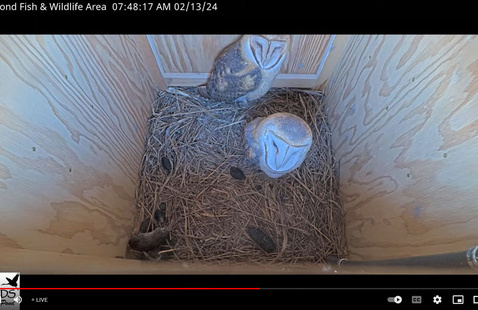
A capture from the Goose Pond webcam of barn owls in a nest box.
MyDNR, Indiana’s Outdoor Newsletter: A pair of barn owls have made a home in the property’s nest box, and you can watch this couple via a live webcam by going to the Goose Pond FWA camera page.
Barn owls are an endangered species in Indiana due to grassland habitat loss. Fewer than 50 nests are found annually in Indiana. To provide barn owls with secure nesting sites that are protected from predators, the DNR has built more than 400 nest boxes and erected them in barns and other structures with suitable habitat during the last 30 years.
The barn owl nest box at Goose Pond FWA was completed in March 2022 and is located next to its Visitors Center. This is the first nesting pair that has decided to call it home. The Friends of Goose Pond group helped provide funding for the camera and box, which has marine-grade plywood to keep the residents dry. It was painted the same color as the Visitors Center and looks like a house.
To learn more please visit the DNR Calendar.
Sign up to receive the MyDNR Newsletter by email: MyDNR Email Newsletter
Resources:
Barn Owl, Indiana Department of Natural Resources
Barn Owl Nest Webcam, Indiana Department of Natural Resources
Creating a Wildlife Habitat Management Plan for Landowners, The Education Store, Purdue Extension’s resource center
A Template for Your Wildlife Habitat Management Plan, The Education Store
Birds and Residential Window Strikes: Tips for Prevention, The Education Store, Purdue Extension resource center
Breeding Birds and Forest Management: the Hardwood Ecosystem Experiment and the Central Hardwoods Region, The Education Store
Managing Woodlands for Birds Video, Purdue Extension-Forestry and Natural Resources (FNR) YouTube Channel
Developing a Wildlife Habitat Management Plan, The Education Store
The Nature of Teaching, YouTube channel
Nature of Teaching: Common Mammals of Indiana, The Education Store
Subscribe to Purdue Extension-Forestry & Natural Resources YouTube Channel, Wildlife Playlist
Indiana Department of Natural Resources
In this edition of ID That Tree, we’re going to introduce you to yet another southern Indiana oak species. This one is a member of the broad white oak group and it’s called post oak. It’s called that because it’s a very rot resistant and hard wood that used to be used for fence posts. It has rounded lobes, no bristle tips, and typified by a cruciform shape of leaf.
If you have any questions regarding wildlife, trees, forest management, wood products, natural resource planning or other natural resource topics, feel free to contact us by using our Ask an Expert web page.
Resources:
Post Oak, Native Trees of Indiana River Walk, Purdue Fort Wayne
ID That Tree, Playlist, Purdue Extension – Forestry and Natural Resources (FNR) YouTube Channel (Invasive White Mulberry, Siberian Elm, Tree of Heaven)
Invasive Species Playlist, Playlist, Purdue Extension – FNR YouTube Channel (Asian Bush Honeysuckle, Burning Bush, Callery Pear, Multiflora rose)
A Woodland Management Moment, Playlist, Purdue Extension – FNR YouTube Channel (Against Invasives, Garlic Mustard, Autumn Olive)
Woodland Stewardship for Landowners, Playlist, Purdue Extension – FNR YouTube Channel (Common Buckthorn, Japanese Barberry)
How long do seeds of the invasive tree, Ailanthus altissima remain viable? (Invasive Tree of Heaven), USDA Forest Service
Indiana Department of Natural Resources: Invasive Species
Indiana Invasive Species Council
Cooperative Invasive Species Management Area (CISMA)
Report Invasive, Purdue Extension
Aquatic Invasive Species, Illinois-Indiana Sea Grant (IISG)
Episode 11 – Exploring the challenges of Invasive Species, Habitat University-Natural Resource University
What are invasive species and why should I care?, Got Nature? Blog, Purdue Extension – FNR
Shrubs and Woody Vines of Indiana and the Midwest, The Education Store, Purdue Extension Resource Center
Native Trees of the Midwest, The Education Store
Investing in Indiana Woodlands, The Education Store
Professional Forester, Indiana Forestry Woodland Owners Association
District Forester 10+acres of woodlands, Indiana Department of Natural Resources
Forest Improvement Handbook, The Education Store
Lenny Farlee, Extension Forester
Hardwood Tree Improvement and Regeneration Center
Purdue Department of Forestry & Natural Resources
In this edition of ID That Tree, we’re going to introduce you to a southern oak found in Indiana, cherrybark oak. This species can typically be found in bottomland areas in extreme southern Indiana. It’s a member of the broad red oak group. It has hairlike bristle tips, relatively large leaves, a waxy coating on the top, and lobes that have one or tow hair-like spines on the end.
If you have any questions regarding wildlife, trees, forest management, wood products, natural resource planning or other natural resource topics, feel free to contact us by using our Ask an Expert web page.
Resources:
Cherrybark Oak, Native Trees of Indiana River Walk, Purdue Fort Wayne
ID That Tree, Playlist, Purdue Extension – Forestry and Natural Resources (FNR) YouTube Channel (Invasive White Mulberry, Siberian Elm, Tree of Heaven)
Invasive Species Playlist, Playlist, Purdue Extension – FNR YouTube Channel (Asian Bush Honeysuckle, Burning Bush, Callery Pear, Multiflora rose)
A Woodland Management Moment, Playlist, Purdue Extension – FNR YouTube Channel (Against Invasives, Garlic Mustard, Autumn Olive)
Woodland Stewardship for Landowners, Playlist, Purdue Extension – FNR YouTube Channel (Common Buckthorn, Japanese Barberry)
How long do seeds of the invasive tree, Ailanthus altissima remain viable? (Invasive Tree of Heaven), USDA Forest Service
Indiana Department of Natural Resources: Invasive Species
Indiana Invasive Species Council
Cooperative Invasive Species Management Area (CISMA)
Report Invasive, Purdue Extension
Aquatic Invasive Species, Illinois-Indiana Sea Grant (IISG)
Episode 11 – Exploring the challenges of Invasive Species, Habitat University-Natural Resource University
What are invasive species and why should I care?, Got Nature? Blog, Purdue Extension – FNR
Shrubs and Woody Vines of Indiana and the Midwest, The Education Store, Purdue Extension Resource Center
Native Trees of the Midwest, The Education Store
Investing in Indiana Woodlands, The Education Store
Professional Forester, Indiana Forestry Woodland Owners Association
District Forester 10+acres of woodlands, Indiana Department of Natural Resources
Forest Improvement Handbook, The Education Store
Lenny Farlee, Extension Forester
Hardwood Tree Improvement and Regeneration Center
Purdue Department of Forestry & Natural Resources
Indiana Arborist Association
P.O. Box 946
Cicero, IN 46034
Press Release February 14, 2024
The Indiana Arborist Association (IAA) has received funding from Indiana Department of Natural Resource’s Community and Urban Forestry program to launch the first ever workforce development program dedicated to training certified arborists from underserved and disadvantaged communities in Northwest Indiana (NWI). This grant is funded through the U.S. Department of Agriculture (USDA) Forest Service Urban & Community Forestry program.
The IAA strives to enhance the quality of life for Indiana residents by encouraging the planting, maintenance and preservation of trees and promoting the advantages of working with qualified professional arborists who use current industry standards. Ashley Mulis, who will serve as program manager for the initiative is excited for this opportunity. “The need for qualified arborists in NWI has consistently surpassed the number of available practitioners. The IAA is thrilled to be able to launch such an important program in an area of the state that has historically suffered from both lack of tree canopy and certified arborists.” The State of Indiana along with many states across the U.S. struggle to fill jobs in the green industry with skilled labor. To effectively manage the urban forest, communities need skilled practitioners in arboriculture who understand the biology, management needs, and critical ecosystem services trees provide.
The Arborist Apprenticeship program will be a collaborative effort with several partners in NWI including Purdue University Northwest (PNW), Purdue Extension, and the Center for Workforce Innovation who will assist in the education and training of arborists who will go on to care for trees in disadvantaged communities of NWI. PNW Chancellor Kenneth Holford had this to say of the program partnership with IAA: “Purdue University Northwest is pleased to be a partner in this innovative workforce development program aimed at filling a growing and increasingly important gap in local talent to enhance the urban forests and ecosystems throughout Northwest Indiana. This program is consistent with PNW’s goal of building a strong, skilled, and sustained workforce for the region.”
Northwest Indiana has been the focus of a large multi-year tree planting effort led by CommuniTree. CommuniTree is NWI’s flagship urban and community forestry program that brings non-profits, communities, government agencies, universities, and businesses together to deliver a shared goal of creating a more diverse, healthy, and equitable urban forest across the region. As of 2024, CommuniTree partners including the Northwestern Indiana Regional Planning Commission (NIRPC), the Student Conservation Association (SCA), the US Forest Service (USFS), the NWI Urban Waters Federal Partnership (NWI UWFP) and others, have planted over 10,000 trees across the region. These trees require professional management provided by trained certified arborists. “CommuniTree, an outgrowth of the NWI UWFP, has created an unparalleled opportunity for workforce development initiatives to continue to grow, sustain and diversify urban forests in the region by drawing on the strengths that regional partnerships bring to the table. The NWI UWFP fully supports the IAA in their endeavor to provide professionally trained and certified Arborists for NWI.” Victoria Wittig, Ph.D., the Northwest Indiana Urban Waters Federal Partnership Ambassador. “The Center of Workforce Innovations applauds IAA on their work to bring this transformational program to NWI. Disadvantaged communities often bear the brunt of climate change impacts and environmental degradation. Training individuals from these communities in climate adaptation and mitigation strategies can lead to healthier local environments. The CommuniTree program, in conjunction with this Arborist Apprenticeship program specifically aims to not only reverse these environmental impacts but also equip residents of those same communities with the skills and knowledge necessary to thrive in the emerging green economy through a proven work-and-learn model.” Shaun Sahlhoff, Director of Planning and Fundraising at the Center of Workforce Innovations.
To learn more about the Indiana Arborist Association visit www.indiana-arborist.org or email info@indiana-arborist.org.
Media Contact:
Ashley Mulis, Business Manager
Indiana Arborist Association
Email: ashley@indiana-arborist.org
Phone: (219) 295-0048
Lindsey Purcell, Executive Director
Indiana Arborist Association
Email: lindsey@indiana-arborist.org
Phone: (219) 295-0048
Other Resources:
Urban Forestry, Playlist, Purdue Extension – Forestry and Natural Resources (FNR) YouTube Channel
How to Find an Arborist Near You!, Purdue Extension – FNR Got Nature? Blog
What is Urban Forestry? Do You Know?, Purdue Extension – FNR Got Nature? Blog
Urban Forestry Minor, Purdue Forestry & Natural Resources (FNR)
Storms Can Cause Damage and Tree Cleanup, What You Need to Know, Purdue Extension – FNR Got Nature? Blog
Purdue Landscape Report, Purdue Science-Based Midwest Landscaping
Forest Improvement Handbook, The Education Store, Purdue Extension’s resource center
Investing in Indiana Woodlands, The Education Store
Woodland Wildlife Management, The Education Store
ID That Tree, Playlist, Purdue Extension – Forestry & Natural Resources (FNR) YouTube Channel

Recent Posts
- Beetle that attacks Tree-of-Heaven found in Indiana, Purdue Landscape Report
Posted: March 20, 2026 in Invasive Insects, Wildlife, Woodlands - ID That Tree: Dwarf Chinkapin Oak
Posted: in Forestry, Urban Forestry, Wildlife, Woodlands - IN-PREPared: Essential Resources for Indiana’s Severe Weather Season
Posted: March 11, 2026 in How To, Safety - DNR Hiring for Indiana Conservation Officer Positions, MyDNR
Posted: March 9, 2026 in Urban Forestry, Wildlife, Woodlands - ID That Tree: Shumard Oak
Posted: in Plants, Urban Forestry, Wildlife, Woodlands - A Woodland Management Moment: Windbreak Around Walnut Plantings
Posted: March 3, 2026 in Forestry, Urban Forestry, Woodland Management Moment - Getting Certified as an Indiana Certified Prescribed Burn Manager
Posted: March 2, 2026 in How To, Urban Forestry, Woodlands - Uniting Indiana Residents Against Invasive Species
Posted: February 27, 2026 in Community Development, Invasive Insects, Wildlife - Have You Seen a Soaring Eagle Lately? Morning Ag Clips
Posted: February 25, 2026 in Urban Forestry, Wildlife - Register for Natural Resources Teacher Institute’s Class of 2026
Posted: February 19, 2026 in Forestry, Wildlife, Woodlands
Archives
Categories
- Alert
- Aquaculture/Fish
- Aquatic/Aquaculture Resources
- Ask the Expert
- Christmas Trees
- Community Development
- Disease
- Drought
- Forestry
- Forests and Street Trees
- Gardening
- Got Nature for Kids
- Great Lakes
- How To
- Invasive Animal Species
- Invasive Insects
- Invasive Plant Species
- Land Use
- Natural Resource Planning
- Nature of Teaching
- Plants
- Podcasts
- Ponds
- Publication
- Safety
- Spiders
- Timber Marketing
- Uncategorized
- Urban Forestry
- Webinar
- Wildlife
- Wood Products/Manufacturing
- Woodland Management Moment
- Woodlands