 Purdue University - Extension - Forestry and Natural Resources
Got Nature? Blog
In this episode of A Woodland Management Moment, Purdue Extension forester Lenny Farlee explores the unique characteristics of north-facing slopes. These shaded hillsides remain cooler and moister for much of the year, creating an ideal habitat for moisture-loving tree species such as Northern Red Oak, tulip tree, sugar maple, and black maple. They also support a rich understory of shade-tolerant shrubs and diverse plant life. Watch the video to see this environment firsthand and learn more!
If you have any questions regarding trees, forests, wildlife, wood products or other natural resource topics, feel free to contact us by using our Ask an Expert web page.
Resources:
A Woodland Management Moment, Playlist, Purdue Extension – Forestry and Natural Resources (FNR) YouTube Channel
The Nature of Oaks Webinar, Purdue Extension-FNR YouTube Channel, Shared from Indiana Forestry & Woodland Owners Association
Conservation Tree Planting: Steps to Success, Purdue Extension – FNR YouTube Channel
Shrubs and Woody Vines of Indiana and the Midwest, Purdue University Press
Native Trees of the Midwest, Purdue University Press
ID That Tree, Playlist, Purdue Extension – FNR YouTube Channel
Investing in Indiana Woodlands, The Education Store
Woodland Stewardship for Landowners Video Series, Playlist, Indiana Department of Natural Resources YouTube Channel
Ask an Expert: Tree Selection and Planting, Purdue Extension – FNR YouTube Channel
Forest Improvement Handbook, The Education Store
Find an Indiana Professional Forester, Indiana Forestry & Woodland Owners Association (IFWOA)
Purdue Arboretum Explorer
Lenny Farlee, Extension Forester
Hardwood Tree Improvement and Regeneration Center
Purdue Department of Forestry & Natural Resources
Morning AgClips — You have probably seen a cartoon or stereotypical TV show where someone sees a mouse and says, “Eek, a mouse!” Mice and rats around homes and farmsteads can be a problem. Have control methods improved on the typical snap trap of 50 years ago? In short, they have.

The adult house mouse is about 5½ to 7½ inches long, including the 3–4-inch tail. Norway rats are much larger, from 13 to 18 inches long, including the 6–8½-inch tail. According to the Internet Center for Wildlife Damage Management (ICWDM), mice eat many types of food but prefer seeds and grain. They sample new foods and are considered “nibblers.” Foods that are high in fat, protein, or sugar (e.g., bacon, chocolate, butter, nuts) may be preferred, even when grain and seeds are present. An individual mouse consumes about 1/10 of its body weight each day and up to 8 pounds per year. Mice contaminate far more food than they consume through their urine and feces.
In homes and commercial buildings, mice may feed on stored food items and pet foods. They contaminate food with their urine, droppings, and hair. On farms, they damage structures that store feed and equipment. Mice often act as reservoirs or vectors of diseases, such as swine dysentery, leptospirosis, salmonellosis, and other diseases.
ICWDM suggests several preventive and control methods people can employ. Proper sanitation around structures is helpful. This reduces sources of food, water, and shelter. Rodent-proof construction is recommended, along with proper storage and disposal of refuse and garbage. They indicate that ultrasonic frightening devices are generally not effective. Repellants and toxicants are options to consider. Trapping devices, such as snap traps, cage or box traps, and glue boards, may also be considered for use.
Read more details on the Morning AgClips website at Dealing with Rodents Around Homes & Farms.
Resources:
A Template for Your Wildlife Habitat Management Plan, The Education Store, Purdue Extension resource center
Wildlife Habitat Hint, Purdue Extension – Forestry & Natural Resources (FNR) YouTube Playlist
Woodland Stewardship for Landowners, Purdue Extension – FNR YouTube Playlist
Woodland Management Moment, Purdue Extension – FNR YouTube Playlist
Invasive Species, Playlist, Purdue Extension – FNR Youtube Channel
Invasive Plant Species Identification, Video, Purdue Extension – FNR Youtube Channel
Invasive plants: impact on environment and people, The Education Store, Purdue Extension’s resource center
Woodland Invaders, Got Nature? Blog, Purdue Extension – FNR
Preventing Wildlife Damage – Do You Need a Permit? – The Education Store, Purdue Extension resource center
Selecting a Nuisance Wildlife Control Professional, The Education Store
How to Construct a Scent Station, The Education Store
Question: How do I properly relocate raccoons from my attic?, Got Nature? Blog, Purdue Extension FNR
Nuisance Wildlife – Indiana Department of Natural Resources
Subscribe to our FNR Extension YouTube Channel with over 250 videos which include: aquatic, forestry, urban forestry, wildlife, community planning videos and much more.
John E. Woodmansee, Extension Educator – Agriculture and Natural Resources (ANR)
Purdue Extension – Whitely County
Invasive species are any plant, animal, insect or plant disease not native to a specific location that can cause harm to the environment, impact the diversity of native species, reduce wildlife habitat or disrupt important ecosystem functions.
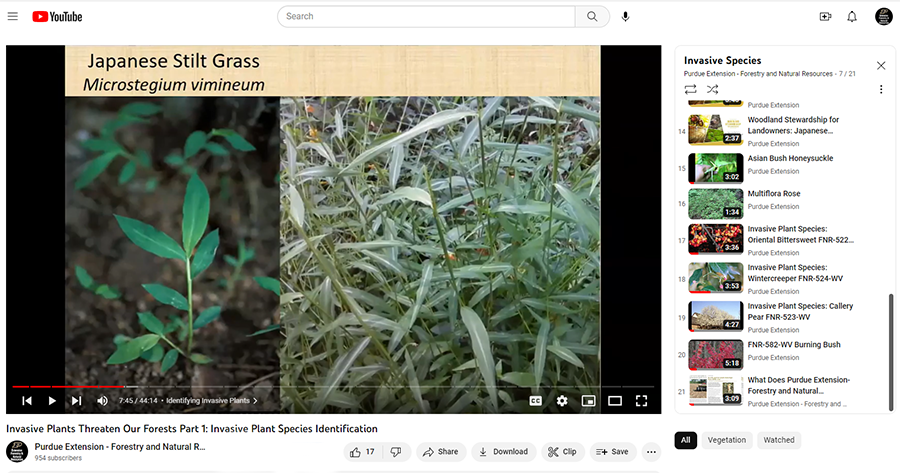 Why should you care about invasive species? Invasive species limit land use, degrade natural resources and inhibit recreational pursuits such as hunting, fishing, bird watching, and foraging. They also negatively impact fisheries, agricultural and forestry industries, destabilize soil and alter water resources. Invasive species also out compete natives and are costly to control with estimates showing that the U.S. spends $137 billion/year to control/manage invasive species.
As spring approaches, many invasive plants will begin to leaf out in woodland areas. Spring is a good time to stop them in their tracks so they don’t overtake native plants, affect water availability or damage the quality of soil among other potential impacts.
Here are some resources to help you identify various invasive plants in woodland areas near you, to know when to report them and also what you can do help control their spread.
Videos on Purdue Extension – Forestry and Natural Resources (FNR) YouTube Channel, Invasive Species Playlist
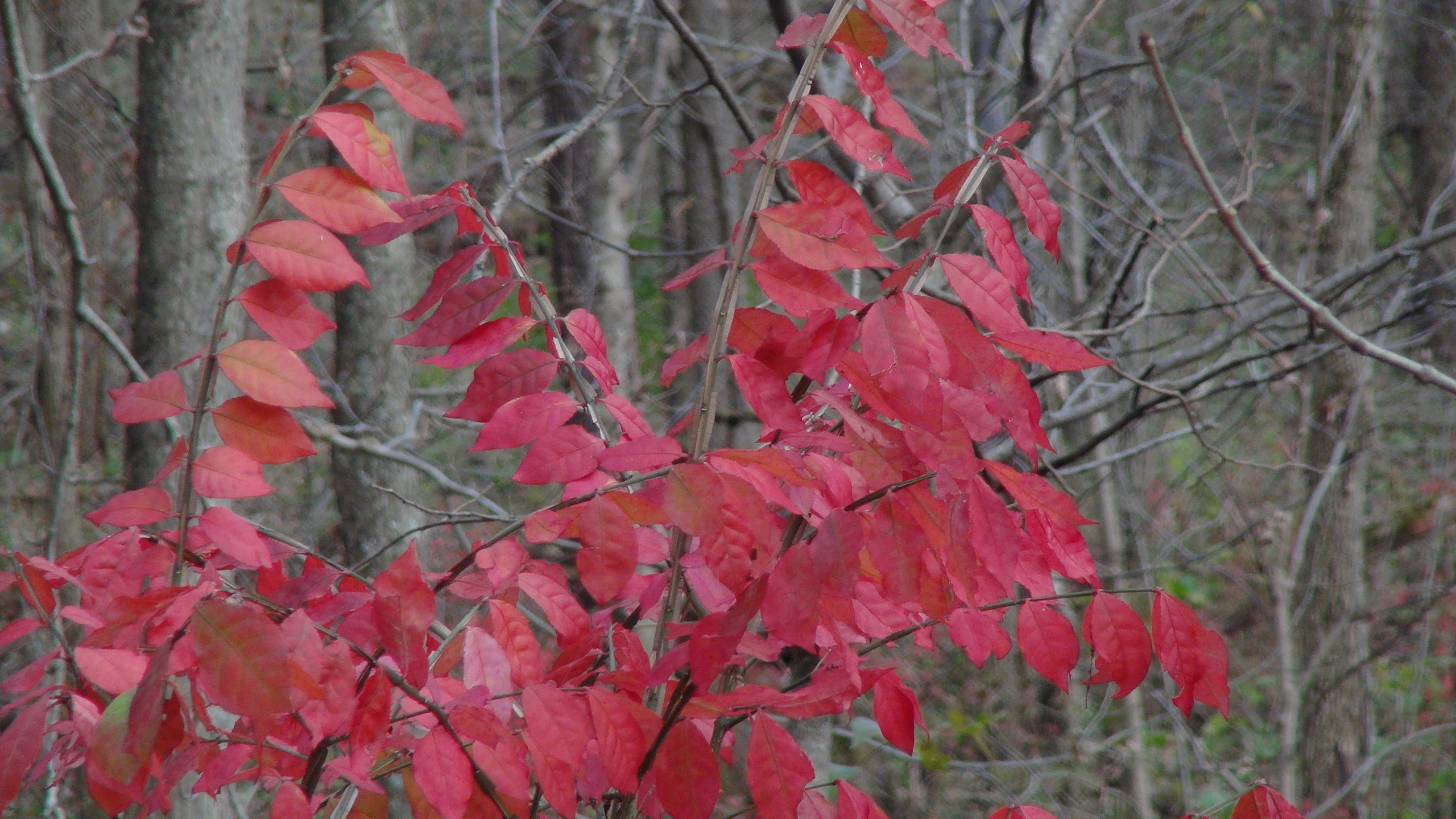
burning bush
- Asian Bush Honeysuckle
- Burning Bush
- Callery Pear
- Multiflora Rose
- Invasive Plants Threaten Our Forests Part 1: Invasive Plant Species Identification
- Invasive Plants Threaten Our Forests Part 2: Control and Management
Don’t miss this YouTube Shorts video, Lenny Farlee Talks About Invasive Plants Emerging in Early Spring
More Purdue Extension-FNR YouTube Video Series –
Woodland Management Moment Videos:
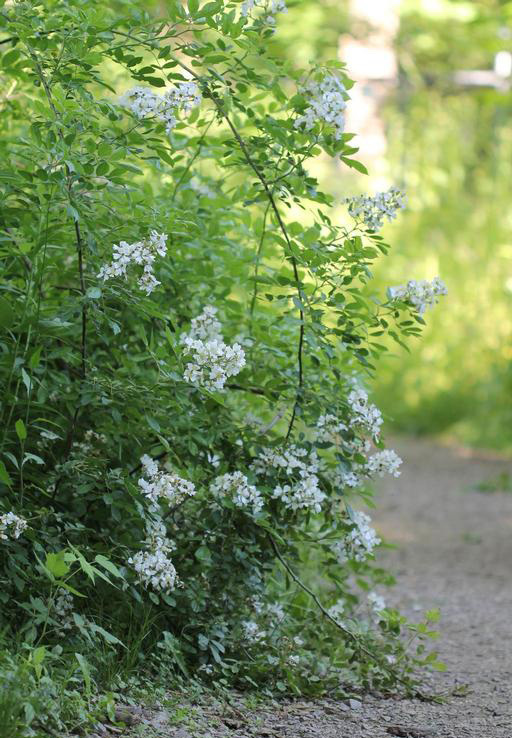
Multiflora Rose
Credit: Rob Routledge, Sault College, Bugwood.org
Woodland Stewardship for Landowners Videos:
ID That Tree Videos:
- Invasive White Mulberry
- Invasive Siberian Elm
- Invasive Tree of Heaven
- Invasive Amur Honeysuckle
- Asian Honeysuckle
FNR Extension Publications, The Education Store:
- Invasive Plant Species: Oriental Bittersweet
- Invasive Plant Species: Wintercreeper
- Japanese Chaff Flower
- Kudzu in Indiana
- Mile-a-minute Vine
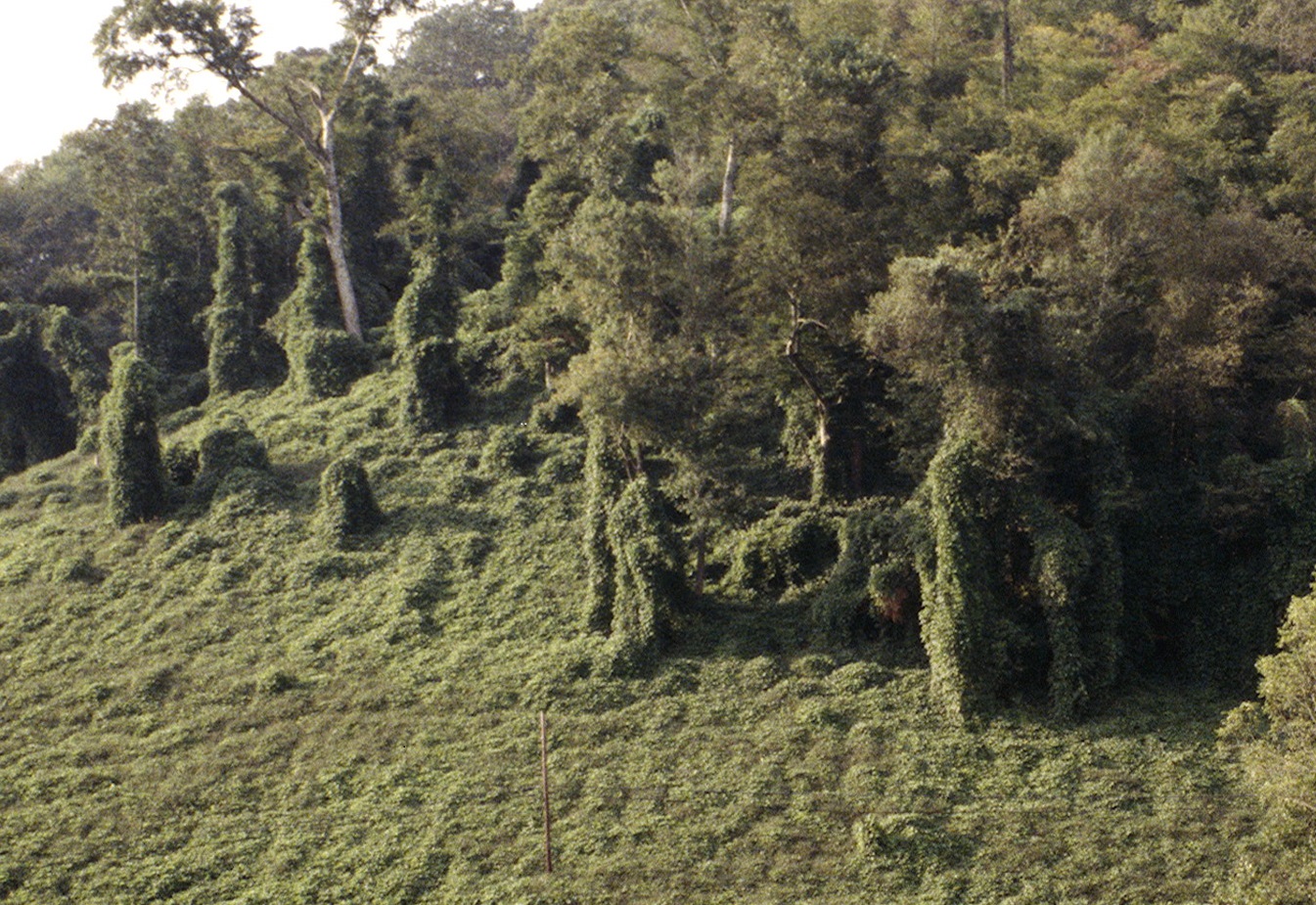
Mile-a-minute
Purdue Landscape Report:
- Alternatives to Burning Bush for Fall Color
- Now is the Time to Identify Callery Pear
- Keyword search: Invasive
FNR Extension Got Nature? Blog:
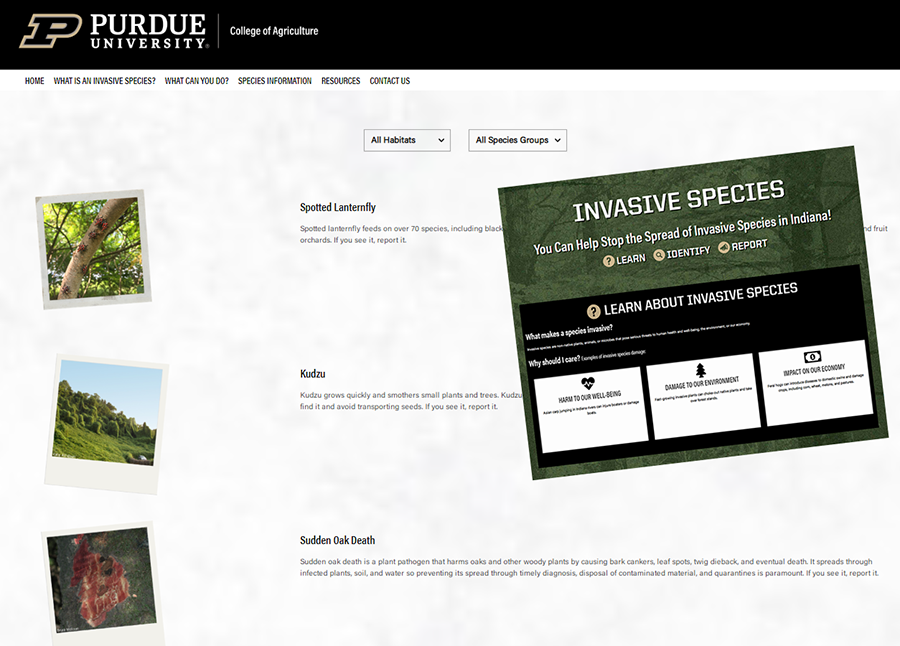 When and how do I report an invasive species?
The Purdue Invasive Species website will help you identify invasive species and explain how to send in your findings. If you notice something is killing an otherwise healthy stand of trees or shrubs, you will want to identify it and report it if it is on the invasive list. If you see a plant that is taking over an area where it doesn’t belong, you will want to identify it and report it if it is on the invasive list.
- The GLEDN Phone App – Great Lakes Early Detection Network
- EDDMaps – Early Detection and Distribution Mapping System
- 1-866 No EXOTIC (1-866-663-9684)
- depp@dnr.IN.gov – Email Indiana Department of Natural Resources (DNR)
More Resources
Indiana Department of Natural Resources: Invasive Species
Indiana Invasive Species Council
Cooperative Invasive Species Management Area (CISMA)
Aquatic Invasive Species, Illinois-Indiana Sea Grant (IISG)
Episode 11 – Exploring the challenges of Invasive Species, Habitat University-Natural Resource University
Emerald Ash Borer Information Network, Purdue University and Partners
What Nurseries Need to Know About the Invasive Species Regulation, The Education Store, Purdue Extension’s resource center
Invasive plants: impact on environment and people, The Education Store, Purdue Extension’s resource center
Diana Evans, Extension and Web Communication Specialist
Purdue University Department of Forestry and Natural Resources
Lenny Farlee, Extension Forester
Hardwood Tree Improvement and Regeneration Center
Purdue Department of Forestry & Natural Resources
Welcome to ID That Tree! In this video, Purdue forester Lenny Farlee examines one of Indiana’s most troublesome invasive shrubs: Amur honeysuckle. This aggressive species, along with other Asian honeysuckle varieties, is widespread across the state. It’s easily identified by its long, pointed leaves, smooth edges, and fine fuzz. Watch the video to learn more about its distinguishing features and the impact on Indiana’s ecosystems!
If you have any questions regarding wildlife, trees, forest management, wood products, natural resource planning or other natural resource topics, feel free to contact us by using our Ask an Expert web page.
Resources:
ID That Tree – Video Playlist, Purdue Extension – Forestry and Natural Resources (FNR) YouTube Channel
Purdue Arboretum Explorer
Conservation Tree Planting: Steps to Success, Purdue Extension – FNR YouTube Channel
A Woodland Management Moment, Playlist, Purdue Extension – FNR YouTube Channel
Woodland Stewardship for Landowners, Playlist, Purdue Extension – FNR YouTube Channel
Indiana Department of Natural Resources: Invasive Species
Indiana Invasive Species Council
Cooperative Invasive Species Management Area (CISMA)
Report Invasive, Purdue Extension
Fifty Common Trees of Indiana, Purdue Extension – FNR
Episode 11 – Exploring the challenges of Invasive Species, Habitat University-Natural Resource University
Shrubs and Woody Vines of Indiana and the Midwest, The Education Store
Native Trees of the Midwest, The Education Store
Professional Forester, Indiana Forestry Woodland Owners Association
Forest Improvement Handbook, The Education Store
Find an Arborist, International Society of Arboriculture
Lenny Farlee, Extension Forester
Hardwood Tree Improvement and Regeneration Center
Purdue Department of Forestry & Natural Resources

Photo from Indiana Department of Natural Resources, Division of Fish and Wildlife Instagram
Wild Bulletin, Indiana Department of Natural Resources (DNR) Fish and Wildlife: DNR’s nongame aquatic biologists are in the middle of a multi-year effort to restore snuffbox mussel populations in the Tippecanoe River. The snuffbox mussel reproduces in the wild by releasing glochidia (microscopic mussel larvae) that attach to the gills of a specific fish species, the logperch. The glochidia eventually grow into baby mussels, fall off the logperch, and mature while living in the bottom of a river.
To assist snuffbox populations in the Tippecanoe River, the nongame aquatics team is mimicking this life cycle. After collecting logperch, they infect the fish with glochidia from Salamonie River snuffbox mussels and hold them in underwater enclosures until baby snuffbox mussels fall off and mature to a taggable size. The snuffbox mussels produced are then used to bolster Tippecanoe River populations.
This project and many others like it are made possible because of donations to the Nongame Wildlife Fund. Having diverse, healthy wildlife populations improves the quality of life for all—and you can help. Donate to the Nongame Wildlife Fund to make a difference on conservation initiatives for the state’s most vulnerable species.
Resources:
A Field Guide to Fish Invaders of the Great Lake Regions, Illinois-Indiana Sea Grant (IISG)
Protect Your Waters, U.S. Fish and Wildlife Service & U.S. Coast Guard
Profitability of Hybrid Striped Bass Cage Aquaculture in the Midwest, The Education Store, Purdue Extension resource center
A Guide to Marketing for Small-Scale Aquaculture Producers, The Education Store
Aquaculture Industry in Indiana Growing, Purdue Today
Sustainable Aquaculture: What does it mean to you?, The Education Store
Pond and Wildlife Management website, Purdue Extension
Fish Cleaning with Purdue Extension County Extension Director, Got Nature? Blog, Purdue Extension – Forestry and Natural Resources
Aquaponics: What to consider before starting your business, YouTube, Purdue Ag Economics
Aquatics & Fisheries, Playlist, YouTube, Purdue Extension – Forestry and Natural Resources
Indiana Department of Natural Resources – Division of Fish & Wildlife

Photo by Indiana Department of Natural Resources, Division of Fish and Wildlife
Wild Bulletin, Indiana Department of Natural Resources (DNR) Fish and Wildlife: Have you seen wildlife showing odd behaviors or signs of disease? DNR encourages you to report them using our online Sick or Dead Wildlife report system. DNR is especially interested in recurring deaths of wildlife in the same location over a period of time, deer showing signs that may indicate chronic wasting disease or epizootic hemorrhagic disease, or incidents involving threatened or endangered species.
Indiana DNR’s Sick or Dead Wildlife Reporting System collects information about wildlife that appear sick or appear to have died without an apparent cause (e.g. do not use this form for predation or roadkill). Reports of incidents involving common species and single animals are useful to help us understand baseline levels of sickness and death in wildlife populations.
Your reports help us track wildlife health over time and detect potential disease outbreaks in the state. Visit the Sick or Dead Wildlife Reporting webpage to learn more.
Resources
Hardwood Ecosystem Experiment – Wildlife Responses to Timber Harvesting, video, Purdue Extension resource center
Forest Improvement Handbook, The Education Store
Invasive plants: impact on environment and people, The Education Store
Managing Your Woods for White-Tailed Deer, The Education Store
Breeding Birds and Forest Management: the Hardwood Ecosystem Experiment and the Central Hardwoods Region, The Education Store
Managing Woodlands for Birds Video, Purdue Extension-Forestry and Natural Resources YouTube Channel
Subscribe: Deer, Forest Management, Invasive Species and many other videos, Purdue Extension-Forestry and Natural Resources YouTube Channel
Indiana Department of Natural Resources – Division of Fish & Wildlife
In this episode of A Woodland Management Moment, Purdue Extension forester Lenny Farlee shares expert tips for regenerating heavy-seeded hardwoods like oak, hickory, and walnut after a timber harvest. Using a real-world example, we walk through the entire process of seeding into slash piles to maximize growth and create the ideal woodland habitat. Tune in to learn how to ensure successful regeneration and a thriving forest for years to come!
If you have any questions regarding trees, forests, wildlife, wood products or other natural resource topics, feel free to contact us by using our Ask an Expert web page.
Resources:
A Woodland Management Moment, Playlist, Purdue Extension – Forestry and Natural Resources (FNR) YouTube Channel
The Nature of Oaks Webinar, Purdue Extension-FNR YouTube Channel, Shared from Indiana Forestry & Woodland Owners Association
Conservation Tree Planting: Steps to Success, Purdue Extension – FNR YouTube Channel
Shrubs and Woody Vines of Indiana and the Midwest, Purdue University Press
Native Trees of the Midwest, Purdue University Press
ID That Tree, Playlist, Purdue Extension – FNR YouTube Channel
Investing in Indiana Woodlands, The Education Store
Woodland Stewardship for Landowners Video Series, Playlist, Indiana Department of Natural Resources YouTube Channel
Ask an Expert: Tree Selection and Planting, Purdue Extension – FNR YouTube Channel
Forest Improvement Handbook, The Education Store
Find an Indiana Professional Forester, Indiana Forestry & Woodland Owners Association (IFWOA)
Purdue Arboretum Explorer
Lenny Farlee, Extension Forester
Hardwood Tree Improvement and Regeneration Center
Purdue Department of Forestry & Natural Resources
Welcome to this edition of “ID That Tree”. In this video Purdue Extension forester Lenny Farlee will introduce you to leatherwood, a charming Indiana shrub. Typically found in the understory of forest areas, this compact shrub is easy to identify by its oblong leaves with smooth margins and alternate leaf arrangement. Join us to learn more about leatherwood and its unique characteristics!
If you have any questions regarding wildlife, trees, forest management, wood products, natural resource planning or other natural resource topics, feel free to contact us by using our Ask an Expert web page.
Resources:
ID That Tree – Video Playlist, Purdue Extension – Forestry and Natural Resources (FNR) YouTube Channel
Purdue Arboretum Explorer
Conservation Tree Planting: Steps to Success, Purdue Extension – FNR YouTube Channel
A Woodland Management Moment, Playlist, Purdue Extension – FNR YouTube Channel
Woodland Stewardship for Landowners, Playlist, Purdue Extension – FNR YouTube Channel
Indiana Department of Natural Resources: Invasive Species
Indiana Invasive Species Council
Cooperative Invasive Species Management Area (CISMA)
Report Invasive, Purdue Extension
Fifty Common Trees of Indiana, Purdue Extension – FNR
Episode 11 – Exploring the challenges of Invasive Species, Habitat University-Natural Resource University
Shrubs and Woody Vines of Indiana and the Midwest, The Education Store
Native Trees of the Midwest, The Education Store
Professional Forester, Indiana Forestry Woodland Owners Association
Forest Improvement Handbook, The Education Store
Find an Arborist, International Society of Arboriculture
Lenny Farlee, Extension Forester
Hardwood Tree Improvement and Regeneration Center
Purdue Department of Forestry & Natural Resources
Tax preparation time usually brings with it questions about what is deductible, how to report this income and what you can do to save on your taxes in the future. Fortunately for woodland owners, there are several excellent resources available to help you find some guidance.
A national site addressing tax issues for woodland owners is the National Timber Tax Website. This site provides updated tax tips for the 2024 filing year, as well as many guides and references to help you effectively plan a tax strategy for your property.
The first link you will see on the National Timber Tax website is the recent timber tax tips by the U.S. Department of Agriculture (USDA), Forest Service:
Tax Tips for Forest Landowners: 2024 Tax Year (pdf 176KB)
Purdue Forestry and Natural Resources Extension offers some publications covering taxation issues for timber sales and tree planting.
How to Treat Timber Sale Income
Determining Tax Basis of Timber
Financial and Tax Aspects of Tree Planting
If you sold timber or planted trees for timber production last year, the references above may help you understand your options and possibly provide some tax savings.
Familiarizing yourself with the tax treatment of timber sales and tree plantings may help you more effectively plan for future tax returns.
Other resources:
U.S. Forest Service
Indiana Department of Natural Resources Offers Program Aiding in Property Tax Reductions, Purdue Extension – Forestry & Natural Resources (FNR) Blog Article
The Education Store, Purdue Extension (place in search field: “timber”)
Find an Indiana Professional Forester, Indiana Forestry & Woodland Owners Association (IFWOA)
Purdue Arboretum Explorer
Native Trees of the Midwest, The Education Store
Shrubs and Woody Vines of Indiana and the Midwest, The Education Store
Investing in Indiana Woodlands, The Education Store
Forest Improvement Handbook, The Education Store
ID That Tree, Purdue Extension-Forestry & Natural Resources (FNR) YouTube playlist
Woodland Management Moment , Purdue Extension-FNR YouTube playlist
Indiana DNR Offers Special Program Aiding in Property Tax Reductions – IFWOA
Lenny Farlee, Extension Forester
Hardwood Tree Improvement and Regeneration Center (HTIRC)
Forestry and Natural Resources, Purdue University
 Indiana Forestry & Woodland Owners Association (IFWOA) News: If you live in Indiana and own more than ten acres of woodlands, then you may want to enroll in the Classified Forest and Wildlands Program offered through the Indiana Department of Natural Resources (DNR), Division of Forestry. This program encourages timber production, watershed protection, and wildlife habitat management on private lands in Indiana. Program landowners receive a property tax reduction in return for following a professionally written management plan. In addition to the tax incentive, landowners receive free technical assistance from DNR foresters and wildlife biologists, priority for cost-share to offset the cost of doing management, and the ability to “green” certify their forests. The minimum requirement for program enrollment is 10 acres of forest, wetland, shrubland, and/or grassland.
“Once enrolled in our program, you get a reduced property tax assessment,” says Gretchen Herbaugh, District Forester with Indiana DNR serving southwestern Indiana.
“Property can be anything from forest ground to native grasses to pollinator habitats to wildlife food plots—we span a large range of habitat types and management styles,” Herbaugh says.
For full IFWOA article view: Indiana DNR Offers a Special Program for Woodland Owners.
To learn more about the program with more resources view the Hoosier Ag Today article, Indiana DNR Offering a Special Program for Woodland Owners.
Resources:
Subscribe, IFWOA YouTube Channel (includes The Nature of Oaks, Be Tick Aware, Population Ecology of Deer and more)
Find an Indiana Professional Forester, Indiana Forestry & Woodland Owners Association (IFWOA)
Purdue Arboretum Explorer
Native Trees of the Midwest, The Education Store
Shrubs and Woody Vines of Indiana and the Midwest, The Education Store
Investing in Indiana Woodlands, The Education Store
Forest Improvement Handbook, The Education Store
ID That Tree, Purdue Extension-Forestry & Natural Resources (FNR) YouTube playlist
Woodland Management Moment , Purdue Extension-FNR YouTube playlist
District Foresters for 10 plus acres, Indiana Department of Natural Resources
Financial and Tax Aspects of Tree Planting
Diana Evans, Extension and Web Communication Specialist
Purdue University Department of Forestry and Natural Resources
Liz Jackson, Engagement Lead
Indiana Forestry & Woodland Association (IFWOA)

Recent Posts
- Beetle that attacks Tree-of-Heaven found in Indiana, Purdue Landscape Report
Posted: March 20, 2026 in Invasive Insects, Wildlife, Woodlands - ID That Tree: Dwarf Chinkapin Oak
Posted: in Forestry, Urban Forestry, Wildlife, Woodlands - IN-PREPared: Essential Resources for Indiana’s Severe Weather Season
Posted: March 11, 2026 in How To, Safety - DNR Hiring for Indiana Conservation Officer Positions, MyDNR
Posted: March 9, 2026 in Urban Forestry, Wildlife, Woodlands - ID That Tree: Shumard Oak
Posted: in Plants, Urban Forestry, Wildlife, Woodlands - A Woodland Management Moment: Windbreak Around Walnut Plantings
Posted: March 3, 2026 in Forestry, Urban Forestry, Woodland Management Moment - Getting Certified as an Indiana Certified Prescribed Burn Manager
Posted: March 2, 2026 in How To, Urban Forestry, Woodlands - Uniting Indiana Residents Against Invasive Species
Posted: February 27, 2026 in Community Development, Invasive Insects, Wildlife - Have You Seen a Soaring Eagle Lately? Morning Ag Clips
Posted: February 25, 2026 in Urban Forestry, Wildlife - Register for Natural Resources Teacher Institute’s Class of 2026
Posted: February 19, 2026 in Forestry, Wildlife, Woodlands
Archives
Categories
- Alert
- Aquaculture/Fish
- Aquatic/Aquaculture Resources
- Ask the Expert
- Christmas Trees
- Community Development
- Disease
- Drought
- Forestry
- Forests and Street Trees
- Gardening
- Got Nature for Kids
- Great Lakes
- How To
- Invasive Animal Species
- Invasive Insects
- Invasive Plant Species
- Land Use
- Natural Resource Planning
- Nature of Teaching
- Plants
- Podcasts
- Ponds
- Publication
- Safety
- Spiders
- Timber Marketing
- Uncategorized
- Urban Forestry
- Webinar
- Wildlife
- Wood Products/Manufacturing
- Woodland Management Moment
- Woodlands