 Purdue University - Extension - Forestry and Natural Resources
Got Nature? Blog
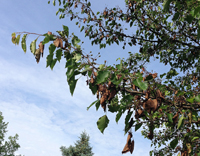 Fire blight is infecting flowering pear trees in large numbers in Indiana for the third consecutive year with a Purdue Extension specialist again urging homeowners to check their trees for symptoms.
Symptoms of the potentially deadly disease with no cure are wilting shoots, cankers on branches and blackened leaves, which give the disease its name because trees appear to be scorched.
Resources
Purdue Pest and Plant Diagnostic Laboratory
The Education Store
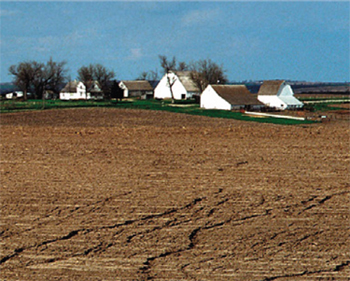 Because agriculture dominates the midwestern landscape, it has a huge impact on environmental quality. Agricultural producers are often advised to adopt practices that help to reduce the impact of agriculture on the environment. However, like all humans, they are often reluctant to change, which makes the work of conservation professionals extremely challenging. In this publication, we explore the myths and realities around what motivates farmers to adopt conservation practices. We draw on the authors’ combined research and applied practitioner experience with farmer adoption of conservation practices. Most evidence is based on studies and observations of traditional row-crop farmers in the midwestern United States.
Adoption of Agricultural Conservation Practices
The Education Store
Purdue Extension
Spring time brings a cacophony of frog calls around ponds and wetlands, but as spring slowly transitions into summer, the warmer temperatures signal the breeding season for many of our native reptiles. One of the oldest and most primitive reptile groups are the turtles. These ancient reptiles have remained relatively unchanged for 225 million years. There are currently ~300 species of turtles worldwide, and 18 species are found in Indiana. Most turtles in Indiana are associated with water, particularly waters that provide a variety of food items, basking sites and adjacent upland habitats. While Indiana is home to a diversity of turtle species, many are declining in number across their range. There are many factors contributing to these declines, but one that is particularly important this time of year is road mortality.
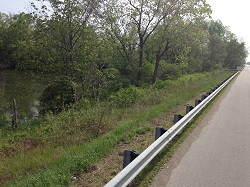
Figure 1: Small pond containing semi-aquatic turtles with a major road intersecting adjacent breeding habitat.
Why do you see so many turtles crossing the road in late spring and early summer (May-June)? This is the time of year when most of our turtles are searching for adequate nesting sites. Unlike amphibians that generally lay their eggs directly in the water, female turtles search for nesting spots in open, unshaded areas where the soil is not muddy or subject to flooding. Nests are often located on the nearest spot of land providing these conditions, but females of some species may travel 1-2 kilometers in search of a suitable net site.
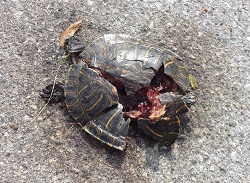
Figure 2: Female Red-eared Slider killed while attempting to cross the road to lay eggs at nearby upland nesting site.
Unfortunately, many of the upland sites are separated from ponds, lakes and streams by roads (Figure 1). As the females leave the ponds to lay eggs, they are forced to cross busy roads and may suffer incredibly high mortality rates (Figure 2). Females are more prone to road mortality than males (which are not required to leave the water to lay eggs), resulting in some populations consisting of nearly all male turtles. Increased female mortality lowers population growth rates (once the female is killed, so are the eggs she was carrying). To further complicate matters, turtles are long-lived species (up to 100 years), and females may not reach sexual maturity for 8-25 years.
What can you do to help? Increase vigilance and slow down when driving, especially in areas where roads intersect ponds and adjacent uplands. If you encounter an injured turtle that needs medical attention, call the Indiana DNR at 800-893-4116 or 317-232-4080 during business hours, 765-473-9722 (northern half of Indiana) or 812-837-9536 (southern half of Indiana) after hours or visit wildlifehotline.info.
For more information on turtles:
The Turtles of Indiana
The Education Store (Search keywords for more information)
Rod Williams, Associate Professor of Wildlife Science
Department of Forestry and Natural Resources, Purdue University
The month of May is not only known for producing flowers but the start of the white-tailed deer fawning season. In fact, nearly 90% of all white-tailed deer fawns are born between mid-May and mid-June. This time of year coincides with many of the outdoor activities that we all enjoy (hiking, mushroom hunting and shed hunting) and may sometimes bring us into contact with deer fawns.
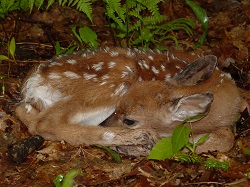
Figure 1. White-tailed deer fawn hiding in cover while the mother is off feeding.
When out enjoying nature, it is not uncommon to come upon a fawn tucked away under brushy cover, alone (Figure 1). At first glance, it may appear that the fawn has been abandoned by its mother, but this is rarely the case. This is actually part of the doe’s strategy to keep her fawn alive. Caching fawns in heavy cover serves to keep the fawn out of sight and away from would-be predators. A fawn will instinctively stay bedded down, remain motionless and silent until its mother returns from feeding. However, if harassed, the fawn may eventually leave the safety of cover and bleat in distress which results in the doe returning immediately to her fawn.
If you happen upon a fawn in the wild, you should not handle or harass it. Handling young fawns can distress not only the fawn, but the mother that is likely close by. If you happen to find a fawn cached in the woods, admire its hiding spot, spotted camouflage pattern and perhaps snap a photo. Take pride in knowing that the young fawn is not an abandoned orphan and will soon grow into the largest wild mammal in Indiana.
Under no circumstance should you remove a fawn from its hiding place. Removing wildlife from the environment is illegal without a proper handling permit from the Department of Natural Resources. If you find a sick or injured animal, you should contact your DNR law enforcement district or regional headquarters. The DNR does not care for injured animals but can connect you to licensed wildlife rehabilitators with the appropriate permits to care for injured wildlife.
Sources
Mammals of Indiana, J.O. Whitker and R.E. Mumford
Common Indiana Mammals, R.N. Chapman and R.N. Williams, FNR-413-W
Indiana DNR Orphaned and Injured Animals
Rod Williams, Associate Professor of Wildlife Science
Department of Forestry and Natural Resources, Purdue University
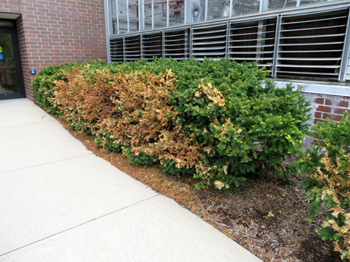 Extreme cold last winter, unrelenting winds and unusually large amounts of salt that were applied to roads, sidewalks and parking lots are taking their toll on landscape plants this spring, a group of Purdue University experts say.
They are seeing considerable damage and expect more this summer and beyond. While it is difficult to determine winter injury until bud break, they say it is now time for homeowners and others with ornamental plants to evaluate their plants for damage that needs to be corrected.
One of the best parts of spring is seeing all of the wildlife seemingly come to life around us. Unfortunately, that activity can also bring new challenges to homeowners. One of the most common and widespread problems is lawn damage caused by moles.
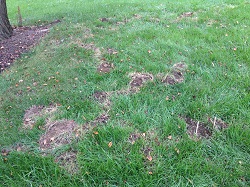
In Indiana, eastern moles cause significant lawn damage. Characteristic signs of damage are the raised surface tunnels (these make your lawn uneven and feel “spongy” when you walk across it) and the dirt mounds created when moles dig deeper tunnels. A single mole can dig many feet of tunnels; one study found a single mole constructed 31 m of surface tunnels in a day.
Biologists actually know very little about moles compared to many species. It is assumed they are territorial and solitary (except during the breeding season), but that has yet to be determined. The only home range study of eastern moles was published in 1976. That study found that the average home range size of male moles was just over 2.5 acres; females had an average home range size of two-thirds of an acre. In reality, there is likely much variation across habitat types and season. Clearly, small yards in urban areas are capable of sustaining many moles.
One of the most effective ways to control moles in the yard is by trapping. It just so happens that the best time to trap them is right now. In May, moles are actively looking for food (mostly earthworms and insects) in the top layer of the soil profile; however, they have not yet had their litter of up to four young. Thus, a little trapping effort now can save you more effort, and less damage, later.
There are a lot of different kinds of mole traps on the market. Which do you choose? Regardless of the type of trap, it should be in good working order. Poorly kept traps that are rusty with loose or broken parts are not worth setting out. In terms of the specific type of trap that you use, it’s really up to you. With types of traps, I use the analogy of computer programs. There are advantages and limitations to most computer programs, but they all get the job done they were intended to do. Different people seem to find different programs easier to work with than others. Perhaps most often, we simply use the first program we learned to use, and as long as it works, there’s not much point in learning another. I think the same is true of traps. We tend to have success with the ones that we first learned or have some experience with using.
The main point is to start trapping now – don’t wait for the damage to get worse. Select relatively straight surface tunnels for trap locations. If you only have one trap at your disposal, you may want to also mark a couple other potential trapping locations. Collapse these locations by stepping on them and marking them with a pin flag. If you aren’t having success catching a mole in your initial location, you can try moving to one of these if the tunnels are repaired. It may be that you initially chose a tunnel that was not a primary tunnel. However, it also may mean that your trap was not set properly.
Finally, you may come across some references that will direct you to check the traps frequently. While this is absolutely critical for live traps, it is not for mole traps since they are kill traps. There is no requirement to check them regularly other than to see if you have a mole. However, a trap with a dead mole won’t catch anything else. This is one reason why setting several traps is better if you have access to them. If you don’t catch a mole within two days, then you should consider moving locations or resetting the trap. When you catch a mole, keep setting traps until you don’t catch them. Most homeowners have problems with several moles and not simply one mole.
For more detailed information about controlling moles, see Wildlife Conflict Management – Moles, Purdue Department of Entomology.
Resources:
Moles, The Education Store, Purdue Extension resource center
Dealing With Mole Damage in Your Yard, Video, Purdue-Extension Forestry and Natural Resources (FNR) YouTube Channel
Adjuvants and the Power of the Spray Droplet: Improving the Performance of Pesticide Applications, The Education Store
Preventing Wildlife Damage – Do You Need a Permit?, The Education Store
Attract Hummingbirds to Your Yard, Video, Purdue Extension – FNR YouTube Channel
How to Stop Woodland Animals from Digging in Your Flower Pots, Video, Purdue Extension – FNR YouTube Channel
Brian MacGowan, Extension Wildlife Specialist
Department of Forestry and Natural Resources, Purdue University
Box turtles are so-called because unlike most turtles, they can completely close up their shell, much like a box. They have a hinged belly that can close so tightly that even an ant couldn’t get inside. They have probably evolved this capability in order to be safe from predators such as raccoons and opossums. There is a wonderful British Broadcasting Corporation (BBC) video called Eastern Box Turtle.
We have two box turtle species in Indiana, the ornate box turtle and the eastern box turtle. Both are protected by law from disturbance of any kind with the single exception of moving them out of danger, such as helping one cross a road (place it on the side it was headed; it will cross again if you return it to the original side). 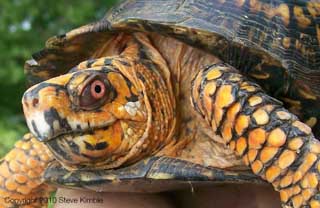 Both box turtles in Indiana are state protected because their numbers are declining, probably due to habitat loss and road deaths. What can you do to help? Slow down when driving, especially on rainy spring, summer or fall mornings. If you wish to have a box turtle as a pet, make sure that it was captive-reared, not wild-caught, though both are illegal in Indiana. If you encounter an injured box turtle that needs medical attention, call the Indiana DNR at 800-893-4116 or 317-232-4080 during business hours, 765-473-9722 (northern half of Indiana) or 812-837-9536 (southern half of Indiana).
To learn more about box turtles and other turtle species in Indiana, visit The Education Store for Turtles of Indiana.
Steve Kimble, Post Doctoral Research Associate
Department of Forestry and Natural Resources, Purdue
Rod Williams, Associate Professor of Wildlife Science
Department of Forestry and Natural Resources, Purdue
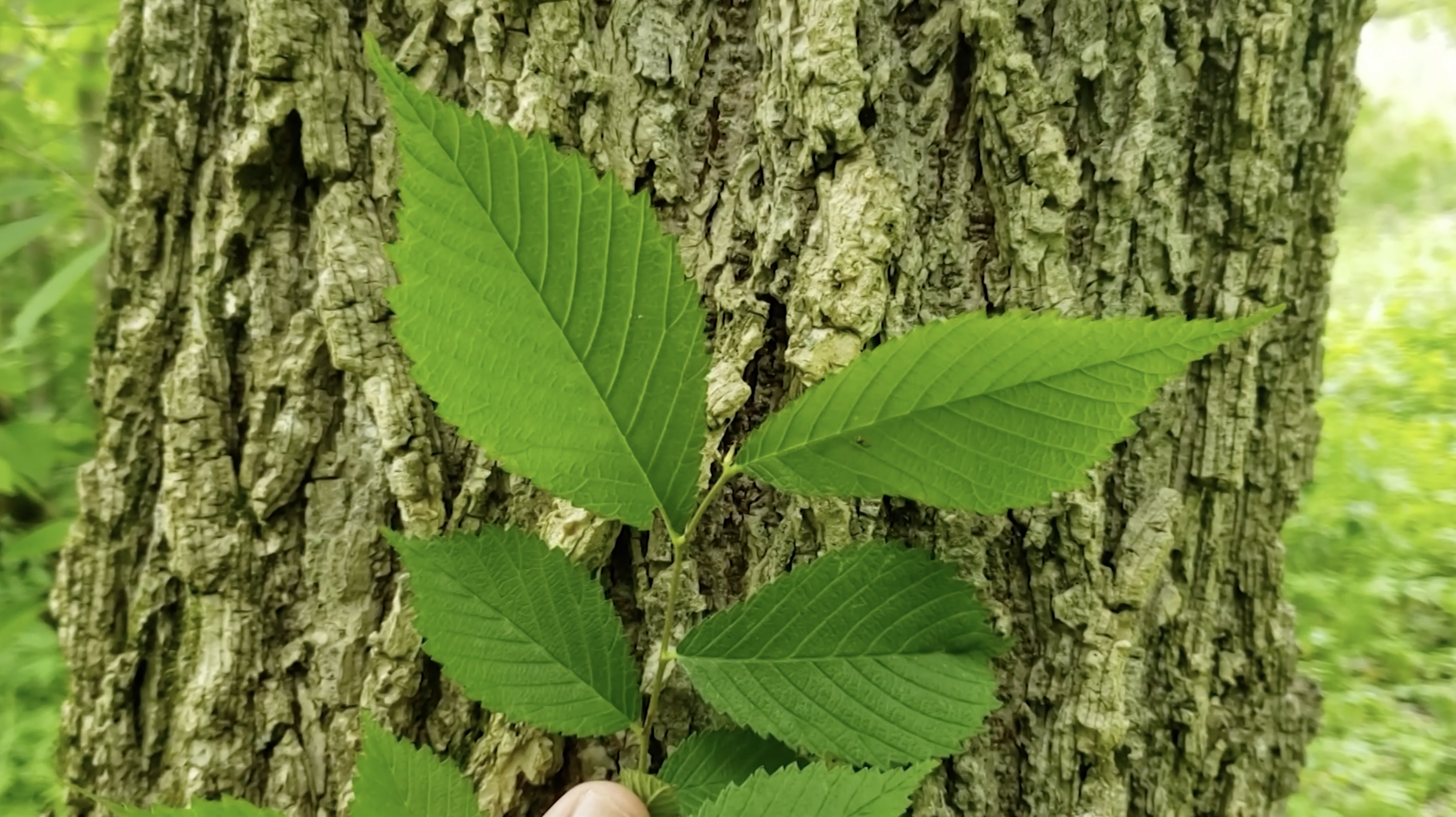 American elms have been the victim of a decimating disease known as DED or Dutch Elm Disease. However, there are a few that linger and remain, gracing our city streets with their majestic arching form. Many elms are mistakenly identified as American; however, there are many other “weedy” elms that have naturally inhabited our urban landscape. Due to the incredible interest in these trees, plant breeders have developed resistant American elms which are showing excellent results. Unfortunately, many of those trees proved to be susceptible to other diseases such as Elm Yellows.
Providing that the tree has been identified as an American elm, proper management is required to maintain its health and vigor to provide a sustainable tree in the landscape.
Strategies include:
Sanitation: Quick removal of diseased trees and symptomatic branches is necessary in managing this disease. Removal of the damaged parts reduces breeding sites for the elm bark beetle and removes the fungus from the vicinity. Branches with “flagging” symptoms should be removed, making a cut well behind (5-8 ft.) any visual symptoms.
Pesticide Applications:
Insecticides to kill bark beetle vectors – Attempt to control the insect vector population by applying an insecticide. Timing of the application may depend on the type of insecticide you have selected. Some insecticides may target the spring feeding sites while others target the overwintering sites and should be applied during late autumn. Use of this management option should be considered carefully. It is difficult to attempt control over this beetle population due to the timing factor, the complete coverage issue, expense and pesticide exposure.
Preventative fungicide injections – There are effective fungicides capable of protecting elm trees from infection, but this method of management should be considered carefully. Fungicide injection must be performed by someone trained in the technique and may be expensive. Protection lasts 1-3 years and then must be repeated. In addition, some researchers are concerned that repeated wounding of the tree (by drilling holes) for the injection may open trees to decay. If there is concern for infestation, it is critical to contact a reputable tree care company specializing in good plant healthcare. Always contact an International Society of Arboriculture Certified Arborist to help insure best practices. For more information on DED and management strategies, click on the links below.
Resources
Dutch Elm Disease
Diseases in Hardwood Tree Plantings
Pest Tracker: Dutch Elm Disease
Lindsey Purcell, Urban Forestry Specialist
Department of Forestry and Natural Resources, Purdue University
Salamanders are often mistaken for lizards, but the two groups are very different.
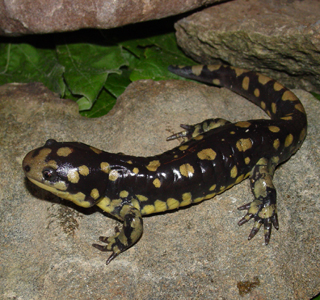
Tiger salamanders are a common species found in Indiana. The bright spotting is probably a sign to predators that they taste bad.
Though they both have similar body shapes, lizards are reptiles (along with turtles, snakes, crocodiles, dinosaurs, and yes, birds) while salamanders are amphibians (along with toads, frogs and a weird and rarely seen group called caecilians). This means lizards have dry scaly skin, while salamanders have moist, porous skin. Lizards all must breathe with lungs, just as humans do. Salamanders, on the other hand, can breathe through their skin, via gills, via lungs or in some cases via their skin and lungs!
Another major difference between lizards and salamanders is their reproduction. Lizards have leathery, partly calcified (shelled) eggs that are typically buried in sand or dirt, but a few species are hatched while still inside the mother before birth. Salamanders, as amphibians, mostly lay their eggs in water where the larvae hatch and after some time usually metamorphose and return to land. Lizards can be found most anywhere on land, while salamanders must stay where they won’t dry out: under logs or leaves, underground or directly in water. We have about six species of lizards and 23 species of salamanders here in Indiana.
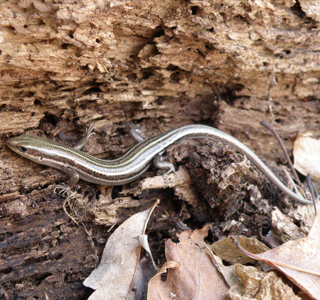
The five-lined skink is another Indiana native. Females will aggressively guard their nests, sometimes biting a threatening finger (don’t worry, they’re not venomous).
Several of the salamander species are listed as Special Concern or State Endangered. Regardless of their legal status, all wildlife should be left where you find it unless it’s in immediate danger, such as on a road.
For more information on how to identify Indiana salamanders and lizards:
Salamanders of Indiana book
Snakes and Lizards of Indiana
Place keywords in the search field at the Purdue Extension resource center for more information: The Education Store.
View Help The Hellbender website for more information on salamanders.
Steve Kimble, Post Doctoral Research Associate
Department of Forestry and Natural Resources, Purdue
Rod Williams, Associate Professor of Wildlife Science
Department of Forestry and Natural Resources, Purdue
I am noticing several weeping cherries in the neighborhood which appear to be damaged, maybe dead over the winter. Forsythia bloom was poor, and my Cornus mas failed to bloom too. Will they recover?
Damage is just now starting to reveal itself due to the late growing season this year. Cherry trees appear to have been hit very hard, especially sweet cherries with over 90% of the crop damaged. Many landscape trees bloomed sporadically or not at all due to the extreme cold. Redbuds were light to no bloom but appear to be leafing out fine. Forsythia seems to be dependent on species and if they are planted in a protected area or microclimate. Many forsythia flowered well this spring, but many in open, exposed areas bloomed very little. Also it appears that Cornus mas is failing to bloom as well. Another consideration is impact of the drought from last year. I believe we will be seeing even greater impact with extreme cold providing an additional blow to our trees and shrubs. Plants may fail to bloom but still be alive.
The best suggestion is be patient and to provide good cultural practices with water when needed this spring and summer and provide the proper levels of mulch. Avoid fertilization and only lightly prune when necessary. Most likely trees are in stress conditions, still in recovery from the previous drought along with the extreme cold. Too much care can be lethal.
Resources
Pruning Ornamental Trees and Shrubs
Why Plants Fail to Bloom
Lindsey Purcell, Urban Forestry Specialist
Department of Forestry and Natural Resources, Purdue University

Recent Posts
- 2026 Winter Bat Survey In Progress, MyDNR
Posted: March 27, 2026 in Wildlife - Fast-Growing Trees for the Landscape, Purdue Landscape Report
Posted: March 26, 2026 in Forestry, Urban Forestry, Woodlands - Urban Tree Spotlight: Planting Deciduous Shade Trees, Purdue Landscape Report
Posted: March 25, 2026 in Forests and Street Trees, Urban Forestry, Woodlands - Beetle that attacks Tree-of-Heaven found in Indiana, Purdue Landscape Report
Posted: March 20, 2026 in Invasive Insects, Wildlife, Woodlands - ID That Tree: Dwarf Chinkapin Oak
Posted: in Forestry, Urban Forestry, Wildlife, Woodlands - IN-PREPared: Essential Resources for Indiana’s Severe Weather Season
Posted: March 11, 2026 in How To, Safety - DNR Hiring for Indiana Conservation Officer Positions, MyDNR
Posted: March 9, 2026 in Urban Forestry, Wildlife, Woodlands - ID That Tree: Shumard Oak
Posted: in Plants, Urban Forestry, Wildlife, Woodlands - A Woodland Management Moment: Windbreak Around Walnut Plantings
Posted: March 3, 2026 in Forestry, Urban Forestry, Woodland Management Moment - Getting Certified as an Indiana Certified Prescribed Burn Manager
Posted: March 2, 2026 in How To, Urban Forestry, Woodlands
Archives
Categories
- Alert
- Aquaculture/Fish
- Aquatic/Aquaculture Resources
- Ask the Expert
- Christmas Trees
- Community Development
- Disease
- Drought
- Forestry
- Forests and Street Trees
- Gardening
- Got Nature for Kids
- Great Lakes
- How To
- Invasive Animal Species
- Invasive Insects
- Invasive Plant Species
- Land Use
- Natural Resource Planning
- Nature of Teaching
- Plants
- Podcasts
- Ponds
- Publication
- Safety
- Spiders
- Timber Marketing
- Uncategorized
- Urban Forestry
- Webinar
- Wildlife
- Wood Products/Manufacturing
- Woodland Management Moment
- Woodlands