 Purdue University - Extension - Forestry and Natural Resources
Got Nature? Blog
With rainfall well below average, watering your trees is more important than ever. Indiana typically receives around 3.14 inches of rain in September, but as of 2025, only 1.31 inches have fallen—making this month even drier than last year. These conditions can lead to dry, wilted leaves and stress for trees across the state, especially during prolonged heat. To see how drought is affecting your area, visit the U.S. Drought Monitor for Indiana-specific maps.
In this video, Lindsey Purcell, Executive Director of the Indiana Arborist Association, explains why consistent watering is critical and shares practical tips to help your trees stay healthy through dry spells.
Extreme heat can have a major impact on tree health and survival. Water is the most limiting ecological resource for a tree, and without adequate moisture, decline and death are imminent. It reduces carbohydrate production, significantly lowering energy reserves and production of defense chemicals in the tree. Check out this publication titled Drought? Don’t Forget the Trees! to learn what to look for for any weakening issues including pests that like the dry conditions.
If you have any questions regarding wildlife, trees, forest management, wood products, natural resource planning or other natural resource topics, feel free to contact us by using our Ask an Expert web page.
More Extreme Heat Resources:
Climate and Drought Maps, Purdue Indiana State Climate Office
Summer Tree Care, Purdue Landscape Report
Drought? Don’t Forget the Trees!, The Education Store, Purdue Extension resource center
Extreme Heat Including Fact Sheets, Purdue Extension – IN-PREPared
Extreme Heat – Resources, Extension Disaster Education Network (EDEN)
Drought Information, Indiana Department of Natural Resources
Planting Your Tree Part 1: Choosing Your Tree, Purdue Extension YouTube Channel
Tree Selection for the “Un-natural” Environment, The Education Store
Tree Pruning Essentials Video, Purdue Extension YouTube Channel
Tree Defect Identification, The Education Store
Tree Wound and Healing, Got Nature? Blog, Purdue Extension – Forestry and Natural Resources
Surface Root Syndrome, The Education Store
Submit Sample, Purdue Plant & Pest Diagnostic Lab
Find an Arborist, Indiana Arborist Association
Ben McCallister, Urban Forestry Specialist
Purdue Forestry & Natural Resources
 Step into the woods and into the legacy of sustainable forestry with a full-day field tour of the Goetsch property in Beloit, Wisconsin—one of the highlights of this year’s Walnut Council National Meeting. This unique site, donated to the Council in 2019, showcases nearly a century of hardwood forest management, including majestic walnut trees planted in the 1930s and thousands of younger trees carefully cultivated over the past four decades.
Participants will explore hands-on demonstrations in crop tree release, regeneration planting, drone-assisted monitoring, and sawmilling. The tour includes bus transportation, lunch, and expert-led discussions on real-world forestry practices in action.
Connect, Learn, and Share at the National Meeting in Rockford, Illinois
The full program runs Sunday, July 27 through Tuesday, July 29 at the Hilton Garden Inn Rockford Conference Center, offering a rich mix of networking, education, and inspiration:
- Sunday evening kicks off with a welcoming dinner and informal “Landowner Show & Tell,” where members share personal stories, tips, and lessons learned.
- Monday features the Goetsch property field tour, followed by an evening banquet with a keynote by Illinois State Forester Kenneth Jolly.
- Tuesday brings a full day of indoor programming, including expert presentations on hardwood management, roundtable discussions, and a landowner panel.
Companion tours are also available, including visits to Anderson Japanese Garden and Midway Village Museum.
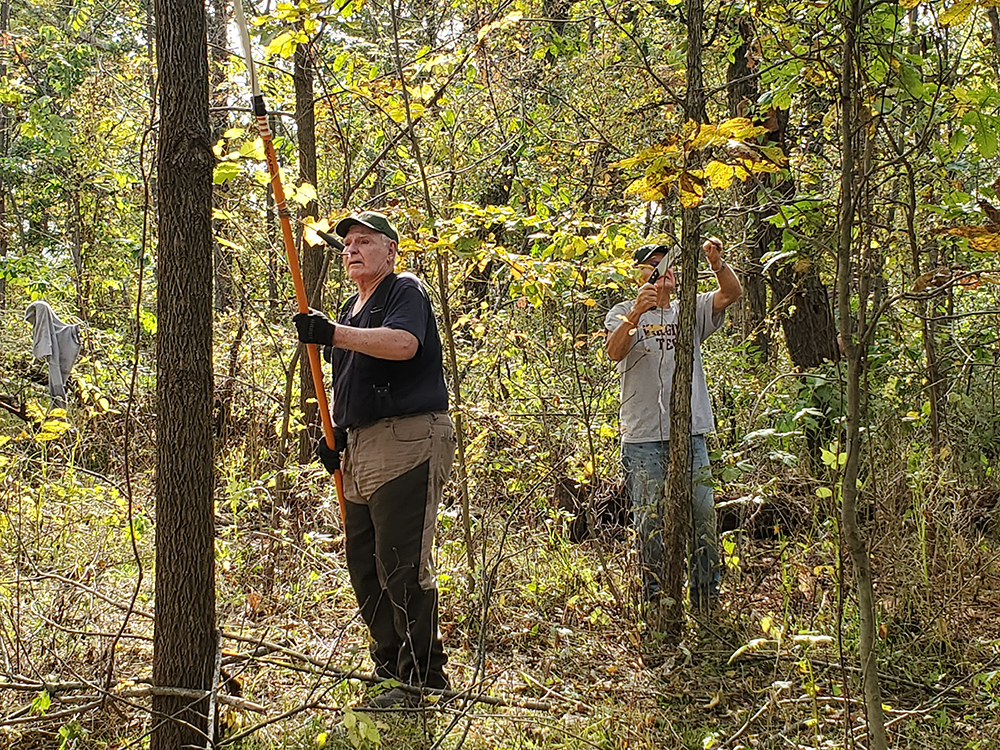 Whether you’re a seasoned forester, a new landowner, or simply passionate about sustainable hardwood management, this event offers something for everyone. Register for the full event or individual days, and don’t forget to book your hotel by June 28 to receive the special group rate.
This program will be submitted for CFE credits from Society of American Foresters.
Questions? Call 765-496-5013 or email walnutcouncil@gmail.com.
About the Walnut Council:
Founded in 1970, the Walnut Council is an international association representing nearly 700 woodland owners, foresters, forest scientists, and wood-producing industry representatives in 45 states and three foreign countries. The purpose is to assist in the technical transfer of forest research to field applications, help build and maintain better markets for wood products and nut crops, and to promote sustainable forest management, conservation, reforestation, and utilization of American black walnut (Juglans nigra) and other high quality fine hardwoods.
Resources:
Indiana Forestry & Woodland Owners Association (IFWOA) YouTube Channel
Deer Impact Toolbox, Purdue Extension Pond and Wildlife Management
Grassland Management, Purdue Extension Pond and Wildlife Management
District Forester, Indiana DNR Division of Forestry, for over 10 acres of woodlands
Directory of Professional Foresters, Indiana Forestry & Woodland Owners Association (IFWOA)
Indiana Woodland Steward E-newsletters, Eleven Member Organization
A Woodland Management Moment, Playlist, Purdue Extension – Forestry and Natural Resources (FNR) YouTube Channel
Conservation Tree Planting: Steps to Success, Purdue Extension – FNR YouTube Channel
Forest Improvement Handbook, The Education Store
Invasive Species, Playlist, Purdue Extension – FNR YouTube Channel
Woodland Stewardship for Landowners, Playlist, Purdue Extension – FNR YouTube Channel
Invasive Plant Species Identification, Video, Purdue Extension – FNR YouTube Channel
Report Invasive Species, Purdue Invasive Species
ID That Tree – Video Playlist, Purdue Extension – Forestry and Natural Resources (FNR) YouTube Channel
Subscribe – Purdue Extension-FNR YouTube Channel
Liz Jackson, IFWOA Engagement Specialist & Walnut Council Manager
Indiana Forestry & Woodlands Owners Association (IFWOA)
Welcome to ID That Tree! In this episode, Purdue Extension Forester Lenny Farlee introduces us to a relatively common Indiana shrub called Witch-Hazel. Discover the characteristics of the environment this shrub is found in, the features of the shrub itself and the interesting history behind it! As a nature lover, student or someone who’s simply just curious about local plants, this video is a great way to get a quick run-down on important information and identification.
If you have any questions regarding wildlife, trees, forest management, wood products, natural resource planning or other natural resource topics, feel free to contact us by using our Ask an Expert web page.
Resources:
ID That Tree – Video Playlist, Purdue Extension – Forestry and Natural Resources (FNR) YouTube Channel
Purdue Arboretum Explorer
Conservation Tree Planting: Steps to Success, Purdue Extension – FNR YouTube Channel
A Woodland Management Moment, Playlist, Purdue Extension – FNR YouTube Channel
Woodland Stewardship for Landowners, Playlist, Purdue Extension – FNR YouTube Channel
Indiana Department of Natural Resources: Invasive Species
Indiana Invasive Species Council
Cooperative Invasive Species Management Area (CISMA)
Report Invasive, Purdue Extension
Fifty Common Trees of Indiana, Purdue Extension – FNR
Habitat University, Episode 12 – Exploring the challenges of Invasive Species, Habitat University-Natural Resource University
Shrubs and Woody Vines of Indiana and the Midwest, Purdue University Press
Native Trees of the Midwest, Purdue University Press
Professional Forester, Indiana Forestry Woodland Owners Association
District Forester, Indiana Department of Natural Resources, 10+ acres
Find an Arborist, International Society of Arboriculture
Forest Improvement Handbook, The Education Store
Lenny Farlee, Extension Forester
Hardwood Tree Improvement and Regeneration Center
Purdue Department of Forestry & Natural Resources
In recognition of Pollinator Week June 16-22, 2025, let’s see what is blooming at Purdue FNR Tippecanoe County property, Martell Forest.
 Wild petunia, Ruellia sp, are several species found in woodland and sunny edge habitats. The blooms do look like the familiar garden petunia, but it is a different genus of plants. I caught small insects inside the flower, evidence of its pollinator value, although I have read the individual flowers may only last one day.
 I came upon a unique parasitic plant that does not have chlorophyll or true leaves, but obtains its nutrients by parasitizing oak trees. This is American cancer root, Conopholis americana, also called bear corn, because of the similarity of the plant structure to an ear of corn. Although it lacks chlorophyll, it does possess flowers that propagate the plant.
 Not far from the cancer root I found fire pink, Silene virginica. This is one flower that would be hard to miss! This is about as red as any native flower encountered in Indiana forests. If you are wondering why pink is in the name instead of red, it is a member of the pink family of plants, which include carnations and a rare prairie relative, royal catchfly. An effort was made a few years ago to make this our state flower, but that has not been acted upon so far.
 As I headed downhill I came across Virginia spiderwort, Tradescantia virginiana, with beautiful three-petaled violet to blue flowers clustered at the top of the plant. The flowers typically last only a day, but are rapidly replaced by the numerous buds below the current blooms.
 Blue-eyed grass, Sisyrinchium sp, was encountered in a grassy area near a tree plantation. This is not a grass but several species that are members of the iris family. The tiny blooms and narrow leaves blend into the grass background.
 Some woody plants are blooming in June as well. This is the bell-shaped flower of American persimmon, Diospyros virginiana. Persimmon trees tend to bear either all male or all female flowers on a single tree, but occasionally a tree will have both. Female flowers are solitary on the stems while male flowers tend to be in small clusters.
 The final bloom I have included is rough-leaved dogwood, Cornus drummondii, a shrub relative of the flowering dogwood that provides a white blossom show earlier in the spring. As the name implies, this shrub has leaves with a slightly sandpaper-texture and clusters of small white flowers that are attractive to many pollinators. This blooms later than several other dogwoods, extending the flowering season.
More about Pollinator Week: this is an annual celebration in support of pollinator health that was initiated and is managed by Pollinator Partnership. It is a time to raise awareness for pollinators and spread the word about what we can do to protect them. Pollinators include bees, butterflies, beetles, moths, wasps, hummingbirds, bats, flies, beetles, lizards, rodents and more.
Resources:
Ask an Expert: What’s Buzzing or Not Buzzing About Pollinators, Purdue Extension – Forestry & Natural Resources (FNR) YouTube Channel
Pollinator Conservation Education, Purdue Extension – Entomology
What’s buzzing in your backyard? Learn about protecting pollinators, beekeeping with Purdue Extension, Purdue Extension News
Indiana Monarch and Pollinator Conservation website
Protecting Pollinators: Protecting Pollinators in Home Lawns and Landscapes, publication, The Education Store, Purdue Extension’s resource center
Consider Pollinators When Planning Your Garden, Got Nature? Blog, Purdue Extension – FNR
Pollinator Conservation Education, Purdue Entomology
Recommended Indiana-Native Plants for Attracting Pollinators (pdf), Purdue Extension – Entomology
Attract Hummingbirds to Your Yard video, Purdue Extension – FNR YouTube Channel
Protecting Pollinators: Biology and Control of Varroa Mites in Bee Hives, The Education Store, Purdue Extension resource center
Gardening for Pollinators, Purdue Garden Articles
Subscribe Purdue Extension-Forestry and Natural Resources YouTube Channel
Lenny Farlee, Extension Forester
Hardwood Tree Improvement and Regeneration Center
Purdue Department of Forestry & Natural Resources
Welcome to ID That Tree! In this episode, Purdue Extension Forester Lenny Farlee introduces Coralberry, a small native Indiana shrub also known as Buckbrush. Learn how it got its name, what makes its leaves unique and where it typically grows. Whether you’re a nature lover, student or just curious about local plant life, this quick and informative video is a great way to expand your knowledge of Indiana’s native shrubs.
If you have any questions regarding wildlife, trees, forest management, wood products, natural resource planning or other natural resource topics, feel free to contact us by using our Ask an Expert web page.
Resources:
ID That Tree – Video Playlist, Purdue Extension – Forestry and Natural Resources (FNR) YouTube Channel
Purdue Arboretum Explorer
Conservation Tree Planting: Steps to Success, Purdue Extension – FNR YouTube Channel
A Woodland Management Moment, Playlist, Purdue Extension – FNR YouTube Channel
Woodland Stewardship for Landowners, Playlist, Purdue Extension – FNR YouTube Channel
Indiana Department of Natural Resources: Invasive Species
Indiana Invasive Species Council
Cooperative Invasive Species Management Area (CISMA)
Report Invasive, Purdue Extension
Fifty Common Trees of Indiana, Purdue Extension – FNR
Habitat University, Episode 12 – Exploring the challenges of Invasive Species, Habitat University-Natural Resource University
Shrubs and Woody Vines of Indiana and the Midwest, The Education Store
Native Trees of the Midwest, The Education Store
Professional Forester, Indiana Forestry Woodland Owners Association
District Forester, Indiana Department of Natural Resources, 10+ acres
Find an Arborist, International Society of Arboriculture
Forest Improvement Handbook, The Education Store
Lenny Farlee, Extension Forester
Hardwood Tree Improvement and Regeneration Center
Purdue Department of Forestry & Natural Resources
 Discover the importance of thinning dense native warm-season grasses in conservation plantings to improve diversity. This guide explains methods to reduce tall native warm-season grasses to improve habitat for wildlife. Essential reading for conservationists and land managers interested in grassland ecosystems.
Learn when and how to thin these grasses effectively, and explore strategies that balance ecological health with long-term land management goals: Thinning Native Warm-Season Grasses
This publication is part of a seven publication series The Managing Conservation Plantings Series which include details on how to control invasive species and other problematic plants in Conservation Reserve Program (CRP) plantings and native warm-season grass and wildflower conservation plantings.
Publications in this series include:
- Golden Rod Control
- Thinning Native Warm-Season Grasses
- Sericea Lespedeza Control
- Woody Encroachment and Woody Invasives
- Johnson Grass Control
- Reed Canarygrass Control
- Teasel Control (Common and Cut Leaved)
- Controlling Introduced Cool-season Grasses
- Crownvetch, Sweetclover and Birdsfoot Trefoil Control
Resources:
Deer Impact Toolbox & Grassland Management, Purdue Extension Pond and Wildlife Management
Pond and Wildlife Management, Purdue Extension
Forestry for the Birds Virtual Tour and Pocket Guide, Got Nature? Blog, Purdue Extension – FNR
Frost Seeding to Establish Wildlife Food Plots and Native Grass and Forb Plantings – Purdue Extension – FNR YouTube channel
Wildlife Habitat Hint: Tips for Evaluating a First Year Native Grass and Forb Plantings, Purdue Extension – FNR YouTube Channel
Drone Seeding Native Grasses and Forbs: Project Overview & Drone Setup, Purdue Extension – FNR YouTube channel
Ask an Expert: Wildlife Food Plots, video, Purdue Extension – FNR YouTube Channel
Handling Harvested Game: Episode 1, Field Dressing, video, Purdue Extension – FNR YouTube Channel
Managing Your Woods for White-Tailed Deer, The Education Store
Forest Improvement Handbook, The Education Store
Forest Management for Reptiles and Amphibians: A Technical Guide for the Midwest, The Education Store
A Template for Your Wildlife Habitat Management Plan, The Education Store
Woodland Stewardship for Landowners, Playlist, Purdue Extension – FNR YouTube channel
Nature of Teaching Unit 1: Animal Diversity and Tracking, The Education Store
Nature of Teaching, Purdue College of Agriculture
Invasive Species Playlist, Playlist, Purdue Extension – FNR YouTube Channel
Report Invasive, Purdue Extension
Subscribe Purdue Extension – Forestry and Natural Resources YouTube Channel
Jarred Brooke, Wildlife Extension Specialist
Purdue Department of Forestry and Natural Resources
Purdue Landscape Report: Recently, there has been an uptick in questions related to one of Indiana’s most notorious invasive pests: the emerald ash borer. Homeowners, businesses, even professionals have asked if ash trees are still present in Indiana, and if the insect is still a threat to our ecosystem. Emerald ash borer wreaked significant havoc among Indiana’s hardwoods, and a person could be forgiven for believing that there are no ash trees at all in our state, but this is simply not true. Ash still survives in Indiana and can be found both as ornamental plantings and in untended woodlots; unfortunately, emerald ash borer is also still present and just as deadly to them as ever. The question of protecting ash versus removal them is complex, but entomologists and tree specialists have learned from this insect’s invasion.
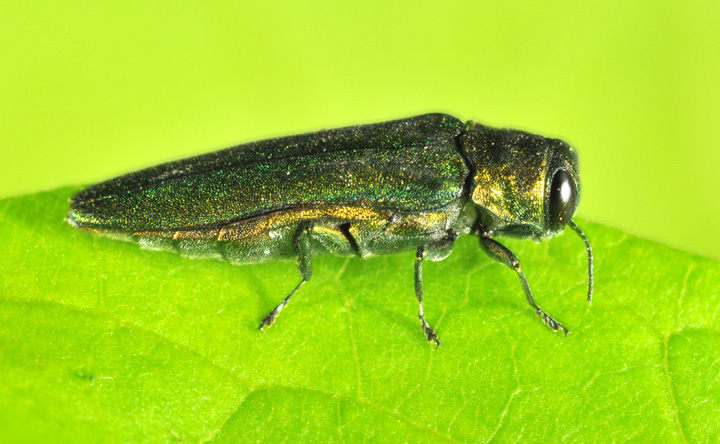
Figure 1. Side view of EAB, John Obermeyer
The emerald ash borer (Agrilus planipennis), a wood-boring insect native to Asia, is responsible for decimating ash (Fraxinus spp.) throughout the United States and elsewhere. In Indiana, this insect’s presence was confirmed in 2004, though it had probably been in the state for some time before then. Since its arrival, Hoosiers have been forced to watch as ash trees have rapidly declined and died due to the insect’s feeding and life cycle. The insect lays its eggs in crevices in the bark of an ash that is 8 to 10 years old, and after hatching, the new larvae begin to bore through the tree’s cambium tissue. The tree relies on its cambium tissue to transport water and nutrients and supply cells for new growth. Often, the only signs of the insect’s presence are a reduction in canopy coverage and D-shaped exit holes in the bark, indicating adult emergence. As time goes on, however, the tree will continue to lose canopy, experience limb death, and often have large chunks of bark detach. Unprotected trees will typically die within 2 to 5 years of infestation. Dead and dying ash trees represent a serious hazard to health and property as infestation will leave them extremely brittle. Brittle ash will often fall during weather events or even collapse over time as limbs fall off.
While emerald ash borer did significant damage to ash tree populations in Indiana, they did not destroy the population entirely. While virtually all untreated trees will eventually become infested, saplings with a trunk diameter of ½ to 1 inch will remain untouched, allowing annual replacement of trees to continue. Since the initial invasion killed so many trees, the borer’s populations have been proportionally reduced as well due to a lack of a food source. This combination of factors has created a cycle of growth and infestation that allows both populations to survive, but at significantly lower levels as compared to the period of the initial infestation. Unfortunately, this also means that emerald ash borer is now a permanent fixture in the hardwood ecosystem in Indiana.

Figure 2. This photo illustration shows three ash trees in Bloomington, Indiana, with different levels of canopy lost to the emerald ash borer. (Purdue Tree Doctor app illustration/Cliff Sadof)
While many may believe ash trees are a total loss, there are still options to protect ash tree and even rescue ash that have already been infested. The first step in this process is to determine the extent of damage in a given tree. As the cambium tissue is consume by ash borer larvae, the tree will experience a steady loss of canopy and limb death. The proportion of lost canopy makes a great indicator for treatment viability. For example, a tree that has only lost 10% of its canopy will normally respond well to treatment. As more canopy is lost, recovery is more challenging, until the tree has lost %30 of canopy coverage. After that point, there is very little chance that a rescue treatment will be successful, and removal will most likely be necessary. It is also important to remember that limb death may occur; these limbs will not recover and will need to be removed to avoid any potential hazards.
There are several insecticides with varying ranges of efficacy that can be used to manage emerald ash borer. These include imidacloprid, dinotefuran, azadirachtin, and emamectin benzoate. Several studies have been conducted to find the best combination of chemical and application type, such as the difference between using a soil drench compared to a trunk injection. While all of the above chemicals can be effective against the insect, the combination of emamectin benzoate applied through a trunk injection offers the best, longest lasting protection from infestation. This combination has a durable effect lasting for two years under dense infestations. However, the reduction in emerald ash borer populations have spread the distribution of the insect thinner, and longer intervals between treatments are possible. A ten-year study conducted by Purdue University demonstrated that treating trees once every three years provided sufficient protection from the beetles, while also showing that 4 to 5 years after last treatment coincided with an increase in damage to the trees. This same study also found that by six years post-treatment, the trees would decline to the point of making removal a necessity. This research concluded that increasing time between intervals after three years increased the risk of catastrophic damage due to emerald ash borer activity, thus the recommendation for three-year intervals.
Ultimately, many will see this as a financial issue: the cost of treatment over time against the cost of removal to avoid potential damages. The above study estimated the cost of treating a single tree with an emamectin benzoate injection at $300 per treatment. Since treatment only needs to happen once every three years, the cost per year per tree would be $100, approximately. Tree removal was estimated between $1800 and $3600, depending on tree location and other factors. Also consider replacement costs if you wanted to continue to grow ash in that area, and how long the tree would need to grow to match the size of the tree you just replaced. Additionally, add in any treatment costs to make sure it survives infestation. When looked at from this angle, maintaining regular treatment on rescuable trees would appear to be the most cost-effective route for managing ash. Any treatment plan should be discussed with a professional, such as a certified arborist.
Read the original article posted in the Purdue Landscape Report April 2025 Newsletter: Revisiting Ash Tree Protection.
Subscribe and receive the newsletter: Purdue Landscape Report Newsletter.
Resources:
New Hope for Fighting Ash Borer, Got Nature? Purdue Extension-FNR
Invasive Pest Species: Tools for Staging and Managing EAB in the Urban Forest, Got Nature?
Emerald Ash Borer, Purdue Extension-Entomology
Emerald Ash Borer Tools & Resources – Purdue Extension Entomology
Planting Your Tree Part 1: Choosing Your Tree, Purdue Extension YouTube Channel
Tree Planting Part 2: Planting a Tree, Purdue Extension – Forestry and Natural Resources YouTube Channel
Indiana Invasive Plant List, Indiana Invasive Species Council, Purdue Entomology
Landscape Report Shares Importance of Soil Testing, Purdue FNR Extension
Find an Arborist website, Trees are Good, International Society of Arboriculture (ISA)
Tree Risk Management – The Education Store, Purdue Extension’s resource center
ID That Tree – Video Playlist, Purdue Extension – Forestry and Natural Resources (FNR) YouTube Channel
Purdue Arboretum Explorer
Conservation Tree Planting: Steps to Success, Purdue Extension – FNR YouTube Channel
A Woodland Management Moment, Playlist, Purdue Extension – FNR YouTube Channel
Woodland Stewardship for Landowners, Playlist, Purdue Extension – FNR YouTube Channel
Indiana Department of Natural Resources: Invasive Species
Indiana Invasive Species Council
Cooperative Invasive Species Management Area (CISMA)
Report Invasive, Purdue Extension
Native Trees of the Midwest, Purdue University Press
Professional Forester, Indiana Forestry Woodland Owners Association
Forest Improvement Handbook, The Education Store
Bob Bruner, Exotic Forest Pest Educator
Purdue Entomology
Purdue Landscape Report: Sawflies are frequent pests in the landscape that attack a wide variety of plants, from ornamental flowers to large trees. You might start to see them damaging plants around this time of year as the first generations hatch and begin to feed on foliage. They are often mistaken for caterpillars, which are the larval stages of butterflies and moths (Order Lepidoptera). However, sawflies are actually wasp-like insects (Order Hymenoptera).
Let’s review how to tell them apart. Products that are labeled for caterpillars do not always work on sawflies, so proper identification is important.
- The most reliable characteristic are the prolegs. Sawflies have 6+ pairs of prolegs, or false legs, while caterpillars have < 6 pairs of prolegs. (Fig. 1)
- When disturbed, sawflies will lift their posterior into an “S” shape. Caterpillars don’t display this behavior. (Fig. 2)


Integrated management recommendations
Early in the year, before hatching starts, look for sawfly oviposition on your plants. This will vary depending on the species of sawfly. For example, the European Pine sawfly eggs look like yellow-orange spots evenly spaced on the needles (Fig. 3). The Bristly Roseslug sawfly uses her ovipositor to cut a slit into the leaf petiole where she inserts eggs. The gooseberry sawfly lays eggs on a leaf vein (Fig. 4).


If the eggs are readily visible, manual removal will help reduce the populations. This is best accomplished in early spring before the eggs hatch. Use a tool to smash the eggs, or prune of the affected plant material.
You may not notice any problem on the plant until you start to see holes appearing in the foliage. Monitor regularly in the spring for holes and “window pane” damage (Fig. 5). This is the time of year when sawflies are hatching, so don’t wait any longer to check your plants. Sawfly management is best accomplished when the larvae are still small. Prune or shake off the larvae from the plant, or spray with a biorational material so as not to disturb natural enemies and cause a secondary pest outbreak later in the summer.

For more information on sawfly biology, check out this five-minute video: Slaying Sawflies with Purdue Plant Doctor.
Specific management recommendations can be found on the Purdue Plant Doctor website. Type “sawfly” into the search and click on the species you would like to read more about!
Read the original article on Purdue Landscape Report: Sawflies: the caterpillar pests that are not caterpillars.
Ask the Expert: Pests in Your Woods, Purdue Extension – Forestry & Natural Resources (FNR) YouTube Channel
Report Spotted Lanternfly, Purdue Landscape Report
Invasive Species Playlist, Purdue Extension – FNR YouTube Channel
Indiana Department of Natural Resources: Invasive Species
Indiana Invasive Species Council
Cooperative Invasive Species Management Area (CISMA)
Report Invasive, Purdue Extension
What are invasive species and why should I care?, Got Nature? Blog, Purdue Extension – FNR
Purdue Plant Doctor, Purdue Extension
An Introduction to Trees of Indiana, The Education Store, Purdue Extension’s resource center
Fifty Common Trees of Indiana, Forestry & Natural Resources
ID That Tree, Playlist, Purdue Extension – FNR YouTube Channel
A Woodland Management Moment, Playlist, Purdue Extension – FNR YouTube Channel
Woodland Stewardship for Landowners, Playlist, Purdue Extension – FNR YouTube Channel
Native Trees of the Midwest, Purdue University Press
Alicia Kelley, Cooperative Agricultural Pest Survey (CAPS) Coordinator
Purdue Extension – Entomology
 Question: Is it recommended to feed birds during the summer? Could this effect migration?
Answer: Continuing to feed birds in the spring and summer comes down to personal preference and is not a problem for birds. Many things drive migration including daylength. The only difference is some foods (e.g., suet) can become rancid. Even bird seed (especially wet seed) can spoil quicker. You can fix this by changing out your food regularly, or by not filling the feeders as full so that birds empty the feeder more quickly.
Resources:
The Basics of Bird Migration: How, Why and Where, Cornell Lab
Feeding Birds, Cornell Lab
Bird Feeding Tips, Audubon.org
More Resources:
Virtual Tour Brings Forest Management for Birds to Life, Purdue Extension – Forestry and Natural Resources (FNR) Got Nature? Blog
Breeding Bird Atlas, Indiana Department of Natural Resources
IN DNR Shares How to Keep Your Backyard Birds Healthy, Purdue Extension – FNR Got Nature? Blog
Question: Is there any risk of becoming infected with avian influenza virus by feeding backyard birds?, Purdue Extension – FNR Got Nature? Blog
Breeding Birds and Forest Management: the Hardwood Ecosystem Experiment and the Central Hardwoods Region, The Education Store, Purdue Extension resource center
Forest Birds, The Education Store
Managing Woodlands for Birds, The Education Store
Managing Woodlands for Birds Video, Purdue Extension – FNR YouTube Channel
The Birders’ Dozen, Profile: Baltimore Oriole, Indiana Woodland Steward
Ask An Expert, Playlist, Purdue Extension – FNR YouTube channel
Birds and Residential Window Strikes: Tips for Prevention, The Education Store
No Room at the Inn: Suburban Backyards and Migratory Birds, Education Store
Putting a Little Wildlife in Your Backyard This Spring, The Education Store
Subscribe, Purdue Extension – FNR YouTube Channel
Dr. Brian MacGowan, Extension Wildlife Specialist & Certified Wildlife Biologist
Department of Forestry & Natural Resources, Purdue University
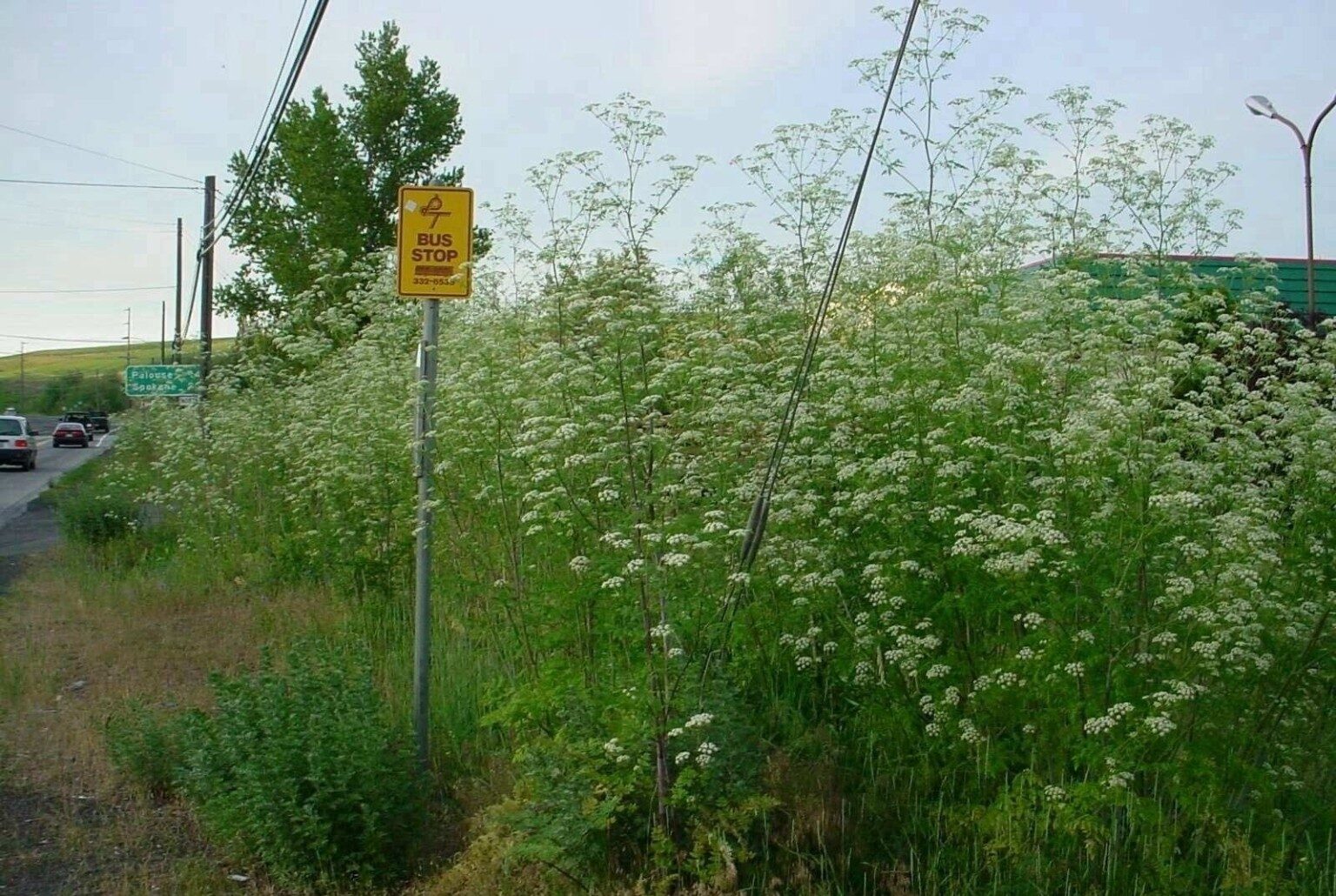
Photo by: Richard Old, XID Services, Inc., Bugwood.org
Made infamous through the trial of Socrates, Shakespeare’s Hamlet and Macbeth, and several other works of classic literature, poison hemlock is an extremely toxic plant that will pose a risk this summer and should be handled with caution.
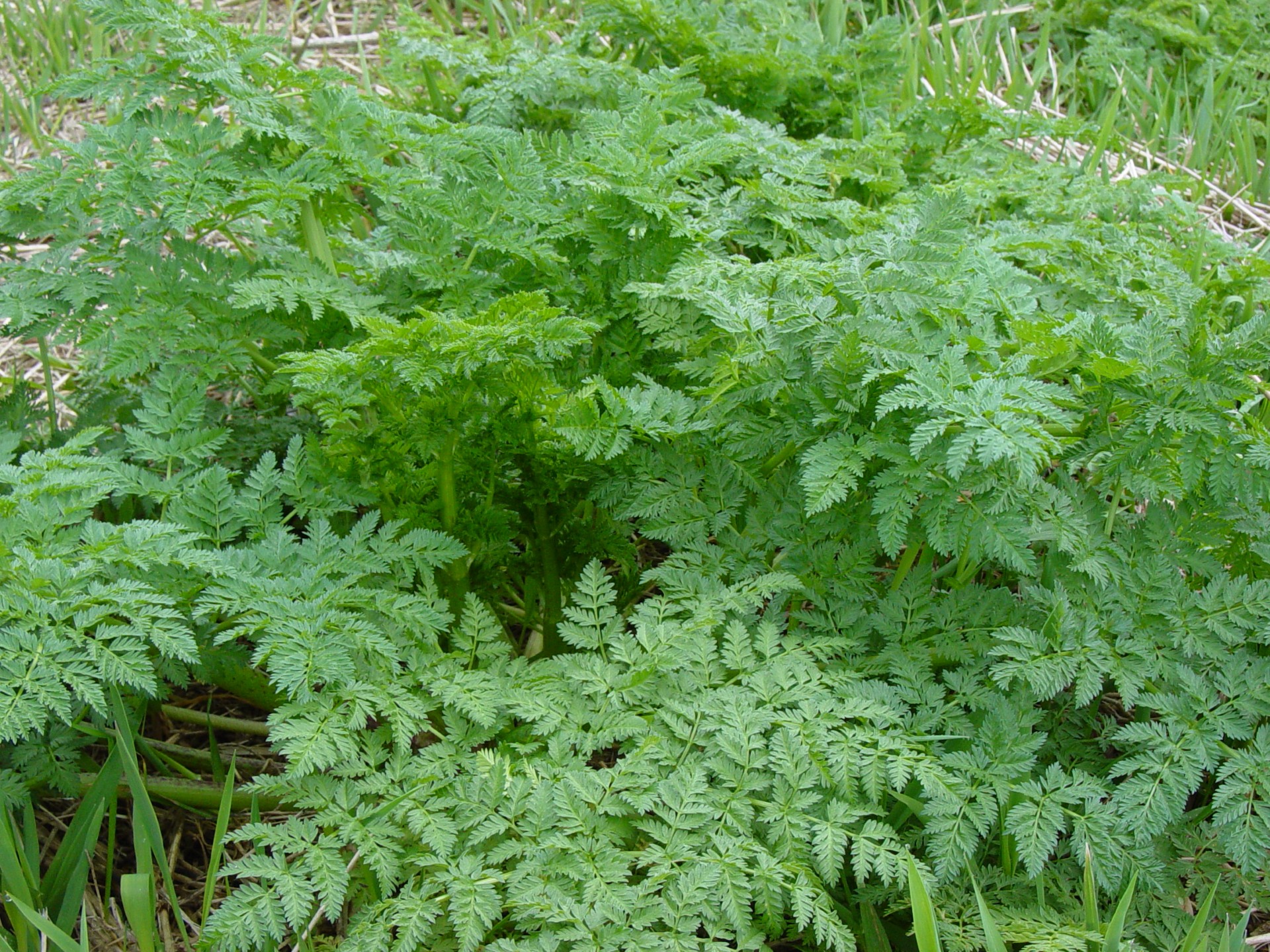
Poison hemlock is native to Europe. It is a biennial plant, meaning that it has a two-year lifespan. Last summer, it went through vegetative growth and largely stayed out of sight as a basal rosette. This summer, a long stem (up to 3 to 10 feet tall) will bolt and produce small white clusters of flowers. Poison hemlock is a member of the parsley family and can sometimes be confused with wild carrot. However, its distinguishing feature is its hairless hollow stalks with purple blotches.
The biggest risk with poison hemlock is ingestion. Lethal doses are fairly small, so it is important for animal owners or parents of young children to identify it in their area and remove it if possible. The toxins can also be absorbed through the skin and lungs, so be sure to wear gloves and a mask when handling these plants.
Symptoms of hemlock poisoning include dilation of the pupils, weakening or slowing pulse, blue coloration around the mouth and eventually paralysis of the central nervous system and muscles leading to death. Quick treatment can reverse the effects, so act quickly.
It is considered highly invasive and is listed on both Indiana’s noxious weed list and the terrestrial invasive plant rule list, Indiana General Assembly IC 14-24-12, IC 15-15, IC 15-16-7 to 10, Indiana Department of Natural Resources, Terrestrial Invasive Species – Plants. Thus, its occurrence may have legal implications for landowners. Some Indiana counties aggressively monitor and spray poison hemlock, particularly along county roads. It primarily invades disturbed and early succession sites such as roadsides, stream and ditch banks, vacant lots, and field borders. However, it can spread into pastures, hay fields, and other grassland habitats.
Its sap contains alkaloid toxins which are highly toxic to humans and animals. Although humans would not normally purposely or accidentally ingest poison hemlock (Socrates was a notable exception), care should be taken when mowing or cutting to avoid dermal and respiratory inhalation exposure. Livestock farmers should control poison hemlock in pastures, feed lots and holding pens and ensure it is not baled in hay.
Poison hemlock spreads via seed, so effective management must prevent new seed production, prevent spread of existing seed, and exhaust the existing seed supply in the soil seed bank.
 Poison hemlock seed is often inadvertently spread by mowing, road maintenance or agricultural equipment. Mow infested areas along roadsides, ditch banks and field edges before seed develops. A single mowing may delay but not stop poison hemlock from growing another shoot and ultimately flowering and producing seed. Multiple mowings are likely required to prevent new seed production.
Herbicide control should focus on the first-year basal rosette. Herbicide control can still be achieved in the early stages of flower stem development. However, as the flower stem grows so grows the amount of herbicide required to provide full coverage and thus full control. A 2% solution of glyphosate (41% active ingredient) in water with a non-ionic surfactant will provide good control of poison hemlock basal rosettes. If the poison hemlock is growing among desirable grasses, broadleaf-specific herbicides such as triclopyr and 2,4-D are also very effective on poison hemlock and will not harm the grasses. AS always, read the pesticide label for proper, safe handling and use.
For more information see Purdue Cooperative Extension Invasive Plant Fact Sheet Series FNR-437-W, Poison Hemlock. For further guidance on poison hemlock control, contact your county Purdue Cooperative Extension office.
Resources:
Noxious and Invasive Weeds and the Weed Laws in Indiana, Purdue Extension – Botany & Plant Pathology
Be Careful Around Highly Toxic Poison Hemlock Plant This Summer, Purdue Extension – Forestry and Natural Resources (FNR)
Poison Hemlock, Pest & Crop Newsletter, Purdue Extension – Entomology
Pest & Crop Newsletter, Purdue Extension
Recognizing and Managing Poison Hemlock, Purdue Landscape Report
Hemlock Woolly Adelgid: Distribution Update, Purdue Landscape Report
Poison Hemlock (Conium maculatum), United States Department of Agriculture (USDA)
Invasive plants: impact on environment and people, The Education Store, Purdue Extension’s resource center
Woodland Management Moment: Invasive Species Control Process, Video, Purdue Extension – Forestry and Natural Resources (FNR) YouTube Channel
What are Invasive Species and Why Should I Care?, Purdue Extension – Forestry and Natural Resources (FNR)
Indiana Invasive Species Council
Report INvasive, Purdue Extension & Indiana Invasive Species Council
Purdue Pest and Plant Diagnostic Lab
Ron Rathfon, Regional Extension Forester, Southern Indiana Purdue Agriculture Center (SIPAC)
Purdue Forestry and Natural Resources

Recent Posts
- Beetle that attacks Tree-of-Heaven found in Indiana, Purdue Landscape Report
Posted: March 20, 2026 in Invasive Insects, Wildlife, Woodlands - ID That Tree: Dwarf Chinkapin Oak
Posted: in Forestry, Urban Forestry, Wildlife, Woodlands - DNR Hiring for Indiana Conservation Officer Positions, MyDNR
Posted: March 9, 2026 in Urban Forestry, Wildlife, Woodlands - ID That Tree: Shumard Oak
Posted: in Plants, Urban Forestry, Wildlife, Woodlands - Uniting Indiana Residents Against Invasive Species
Posted: February 27, 2026 in Community Development, Invasive Insects, Wildlife - Have You Seen a Soaring Eagle Lately? Morning Ag Clips
Posted: February 25, 2026 in Urban Forestry, Wildlife - Register for Natural Resources Teacher Institute’s Class of 2026
Posted: February 19, 2026 in Forestry, Wildlife, Woodlands - ID That Tree: Fragrant Sumac
Posted: February 4, 2026 in Plants, Urban Forestry, Wildlife - Woodsy Owl Edition for Educational Learning, USDA – U.S. Forest Service
Posted: January 21, 2026 in Forestry, Forests and Street Trees, Got Nature for Kids, Urban Forestry, Wildlife - Opt-in to the Deer Management Survey, MyDNR
Posted: January 12, 2026 in Forestry, Wildlife
Archives
Categories
- Alert
- Aquaculture/Fish
- Aquatic/Aquaculture Resources
- Ask the Expert
- Christmas Trees
- Community Development
- Disease
- Drought
- Forestry
- Forests and Street Trees
- Gardening
- Got Nature for Kids
- Great Lakes
- How To
- Invasive Animal Species
- Invasive Insects
- Invasive Plant Species
- Land Use
- Natural Resource Planning
- Nature of Teaching
- Plants
- Podcasts
- Ponds
- Publication
- Safety
- Spiders
- Timber Marketing
- Uncategorized
- Urban Forestry
- Webinar
- Wildlife
- Wood Products/Manufacturing
- Woodland Management Moment
- Woodlands