 Purdue University - Extension - Forestry and Natural Resources
Got Nature? Blog
On this edition of ID That Tree, Purdue Extension forester Lenny Farlee introduces you to the willow family, especially the black willow. The black willow is the only tree sized willow in Indiana. This species features a single scale covering the bud and thin flexible twigs, and is often found near wetland sites.
If you have any questions regarding wildlife, trees, forest management, wood products, natural resource planning or other natural resource topics, feel free to contact us by using our Ask an Expert web page.
Resources:
ID That Tree, Playlist, Purdue Extension – Forestry and Natural Resources YouTube Channel
A Woodland Management Moment, Playlist, Purdue Extension – FNR YouTube Channel
Native Trees of the Midwest, The Education Store
Investing in Indiana Woodlands, The Education Store
Forest Improvement Handbook, The Education Store
Lenny Farlee, Sustaining Hardwood Extension Specialist
Purdue University Department of Forestry and Natural Resources
This week on ID That Tree, Purdue Extension forester Lenny Farlee introduces you to another Indiana conifer, one that is found natively on dry hillsides in two southern counties near the Ohio River, the Virginia Pine. The Virginia pine is easily identified by its needle clusters that feature twisted two-needle groupings and its cones, which feature spikes at the end of the scales. Learn more about this tree often used for reforestation inside.
If you have any questions regarding wildlife, trees, forest management, wood products, natural resource planning or other natural resource topics, feel free to contact us by using our Ask an Expert web page.
Resources:
ID That Tree, Playlist, Purdue Extension – Forestry and Natural Resources YouTube Channel
A Woodland Management Moment, Playlist, Purdue Extension – FNR YouTube Channel
Shrubs and Woody Vines of Indiana and the Midwest, The Education Store, Purdue Extension Resource Center
Native Trees of the Midwest, The Education Store
Investing in Indiana Woodlands, The Education Store
Forest Improvement Handbook, The Education Store
Virginia Pine, Native Trees of IN River Walk, Purdue University Fort Wayne
Lenny Farlee, Sustaining Hardwood Extension Specialist
Purdue University Department of Forestry and Natural Resources
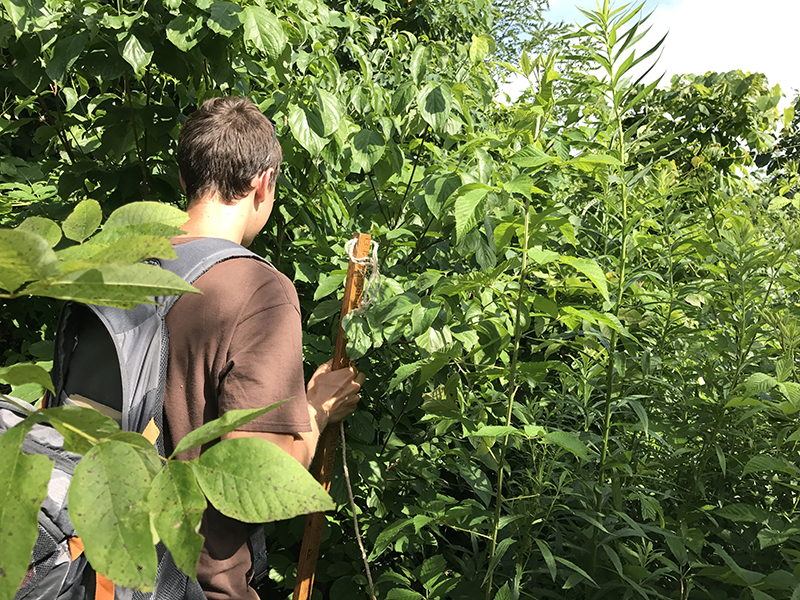
 What do whip-poor-wills, woodcock, bobcats, and box turtles have in common? All these species make their home in young forests. But, what is a young forest? And what do young forests look like?
This new video series from the Hoosier National Forest helps shed some light on these questions and more.
Specialists representing a diversity of organizations (American Bird Conservancy, Purdue Extension, National Wild Turkey Federation, Indiana Department of Natural Resources, U.S. Forest Service) discuss the importance of young forest as habitat for a wide variety of wildlife, managing young forests and misconceptions about young forest.
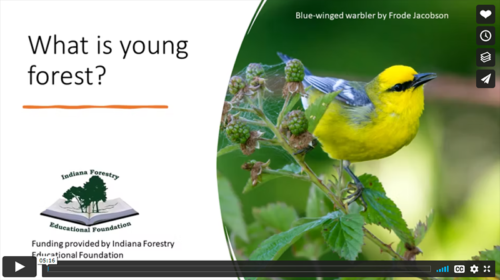
 U.S. Forest Service Vimeo Young Forest Videos:
- Hoosier National Forest – What is young forest?
- Who Needs Young Forest?
- What Does Young Forest Management Look Like?
- Misconceptions About Young Forest
Other resources:
Harvesting our forests, the wildlife debate, Purdue Extension – Forestry and Natural Resources (FNR) Got Nature? Blog
Wildlife Responses to Timber Harvesting, The Education Store, Purdue Extension’s resource center
Breeding Birds and Forest Management: the Hardwood Ecosystem Experiment and the Central Hardwoods Region, The Education Store
 Forest Management for Reptiles and Amphibians: A Technical Guide for the Midwest, The Education Store
Hardwood Ecosystem Experiment – Forest Birds , Purdue Extension – FNR YouTube Channel
Managing Woodlands for Birds , Purdue Extension – FNR YouTube Channel
Sustaining Our Oak-Hickory Forests , Purdue Extension – FNR YouTube Channel
Ask the Expert: Hardwood Ecosystem Experiment – Birds and Salamander Research, Purdue Extension – FNR YouTube Channel
Hardwood Ecosystem Experiment Highlights: Breeding Birds, Purdue Extension – FNR YouTube Channel
Hardwood Ecosystem Experiment Highlights: Small Mammals, Purdue Extension – FNR YouTube Channel
Hardwood Ecosystem Experiment Highlights: Salamanders, Purdue Extension – FNR YouTube Channel
Hardwood Ecosystem Experiment Highlights: Moths, Purdue Extension – FNR YouTube Channel
Hardwood Ecosystem Experiment Highlights: Bats, Purdue Extension – FNR YouTube Channel
Hardwood Ecosystem Experiment: How the HEE Came to Be, Purdue Extension – FNR YouTube Channel
Hardwood Ecosystem Experiment publications , Hardwood Ecosystem Experiment (HEE) website
New Videos Stress Importance of Young Forests, Purdue News – Forestry and Natural Resources
Jarred Brooke, Wildlife Extension Specialist
Purdue Forestry and Natural Resources
In this edition of ID That Tree, meet a rarely found native tree that is closely related to the black walnut, the butternut. The butternut has been plagued by fungal disease, but can be identified by large lemon-shaped nuts, very sharp ridges on the nut inside the husk, a “hairy eyebrow” above the leaf scar/below the buds, and long compound leaves with a terminal leaflet intact.
If you have any questions regarding wildlife, trees, forest management, wood products, natural resource planning or other natural resource topics, feel free to contact us by using our Ask an Expert web page.
Resources:
ID That Tree, Playlist, Purdue Extension – Forestry and Natural Resources YouTube Channel
A Woodland Management Moment, Playlist, Purdue Extension – FNR YouTube Channel
Shrubs and Woody Vines of Indiana and the Midwest, The Education Store, Purdue Extension Resource Center
Native Trees of the Midwest, The Education Store
Investing in Indiana Woodlands, The Education Store
Forest Improvement Handbook, The Education Store
Butternut, Native Trees of Indiana River Walk, Purdue Fort Wayne
Indiana Walnut Council, Industry Representatives include 45 states and 3 foreign countries
Lenny Farlee, Sustaining Hardwood Extension Specialist
Purdue University Department of Forestry and Natural Resources
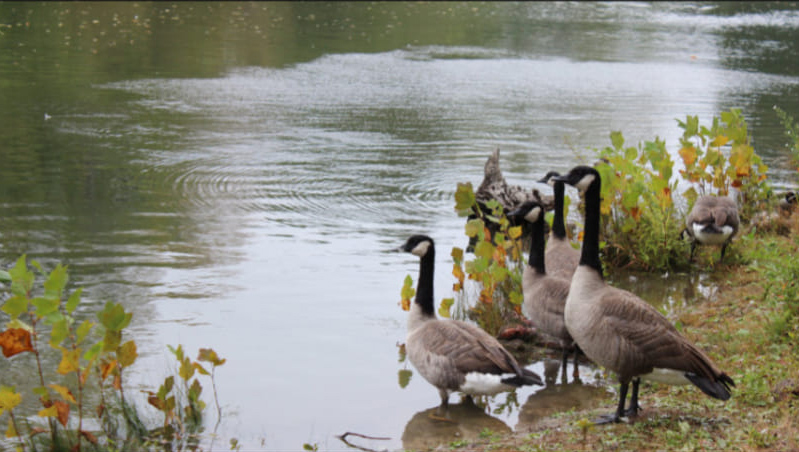 My DNR-Indiana’s Outdoor News: Make preparations now to keep geese off your land. Our friends at Indiana Department of Natural Resources remind us that Canada geese begin scouting for nesting areas in February. If you want to keep geese off your property, now is the time to start preparing. Geese prefer to nest near water surrounded by short, mowed grass and often return to where they have had previous nesting success. Well-kept lawns provide geese with food and a clear line-of-sight to see predators.
For more information and resources view the Indiana Department of Natural Resources: Fish and Wildlife – Canada Geese Management web page. You will find regulations, common goose conflicts, Canada Goose Biology, hunting information and more.
Other Resources:
Selecting a Nuisance Wildlife Control Professional, Got Nature? blog, Purdue Extension-Forestry & Natural Resources
Nuisance Canada Goose Management – Indiana Department of Natural Resources (INDNR)
Caution: Feeding Waterfowl May Be Harmful, U.S. fish & Wildlife Service
Indiana Department of Natural Resources
In this edition of ID That Tree, meet a non-native tree originally planted for fence rows, the Osage Orange, also known as a hedge apple. This tree is known by its gray bark with orange undertones and its large yellowish fruit, which has a milky center.
If you have any questions regarding wildlife, trees, forest management, wood products, natural resource planning or other natural resource topics, feel free to contact us by using our Ask an Expert web page.
Resources:
ID That Tree, Playlist, Purdue Extension – Forestry and Natural Resources YouTube Channel
A Woodland Management Moment, Playlist, Purdue Extension – FNR YouTube Channel
Shrubs and Woody Vines of Indiana and the Midwest, The Education Store, Purdue Extension Resource Center
Native Trees of the Midwest, The Education Store
Investing in Indiana Woodlands, The Education Store
Forest Improvement Handbook, The Education Store
Pin Oak, Native Trees of Indiana River Walk, Purdue Fort Wayne
Lenny Farlee, Sustaining Hardwood Extension Specialist
Purdue University Department of Forestry and Natural Resources
On this edition of ID That Tree, meet the black locust, which is recognizable by its small, rounded pinnate leaflets; gray bark with rough, long running ridges with orange undertones; and paired thorns where the buds and leaves originate.
If you have any questions regarding wildlife, trees, forest management, wood products, natural resource planning or other natural resource topics, feel free to contact us by using our Ask an Expert web page.
Resources:
ID That Tree, Playlist, Purdue Extension – Forestry and Natural Resources YouTube Channel
A Woodland Management Moment, Playlist, Purdue Extension – FNR YouTube Channel
Shrubs and Woody Vines of Indiana and the Midwest, The Education Store, Purdue Extension Resource Center
Native Trees of the Midwest, The Education Store
Investing in Indiana Woodlands, The Education Store
Forest Improvement Handbook, The Education Store
Black Locust, Native Trees of Indiana River Walk, Purdue Fort Wayne
Lenny Farlee, Sustaining Hardwood Extension Specialist
Purdue University Department of Forestry and Natural Resources
On this edition of ID That Tree, Purdue Extension forester Lenny Farlee shows you the differences between two non-native species commonly found in Indiana in decorative capacities, and especially during the holiday season, firs and spruces. Learn the differences in needles, cones and twigs so you can tell these species apart.
If you have any questions regarding wildlife, trees, forest management, wood products, natural resource planning or other natural resource topics, feel free to contact us by using our Ask an Expert web page.
Resources:
ID That Tree, Playlist, Purdue Extension – Forestry and Natural Resources YouTube Channel
A Woodland Management Moment, Playlist, Purdue Extension – FNR YouTube Channel
Shrubs and Woody Vines of Indiana and the Midwest, The Education Store, Purdue Extension Resource Center
Native Trees of the Midwest, The Education Store
Investing in Indiana Woodlands, The Education Store
Forest Improvement Handbook, The Education Store
Pin Oak, Native Trees of Indiana River Walk, Purdue Fort Wayne
Lenny Farlee, Sustaining Hardwood Extension Specialist
Purdue University Department of Forestry and Natural Resources
It’s not holly, but it will help you keep holiday cheer long into the winter, meet Winterberry. On this edition of ID That Tree, Purdue Extension forester Lenny Farlee explains the difference between winterberry and holly, as well as how to identify this deciduous plant.
If you have any questions regarding wildlife, trees, forest management, wood products, natural resource planning or other natural resource topics, feel free to contact us by using our Ask an Expert web page.
Resources:
ID That Tree, Playlist, Purdue Extension – Forestry and Natural Resources YouTube Channel
A Woodland Management Moment, Playlist, Purdue Extension – FNR YouTube Channel
Shrubs and Woody Vines of Indiana and the Midwest, The Education Store, Purdue Extension Resource Center
Native Trees of the Midwest, The Education Store
Investing in Indiana Woodlands, The Education Store
Forest Improvement Handbook, The Education Store
Pin Oak, Native Trees of Indiana River Walk, Purdue Fort Wayne
Lenny Farlee, Sustaining Hardwood Extension Specialist
Purdue University Department of Forestry and Natural Resources
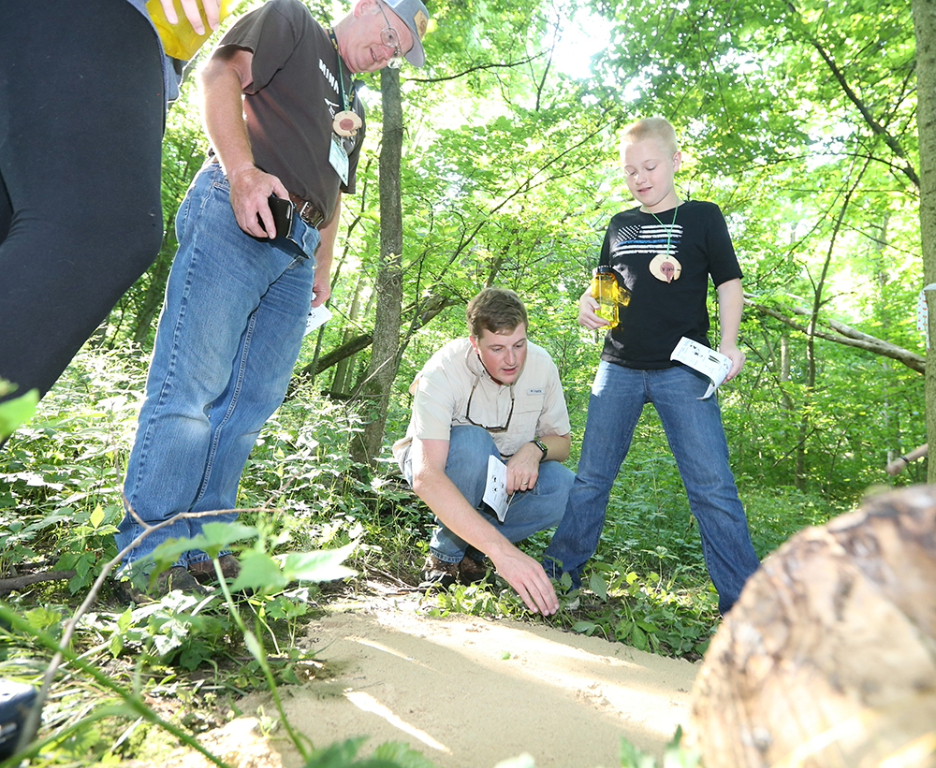 Purdue Extension wildlife specialist Jarred Brooke has been named as a recipient of the Purdue Cooperative Extension Specialists’ Association (PUCESA) Early Career Award, which recognizes an Extension specialist with less than 10 years of service.
Recipients must demonstrate Extension leadership; excellence in delivering public education programs; innovative approaches to program development and delivery; outreach efforts to county Extension educators; research that benefits Extension clientele through practical application; or through demonstrated collaboration with county educators, agencies or community leaders.
“I am truly grateful to be honored by my peers with this award, but most of my extension work would not have been possible without the wonderful people I work with both inside and outside of Purdue,” Brooke said. “I am indebted to them.”
Brooke, a 2012 wildlife science alum, returned to his alma mater in August 2016 as an Extension wildlife specialist after completing his master’s degree in wildlife management from the University of Tennessee in 2015. Over the past five years, Brooke has become a productive and effective extension specialist and has taken on multiple leadership roles, collaborated with partners in an outside of Extension, conducted applied research and worked to deliver impactful and innovative extension programming.
Brooke was honored with the PK-12 Outreach and Engagement Excellence Staff Award in April 2021 for his work with the 4H-Academy, the Wildlife Habitat Education Program and The Nature of Teaching.
Outside of Extension, Brooke helped form the Indiana Prescribed Fire Council, of which he has served as chair since 2018. He also is currently the Past President of the Indiana Chapter of the Wildlife Society, and served on the continuing education committee for the group. In these roles, Brooke collaborates with other natural resources professionals to plan and deliver natural resource-based programming to other professionals and landowners throughout Indiana.
Resources:
Jarred Brooke Receives PK-12 Council Staff Excellence Award, Got Nature? Blog, Purdue Extension-FNR
Brooke’s Prescribed Fire Videos Utilized in Global USFS Efforts, Got Nature? Blog, Purdue Extension-FNR
Pond and Wildlife Management, Purdue Extension-Forestry and Natural Resources
Natural Resources University, Deer, Fire, Pond and Habitat Podcasts
Creating a Wildlife Habitat management Plan for Landowners, Got Nature? Blog, Purdue Extension-FNR
A Template for Your Wildlife Habitat Management Plan, Got Nature? Blog, Purdue Extension-FNR
Subscribe to Purdue Extension – Forestry and Natural Resources YouTube Channel and view Jarred Brooke’s deer, fire and other wildlife videos.
Wendy Mayer, FNR Communications Coordinator
Purdue University Department of Forestry and Natural Resources
Jarred Brooke, Wildlife Extension Specialist
Purdue Forestry and Natural Resources

Recent Posts
- Beetle that attacks Tree-of-Heaven found in Indiana, Purdue Landscape Report
Posted: March 20, 2026 in Invasive Insects, Wildlife, Woodlands - ID That Tree: Dwarf Chinkapin Oak
Posted: in Forestry, Urban Forestry, Wildlife, Woodlands - DNR Hiring for Indiana Conservation Officer Positions, MyDNR
Posted: March 9, 2026 in Urban Forestry, Wildlife, Woodlands - ID That Tree: Shumard Oak
Posted: in Plants, Urban Forestry, Wildlife, Woodlands - Uniting Indiana Residents Against Invasive Species
Posted: February 27, 2026 in Community Development, Invasive Insects, Wildlife - Have You Seen a Soaring Eagle Lately? Morning Ag Clips
Posted: February 25, 2026 in Urban Forestry, Wildlife - Register for Natural Resources Teacher Institute’s Class of 2026
Posted: February 19, 2026 in Forestry, Wildlife, Woodlands - ID That Tree: Fragrant Sumac
Posted: February 4, 2026 in Plants, Urban Forestry, Wildlife - Woodsy Owl Edition for Educational Learning, USDA – U.S. Forest Service
Posted: January 21, 2026 in Forestry, Forests and Street Trees, Got Nature for Kids, Urban Forestry, Wildlife - Opt-in to the Deer Management Survey, MyDNR
Posted: January 12, 2026 in Forestry, Wildlife
Archives
Categories
- Alert
- Aquaculture/Fish
- Aquatic/Aquaculture Resources
- Ask the Expert
- Christmas Trees
- Community Development
- Disease
- Drought
- Forestry
- Forests and Street Trees
- Gardening
- Got Nature for Kids
- Great Lakes
- How To
- Invasive Animal Species
- Invasive Insects
- Invasive Plant Species
- Land Use
- Natural Resource Planning
- Nature of Teaching
- Plants
- Podcasts
- Ponds
- Publication
- Safety
- Spiders
- Timber Marketing
- Uncategorized
- Urban Forestry
- Webinar
- Wildlife
- Wood Products/Manufacturing
- Woodland Management Moment
- Woodlands