 Purdue University - Extension - Forestry and Natural Resources
Got Nature? Blog
The Purdue Landscape Report, a blog which provides science-based, timely information regarding Midwest landscapes to commercial growers, garden centers, landscapers, arborists and the general public, was recognized with the Extension Division Education Materials Award for Outstanding Blog at the American Society of Horticultural Science convention in August.
The Purdue Landscape Report is a collaborative effort between Purdue Extension specialists and diagnosticians in the areas of horticulture, entomology, plant pathology, urban forestry and turf science. Articles cover everything from tree maintenance to pest and disease problems and management to plant selection.
“Our Purdue Green Industry Team brings together many disciplines and expertise for the industry and homeowners as well as any other university in the country,” Nursey and Landscape Outreach Specialist Kyle Daniel said. “The research and outreach efforts of each member of the team contributes to helping the industry be more sustainable, efficient, environmentally conscious, and profitable. The Purdue Landscape Report is one way that we present science-based information to our stakeholders around the state. In addition to this information being distributed locally, there are many subscribers from across the country.”
The PLR team includes:
 Kyle Daniel – Nursey and Landscape Outreach Specialist, Purdue Horticulture and Landscape Architecture
- Rosie Lerner – Extension Consumer Horticulturist, Purdue Horticulture and Landscape Architecture
- Cliff Sadof – Professor, Entomology Extension Specialist
- Tom Creswell – Clinical Engagement Professor, Director of the Plant & Pest Diagnostic Laboratory; Purdue Botany and Plant Pathology
- Janna Beckerman – Professor of Botany and Plant Pathology
- John Bonkowski – Clerk, Purdue Botany and Plant Pathology
- Lindsey Purcell – Purdue Extension urban forester, Purdue Forestry and Natural Resources
- Gail Ruhl – Visiting Scholar, Purdue Biological Sciences
- Elizabeth Barnes – Exotic Forest Pest Educator, Purdue Entomology
- Todd Abrahamson – Purdue Plant & Pest Diagnostic Lab Secretary
- Lori Jolly-Brown – Extension Events and Communications Coordinator, Purdue Horticulture and Landscape Architecture
- Kirby Kalbaugh – Application and Systems Administrator, Purdue Horticulture and Landscape Architecture

Since launching in February 2018, the Purdue Landscape Report has included more than 144 articles. The website boasted more than 75,000 unique article downloads in 2019. PLR is also sent out in a bi-weekly email newsletter to more than 4,000 subscribers nationwide. The blog has brought in 137,000 unique visitors thus far in 2020.
In August, the Purdue Landscape Report staff also began a live, virtual series every other Wednesday, which addresses articles and hot topics. In just two months, that series has had more than 1,100 views.
Resources
Purdue Landscape Report Team Begins New Virtual Series, Got Nature? Blog, Purdue Extension – Forestry and Natural Resources
The Purdue Landscape Report Issues, Purdue Landscape Report
Tree wounds and healing, Got Nature? Blog
Fall webworms: Should you manage them, Got Nature? Blog
Purdue Landscape Report Facebook Page
Purdue Extension forester Lenny Farlee says we can thank wildlife, especially birds, for the spread of wild black cherry trees. This tree-sized cherry tree has shiny, elongated leaves with finely toothed margins, and a very dark, flaky bark to go with tiny berries.
If you have any questions regarding trees, forests, wildlife, wood products or other natural resource topics, feel free to contact us by using our Ask an Expert web page.
Resources
Black Cherry, The Education Store, Purdue Extension resource center
Beware of Black Cherry Toxicity; It’s Weedy, Too, Indiana Yard and Garden – Purdue Consumer Horticulture
Black Cherry, Native Trees of Indiana River Walk, Purdue Fort Wayne
Investing in Indiana Woodlands, The Education Store
Tree Appraisal and the Value of Trees, The Education Store
Forest Improvement Handbook, The Education Store
ID That Tree, Playlist, Purdue Extension – Forestry and Natural Resources Youtube Channel
A Woodland Management Moment, Playlist
Lenny Farlee, Sustaining Hardwood Extension Specialist
Purdue University Department of Forestry and Natural Resource
Small mammals, such as chipmunks and mice aren’t just cute to look at, they actually serve a purpose in our forest ecosystems. Check out what small mammals are found on the Hardwood Ecosystem Experiment and the mutually beneficial relationship they have with the forest.
If you have any questions regarding trees, forests, wildlife, wood products or other natural resource topics, feel free to contact us by using our Ask an Expert web page.
Resources
Hardwood Ecosystem Experiment (HEE), Playlist, Purdue Extension – Forestry and Natural Resources
Hardwood Ecosystem Experiment, Website
Hardwood Ecosystem Experiment – Wildlife Responses to Timber Harvesting, Purdue Extension – Forestry and Natural Resources
The Hardwood Ecosystem Experiment: Indiana Forestry and Wildlife, The Education Store
The Nature of Teaching: Unit 4, Mammals and Ecosystems, The Education Store
Charlotte Owings, Hardwood Ecosystem Experiment Project Coordinator
Purdue University, Department of Forestry and Natural Resources
 Purdue Extension: Sycamore and Tulip Poplar tree seeds orbited the Earth on the US space shuttle Atlantis STS more than 30 years ago, from December 2-6, 1988, as part of a Purdue Extension 4-H project with Astronaut Jerry Ross.
The seeds were grown into saplings on Purdue University’s campus and one was donated to each county Extension Office in Indiana in 1989 to celebrate the diamond anniversary of Purdue Extension Service. These trees continue to grow in many Indiana communities, today.
Kristi Whitacre, Purdue Extension Educator, and Daniel Walker, Purdue Community Planning Extension Specialist, have documented the story and gathered information on the remaining trees in an interactive story map.
Visit Space Tree Story Map (STS-M) to view the map, to learn about the history of the project, receive tips on harvesting the seeds and to learn more about astronaut Jerry Ross.
Resources
Purdue Extension
Sycamore, The Education Store, Purdue Extension resource center
Tree Planting Part 1: Choosing a Tree, video
Tree Planting Part 2: Planting Your Tree, video
State tree a popular landscape choice, Morning AgClips, Got Nature? Blog, Purdue Extension – Forestry and Natural Resources
The Tree from Space at Fox Island, Purdue Extension
Jesica Hollinger, Extension Communication Specialist
Purdue Extension
Purdue Landscape Report: Trees are incredible survivors in spite of the challenges from pests of all kinds, including us! They are vulnerable to injuries such as mechanical wounds from lawn equipment, vehicles and ice. Pruning results in an intentional wound which is of importance to consider. Tree owners and managers need to prune trees to maintain aesthetic characteristics, remove infected limbs, reduce risk, or improve structural stability. Proper pruning practice and understanding tree wounds can minimize the impact of creating wounds on trees.
Wounds attract pests due to the phytochemicals dispersed from exposed tissue. When tree tissue is damaged or wounded, the newly uncovered tissue is exposed and that is when to expect an attack. Insect pests are drawn to trees in distress, feeding on the tissue and weakening the tree. Diseases affecting trees will introduce enzymes into the cells, digesting living tissue responsible for food and water translocation (phloem and xylem) or structural support resulting in unhealthy, unsightly, or unsafe trees.
Wound wood Formation
Trees attempt to close wounds by sealing or compartmentalizing the affected area, naturally.
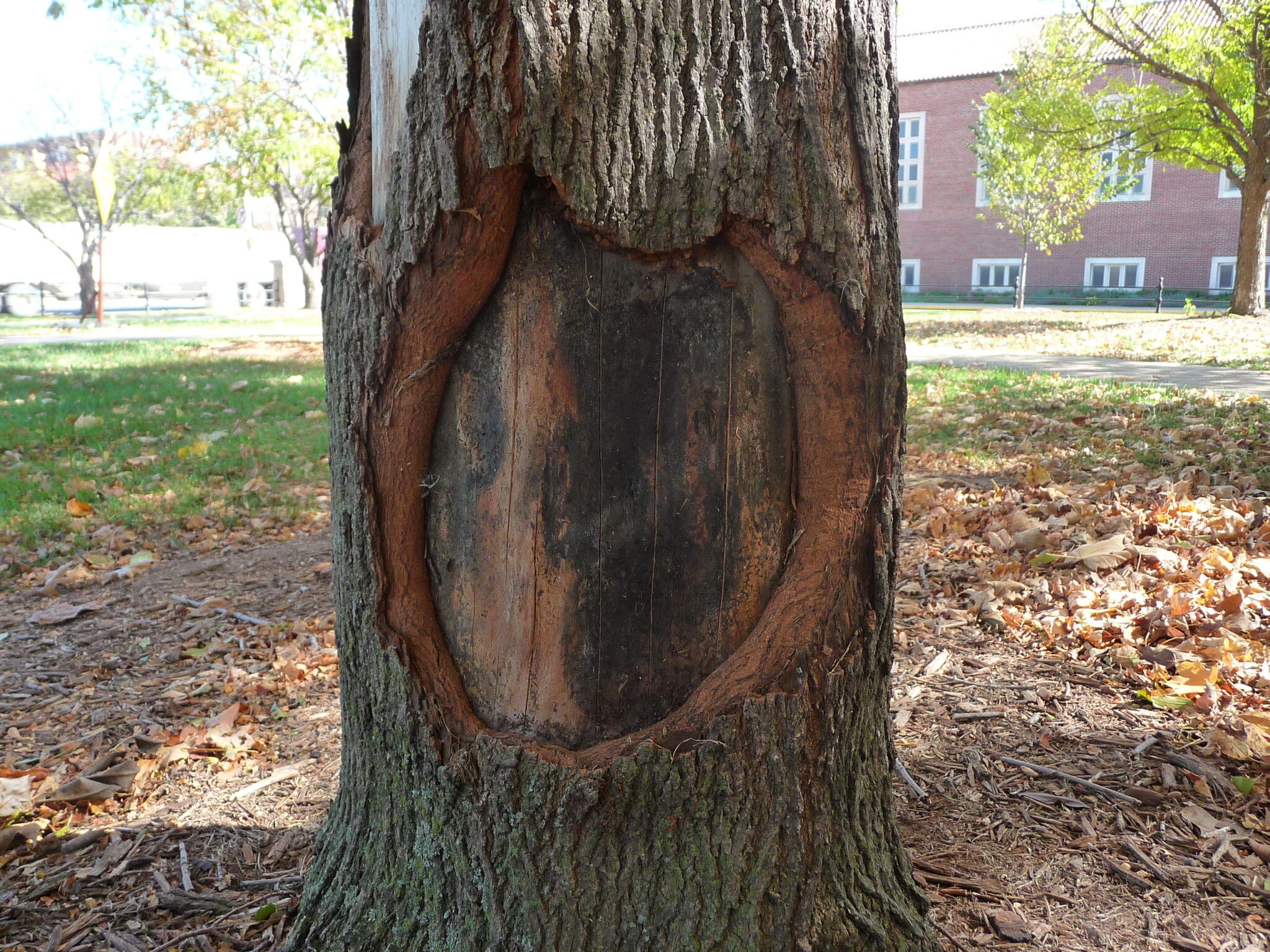
Tree trunk damaged by construction equipment developing wound wood around the edges to eventually seal the wound.
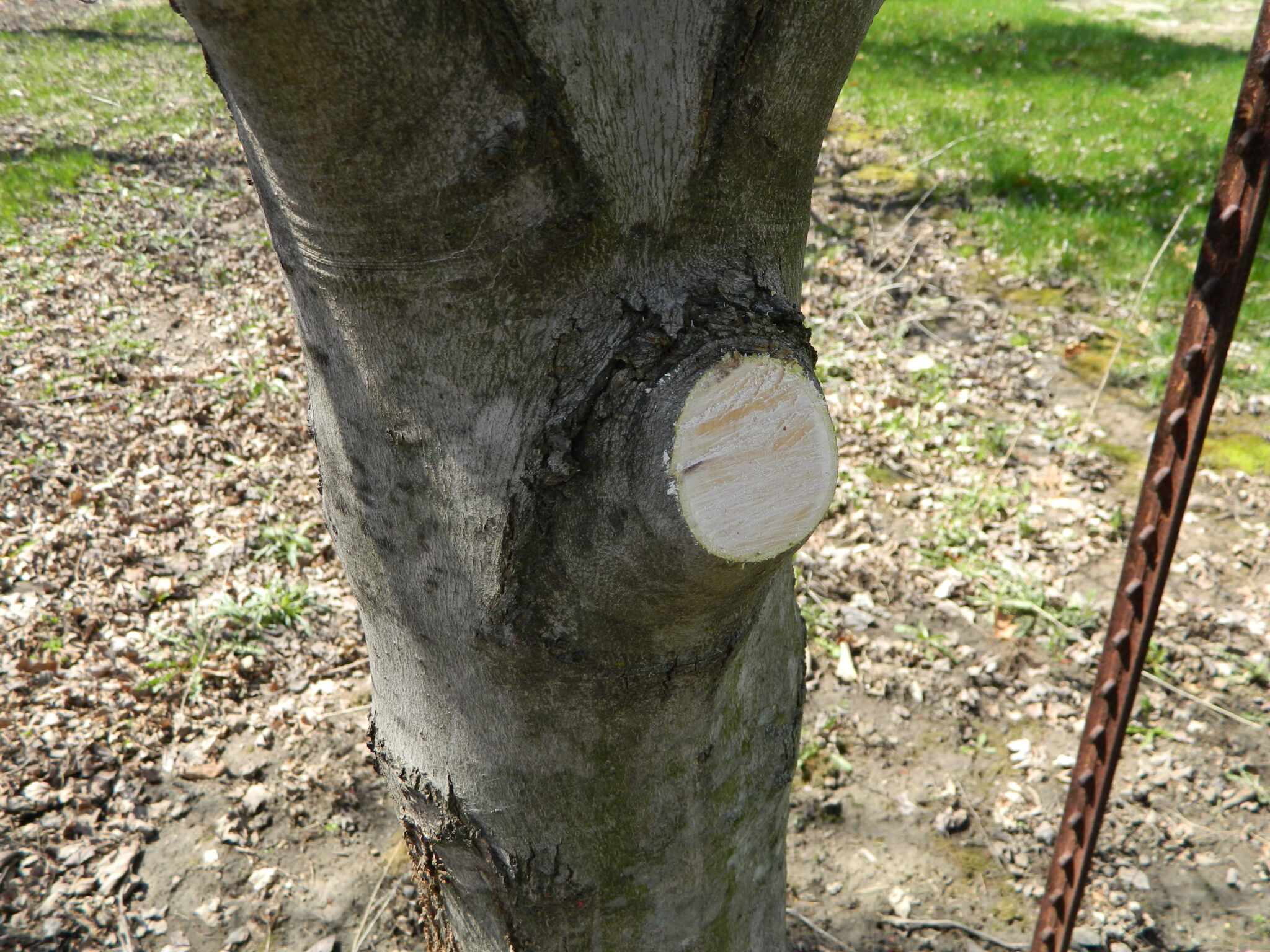
Pruning cuts will develop callus tissue on the exposed tissue giving rise to wound wood.
Wound recovery rates vary widely for different tree species. The speed of recuperation is greatly affected by developmental environmental conditions, vigor and health of the tree. Some trees may never completely close their wounds due to their genetic capacity or perhaps inadequate resources to keep the tree vigorous. However, numerous studies reveal that faster wound closure results in fewer health issues for the tree. Quick healing is always better!
A healthy tree will seal wounds faster and the same for younger trees as well. Trees that are planted in well-drained, quality soils, with good texture, structure, and containing adequate nutrition levels, grow in a way that favors the healing process. Thus, when planting trees, homeowners should be aware of the effects of site selection, soil quality, and other site factors that may impact tree growth.
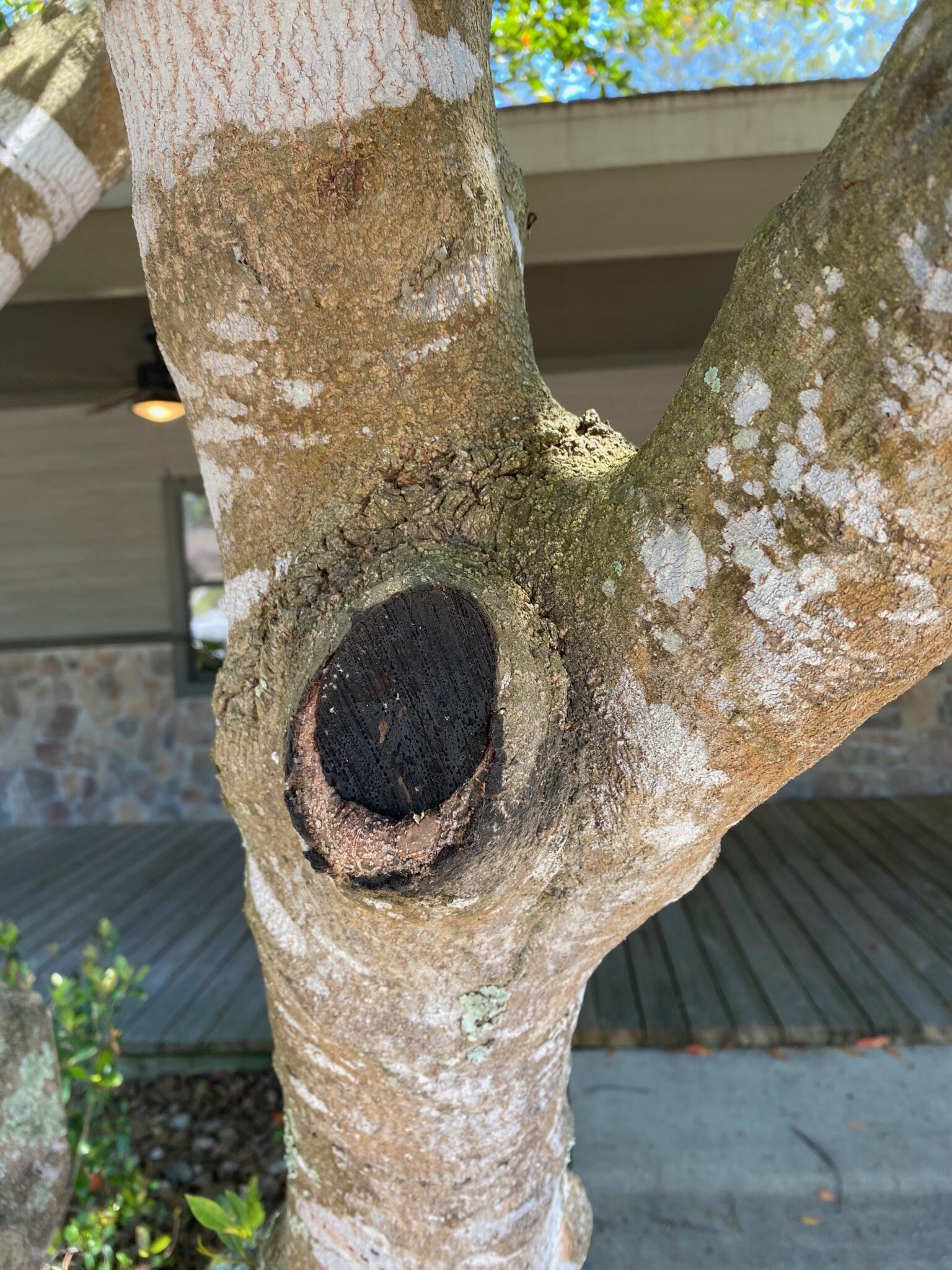
Wound dressings slow closure and can prevent healing.
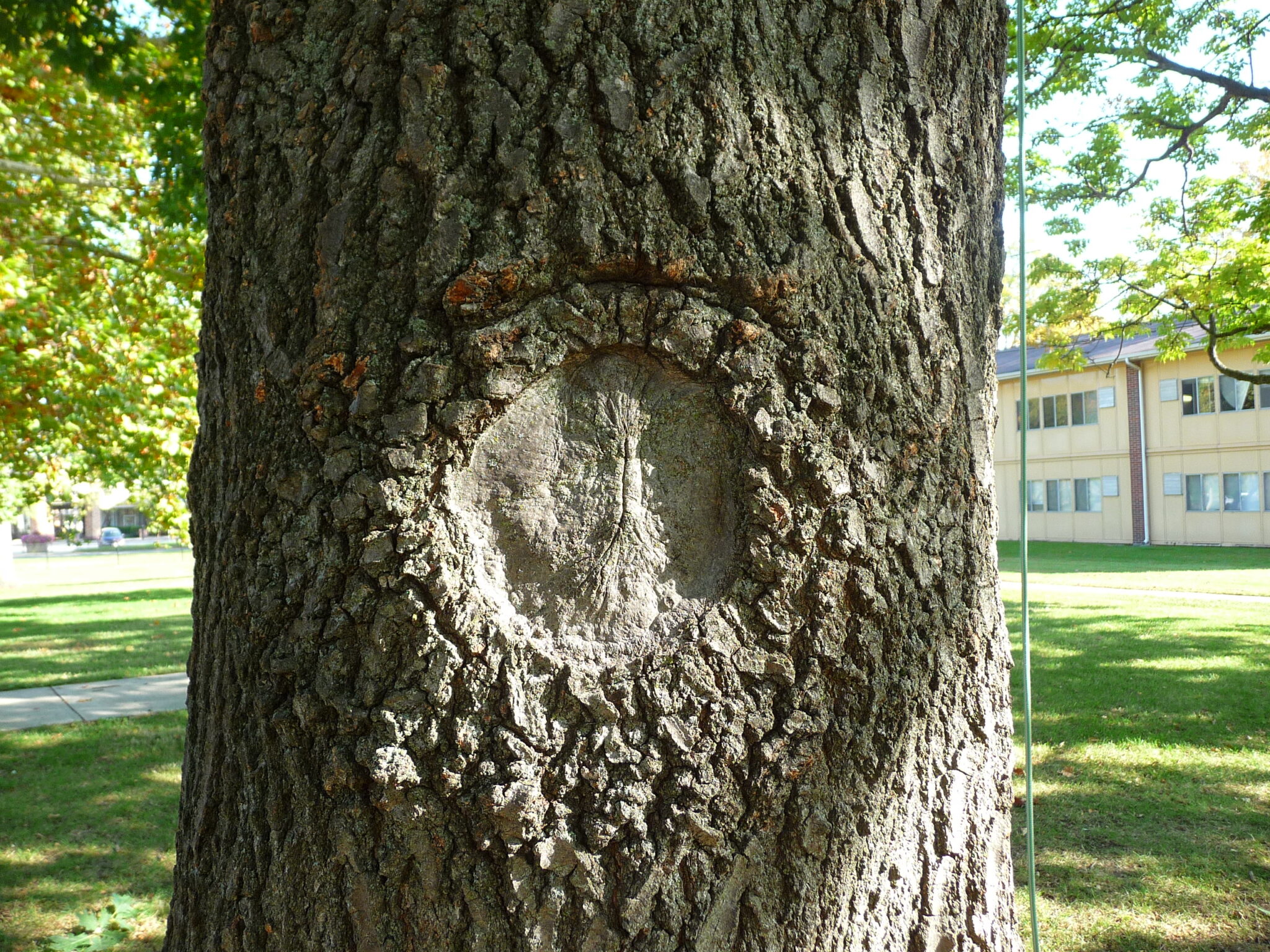
Complete wound closure improves tree health and slows decay.
There are few ways wound closure can be hastened, or at least not inhibited. First, it is essential to avoid limiting oxygen availability to the wounded tissues. Oxygen is necessary for proper recovery. For example, painting a wound with any kind of material that interferes or impedes oxygen will slow or even prevent wound closure by poor callus formation. Wound treatment with petroleum-based products is not recommended. In fact, research indicates any type of wound dressing can slow the healing process. There is one exception for treating wounds. This is in areas where oak wilt disease occurs, wound paints may be useful in preventing insect spread of the oak wilt fungal pathogen.
Basically, the best way to help insure proper wound closure and quick and effective sealing of the tissue is a proper pruning cut and preventing damage whenever possible.
Find a professional
Be sure to always hire an insured, tree care professional, preferably and ISA Certified Arborist with the experience, expertise, and equipment to provide proper tree care. Require proof of liability insurance to protect yourself as well.
Another easy way to find a tree care service provider in your area is to use the “Locate Your Local Tree Care Industry Association Member Companies” program. For more information refer to the publication Trees and Utilities at the Purdue Education Store.
Find an ISA Certified Arborist in your area by visiting the Trees Are Good website.
Resources
Tree Pruning Essentials, Publication & Video, The Education Store, Purdue Extension resource center
Tree Pruning: What Do Trees Think?, The Education Store
Mechanical Damage to Trees: Mowing and Maintenance Equipment, The Education Store
Tree Installation Process and Practices, The Education Store
Tree Pruning for the Landscape, Webinar, Purdue Extension – Forestry and Natural Resources Youtube channel
Lindsey Purcell, Chapter Executive Director
Indiana Arborist Association
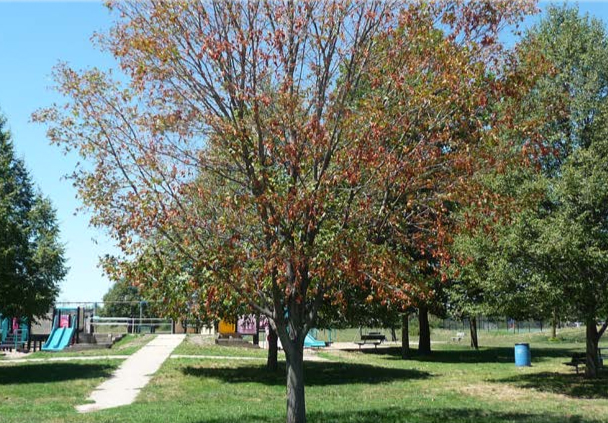 Many homeowners are finding their trees with dry and wilted leaves and no rain in sight. This publication describes how homeowners can deal with these drought-stressed trees, Drought? Don’t Forget the Trees!
Drought can have a major impact on tree health and survival. Water is the most limiting ecological resource for a tree, and without adequate moisture, decline and death are imminent. It reduces carbohydrate production, significantly lowering energy reserves and production of defense chemicals in the tree.
Trees in a weakened state from drought are more susceptible to pests, which can further weaken the tree, and even kill part or all of it. Although there is nothing we can do to prevent drought, it is important to know what can be done to reduce long-term effects of prolonged dry conditions.
Resources:
Water Your Trees, Video, Purdue Extension – Forestry and Natural Resources (FNR) YouTube Channel
Trees in Times of Drought, Video, Purdue Agriculture
INPREPared, Purdue Extension
Drought Information, Indiana Department of Natural Resources
Tree Planting Part 1: Choosing a Tree video, Purdue Extension-FNR YouTube Channel
Lindsey Purcell, Chapter Executive Director
Indiana Arborist Association
On this edition of ID That Tree, Purdue Extension forester Lenny Farlee introduces you to the northern white cedar, a native conifer that is used for ornamental, windbreak and reforestation purposes. This evergreen has distinct scale like foliage which is soft to the touch. He shares how to distinguish it from the eastern red cedar.
If you have any questions regarding trees, forests, wildlife, wood products or other natural resource topics, feel free to contact us by using our Ask an Expert web page.
Resources
ID That Tree, Playlist, Purdue Extension – Forestry and Natural Resources Youtube Channel
ID That Tree: Eastern Red Cedar, Video
Thuja occidentalis, The Purdue Arboretum Explorer
Investing in Indiana Woodlands, The Education Store
Tree Appraisal and the Value of Trees, The Education Store
Forest Improvement Handbook, The Education Store
Lenny Farlee, Sustaining Hardwood Extension Specialist
Purdue University Department of Forestry and Natural Resources
Purdue Landscape Report: Homeowners can easily become injured – often fatally – while attempting to trim trees near overhead electrical wires. Though it is tempting to try to save money with this “do-it-yourself” approach, the potential for electrocution is not worth the risk. It is important to recognize when to call a professional arborist.
Terrible accidents can happen when a homeowner uses any type of cutting tools and/or ladders when attempting to trim backyard trees and shrubs. Overhead wires are often unnoticed and is touched by directly or indirectly, causing injury or death.
Examples include:
- A homeowner climbed a ladder to trim a tree branch that was dropping leaves into his above ground swimming pool and causing a nuisance. A branch came in contact with the power line, shocking the man with a jolt of electricity and sending him into cardiac arrest. He fell 20 feet to the ground but was revived by medics at the scene.
- MATTHEWS, N.C. — A man trimming trees in a neighborhood was shocked Wednesday morning after a limb fell on power lines, authorities said. Nearby resident Margie Owens knows the man and said he does odd jobs around the neighborhood. According to officials, after the limb fell from pruning, the tree continued to be energized by the power line, leaving the man stuck.
- A Charlotte County man was electrocuted trimming trees in a backyard. The victim was part of a landscaping crew and came in direct contact with a utility line.
Preventable Accidents
Tree limbs can conduct electricity. When trees grow near overhead wires, they can contact the wires and become energized. Trees and wires are dangerous, full of electrical power that can injure or kill humans. How do we know which lines are energized? WE DON’T! Assume all are carrying dangerous electrical current and should be avoided when working around them.
A common house switch carries 120 volts, but the electric flow is usually limited to 10, 15 or 20 amps. A common “house drop” (service wire) contains 240 volts and up to 20 amps or more. Given the right set of circumstances, even the shock a person gets from a common light switch can kill, but at the same time, it is easier to break electrical contact while standing inside a house. If a person is climbing a ladder or is in the tree, it may be more difficult to break contact with the energized wire. This means that the service line over a typical yard could easily kill a person.

Utility service providers can help select a tree which is compatible with nearby lines and reduce the need for excessive pruning to maintain safety and reliability

These powerlines could be “energizing” the tree creating a potential shock hazard for anyone touching the tree. Notice the burning on the new growth.
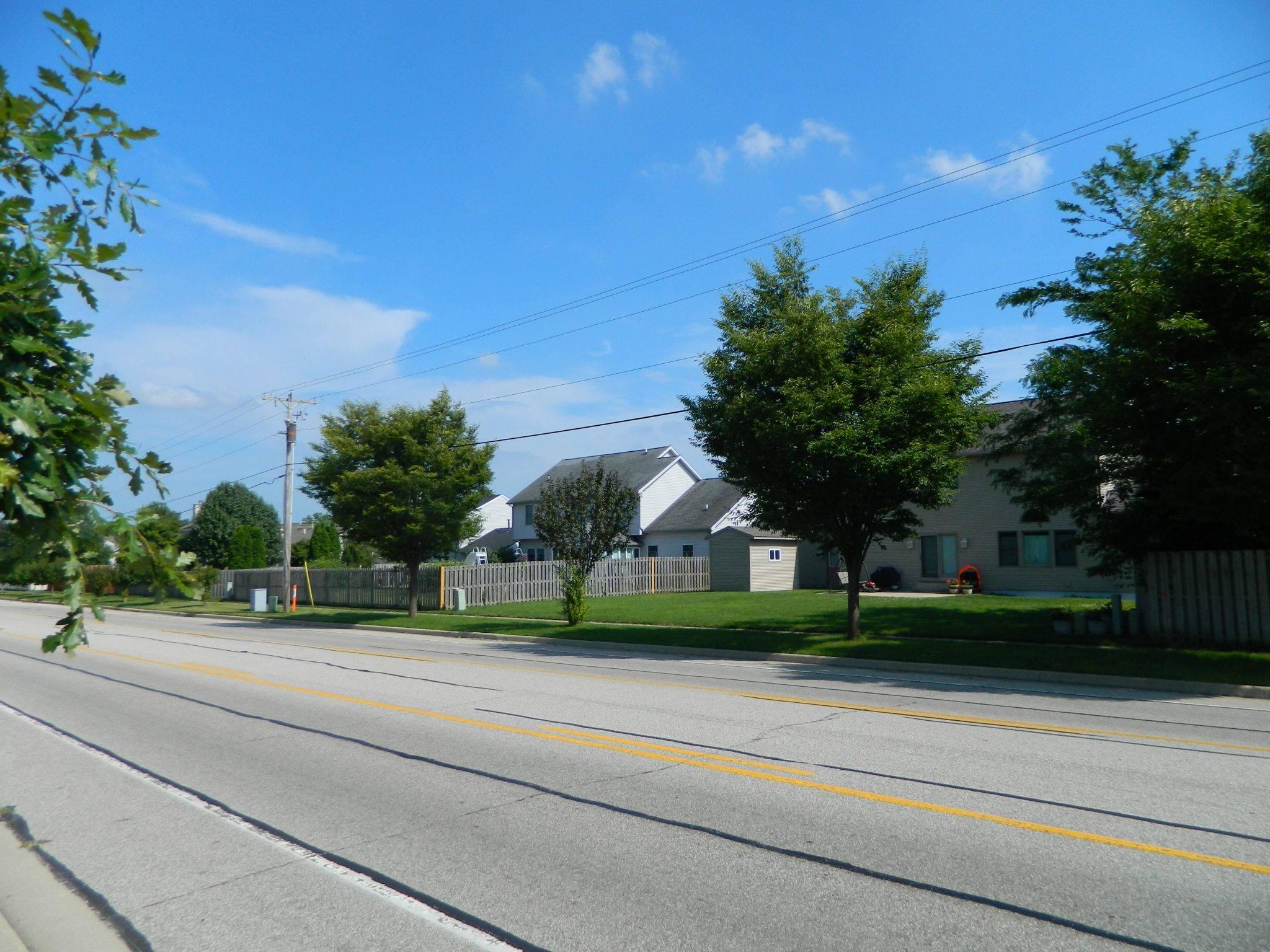
Trees growing into utility lines should be pruned by a qualified arborist.
Here are a few tips to avoid trees in wires:
- Look for power lines before pruning trees and large shrubs. If lines are anywhere near the tree within 10 ft. don’t attempt any tree work. Tree care professionals have the training and equipment needed to perform these tasks safely.
- Never climb a tree in order to prune it. Even if the wires aren’t currently touching the tree, remember that the tree’s branches will shift once you begin climbing or removing limbs.
- Don’t move ladders or long-handled pruning tools around the yard without first looking up. Always read and heed ladder-use safety labels.
Find a professional
Be sure to always hire an insured, tree care professional, preferably and ISA Certified Arborist with the experience, expertise, and equipment to safely take down or prune trees in wires. Require proof of liability insurance to protect yourself as well.
Another easy way to find a tree care service provider in your area is to use the “Locate Your Local Tree Care Industry Association Member Companies” program. For more information refer to the publication Trees and Utilities at the Purdue Education Store.
Find a certified arborist in your area by going to Trees are good website.
Resources:
Tree Pruning for the Landscape, Video, Purdue Extension – Forestry and Natural Resources YouTube Channel
Tree Pruning Essentials, Video & Publication
Tree Appraisal and the Value of Trees, The Education Store, Purdue Extension’s resource center
Tree Pruning: What Do Trees Think?, The Education Store
Mechanical Damage to Trees: Mowing and Maintenance Equipment, The Education Store
Tree Installation Process and Practices, The Education Store
Purdue Extension forester Lenny Farlee introduces you to one of Indiana’s most common trees, the sugar maple. This species, which is often used to produce maple syrup, is easily identifiable by its five-lobed leaves, opposite leaf and branch arrangement, and ability to thrive in the understory.
If you have any questions regarding trees, forests, wildlife, wood products or other natural resource topics, feel free to contact us by using our Ask an Expert web page.
Resources
The Story Behind a Sugar Maple Scar, Purdue Extension
Sugar Maple, The Purdue Arboretum
Hard or Sugar Maple, The Education Store, Purdue Extension resource center
Investing in Indiana Woodlands, The Education Store
Tree Appraisal and the Value of Trees, The Education Store
Forest Improvement Handbook, The Education Store
ID That Tree, Playlist, Purdue Extension – Forestry and Natural Resources Youtube Channel
A Woodland Management Moment, Playlist, Purdue Extension – Forestry and Natural Resources Youtube Channel
Lenny Farlee, Sustaining Hardwood Extension Specialist
Purdue University Department of Forestry and Natural Resources
 Your Ecosystem Listening Labs (YELLS): The Science of Soundscape Ecology Instructor’s Guide, Grades 5-8 is a 160-page publication, consisting of four chapters that focus on physics of sound, animal communication, soundscapes, and soundscape ecology.
The world around us is full of amazing sounds that are often ignored by humans. Unfortunately, many of the sources of these sounds are actually in danger of being destroyed by human activities. The activities contained in this package take students through the entire scientific method, from observations through conclusions, pairing the practice of science with the exploration of soundscape-based content.
To learn more about soundscape ecology and the sounds around us we might be missing or don’t know are there, visit Center for Global Soundscapes.
Resources
Record the Earth, APP
Community Soundscape Planning Guide: Controlling Noise & Protecting Natural and Cultural Sonic Spaces, The Education Store, Purdue Extension resource center
Bryan Pijanowski, Professor of Landscape and Soundscape Ecology
Purdue University Department of Forestry and Natural Resources
Kristen Bellisario, Post Doc Research Associate
Purdue University Department of Forestry and Natural Resources

Recent Posts
- October Is Firewood Month: Protect Indiana’s Forests by Making Smart Choices
Posted: October 1, 2026 in Forestry, Forests and Street Trees, How To, Invasive Insects, Urban Forestry - What You Plant Matters to Wildlife
Posted: September 16, 2026 in Plants, Urban Forestry, Wildlife - Question: Why Did the Shagbark Hickories Survive the Tornado?
Posted: August 27, 2026 in Forests and Street Trees, How To, Urban Forestry - New Indiana Woodland Steward Newsletter
Posted: August 12, 2026 in Forestry, Urban Forestry, Wildlife, Woodlands - Trees and Storms: Understanding Damage, Risk and Recovery
Posted: in How To, Urban Forestry - Pruning Highlight-Pollarding Trees: A Traditional Pruning Practice with Modern Uses
Posted: June 11, 2026 in Forestry, Forests and Street Trees, Urban Forestry, Wildlife, Woodlands - Flat-Faced Longhorn Beetle Found in Hardwood Logs – IDNR Division of Entomology
Posted: June 8, 2026 in Alert, Forestry, Forests and Street Trees, Invasive Insects, Urban Forestry, Wildlife, Woodlands - Connecting Research to Practice: Natural Resources & Land Use Spring Training
Posted: June 5, 2026 in Forestry, Forests and Street Trees, How To, Invasive Animal Species, Invasive Plant Species, Land Use, Natural Resource Planning, Urban Forestry, Wildlife, Woodlands - Indiana Monarch and Pollinator Conservation
Posted: June 1, 2026 in Forestry, Forests and Street Trees, Gardening, How To, Natural Resource Planning, Plants, Urban Forestry, Wildlife - Spotted Lanternfly Feeds on Over 70 Plus Plant Species
Posted: May 20, 2026 in Alert, Forestry, Forests and Street Trees, Gardening, Invasive Insects, Urban Forestry, Wildlife
Archives
Categories
- Alert
- Aquaculture/Fish
- Aquatic/Aquaculture Resources
- Ask the Expert
- Christmas Trees
- Community Development
- Disease
- Drought
- Forestry
- Forests and Street Trees
- Gardening
- Got Nature for Kids
- Great Lakes
- How To
- Invasive Animal Species
- Invasive Insects
- Invasive Plant Species
- Land Use
- Natural Resource Planning
- Nature of Teaching
- Plants
- Podcasts
- Ponds
- Publication
- Safety
- Spiders
- Timber Marketing
- Urban Forestry
- Webinar
- Wildlife
- Wood Products/Manufacturing
- Woodland Management Moment
- Woodlands