 Purdue University - Extension - Forestry and Natural Resources
Got Nature? Blog
Familiar with surprise lilies? Indiana has a native surprise onion!
Many yards where I grew up in southern Indiana were graced with surprise lilies. These plants grew long narrow leaves in the spring, which faded and died by early summer. After a pause with no evidence of the plant, long stems with pink lily-like flowers emerged, with no leaves to be seen.

Ramps foliage is often found in clusters or patches in early spring. These leaves will die before summer.
While these plants are not a native species, we do have a native with similar habits that is a distant relative of the surprise lily. That plant is ramps, also known as wild leek and a variety of other local names. There are two species of ramps recognized now – the more common broad-leaved ramps, Allium tricoccum, and the narrow-leaved ramps, Allium burdickii. Ramps are related to onions and garlic and have odor and taste reminiscent of those plants. Ramps foliage emerges early in the spring and was one of the earliest green edibles available to First Nations people and early European settlers.
Many communities developed festivals or celebrations centered on the emergence of ramps as a sign of spring and some fresh greens to eat. The bright green leaves emerge before the tree leaves and fade before summer, but by the first half of June expect to see thin stems with a rounded cluster of small white flowers emerge – our surprise onion! It may take a ramps plant seven to ten years from seed to produce a flower, so this is a slow-growing and long-lived forest perennial. The flowers are pollinated by insects and produce round black seeds that may stay on the stalk through winter.
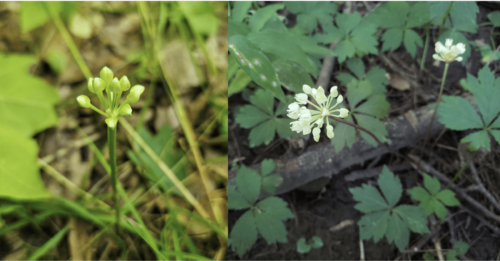
Newly emerged flower stem and buds and the blooming flowers of ramps.
Look for ramps in well-shaded forest areas with moist soils. They have a scattered distribution across Indiana, so you won’t find them in every woodland. The leaves and bulbs are edible, but absolute certainty of ID is essential as there are some toxic plants that look similar. Check ID references and spend some time with experienced foragers before eating any wild plants. The onion/garlic odor of ramps is a good indicator for positive ID.
Since this is a slow growing plant with a limited distribution, over-collection is a threat. A responsible harvesting technique is to harvest one leaf from mature plants, leaving the other leaves and the bulb. If you harvest the whole plant, take less than 5 percent of the plants in a patch, allowing seeding and bulb division to repopulate the area. Seed or bulbs can also be used to plant new patches. So keep you eyes open for our local surprise flowers this June – ramps!
Resources:
ID That Tree, Playlist, Purdue Extension – Forestry and Natural Resources (FNR) YouTube Channel
A Woodland Management Moment, Playlist, Purdue Extension – FNR YouTube Channel (Against Invasives, Garlic Mustard, Autumn Olive)
Woodland Stewardship for Landowners, Playlist, Purdue Extension – FNR YouTube Channel (Common Buckthorn, Japanese Barberry)
Indiana Department of Natural Resources: Invasive Species
Indiana Invasive Species Council
Cooperative Invasive Species Management Area (CISMA)
Episode 11 – Exploring the challenges of Invasive Species, Habitat University-Natural Resource University
What are invasive species and why should I care?, Got Nature? Blog, Purdue Extension – FNR
Shrubs and Woody Vines of Indiana and the Midwest, The Education Store, Purdue Extension Resource Center
Planting Your Tree Part 1: Choosing Your Tree, video, The Education Store
Find an Arborist website, Trees are Good, International Society of Arboriculture (ISA
Lenny Farlee, Extension Forester
Hardwood Tree Improvement and Regeneration Center
Purdue Department of Forestry & Natural Resources
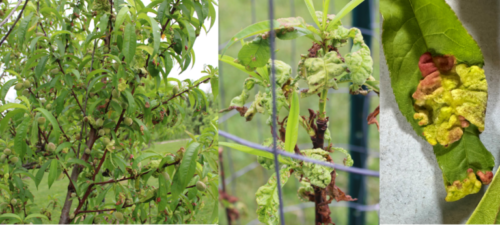
Figure 1: Peach trees showing symptoms of peach leaf curl caused by Taphrina
Purdue Landscape Report: The past two months have been relatively wet and cool to warm. This prolonged period of overcast conditions, high humidity, and light to moderate rainfall is perfect for some of our foliar disease issues.
“April flowers bring May Leaf spots” doesn’t have the right ring to it, but we are seeing quite a bit of leaf curl and leaf blister. These are two disease issues caused by Taphrina spp. fungi. Like the common names of their diseases, the symptoms caused by a Taphrina infection include leaf deformation.

Figure 2: Oak leaf blister symptoms ranging from light green early infections, changing to yellow and then becoming necrotic as the season progresses.
In the case of Peach, the leaves turn light yellow, bright pink, or red where tissue puckers and twists leading to curled leaves. In oak, leaves develop localized blisters that are light green early in the season and are easy to miss since the color is not very different from healthy tissue.
However, the blisters will turn brown later in the season which makes them more noticeable. Maples also get a disease caused by Taphrina, but it does not cause as much distortion as it does on oak or peach. Severe maple leaf blister can lead to leaves becoming slightly contorted, but the primary symptom is brown necrotic lesions.
With cool wet weather over an extended period of time, we have been seeing more foliar disease issues than in the last few years.

Figure 3: Symptoms of leaf blister on maple trees.
Since disease problems can take time to develop, Taphrina is likely just the harbinger for some other disease issues we may see in early summer if moderate conditions continue. If the weather dries out as it heats up, it will halt many of these foliar problems in their tracks.
Original article posted: Purdue Landscape Report
Subscribe and receive the newsletter: Purdue Landscape Report Newsletter.
Resources:
Learn How to Support Oak-Hickory Ecosystems, Purdue Extension – Forestry and Natural Resources (FNR) Got Nature? Post
“The Nature of Oaks” Webinar, Indiana forestry & Woodland Owners Association
How to Find an Arborist Near You!, Purdue Extension – FNR Got Nature? Post
Diplodia Tip Blight of Two-Needle Pines, The Education Store, Purdue Extension resource center
Boxwood Blight, The Education Store
Disease of Landscape Plants: Cedar Apple and Related Rusts on Landscape Plants, The Education Store
Planting Your Tree Part 1: Choosing Your Tree, Purdue Extension YouTube Channel
Indiana Department of Natural Resources: Invasive Species
Indiana Invasive Species Council
Cooperative Invasive Species Management Area (CISMA)
Report Invasive, Purdue Extension
Aquatic Invasive Species, Illinois-Indiana Sea Grant (IISG)
Episode 11 – Exploring the challenges of Invasive Species, Habitat University-Natural Resource University
What are invasive species and why should I care?, Got Nature? Blog, Purdue Extension – FNR
Shrubs and Woody Vines of Indiana and the Midwest, The Education Store, Purdue Extension Resource Center
Native Trees of the Midwest, The Education Store
John Bonkowski, Lead Extension Administrator
Purdue Department of Botany and Plant Pathology
Figure 1: Spongy moth caterpillar, credit to John Obermeyer.
Purdue Landscape Report: Spring is always a wonderful, if somewhat chaotic, time of year in Indiana. Between the heavy rains and beautiful flowers blooming, the months leading up to summer can make your head spin. While we enjoy the trees greening out and watch out for storms, we need to be aware that spring awakens other organisms, many of which have a major impact on our lives. This time of the year introduces a host of insect species hatching from eggs, emerging from cocoons, or returning from their overwintering nap, and many of those species mean bad news for our trees. One of the most impactful species we deal with in Indiana is Lymantria dispar, or the spongy moth.
The spongy moth, so named for the sponge-like egg masses they lay in the early fall, is an invasive species belonging to family Erebidae, a large group of moths that include species such as the woolly bear we see every year in Indiana. Spongy moth is a native to Eurasia, and historical record shows it has caused problems throughout Europe as early as the seventeenth century. In the late nineteenth century, an amateur entomologist and would-be entrepreneur brought spongy moth to North America in a failed attempt to create a new silk moth hybrid. Inevitably, the insect escaped captivity and has since spread through several states over the last century, including the northern portion of Indiana.

Figure 2: Mating spongy moth adults, credit to John Obermeyer.
Spongy moth is a generalist pest that strips leaf tissue from many species of trees, though it has a particular preference for oak. Like all butterflies and moths, the larva, or caterpillar, is the damaging form of this insect. Spongy moth caterpillars bear chewing mouthparts they use to consume leaf tissue, but they do not attack wood or root systems of their hosts. Adults are non-feeding and only survive long enough to reproduce. Spongy moth can produce large populations each year and move quickly across a landscape, creating sudden infestations and near-complete defoliation in those areas. While trees will typically recover after losing a significant portion of their leaf tissue, repeated infestations will make a host tree more susceptible to disease, reduce resilience, and potentially lead to death.
Like other moths and butterflies, spongy moth has well-defined life stages that can be used to easily identify them. Caterpillars will begin to appear between mid-April and early May and can be identified by their hairy appearance, distinct black, blue, and red coloration, and the tendency to move up and down the surface of a tree (Fig. 1). Male larvae will develop through five instars, while female larvae will grow over the course of six instars. Larvae will enter the pupal stage midsummer and spend approximately ten to twelve days developing. The pupae of this insect are darkly colored and lack the silk cocoon seen in other species. Adult male moths will emerge in the latter half of the summer season, followed by female moths about a week later. The moths can be identified by the pattern on their wings: a black chevron associated with a dot on a pale white or cream background (Fig. 2). Male moths will have large, feathery antennae and are capable of flight, while females are flightless with smaller antennae. Adult moths will only survive for a few days to reproduce and lay sponge-like egg masses, which will overwinter and hatch the following spring (Fig. 3).
Figure 3: Spongy moth egg mass on tree, credit to John Obermeyer.
Management of spongy moth often involves work by state and federal agencies, such as the Indiana’s Department of Natural Resources. Within the Hoosier state, the DNR has quarantined several northern counties to prevent movement of materials that could potentially spread spongy moth even further. They also conduct yearly mitigation programs to eliminate infestations that are outside of the quarantined area. Indiana DNR, specifically the Division of Entomology and Plant Pathology, posts information on all mitigation efforts as well as hosts public meetings so residents understand what treatments are used for spongy moth management, and how it will affect their community.
Most organizations, including Indiana DNR, typically use two methods to control spongy moth: mating disruption and Btk applications. Mating disruption uses the moth’s biology against it by confounding its ability to locate a mate. Spongy moths, like many species, use a chemical signal called a pheromone to attract potential mates; male moths follow the trail of pheromones emitted by a female. By filling an area with the pheromone, the male moths become unable to follow individual chemical signals, resulting in fewer eggs being laid for the next spring. Pheromones are also highly species-specific, ensuring little to no impact on other organisms. In Indiana, the chemical used for mating disruption is applied aerially to cover a significant area, and the chemical used is made of food grade materials that break down easily.
Btk applications are also done aerially, coating foliage with a selective pesticide that only affects moth and butterfly species. Btk is a protein derived from a native soil-borne bacteria (Bacillus thuringiensis kurstaki) and works by damaging the internal lining of an insect’s gut after being consumed. This is a pesticide that is commonly applied to all manner of crops, persists only for a short time in the environment, and only harms insects. It also has the benefit of having minimal impact on pollinators, especially when applied using label directions.
While spongy moth is a serious challenge, there are some options you can use to protect your natural spaces. The first option, and perhaps the most important, is to be vigilant. If you live in or near an infestation, get into the habit of checking your trees for egg masses starting in the late summer through the fall. When you find egg masses, check for small pinholes in the sponge-like covering; the hole is created by a beneficial parasitoid wasp that uses the caterpillars as hosts for their young. You can also destroy egg masses by using a horticultural oil labeled for that purpose, or by scraping off the egg masses into a bucket of soapy water. Also be watchful of egg masses being laid on homes, firewood, or the sides and undersides of vehicles that move through infested areas.
Larvae will begin to appear in late April, with warmer temperatures encouraging populations to hatch earlier. One method of controlling larvae is to use burlap banding as a trap to capture larvae moving up and down the surface of the tree trunk. This can be done by tying a folded piece of burlap around the trunk of the tree at approximately chest height. Caterpillars, attempting to hide from predators during the day, will crawl into the folds. Once the late afternoon arrives, the caterpillars can be removed and destroyed by dumping them into soapy water. You can also use sticky substances in an effort to capture the caterpillars by coating a tree at chest height with it, but this method has several drawbacks. Any substrate that is sticky enough to capture spongy moth caterpillars will also capture any other insect, beneficial and damaging, and could potentially catch small mammals and birds as well.
If you plan to use pesticides, May through June is the best time to apply. Biological pesticides such as Btk, spinosad, and others, are available for homeowner use, as well as systemic insecticides such as dinotefuran and emamectin benzoate. However, given how widespread the caterpillars can be and the heights they can reach, using some insecticides may not be feasible or may require professional assistance. Homeowners and property managers should consult certified arborists to learn what options will be best, and use pesticides as per the label directions.
While spongy moth is now a permanent part of our ecosystem, we still want to limit its ability to move into new parts of Indiana. If you live outside of quarantine areas and find an egg mass, caterpillar, or adult moth, report them by contacting the Indiana Department of Natural Resources at 1-866-NOEXOTIC, or by emailing DEPP@dnr.in.gov; make sure to include pictures and location. You can also consult your local Extension office for assistance in finding arborists, speaking with specialists, or getting problem insects identified.
Original article posted: Purdue Landscape Report.
Subscribe and receive the newsletter: Purdue Landscape Report Newsletter.
Resources:
Spongy Moth, Indiana Department of Natural Resources
The Spongy Moth in Indiana, Purdue Extension – Entomology
Invasive Species, Playlist, Purdue Extension – FNR YouTube Channel
Report Invasive Species, Purdue Invasive Species
What are invasive species and why should I care?, Got Nature? Blog, Purdue Extension – Forestry and Natural Resources
Pest Management, The Education Store
Protecting Pollinators: Why Should We Care About Pollinators?, The Education Store, Purdue Extension resource center
Subscribe Purdue Extension-Forestry and Natural Resources YouTube Channel
Bob Bruner, Exotic Forest Pest Educator
Purdue Entomology
 Purdue Extension News – Whitely County Posts: The recently launched Purdue Plant Doctor website at purdueplantdoctor.com navigates like a smartphone app and can help growers identify and manage insect pests and diseases of trees, shrubs, and flowers. It will also help growers recognize “good bugs,” those beneficial insects that prey on harmful insect pests or serve as valuable pollinators. Helpful instructional videos provide supplemental content.
Purdue entomologist Cliff Sadof was a key contributor to this site. He said that identifying a plant problem is the first step to improving the health of plants in the landscape. “We created a series of short (5 to 7 min.) YouTube videos to help you learn or just brush up your plant diagnostic skills,” he said. “Each video guides you through the diagnostic process in real landscapes, reviews pest biology, and provides tips on management.” Videos finish with a demonstration of how to use the Purdue Plant Doctor to confirm your diagnosis and get current recommendations. Key moments tabs help you navigate through each video.
Users may watch these videos in English or Spanish from the “Quick Guides” available on the website or directly from YouTube. Some of the topics include:
- Diagnosing Plant Problems with the Purdue Plant Doctor Web Page: Learn how to diagnose and manage pest and disease problems on ornamental plants and how to keep your plants healthy. The Plant Doctor Web page is a mobile-ready website that can improve communication between plant care professionals and their clientele. Spanish version is also available.
- Beating Back Borers of Pines and Other Cone Bearing Trees with the Purdue Plant Doctor: Borers can be a real problem in landscapes that use pines and other evergreens to serve as a windbreak or a visual screen. Learn how to detect borer problems before they destroy your planting, and get tips on protecting these coniferous trees from borers. Spanish version is also available.
- Managing Spider Mite Mayhem with the Purdue Plant Doctor: Spider mites may be small, but they can cause big problems. Learn how to detect mites before they harm plants, and what you can do to keep plants healthy before and after mites have been detected. Spanish version is also available.
- All You Need to Know about Managing Scales and Mealybugs with the Purdue Plant Doctor: Drought and rising temperatures can make plants more susceptible to scale insects. Learn about the threats these insects pose to your plants and landscapes. Then find out how you can monitor them and improve your ability to keep your plants safe from harm. Spanish version is also available.
- Taming Aphid Problems with the Purdue Plant Doctor: Aphid problems can turn your landscape into a sticky mess. Learn the threats they pose to your plants and how to detect and manage them. Spanish version is also available.
- Managing Japanese Beetle with The Purdue Plant Doctor: Japanese beetles can wreak havoc in your landscape by consuming the flowers and leaves of your ornamental planting or by killing your turf. Learn why Japanese beetle traps can make Japanese beetle problems worse. Get the latest information about these beetles and how to control them. Spanish version is also available.
- Managing Plant Galls with the Purdue Plant Doctor: Galled about Galls? Want to learn how to diagnose bumps on plants and how they affect plants? This video will discuss the causes of plant galls and what you need to do to keep your plants healthy. Spanish version is also available.
Too often when we see an insect, we automatically think it’s a pest. But that is not always the case. The Purdue Plant Doctor website will also help you recognize beneficial insects like ambush bugs, assassin bugs, ground beetles, soldier beetles, lacewings, and minute pirate bugs.
So, whether you are a homeowner or a landscape professional, the Purdue Plant Doctor can help you manage pests in landscapes and recognize the beneficial insects in landscapes.
More Resources:
Hardwoods of the Central Midwest, Purdue Arboretum Explorer
Forest Improvement Handbook, The Education Store, Purdue Extension’s resource center
ID That Tree, Purdue Extension-Forestry & Natural Resources (FNR) YouTube playlist
Native Trees of the Midwest, The Education Store
Woodland Management Moment , Purdue Extension-FNR YouTube playlist
Tree Installation: Process and Practices, The Education Store, Purdue Extension’s resource center
Planting Your Tree Part 1: Choosing Your Tree, video, The Education Store
Tree Risk Management – Got Nature? Blog, Purdue Extension – FNR
Find an Arborist website, Trees are Good, International Society of Arboriculture (ISA)
John E. Woodmansee, Extension Educator – Agriculture and Natural Resources (ANR)
Purdue Extension – Whitely County
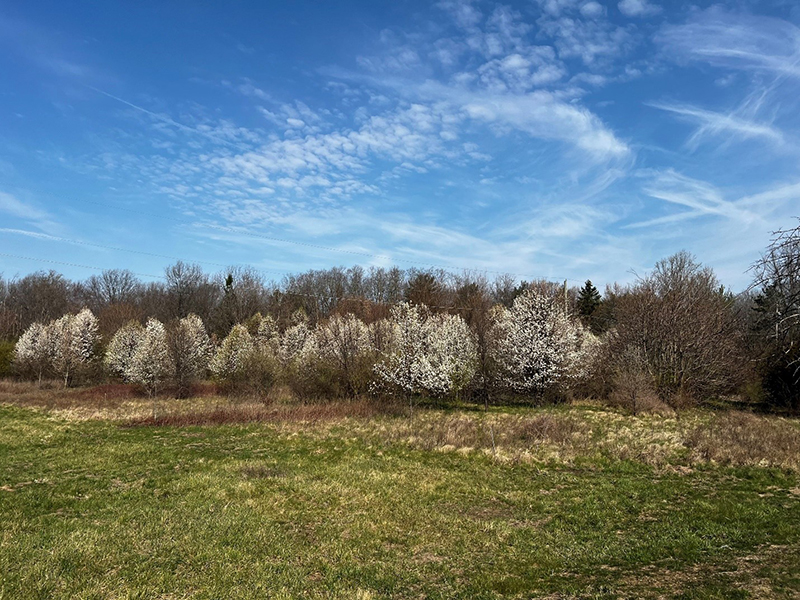 Purdue Landscape Report: Most people these days have, at the very least, heard of Callery and Bradford pear trees and know something about the invasiveness of this ornamental street tree. But I still get questions about what it is and why it’s so bad. So, I’d like to offer a little history of this infamous tree. Where did it come from, why is it so popular, why is it such an awful tree to plant, and some suggestions for better species to plant in its place.
Pyrus calleryana, the Callery pear (Fig. 1), was originally introduced from Asia to the United States in 1908. This was done in an attempt to breed pear trees that were resistant to fire blight, a bacterial disease that can spread rapidly causing leaves and branches to blacken as if burnt by fire, eventually resulting in death. Along with its resistance, the Callery pear was tested as a rootstock for the edible European pear (Pyrus communis) and its vigor in growth.
Callery Pear grows to a height of 30 to 50 feet with a spread up to 30 feet wide. Thick leaves grow alternately, are dark green, grow with sharp spurs along branches, and turn reddish-purple in the fall. They are one of the first trees to bloom and begin to grow in the spring and one of the last to drop their leaves in the fall. They produce a beautiful show of white flowers in the spring that have an unfortunate odor and an abundance of small fruits in the fall that are spread by birds and other wildlife. In fact, invasive European Starlings are one of the primary species that feed on and spread the fruits and seeds. Stems are smooth with light-colored lenticels while more mature stems are light to medium grey with fissures along the bark. Branching is usually upright in structure leading to poor branch unions that are weak and prone to failure. They grow quickly and tolerate a wide variety of planting locations and conditions, which led to the widespread use as both street and ornamental trees in urban plantings.
The Bradford pear tree is a variety of Callery pear cultivated in the early 1950s as a sterile tree without sharp spurs. Unfortunately, it cross-pollinated with other varieties leading to the rapid spread and out-competing of native species that we see in fields, along roadsides, and in forests today (Figs. 2 & 3). As awareness of the environmental issues of Callery pear spreads, local and state governments are working on removing them from the landscape. It is often joked that pruning these trees is extremely simple, involving a single cut at the base of the tree.
Due to the extensive use of these trees over the past 7 decades though, removals can lead to a large loss of existing canopy, especially with mature trees. This loss is worth negating the ecological damage they cause and with patience can be replaced with more appropriate species. Suggestions include serviceberry (Amelanchier laevis), flowering dogwood (Cornus florida), redbud (Cercis canadensis), and crabapple (Malus sylvestris).
For more information on invasive pear trees or on how to remove them see the links below.
To view this full article and other Purdue Landscape Report articles, please visit: Invasive Bradford/Callery Pear: Why it is so detrimental and what to plant instead.
Subscribe and receive the newsletter: Purdue Landscape Report.
Resources:
ID That Tree: Invasive Callery Pear, Purdue Extension – Forestry and Natural Resources (FNR) YouTube Channel
The Rise and Fall of the Ornamental Callery Pear Tree, Arboretum of Harvard University
Find an Arborist video, Trees are Good-International Society of Arboriculture (ISA)
ID That Tree, Playlist, Purdue Extension – FNR YouTube Channel (Invasive White Mulberry, Siberian Elm, Tree of Heaven)
Invasive Species Playlist, Playlist, Purdue Extension – FNR YouTube Channel (Asian Bush Honeysuckle, Burning Bush, Callery Pear, Multiflora rose)
A Woodland Management Moment, Playlist, Purdue Extension – FNR YouTube Channel (Against Invasives, Garlic Mustard, Autumn Olive)
Woodland Stewardship for Landowners, Playlist, Purdue Extension – FNR YouTube Channel (Common Buckthorn, Japanese Barberry)
Report Invasive Species, Purdue Invasive Species
The GLEDN Phone App – Great Lakes Early Detection Network
EDDMaps – Early Detection and Distribution Mapping System (Report Invasives)
How long do seeds of the invasive tree, Ailanthus altissima remain viable? (Invasive Tree of Heaven), USDA Forest Service
Indiana Department of Natural Resources: Invasive Species
Indiana Invasive Species Council
Cooperative Invasive Species Management Area (CISMA)
Aquatic Invasive Species, Illinois-Indiana Sea Grant (IISG)
Episode 11 – Exploring the challenges of Invasive Species, Habitat University-Natural Resource University
What are invasive species and why should I care?, Got Nature? Blog, Purdue Extension – FNR
Trees and Storms: Understanding Damage, Risk and Recovery – Got Nature? Blog, Purdue Extension – FNR
Planting Your Tree, video, The Education Store
Tree Installation, The Education Store
Subscribe – Purdue Extension-FNR YouTube Channel
Ben McCallister, Urban Forestry Specialist
Purdue Forestry & Natural Resources
In this edition of ID That Tree, we’re going to introduce you to a very rare Indiana shrub that’s a relic of the ice age here, and that is Canada yew. It’s only found in Indiana on very steep slopes, rock faces, and cliffs. It’s an evergreen, so it is coniferous. It’s also very palatable to deer, so deer browse has been very hard on this particular shrub.
If you have any questions regarding wildlife, trees, forest management, wood products, natural resource planning or other natural resource topics, feel free to contact us by using our Ask an Expert web page.
Resources:
ID That Tree, Playlist, Purdue Extension – Forestry and Natural Resources (FNR) YouTube Channel (Invasive White Mulberry, Siberian Elm, Tree of Heaven)
Invasive Species Playlist, Playlist, Purdue Extension – FNR YouTube Channel (Asian Bush Honeysuckle, Burning Bush, Callery Pear, Multiflora rose)
A Woodland Management Moment, Playlist, Purdue Extension – FNR YouTube Channel (Against Invasives, Garlic Mustard, Autumn Olive)
Woodland Stewardship for Landowners, Playlist, Purdue Extension – FNR YouTube Channel (Common Buckthorn, Japanese Barberry)
How long do seeds of the invasive tree, Ailanthus altissima remain viable? (Invasive Tree of Heaven), USDA Forest Service
Indiana Department of Natural Resources: Invasive Species
Indiana Invasive Species Council
Cooperative Invasive Species Management Area (CISMA)
Report Invasive, Purdue Extension
Aquatic Invasive Species, Illinois-Indiana Sea Grant (IISG)
Episode 11 – Exploring the challenges of Invasive Species, Habitat University-Natural Resource University
What are invasive species and why should I care?, Got Nature? Blog, Purdue Extension – FNR
Shrubs and Woody Vines of Indiana and the Midwest, The Education Store, Purdue Extension Resource Center
Native Trees of the Midwest, The Education Store
Investing in Indiana Woodlands, The Education Store
Professional Forester, Indiana Forestry Woodland Owners Association
District Forester 10+acres of woodlands, Indiana Department of Natural Resources
Forest Improvement Handbook, The Education Store
Lenny Farlee, Extension Forester
Hardwood Tree Improvement and Regeneration Center
Purdue Department of Forestry & Natural Resources
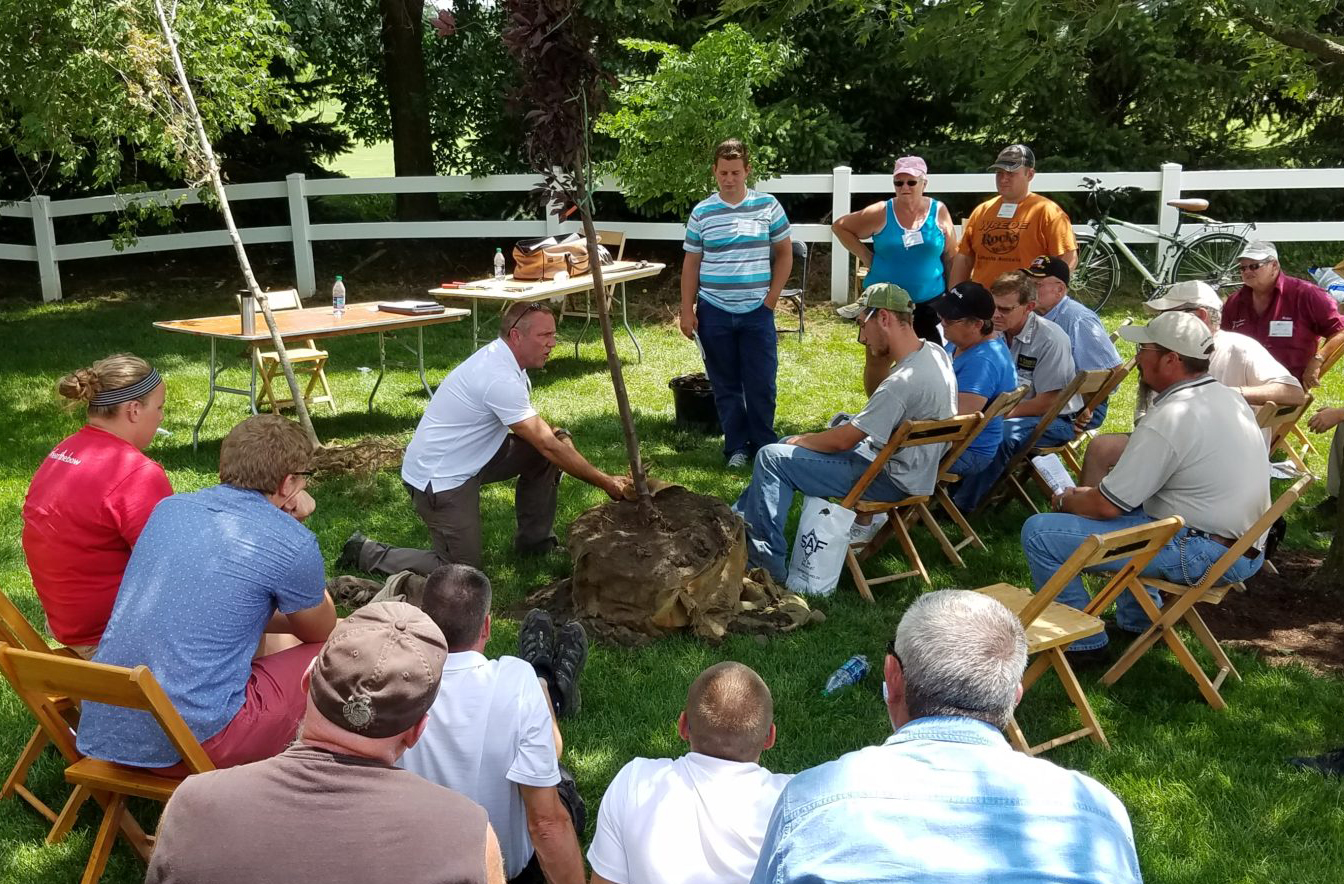 Spring is almost here and we get to wave goodbye to winter. Temperatures are rising, the winds are blowing, and trees are waking up—one of the hot topics every spring is planting. If you missed the chance to get a tree or two (or many more) in the ground this past autumn, then now is the time to start thinking about it again. Look at your planting spaces to see what kind of tree would do well. Think about the tree going in the ground now vs 10 years from now, 30 years, or even 50 years. Will a full-size oak fit in your space or will a smaller redbud work better? Do you have poorly drained soil where a willow or bald cypress will enjoy the excess water or well-drained soil that an American beech or black gum might fare better? Think about what you might want growing in your portion of the ecosystem. Are you looking for spring flowers, shade in the summer, color in the fall, or even different bark types and branch architecture for the winter? Also, once you’ve made your decision and got your new tree make sure you plant it properly to ensure a long happy life and lots of enjoyment.
Don’t forget about the trees you already have in the ground, too. One simple act that you can do to help them out is to re-mulch your current trees. Mulching helps to regulate soil moisture and temperature for the roots of your trees. Grab a rake and work last year’s mulch into the ground a little, then apply enough new mulch to have about a 2–3-inch layer around your tree. Depending on the size of your tree you might need to have a larger mulch ring, but aim for at least a 3-foot diameter, and DO NOT mulch up to the trunk. This is volcano mulching and creates an area of decay in the trunk that can lead to failure. Leave a 2-3-inch ring between the trunk and the mulch.
For more spring tree tips check out the Purdue Extension – Forestry and Natural Resources (FNR) “YouTube Shorts” video, Ben McCallister Offers Spring Tree Tips
If you have any questions about these topics, please check out the links provided on tree selection, planting, and mulching.
Resources:
The Purdue Landscape Report
Tree Installation, The Education Store
Choosing a Tree video, Purdue Extension-FNR YouTube Channel
Planting Your Tree Part 1: Choosing Your Tree, Purdue Extension-FNR YouTube Channel
Mechanical Damage to Trees, The Education Store
Re-Mulch Your Trees, Purdue Landscape Report
Summer Tree Care, Purdue Landscape Report
Tree Defect Identification, The Education Store
Tree Wound and Healing, Got Nature? Blog, Purdue Extension – Forestry and Natural Resources
Surface Root Syndrome, The Education Store
Shrubs and Woody Vines of Indiana and the Midwest, Purdue University Press
Ask an Expert: Tree Selection and Planting, Purdue Extension-Forestry & Natural Resources (FNR) YouTube playlist
ID That Tree, Purdue Extension-FNR YouTube playlist
Subscribe – Purdue Extension-FNR YouTube Channel
Ben McCallister, Urban Forestry Specialist
Purdue Forestry & Natural Resources
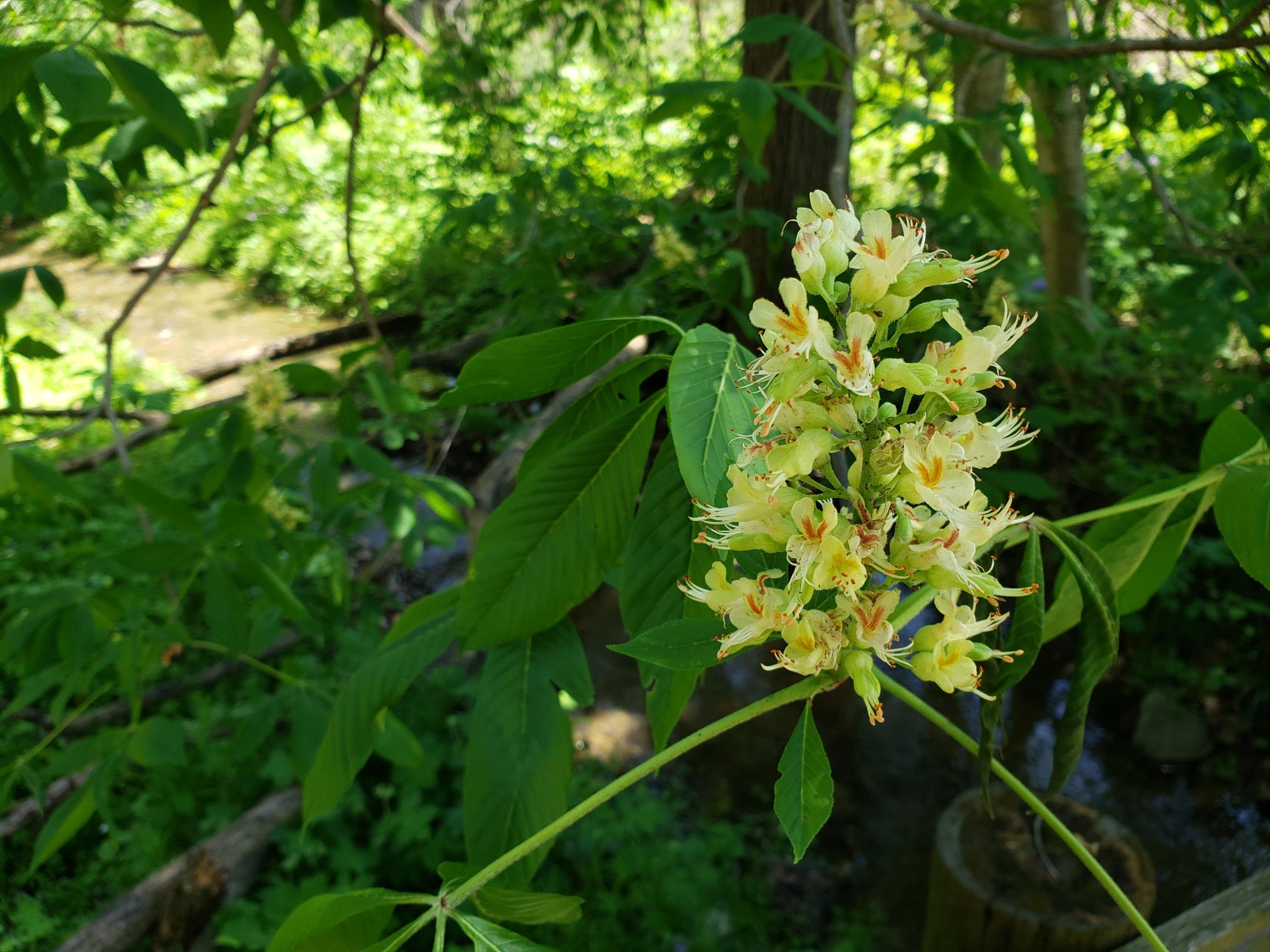
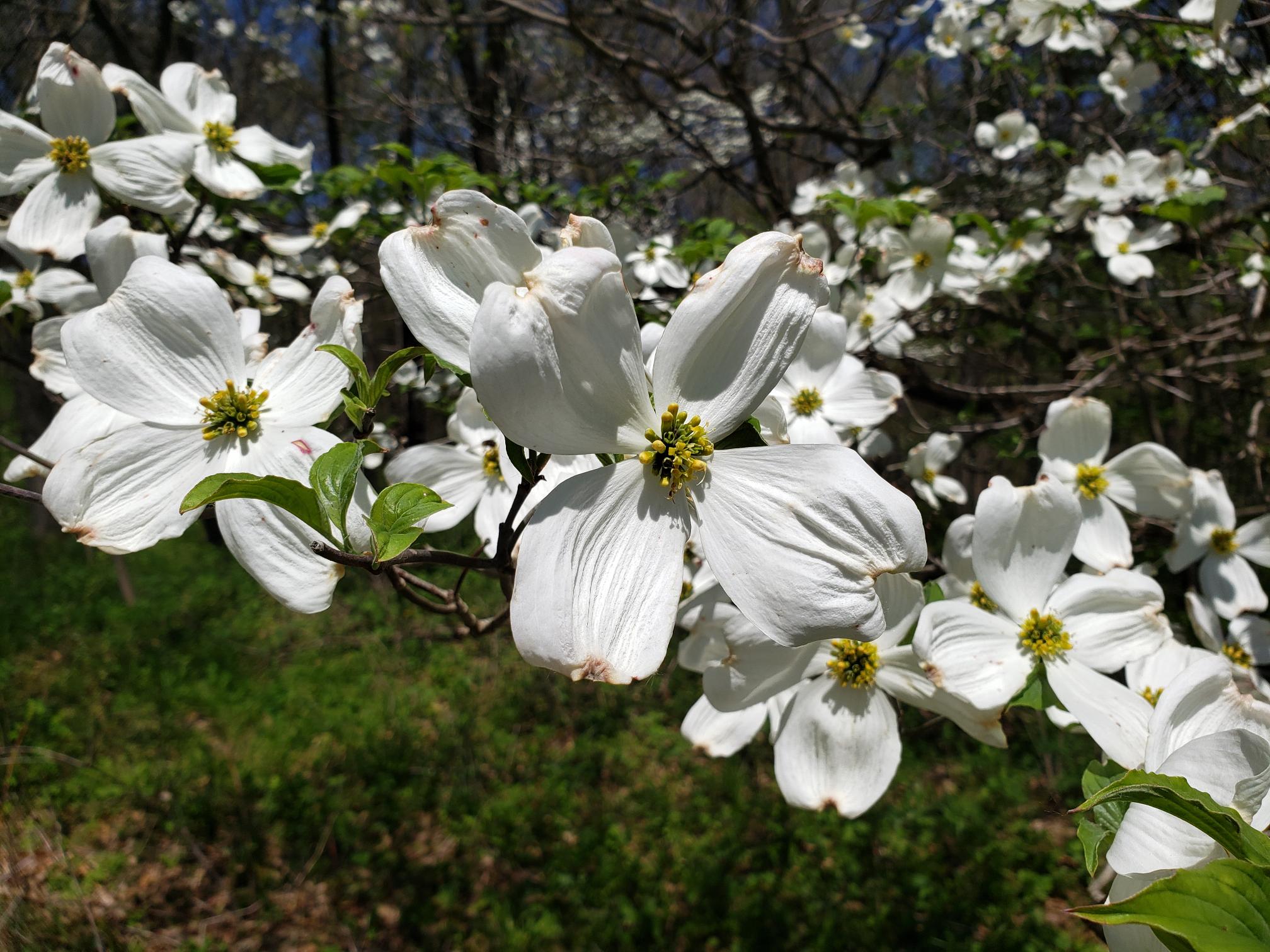
Observing the colors and patterns of blooming plants is an enjoyable spring activity that reinforces the plant world is becoming active after the long pause of winter. Most mature flowering plants produce some sort of flower structure, but some are more noticeable than others. Some of the earliest among native Indiana trees are red and silver maple, the elms, serviceberry and Ohio buckeye. Some of the showiest blooms are found on redbud, flowering dogwood, tuliptree and magnolias. Keeping a journal of when first blooms are sighted or taking date-stamped photos is a good way to track this sign of spring from year to year and give you a hint of when future blooms may happen.

There is also a substantial show on the forest floor. Early-blooming wildflowers emerge and bloom before trees and shrubs expand leaves, allowing them access to sunlight in early spring. Some plants to look for include spring beauty, trilliums, Dutchman’s’ breeches, and bloodroot. Tree, shrub and plant field guides as well as plant ID apps can help you learn the ID features and life histories of these native plants.
Check out our Purdue Extension YouTube Channel to learn from Lenny Farlee, Extension Forester. In this Purdue Extension-FNR “YouTube Shorts” video below you will learn about early blooming trees in the spring time.
Resources:
ID That Tree, Playlist, Purdue Extension – Forestry and Natural Resources (FNR) YouTube Channel
Invasive Species Playlist, Playlist, Purdue Extension – FNR YouTube Channel (Asian Bush Honeysuckle, Burning Bush, Callery Pear, Multiflora rose)
A Woodland Management Moment, Playlist, Purdue Extension – FNR YouTube Channel (Against Invasives, Garlic Mustard, Autumn Olive)
Woodland Stewardship for Landowners, Playlist, Purdue Extension – FNR YouTube Channel (Common Buckthorn, Japanese Barberry)
Indiana Department of Natural Resources: Invasive Species
Indiana Invasive Species Council
Cooperative Invasive Species Management Area (CISMA)
Report Invasive, Purdue Extension
Aquatic Invasive Species, Illinois-Indiana Sea Grant (IISG)
Episode 11 – Exploring the challenges of Invasive Species, Habitat University-Natural Resource University
What are invasive species and why should I care?, Got Nature? Blog, Purdue Extension – FNR
Shrubs and Woody Vines of Indiana and the Midwest, The Education Store, Purdue Extension Resource Center
Native Trees of the Midwest, The Education Store
Lenny Farlee, Extension Forester
Hardwood Tree Improvement and Regeneration Center
Purdue Department of Forestry & Natural Resources
In this edition of ID That Tree, we’re going to introduce you to yet another native Indiana elm found in the far southwest corner of Indiana, and that is winged elm. It’s named for its prominent corky ridges that we see extending off the main stems and twigs. It has alternate leaf arrangement, simple leaves, and doubly serrated margins.
If you have any questions regarding wildlife, trees, forest management, wood products, natural resource planning or other natural resource topics, feel free to contact us by using our Ask an Expert web page.
Resources:
Winged Elm, Native Trees of Indiana River Walk, Purdue Fort Wayne
ID That Tree, Playlist, Purdue Extension – Forestry and Natural Resources (FNR) YouTube Channel (Invasive White Mulberry, Siberian Elm, Tree of Heaven)
Invasive Species Playlist, Playlist, Purdue Extension – FNR YouTube Channel (Asian Bush Honeysuckle, Burning Bush, Callery Pear, Multiflora rose)
A Woodland Management Moment, Playlist, Purdue Extension – FNR YouTube Channel (Against Invasives, Garlic Mustard, Autumn Olive)
Woodland Stewardship for Landowners, Playlist, Purdue Extension – FNR YouTube Channel (Common Buckthorn, Japanese Barberry)
How long do seeds of the invasive tree, Ailanthus altissima remain viable? (Invasive Tree of Heaven), USDA Forest Service
Indiana Department of Natural Resources: Invasive Species
Indiana Invasive Species Council
Cooperative Invasive Species Management Area (CISMA)
Report Invasive, Purdue Extension
Aquatic Invasive Species, Illinois-Indiana Sea Grant (IISG)
Episode 11 – Exploring the challenges of Invasive Species, Habitat University-Natural Resource University
What are invasive species and why should I care?, Got Nature? Blog, Purdue Extension – FNR
Shrubs and Woody Vines of Indiana and the Midwest, The Education Store, Purdue Extension Resource Center
Native Trees of the Midwest, The Education Store
Investing in Indiana Woodlands, The Education Store
Professional Forester, Indiana Forestry Woodland Owners Association
District Forester 10+acres of woodlands, Indiana Department of Natural Resources
Forest Improvement Handbook, The Education Store
Lenny Farlee, Extension Forester
Hardwood Tree Improvement and Regeneration Center
Purdue Department of Forestry & Natural Resources
In this edition of ID That Tree, we’re going to introduce you to yet another southern Indiana oak species. This one is a member of the broad white oak group and it’s called post oak. It’s called that because it’s a very rot resistant and hard wood that used to be used for fence posts. It has rounded lobes, no bristle tips, and typified by a cruciform shape of leaf.
If you have any questions regarding wildlife, trees, forest management, wood products, natural resource planning or other natural resource topics, feel free to contact us by using our Ask an Expert web page.
Resources:
Post Oak, Native Trees of Indiana River Walk, Purdue Fort Wayne
ID That Tree, Playlist, Purdue Extension – Forestry and Natural Resources (FNR) YouTube Channel (Invasive White Mulberry, Siberian Elm, Tree of Heaven)
Invasive Species Playlist, Playlist, Purdue Extension – FNR YouTube Channel (Asian Bush Honeysuckle, Burning Bush, Callery Pear, Multiflora rose)
A Woodland Management Moment, Playlist, Purdue Extension – FNR YouTube Channel (Against Invasives, Garlic Mustard, Autumn Olive)
Woodland Stewardship for Landowners, Playlist, Purdue Extension – FNR YouTube Channel (Common Buckthorn, Japanese Barberry)
How long do seeds of the invasive tree, Ailanthus altissima remain viable? (Invasive Tree of Heaven), USDA Forest Service
Indiana Department of Natural Resources: Invasive Species
Indiana Invasive Species Council
Cooperative Invasive Species Management Area (CISMA)
Report Invasive, Purdue Extension
Aquatic Invasive Species, Illinois-Indiana Sea Grant (IISG)
Episode 11 – Exploring the challenges of Invasive Species, Habitat University-Natural Resource University
What are invasive species and why should I care?, Got Nature? Blog, Purdue Extension – FNR
Shrubs and Woody Vines of Indiana and the Midwest, The Education Store, Purdue Extension Resource Center
Native Trees of the Midwest, The Education Store
Investing in Indiana Woodlands, The Education Store
Professional Forester, Indiana Forestry Woodland Owners Association
District Forester 10+acres of woodlands, Indiana Department of Natural Resources
Forest Improvement Handbook, The Education Store
Lenny Farlee, Extension Forester
Hardwood Tree Improvement and Regeneration Center
Purdue Department of Forestry & Natural Resources

Recent Posts
- Popular Landscape Shrub is Invasive
Posted: October 15, 2026 in Alert, Forestry, Forests and Street Trees, Invasive Plant Species, Plants, Woodlands - Purdue Extension’s Regional Teams Are Here: Connecting Communities with Expertise and Opportunity
Posted: October 14, 2026 in Community Development, Forestry, Forests and Street Trees, Gardening, How To, Timber Marketing, Urban Forestry, Wildlife, Woodlands - Why Do Our Trees Go From Green Leaves to Different Colors?
Posted: in Forestry, Forests and Street Trees, Urban Forestry, Woodlands - October Is Firewood Month: Protect Indiana’s Forests by Making Smart Choices
Posted: October 1, 2026 in Forestry, Forests and Street Trees, How To, Invasive Insects, Urban Forestry - Question: Why Did the Shagbark Hickories Survive the Tornado?
Posted: August 27, 2026 in Forests and Street Trees, How To, Urban Forestry - Jarred Brooke Receives Early Career Award for Prescribed Fire Work
Posted: July 20, 2026 in Forestry, Forests and Street Trees, Natural Resource Planning, Safety - Pruning Highlight; Espalier Pruning: Training Trees into Living Patterns
Posted: July 8, 2026 in Forestry, Forests and Street Trees, Gardening - Pruning Highlight-Pollarding Trees: A Traditional Pruning Practice with Modern Uses
Posted: June 11, 2026 in Forestry, Forests and Street Trees, Urban Forestry, Wildlife, Woodlands - Flat-Faced Longhorn Beetle Found in Hardwood Logs – IDNR Division of Entomology
Posted: June 8, 2026 in Alert, Forestry, Forests and Street Trees, Invasive Insects, Urban Forestry, Wildlife, Woodlands - Connecting Research to Practice: Natural Resources & Land Use Spring Training
Posted: June 5, 2026 in Forestry, Forests and Street Trees, How To, Invasive Animal Species, Invasive Plant Species, Land Use, Natural Resource Planning, Urban Forestry, Wildlife, Woodlands
Archives
Categories
- Alert
- Aquaculture/Fish
- Aquatic/Aquaculture Resources
- Ask the Expert
- Christmas Trees
- Community Development
- Disease
- Drought
- Forestry
- Forests and Street Trees
- Gardening
- Got Nature for Kids
- Great Lakes
- How To
- Invasive Animal Species
- Invasive Insects
- Invasive Plant Species
- Land Use
- Natural Resource Planning
- Nature of Teaching
- Plants
- Podcasts
- Ponds
- Publication
- Safety
- Spiders
- Timber Marketing
- Urban Forestry
- Webinar
- Wildlife
- Wood Products/Manufacturing
- Woodland Management Moment
- Woodlands