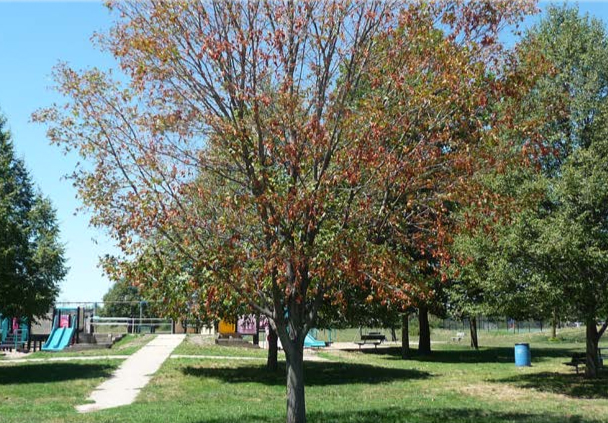
Several things come into play when it comes to determining the colors that we find on leaves of our trees. In this video, we will talk about the several pigments that are found in trees and what changes from summer to fall that brings us the bright colors on leaves.
If you have any questions regarding trees, forests, wildlife, wood products or other natural resource topics, feel free to contact us by using our Ask an Expert web page.
In this edition of ID That Tree, Purdue Extension forester Lenny Farlee teaches you about the state tree of Indiana, the tulip tree. It is also known as the tulip poplar or yellow poplar, although it is more closely related to the magnolia. This tree is known for its simple tulip shaped leaves and colorful flowers in the spring, although they are often high up on the tree.
If you have any questions regarding trees, forests, wildlife, wood products or other natural resource topics, feel free to contact us by using our Ask an Expert web page.
Join Purdue Extension urban forester Lindsey Purcell, exotic forest pest educator Elizabeth Barnes and entomology extension specialist Cliff Sadof as they share about how to inspect trees, what to look for, who to contact, etc., as well what invasive pests and diseases you should keep your eye out for.
If you have any questions regarding trees, forests, wildlife, wood products or other natural resource topics, feel free to contact us by using our Ask an Expert web page.
Wildlife extension specialist Jarred Brooke explains why the shelterwood technique is one of his favorite ways to create food and cover in woodlands for wildlife. The benefits of creating this type of food source and cover increases a variety of wildlife species along with aiding the forest area with a healthy ground cover.
If you have any questions regarding wildlife, trees, forest management, wood products, natural resource planning or other natural resource topics, feel free to contact us by using our Ask an Expert web page.
Get to know one of our small Indiana trees, good for landscaping, that has purple flowers in the summer and pink fruit in the fall. Meet the American Burning Bush or Wahoo. Purdue Extension forester Lenny Farlee shares about where you can find this species, and more identifying characteristics.
The American Burning Bush is a native and desirable small tree found in our Indiana woodlands, not to be confused with winged burning bush, which is an exotic and invasive shrub that has escaped into woodlands from landscape plantings.
If you have any questions regarding trees, forests, wildlife, wood products or other natural resource topics, feel free to contact us by using our Ask an Expert web page.
Purdue Extension forester Lenny Farlee introduces you to one of the bright flowering stars of spring, the Redbud. This native tree is known for its pink and lavender flowers in early spring, its heart-shaped leaves and for its home along the edge of open fields and brushy areas.
If you have any questions regarding trees, forests, wildlife, wood products or other natural resource topics, feel free to contact us by using our Ask an Expert web page.
Purdue Extension forester Lenny Farlee introduces you to the flowering dogwood, a species with simple leaves with an interesting venation pattern on them, white blossoms in the spring and red to maroon foliage in the fall.
If you have any questions regarding trees, forests, wildlife, wood products or other natural resource topics, feel free to contact us by using our Ask an Expert web page.
Meet the Eastern Hemlock, one of Indiana’s native conifers, which is typically found near canyons, ravines and steep slopes. They can grow to be more than 100 feet tall and to be 200-300 years old. Learn more from Purdue Extension forester Lenny Farlee below.
If you have any questions regarding trees, forests, wildlife, wood products or other natural resource topics, feel free to contact us by using our Ask an Expert web page.
Purdue Extension forester Lenny Farlee introduces you to the Devil’s Walking Stick, a small tree from the ginseng family found in southern Indiana. It is identifiable by thorns or spikes along the stem, unique doubly compound leaves, and large clusters of small white flowers.
If you have any questions regarding trees, forests, wildlife, wood products or other natural resource topics, feel free to contact us by using our Ask an Expert web page.
Many homeowners are finding their trees with dry and wilted leaves and no rain in sight. This publication describes how homeowners can deal with these drought-stressed trees, Drought? Don’t Forget the Trees!
Drought can have a major impact on tree health and survival. Water is the most limiting ecological resource for a tree, and without adequate moisture, decline and death are imminent. It reduces carbohydrate production, significantly lowering energy reserves and production of defense chemicals in the tree.
Trees in a weakened state from drought are more susceptible to pests, which can further weaken the tree, and even kill part or all of it. Although there is nothing we can do to prevent drought, it is important to know what can be done to reduce long-term effects of prolonged dry conditions.