 Purdue University - Extension - Forestry and Natural Resources
Got Nature? Blog
On this edition of ID That Tree, Purdue Extension forester Lenny Farlee introduces you to one of our common bottomland trees, the Eastern Cottonwood. This tree stands out for its triangular or delta shaped leaves, often with prominent teeth along the edges, which extend from long flattened leaf stems. This native tree is named for its early season fruit, which is a little tuft of white hairs that holds a small seed that is produced in large quantities and often blown far from the parent tree.
If you have any questions regarding wildlife, trees, forest management, wood products, natural resource planning or other natural resource topics, feel free to contact us by using our Ask an Expert web page.
Resources:
ID That Tree, Playlist, Purdue Extension – Forestry and Natural Resources Youtube Channel
A Woodland Management Moment, Playlist, Purdue Extension – FNR Youtube Channel
Shrubs and Woody Vines of Indiana and the Midwest, The Education Store, Purdue Extension Resource Center
Native Trees of the Midwest, The Education Store
Investing in Indiana Woodlands, The Education Store
Forest Improvement Handbook, The Education Store
Lenny Farlee, Sustaining Hardwood Extension Specialist
Purdue University Department of Forestry and Natural Resources
In this episode of A Woodland Management Moment, Purdue Extension forester Lenny Farlee talks about crop tree release, the process of selecting timber crop trees that help meet your management objectives and managing the area around them in order to allow your selected trees to thrive in the stand.
If you have any questions regarding trees, forests, wildlife, wood products or other natural resource topics, feel free to contact us by using our Ask an Expert web page.
Resources:
A Woodland Management Moment, Playlist, Purdue Extension – Forestry and Natural Resources (FNR) YouTube Channel
Shrubs and Woody Vines of Indiana and the Midwest, Purdue University Press
Native Trees of the Midwest, Purdue University Press
ID That Tree, Playlist, Purdue Extension – FNR YouTube Channel
Investing in Indiana Woodlands, The Education Store
Woodland Stewardship for Landowners Video Series, Playlist, Indiana Department of Natural Resources YouTube Channel
Ask an Expert: Tree Selection and Planting, Purdue Extension – Forestry and Natural Resources (FNR) YouTube Channel
Lenny Farlee, Sustaining Hardwood Extension Specialist
Purdue University Department of Forestry and Natural Resources
Like the rest of the red/black oak group, the Northern Red Oak has multi-lobed leaves with bristle tips. This native tree, however, has a group of buds at the terminal end of the stem that are smooth, shiny and reddish brown to brown in color. A strong identifier for this species is the bark, which looks like ski tracks or long running ridges that run up and down the sides of the tree. The acorns feature tight shallow caps with tight scales that resemble a beret.
For more on the red oak group, watch this video.
If you have any questions regarding wildlife, trees, forest management, wood products, natural resource planning, or other natural resource topics, feel free to contact us by using our Ask an Expert web page.
Resources:
ID That Tree, Playlist, Purdue Extension – Forestry and Natural Resources Youtube Channel
A Woodland Management Moment, Playlist, Purdue Extension – FNR Youtube Channel
Shrubs and Woody Vines of Indiana and the Midwest, Purdue University Press
Native Trees of the Midwest, Purdue University Press
Investing in Indiana Woodlands, The Education Store
Forest Improvement Handbook, The Education Store
Lenny Farlee, Sustaining Hardwood Extension Specialist
Purdue University Department of Forestry and Natural Resources
On this episode of ID That Tree, Purdue Extension forester Lenny Farlee introduces you to a non-native invasive tree that is widespread across the state, white mulberry. Key identifying characteristics to separate it from its native cousin red mulberry are shiny variable leaves and where the species grows, near fencerows, hedgerows and other waste areas. The red mulberry has larger leaves that are duller in color with a sandpapery texture, and the species is often found in the forest understory.
If you have any questions regarding wildlife, trees, forest management, wood products, natural resource planning, or other natural resource topics, feel free to contact us by using our Ask an Expert web page.
Resources:
ID That Tree, Playlist, Purdue Extension – Forestry and Natural Resources Youtube Channel
Report Invasive Species, Purdue Invasive Species
The GLEDN Phone App – Great Lakes Early Detection Network
EDDMaps – Early Detection and Distribution Mapping System
Indiana Department of Natural Resources: Invasive Species
Indiana Invasive Species Council
Cooperative Invasive Species Management Area (CISMA)
A Woodland Management Moment, Playlist, Purdue Extension – FNR Youtube Channel
Shrubs and Woody Vines of Indiana and the Midwest, Purdue University Press
Native Trees of the Midwest, Purdue University Press
Investing in Indiana Woodlands, The Education Store
Forest Improvement Handbook, The Education Store
Lenny Farlee, Sustaining Hardwood Extension Specialist
Purdue University Department of Forestry and Natural Resources
In this episode of A Woodland Management Moment, Purdue Extension forester Lenny Farlee talks about how you can use nuts and seeds left dropped by existing trees, from walnuts to oaks and hickories, to establish new seedlings in other areas of your landscape through a process called direct seeding.
If you have any questions regarding trees, forests, wildlife, wood products or other natural resource topics, feel free to contact us by using our Ask an Expert web page.
Resources:
A Woodland Management Moment, Playlist, Purdue Extension – Forestry and Natural Resources (FNR) YouTube Channel
Shrubs and Woody Vines of Indiana and the Midwest, Purdue University Press
Native Trees of the Midwest, Purdue University Press
Investing in Indiana Woodlands, The Education Store
Forest Improvement Handbook, The Education Store
ID That Tree, Playlist, Purdue Extension – FNR YouTube Channel
Resources and Assistance Available for Planting Hardwood Seedlings, The Education Store
Woodland Stewardship for Landowners Video Series, Playlist, Indiana Department of Natural Resources YouTube Channel
Ask an Expert: Tree Selection and Planting, Purdue Extension – Forestry and Natural Resources (FNR) YouTube Channel
Lenny Farlee, Sustaining Hardwood Extension Specialist
Purdue University Department of Forestry and Natural Resources
On this episode of ID That Tree, Purdue Extension forester Lenny Farlee introduces you to an often overlooked native Indiana species, the red mulberry. This tree, often found in the shade or in river bottom areas, features variable leaves in an alternate arrangement, gray to brown flaky bark and black/dark purple berries, loved by animals and humans alike.
If you have any questions regarding wildlife, trees, forest management, wood products, natural resource planning, or other natural resource topics, feel free to contact us by using our Ask an Expert web page.
Resources:
ID That Tree, Playlist, Purdue Extension – Forestry and Natural Resources Youtube Channel
A Woodland Management Moment, Playlist, Purdue Extension – FNR Youtube Channel
Shrubs and Woody Vines of Indiana and the Midwest, Purdue University Press
Native Trees of the Midwest, Purdue University Press
Investing in Indiana Woodlands, The Education Store
Forest Improvement Handbook, The Education Store
Lenny Farlee, Sustaining Hardwood Extension Specialist
Purdue University Department of Forestry and Natural Resources
On this edition of ID That Tree, meet a range restricted species that is best identified by its bronze to yellowish bark, which often peels off in small flakes. The yellow birch, which is typically found natively in northern Indiana, also has simple finely toothed leaves and twigs that smell like wintergreen when scraped. Learn more from Purdue Extension forester Lenny Farlee inside.
If you have any questions regarding wildlife, trees, forest management, wood products, natural resource planning or other natural resource topics, feel free to contact us by using our Ask an Expert web page.
Resources:
ID That Tree, Playlist, Purdue Extension – Forestry and Natural Resources Youtube Channel
A Woodland Management Moment, Playlist, Purdue Extension – FNR Youtube Channel
Shrubs and Woody Vines of Indiana and the Midwest, Purdue University Press
Native Trees of the Midwest, Purdue University Press
Investing in Indiana Woodlands, The Education Store
Forest Improvement Handbook, The Education Store
Lenny Farlee, Sustaining Hardwood Extension Specialist
Purdue University Department of Forestry and Natural Resources
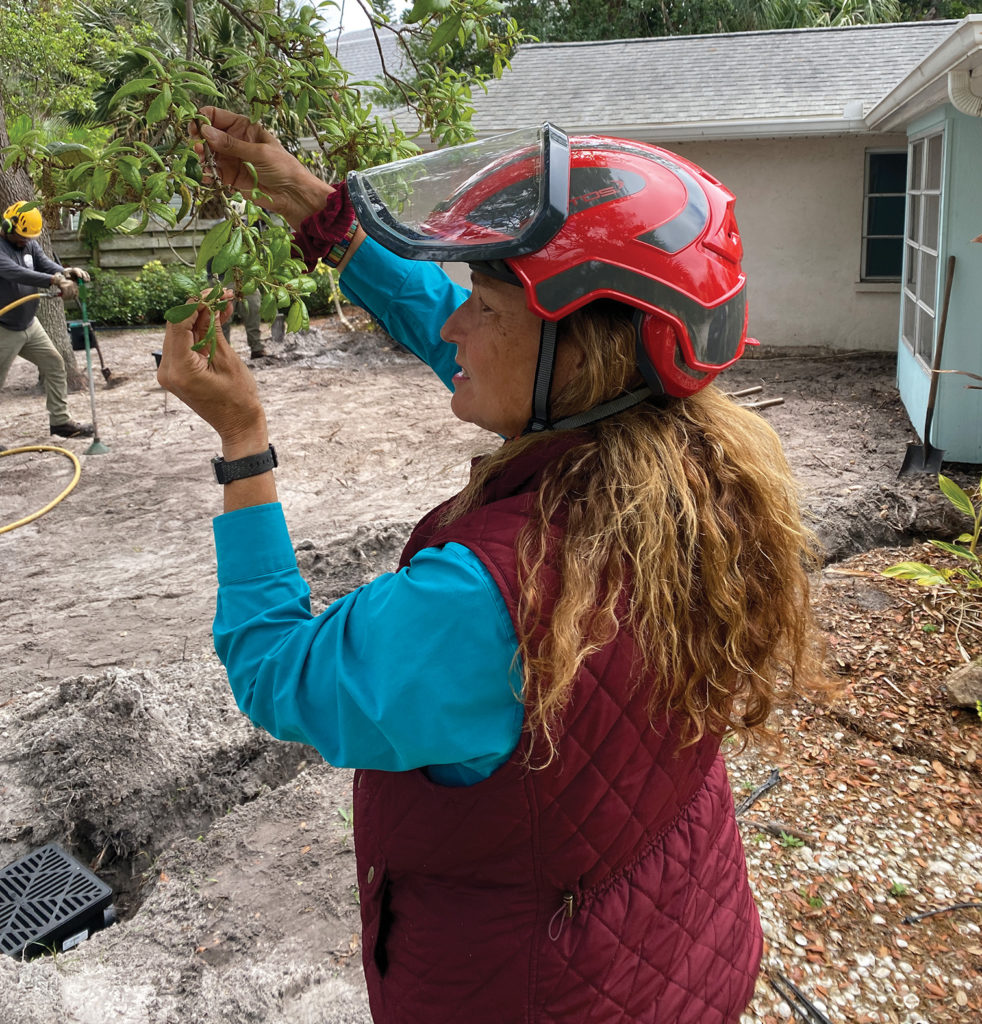
Scouting is the essential first step of an IPM program. Shown here is Tammy Kovar, owner of Biological Tree Services, a nine-year TCIA member company based in Sarasota, Florida. All photos and graphics courtesy of the author.
Tree Care Industry (TCI) Magazine: Plant health care (PHC) is the science and practice of understanding and overcoming the succession of biotic and abiotic factors limiting plants from achieving their full genetic potential in our landscapes and urban forests. Plant health care has been practiced as long as modern arboriculture itself and, as a science-based concept, is an important component in overall integrated pest management (IPM).
Pest management in our urban forests is a moving target and sometimes is overwhelming, especially for those early-career professionals. I remember from my early days in the field the overwhelming thought of needing to know every pest for every tree! I literally had a truckload (back seat of a king cab) of university publications, bulletins and articles ripped out of magazines for reference in the event I couldn’t figure it out quickly and on site. Just that fear of not knowing was often very stressful. Well, that has changed significantly.
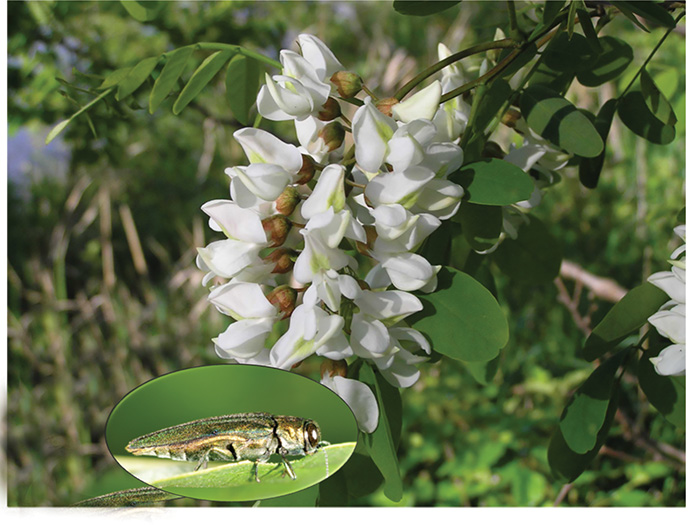
Adult emerald ash borers typically take flight about the same time that black locust trees bloom, indicating a good time for treatment.
The point is that first, you don’t have to know everything, and second, resources now are easily and readily available. Today, the smartphone and computing opportunities available on mobile platforms, apps such as the Purdue Tree Doctor and other web-based apps have improved diagnostics significantly, making it simpler for the technician to get a better idea of their pest issue and easier to find a control strategy.
One of the basic and most important keys when starting a PHC program is just learning to recognize the concerns for common trees already in your care. Tree identification is critically important to determine whether the tree is even a host for any given disease or insect. As a technician, you don’t need to know every tree in North America; just focus on those that are commonly found and that you are called upon to investigate for pest issues with your clients and customers. Few things are as awkward as misidentification of a tree and the corresponding application. Recommendations for treating emerald ash borer on a European mountain ash (Sorbus aucuparia), which is not susceptible to EAB infestation, could be fairly damaging to your credibility and your company!
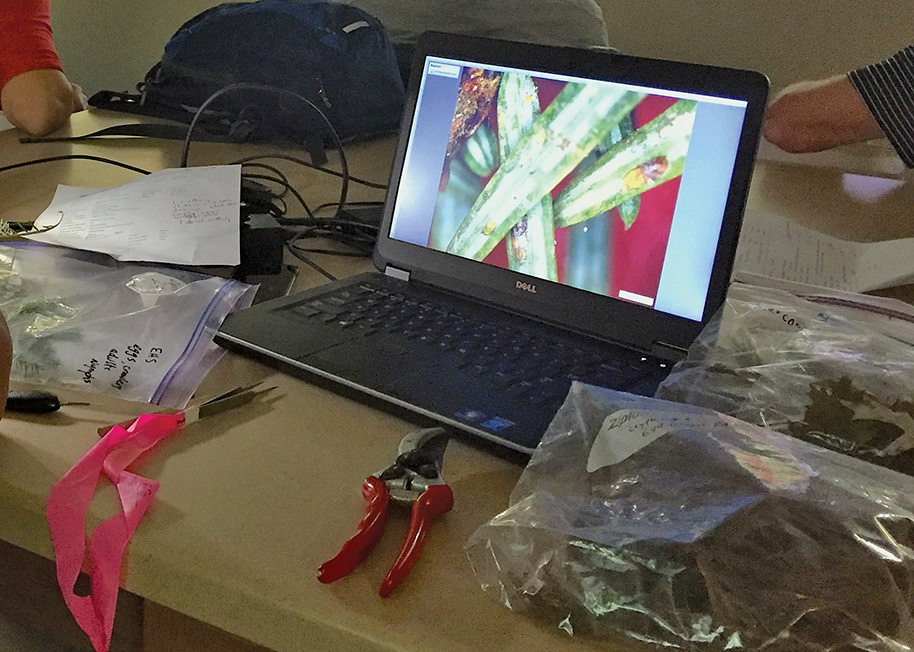
Each state has a land-grant college with resources to assist PHC technicians.
Get some help
All there is to know and what you need to know can be mind-boggling; however, it is more manageable when we are able to discover the resources available. Often overlooked, local extension services from state land-grant colleges provide a tremendous collection of experts trained and educated in pest management. They often have plant and pest diagnostic laboratories assisting with identification of those challenging diseases or insects, usually at a very economical cost, along with the appropriate management strategy to apply for control.
Resources:
Planting Your Tree Part 1: Choosing Your Tree, Purdue Extension YouTube Channel
Tree Installation: Process and Practices, The Extension Store, Purdue Extension resource center
Ask an Expert: Tree Selection and Planting, Purdue FNR Extension YouTube Channel
Webinar: How to Identify Trees in Indiana, Got Nature? Post, Purdue Extension – Forestry and Natural Resources
Shrubs and Woody Vines of Indiana and the Midwest, Purdue University Press
Native Trees of the Midwest, Purdue University Press
ID That Tree, Purdue Extension – Forestry and Natural Resources YouTube Playlist
Purdue Plant and Pest Diagnostic Lab
Emerald Ash Borer Information from Purdue
Lindsey Purcell, Urban Forestry Specialist
Purdue Department of Forestry and Natural Resources
In this edition of ID That Tree, Purdue Extension forester Lenny Farlee introduces you to a member of the Indiana maple family that doesn’t follow the rest of its family’s traditions. Learn about the boxelder and its unique traits inside.
If you have any questions regarding wildlife, trees, forest management, wood products, natural resource planning or other natural resource topics, feel free to contact us by using our Ask an Expert web page.
Resources:
ID That Tree, Playlist, Purdue Extension – Forestry and Natural Resources Youtube Channel
A Woodland Management Moment, Playlist, Purdue Extension – FNR Youtube Channel
Shrubs and Woody Vines of Indiana and the Midwest, Purdue University Press
Native Trees of the Midwest, Purdue University Press
Investing in Indiana Woodlands, The Education Store
Forest Improvement Handbook, The Education Store
Boxelder, The Purdue Arboretum Explorer
Lenny Farlee, Sustaining Hardwood Extension Specialist
Purdue University Department of Forestry and Natural Resources
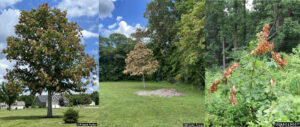
Image 1. Cicada damage is typically restricted to the small, outer twigs. Trees may be completely covered by cicadas or have a few isolated dead twigs. All trees in these images are expected to suffer no serious long term effects from this damage. Images by Clifford Sadof of Purdue University and Pennsylvania Department of Conservation and Natural Resources – Forestry.
Purdue Landscape Report: Dead leaves covering trees (image 1) or on the ground beneath them (image 2) in July would normally be a worrying sign for tree health, but this year much of the damage can be blamed on 17-year cicadas. This damage is unlikely to cause serious trouble for healthy, large trees and management is relatively simple. The choice to prune or not to prune comes down to cost, aesthetics, and concern for the next generation of cicadas.
How Cicadas Damage Plants
Cicada damage is similar to a light pruning and should not be an issue for healthy, mature trees. Cicadas damage trees when they lay their eggs in small twigs (3/16 to 1/2 inch in diameter) on deciduous trees and shrubs. They have a long, thin body part called an ovipositor that resembles a sewing needle that they stab into plants to lay their eggs. This action creates small holes and cracks in the bark (image 3). If enough cicadas lay their eggs in a twig, it can damage the bark enough to kill the twig (image 1).

Image 2. The dead twigs killed by cicada egg laying may break off the tree and litter the ground underneath. Image by Pennsylvania Department of Conservation and Natural Resources – Forestry.
Recognizing Cicada Damage
The degree of cicada damage depends on insect density and the number of trees in the area. To determine if a tree or bush has been damaged by cicadas, ask the following questions:
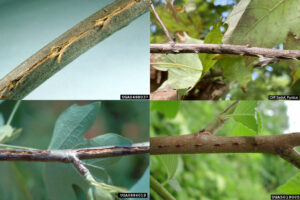
Image 3. Cicada egg laying damage varies between tree species, but is consistently in a straight, length-wise line along the branch. Note that all four examples also have signs of either puncture marks, cracks in the bark, or some combination of the two. Images by John Ghent, Clifford Sadof of Purdue University, Tim Tigner of Virginia Department of Forestry, and Pennsylvania Department of Conservation and Natural Resources – Forestry.
1. Were there 17-year cicadas within 50 meters (~164 ft) of the tree this year? Cicadas do not travel very far. If there weren’t noticeable numbers of 17-year cicadas nearby the damage was likely caused by something else.
2. Is the damage on a deciduous tree or bush? Cicadas rarely lay their eggs on evergreen trees and herbaceous plants. Damage on these types of plants is likely caused by something other than the cicadas.
3. What size of branches and twigs are damaged? Cicadas show a strong preference for small twigs (3/16 to 1/2 inch in diameter). As a result, damaged trees may appear as though their outer layer of leaves is dead while the inner leaves remain healthy (image 2). If larger branches are dead, the damage was probably not caused by cicadas.
4. Does the bark have typical egg laying damage? If you can reach the damaged twigs, look for a row of puncture wounds often connected by cracks length-wise along the branch. Their appearance may vary between tree species (image 3), but they will almost always be length-wise.
Resources:
17 Ways to Make the Most of the 17-year Cicada Emergence, Purdue College of Agriculture
Ask an Expert: Cicada Emergence Video, Got Nature? Blog, Purdue Extension-FNR
Periodical Cicada in Indiana, The Education Store, Purdue Extension resource center
Cicada Killers, The Education Store
Cicada, Youth and Entomology, Purdue Extension
Purdue Cicada Tracker, Purdue Extension-Master Gardener Program
Purdue Landscape Report
Elizabeth Barnes, Exotic Forest Pest Educator
Purdue University Department of Entomology

Recent Posts
- Tree Silvics and Succession Webinar: A Biological Basis for Management
Posted: January 30, 2026 in Forests and Street Trees, Urban Forestry, Woodlands - Woodsy Owl Edition for Educational Learning, USDA – U.S. Forest Service
Posted: January 21, 2026 in Forestry, Forests and Street Trees, Got Nature for Kids, Urban Forestry, Wildlife - ID That Tree: Trumpet Creeper
Posted: January 20, 2026 in Forests and Street Trees, Urban Forestry, Woodlands - A Woodland Management Moment: Black Walnut in Pine Plantation
Posted: December 19, 2025 in Forestry, Forests and Street Trees, Urban Forestry, Woodlands - A Woodland Management Moment: Butternut Disease and Breeding
Posted: December 1, 2025 in Forestry, Forests and Street Trees, Woodland Management Moment, Woodlands - Why Do Our Trees Go From Green Leaves to Different Colors?
Posted: November 4, 2025 in Forestry, Forests and Street Trees, Urban Forestry, Woodlands - October Is Firewood Month: Protect Indiana’s Forests by Making Smart Choices
Posted: October 13, 2025 in Forestry, Forests and Street Trees, How To, Invasive Insects, Urban Forestry - Help Your Trees Transition Into Autumn, Purdue Landscape Report
Posted: October 7, 2025 in Forests and Street Trees, Urban Forestry, Woodlands - Marssonina Leaf Spot and Blotch of Poplar, Purdue Landscape Report
Posted: October 1, 2025 in Disease, Forests and Street Trees, Urban Forestry, Woodlands - Discover the Rich World of Oaks with Purdue Extension – FNR
Posted: September 26, 2025 in Ask the Expert, Forests and Street Trees, Wildlife, Woodlands
Archives
Categories
- Alert
- Aquaculture/Fish
- Aquatic/Aquaculture Resources
- Ask the Expert
- Christmas Trees
- Community Development
- Disease
- Drought
- Forestry
- Forests and Street Trees
- Gardening
- Got Nature for Kids
- Great Lakes
- How To
- Invasive Animal Species
- Invasive Insects
- Invasive Plant Species
- Land Use
- Natural Resource Planning
- Nature of Teaching
- Plants
- Podcasts
- Ponds
- Publication
- Safety
- Spiders
- Timber Marketing
- Uncategorized
- Urban Forestry
- Webinar
- Wildlife
- Wood Products/Manufacturing
- Woodland Management Moment
- Woodlands