 Purdue University - Extension - Forestry and Natural Resources
Got Nature? Blog
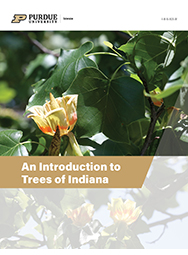
Trees are one of Indiana’s great natural resources. Professor T.E. Shaw, one of the first Indiana Extension foresters, wanted to make sure young Hoosiers, beginners in the field of forestry and tree enthusiasts alike had an educational resource to help them learn the names and identify local trees.
Shaw updated Charles C. Deam’s highly technical Trees of Indiana, which was first published in 1911, putting out an update for the 4-H forestry handbook in 1949. A second edition came out in 1950 and another revision was completed just before Shaw’s death in 1956 and published as “Fifty Common Trees of Indiana” through the Indiana Department of Conservation.
The publication, which utilizes simple methods and user-friendly language, has become a common resource many place in their backpacks before beginning an outdoor adventure.
The 1956 publication has been used for decades by 4-H, FFA and many other classroom and outdoor education programs as an introduction to tree identification for Indiana youth. Nearly 70 years later, the publication will be reintroduced as “An Introduction to Trees of Indiana,” with additional trees added to the resource along with updates of the original species. An Introduction to Trees of Indiana was a collaboration of experts from the Purdue Department of Forestry and Natural Resources (FNR), Indiana 4-H Youth Development and the Indiana Department of Natural Resources.
Add your copy of this new book to your library by visiting the Purdue Extension resource center, The Education Store: An Introduction to Trees of Indiana, product code: 4-H-15-80A.
Other resources:
Fifty Common Trees of Indiana
Native Trees of the Midwest, The Education Store
Shrubs and Woody Vines of Indiana and the Midwest, The Education Store
ID That Tree, Playlist, Subscribe to Purdue Extension – Forestry and Natural Resources YouTube Channel
A Woodland Management Moment, Playlist, Purdue Extension – FNR YouTube Channel
Investing in Indiana Woodlands, The Education Store
Forest Improvement Handbook, The Education Store
Tony Carrell, 4-H Youth Development Extension Specialist
Purdue Extension 4-H Youth Development
Lenny Farlee, Sustaining Hardwood Extension Specialist
Purdue University Department of Forestry and Natural Resources
Lindsey Purcell, Urban Forestry Specialist
Purdue University Department of Forestry and Natural Resources
On this edition of ID That Tree, Purdue Extension forester Lenny Farlee shows you the differences between two non-native species commonly found in Indiana in decorative capacities, and especially during the holiday season, firs and spruces. Learn the differences in needles, cones and twigs so you can tell these species apart.
If you have any questions regarding wildlife, trees, forest management, wood products, natural resource planning or other natural resource topics, feel free to contact us by using our Ask an Expert web page.
Resources:
ID That Tree, Playlist, Purdue Extension – Forestry and Natural Resources YouTube Channel
A Woodland Management Moment, Playlist, Purdue Extension – FNR YouTube Channel
Shrubs and Woody Vines of Indiana and the Midwest, The Education Store, Purdue Extension Resource Center
Native Trees of the Midwest, The Education Store
Investing in Indiana Woodlands, The Education Store
Forest Improvement Handbook, The Education Store
Pin Oak, Native Trees of Indiana River Walk, Purdue Fort Wayne
Lenny Farlee, Sustaining Hardwood Extension Specialist
Purdue University Department of Forestry and Natural Resources
It’s not holly, but it will help you keep holiday cheer long into the winter, meet Winterberry. On this edition of ID That Tree, Purdue Extension forester Lenny Farlee explains the difference between winterberry and holly, as well as how to identify this deciduous plant.
If you have any questions regarding wildlife, trees, forest management, wood products, natural resource planning or other natural resource topics, feel free to contact us by using our Ask an Expert web page.
Resources:
ID That Tree, Playlist, Purdue Extension – Forestry and Natural Resources YouTube Channel
A Woodland Management Moment, Playlist, Purdue Extension – FNR YouTube Channel
Shrubs and Woody Vines of Indiana and the Midwest, The Education Store, Purdue Extension Resource Center
Native Trees of the Midwest, The Education Store
Investing in Indiana Woodlands, The Education Store
Forest Improvement Handbook, The Education Store
Pin Oak, Native Trees of Indiana River Walk, Purdue Fort Wayne
Lenny Farlee, Sustaining Hardwood Extension Specialist
Purdue University Department of Forestry and Natural Resources
On this edition of ID That Tree, meet umbrella magnolia, a small tree easily identified by the clusters of long simple leaves at the end of the twigs, which form an umbrella shape, and by its beautiful white blossoms in the spring.
If you have any questions regarding wildlife, trees, forest management, wood products, natural resource planning or other natural resource topics, feel free to contact us by using our Ask an Expert web page.
Resources:
ID That Tree, Playlist, Purdue Extension – Forestry and Natural Resources YouTube Channel
A Woodland Management Moment, Playlist, Purdue Extension – FNR YouTube Channel
Shrubs and Woody Vines of Indiana and the Midwest, The Education Store, Purdue Extension Resource Center
Native Trees of the Midwest, The Education Store
Investing in Indiana Woodlands, The Education Store
Forest Improvement Handbook, The Education Store
Pin Oak, Native Trees of Indiana River Walk, Purdue Fort Wayne
Lenny Farlee, Sustaining Hardwood Extension Specialist
Purdue University Department of Forestry and Natural Resources
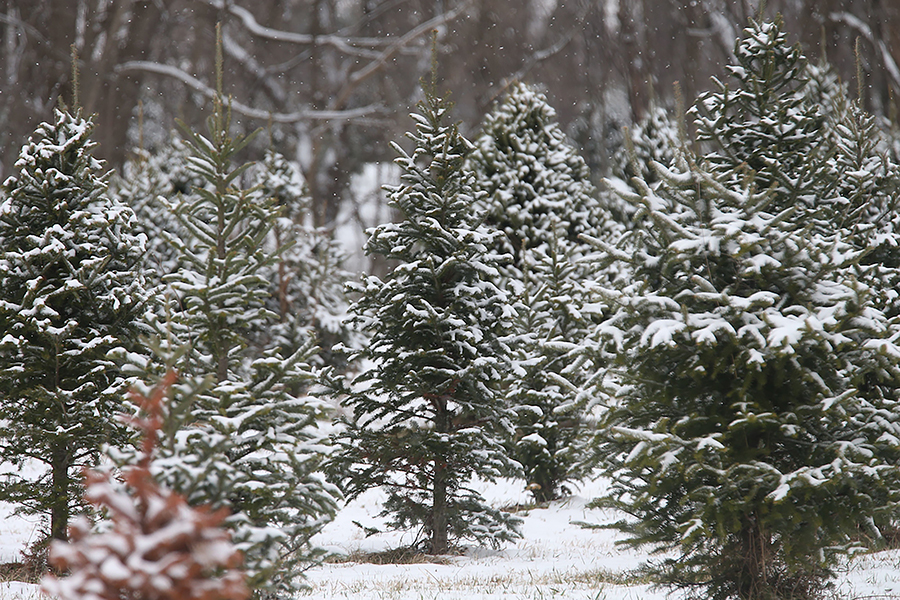 With the holidays over the needles are beginning to fall from your natural Christmas tree, continue to spread holiday cheer by returning your tree to nature.
Jarred Brooke, Extension wildlife specialist, shares a few creative ways you can repurpose and recycle your tree this year.
“Before you throw your used natural Christmas tree in the trash, think about recycling it on your property. Instead of taking up space in the landfill, your tree could decompose naturally while providing cover and food for fish, wildlife or insects,” said Brooke.
No matter how you choose to repurpose your tree, make sure it is free from ornaments and decorations. Do not recycle trees that have been sprayed with “fake” snow or treated with chemicals.
Create a habitat for fish
Throwing used Christmas trees in ponds is a great way to recycle the tree and provide a fish habitat to your pond. The small branches provide hiding spots for small fish to escape from larger predators.
If the pond is frozen with more than four inches of ice, you can drag your tree onto the ice. The tree will fall into place once the ice melts.
You should only add Christmas trees to your ponds or other private ponds with the permission of the pond owner. While they do provide great habitats for fish, they can be a nuisance for fishing as hooks and lines may get caught on branches. It is recommended that you keep trees away from popular fishing areas like docks.
Resources:
Selecting a Real Christmas Tree, Got Nature? Blog, Purdue Extension-Forestry and Natural Resources
A Choose-and-Cut Pine and Fir Christmas Tree Case Study, The Education Store, Purdue Extension’s resource center
Living Christmas Trees For The Holidays and Beyond, The Education Store
Growing Christmas Trees, The Education Store
Selecting an Indiana-Grown Christmas Tree, The Education Store
Forest/Timber Playlist, subscribe to Purdue Extension – Forestry and Natural Resources YouTube Channel
Aquatics & Fisheries, Playlist, Purdue Extension – Forestry and Natural Resources YouTube Channel
Ask an Expert: Pond Wildlife Management, Video, Purdue Extension – FNR YouTube Channel
Ask an Expert: Pond Management: What to Do in Winter, How to Plan for Spring, Video, Purdue Extension – FNR YouTube Channel
Aquatic Plant Management: Identifying and Managing Aquatic Vegetation, The Education Store
Pond and Wildlife Management, Purdue Extension-Forestry and Natural Resources
Jarred Brooke, Wildlife Extension Specialist
Purdue Forestry and Natural Resources
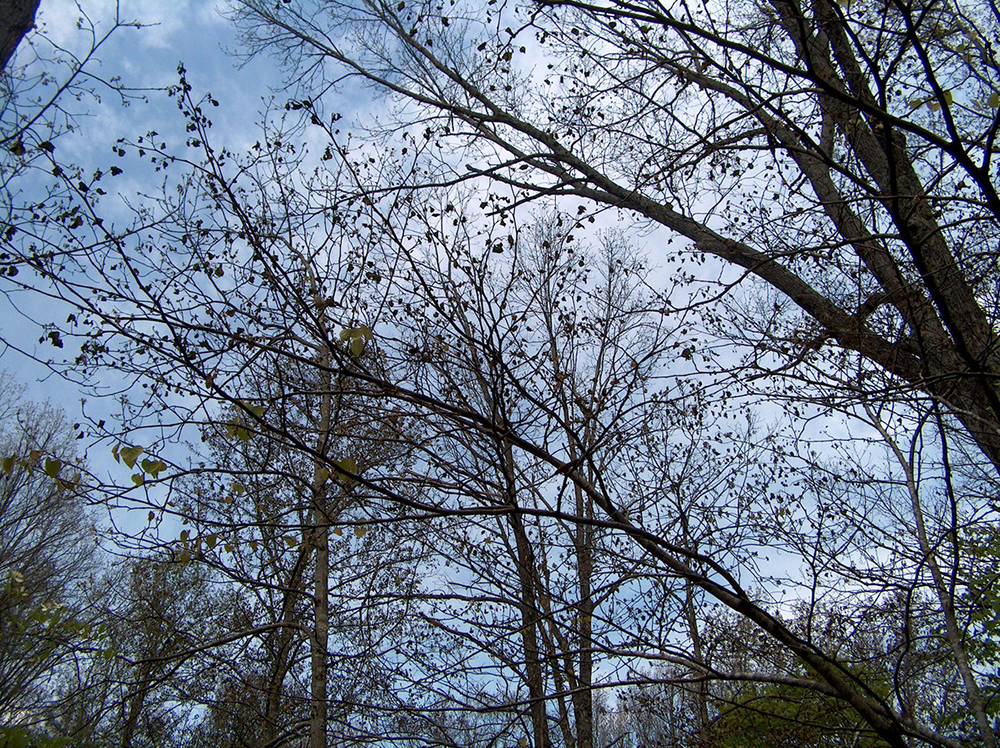 In particular, newly fall-planted trees, shrubs, and perennials should be monitored and watered late into the season, since they haven’t had time to develop extensive root systems.
Pay attention to evergreens plants. Evergreens do not go dormant in the winter and are still actively respiring and lose water through their needles. Deciduous trees respire at lower rates in winter.
Since soil insulates and cools down later in the year than the air temperature, roots stay warmer longer and respire at higher rates than the above-ground parts, the trunk, and branches, of deciduous trees after their leaves drop.
Only water when the temperature is above 40°F. In some places, that could be as late as the end of December. That last good watering is an important one.
Stop supplemental watering after the ground freezes because at this point the trees cannot absorb water through the frozen soil.
Other Helpful Resources:
Winterize Your Trees, The Education Store, Purdue Extension’s resource center
Why are the Gingko Leaves Not Falling, Purdue Extension-Forestry and Natural Resources Got Nature? Blog
ID That Tree Winter Edition: Alternate Leaf Arrangement – Black Walnut/Eastern Cottonwood, FNR Got Nature? Blog
ID That Tree Winter Edition: Opposite Leaf Arrangement – Ohio Buckeye/Red Maple, Purdue Extension-FNR YouTube Channel
ID That Tree Winter Edition: Alternate Leaf Arrangement – Honey Locust/Burr Oak, Purdue Extension-FNR YouTube Channel
How do Trees Use Water?, Purdue Landscape Report
Planting Your Tree Part 1: Choosing Your Tree, Purdue extension-FNR YouTube Channel
Tree Installation: Process and Practices, The Education Store
Lindsey Purcell, Chapter Executive Director
Indiana Arborist Association
On this edition of ID That Tree, meet a species of native Indiana oak from the broad red/black oak family, which is found in bottomlands and areas with imperfectly drained soil, the Pin Oak. This species is recognizable by round acorns with flat scales, bristle-tipped leaves with deep 90-degree angled lobes, and lower branches that angle downward.
If you have any questions regarding wildlife, trees, forest management, wood products, natural resource planning or other natural resource topics, feel free to contact us by using our Ask an Expert web page.
Resources:
ID That Tree, Playlist, Purdue Extension – Forestry and Natural Resources YouTube Channel
A Woodland Management Moment, Playlist, Purdue Extension – FNR YouTube Channel
Shrubs and Woody Vines of Indiana and the Midwest, The Education Store, Purdue Extension Resource Center
Native Trees of the Midwest, The Education Store
Investing in Indiana Woodlands, The Education Store
Forest Improvement Handbook, The Education Store
Pin Oak, Native Trees of Indiana River Walk, Purdue Fort Wayne
Lenny Farlee, Sustaining Hardwood Extension Specialist
Purdue University Department of Forestry and Natural Resources
Meet overcup oak, a species found on swampy ground and soils in southwestern Indiana. It is identifiable by its deeply sinused alternately arranged leaves as well as its acorns, which have a cap which encases nearly the entire acorn and typically don’t let go easily.
If you have any questions regarding wildlife, trees, forest management, wood products, natural resource planning or other natural resource topics, feel free to contact us by using our Ask an Expert web page.
Resources:
ID That Tree, Playlist, Purdue Extension – Forestry and Natural Resources YouTube Channel
A Woodland Management Moment, Playlist, Purdue Extension – FNR YouTube Channel
Shrubs and Woody Vines of Indiana and the Midwest, The Education Store, Purdue Extension Resource Center
Native Trees of the Midwest, The Education Store
Overcup Oak, Native Trees of Indiana Riverwalk Purdue Fort Wayne
Investing in Indiana Woodlands, The Education Store
Forest Improvement Handbook, The Education Store
Lenny Farlee, Sustaining Hardwood Extension Specialist
Purdue University Department of Forestry and Natural Resources
In this edition of ID That Tree, Purdue Extension forester Lenny Farlee introduces you to a native Indiana tree that provided a substitute for coffee in its past. Meet the Kentucky coffee tree, which is known by its large pods, doubly-compound leaves and beautifully textured bark. Learn more inside.
If you have any questions regarding wildlife, trees, forest management, wood products, natural resource planning or other natural resource topics, feel free to contact us by using our Ask an Expert web page.
Resources:
ID That Tree, Playlist, Purdue Extension – Forestry and Natural Resources YouTube Channel
A Woodland Management Moment, Playlist, Purdue Extension – FNR YouTube Channel
Shrubs and Woody Vines of Indiana and the Midwest, The Education Store, Purdue Extension Resource Center
Native Trees of the Midwest, The Education Store
Investing in Indiana Woodlands, The Education Store
Forest Improvement Handbook, The Education Store
River Birch-Native Trees of Indiana River Walk, Purdue University Fort Wayne
Lenny Farlee, Sustaining Hardwood Extension Specialist
Purdue University Department of Forestry and Natural Resources
In this edition of ID That Tree, meet River Birch. As its name implies, it is often found near waterways and in moist soil areas across the state of Indiana. It can be multi-stemmed, often in landscaping, or single stemmed, often in woodlands and bottomlands. Simple triangular-shaped leaves with doubly-serrated margins and flaking/peeling bark are key identifiers. In younger trees, the bark peels more and can range from chalky white to reddish brown. Bark on older trees is darker gray/brown and peeling is less prominent.
If you have any questions regarding wildlife, trees, forest management, wood products, natural resource planning or other natural resource topics, feel free to contact us by using our Ask an Expert web page.
Resources:
ID That Tree, Playlist, Purdue Extension – Forestry and Natural Resources YouTube Channel
A Woodland Management Moment, Playlist, Purdue Extension – FNR YouTube Channel
Shrubs and Woody Vines of Indiana and the Midwest, The Education Store, Purdue Extension Resource Center
Native Trees of the Midwest, The Education Store
Investing in Indiana Woodlands, The Education Store
Forest Improvement Handbook, The Education Store
River Birch-Native Trees of Indiana River Walk, Purdue University Fort Wayne
Lenny Farlee, Sustaining Hardwood Extension Specialist
Purdue University Department of Forestry and Natural Resources

Recent Posts
- Popular Landscape Shrub is Invasive
Posted: October 15, 2026 in Alert, Forestry, Forests and Street Trees, Invasive Plant Species, Plants, Woodlands - Purdue Extension’s Regional Teams Are Here: Connecting Communities with Expertise and Opportunity
Posted: October 14, 2026 in Community Development, Forestry, Forests and Street Trees, Gardening, How To, Timber Marketing, Urban Forestry, Wildlife, Woodlands - Why Do Our Trees Go From Green Leaves to Different Colors?
Posted: in Forestry, Forests and Street Trees, Urban Forestry, Woodlands - October Is Firewood Month: Protect Indiana’s Forests by Making Smart Choices
Posted: October 1, 2026 in Forestry, Forests and Street Trees, How To, Invasive Insects, Urban Forestry - Question: Why Did the Shagbark Hickories Survive the Tornado?
Posted: August 27, 2026 in Forests and Street Trees, How To, Urban Forestry - Jarred Brooke Receives Early Career Award for Prescribed Fire Work
Posted: July 20, 2026 in Forestry, Forests and Street Trees, Natural Resource Planning, Safety - Pruning Highlight; Espalier Pruning: Training Trees into Living Patterns
Posted: July 8, 2026 in Forestry, Forests and Street Trees, Gardening - Pruning Highlight-Pollarding Trees: A Traditional Pruning Practice with Modern Uses
Posted: June 11, 2026 in Forestry, Forests and Street Trees, Urban Forestry, Wildlife, Woodlands - Flat-Faced Longhorn Beetle Found in Hardwood Logs – IDNR Division of Entomology
Posted: June 8, 2026 in Alert, Forestry, Forests and Street Trees, Invasive Insects, Urban Forestry, Wildlife, Woodlands - Connecting Research to Practice: Natural Resources & Land Use Spring Training
Posted: June 5, 2026 in Forestry, Forests and Street Trees, How To, Invasive Animal Species, Invasive Plant Species, Land Use, Natural Resource Planning, Urban Forestry, Wildlife, Woodlands
Archives
Categories
- Alert
- Aquaculture/Fish
- Aquatic/Aquaculture Resources
- Ask the Expert
- Christmas Trees
- Community Development
- Disease
- Drought
- Forestry
- Forests and Street Trees
- Gardening
- Got Nature for Kids
- Great Lakes
- How To
- Invasive Animal Species
- Invasive Insects
- Invasive Plant Species
- Land Use
- Natural Resource Planning
- Nature of Teaching
- Plants
- Podcasts
- Ponds
- Publication
- Safety
- Spiders
- Timber Marketing
- Urban Forestry
- Webinar
- Wildlife
- Wood Products/Manufacturing
- Woodland Management Moment
- Woodlands