 Purdue University - Extension - Forestry and Natural Resources
Got Nature? Blog
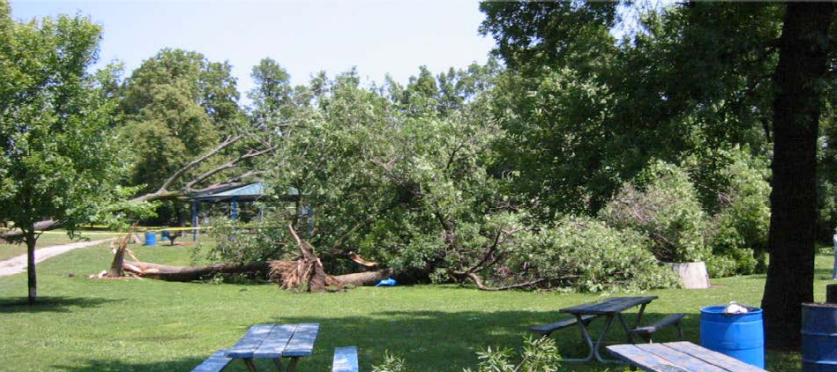 Safety first! Stay clear and look for dangerous hanging limbs, broken branches and other failures before beginning cleanup or inspections. Keep others clear of the areas beneath and around damaged trees. Be alert for power lines that could be involved with damaged trees. All utility lines should be considered energized and dangerous.
Lindsey Purcell, Chapter Administrator & Master Arborist with Indiana Arborist Association, shares, “in my experience, during storm cleanup, many tree owners are faced with the decision of what to do with their trees relative to restoration or removal”. There are several types of tree damage that occur from violent weather. Each has its own specific assessment considerations. All parts of the tree should be inspected during a post-storm assessment. This requires the expertise of trained, professional arborists to assist with the decision making regarding the best course of action. Unfortunately, there are those who take advantage of the situation and overcharge or provide poor advice when it comes to the best decision on their trees. Don’t make any hasty decisions and be sure you are hiring an International Society of Arboriculture (ISA) Certified Arborist, ask for references and proof of insurance in the process. To find an arborist near you, verify credentials and to find more information on trees view video: Find an Arborist, Trees are Good, ISA.
View publication Trees and Storms located in The Education Store, Purdue Extension’s resource center, for more information.
Resources:
Find an Arborist video, Trees are Good-International Society of Arboriculture (ISA)
Caring for storm-damaged trees/How to Acidify Soil in the Yard – In the Grow, Purdue Extension
Moist soil and rotten roots makes it easy for trees to come crashing down – Fox 59 News
Why Is My Tree Dying? – The Education Store
Tree Risk Management – The Education Store
Mechanical Damage to Trees: Mowing and Maintenance Equipment – The Education Store
Trees and Electric Lines – The Education Store
Indiana Prepared (IN-PREPared), Purdue Extension
Lindsey Purcell, Chapter Administrator & Master Arborist
Indiana Arborist Association
The classic and trusted book “Fifty Common Trees of Indiana” by T.E. Shaw was published in 1956 as a user-friendly guide to local species. Nearly 70 years later, the publication has been updated through a joint effort by the Purdue Department of Forestry and Natural Resources, Indiana 4-H, and the Indiana Department of Natural Resources, and reintroduced as “An Introduction to Trees of Indiana.”
The full publication is available for download for $7 in the Purdue Extension Education Store. The field guide helps identify common Indiana woodlot trees. 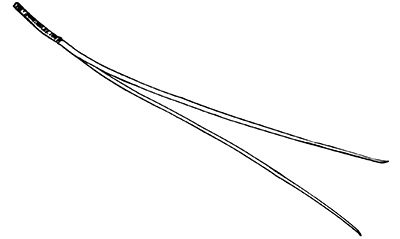
Each week, the Intro to Trees of Indiana web series will offer a sneak peek at one species from the book, paired with an ID That Tree video from Purdue Extension forester Lenny Farlee to help visualize each species as it stands in the woods. Threats to species health as well as also insight into the wood provided by the species, will be provided through additional resources as well as the Hardwoods of the Central Midwest exhibit of the Purdue Arboretum, if available.
This week, we meet the red pine, or Pinus resinosa, which is not native to Indiana, but has been planted widely across the state.
This conifer has clusters of two slender, flexible, green or yellow green needles, which are four to six inches long. If the needles are bent, they will break cleanly, unlike that of ornamentally planted Austrian pine. The long needles cause a very tufted look to the tree canopy.
Bark on the red pine is scaly and red-orange in color in younger trees and platy and reddish brown in older trees. Cones are egg-shaped, approximately two inches long and have smooth scales.
Red pine tends to be very, straight and tall, growing to between 50 and 80 feet tall. This species, which can be as tall as 200 feet, is typically found on sandy, well-drained soils with low pH and full sun. The natural range of the red pine is the northeastern United States and southern Canada near the Great Lakes and St. Lawrence River. The species can be found as far west as Minnesota and into Manitoba. It can be found dipping south into Wisconsin, Illinois, Michigan, West Virginia and Pennsylvania.
For full article with additional photos view: Intro to IN Trees: Red Pine, Forestry and Natural Resources’ News.
If you have any questions regarding wildlife, trees, forest management, wood products, natural resource planning or other natural resource topics, feel free to contact us by using our Ask an Expert web page.
Other Resources:
ID That Tree: Red Pine
Morton Arboretum: Red Pine
Diplodia Tip Blight of Two-Needle Pines, The Education Store, Purdue Extension’s resource center
Borers of Pines and Other Needle Bearing Evergreens in Landscapes, The Education Store
Native Trees of the Midwest, The Education Store
Shrubs and Woody Vines of Indiana and the Midwest, The Education Store
Investing in Indiana Woodlands, The Education Store
Forest Improvement Handbook, The Education Store
Purdue Arboretum Explorer
The Woody Plant Seed Manual, U.S. Forest Service
ID That Tree, Purdue Extension-Forestry & Natural Resources (FNR) YouTube playlist
Woodland Management Moment , Purdue Extension-FNR YouTube playlist
Wendy Mayer, FNR Communications Coordinator
Purdue University Department of Forestry and Natural Resources
Lenny Farlee, Extension Forester
Purdue University Department of Forestry and Natural Resources
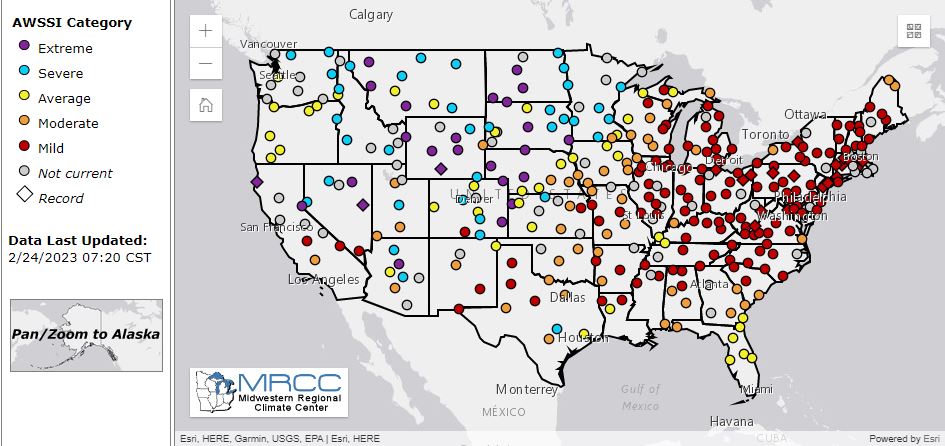
Figure 1. Accumulated Winter Season Severity Index for winter 2022-2023 in the United States from the Midwest Regional Climate Center.
Purdue Landscape Report: Remember the pre-Christmas freeze? What about the extremely long fall? The Midwest experienced above-average temperatures through most of the winter, but those extremely cold temps in late December made for more than a few pipes to freeze in the southern part of the Midwest. The dichotomy in weather patterns over the last several years has been mind-boggling. We’ve gone from flooding to drought in most recent growing seasons, to the extremes in temperatures this winter. Though it’s an inconvenience for us, plants don’t have the option of heated seats or umbrellas, thus stress or death can occur in these extremes.
East of the Mississippi River, the 2022-2023 winter has been significantly milder than average, based on past climate models (Fig. 1). We don’t typically have cold injury in late December, but drastic changes in temperatures can cause pernicious effects on plant health. The entire state of Indiana had the drastic changes in temperature December 22-27, 2022 (Table 1).

Table 1. The high and low temperatures (F) in Evansville, Indianapolis, and Fort Wayne December 22-27, 2022. Data courtesy of the National Weather Service.
There’s on-going evidence of damage across the Midwest from the late/long fall and extreme cold that was experienced in mid-late December. We’ve observed some perennial evergreens, i.e., American holly, Meserve holly (Fig. 2), and skip laurel (Fig. 3), damaged or killed during this winter, especially in the southern parts of the Midwest. In addition, some deciduous trees have significant bark cracking (Fig. 4). Though these plants are hardy well below the temperatures that were experienced, the maximum dormancy wasn’t yet reached by plants due to the warm temperatures so late into the winter season.
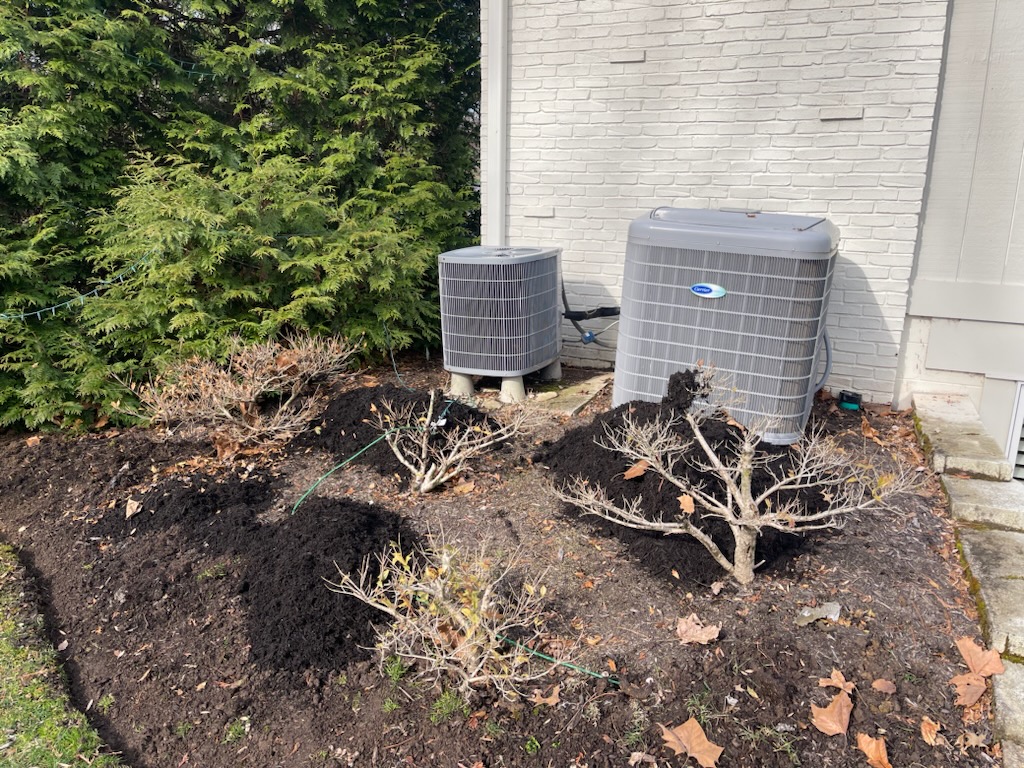
Figure 2. A planting of Meserve hollies died during the winter of 2022-2023 due to cold injury. Photo via Gabriel Gluesenkamp.
There’s on-going evidence of damage across the Midwest from the late/long fall and extreme cold that was experienced in mid-late December. We’ve observed some perennial evergreens, i.e., American holly, Meserve holly (Fig. 2), and skip laurel (Fig. 3), damaged or killed during this winter, especially in the southern parts of the Midwest. In addition, some deciduous trees have significant bark cracking (Fig. 4). Though these plants are hardy well below the temperatures that were experienced, the maximum dormancy wasn’t yet reached by plants due to the warm temperatures so late into the winter season.
Plants survive through the winter by entering a phase of dormancy in which the plant is in a state of suspended animation. The dormancy process in plants is a complicated series of internal events caused by external events, that allow perennial plants to protect themselves during environmental changes, such as winter.
For more images and full article view: Cold Injury During a Very Mild Winter?

Figure 3. Skip laurel death due to cold injury in 2022-2023. Photo via Tom Creswell.
Resources:
The Purdue Landscape Report
Purdue Landscape Report Facebook Page
Fall webworms: Should you manage them, Got Nature? Blog
Purdue Landscape Report Team Begins New Virtual Series, Got Nature? Blog, Purdue Extension – Forestry and Natural Resources (FNR)
Tree wounds and healing, Got Nature? Blog
Shrubs and Woody Vines of Indiana and the Midwest, The Education Store
Tree Risk Management, The Education Store
Why Is My Tree Dying?, The Education Store
ID That Tree, Purdue Extension-Forestry & Natural Resources (FNR) YouTube playlist
Subscribe to Purdue Extension-Forestry & Natural Resources (FNR) YouTube Channel
Kyle Daniel, Commercial Landscape and Nursery Crops Extension Specialist
Purdue Horticulture & Landscape Architecture
The classic and trusted book “Fifty Common Trees of Indiana” by T.E. Shaw was published in 1956 as a user-friendly guide to local species. Nearly 70 years later, the publication has been updated through a joint effort by the Purdue Department of Forestry and Natural Resources, Indiana 4-H, and the Indiana Department of Natural Resources, and reintroduced as “An Introduction to Trees of Indiana.”
The full publication is available for download for $7 in the Purdue Extension Education Store. The field guide helps identify common Indiana woodlot trees.
Each week, the Intro to Trees of Indiana web series will offer a sneak peek at one species from the book, paired with an ID That Tree video from Purdue Extension forester Lenny Farlee to help visualize each species as it stands in the woods. Threats to species health as well as also insight into the wood provided by the species, will be provided through additional resources as well as the Hardwoods of the Central Midwest exhibit of the Purdue Arboretum, if available.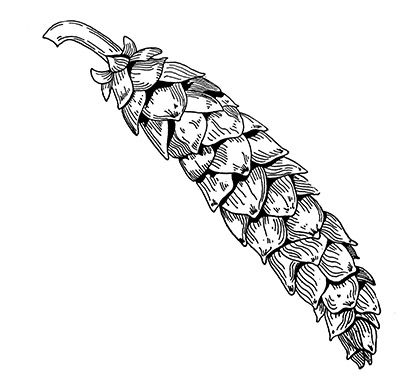
This week, we meet the eastern white pine or Pinus strobus, which historically was one of the tallest trees in the eastern United States.
This conifer is the only five-needled pine native to Indiana, meaning that the bundles of needles coming off the branches in one location, also called fascicles, include five needles per bundle. These needles are typically between two and four inches long and are blue green in color. Needles remain on the tree for two to three years before dropping in the fall.
The bark on younger trees is dark and relatively smooth, and becomes quite furrowed in older trees. The eastern white pine adds a ring of side branches and a terminal shoot yearly with age.
The cones of this species are up to eight inches long, have relatively thin scales and are often covered with quite a bit of white sap or pitch. Cones remain on the tree for two years.
Eastern white pine trees typically grow to between 65 and 100 feet tall, but can exceed 150 feet tall in old growth forests. This species prefers acidic, moist and well-drained soil, but can tolerate alkaline soils. Eastern white pine is native to the central and eastern United States and Canada. Its range extends as far west as Arkansas, Missouri, Iowa and Minnesota in the U.S. and Manitoba in Canada. Its distribution reaches south through the Great Lakes states and in the Appalachian Mountains into northern Georgia as well as east along the Atlantic seaboard.
For full article with additional photos view: Intro to Trees of Indiana: Eastern White Pine, Forestry and Natural Resources’ News.
If you have any questions regarding wildlife, trees, forest management, wood products, natural resource planning or other natural resource topics, feel free to contact us by using our Ask an Expert web page.
Other Resources:
ID That Tree: Eastern White Pine
Morton Arboretum: Eastern White Pine
Tree Diseases: White Pine Decline in Indiana
White Pine and Salt Tolerance
U.S. Forest Service Database – Eastern White Pine
Purdue Arboretum Explorer
The Woody Plant Seed Manual, U.S. Forest Service
Fifty Common Trees of Indiana
An Introduction to Trees of Indiana
Native Trees of the Midwest, The Education Store
Shrubs and Woody Vines of Indiana and the Midwest, The Education Store
Investing in Indiana Woodlands, The Education Store
Forest Improvement Handbook, The Education Store
ID That Tree, Purdue Extension-Forestry & Natural Resources (FNR) YouTube playlist
Woodland Management Moment , Purdue Extension-FNR YouTube playlist
Wendy Mayer, FNR Communications Coordinator
Purdue University Department of Forestry and Natural Resources
Lenny Farlee, Extension Forester
Purdue University Department of Forestry and Natural Resources
In this webinar hosted by Indiana Forestry & Woodland Owners Association, author Doug Tallamy discusses his book “The Nature of Oaks” and how Oaks sustain a complex and fascinating web of wildlife. Doug has also written Bringing Nature Home: How Native Plants Sustain Wildlife in Our Gardens which was awarded the silver metal in 2008 by the Garden Writers Association, Living Landscape, and Nature’s Best Hope. Tallamy has also founded Homegrown National Parks, a grassroots call-to-action to regenerate biodiversity and ecosystem function by planting native plants and creating new ecological networks.
Join IFWOA for their upcoming webinar that will be recorded and placed on their YouTube Channel:
- April 12, 2023 – Magnificent Trees of Indiana
Check out their Indiana Forestry & Woodland Association YouTube Channel for videos including: What is IFWOA?; A New Carbon Program for Hardwood Landowners Webinar, 202 Charles Deam Forest Stewardship Award and much more.
The Indiana Forestry & Woodland Owners Association (IFWOA) was founded in 1977 and is a non-profit organization dedicated to conservation and sustainable management of woodlands in Indiana. IFWOA advocates for scientific best practices for management to achieve objectives of clean water, wildlife habitat, soil protection, native species diversity, timber production, recreation, carbon sequestration and many others.
IFWOA is an affiliate of the National Woodland Owners Association. IFWOA is a partner, collaborator or is represented on leading National and State organizations. These memberships or collaborations are selected to advance Indiana Woodland owner’s interests. IFWOA monitors and influences legislation and economic trends impacting Indiana woodlands and landowners for our members. Membership in IFWOA provides a valuable network linkage to information and resources at the leading edge of science, industry and politics impacting Indiana woodlands.
Resources:
Find an Indiana Professional Forester, Indiana Forestry & Woodland Owners Association (IFWOA)
Purdue Arboretum Explorer
Native Trees of the Midwest, The Education Store
Shrubs and Woody Vines of Indiana and the Midwest, The Education Store
Investing in Indiana Woodlands, The Education Store
Forest Improvement Handbook, The Education Store
ID That Tree, Purdue Extension-Forestry & Natural Resources (FNR) YouTube playlist
Woodland Management Moment , Purdue Extension-FNR YouTube playlist
Diana Evans, Extension and Web Communication Specialist
Purdue University Department of Forestry and Natural Resources
Liz Jackson, Engagement Lead
Indiana Forestry & Woodland Association
The classic and trusted book “Fifty Common Trees of Indiana” by T.E. Shaw was published in 1956 as a user-friendly guide to local species. Nearly 70 years later, the publication has been updated through a joint effort by the Purdue Department of Forestry and Natural Resources, Indiana 4-H, and the Indiana Department of Natural Resources, and reintroduced as “An Introduction to Trees of Indiana.”
The full publication is available for download for $7 in the Purdue Extension Education Store. The field guide helps identify common Indiana woodlot trees. 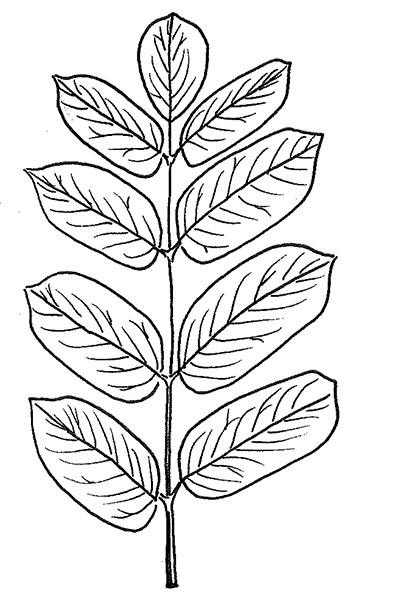
Each week, the Intro to Trees of Indiana web series will offer a sneak peek at one species from the book, paired with an ID That Tree video from Purdue Extension forester Lenny Farlee to help visualize each species as it stands in the woods. Threats to species health as well as also insight into the wood provided by the species, will be provided through additional resources as well as the Hardwoods of the Central Midwest exhibit of the Purdue Arboretum, if available.
This week, we meet Butternut or Juglans cinerea.
Also known as white walnut, this species has slowly disappeared from the landscape due to a fungal disease. Butternut canker can cause large dead spots on the tree and can even girdle the tree and kill it before it can produce fruit.
Butternut has alternately held compound leaves that can be between one and two feet long, resembling a black walnut leaf with pairs of leaflets, but butternut often has a terminal leaflet. The toothed leaflets are green in the summer and yellow in the fall.
The bark is light gray and relatively smooth, but it may become furrowed with age, silver on top and darker between the fissures. Butternut twigs are light tan in color and have an elongated terminal bud. The leaf scar resembles the face of a monkey and it has a “hairy eyebrow” above the leaf scar/below the bud.
The fruit is a lemon-shaped edible nut approximately two inches in diameter with sharp ridges on the nut inside the husk. When they are green, the husk is sticky and clammy to the touch, unlike the smooth, thick skin of its cousin black walnut.
Butternuts, which grow 40 to 60 feet tall, prefer moist, well-drained, loamy soils, found in ravines and coves, but it can also grow on drier, rocky soil, especially that of limestone origin. It is usually scattered in the forest and associated with other species that prefer upland sites.
For full article with additional photos view: Intro to Trees of Indiana: Butternut, Forestry and Natural Resources’ News.
If you have any questions regarding wildlife, trees, forest management, wood products, natural resource planning or other natural resource topics, feel free to contact us by using our Ask an Expert web page.
Other Resources:
ID That Tree: Butternut
Hardwoods of the Central Midwest: Butternut
Hardwood Lumber and Veneer Series: Butternut
Morton Arboretum: Butternut
Identification of Butternuts and Butternut Hybrids, The Education Store
Conservation and Management of Butternut Trees, The Education Store
The Plight of the Butternut
HTIRC Seed Propagation Protocol for Purdue and Hybrid Butternut
Purdue Arboretum Explorer
Butternut, Native Tree of Indiana River Walk, Purdue Fort Wayne
The Woody Plant Seed Manual, U.S. Forest Service
Fifty Common Trees of Indiana
An Introduction to Trees of Indiana
Native Trees of the Midwest, The Education Store
Shrubs and Woody Vines of Indiana and the Midwest, The Education Store
Investing in Indiana Woodlands, The Education Store
Forest Improvement Handbook, The Education Store
ID That Tree, Purdue Extension-Forestry & Natural Resources (FNR) YouTube playlist
Woodland Management Moment , Purdue Extension-FNR YouTube playlist
Wendy Mayer, FNR Communications Coordinator
Purdue University Department of Forestry and Natural Resources
Lenny Farlee, Sustaining Hardwood Extension Specialist
Purdue University Department of Forestry and Natural Resources
 The classic and trusted book “Fifty Common Trees of Indiana” by T.E. Shaw was published in 1956 as a user-friendly guide to local species. Nearly 70 years later, the publication has been updated through a joint effort by the Purdue Department of Forestry and Natural Resources, Indiana 4-H, and the Indiana Department of Natural Resources, and reintroduced as “An Introduction to Trees of Indiana.”
The full publication is available for download for $7 in the Purdue Extension Education Store. The field guide helps identify common Indiana woodlot trees.
Each week, the Intro to Trees of Indiana web series will offer a sneak peek at one species from the book, paired with an ID That Tree video from Purdue Extension forester Lenny Farlee to help visualize each species as it stands in the woods. Threats to species health as well as also insight into the wood provided by the species, will be provided through additional resources as well as the Hardwoods of the Central Midwest exhibit of the Purdue Arboretum, if available.
This week, we meet Black willow or Salix nigra. The black willow is one of several species of willow in Indiana, but it is the only tree-sized willow in the state.
This species has long, narrow leaves with short leaf stems, which are held alternately on slender, flexible twigs. Willows have a single scale covering the bud, which helps differentiate them from other species. The finely toothed leaves are medium green in the spring, changing to yellow-green in the fall.
The bark on young trees is smooth, but may be warty or feature some flaking. In old trees, the bark features prominent, light gray vertical flakes.
Black willows, which grow 50 to 70 feet tall, prefer moist or wet soils and often are found growing along streams or in other wetland areas. This species can tolerate alkaline soil, clay soil, occasional flooding and road salt.
For full article with additional photos view: Intro to Trees of Indiana: Black Willow, Forestry and Natural Resources’ News.
If you have any questions regarding wildlife, trees, forest management, wood products, natural resource planning or other natural resource topics, feel free to contact us by using our Ask an Expert web page.
Other Resources:
ID That Tree: Black willow
Hardwoods of the Central Midwest: Black willow
Hardwood Lumber and Veneer Series: Black willow
Morton Arboretum: Black willow
Purdue Arboretum Explorer
Black Willow, Native Trees of Indiana River Walk, Purdue Fort Wayne
The Woody Plant Seed Manual, U.S. Forest Service
Native Trees of the Midwest, The Education Store
Shrubs and Woody Vines of Indiana and the Midwest, The Education Store
Investing in Indiana Woodlands, The Education Store
Forest Improvement Handbook, The Education Store
ID That Tree, Purdue Extension-Forestry & Natural Resources (FNR) YouTube playlist
Woodland Management Moment , Purdue Extension-FNR YouTube playlist
Fifty Common Trees of Indiana
An Introduction to Trees of Indiana
Wendy Mayer, FNR Communications Coordinator
Purdue University Department of Forestry and Natural Resources
Lenny Farlee, Sustaining Hardwood Extension Specialist
Purdue University Department of Forestry and Natural Resources
The full publication is available for download for $7 in the Purdue Extension Education Store. The field guide helps identify common Indiana woodlot trees.
Each week, the Intro to Trees of Indiana web series will offer a sneak peek at one species from the book, paired with an ID That Tree video from Purdue Extension forester Lenny Farlee to help visualize each species as it stands in the woods. Threats to species health as well as also insight into the wood provided by the species, will be provided through additional resources as well as the Hardwoods of the Central Midwest exhibit of the Purdue Arboretum, if available. 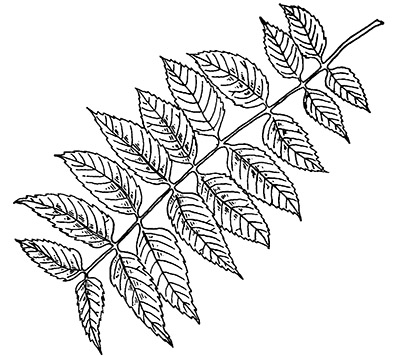
This week, we meet Black walnut or Juglans nigra.
Also known as American black walnut or eastern black walnut, this species has compound leaves with several pairs of leaflets along the individual leaf stems. The leaves, which are arranged alternately on the twigs, can be between one to two feet long. They are green in summer and turn yellow in the fall. The terminal and lateral buds are fuzzy and tan and can resemble suede.
The bark has long, strong running ridges and in older trees can resemble alligator hide. Under the surface of the bark is a dark, chocolate brown color.
Black walnut trees produce nuts, which are ridged and rounded with very heavy shells. Nuts are encased in a thick yellow-green husk, which can leave a dark brown stain on skin. The nut shells require a heavy hammer hit or sharp animal teeth or claws to break open. The nut meat has a very strong aromatic flavor.
Black walnuts, which grow 50 to 75 feet tall, prefer to grow in sunshine and in high quality soils that are deep and well-drained. This species is often found as one of the tallest in the woodlands where they grow. The best quality trees are frequently found on flood free ledges just above stream banks. This species will live on poorer soils, but growth is slow and the wood quality is generally poor.
The natural range of the black walnut is the from the east coast west through the Great Plains. It ranges from Texas and Georgia north to central Minnesota, Wisconsin, Michigan and southern Ontario.
For full article with additional photos view: Intro to Trees of Indiana: Black Walnut, Forestry and Natural Resources’ News.
If you have any questions regarding wildlife, trees, forest management, wood products, natural resource planning or other natural resource topics, feel free to contact us by using our Ask an Expert web page.
Other Resources:
ID That Tree: Black Walnut
Hardwoods of the Central Midwest: Black Walnut
Hardwood Lumber and Veneer Series: Black Walnut
Morton Arboretum: Black walnut
Facts About Black Walnut, The Education Store
Purdue Arboretum Explorer
Black Walnut, Native Trees of Indiana River Walk, Purdue Fort Wayne
The Woody Plant Seed Manual, U.S. Forest Service
Fifty Common Trees of Indiana
An Introduction to Trees of Indiana
Native Trees of the Midwest, The Education Store
Shrubs and Woody Vines of Indiana and the Midwest, The Education Store
Investing in Indiana Woodlands, The Education Store
Forest Improvement Handbook, The Education Store
ID That Tree, Purdue Extension-Forestry & Natural Resources (FNR) YouTube playlist
Woodland Management Moment , Purdue Extension-FNR YouTube playlist
Wendy Mayer, FNR Communications Coordinator
Purdue University Department of Forestry and Natural Resources
Lenny Farlee, Sustaining Hardwood Extension Specialist
Purdue University Department of Forestry and Natural Resources
Tree-of-heaven is native to Asia but has been widely planted in North America and now spreads naturally as a serious invasive tree threat.
In this episode of ID That Tree, Purdue Extension forester Lenny Farlee identifies the invasive tree of heaven, also known as stinking sumac, due to the foul odor that permeates from nearly all parts of the tree. The alternately held compound leaves have teeth at the base of the leaflets on stout stems, while the bark is a medium gray with white wormy marks. This tree spreads through the seeds of its female trees and from suckers off its root system, and it is also the preferred host of an invasive insect, spotted lanternfly, now found in Indiana. Learning to recognize invasive pests a good first step to limiting their spread.
If you have any questions regarding wildlife, trees, forest management, wood products, natural resource planning or other natural resource topics, feel free to contact us by using our Ask an Expert web page.
Resources:
ID That Tree, Playlist, Purdue Extension – Forestry and Natural Resources YouTube Channel (Invasive White Mulberry, Siberian Elm, Tree of Heaven)
Invasive Species Playlist, Playlist, Purdue Extension – FNR YouTube Channel (Asian Bush Honeysuckle, Burning Bush, Callery Pear, Multiflora rose)
A Woodland Management Moment, Playlist, Purdue Extension – FNR YouTube Channel (Against Invasives, Garlic Mustard, Autumn Olive)
Woodland Stewardship for Landowners, Playlist, Purdue Extension – FNR YouTube Channel (Common Buckthorn, Japanese Barberry)
Report Invasive Species, Purdue Invasive Species
The GLEDN Phone App – Great Lakes Early Detection Network
EDDMaps – Early Detection and Distribution Mapping System (Report Invasives)
How long do seeds of the invasive tree, Ailanthus altissima remain viable? (Invasive Tree of Heaven), USDA Forest Service
Indiana Department of Natural Resources: Invasive Species
Indiana Invasive Species Council
Cooperative Invasive Species Management Area (CISMA)
Aquatic Invasive Species, Illinois-Indiana Sea Grant (IISG)
Episode 11 – Exploring the challenges of Invasive Species, Habitat University-Natural Resource University
What are invasive species and why should I care?, Got Nature? Blog, Purdue Extension – FNR
Spotted Lanternfly Feeds on Over 70 Plus Plant Species, Got Nature? Blog, Purdue Extension – FNR
Shrubs and Woody Vines of Indiana and the Midwest, The Education Store, Purdue Extension Resource Center
Native Trees of the Midwest, The Education Store
Investing in Indiana Woodlands, The Education Store
Forest Improvement Handbook, The Education Store
Lenny Farlee, Extension Forester
Hardwood Tree Improvement and Regeneration Center
Purdue Department of Forestry & Natural Resources
The classic and trusted book “Fifty Common Trees of Indiana” by T.E. Shaw was published in 1956 as a user-friendly guide to local species. Nearly 70 years later, the publication has been updated through a joint effort by the Purdue Department of Forestry and Natural Resources, Indiana 4-H, and the Indiana Department of Natural Resources, and reintroduced as “An Introduction to Trees of Indiana.”
The full publication is available for download for $7 in the Purdue Extension Education Store. The field guide helps identify common Indiana woodlot trees.
Each week, the Intro to Trees of Indiana web series will offer a sneak peek at one species from the book, paired with an ID That Tree video from Purdue Extension forester Lenny Farlee to help visualize each species as it stands in the woods. Threats to species health as well as also insight into the wood provided by the species, will be provided through additional resources as well as the Hardwoods of the Central Midwest exhibit of the Purdue Arboretum, if available.
This week, we meet Tulip tree or Liriodendron tulipifera.
The state tree of Indiana, also known as the tulip poplar or yellow poplar, however, is actually more closely related to the magnolia family than the poplar family. It is easily identified by its large, simple tulip shaped leaves held alternately on long leaf stems. The leaves, which feature three lobes, including the top lobe which is widely notched in the middle, turn from glossy green to a golden yellow in the fall.
The bark on young trees is smooth and gray with streaks of white between the ridges, while the bark of older trees is gray-brown and features deep, long running ridges. The trunk is very straight and column-like as it grows toward the sunlight and the tree self-prunes lower branches.
In the spring, the tulip tree produces colorful green and yellow, tulip like flowers with an orange band at the base of each petal, which bloom in May or June, but are often found high up on the tree.
The cone-shaped fruit is a collection of winged seeds that resembles a small, dry pineapple, approximately two-inches in length, which sits upright on the branches.
Tulip trees, which grow 70 to 90 feet tall, are often among the tallest trees in Indiana woodland areas as they are shade intolerant and prefer to grow toward the light. They can often be found in woodlands as large as three to four feet in width on the trunk. Tulip trees prefer acidic, moist, well-drained soil, but can tolerate alkaline soil.
The natural range of the tulip tree is the eastern United States. Its western reach extends from spots in central Louisiana across the eastern edge of Missouri and Illinois up through Indiana and the southern part of Michigan, and reaches eastward across the gulf states and the panhandle of Florida. It can be found throughout much of the Atlantic coast, reaching northward to Pennsylvania, New York and Connecticut.
The Morton Arboretum warns that tulip trees are highly susceptible to ice damage and are marginally hard with weak wood and branch structure.
For full article with additional photos view: Intro to Trees of Indiana: Tulip Tree, Forestry and Natural Resources’ News.
If you have any questions regarding wildlife, trees, forest management, wood products, natural resource planning or other natural resource topics, feel free to contact us by using our Ask an Expert web page.
Other Resources:
ID That Tree: Tulip Tree
Morton Arboretum: Tuliptree
Finishing and Restoring Wood and Structures: Yellow-Poplar Lumber for Exterior Architectural Applications in New Construction and for Historical Restoration, The Education Store
Purdue Arboretum Explorer
Tulip Tree-Native Trees of Indiana Riverwalk, Purdue Fort Wayne
The Woody Plant Seed Manual, U.S. Forest Service
Fifty Common Trees of Indiana
An Introduction to Trees of Indiana
Native Trees of the Midwest, The Education Store
Shrubs and Woody Vines of Indiana and the Midwest, The Education Store
Investing in Indiana Woodlands, The Education Store
Forest Improvement Handbook, The Education Store
ID That Tree, Purdue Extension-Forestry & Natural Resources (FNR) YouTube playlist
Woodland Management Moment , Purdue Extension-FNR YouTube playlist
Wendy Mayer, FNR Communications Coordinator
Purdue University Department of Forestry and Natural Resources
Lenny Farlee, Sustaining Hardwood Extension Specialist
Purdue University Department of Forestry and Natural Resources

Recent Posts
- Tree Silvics and Succession Webinar: A Biological Basis for Management
Posted: January 30, 2026 in Forests and Street Trees, Urban Forestry, Woodlands - Woodsy Owl Edition for Educational Learning, USDA – U.S. Forest Service
Posted: January 21, 2026 in Forestry, Forests and Street Trees, Got Nature for Kids, Urban Forestry, Wildlife - ID That Tree: Trumpet Creeper
Posted: January 20, 2026 in Forests and Street Trees, Urban Forestry, Woodlands - A Woodland Management Moment: Black Walnut in Pine Plantation
Posted: December 19, 2025 in Forestry, Forests and Street Trees, Urban Forestry, Woodlands - A Woodland Management Moment: Butternut Disease and Breeding
Posted: December 1, 2025 in Forestry, Forests and Street Trees, Woodland Management Moment, Woodlands - Why Do Our Trees Go From Green Leaves to Different Colors?
Posted: November 4, 2025 in Forestry, Forests and Street Trees, Urban Forestry, Woodlands - October Is Firewood Month: Protect Indiana’s Forests by Making Smart Choices
Posted: October 13, 2025 in Forestry, Forests and Street Trees, How To, Invasive Insects, Urban Forestry - Help Your Trees Transition Into Autumn, Purdue Landscape Report
Posted: October 7, 2025 in Forests and Street Trees, Urban Forestry, Woodlands - Marssonina Leaf Spot and Blotch of Poplar, Purdue Landscape Report
Posted: October 1, 2025 in Disease, Forests and Street Trees, Urban Forestry, Woodlands - Discover the Rich World of Oaks with Purdue Extension – FNR
Posted: September 26, 2025 in Ask the Expert, Forests and Street Trees, Wildlife, Woodlands
Archives
Categories
- Alert
- Aquaculture/Fish
- Aquatic/Aquaculture Resources
- Ask the Expert
- Christmas Trees
- Community Development
- Disease
- Drought
- Forestry
- Forests and Street Trees
- Gardening
- Got Nature for Kids
- Great Lakes
- How To
- Invasive Animal Species
- Invasive Insects
- Invasive Plant Species
- Land Use
- Natural Resource Planning
- Nature of Teaching
- Plants
- Podcasts
- Ponds
- Publication
- Safety
- Spiders
- Timber Marketing
- Uncategorized
- Urban Forestry
- Webinar
- Wildlife
- Wood Products/Manufacturing
- Woodland Management Moment
- Woodlands