 Purdue University - Extension - Forestry and Natural Resources
Got Nature? Blog
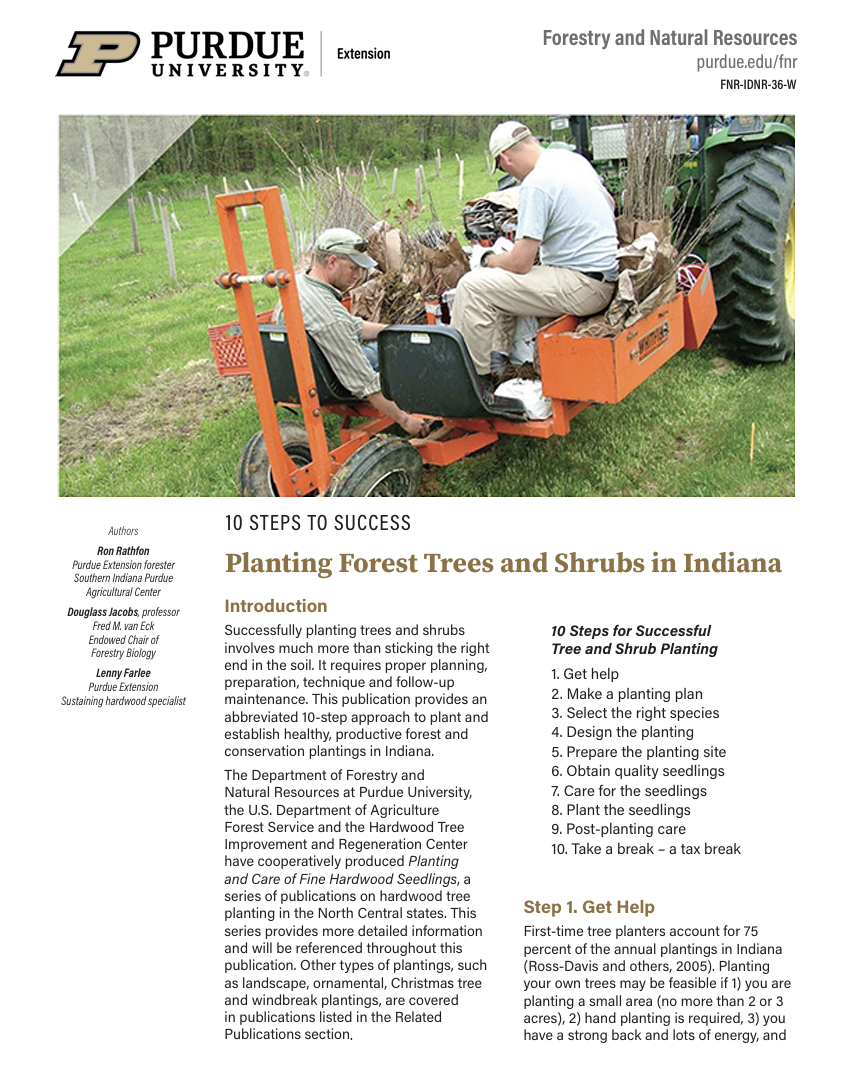 Discover the essential guide for anyone looking to plant forest trees or shrubs in Indiana. Whether you’re a first‑time landowner or an experienced conservationist, Planting Forest Trees and Shrubs in Indiana walks you through the 10 proven steps for establishing healthy, resilient plantings that thrive for generations. From choosing the right species to preparing your site, planting with confidence and ensuring long‑term success, this publication distills expert forestry knowledge into clear, practical advice. Ready to transform your landscape and leave a lasting legacy?
This publication provides an abbreviated 10-step approach to plant and establish healthy, productive forest and conservation plantings in Indiana. Successfully planting trees and shrubs involves much more than sticking the right end in the soil.
To receive the free download, visit the Purdue Extension’s resource center: The Education Store – Planting Forest Trees and Shrubs in Indiana.
Resources:
Control Management of Poison Hemlock, Got Nature? Blog, Purdue Extension – Forestry & Natural Resources (FNR)
Publication: Invasive Plant Series-Tree of Heaven, Got Nature? Blog, Purdue Extension – FNR
Publication – Invasive Plant Series: Swallow-worts, Got Nature? Blog, Purdue Extension – FNR
Question: What is the best management process with cut invasive brush tops?, Got Nature? Blog, Purdue Extension – FNR
Planting Your Tree Part 1: Choosing Your Tree, Purdue Extension YouTube Channel
Tree Pruning Essentials, The Education Store
Tree Pruning Essentials Video, Purdue Extension YouTube Channel
Surface Root Syndrome, The Education Store
District Forester, Indiana Department of Natural Resources, 10+ acres
Directory of Professional Foresters, Indiana Forestry & Woodland Owners Association (IFWOA)
Find an Arborist video, Trees are Good-International Society of Arboriculture (ISA)
Indiana Invasive Species Council
ID That Tree, Playlist, Purdue Extension – FNR YouTube Channel (Invasive White Mulberry, Siberian Elm, Tree of Heaven)
Fifty Common Trees of Indiana
An Introduction to Trees of Indiana
Native Trees of the Midwest, The Education Store
Subscribe – Purdue Extension-FNR YouTube Channel
Ron Rathfon, Regional Extension Forester, Southern Indiana Purdue Agriculture Center (SIPAC)
Purdue Forestry and Natural Resources
Purdue Landscape Report: Spring is just around the corner, green spaces are beginning to wake from their winter slumber, Earth Day and Arbor Day are a little over a month away, and people are ready to get outside with planting on their minds. But before you go and get your tree(s) for planting, there is quite a lot to think about. Every tree is an investment, and if properly cared for, will outlast us and potentially future generations. So, what goes into planting trees, especially large trees?
One important note for successfully planting any tree is thinking about your goals, or what you want out of a new tree. In the case of large trees, the first thing that usually comes to mind is shade. Having a large shade tree to block the sun on your home in hot summers can significantly reduce power consumption from air conditioning. Large shade trees also give us great locations to play, picnic, or relax outside in our backyard, at local playgrounds, or parks. Given the space and care to grow, they can create wonderful local environments and beautiful aesthetics, driving down neighborhoods and city streets. The right species can benefit local wildlife with food production and habitat improvement.
When you know what you want, you can begin to assess your site to see if you have the right space for your future tree. Large trees require larger spaces. If your tree survives to a mature size, will it interfere with anything else around it? Are there utility lines above or below your planting site? What is the proximity to homes, buildings, or other structures? Will it obstruct road signs, lights, or line of sight? Will falling leaves, nuts, or fruits adversely affect anything around the tree? What is the quality of the soil: pH, well-drained, wet, clay, loam, or sand? A poorly assessed planting site could lead to a doomed planting project by placing the wrong tree in the wrong place.
Once you have your goals in mind and know what type of site you have, you can begin to consider what species you may want to plant. A couple of good resources for considering species selection in the Midwest include your local extension offices, reputable nurseries, and online resources like the Morton Arboretum. In the case of large shade trees, we all would like to have our shade now, but trees take time to reach mature heights. That being said, some species grow a little faster than others. Faster-growing trees that grow well in urban settings include:
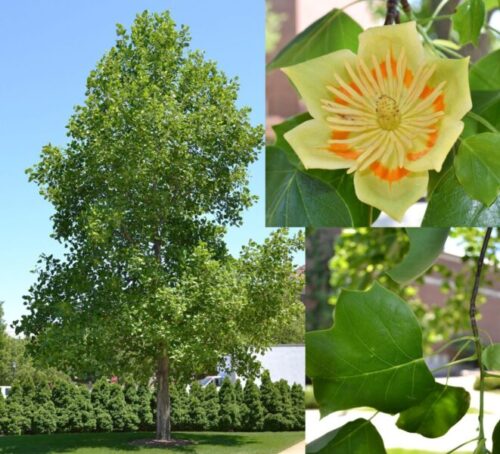
- Tuliptree or tulip-poplar, Liriodendron tulipifera, the state tree of Indiana, can withstand varying light exposure, acidic soil that is moist to well-drained, is moderately sensitive to drought, and can reach heights up to 70-90 feet. It is susceptible to ice damage and has weaker wood than other species.
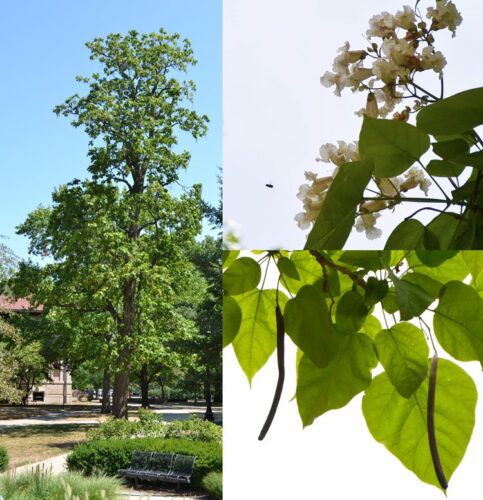
- Northern catalpa, Catalpa speciosa, is slightly smaller at about 60 feet in good conditions, thrives in full sun, and a little more alkaline soil that is moist to well-drained. Large leaves and long bean-like seed pods can be messy, and the wood and structure are on the weaker side.
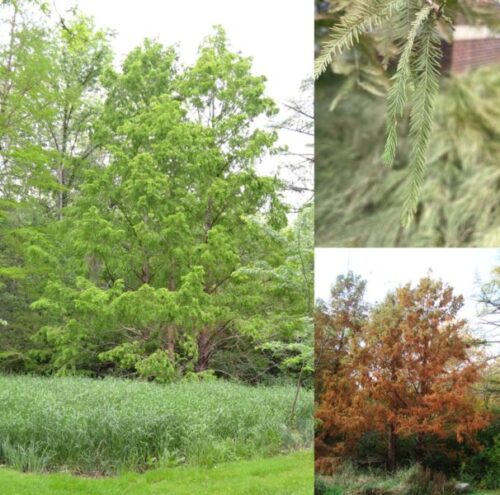
- Dawn redwood, Metasequoia glyptostroboides, is a deciduous conifer (drops its foliage every fall) that can reach heights of 70-100 feet. A non-native tree, it does very well in urban settings without competing with native trees, and can survive full sun in acidic, moist to well-drained soils. It is tolerant of some drought and flooding as well as road salt during the winter.
Next, we have some examples of trees slowing down to moderate growth:
- Silver linden, Tilia tomentosa, another non-native, is a common street tree that can reach heights up to 70 feet. Surviving in full sun to shade, it does well in moist to well-drained soils and is tolerant of some drought, alkaline soils, and road salt. Leaves that are dark green on top and silvery on the bottom, and flowers that can benefit some pollinators.
- Northern red oak, Quercus rubra, is one of my favorite native trees and reaches mature heights up to 75 feet. Preferring acidic, moist to well-drained soils, they can tolerate some drought as well as alkaline soils and clay soils. Leaves are dark green in summer and a beautiful red in the fall, with acorn production and interesting branch structure that benefits native birds and small mammals.
- Bald-cypress, Taxodium distichum, is similar to the dawn redwood. A deciduous conifer that loses its needles after the fall and can grow up to 70 feet. It can survive many soil types, but thrives in acidic, wet soils. In wetter sites, one thing to take into consideration is that it can send up “knee-like” roots well above the soil line to improve structural support and gas exchange. If these appear in lawn situations, they can both damage and be damaged by mowing operations. Extending mulch beds can reduce these negative interactions.
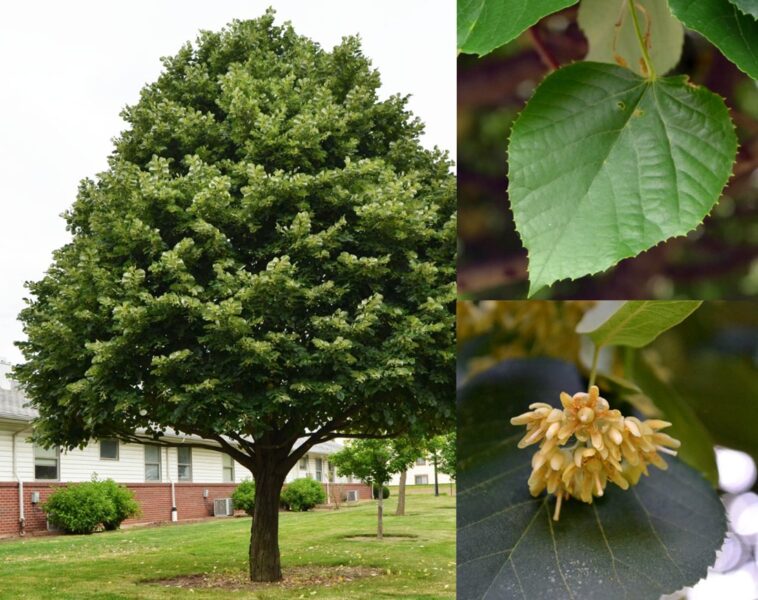
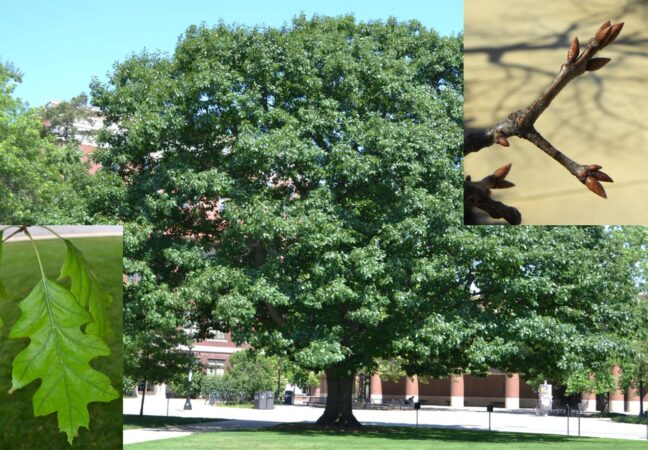
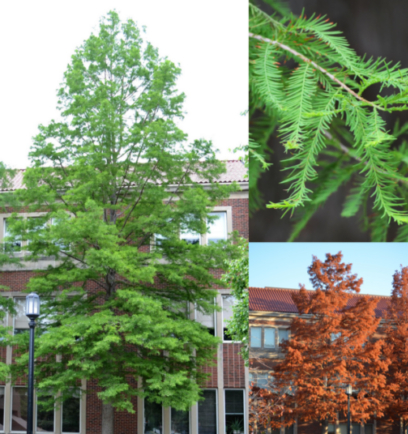
These suggestions are a small sample of large shade trees that can grow well in different urban settings. Remember to think of what the overall goal is for your planting and to assess your site to make informed species choices. With proper forethought, you can make a resilient landscape that your trees will be able to survive in for years and years. If you still have questions, you can contact your local extension office or find an ISA Certified Arborist at Find an ISA-Credentialed Arborist.
Subscribe and receive the newsletter: Purdue Landscape Report Newsletter.
Resources:
Re-mulch Your Trees, Purdue Landscape Report
Find an Arborist video, Trees are Good-International Society of Arboriculture (ISA)
Trees and Storms – The Education Store, Purdue Education’s resource center
Why Is My Tree Dying? – The Education Store
Tree Risk Management – The Education Store
Tree Pruning Essentials, Publication & Video, The Education Store
Trees and Electric Lines – The Education Store
Southwest Damage, Scalding or Frost Cracking, Got Nature? Blog, Purdue Extension – Forestry and Natural Resources (FNR)
Tree Defect Identification, The Education Store
Planting Your Tree, video, Purdue Extension
Tree Installation, The Education Store
Tree Wound and Healing, Got Nature? Blog, Purdue Extension – FNR
Subscribe – Purdue Extension-FNR YouTube Channel
Ben McCallister, Urban Forestry Specialist
Purdue Forestry & Natural Resources
Check out the Purdue Extension – Forestry and Natural Resources YouTube Channel for more videos and webinars covering urban and forestry management, woodlands and wildlife.
Lenny Farlee, Extension Forester
Hardwood Tree Improvement and Regeneration Center
Purdue Department of Forestry & Natural Resources
USDA – U.S. Forest Service: There’s a new resource for teachers and kids in this month’s National Research Digest from USDA Forest Service Research. Read how Woodsy Owl and agency scientists lend a hand and care for the land with a journal for learners of all ages.

Photo from USDA Forest Service
The Woodsy Owl edition examines research on a variety of topics including how climate change affects owls in the Southwest, research on visitors to natural and landscaped areas in urban parks, how scientists identify characteristics of fisher habitats, and how forest planting decisions affect wildlife habitat for certain species. This journal also features sections where Woodsy Owl will share some ways that you can “Lend a Hand” and “Care for the Land.” You and your students can be a part of conserving our natural resources, protecting our environment, and enjoying all that nature has to offer!
This is a valuable educational tool that’s an engaging way for educators to use in teaching, making environmental research accessible to all ages and learning practical ways to make a difference.
Keep up with more research and news by subscribing to the USDA Forest Service National Research Digest.
Resources:
Creating a Wildlife Habitat Management Plan for Landowners, The Education Store, Purdue Extension’s resource center
A Template for Your Wildlife Habitat Management Plan, The Education Store
What a Waste of Food!, lesson plans, The Education Store, Purdue Extension’s resource center
Common Indiana Mammals: Natural History and Identification Sneak Peak Video, Nature of Teaching
Food Waste Lesson Plans, Nature of Teaching
The Nature of Teaching, YouTube channel
Conservation Tree Planting: Steps to Success – webinar, Purdue Extension-Forestry & Natural Resources (FNR) YouTube Channel
Planting Forest Trees and Shrubs in Indiana (pdf), located on The Education Store, Purdue Extension’s resource center
Planting and Care of Fine Hardwood Seedlings (pdf), located on The Education Store, Purdue Extension’s resource center
Managing Woodlands for Birds Video, Purdue Extension-Forestry and Natural Resources (FNR) YouTube Channel
Developing a Wildlife Habitat Management Plan, The Education Store
Subscribe to Purdue Extension-Forestry & Natural Resources YouTube Channel, Wildlife Playlist
Diana Evans, Extension & Web Communications Specialist
Purdue University Department of Forestry and Natural Resources
U.S. Department of Agriculture – Forest Service Research & Development
In this edition of ID That Tree, Purdue Extension Forester Lenny Farlee introduces us to trumpet creeper, a native vine commonly found throughout Indiana. Often noticed climbing trees and other structures, this species plays a visible role in many woodland edges and disturbed sites. Student, landowner or even just simply curious about the plants you see climbing through trees and along roadsides, this video provides a quick and informational introduction to trumpet creeper in Indiana.
If you have any questions regarding wildlife, trees, forest management, wood products, natural resource planning or other natural resource topics, feel free to contact us by using our Ask an Expert web page.
Resources:
ID That Tree – Video Playlist, Purdue Extension – Forestry and Natural Resources (FNR) YouTube Channel
Purdue Arboretum Explorer
Conservation Tree Planting: Steps to Success, Purdue Extension – FNR YouTube Channel
A Woodland Management Moment, Playlist, Purdue Extension – FNR YouTube Channel
Woodland Stewardship for Landowners, Playlist, Purdue Extension – FNR YouTube Channel
Indiana Department of Natural Resources: Invasive Species
Indiana Invasive Species Council
Cooperative Invasive Species Management Area (CISMA)
Report Invasive, Purdue Extension
Fifty Common Trees of Indiana, Purdue Extension – FNR
Habitat University, Episode 12 – Exploring the challenges of Invasive Species, Habitat University-Natural Resource University
Shrubs and Woody Vines of Indiana and the Midwest, Purdue University Press
Native Trees of the Midwest, Purdue University Press
Professional Forester, Indiana Forestry Woodland Owners Association
District Forester, Indiana Department of Natural Resources, 10+ acres
Find an Arborist, International Society of Arboriculture
Forest Improvement Handbook, The Education Store
Lenny Farlee, Extension Forester
Hardwood Tree Improvement and Regeneration Center
Purdue Department of Forestry & Natural Resources
Join Purdue Extension forester Lenny Farlee in this episode of “A Woodland Management Moment” as he discusses the presence of black walnut within a pine plantation. This episode explores how hardwood species like black walnut can become established in planted pine stands and what that means for woodland management decisions. Watch the video to learn about opportunities, challenges and considerations for managing mixed-species woodlands over time.
A good resource to learn more is the Walnut Council website. Founded in 1970, the Walnut Council is an international association representing nearly 700 woodland owners, foresters, forest scientists, and wood-producing industry representatives in 45 states and three foreign countries. The purpose is to assist in the technical transfer of forest research to field applications, help build and maintain better markets for wood products and nut crops, and to promote sustainable forest management, conservation, reforestation, and utilization of American black walnut (Juglans nigra) and other high quality fine hardwoods.
If you have any questions regarding trees, forests, wildlife, wood products, or other natural resource topics, feel free to contact us by using our Ask an Expert web page.
Resources:
A Woodland Management Moment, Playlist, Purdue Extension – Forestry and Natural Resources (FNR) YouTube Channel
The Nature of Oaks Webinar, Purdue Extension-FNR YouTube Channel, Shared from Indiana Forestry & Woodland Owners Association
Conservation Tree Planting: Steps to Success, Purdue Extension – FNR YouTube Channel
Shrubs and Woody Vines of Indiana and the Midwest, Purdue University Press
Native Trees of the Midwest, Purdue University Press
ID That Tree, Playlist, Purdue Extension – FNR YouTube Channel
Investing in Indiana Woodlands, The Education Store
Woodland Stewardship for Landowners Video Series, Playlist, Indiana Department of Natural Resources YouTube Channel
Ask an Expert: Tree Selection and Planting, Purdue Extension – FNR YouTube Channel
Forest Improvement Handbook, The Education Store
Find an Indiana Professional Forester, Indiana Forestry & Woodland Owners Association (IFWOA)
Purdue Arboretum Explorer
Lenny Farlee, Extension Forester
Hardwood Tree Improvement and Regeneration Center
Purdue Department of Forestry & Natural Resources
Join Purdue Extension forester Lenny Farlee in this episode of “A Woodland Management Moment” as he highlights the breeding programs with the native Indiana tree Butternut. This episode introduces viewers to the once frequently found species and why there’s been a notable decline in its population. Watch the video to learn the reason behind butternut’s decline, how we have been trying to combat that with conservation efforts and details about how butternut grows.
If you have any questions regarding trees, forests, wildlife, wood products, or other natural resource topics, feel free to contact us by using our Ask an Expert web page.
Resources:
ID That Tree: Butternut
Hardwoods of the Central Midwest: Butternut
Hardwood Lumber and Veneer Series: Butternut, The Education Store
Morton Arboretum: Butternut
Identification of Butternuts and Butternut Hybrids, The Education Store
Conservation and Management of Butternut Trees, The Education Store
The Plight of the Butternut
HTIRC Seed Propagation Protocol for Purdue and Hybrid Butternut
Purdue Arboretum Explorer
Butternut, Native Tree of Indiana River Walk, Purdue Fort Wayne
The Woody Plant Seed Manual, U.S. Forest Service
A Woodland Management Moment, Playlist, Purdue Extension – Forestry and Natural Resources (FNR) YouTube Channel
Conservation Tree Planting: Steps to Success, Purdue Extension – FNR YouTube Channel
Shrubs and Woody Vines of Indiana and the Midwest, Purdue University Press
Native Trees of the Midwest, Purdue University Press
ID That Tree, Playlist, Purdue Extension – FNR YouTube Channel
Investing in Indiana Woodlands, The Education Store
Woodland Stewardship for Landowners Video Series, Playlist, Indiana Department of Natural Resources YouTube Channel
Ask an Expert: Tree Selection and Planting, Purdue Extension – FNR YouTube Channel
Forest Improvement Handbook, The Education Store
Find an Indiana Professional Forester, Indiana Forestry & Woodland Owners Association (IFWOA)
Purdue Arboretum Explorer
Lenny Farlee, Extension Forester
Hardwood Tree Improvement and Regeneration Center
Purdue Department of Forestry & Natural Resources
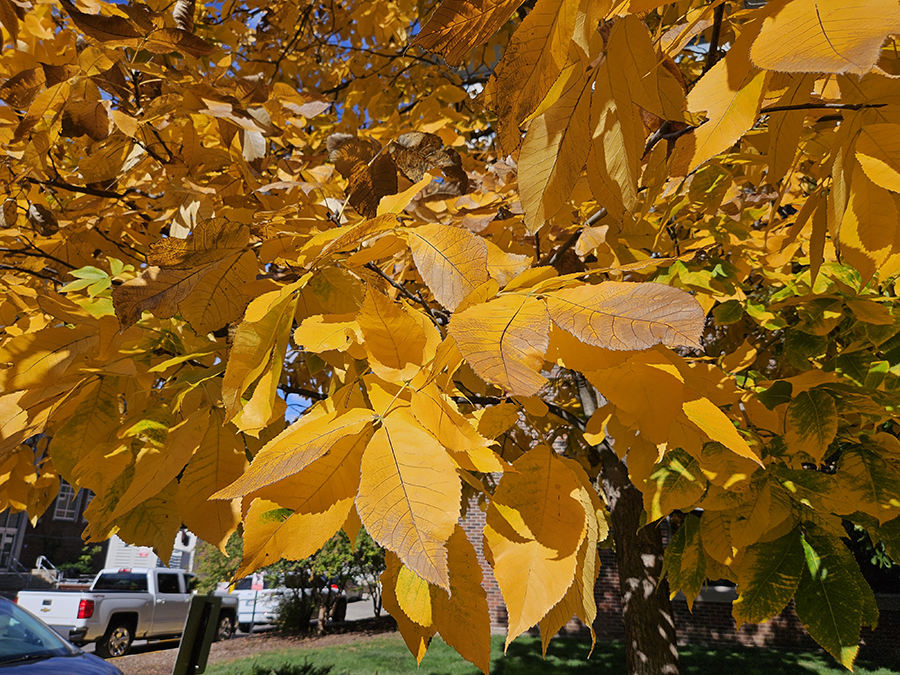
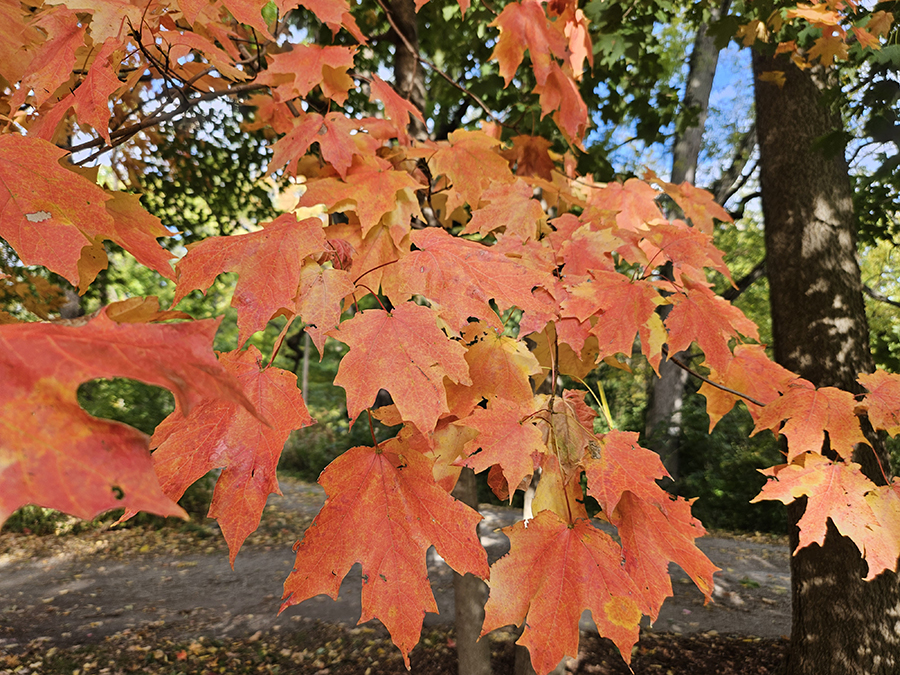
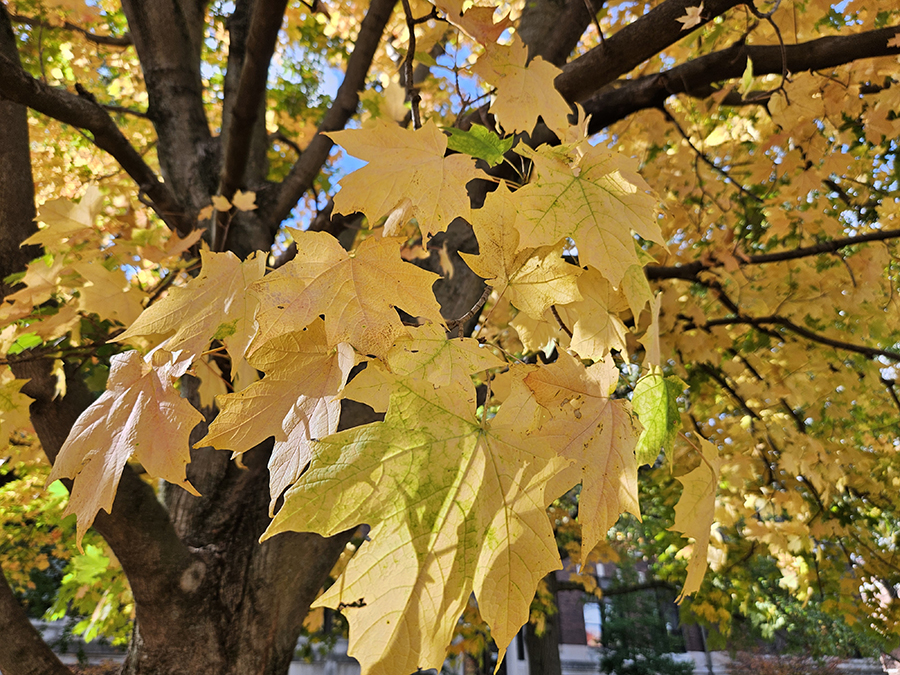
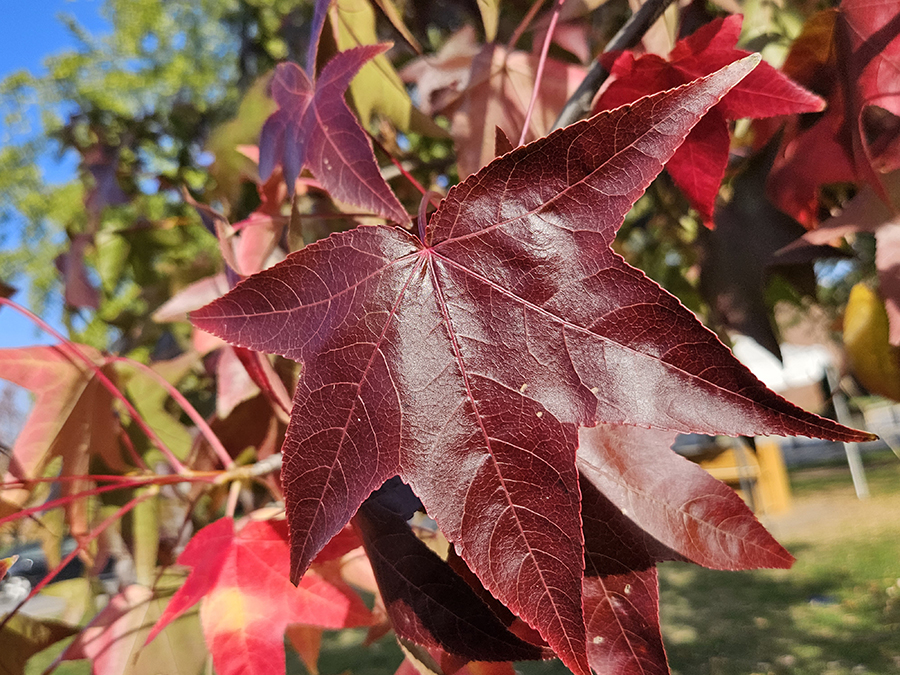
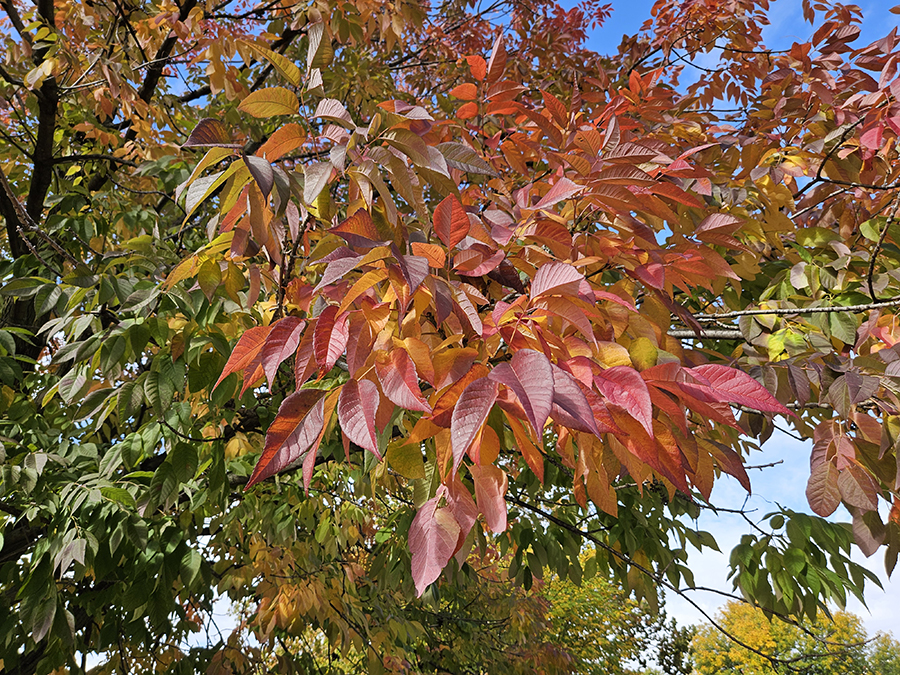
Several things come into play when it comes to determining the colors that we find on leaves of our trees. As our days get shorter and our nights get longer there is a chemical change that happens in the tree. In this video Lenny Farlee talks about the several pigments that are found in trees and what changes from summer to fall that brings us the bright colors on leaves.
Explore IndyStar Story Behind Our Fall Colors
For more on what determines the specific colors our leaves turn and how weather and other factors influence the fall display check out this recent IndyStar article: What determines what color leaves turn in the fall? The story features insights from Lenny Farlee, Purdue Extension forester, who shares his expertise on the science and beauty behind Indiana’s fall foliage.
Fall Foliage by Tree Species (click on the image to expand)


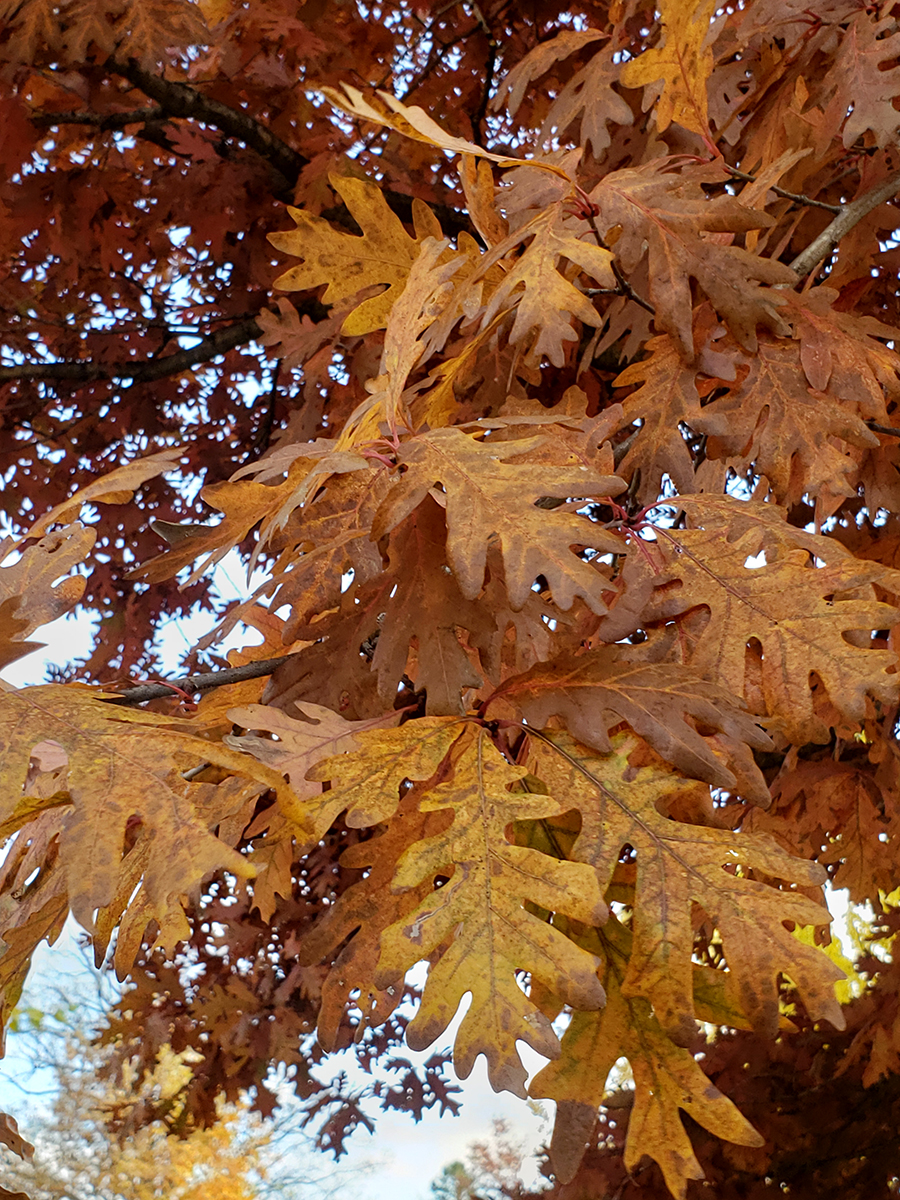

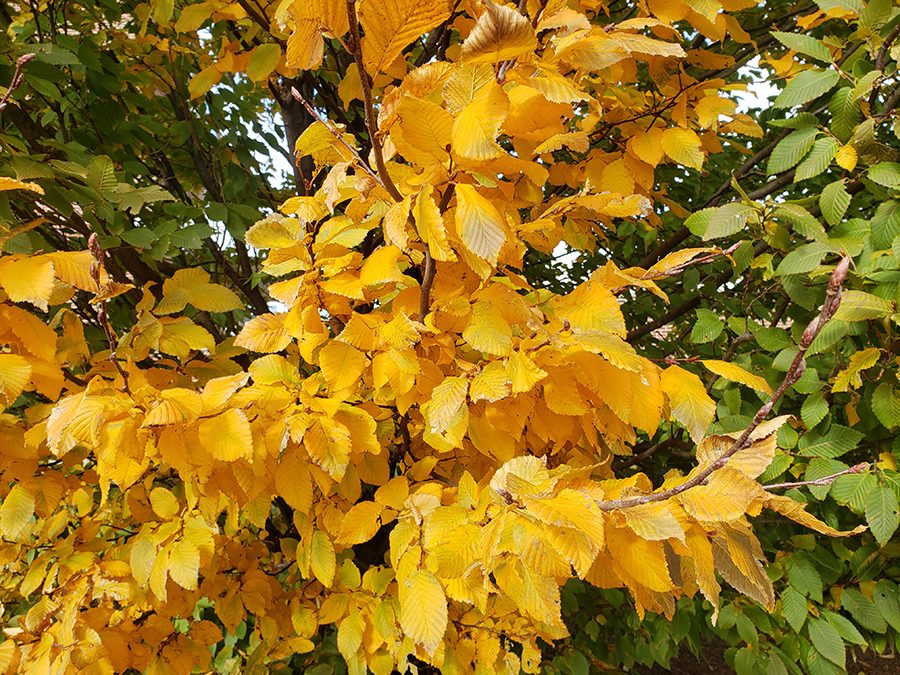
Resources:
Indiana Fall Foliage Map, Explore Fall
Why Fall Color is Sometimes a Dud, Purdue Landscape Report
U.S. Forest Service Website and Hotline, Highlight Fall Colors on National Forests
ID That Tree Fall Color: Sugar Maple, Purdue Extension – Forestry and Natural Resources YouTube Channel, ID That Tree Playlist
ID That Tree Fall Color Edition: Black Gum, Purdue Extension – FNR YouTube Channel, ID That Tree Playlist
ID That Tree Fall Color Edition: Shagbark Hickory, Purdue Extension – FNR YouTube Channel, ID That Tree Playlist
ID That Tree Fall Color Edition: Virginia Creeper, Purdue Extension – FNR YouTube Channel, ID That Tree Playlist
ID That Tree Fall Color Edition: Winged Sumac, Purdue Extension – FNR YouTube Channel, ID That Tree Playlist
Autumn Highlights Tour – South Campus, Purdue Arboretum Explorer
Why Leaves Change Color – the Physiological Basis, The Education Store, Purdue Extension resource center
ID That Tree, Playlist, Subscribe to Purdue Extension – Forestry and Natural Resources YouTube Channel
Lenny Farlee, Extension Forester
Purdue University Department of Forestry and Natural Resources
Hardwood Tree Improvement & Regeneration Center (HTIRC)
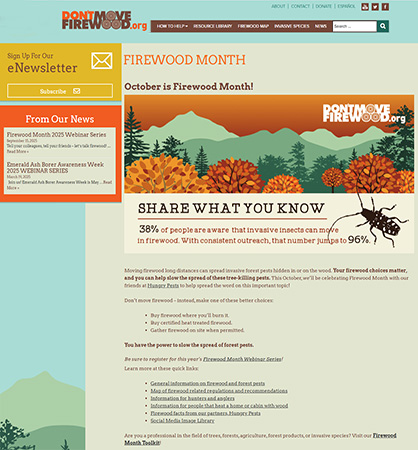
As the crisp autumn air settles in and campfires become a seasonal staple, October brings an important reminder: your firewood choices matter. That’s why October is officially Firewood Month, a nationwide campaign to raise awareness about the risks of moving firewood and the spread of invasive forest pests.
 Why “Don’t Move Firewood” Matters
Transporting firewood, even just a few miles, can unintentionally spread destructive pests like emerald ash borer, Asian longhorned beetle and spongy moth. These invaders often hide inside or on firewood, threatening Indiana’s forests, parks and urban trees.
The Don’t Move Firewood website offers excellent resources to help you make informed choices. Whether you’re heating a cabin, heading out to hunt, or planning a backyard bonfire, they recommend:
- Buying firewood where you’ll burn it
- Choosing certified heat-treated wood
- Gathering wood on-site when permitted
You can also explore their Firewood Month Toolkit, maps of regulations and a webinar series designed for professionals and outdoor enthusiasts alike.
While October is Firewood Month, the risk of spreading invasive pests lasts well beyond the fall. Many forest pests remain a threat throughout the year. Adults may still be visible until the first hard freeze, and egg masses can be observed from now through June. The spotted lanternfly females lay egg masses in late summer through early winter, often peaking in October. These masses can survive through winter and hatch in the spring. Learn more about the Spotted Lanternfly from the Indiana Department of Natural Resources. This is why it’s important to practice safe firewood habits year-round.
Spotlight on ReportINvasive
Check out the latest post on the ReportINvasive Facebook which reinforces the importance of Firewood Month. ReportINvasive is a trusted source for updates on invasive species in Indiana, and their social media outreach is a great way to stay informed and engaged. Give the Facebook page a LIKE and FOLLOW for future webinars and workshops.
Concerned About Insects? Purdue Extension Entomology Can Help
 If you suspect insect damage or want to learn more about forest pests, the Purdue Extension Entomology team is an outstanding resource. Their experts provide science-based guidance on insect identification, management strategies, and outreach materials to help protect Indiana’s ecosystems.
Let’s work together to keep Indiana’s forests healthy and resilient. This October, make the smart choice—don’t move firewood!
More Resources
Spotted Lanternfly – including map sharing locations, Indiana Department of Natural Resources
October is Firewood Awareness Month!, Purdue Landscape Report
Indiana Department of Natural Resources: Invasive Species
Indiana Invasive Species Council
Cooperative Invasive Species Management Area (CISMA)
Aquatic Invasive Species, Illinois-Indiana Sea Grant (IISG)
Emerald Ash Borer Information Network, Purdue University and Partners
Invasive plants: impact on environment and people, The Education Store, Purdue Extension’s resource center
Entomology Weekly Review, Indiana Department of Natural Resources, Division of Entomology & Plant Pathology
Division of Entomology & Plant Pathology, Indiana Department of Natural Resources
Diana Evans, Extension and Web Communication Specialist
Purdue University Department of Forestry and Natural Resources
Purdue Landscape Report: It’s finally October, and we should be enjoying lovely fall temps and colors. While some of the trees are changing, it’s not necessarily due to the change in seasons. As I write this, the temperature is 84 F (29 C). I look out my window and see mostly green leaves with some colors from the short cold snap we had and some from heat and drought stress. Whether you are worried about the trees in your yard and community or not, there are some simple tasks that we can do to assist them as we await the cooler temperatures of Autumn.

A 3 foot radius mulch ring around a medium sized tree (Purdue Landscape Report)
Mulching: One simple task to better prepare your trees for winter is to add a new layer of mulch, which benefits your trees in multiple ways. Adding a 2-3 inch thick layer of mulch will better maintain moisture levels and buffer extreme temperature changes in the soil and will add some organic matter too. Mulching to the drip line will benefit the tree the most, but in the case of larger trees it’s not always feasible. Try for at least a 3-foot radius from the trunk and make sure to leave a 2 inch or so gap between the trunk and the mulch. Remember, no volcano mulching.
Fertilizing: That mulch you just added will add some organic material to your soil as it slowly breaks down, but an autumn fertilization can benefit your trees too. Unlike trees in the forest that have a natural supply of nutrients from fallen leaves and twigs, trees around our homes are usually deprived as we rake and clean up our yards. Adding a slow-release fertilizer in the fall helps provide a nutrient boost over the winter, can promote root growth, and better prepare your tree for Spring.
Watering: Water is still an essential part of your tree care plan, but as temperatures drop and trees begin to head into dormancy they don’t need as much water as is required in the hit summer months. If you have irrigation systems in your yard start to drop the frequency of watering. You can water up until the first freeze, but make sure soils are just a little damp and not soaked. Evergreens in particular will benefit from slow deep watering 1-2 times a week until the soil freezes. Winter winds and temperatures can desiccate the needles without an adequate supply of water.
Pruning: Now is a good time to prune out any dead, damaged, or diseased limbs in your trees. If you have access to hand saws and pole saws or pruners, you can remove smaller branches or those closer to the ground. Make sure you are making proper pruning cuts though, and if there are large limbs, those at heights, or you are just unsure of how to make a good cut enlist the help of a professional arborist.

Use of white tree guards can protect the trunk from temperature changes that cause damage (Joseph O’Brien, USDA Forest Service)
Trunk Damage: Sunscald or southwest damage occurs on young and/or thin barked trees in the winter. Wounds can occur between the south to southwest facing part of the trunk on sunny days in the winter as temperatures rise and suddenly drop. Over time these wounds can become quite large. Trees can also incur damage from deer during the rut. Bucks will scrape trees with their antlers, scraping off the bark and damaging the cambium. Both of these injuries can be reduced one younger trees by installing tree guards in the fall. Tree guards are plastic barriers you place around the main stem of the tree. I recommend using white corrugated drainage pipe that can be found at most home centers. You can make a cut lengthwise along the pipe for easy installation and make sure it has a large enough diameter to leave a space between it and the tree. Just remember to remove it come Spring.
Inspections: Visual inspections can be done year-round, but this time of the year it might be easier to see changes in your tree as leaves are falling and the canopy becomes more visible. From the ground up to the canopy, some of the things you’re looking for include fungal growth around the base of the tree, any sort of damage on the main stem or branches, premature leaf drop or color change, and branches that are dead, cracked, diseased, or seem weak. Any concerns you find are also great information to share with an ISA Certified arborist which can be found using the Trees Are Good website.
View the original article on the Purdue Landscape Report website: Help Your Trees Transition into Autumn.
Subscribe and receive the newsletter: Purdue Landscape Report Newsletter.
Resources:
Re-mulch Your Trees, Purdue Landscape Report
Find an Arborist video, Trees are Good-International Society of Arboriculture (ISA)
Trees and Storms – The Education Store, Purdue Education’s resource center
Moist soil and rotten roots makes it easy for trees to come crashing down – Fox 59 News
Expert: Some storm damage can be easily prevented – Fox 59
Why Is My Tree Dying? – The Education Store
Tree Risk Management – The Education Store
Tree Pruning Essentials, Publication & Video, The Education Store
Mechanical Damage to Trees: Mowing and Maintenance Equipment – The Education Store
Trees and Electric Lines – The Education Store
Tree Defect Identification, The Education Store
Planting Your Tree, video, Purdue Extension
Tree Installation, The Education Store
Tree Wound and Healing, Got Nature? Blog, Purdue Extension – Forestry and Natural Resources
Subscribe – Purdue Extension-FNR YouTube Channel
Ben McCallister, Urban Forestry Specialist
Purdue Forestry & Natural Resources

Recent Posts
- Publication – Planting Forest Trees and Shrubs in Indiana
Posted: April 8, 2026 in Forests and Street Trees, Urban Forestry, Wildlife, Woodlands - Urban Tree Spotlight: Planting Deciduous Shade Trees, Purdue Landscape Report
Posted: March 25, 2026 in Forests and Street Trees, Urban Forestry, Woodlands - Tree Silvics and Succession Webinar: A Biological Basis for Management
Posted: January 30, 2026 in Forests and Street Trees, Urban Forestry, Woodlands - Woodsy Owl Edition for Educational Learning, USDA – U.S. Forest Service
Posted: January 21, 2026 in Forestry, Forests and Street Trees, Got Nature for Kids, Urban Forestry, Wildlife - ID That Tree: Trumpet Creeper
Posted: January 20, 2026 in Forests and Street Trees, Urban Forestry, Woodlands - A Woodland Management Moment: Black Walnut in Pine Plantation
Posted: December 19, 2025 in Forestry, Forests and Street Trees, Urban Forestry, Woodlands - A Woodland Management Moment: Butternut Disease and Breeding
Posted: December 1, 2025 in Forestry, Forests and Street Trees, Woodland Management Moment, Woodlands - Why Do Our Trees Go From Green Leaves to Different Colors?
Posted: November 4, 2025 in Forestry, Forests and Street Trees, Urban Forestry, Woodlands - October Is Firewood Month: Protect Indiana’s Forests by Making Smart Choices
Posted: October 13, 2025 in Forestry, Forests and Street Trees, How To, Invasive Insects, Urban Forestry - Help Your Trees Transition Into Autumn, Purdue Landscape Report
Posted: October 7, 2025 in Forests and Street Trees, Urban Forestry, Woodlands
Archives
Categories
- Alert
- Aquaculture/Fish
- Aquatic/Aquaculture Resources
- Ask the Expert
- Christmas Trees
- Community Development
- Disease
- Drought
- Forestry
- Forests and Street Trees
- Gardening
- Got Nature for Kids
- Great Lakes
- How To
- Invasive Animal Species
- Invasive Insects
- Invasive Plant Species
- Land Use
- Natural Resource Planning
- Nature of Teaching
- Plants
- Podcasts
- Ponds
- Publication
- Safety
- Spiders
- Timber Marketing
- Uncategorized
- Urban Forestry
- Webinar
- Wildlife
- Wood Products/Manufacturing
- Woodland Management Moment
- Woodlands