 Purdue University - Extension - Forestry and Natural Resources
Got Nature? Blog
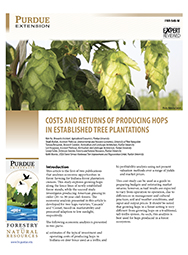 Rapid growth in the craft brewing industry has created an opportunity for Hoosier farmers to start growing hops. Hops are the female flowers (also called cones) from the hop plant (Humulus lupulus). This high-value, perennial crop is used to flavor and stabilize beer. Now available in a free download is a new publication with a study focusing on growing hops along the fence lines of newly established forest stands. This publication titled Costs and Returns of Producing Hops in Established Tree Plantations is the first of two publications that analyzes the economic opportunities in forest farming for Indiana forest plantation owners. The economic analysis presented in this article is developed for two hops varieties, ‘Cascade’ and ‘Comet’, based on marketability and presumed adaption to low sunlight, respectively.
Additional Resources:
Costs and Returns of Producing Wild-Simulated Ginseng in Established Tree Plantations, The Education Store, Purdue Extension’s resource center
Forest Improvement Handbook, The Education Store
The Nature of Teaching, Lesson Plans K-12, Purdue Extension
Hardwood Ecosystem Experiment – Sustaining Our Oak-Hickory Forests, The Education Store
Tree Pruning: What Do Trees Think?, The Education Store
Kim Ha, Research Assistant
Purdue Agricultural Economics
Other contributing authors: Dr. Shadi Atallah, Tamara Benjamin, Dr. Lori Hoagland, Lenny Farlee and Dr. Keith Woeste.
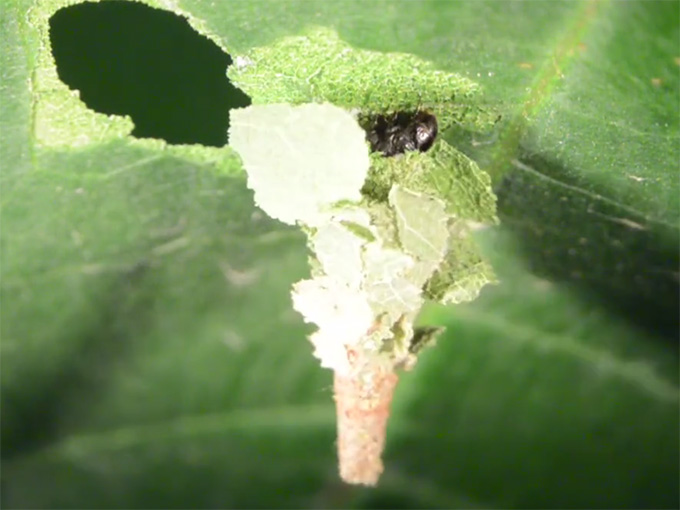 The evergreen bagworm, as its name implies, is well known for its ability to defoliate evergreen trees and shrubs like spruce, arborvitae, fir, junipers and pine. When given a chance, it will also feed on deciduous trees like maples, honeylocust, and crabapples. In late May and early June bagworms hatch from eggs that overwinter in the bag of their mother. When young bagworms begin feeding on broadleaved plants the caterpillars are too small to feed all the way through, so they leave circular patterns of skeletonization. Bagworms can be easily controlled with a spray application of spinosad (Conserve, or Fertilome borer and bagworm killer), or Bacillus thuringiensis (Dipel). More control options are available on the Purdue Tree Doctor App, purdueplantdoctor.com.
View this video located on the Purdue Plant Doctor App Suite Facebook page to watch a young bagworm caterpillar poke its head out of its silken bag to feed on a maple leaf. The young caterpillar scrapes the leaf surface to feed, and cuts bits of green tissue and glues it on its back. At the end of the video it sticks out its legs and flips the entire bag over to hide from the lights.
Resources:
Purdue Plant Doctor App Suite, Purdue Extension-Entomology
Landscape & Ornamentals: Bagworms, The Education Store
Upcoming Workshops, Purdue Extension-Forestry & Natural Resources
Ask An Expert, Purdue Extension-Forestry & Natural Resources
FNR contacts:
Lindsey Purcell, Urban Forestry Specialist
Purdue University, Department of Forestry and Natural Resources
Lenny D Farlee, Sustaining Hardwood Extension Specialist
Purdue University Department of Forestry and Natural Resources
Author:
Cliff Sadof, Professor
Purdue University Department of Entomology
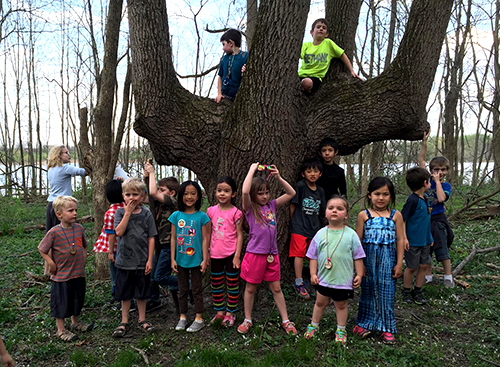
Students in Forestry and Natural Resources (FNR) continue to volunteer for Hands of the Future, Inc., a non-profit program whose mission is to help educate children about the outdoors and natural resources. As this program continues to grow, one of their dreams has been to find woods to create a children’s forest. To have a natural site that has been embellished upon with children’s needs in mind and to encourage outdoor play and adventures.
The students plan on transforming 18.8 acres of idle woods into Zonda’s Children’s Forest. The children’s forest will be composed of six main areas:
- A children’s garden, equipped with a greenhouse and kitchen, that’ll allow children to learn how to properly grow and cook food.
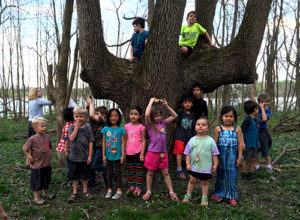
- An enclosed area dedicated to allowing children having fun and safe adventures.
- A viewing area for butterflies, birds and other organisms of the wild, allowing children to easily enjoy the life of the forest.
- A maze designed by sunflowers, where children can have fun and do problem-solving, while close to nature.
- A walk dedicated to viewing the owls and other organisms composing the forest.
- Another enclosed area of the woods for adventures; However, it’ll also contain tree houses, bridges and other fun additions for the children.
Donations:
Donations to help make Zonda’s Children’s Forest a reality can be made here. They have six months to raise $235,000 in order to purchase the woods.
Volunteers & Interns:
Older students and adults can apply to be a volunteer. Volunteers are always appreciated, no past experience necessary. If you love nature and kids you will enjoy this program. Internships are available for college students, contact Zonda Bryant.
Resources:
Family Nature Clubs in Indiana – Indiana Children and Nature Network
Zonda Bryant, Director
765.366.9126
director@hands-future.org
Check out the new publication entitled Benefits of Connecting with Nature now available in The Education Store!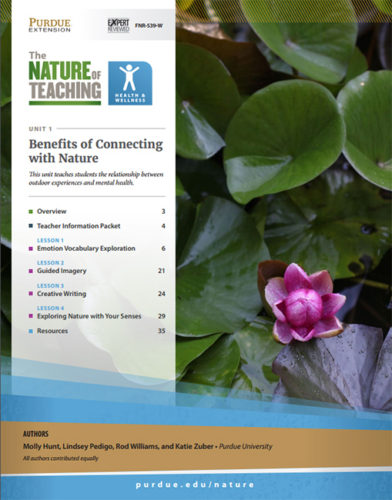
Times are constantly changing with the growth and integration of technology within society. As we become more and more reliant on technology for information and entertainment, we seem to be detached from many vital aspects of our world. People, especially children, are losing their touch with the outdoors. Recent reports show that children ages 6–11 spend an average of 28 hours per week watching television. The average amount of time children spent using mobile devices tripled between 2011–2013.
Natural environments have positive impacts on people’s mental health and well-being. Studies consistently show that natural settings link to much stronger developmental benefits for children.
This unit will help teachers explore student’s relationship between nature and mental health. It contains four 30-40 minutes activities: Emotion Vocabulary Exploration, Guided Imagery, Creative Writing and Exploring Nature with your Senses.
Resources:
The Nature of Teaching – Purdue Extension
Appreciating Reptiles and Amphibians in Nature –The Education Store
Frogs and Toads of Indiana – The Education Store
Molly Hunt, Extension Educator, Delaware County
Purdue University Extension Health and Human Sciences
Katie Zuber, Extension Educator, Lawrence, Jackson, Monroe and Brown County
Purdue University Extension Health and Human Sciences
Lindsey Pedigo, Extension Educator, Howard County
Purdue University Extension Health and Human Sciences
Rod N Williams, Associate Head of Extension & Associate Professor of Wildlife Science
Purdue University Department of Forestry and Natural Resources
In Tennessee, magnolia and the highly invasive ornamental pear trees are in full bloom. In New Jersey, crocuses and buttercups are vibrant spectacles of color. Here in Indiana, flowering dogwood, pawpaw, and red oak have responded to an early spring with a burst of blooms as well. This vibrant display is the result of a mild winter. Unfortunately, there is a downside. A sudden cold freeze after this swathe of warm weather could severely damage blossoms, buds, and significantly reduce yields in fruit and nut trees.
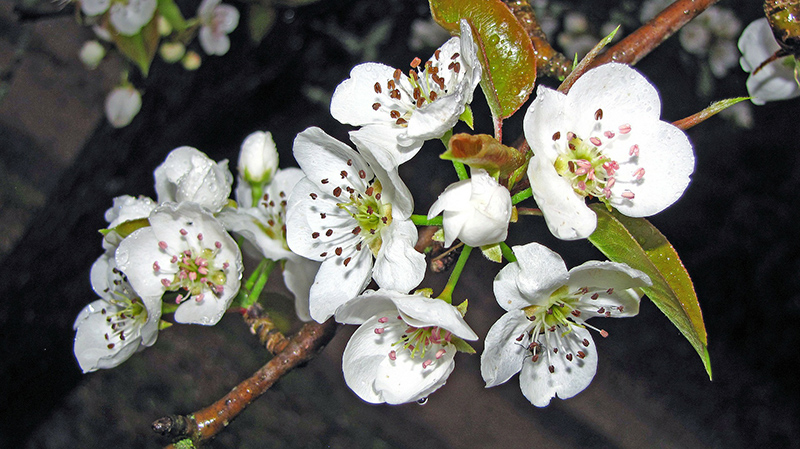
Blooms on pear tree.
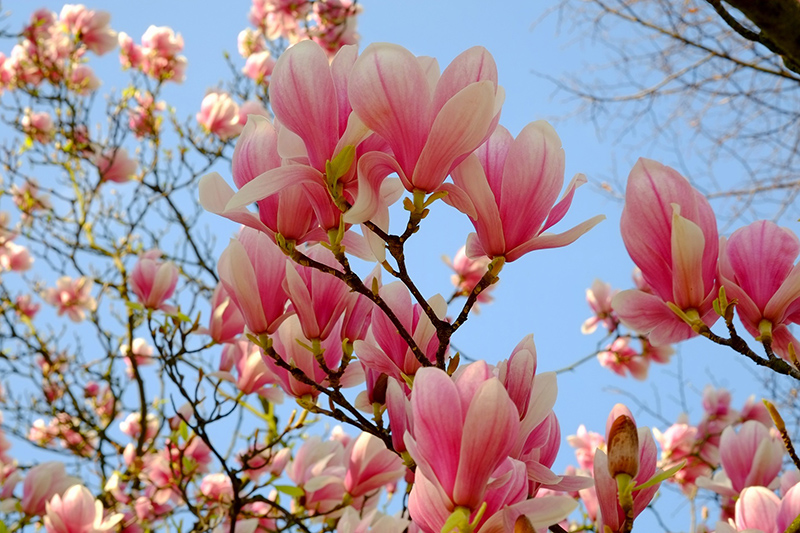
Blooms on magnolia tree.
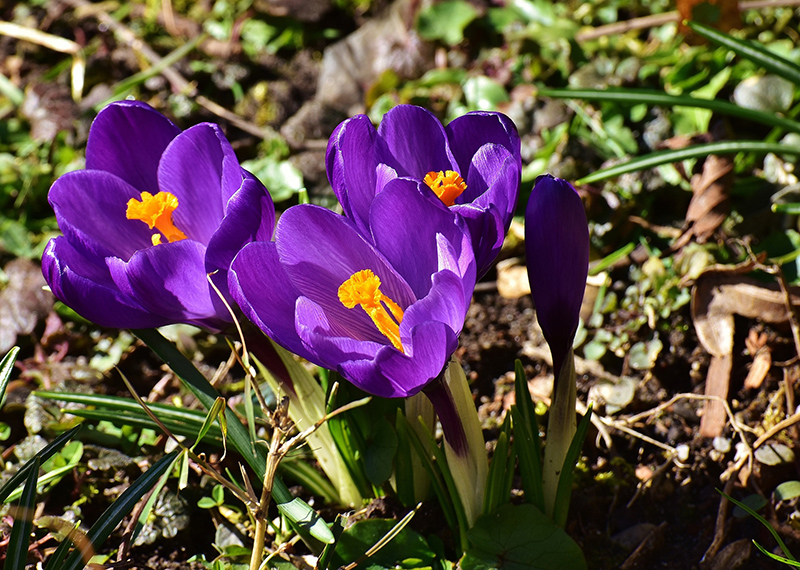
Crocus blooms.
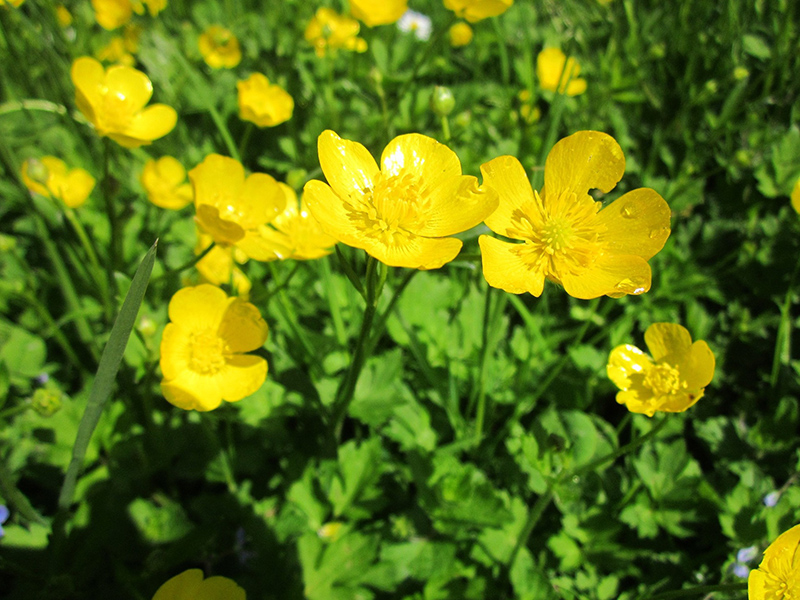
Buttercup blooms.
Growth of a tree or flower is the result of the weather and the perpetuation of its natural growth cycle. To store sufficient resources for the following year, trees use the winter season as an opportunity to shuttle nutrients to their roots. With cold temperatures keeping pests at bay, fewer nutrient resources are needed for defense and maintenance. These nutrients will be shuttled to the branches the following spring to support the growth of buds and blossoms. Interruption in the storage process caused by early spring conditions interferes with nutrient supplies and kickstarts the growing cycle again.
Nutrients once slated for root storage are now being sent to the branches to begin fruit and bud production despite having fewer resources in storage than usual. A freeze that occurs after leaves and buds begin to appear will damage the new growth and likely delay flowering and fruiting until much later in the year when surfeit energy is available to support a second growth effort. While trees are usually able to leaf out a second time, there are often more issues with low yield and early leaf drop.
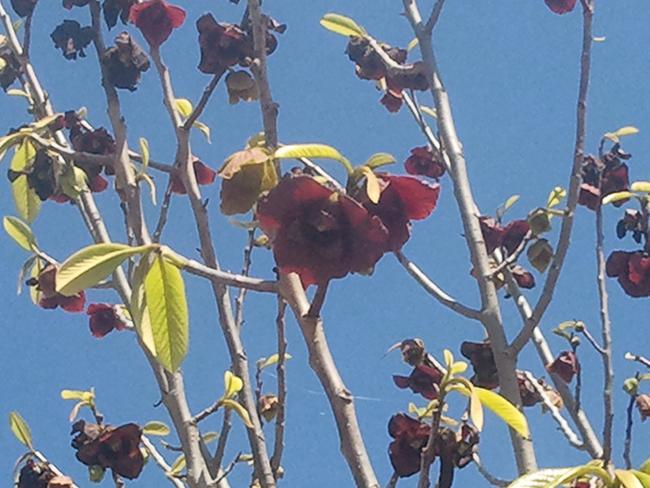
Pawpaw
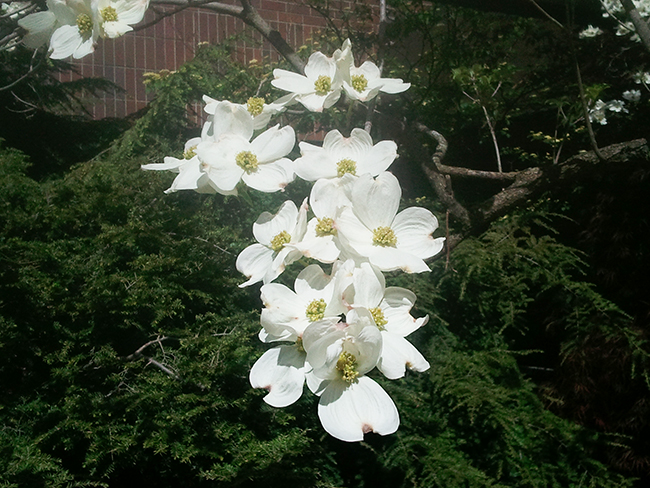
Dogwood
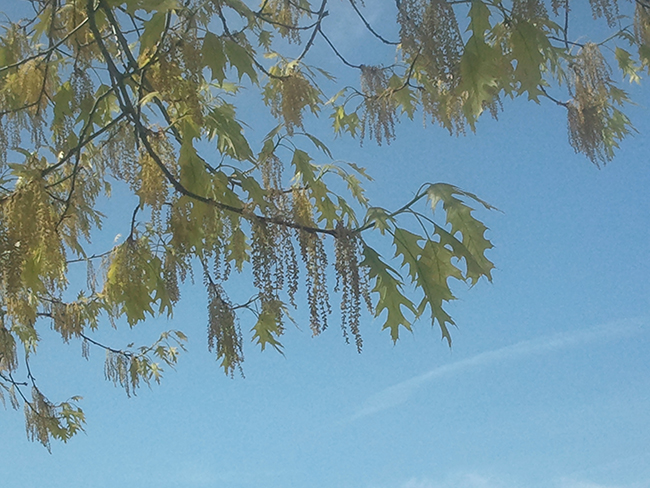
Red oak
Also, insect pests, usually subdued by cold winter temperatures are likely to be out much earlier than usual and with greater numbers. This increase in insect presence does not necessarily bode well for plant pollinator populations. If, for example, a tree flowers earlier than honeybee populations are available, then it is possible that those trees will go unpollinated. Also, if other pollinators are also unavailable, there will be no fruits the following year on that tree.
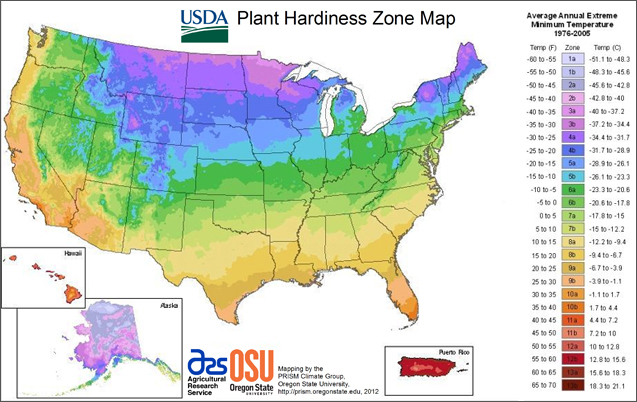
USDA Plant Hardiness Zone Map. Agricultural Research Service, U.S. Department of Agriculture, planthardiness.ars.usda.gov.
Ultimately, the state of our seed, fruit, and nut production depends on two major events; pollination and lack of a cold freeze. If we see a sudden cold snap that damages the trees and eliminates pollinators, then next spring will be a time of sorrow rather than an exciting start to the growing season. The dramatic shifts in weather temperatures over the last decade have led the Department of Agriculture to reevaluate and reassess plant hardiness zones. For the first time in thirty years, an updated map with new zones has now been created, USDA Plant Hardiness Zone Map.
Resources:
Purdue Plant Doctor App, Purdue Extension
Purdue Plant and Pest Diagnostic Laboratory, Purdue Agriculture
Planting & Transplanting Landscape Trees and Shrubs, The Education Store, Purdue Extension resource center
Tree Planting Part 1: Choosing a Tree – video, The Education Store
Tree Installation: Process and Practices, The Education Store
Shaneka Lawson, USDA Forest Service/HTIRC Research Plant Physiologist/Adjunct Assistant Professor
Purdue University Department of Forestry and Natural Resources
Lenny Farlee, Sustaining Hardwood Extension Specialist
Purdue Department of Forestry and Natural Resources
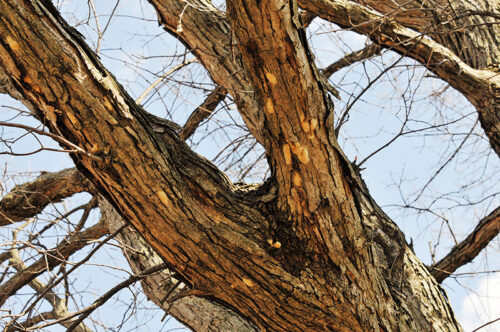
Figure 1: Spongy moth caterpillar, credit to John Obermeyer.
In the late 1860s, French scientist Étienne Trouvelot brought over a seemingly harmless insect from Europe called the gypsy moth to conduct breeding experiments with American moths. When they escaped his backyard and entered into an ecosystem without their native predators, their population exploded. 150 years later, these moths are still a destructive forest pest in Indiana and other states. Every year an effort is made to attempt to curb their population. This year, the Indiana Department of Natural Resources will continue the fight to save our forests from these invasive insects.
Phase one consists of a crop dusting of bacterial chemical spray over the gypsy moth caterpillars’ food sources. This spray is harmless to humans and native wildlife, but is lethal to the caterpillars. Later in the summer, a pheromone will be dispersed over the moths, disrupting the mating process and causing fatal exhaustion.
This huge undertaking isn’t estimated to stop the gypsy moth – in fact, state entomologists don’t see an end in sight. We can only continue to manage this forest pest and aim for reducing populations to a level where local predators can manage them on their own. Indiana citizens can help combat this pest by understanding the gypsy moth problem and learning about its management.
For more information and when the aerial treatments will be conducted in your county visit the Indiana Department of Natural Resources, 2017 Indiana Gypsy Moth Treatment Program. For Tippecanoe view Purdue News.
Resources:
Gypsy Moth (Spongy Moth) website, Purdue Extension-Entomology
Spongy Moth – Indiana Department of Natural Resources
The Gypsy Moth in Indiana – The Education Store, Purdue Extension resource center
Indiana Department of Natural Resources
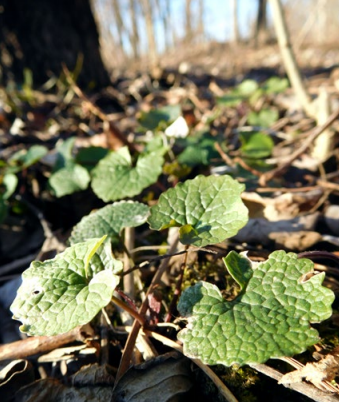 Check out the new publication entitled Invasive Plants: Impact on Environment and People now available in The Education Store!
Invasive species are plants, animals, or pathogens that are nonnative (or alien) to the ecosystem under consideration and whose introduction causes or is likely to cause harm. An invasive species is a nonnative species that can cause significant environmental and economic losses. Invasive species are said to be the second leading cause of biodiversity loss, after habitat loss.
This lesson teaches students about the significant environmental and economic losses that can be caused by the introduction of invasive plant species. It includes a game that can be played in class, plus a worksheet. The lesson meets multiple Indiana science, natural resources, math, and social studies standards.
Resources:
The Nature of Teaching – Purdue Extension
Alternative Options for Invasive Landscape Plants, The Education Store
Invasive Plant Species in Hardwood Tree Plantations, The Education Store
Invasive Plant Species: Callery Pear, Youtube, Education Store
Invasive Plants of the Eastern US, The Education Store
Mysha Clarke, Graduate Research Assistant,
Purdue University Department of Forestry and Natural Resources
Zhao Ma, Associate Professor of Sustainable Natural Resources Social Sciences
Purdue Department of Forestry and Natural Resources

Issue:
Professional arborists, horticulturists, including lawn and tree care companies, garden centers, and landscapers, require training in proper management techniques and pest control to better serve their customers and protect the environment.
What Has Been Done:
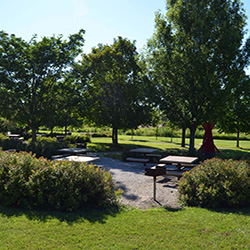
The Professional Landscape Management School is a two-day workshop offered every winter to local commercial lawn and tree care companies, landscapers, nurseries, grounds managers, and garden centers. The topics chosen for the program are based on current trends and needs. I located speakers, created the program schedule and brochure, and advertised it to over 1000 professionals, using both print mail and email.
Results:
- Over 160 professional horticulturists attended the Professional Landscape Management School in 2015. Out of this number, 49 returned completed surveys. Some of the notable results:
- Did you get your money’s worth from attending this year’s school? All forty-nine attendees replied – Yes.
- Do you think that you as an individual will benefit in the coming year because of your attending the 2015 Professional Landscape Management School? 100% said yes.
- Do you think that your company will benefit in the coming year because of your attending the 2015 Professional Landscape Management? 100% said yes.
- What horticultural practices do you think you will change in the coming year, based on what you learned at the 2015 Professional Landscape Management School?
- Plan on adding more native plants to my installations and designs.
- Will be more aware of honeybees when selecting and using pesticides.
- Tree Risk Assessment process can save lives and reduce my liability. Will definitely take further training in this subject.
- Will use information from Landscape Plants to Save Time and Money topic to reduce our campus manpower needs and budget requests.
- My staff and I have more knowledge to better serve our customers.
Purdue Commercial Nursery & Professional Landscape
Many of the invasive plant issues we experience in the urban ecosystem is due to improper plant selection when landscaping our homes and businesses. Often times, nurseries and garden centers stock trees and shrubs that create major issues in nearby natural areas. Landscapers everywhere seek beautiful, unusual, exceptionally hardy, drought-tolerant, or fast-growing plants. Unfortunately, plants selected for their resilience may be invasive because of their adaptable nature. Plants selected for their aesthetic value may be hard to banish from garden centers even after their invasive tendencies are revealed. These plants are typically prolific seed-producers which birds deposit everywhere creating competition for native plants.
Invasive species are damaging because they: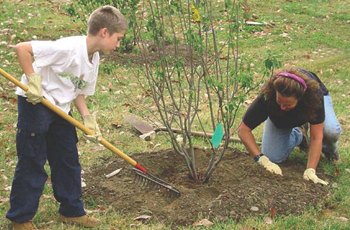
- produce large numbers of new plants each season.
- tolerate many soil types and weather conditions.
- spread easily and efficiently, usually by wind, water, or animals.
- grow rapidly, allowing them to displace slower growing plants.
- spread rampantly when they are free of the natural checks and balances found in their native range.
One of the worst offenders for invasive qualities is the Callery Pear. This ornamental pear, famous for its prolific white flowers in spring, creates a beautiful display in many landscapes. However, it is a poor choice for two major reasons. It is highly invasive and can take over entire natural areas with its heavy seed production. In addition, it is a very weak-wooded tree with poor branch structure, leaving it susceptible to splitting and breaking under heavy winds. Check out this publication for more information on the Callery Pear. See Invasive Plant Species: Callery Pear video for more information.
To help prevent the spread of invasive species, choose plants wisely. Use the following publication as a guide for alternatives for invasive landscape plants, Commercial Greenhouse and Nursery Production: Alternative Options for Invasive Landscape Plants.
Resources:
Invasive Plant Species: Callery Pear – The Education Store, Purdue Extension Resource Center
Invasive Plant Species: Oriental Bittersweet – The Education Store
Invasive Plant Species: Wintercreeper – The Education Store
Invasive Plant Species Fact Sheets: Poison Hemlock – The Education Store
Mile-a-minute Vine – The Education Store
Commercial Greenhouse and Nursery Production: Alternative Options for Invasive Landscape Plants, The Education Store
Invasive Species – Purdue Extension
Indiana’s “Most Unwanted” Invasive Plant Pest List – Indiana Cooperative Agricultural Pest Survey (CAPS) Program
Indiana Invasive Species Council – Includes: IDNR, Purdue Department of Entomology and Professional Partners
Invasive Species – Indiana Department of Natural Resources (IDNR)
National Invasive Species Awareness Week: February 27-March 3, 2017
Lindsey Purcell, Urban Forestry Specialist
Purdue University, Department of Forestry and Natural Resources
When biologists and land managers talk about managing native warm-season grasses (NWSG) they are really talking about managing early-successional plant communities. Early-successional vegetation (i.e., stands of annual or perennial grasses and forbs [broadleaf plants]) provide benefits for a variety of game and non-game wildlife species. Songbirds, northern bobwhite, and ring-necked pheasants use these areas to build nests and raise broods in the summer and for escape and thermal cover in the winter. White-tailed deer also use these areas heavily for bedding, to hide fawns from predators, and the forbs provide deer with excellent nutrition during the summer.
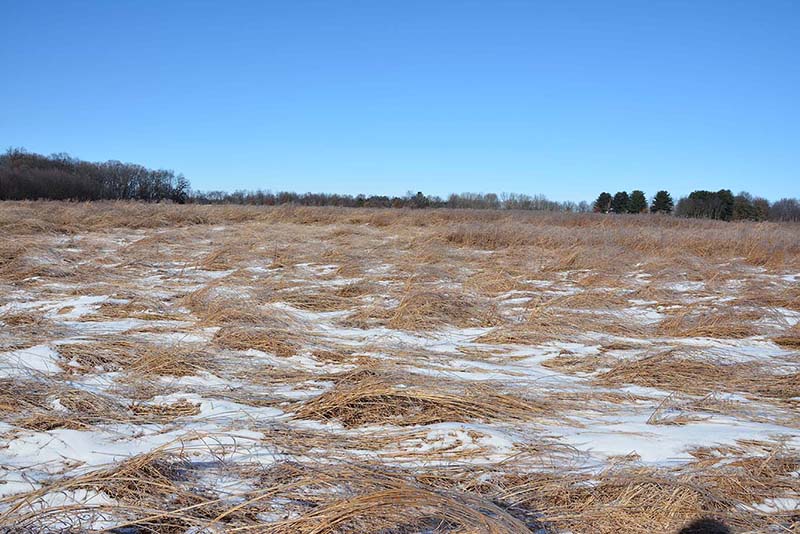
Forbs mixed with grasses help prevent the grasses from falling over and laying flat during the winter.
However, as these stands age their value to most wildlife species decreases drastically! Most stands of planted NWSG have little value, for species such as bobwhite, within 3-5 years of establishment. As the stands age, the tall perennial NWSGs (big bluestem and Indiangrass) become thicker; eventually crowding out all the forbs in the stand and creating a monoculture of grass. In the winter, the grasses fall over or “lodge”, as in the picture, and provide little to no cover.

Forbs mixed with grasses help prevent the grasses from falling over and laying flat during the winter.
This is why programs such as the Conservation Reserve Program require Mid-Contract Management (MCM) during years 4, 5, or 6 of the contract. MCM is aimed at maintaining or enhancing the wildlife value of NWSG stands by thinning the NWSGs providing room for planted and volunteering forbs to grow. These forbs act as supports for the grasses, helping them stand tall all winter, attract pollinators and insects important to foraging songbirds and game birds in the summer, and provide seed throughout the winter. Additionally, thinning the grasses and providing more room for weeds or forbs to grow will make it easier for ground dwelling wildlife to move and forage.
If your stand of NWSGs looks like the picture above, the time to manage them is not now but 2 years ago! However, managing them now can be effective and you have some options!
For most early successional wildlife species, you want the field to be from a 50/50 to 70/30 percent mix of forbs and grasses (favoring forbs). The field should be split into portions and managed on successive years. For larger fields, split the field into 4-5 acres sections. If you have multiple fields on your property you can manage the whole field. The key is to ensure that some cover is left on your farm throughout the winter.
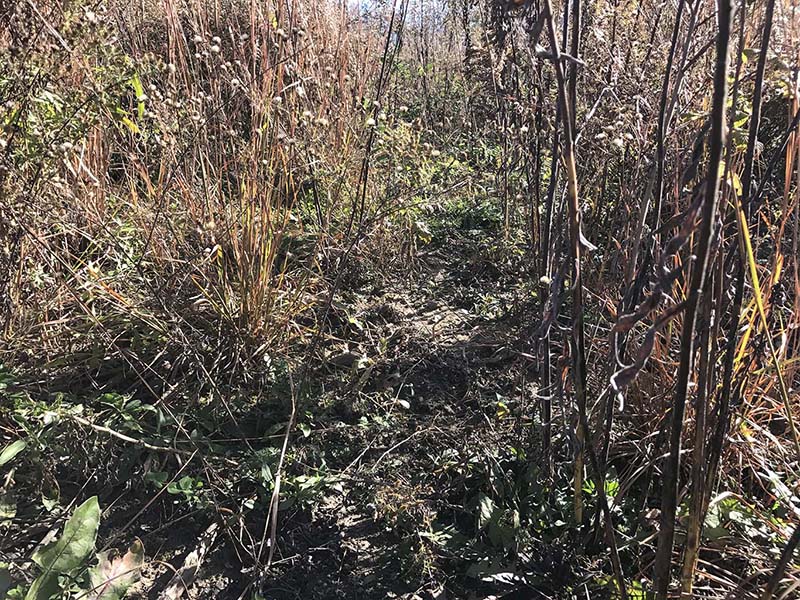
This picture gives you a “quail’s eye view” in a stand of native grasses and forbs with the ideal composition! Notice how the open space between plants and the bare ground would make it easy for a quail to maneuver and feed on insects or seed!
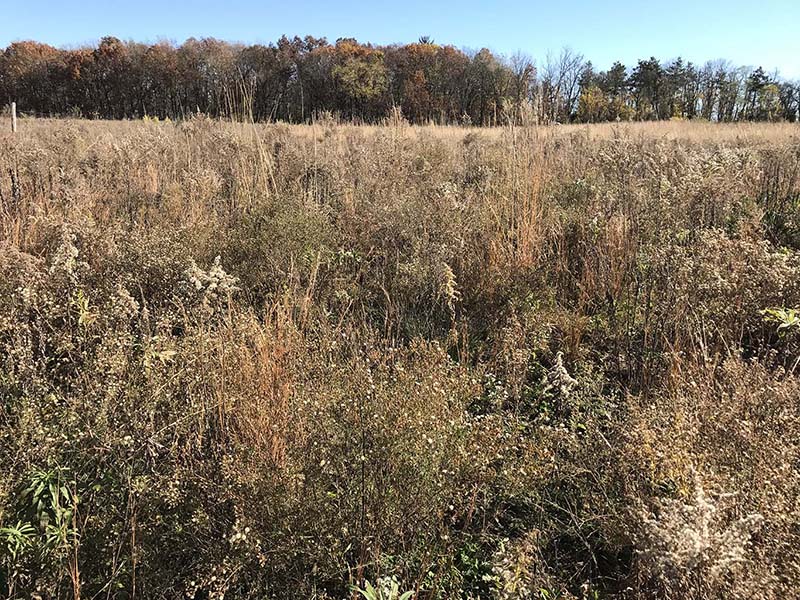
This picture represents the ideal composition of native grass stands; 50% or less of the stand is native grasses and 50% or greater of the stand is comprised of forbs.
September – March
Step 1. Burn or mow a portion of the field.
Step 2. Disk the same portion within a few weeks of burning or mowing the field.
By burning or mowing the field prior to disking, you make it easier for the disk to cut into the soil. The field should be disked so that a majority of the plant debris is worked into the soil and the soil is exposed.
Disking from September through March will result in a more beneficial plant composition than disking in the spring or summer.
May – June or August – September
Step 1. Just after winter and prior to spring green-up (late March or early April) the field should be burned to prepare the field for management. This step is not necessary but can improve the herbicide application. If applying herbicide in Aug-Sep, mowing or burning the field 2-3 weeks prior to application can be beneficial.
Step 2. Apply 2 quarts/acre of glyphosate OR 24 ounces/acre of imazapyr (53% active ingredient) to the field or portions of the field where native grasses are extremely thick.
NOTE: Spot spraying problematic areas are always better than whole field applications, but sometimes whole field applications are warranted.
CAUTION: Imazapyr can harm desirable trees; avoid spraying imazapyr within the drip line of desirable trees.
These management options will reduce or “thin” the native grasses enough to provide forbs from the seed bank with room to grow! The field may look “messy” or “weedy” the first summer or two after application but that’s okay! Actually, it’s what you want! Most of the “weeds” that come from the seed bank provide excellent cover and food for a variety of wildlife species. Just be sure to control undesirable weeds such as Canada thistle, if they appear.
For more information on how to manage NWSG or other early successional vegetation, contact your local IN-DNR wildlife biologist or NRCS office.
Additional Resources:
Herbicides to reduce NWSG density, SEAFWA
Landowner’s guide to NWSG management, TRACE
Quail Habitat – Putting the Numbers in Perspective, The Education Store
Control of Canada Thistle in CRP and Other Noncrop Acreage, The Education Store
Jarred Brooke, Extension Wildlife Specialist;
Purdue University Department of Forestry and Natural Resources

Recent Posts
- Indiana Monarch and Pollinator Conservation
Posted: June 1, 2026 in Forestry, Forests and Street Trees, Gardening, How To, Natural Resource Planning, Plants, Urban Forestry, Wildlife - ID That Tree: Shumard Oak
Posted: March 9, 2026 in Plants, Urban Forestry, Wildlife, Woodlands - ID That Tree: Fragrant Sumac
Posted: February 4, 2026 in Plants, Urban Forestry, Wildlife - It’s Not Too Late to Order Trees for Spring Planting
Posted: January 13, 2026 in Forestry, How To, Plants - Red in Winter – What Are Those Red Fruits I See?
Posted: December 1, 2025 in Forestry, Plants, Urban Forestry, Wildlife, Woodlands - Fall Tree Care Tips
Posted: September 20, 2025 in Forestry, Forests and Street Trees, Gardening, How To, Land Use, Plants, Safety, Timber Marketing, Urban Forestry, Wood Products/Manufacturing, Woodlands - Top 10 Spring Flowering Shrubs, Purdue Landscape Report
Posted: April 28, 2025 in Gardening, Plants, Urban Forestry - Protecting Spring Plants From Wildlife Damage Using Repellents
Posted: April 14, 2025 in How To, Plants, Wildlife - Ask An Expert: Holidays in the Wild
Posted: December 9, 2024 in Christmas Trees, Forestry, Forests and Street Trees, How To, Plants, Wildlife, Woodlands - When Roundup Isn’t Roundup – Purdue Landscape Report
Posted: October 17, 2024 in Forestry, Gardening, Plants, Urban Forestry
Archives
Categories
- Alert
- Aquaculture/Fish
- Aquatic/Aquaculture Resources
- Ask the Expert
- Christmas Trees
- Community Development
- Disease
- Drought
- Forestry
- Forests and Street Trees
- Gardening
- Got Nature for Kids
- Great Lakes
- How To
- Invasive Animal Species
- Invasive Insects
- Invasive Plant Species
- Land Use
- Natural Resource Planning
- Nature of Teaching
- Plants
- Podcasts
- Ponds
- Publication
- Safety
- Spiders
- Timber Marketing
- Urban Forestry
- Webinar
- Wildlife
- Wood Products/Manufacturing
- Woodland Management Moment
- Woodlands