 Purdue University - Extension - Forestry and Natural Resources
Got Nature? Blog
Question:
Are these pretty green flower shaped growth spots lichens? It just appeared on my tree this year. With this type of fungus should I be worried that it could damage the tree?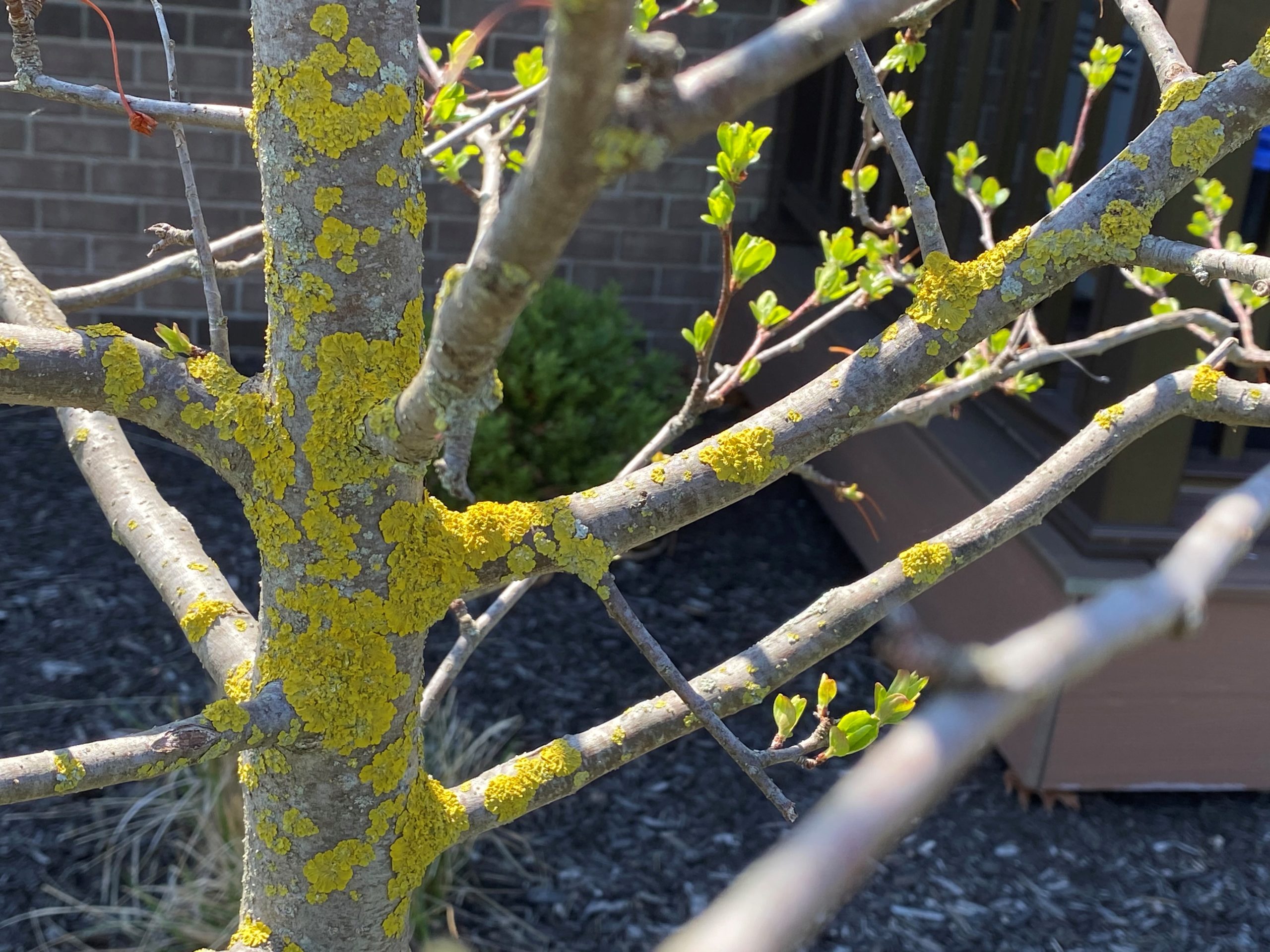
Answer:
Lichen is common on trees and not bad either. Those grayish-green patches, come in all sizes and shapes and sometimes covering much of the tree, are not feeding on your woody plants. Lichens grow on the surface of the tree, and do not penetrate any tissue. Instead, they make use of the trunk or branches for support. They can be aesthetically pleasing for many. Lichens play a very significant role as a bio-indicator. They only grow where the air quality is good and have a favorable growing environment. They help filter the air as well… so, don’t worry, be happy!
Resources:
Lichens, Purdue Botany & Plant Pathology
Purdue Plant & Pest Diagnostic Lab, Purdue Botany & Plant Pathology
Diseases of Landscape Plants: Leaf Diseases, The Education Store, Purdue Extension resource center
Surface Root Syndrome, The Education Store
Tree Installation: Process and Practices, The Education Store
Purdue Landscape Report, Purdue University
Lindsey Purcell, Urban Forestry Specialist
Purdue University, Department of Forestry and Natural Resources
Many of our favorite plants have multiple personalities. There is a good side and a bad side, shown especially when they escape the landscape and spread to our native areas, becoming invasive. When it comes to invasive plants in landscapes, there is good news and bad news. The bad news is that invasive plants are planted intentionally as ornamentals, and several species known to be invasive are readily available for sale from nurseries and garden centers. The good news is that there are many beautiful plants to choose from that are not invasive. Indeed, while many of the most picturesque garden plants are not native to the Midwest, the majority are not invasive. For example, hosta, smoke tree, boxwoods, Japanese tree lilacs, and dwarf shrub junipers are all non-native to the region but are not known to be invasive. However, brad ford pear, red barberry, burning bush and other “go-to” landscape plants are damaging our natural ecosystem by establishing themselves where they really aren’t welcome. These plants should be avoided and even considered for removal and replacement.
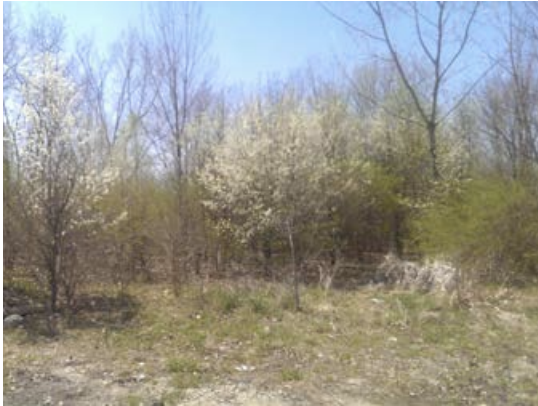
After their seeds are disseminated, callery pears can invade natural and disturbed areas.
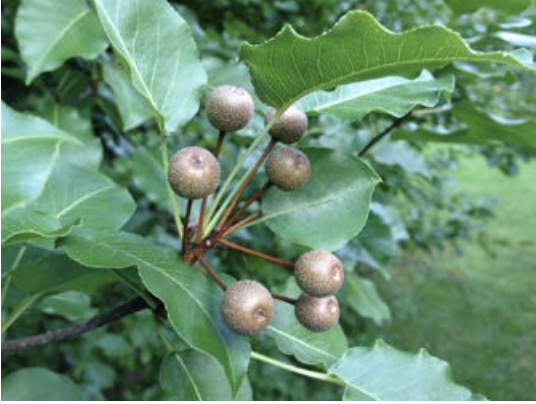
Many callery pears can produce abundant fruit
that are widely distributed by birds

Mile-a-minute vine grows more than 25 feet in height in one growing season while covering and smothering forest trees.
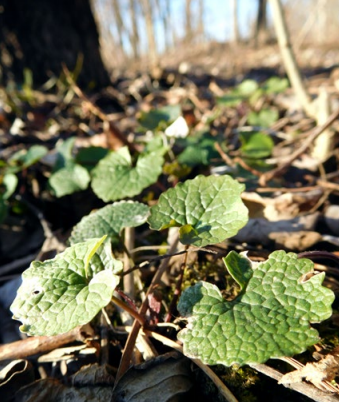
Garlic mustard produces chemicals that inhibit the growth of other plants.
Several professional landscape and nursery organizations have taken the charge in eliminating these harmful plants. They believe invasive species adversely affect the integrity of ecosystems and cause both environmental degradation and economic harm. Invasive species – whether they are plants, animals, fungi, or insects – may cause deterioration of native habitats and plant communities as well as damage to designed and managed ecosystems. Because invasives reduce biodiversity and disrupt the healthy structure and function of both native and human ecosystems, planners, contractors, arborists, landscape architects and other green industry professionals should not introduce or support the use of known invasive species. And, where they are already existing, steps should be taken to eradicate them.
Read the publication Commercial Greenhouse and Nursery Production: Alternative Options for Invasive Landscape Plants for more information. Also, here are several online resources for details on invasive pests:
Midwest Invasive Plant Network
Indiana Invasive Species Council
Invasive.org
Indiana Wildlife Federation
To view more Got Nature? posts on Invasive Species:
Woodland Invaders
What are invasive species and why should I care?
Resources
Indiana DNR Division of Forestry
Report Invasive, Purdue Extension
The GLEDN Phone App – Great Lakes Early Detection Network
EDDMaps – Early Detection and Distribution Mapping System (Report Invasives)
Cooperative Invasive Species Management Area (CISMA)
Indiana Department of Natural Resources: Invasive Species
Indiana Invasive Species Council
Commercial Greenhouse and Nursery Production: Alternative Options for Invasive Landscape Plants, The Education Store, Purdue Extension’s resource center
What Nurseries Need to Know About the Invasive Species Regulation, The Education Store, Purdue Extension’s resource center
Invasive plants: impact on environment and people, The Education Store, Purdue Extension’s resource center
Lindsey Purcell, Chapter Executive Director
Indiana Arborist Association
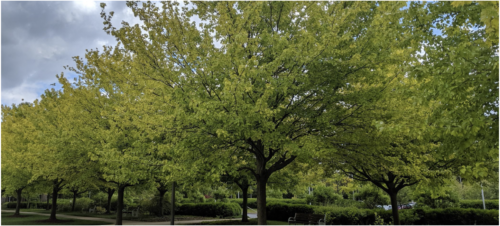 Many trees, shrubs, and other ornamental plantings in Indiana and throughout the Midwest suffer from iron deficiency caused by high pH (alkaline) soil. Soil pH affects plant growth directly and indirectly by affecting the availability of essential nutrients and microbial activity. One of these nutrients is iron, an essential plant nutrient that is required for the production of chlorophyll. Chlorophyll is necessary for photosynthesis and gives plants their green color. Iron (and manganese) deficiency results in leaf yellowing (chlorosis); over time, scorching of foliage, dieback and even death of the tree or shrub can result.
Iron Chlorosis of Trees and Shrubs talks about the symptoms, the cause and the managing of iron chlorosis. One of the authors is Lindsey Purcell, an urban forestry specialist from the Department of Forestry and Natural Resources at Purdue University.
This 5-page publication is part of the Plant Pathology in the Landscape Series and is a free download from the Purdue Extension resource center, The Education Store. View other tree disease publications and video resources as you place keywords in the search field located on The Education Store website.
Resources
Tree Diseases: Oak Wilt in Indiana, The Education Store, Purdue Extension resource center
Tree Diseases: White Pine Decline in Indiana, The Education Store, Purdue Extension resource center
Mechanical Damage to Trees: Mowing and Maintenance Equipment, The Education Store, Purdue Extension resource center
Surface Root Syndrome, The Education Store, Purdue Extension resource center
Tree Appraisal and the Value of Trees, The Education Store, Purdue Extension resource center
Lindsey Purcell, Urban Forestry Specialist
Purdue University, Department of Forestry and Natural Resources
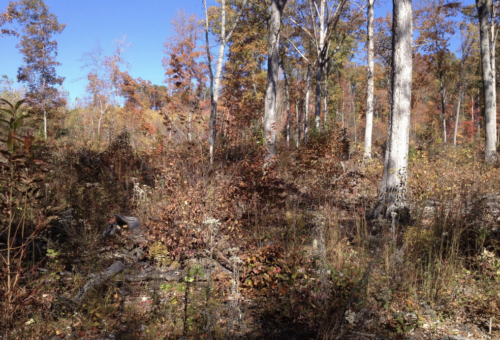
Many woodland landowners are interested in improving their properties for one of Indiana’s most abundant game animals, white-tailed deer. This publication titled Managing Your Woods for White-Tailed Deer outlines different options landowners have to enhance white-tailed deer habitat in their woodlands. Learn the pros and cons of mature forests vs. young forest stands along with finding answers to these and other questions you may have:
- Can mature forests cause less forage?
- What does lacking oak trees mean for managing deer?
- Which plants do deer eat?
This 16-page publication filled with plants and forest photos is a free download from the Purdue Extension resource center, The Education Store. View other deer publications and video resources as you place keywords in the search field located on The Education Store website.
Resources
Renovating native warm-season grass stands for wildlife: A Land Manager’s Guide, The Education Store, Purdue University
Bovine Tuberculosis in Wild White-tailed Deer, The Education Store
How to Score Your White-tailed Deer, Video, The Education Store
How to Build a Plastic Mesh Deer Exclusion Fence, The Education Store
Frost Seeding to Establish Wildlife Food Plots and Native Grass and Forb Plantings, Video
Jarred Brooke, Extension Wildlife Specialist
Purdue Department of Forestry and Natural Resources
Purdue Landscape Report: Yes, we need trees and here’s why…
Trees have presented as more than just a pretty face as research has indicated that trees are even more valuable for their function as much as their form. Currently, more than 50 percent of the world’s population now lives in towns and cities. In the Hoosier state, the last census indicated that 72% of our population lives in an urban area and this statistic is increasing annually.
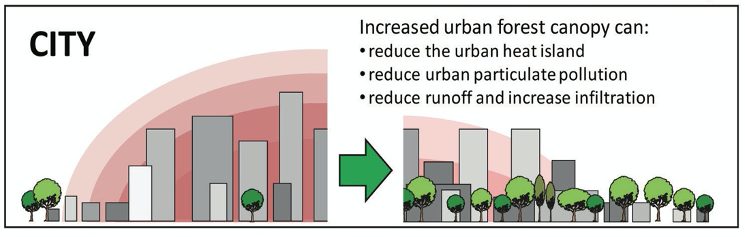
Properly planted trees improve living conditions in downtown and suburban areas. Sources
For the most part, the rapid expansion of cities takes place with little consideration to land use planning strategy. The resulting human pressure has highly damaging effects on our urban trees and green spaces. The environmental impacts of climate change are intensified by urbanization such as increased pollution, increased temperatures, and larger demands on infrastructure such as stormwater systems.
Urban trees can help to mitigate some of the negative impacts and social consequences of urban sprawl and make cities more resilient to these changes. These important functions are called ecosystem services. This is the way urban foresters measure the benefits that trees provide other than just their beauty. Ecosystems services are the many benefits that trees and plants provide to the community. They improve our quality of life by providing food, cleaner air and water, regulating temperatures, supporting pollination and providing recreational, health and spiritual benefits.
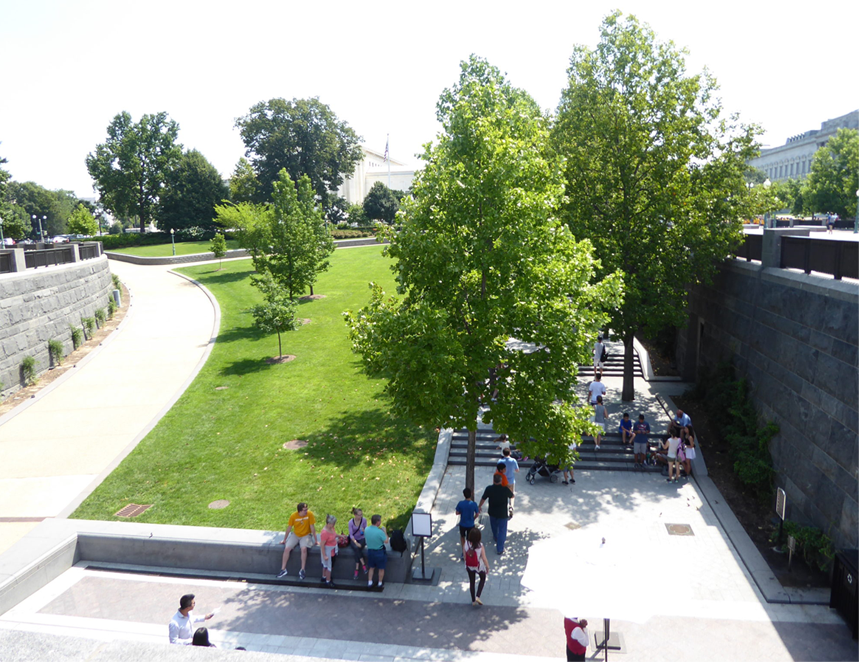
People will stay longer and enjoy urban economy more with tree-lined streets. Sources
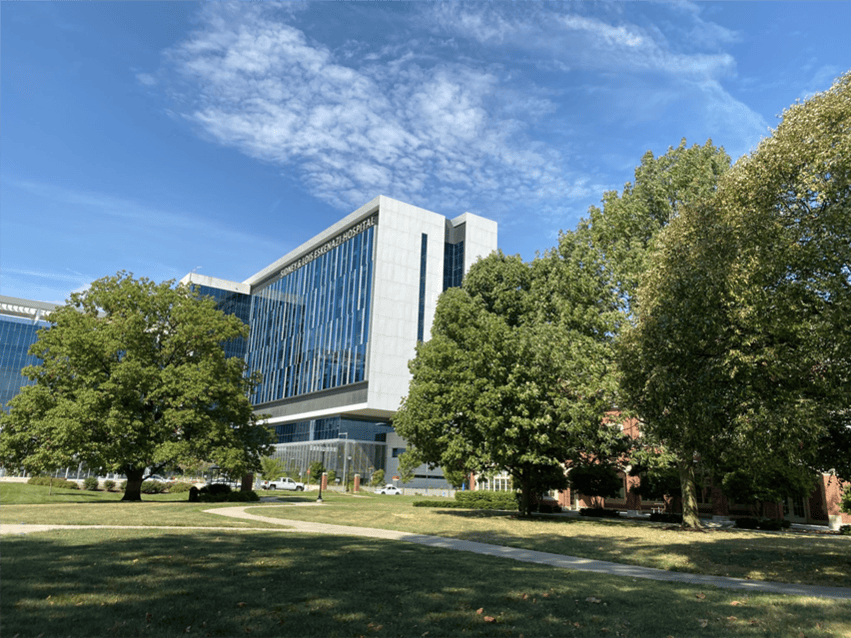
Trees are proven to reduce length of hospital stays and improve birth outcomes. Sources
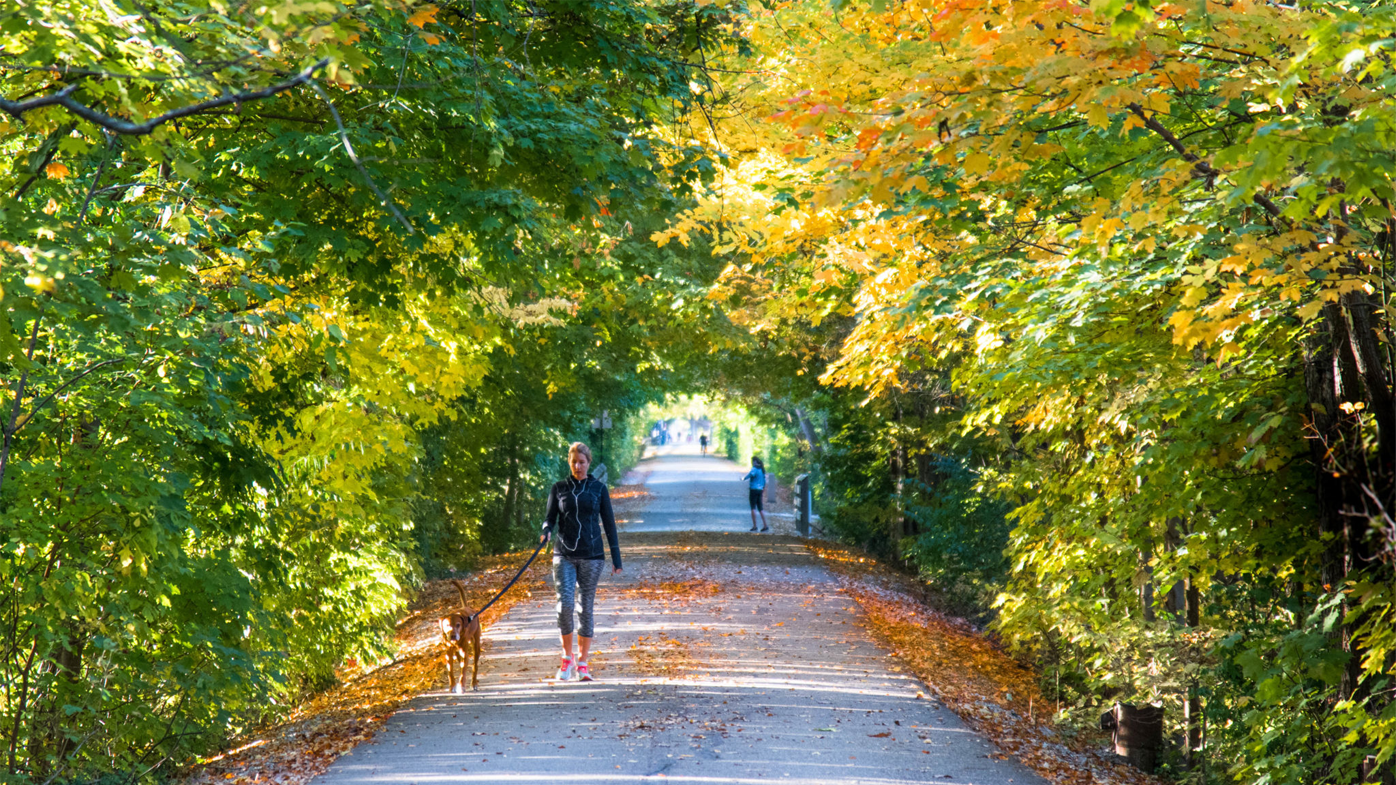
Recreational areas are critical to community well-being. Sources
Here are some easy ways in which urban trees and woodlots contribute to making cities more environmentally sustainable and livable:
- Trees can contribute to the increase of local food and nutrition security, providing food such as fruits and nuts for wildlife and human consumption.
- Trees play an important role in increasing urban biodiversity, providing plants and animals with a proper habitat, food and protection.
- A mature tree can absorb up to 350 lbs. of CO2 per year. As a result, trees play an important role in climate change mitigation. In cities with high levels of pollution, trees can improve air quality making cities healthier places to live in.
- Strategic placement of trees in cities can help to cool the air between 30-40o F, thus reducing the urban “heat island” effect, helping reduce extreme heat conditions in summer weather.
- Large trees are great biological filters for urban pollutants and particulate pollution. They absorb pollutant gases (such as carbon monoxide, nitrogen oxides, ozone and Sulphur oxides) and filter fine particulates such as dust, dirt, or smoke out of the air by trapping them on leaves and bark.
- Research shows that living in close proximity of urban green spaces and having access to them, can improve physical and mental health, for example by decreasing high blood pressure and stress. Also, research indicates greatly improved neo-natal health as well. This, in turn, contributes to the well-being of urban communities.
- Mature trees regulate water flow and play a key role in preventing floods and reducing the risk of sewer overflow. Stormwater management is a crucial city infrastructure issue and trees help. A mature tree, for instance, can intercept more than 5,000 gallons of water per year and without trees, every rain would contribute floods.
- Trees also help to reduce carbon emissions by helping to conserve energy. For example, the correct placement of trees around buildings can reduce the need for air conditioning by 30 percent and reduce winter heating bills by 20-50 percent.
- Planning urban landscapes with trees can increase property value, by up to 15 percent, and attract tourism and business.
These are just a few examples of the functional benefits that trees provide to our everyday life. A community or neighborhood with well-planned and well-managed green infrastructure becomes more resilient, sustainable and equitable in terms of livelihood improvement, climate change mitigation and adaptation, disaster risk reduction and ecosystems conservation. Throughout their lifetime, trees can thus provide a benefit package worth two to three times more than the investment made in planting and caring for them. Trees aren’t the answer, but they are part of the equation. Planting trees is important, but their maintenance is as equally important.
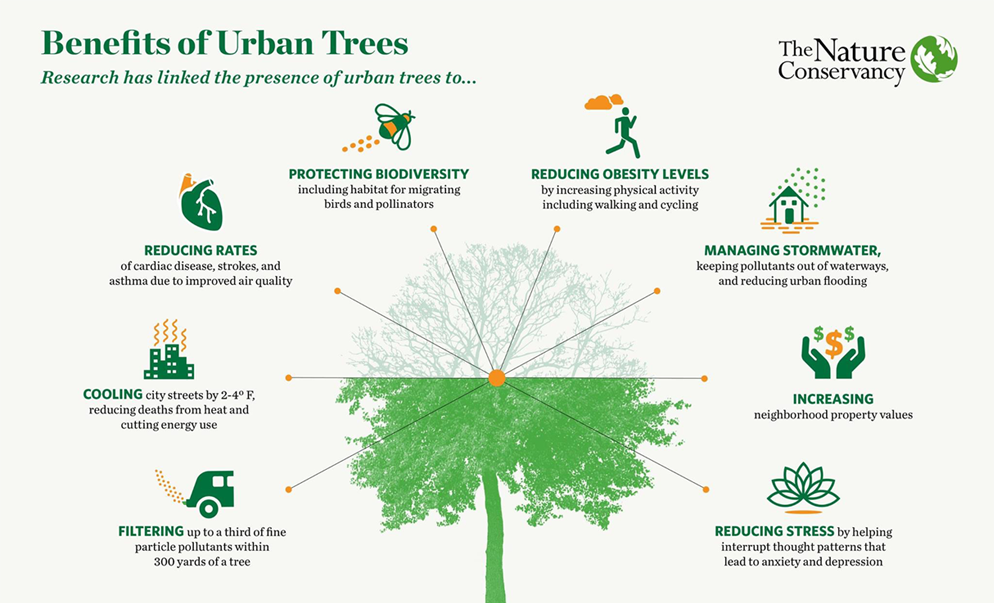
Trees make life better. Sources
For more information on urban tree care, visit the Purdue Education Store for tree care tips and suggestions.
Resources
Tree Appraisal and the Value of Trees, The Education Store, Purdue Extension’s resource center
Tree Pruning Essentials, Publication & Video, The Education Store
Tree Installation: Process and Practices, The Education Store
Tree Selection for the “Un-natural” Environment, The Education Store
The Nature of Teaching: Trees of the Midwest, The Education Store
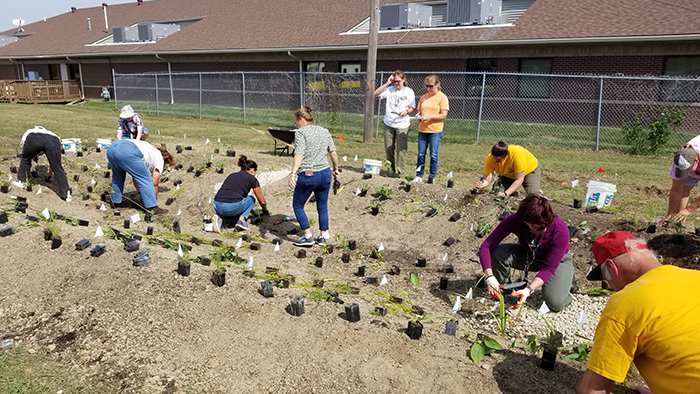
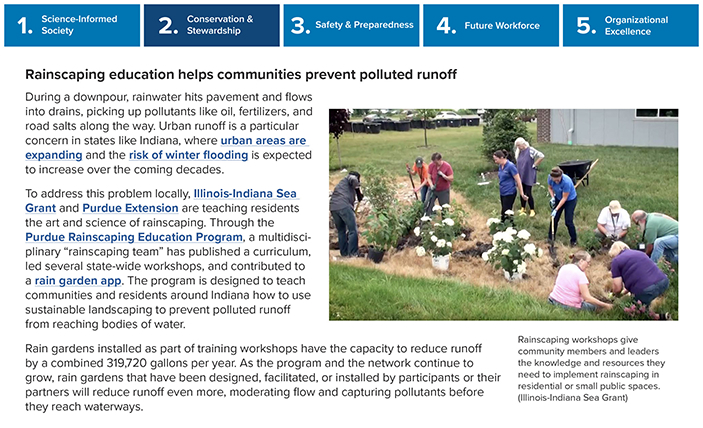
The Purdue Extension and Illinois-Indiana Sea Grant Rainscaping Education Program was highlighted in the National Oceanic and Atmospheric Administration’s Education Accomplishments Report (pdf) for fiscal year 2019.
This report highlighted all of NOAA’s greatest accomplishments related to education in five main goal areas: science informed society, conservation and stewardship, safety and preparedness, future workforce and organizational excellence.
The Rainscaping Education Program was featured in the Conservation and Stewardship section of the report. The Purdue Rainscaping Education Program offers state-wide training for Purdue Master Gardeners, conservation agencies and organizations, stormwater professionals and landscape companies and consultants. Through two-day workshop sessions, the program provides an introduction to rainscaping and rain gardens, including segments on site selection, plant selection, garden design, installation, maintenance and community engagement.
“It is wonderful to have the innovative and collaborative work of the Purdue Rainscaping Education Team recognized for its efforts,” Kara Salazar, assistant program leader and extension specialist for sustainable communities said. “The team has been working together since 2013 to develop and implement the interdisciplinary program addressing the need for community education on sustainable landscape practices to prevent polluted runoff.”
Salazar and John Orick, Purdue Master Gardener State Coordinator, are co-leads on the project. View the full Rainscaping Team.
The featured segment on the Rainscaping program from the NOAA annual report is below.
Resources
What is Rainscaping? Purdue Rainscaping Education Program Video, Purdue Extension
Q&A About Drainage Water Recycling for the Midwest, The Education Store, Purdue Extension resource center
Become a Purdue Master Gardener, The Education Store
Plan Today For Tomorrow’s Flood, The Education Store
Kara Salazar, Assistant Program Leader and Extension Specialist for Sustainable Communities
Department of Forestry and Natural Resources
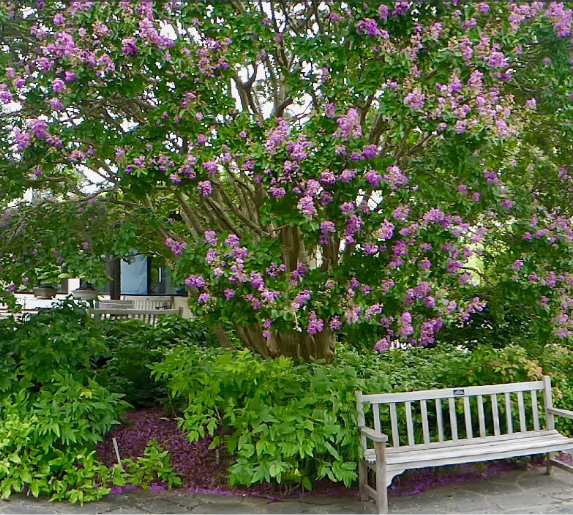 Trees provide many benefits and value to property owners in functional, aesthetic, social, environmental, and even economic ways. Functional benefits include mitigating climate change by storing carbon, removing pollution from the atmosphere, managing stormwater runoff, and improving air quality. Trees provide oxygen and many other benefits – such as shade, which can impact home cooling costs.
The collective value of trees makes a difference in people’s health and quality of life in cities and towns everywhere. This updated Purdue Extension publication Tree Appraisal and the Value of Trees describes methods used to appraise trees and landscapes that can determine their value and worth, reasons why a tree should be appraised, the factors that go into tree appraisal, what appraisal ratings mean, and sample scenarios.
Resources
The Nature of Teaching: Trees of the Midwest, The Education Store, Purdue Education Resource Center
Corrective Pruning for Deciduous Trees, The Education Store
Resources and Assistance Available for Planting Hardwood Seedlings, The Education Store
Tree Support Systems, The Education Store
Purdue University, Department of Forestry and Natural Resources
 Winged burning bush, winged euonymus, or simply burning bush (Euonymus alatus) is a medium-sized deciduous shrub native to China, Japan and Korea but is widely planted in the United States. Winged burning bush has been planted in the US since the 1860s, primarily as an ornamental shrub due to its bright red fall foliage. Reports of this species escaping cultivation and establishing in natural areas, such as woodlands, prairies and other uncultivated areas, emerged in the 1970s in the Northeast and Midwest US. The species is now considered invasive in most of the eastern US, including Indiana.
Invasive Plant Series: Winged Burning Bush is an 8-page publication written by experts Brian Beheler, farm manager, Don Carlson, forester, Lenny Farlee, sustaining hardwood extension specialist and Ron Rathfon, regional extension forester SIPAC. In this publication, you can learn about the identification, distribution, impact, management and control of this deciduous shrub found in Indiana hardwood forests. For more information check out the Burning Bush Video.
Resources
Report Invasive Species, Purdue Agriculture & Indiana Invasive Species Council
The GLEDN Phone App – Great Lakes Early Detection Network
EDDMaps – Early Detection and Distribution Mapping System (Report Invasives)
Cooperative Invasive Species Management Area (CISMA)
Indiana Department of Natural Resources: Invasive Species
Indiana Invasive Species Council
Burning Bush Video, video, The Education Store, Purdue Extension resource center
What Nurseries Need to Know About the Invasive Species Regulation, The Education Store
Invasive plants: impact on environment and people, The Education Store
Invasive Plant Species: Oriental Bittersweet, The Education Store
Invasive Plant Species: Callery Pear, The Education Store
Invasive Plant Species: Wintercreeper, The Education Store
Lenny Farlee, Extension Forester
Purdue University Department of Forestry and Natural Resources
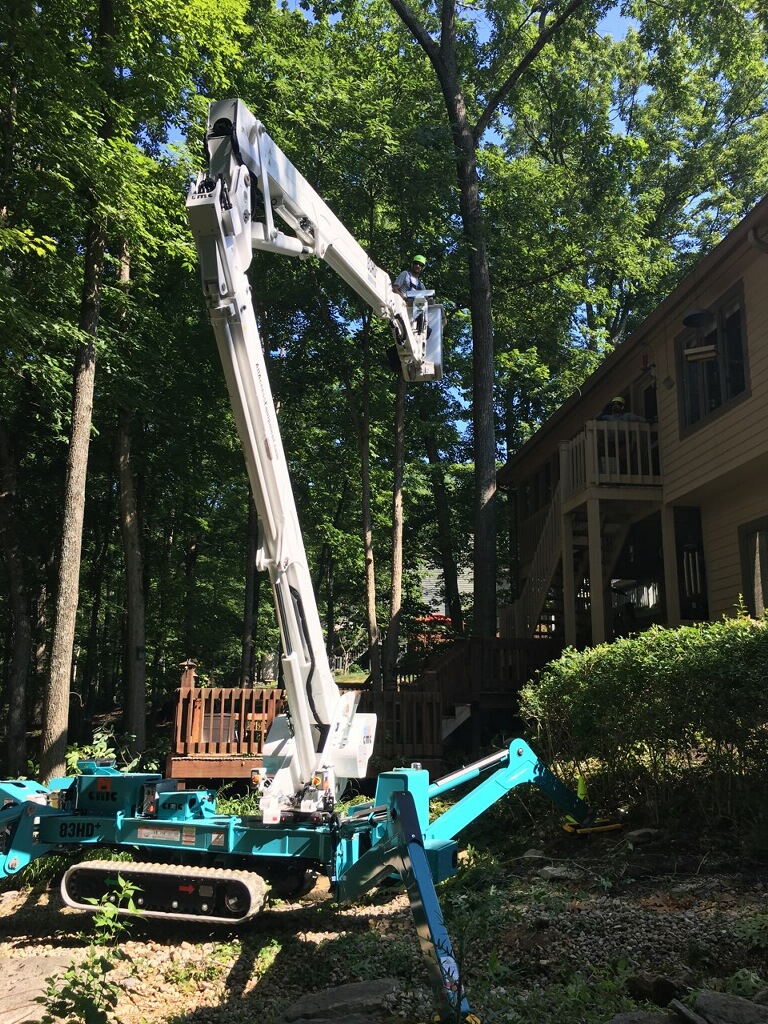
Purdue Landscape Report: There are many different aspects of tree work which include a wide range of costs, but let’s start with the most common expense: tree removal. It can be difficult to understand why removing a tree can cost so much when the whole process seems as simple as “just cutting it down.” In reality, the work is usually much more involved than making a few cuts with a chain saw and then hauling it all away.
Complexity – Trees being removed often need to be cut apart in sections to avoid dropping the whole tree or large pieces onto the lawn or landscape or into the street. This is a safer approach and also prevents serious damage to the turf and landscape below. News reports are full of accidents involving untrained tree workers, or homeowners, attempting to cut down a tree without the knowledge of how the tree reacts to being cut. Usually, specialized equipment is needed, such as aerial lifts or cranes to access the tree safely. This equipment is costly to acquire and maintain. Some of the typical equipment such as these mentioned can cost more than some homes! Often, the use of this equipment involves setting up traffic control in busy streets where permits and additional flagging support are needed.
Difficult and dangerous – 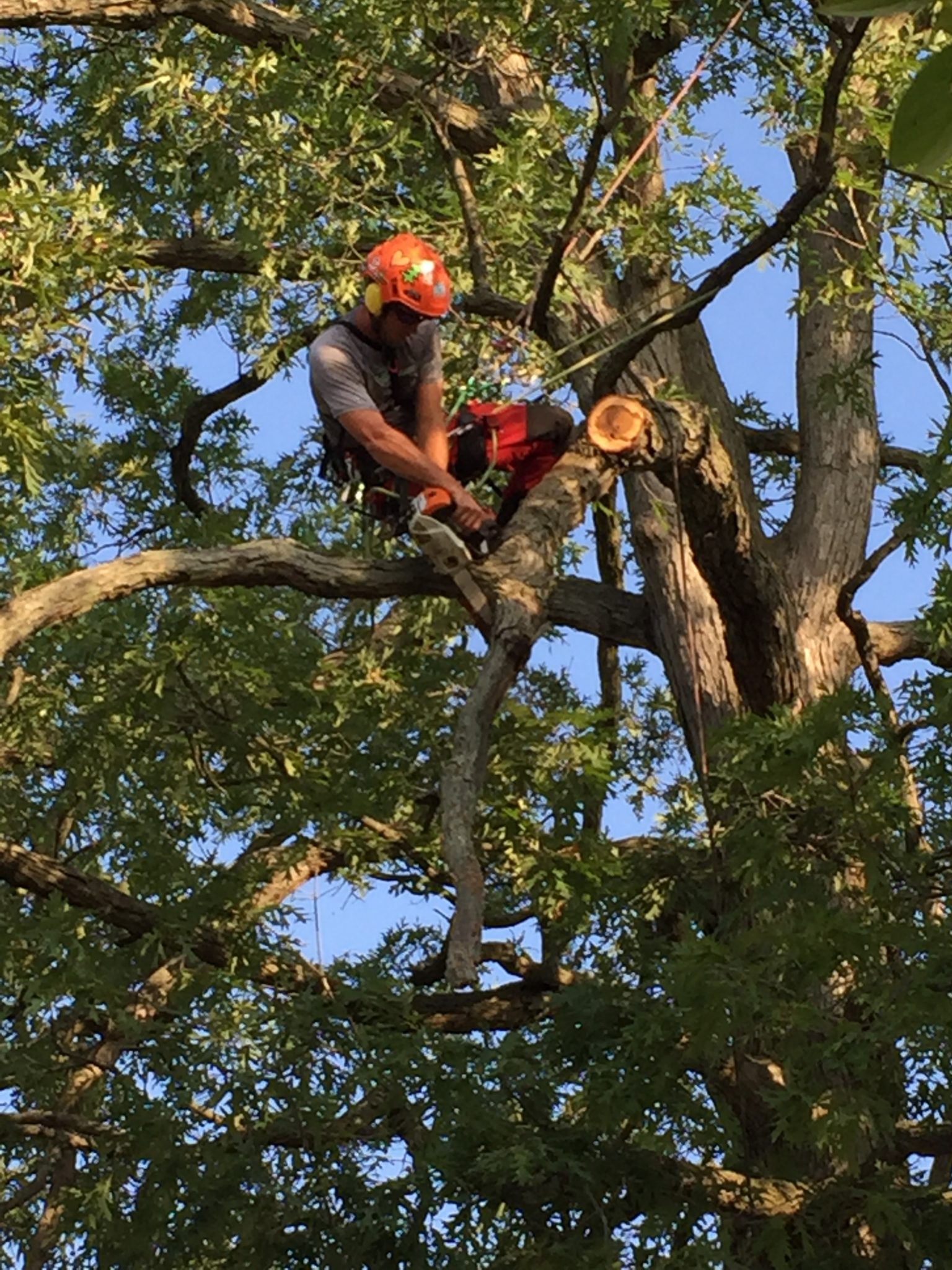 Tree pruning and tree removal, is difficult and dangerous work. Also, there is a reason why the tree is being removed. Often it has been deemed high risk or presents a danger on the site. Tree crews are regularly asked to work on trees with compromised structure from storm damage or years of neglect. These compromised trees are often dead trees, which are particularly dangerous. A tree that has been dead for several years usually becomes brittle and inflexible. When you try to cut it down, controlling the direction of fall is a challenge and it will often shatter, throwing broken branches in an uncontrolled manner. Often, tree workers are in trees that have electrical conductors running through the branches. That risky situation should speak for itself.
Insurance, Licensing – Because tree work can be hazardous, qualified companies will have expensive liability insurance to protect the homeowner’s property, as well as workers’ compensation insurance to help cover injuries sustained by the crew, should they occur. You get what you pay for and this includes tree care as well! If you select a company that is less expensive, they may not carry insurance which leaves the tree owner at a high risk of having to pay damages several times the original job estimate, if something goes wrong. Always check with your tree care company to be sure they can validate proper insurance before starting tree work. This applies to any service company which may be used in and around your home or property.
Trained and Certified Workers – Its best to choose a tree care company where the crew has current industry credentials 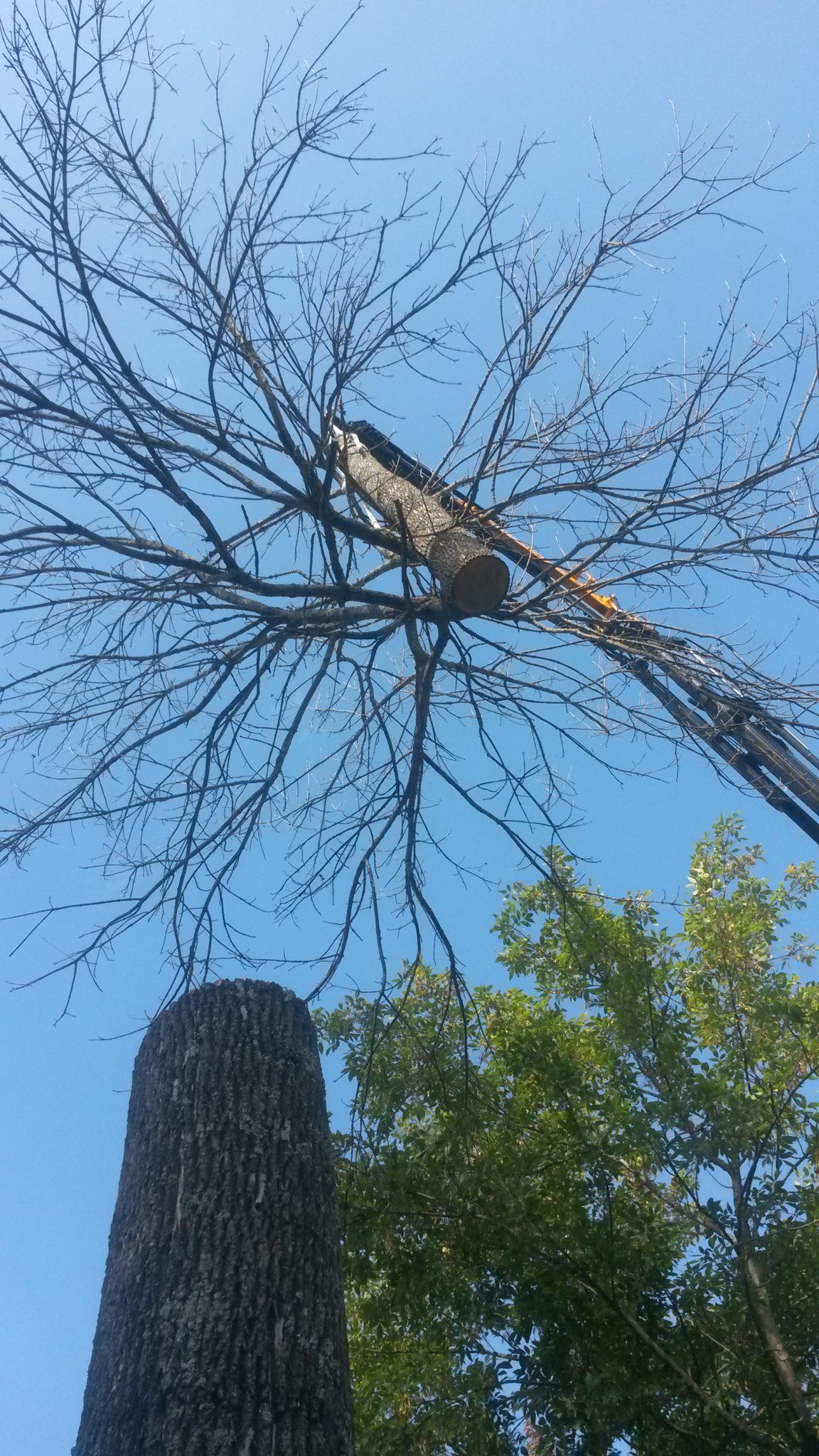 and a history of training and experience. How do you know if a company’s staff is trained and experienced? Ask to see their credentials and look for programs such as the International Society of Arboriculture (ISA) Certified Arborist, or the Tree Care Industry Association (TCIA) Certified Treecare Safety Professional which are indicators of a professional business with the expertise to perform the work. Tree owners and managers have the option to interview two or three tree care companies before deciding about tree removal or other critical practices such as pruning. Ask to see a copy of the current insurance certificate as well as copies of the crew’s competency credentials. If a company representative hesitates to provide these documents or insists, they don’t need to “prove” themselves, find another company to perform the work. Ask for references. This is easy since often all that is needed is to drive by a location to see the quality of the pruning work or removal work completed.
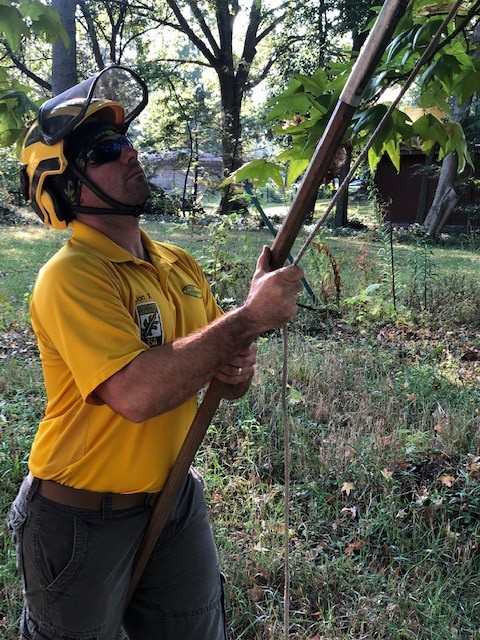
Find a professional – Also, to check for an ISA Certified Arborist in your area, visit the website www.treesaregood.org then click on the link “Find an Arborist”. By entering your zip code, a list of credentialed arborists can be found nearest your location.
Tree care performed properly will be an investment in your property that, when done correctly, will give you valued returns for decades.
Resources
Mechanical Damage to Trees: Mowing and Maintenance Equipment, The Education Store, Purdue Extension’s resource center
Tree Appraisal and the Value of Trees, The Educational Store
Tree Pruning Essentials, video, The Education Store
Tree Pruning Essentials, The Education Store
Tree Selection for the “Un-natural” Environment, The Education Store
Lindsey Purcell, Chapter Executive Director
Indiana Arborist Association
Purdue Landscape Report: Just as sure as you try to predict the weather, it is likely to change. But going out on a limb, I predict that we will have a bit of a dud for fall color display this year. Not a very risky prediction, considering that many plants already are starting to turn color and/or drop leaves in some areas of the state.
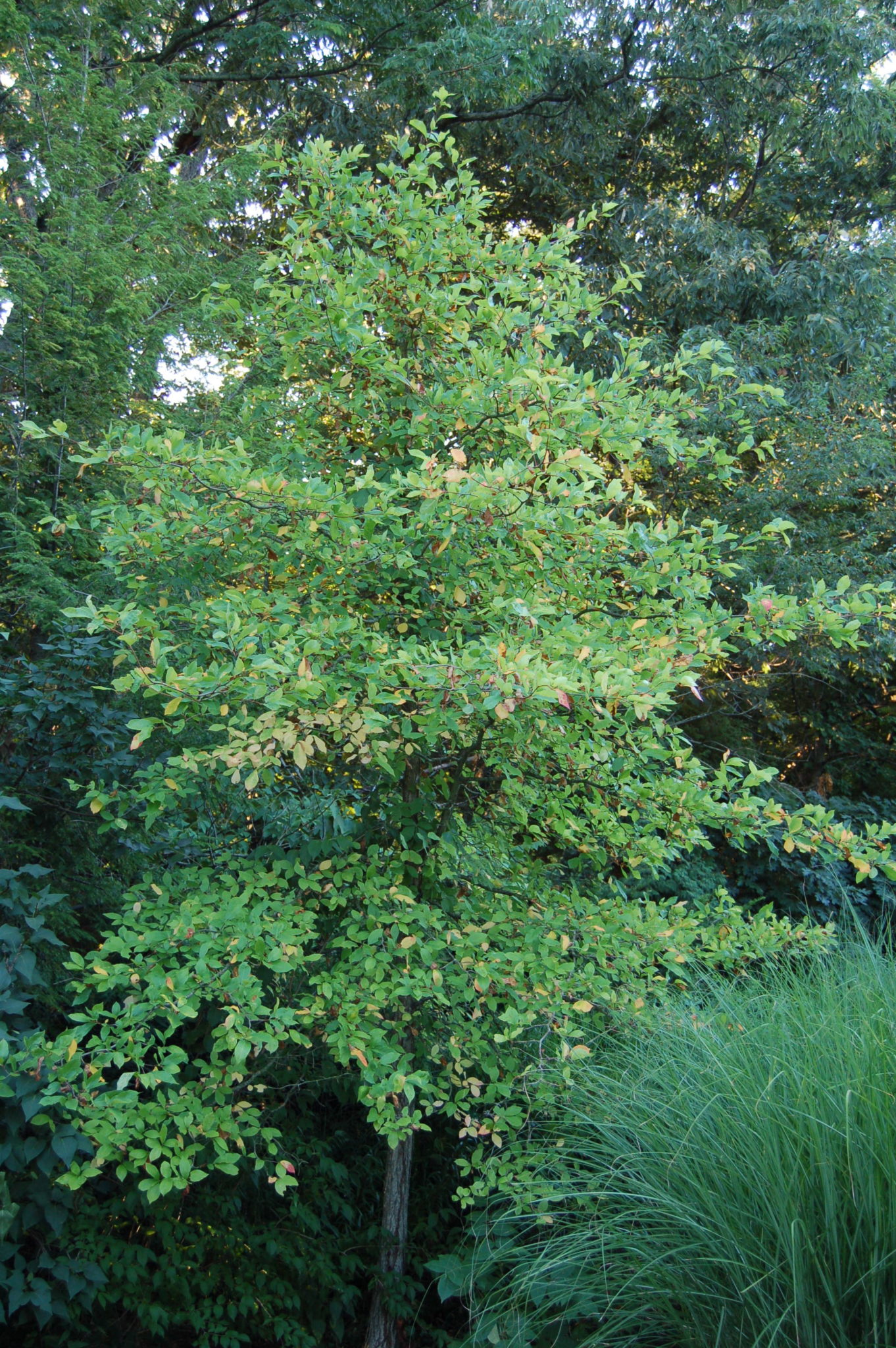
Nyssa sylvatica (black gum) showing early fall color due to drought stress. Source
So why would the colors be early and/or a bit duller than usual? Certainly, some of the reason why plants display fall colors has to do with the genetic makeup of the plant. That doesn’t change from year to year. But the timing and intensity of fall colors do vary, depending on factors such as availability of soil moisture and plant nutrients, as well as environmental signals such as temperature, sunlight, length of day, and cool nighttime temperatures.
The droughty conditions experienced during much of the second half of summer are likely to have decreased the amount of fall color pigment. Southern Indiana has been particularly parched. Despite recent rains in some areas, much of the state remains designated as abnormally dry to moderate drought. You can check your area’s conditions at the US Drought Monitor for Indiana. Additional maps and data is available at the Midwest Regional Climate Center.
Growing conditions throughout the season affect fall color as does current weather. Colors such as orange and yellow, which we see in the fall, are actually present in the leaf all summer. However, those colors are masked by the presence of chlorophyll, the substance responsible for green color in plants during the summer. Chlorophyll allows the plant to use sunlight and carbon dioxide from the air to produce carbohydrates (sugars and starch). Trees continually replenish their supply of chlorophyll during the growing season.
As the days grow shorter and (usually) temperatures cooler, the trees use chlorophyll faster than they can replace it. The green color fades as the level of chlorophyll decreases, allowing the other colored pigments to show through. Plants that are under stress–from conditions like prolonged dry spells–often will display early fall color because they are unable to produce as much chlorophyll.
Yellow, brown and orange colors, common to such trees as birch, some maples, hickory and aspen, come from pigments called carotenoids, the same pigments that are responsible for the color of carrots, corn and bananas.
Red and purple colors common to sweet gum, dogwoods and some maples and oaks are produced by another type of pigment called anthocyanin, the pigment responsible for the color of cherries, grapes, apples and blueberries. Unlike chlorophyll and carotenoids, anthocyanins are not always present in the leaf but are produced in late summer when environmental signals occur. Anthocyanins also combine with carotenoids to produce the fiery red, orange, and bronze colors found in sumac, oaks, and dogwoods.
Red colors tend to be most intense when days are warm and sunny, but nights are cool–below 45º F. The color intensifies because more sugars are produced during warm, sunny days; cool night temperatures cause the sugars to remain in the leaves. Pigments are formed from these sugars, so the more sugar in the leaf, the more pigment, and, thus, more intense colors. Warm, rainy fall weather decreases the amount of sugar and pigment production. Warm nights cause what sugars that are made to move out of the leaves, so that leaf colors are muted.
Leaf color also can vary from tree to tree and even from one side of a tree to another. Leaves that are more exposed to the sun tend to show more red coloration while those in the shade turn yellow. Stress such as drought, poor fertility, disease or insects may cause fall color to come on earlier, but usually results in less intense coloration, too. And stress or an abrupt hard freeze can cause leaves to drop before they have a chance to change color.
So far, weather conditions lead me to think this will be one of those not so showy fall color years. I hope I am proven wrong!
Resources
Why Leaves Change Color, The Education Store, Purdue Extension
Fifty Common Trees of Indiana
An Introduction to Trees of Indiana
Native Trees of the Midwest, Purdue University Press
Why Leaves Change Color, USDA Forest Service, Northeastern Area
B. Rosie Lerner, Retired Extension Consumer Horticulturist
Purdue Horticulture and Landscape Architecture

Recent Posts
- ID That Tree: Shumard Oak
Posted: March 9, 2026 in Plants, Urban Forestry, Wildlife, Woodlands - ID That Tree: Fragrant Sumac
Posted: February 4, 2026 in Plants, Urban Forestry, Wildlife - It’s Not Too Late to Order Trees for Spring Planting
Posted: January 13, 2026 in Forestry, How To, Plants - Red in Winter – What Are Those Red Fruits I See?
Posted: December 1, 2025 in Forestry, Plants, Urban Forestry, Wildlife, Woodlands - Untangling and Identifying Vines, Purdue Landscape Report
Posted: September 29, 2025 in Invasive Plant Species, Plants, Wildlife - Control Management of Poison Hemlock
Posted: May 7, 2025 in Invasive Plant Species, Plants, Wildlife, Woodlands - Top 10 Spring Flowering Shrubs, Purdue Landscape Report
Posted: April 28, 2025 in Gardening, Plants, Urban Forestry - PPDL’s 2024 Annual Report – Enhancing Plant Health
Posted: March 21, 2025 in Forestry, Invasive Insects, Invasive Plant Species, Plants, Wildlife - What Are Invasive Species and Why Should I Care?
Posted: February 24, 2025 in Forestry, How To, Invasive Plant Species, Plants, Woodlands - Ask An Expert: Holidays in the Wild
Posted: December 9, 2024 in Christmas Trees, Forestry, Forests and Street Trees, How To, Plants, Wildlife, Woodlands
Archives
Categories
- Alert
- Aquaculture/Fish
- Aquatic/Aquaculture Resources
- Ask the Expert
- Christmas Trees
- Community Development
- Disease
- Drought
- Forestry
- Forests and Street Trees
- Gardening
- Got Nature for Kids
- Great Lakes
- How To
- Invasive Animal Species
- Invasive Insects
- Invasive Plant Species
- Land Use
- Natural Resource Planning
- Nature of Teaching
- Plants
- Podcasts
- Ponds
- Publication
- Safety
- Spiders
- Timber Marketing
- Uncategorized
- Urban Forestry
- Webinar
- Wildlife
- Wood Products/Manufacturing
- Woodland Management Moment
- Woodlands