 Purdue University - Extension - Forestry and Natural Resources
Got Nature? Blog
In this Tree Installation for The Landscape Webinar, urban forestry specialist Lindsey Purcell shares information regarding research finds and current best management practices for tree installation.
Please visit the Tree Installation for the Landscape Survey after you watch the video so we can learn more about you and feel free to share your suggestions for future topics.
Resources
Tree Installation Process and Practices, The Education Store, Purdue Extension resource center
Tree Support Systems, The Education Store
Tree Pruning Essentials, Video & Document
Tree Appraisal and the Value of Trees, The Education Store
Tree Pruning: What Do Trees Think?, The Education Store
Mechanical Damage to Trees: Mowing and Maintenance Equipment, The Education Store
Tree Planting Part 1: Choosing a Tree, The Education Store
Tree Planting Part 2: Planting Your Tree, The Education Store
Planting Problems: Planting Too Deep, Video, Purdue Extension – Forestry and Natural Resources Youtube Channel
Lindsey Purcell, Urban Forestry Specialist
Purdue University, Department of Forestry and Natural Resources
Marking your property line can ensure you are receiving the full benefit of the property you own. Lenny Farlee, Purdue Extension forester, shares in the video below a new inexpensive way to mark your property line and has the same force of the law as no trespassing signs have.
If you have any questions regarding trees, forests, wildlife, wood products or other natural resource topics, feel free to contact us by using our Ask an Expert web page.
Resources
Indiana Department of Natural Resources – Division of Forestry, District Foresters
A Woodland Management Moment, Playlist, Purdue Extension – Forestry and Natural Resources Youtube Channel
Woodland Stewardship for Landowners, Playlist
Investing in Indiana Woodlands, The Education Store, Purdue Extension resource center
Forest Improvement Handbook, The Education Store
Timber Harvesting and Logging Practices for Private Woodlands, The Education Store
Lenny Farlee, Sustaining Hardwood Extension Specialist
Purdue University Department of Forestry and Natural Resources
As you decide best management practices for your woodlands, this short video shares how native grape vine can be a positive addition or a detriment depending on your goals. Lenny Farlee, Purdue Extension forester, shows you what it looks like and how it grows even to the tops of the trees.
If you have any questions regarding trees, forests, wildlife, wood products or other natural resource topics, feel free to contact us by using our Ask an Expert web page.
Resources
A Woodland Management Moment, Playlist, Purdue Extension – Forestry and Natural Resources Youtube Channel
Invasive Species, Playlist
Woodland Stewardship for Landowners, Playlist
Investing in Indiana Woodlands, The Education Store, Purdue Extension resource center
Forest Improvement Handbook, The Education Store
Invasive plants: impact on environment and people, The Education Store
What are invasive species and why should I care?, Got Nature? Blog, Purdue Extension
Woodland Invaders, Got Nature? Blog
Lenny Farlee, Sustaining Hardwood Extension Specialist
Purdue University Department of Forestry and Natural Resources
Garlic mustard is an invasive herbaceous plant that is shade tolerant and can invade our forest understories. In its second growing season it produces a flower which releases many seeds. In the video below, Purdue Extension forester Lenny Farlee will share what options we have to help control it.
If you have any questions regarding trees, forests, wildlife, wood products or other natural resource topics, feel free to contact us by using our Ask an Expert web page.
Resources
A Woodland Management Moment, Playlist, Purdue Extension – Forestry and Natural Resources Youtube Channel
Invasive Species, Playlist
Woodland Stewardship for Landowners, Playlist
Investing in Indiana Woodlands, The Education Store, Purdue Extension resource center
Invasive plants: impact on environment and people, The Education Store
Woodland Invaders, Got Nature? Blog
Lenny Farlee, Sustaining Hardwood Extension Specialist
Purdue University Department of Forestry and Natural Resources
On May 5th, we held a Facebook LIVE: Ask an Expert with several FNR specialists and one of the questions that came in is a question I receive often.
One of the many benefits of interacting with farmers and land managers is I learn about the problems you face. A question came in around the 17:30 minute mark of how to deal with vole damage problems in their 3- to 5-acre pumpkin patch. I didn’t have an answer regarding registered pesticides (including taste repellents and toxicants) that are labeled for voles in pumpkins. Doing a broad search on the internet is helpful but it is hard to figure out what you can use in your state. Pesticides are often labeled for use in one state but not others. Luckily, anyone can search for registered pesticides online at on the National Pesticide Information Retrieval System. Most states, including Indiana, are included. You can search by EPA registration number, product name, company name, or active ingredient. A particular search can still yield many choices but this is a helpful way of finding out what is available. Each product has a link to the EPA website that includes product labels.
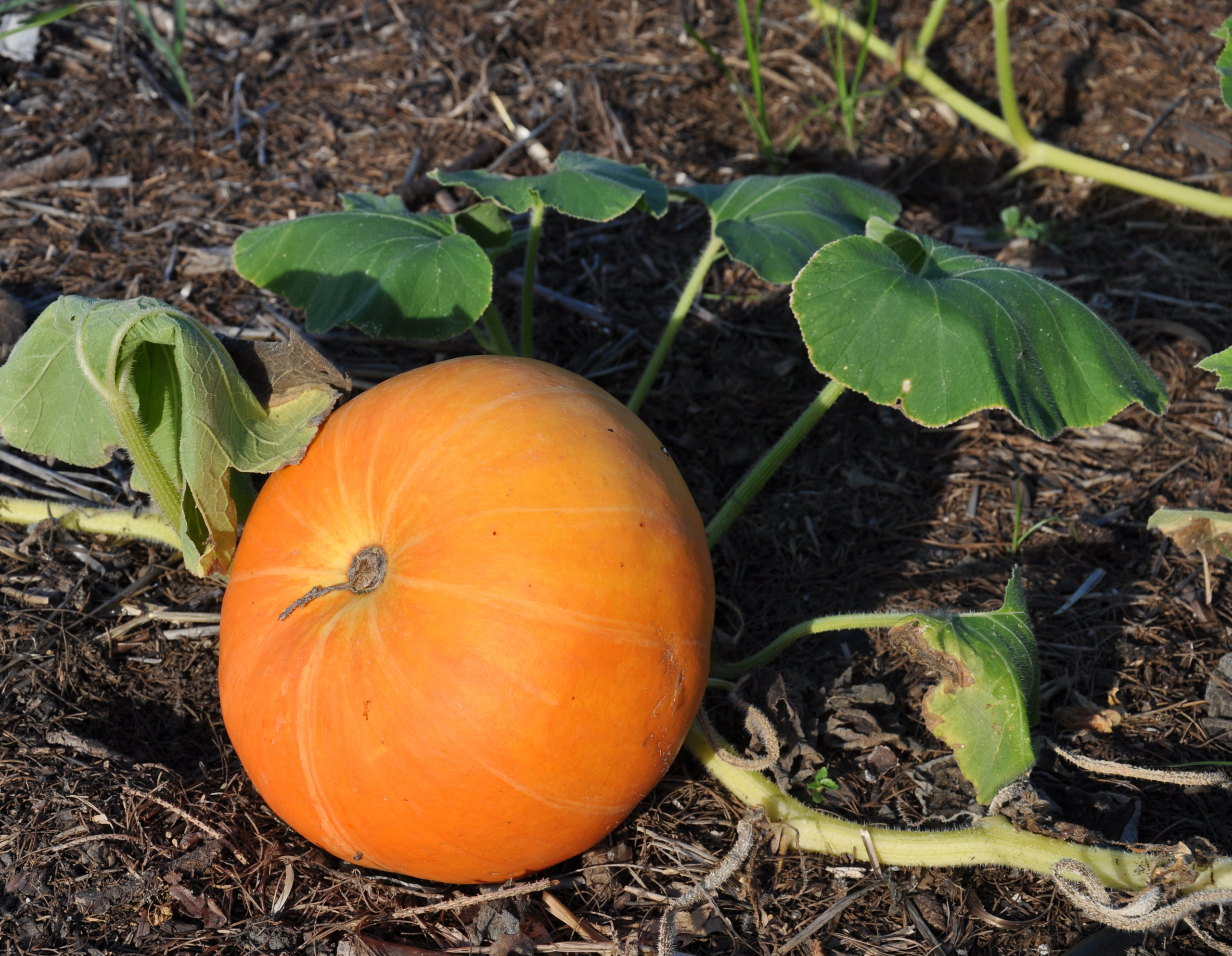
Since our program last week, I did some checking and found a product registered in Indiana labeled for voles in pumpkins as well as many other crops. Millers Hot Sauce is a taste repellent with an active ingredient of capsaicin (2.5% by weight), which is an irritant to animals, but one some people enjoy in hot peppers. Per label instructions adding an antitranspirant film former or a sticker may prolong the effectiveness of the product. Mix the product and additives with water according to label instructions. For heavy damage, start treatment after first true leaves appear and continue treatment every 7 days. If applying to transplants, start application one week after transplanting and continue every 7 days.
Always read the label completely before applying any pesticide. The efficacy of any repellent depends on a number of factors including animal population size and density, available food, and availability of cover. With voles, the year can be key because their populations tend to cycle. Combining other methods with repellents can often increase success. For example, soil cultivation within plant rows and in adjacent habitat can help reduce the habitat quality for voles. Cultivation can also directly kill some voles. There are of course tradeoffs and every situation is unique. Soil cultivation would not be an option in some cases (e.g., adjacent to water, steep slopes). I was unable to find a toxicant registered for voles in pumpkins. But depending on what the land cover is adjacent to the pumpkin patches, some of these may be appropriate in those areas.
With face-to-face Extension programs on hold for the foreseeable future, look for more live Q&A sessions and other programs on Facebook (PurdueFNR) or Twitter (@PurdueFNR).
Resources
National Pesticide Information Retrieval System
Midwest Fruit Pest Management Guide, The Education Store, Purdue Extension resource center
Hops Production in Indiana: Integrated Pest Management Guide for Hops in Indiana, The Education Store
Turfgrass Insects: Managing Black Cutworms in Turfgrass, The Education Store
Applied Research in Field Crop Pathology for Indiana – 2019, The Education Store
Managing Alfalfa Autotoxicity, The Education Store
Brian MacGowan, Wildlife Extensions Specialist
Purdue Forestry and Natural Resources
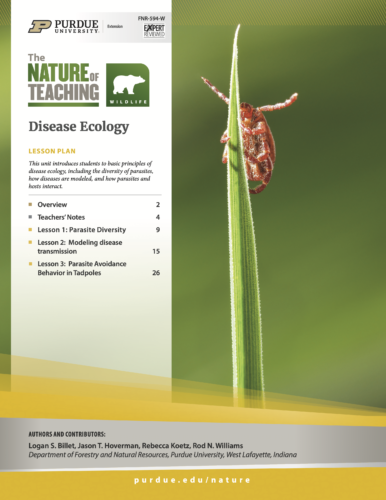 The Nature of Teaching: Disease Ecology is one unit in a series available from The Nature of Teaching – the place to go for teaching resources that focus on wildlife, food waste, health and wellness. In this series teachers can find free lesson plans, printables, posters, a photo library, information on upcoming workshops and more.
This unit introduces students to basic principles of disease ecology, including the diversity of parasites, how diseases are modeled, and how parasites and hosts interact. It includes three lessons with colorful animal cards to print along with worksheets and presentation.
Lesson 1: Parasite Diversity Activity
Lesson 2: Modeling Disease Transmission
Lesson 3: Parasite Avoidance Behavior in Tadpoles
This 33-page download PDF is written by Dr. Jason Hoverman; Logan Billet, Rebecca Koetz and Dr. Rod Williams.
For more resources, please check the Education Store.
Resources
Benefits of Connecting with Nature, The Education Store, Purdue Extension resource center
The Nature of Teaching: Ecotoxicology and Environmental Health, The Education Store
Resourceful Animal Relationships, The Education Store
The Nature of Teaching: Food Waste and the Environment, The Education Store
Rod Williams, Professor of Wildlife Science
Purdue University Department of Forestry and Natural Resources
Purdue Forestry & Natural Resources extension specialists gathered for a Facebook LIVE event held May 5th to answer questions on a wide range of topics from woodland management to wildlife habitat, ponds to invasive species and more.
Topics ranged from what to do about moles, voles and Canada geese causing damage in your yard, to how to pick the right tree for your landscape and how to measure the worth of your trees. The presentation also included segments on what to do about algae in your pond to how to know if you need to restock it as well as what to do about invasive plant species and how to protect your trees from deer damage.
Get advice from extension specialists Jarred Brooke, Lenny Farlee, Brian MacGowan, Lindsey Purcell, Rod Williams and Mitch Zischke in the video below.
If you have any further questions feel free to send your questions by submitting our Ask An Expert form.
Resources mentioned:
Purdue Extension – The Education Store
Purdue Report Invasive Species Website
Midwest Invasive Species Network Database
TreesAreGood.org
Find a Forester in Indiana
Improve My Property for Wildlife, Purdue Extension
Online Mole Program, Event May 14th, Purdue FNR Extension
Have you seen a hairless squirrel, Got Nature? Blog, Purdue FNR Extension
Stocking Fish, The Education Store, Purdue Extension Resource Center
Tree Selection for the “Un-natural” Environment, The Education Store
Selecting a Nuisance Control Operator, The Education Store
Forest Products Price Report (pdf), Indiana Department of Natural Resources (IDNR)
Indiana DNR Nuisance Goose Control Options (pdf), Indiana Department of Natural Resources (IDNR)
Turtles of Indiana, The Education Store
Salamanders of Indiana, The Education Store
Frogs and Toads of Indiana, The Education Store
Snakes and Lizards of Indiana, The Education Store
Aquatic Plant Management, The Education Store
Native Grasses, The Education Store
Preventing Deer Browsing on Trees/Shrubs, Video, Purdue Extension Youtube Channel
Brian MacGowan, Wildlife Extension Specialist
Purdue University, Department of Forestry and Natural Resources
Our recent cold mornings resulted in late freeze damage to many trees and shrubs. This damage to newly emerging shoots and leaves follows a few hours of temperatures below the freezing mark. Damage is usually characterized by wilting browning of new growth, particularly leaves and needles. It may take a few days, or until temperatures begin warming again, for damage to become evident.
The photos below reveal some late freeze damage in southern Indiana, shared by a concerned tree owner. It is often dramatic and can cause concern for homeowners and landscapers. Fortunately, the damage is largely aesthetic, and plants will quickly resume growth.
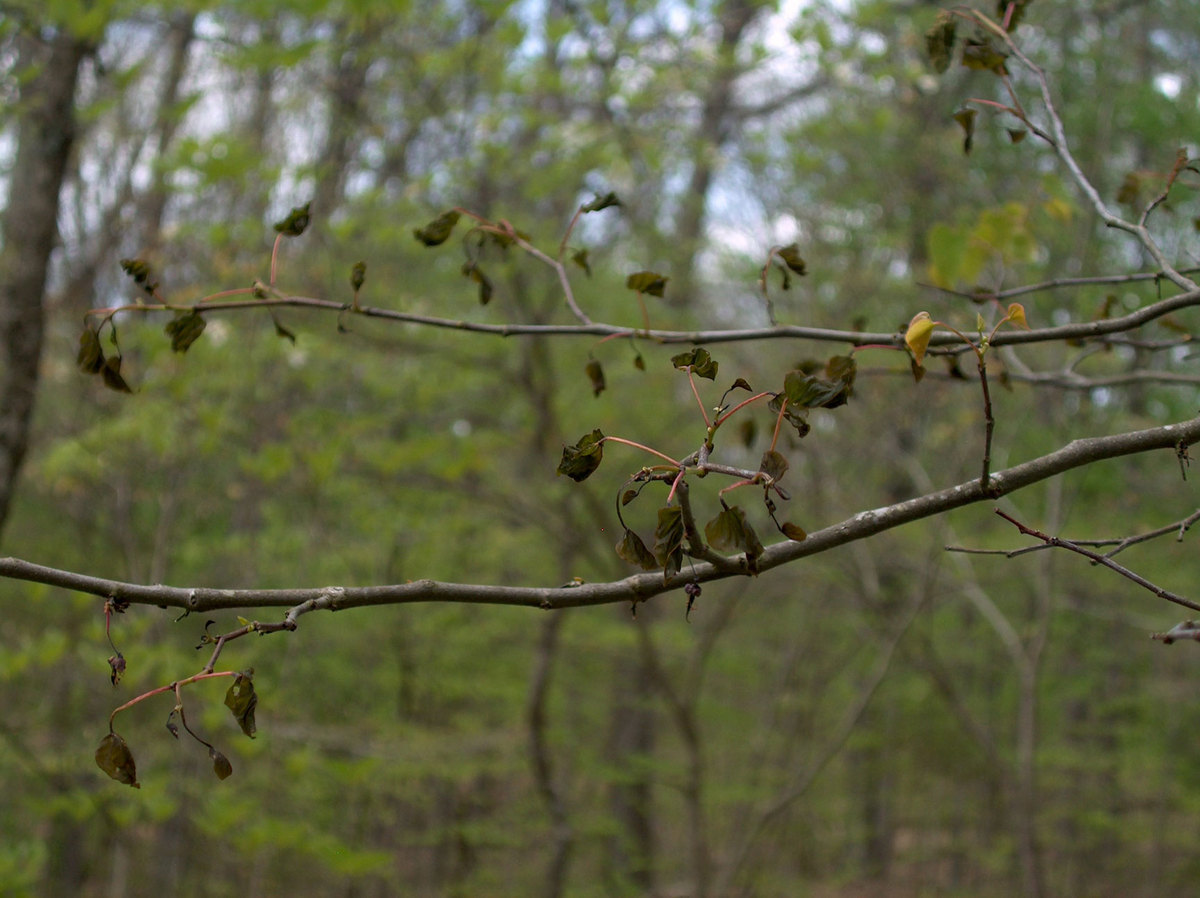
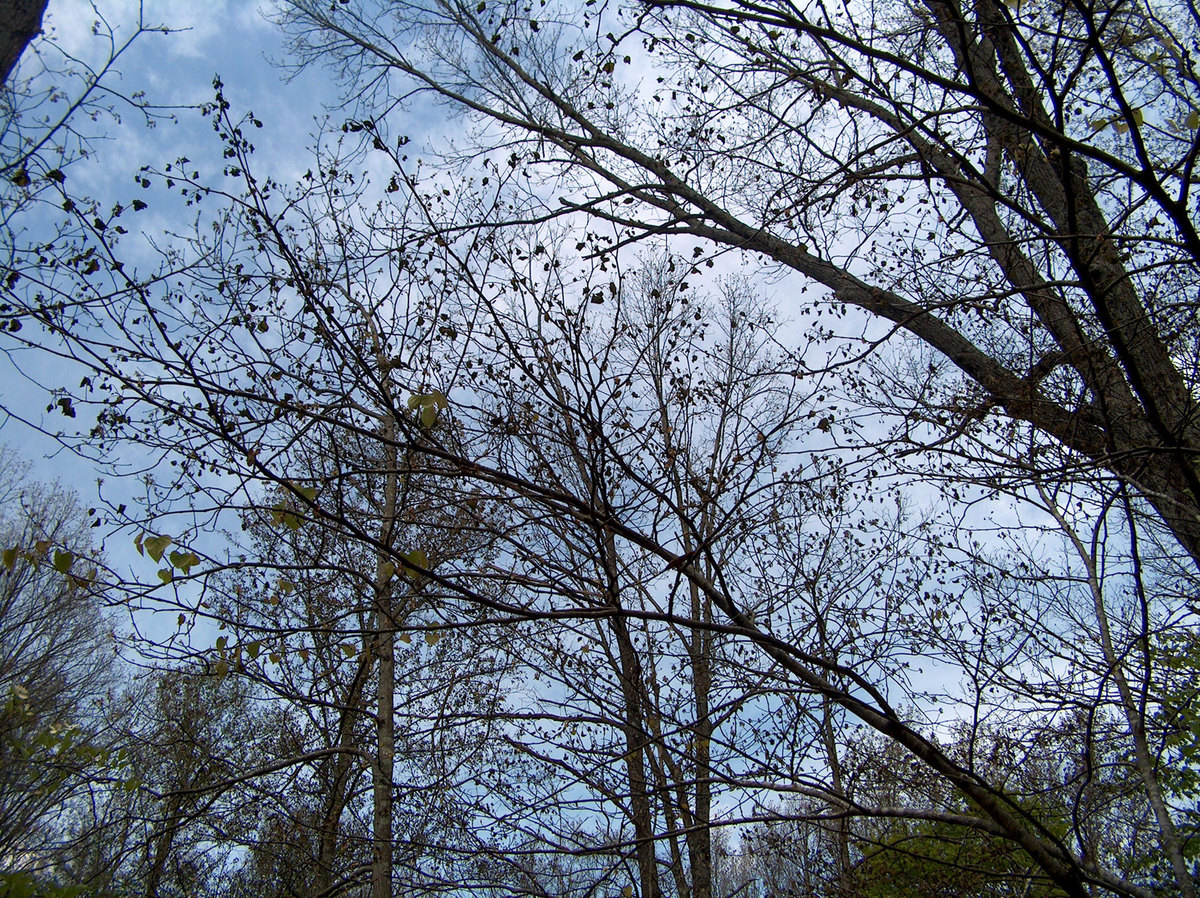
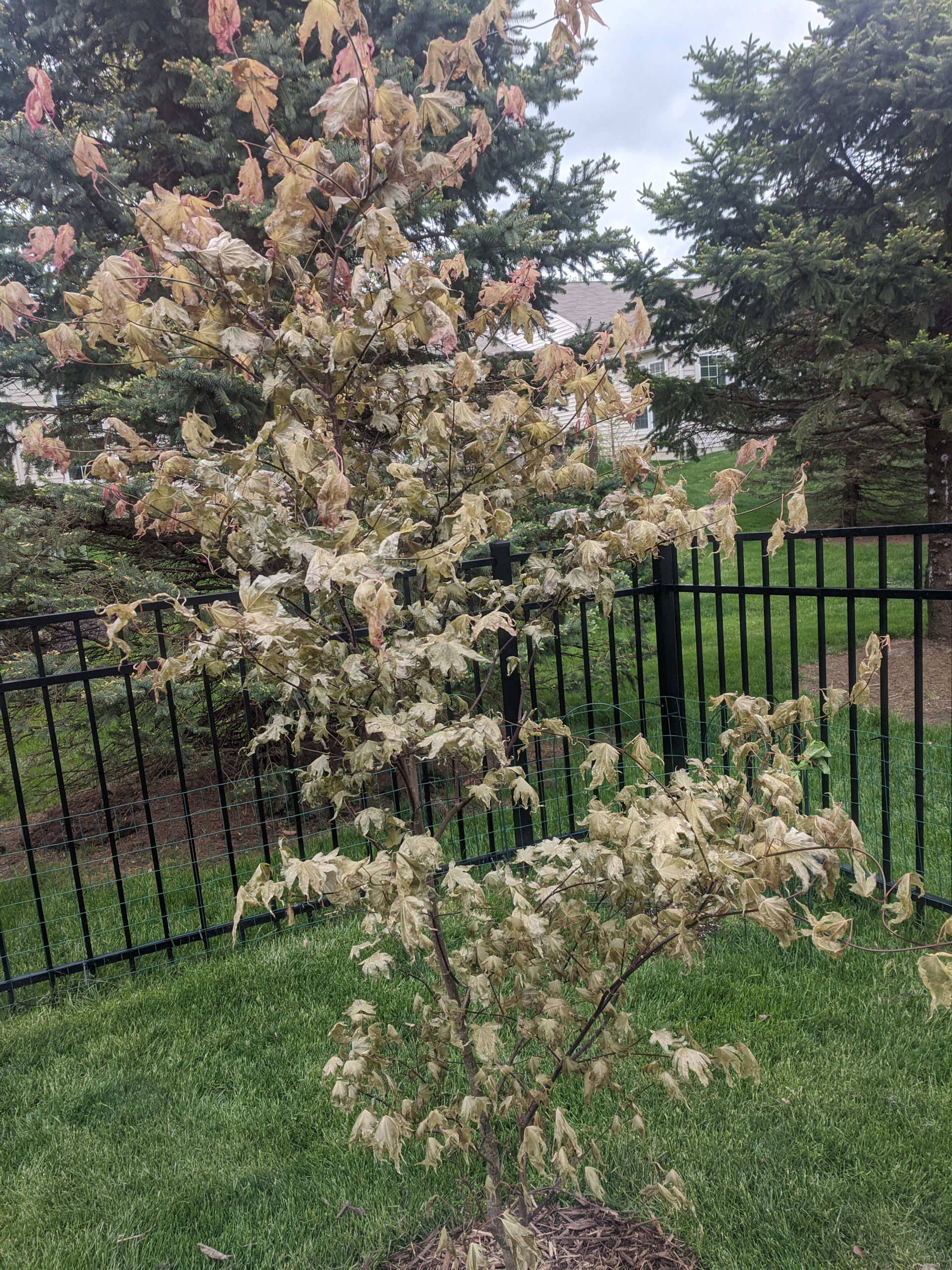
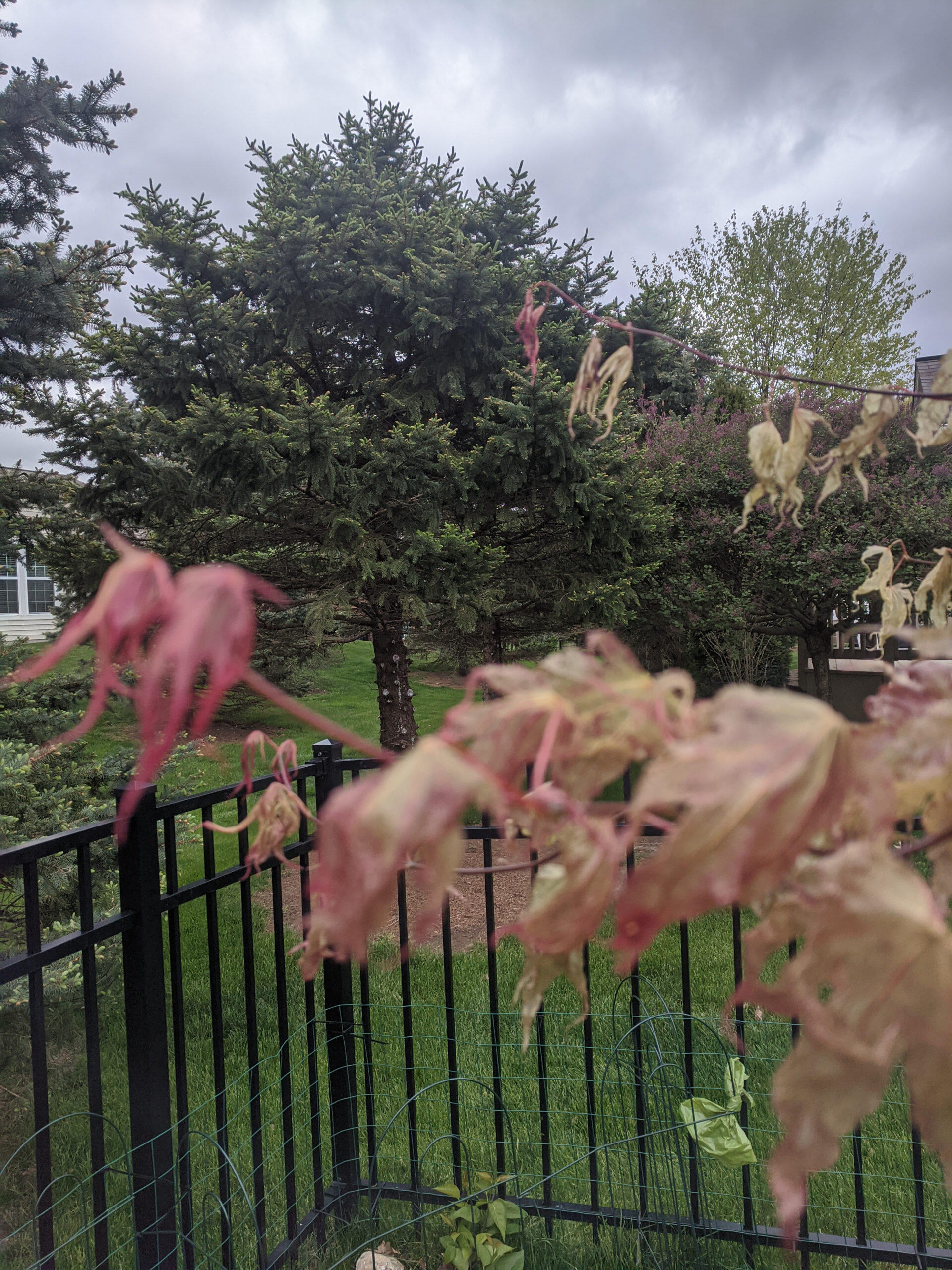
What can you expect? Typically, the damaged or dead leaves will fall and new leaves will emerge, although somewhat slowly. A reduction in growth and leaf size can be anticipated as well. Just remain calm and wait for the tree to recover. If the tree was vigorous going into winter and had a good store of carbohydrates, it can withstand an environmental hit such as these cold extremes.
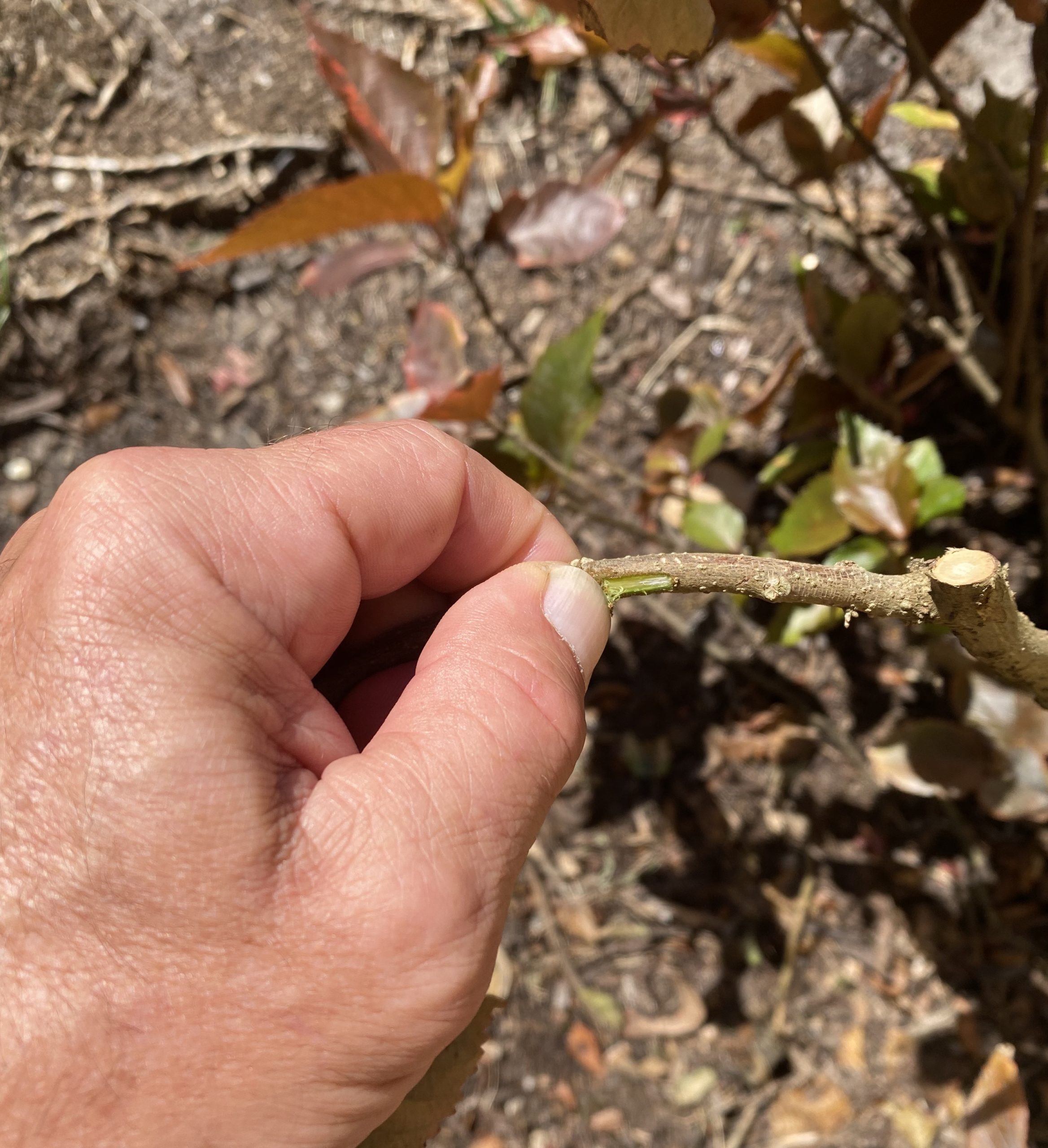 If branches or stems don’t show any evidence of bud or leaf emergence, lightly scratch the bark with your thumbnail. If the green cambial layer is revealed, the tree is likely just slowly emerging from dormancy. If there is no green tissue evident, it is likely dead. Prune out the dead branches to a living later branch and assess the plant.
Resources
Question: What are these pretty green flower shaped growth spots? Will they damage the tree?, Got Nature? Post, Purdue FNR Extension
Iron Chlorosis of Trees and Shrubs, The Education Store, Purdue Extension resource center
Tree Diseases: Oak Wilt in Indiana, The Education Store
Tree Diseases: White Pine Decline in Indiana, The Education Store
Mechanical Damage to Trees: Mowing and Maintenance Equipment, The Education Store
Surface Root Syndrome, The Education Store
Tree Appraisal and the Value of Trees, The Education Store
Lindsey Purcell, Urban Forestry Specialist
Purdue University, Department of Forestry and Natural Resources
For such a small creature, moles can cause big headaches. Their tunneling behavior can cause extensive damage to turf areas if left unchecked. While the damage is easy to identify, solving it can be tricky.

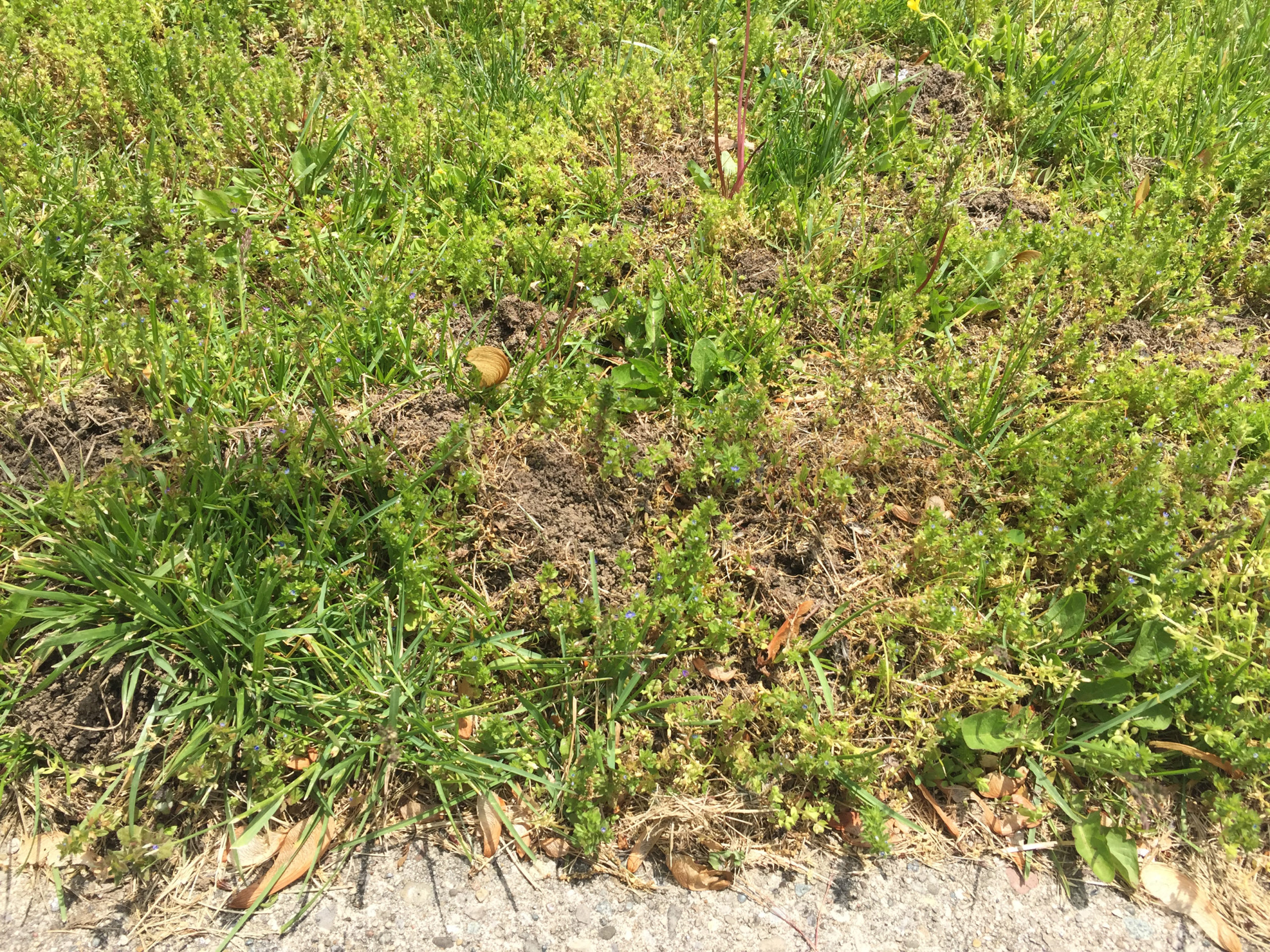
Purdue wildlife specialist, Brian MacGowan, shared tips and control techniques including trapping, repellents, toxicants, and cultural methods as well as answer your questions on the topic on Facebook LIVE, Thursday, May 14th.
You can view this topic along with question and answer time on the Purdue FNR Facebook page: https://www.facebook.com/PurdueFNR/videos/3372718849422210/.
If you have any further questions feel free to place your question in the comment section on our Purdue FNR Facebook page on the video link above or you can send your question by submitting an Ask An Expert form.
Resources
Moles, The Education Store, Purdue Extension resource center
Adjuvants and the Power of the Spray Droplet: Improving the Performance of Pesticide Applications, The Education Store
Preventing Wildlife Damage – Do You Need a Permit?, The Education Store
Attract Hummingbirds to Your Yard, Video, Purdue Extension Youtube Channel
How to Stop Woodland Animals from Digging in Your Flower Pots, Video, Purdue Extension Youtube Channel
Brian MacGowan, Wildlife Extension Specialist
Purdue Forestry and Natural Resources
Question:
Are these pretty green flower shaped growth spots lichens? It just appeared on my tree this year. With this type of fungus should I be worried that it could damage the tree?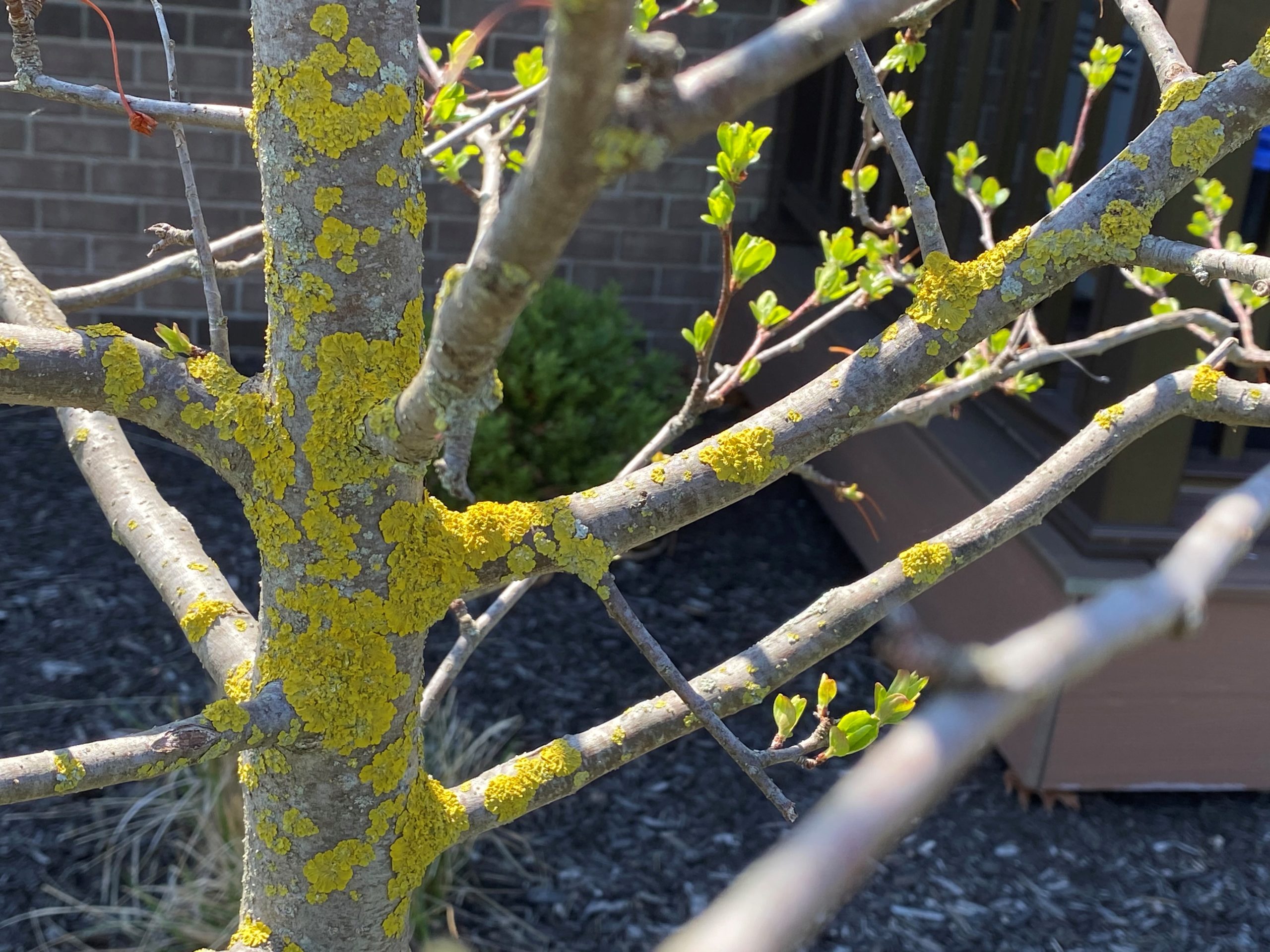
Answer:
Lichen is common on trees and not bad either. Those grayish-green patches, come in all sizes and shapes and sometimes covering much of the tree, are not feeding on your woody plants. Lichens grow on the surface of the tree, and do not penetrate any tissue. Instead, they make use of the trunk or branches for support. They can be aesthetically pleasing for many. Lichens play a very significant role as a bio-indicator. They only grow where the air quality is good and have a favorable growing environment. They help filter the air as well… so, don’t worry, be happy!
Resources:
Lichens, Purdue Botany & Plant Pathology
Purdue Plant & Pest Diagnostic Lab, Purdue Botany & Plant Pathology
Diseases of Landscape Plants: Leaf Diseases, The Education Store, Purdue Extension resource center
Surface Root Syndrome, The Education Store
Tree Installation: Process and Practices, The Education Store
Purdue Landscape Report, Purdue University
Lindsey Purcell, Urban Forestry Specialist
Purdue University, Department of Forestry and Natural Resources

Recent Posts
- ID That Tree: Nannyberry Viburnum
Posted: July 22, 2026 in Forestry, Plants, Wildlife, Woodlands - ID That Tree: Eastern Swamp Privet
Posted: in Forestry, Plants, Wildlife, Woodlands - Indiana Monarch and Pollinator Conservation
Posted: June 1, 2026 in Forestry, Forests and Street Trees, Gardening, How To, Natural Resource Planning, Plants, Urban Forestry, Wildlife - ID That Tree: Shumard Oak
Posted: March 9, 2026 in Plants, Urban Forestry, Wildlife, Woodlands - ID That Tree: Fragrant Sumac
Posted: February 4, 2026 in Plants, Urban Forestry, Wildlife - It’s Not Too Late to Order Trees for Spring Planting
Posted: January 13, 2026 in Forestry, How To, Plants - Red in Winter – What Are Those Red Fruits I See?
Posted: December 1, 2025 in Forestry, Plants, Urban Forestry, Wildlife, Woodlands - Fall Tree Care Tips
Posted: September 20, 2025 in Forestry, Forests and Street Trees, Gardening, How To, Land Use, Plants, Safety, Timber Marketing, Urban Forestry, Wood Products/Manufacturing, Woodlands - Top 10 Spring Flowering Shrubs, Purdue Landscape Report
Posted: April 28, 2025 in Gardening, Plants, Urban Forestry - Protecting Spring Plants From Wildlife Damage Using Repellents
Posted: April 14, 2025 in How To, Plants, Wildlife
Archives
Categories
- Alert
- Aquaculture/Fish
- Aquatic/Aquaculture Resources
- Ask the Expert
- Christmas Trees
- Community Development
- Disease
- Drought
- Forestry
- Forests and Street Trees
- Gardening
- Got Nature for Kids
- Great Lakes
- How To
- Invasive Animal Species
- Invasive Insects
- Invasive Plant Species
- Land Use
- Natural Resource Planning
- Nature of Teaching
- Plants
- Podcasts
- Ponds
- Publication
- Safety
- Spiders
- Timber Marketing
- Urban Forestry
- Webinar
- Wildlife
- Wood Products/Manufacturing
- Woodland Management Moment
- Woodlands