Several things come into play when it comes to determining the colors that we find on leaves of our trees. In this video, we will talk about the several pigments that are found in trees and what changes from summer to fall that brings us the bright colors on leaves.
If you have any questions regarding trees, forests, wildlife, wood products or other natural resource topics, feel free to contact us by using our Ask an Expert web page.
In this edition of ID That Tree, Purdue Extension forester Lenny Farlee teaches you about the state tree of Indiana, the tulip tree. It is also known as the tulip poplar or yellow poplar, although it is more closely related to the magnolia. This tree is known for its simple tulip shaped leaves and colorful flowers in the spring, although they are often high up on the tree.
If you have any questions regarding trees, forests, wildlife, wood products or other natural resource topics, feel free to contact us by using our Ask an Expert web page.
Join Purdue Extension urban forester Lindsey Purcell, exotic forest pest educator Elizabeth Barnes and entomology extension specialist Cliff Sadof as they share about how to inspect trees, what to look for, who to contact, etc., as well what invasive pests and diseases you should keep your eye out for.
If you have any questions regarding trees, forests, wildlife, wood products or other natural resource topics, feel free to contact us by using our Ask an Expert web page.
Wildlife extension specialist Jarred Brooke explains why the shelterwood technique is one of his favorite ways to create food and cover in woodlands for wildlife. The benefits of creating this type of food source and cover increases a variety of wildlife species along with aiding the forest area with a healthy ground cover.
If you have any questions regarding wildlife, trees, forest management, wood products, natural resource planning or other natural resource topics, feel free to contact us by using our Ask an Expert web page.
Purdue Landscape Report: Trees are incredible survivors in spite of the challenges from pests of all kinds, including us! They are vulnerable to injuries such as mechanical wounds from lawn equipment, vehicles and ice. Pruning results in an intentional wound which is of importance to consider. Tree owners and managers need to prune trees to maintain aesthetic characteristics, remove infected limbs, reduce risk, or improve structural stability. Proper pruning practice and understanding tree wounds can minimize the impact of creating wounds on trees.
Wounds attract pests due to the phytochemicals dispersed from exposed tissue. When tree tissue is damaged or wounded, the newly uncovered tissue is exposed and that is when to expect an attack. Insect pests are drawn to trees in distress, feeding on the tissue and weakening the tree. Diseases affecting trees will introduce enzymes into the cells, digesting living tissue responsible for food and water translocation (phloem and xylem) or structural support resulting in unhealthy, unsightly, or unsafe trees.
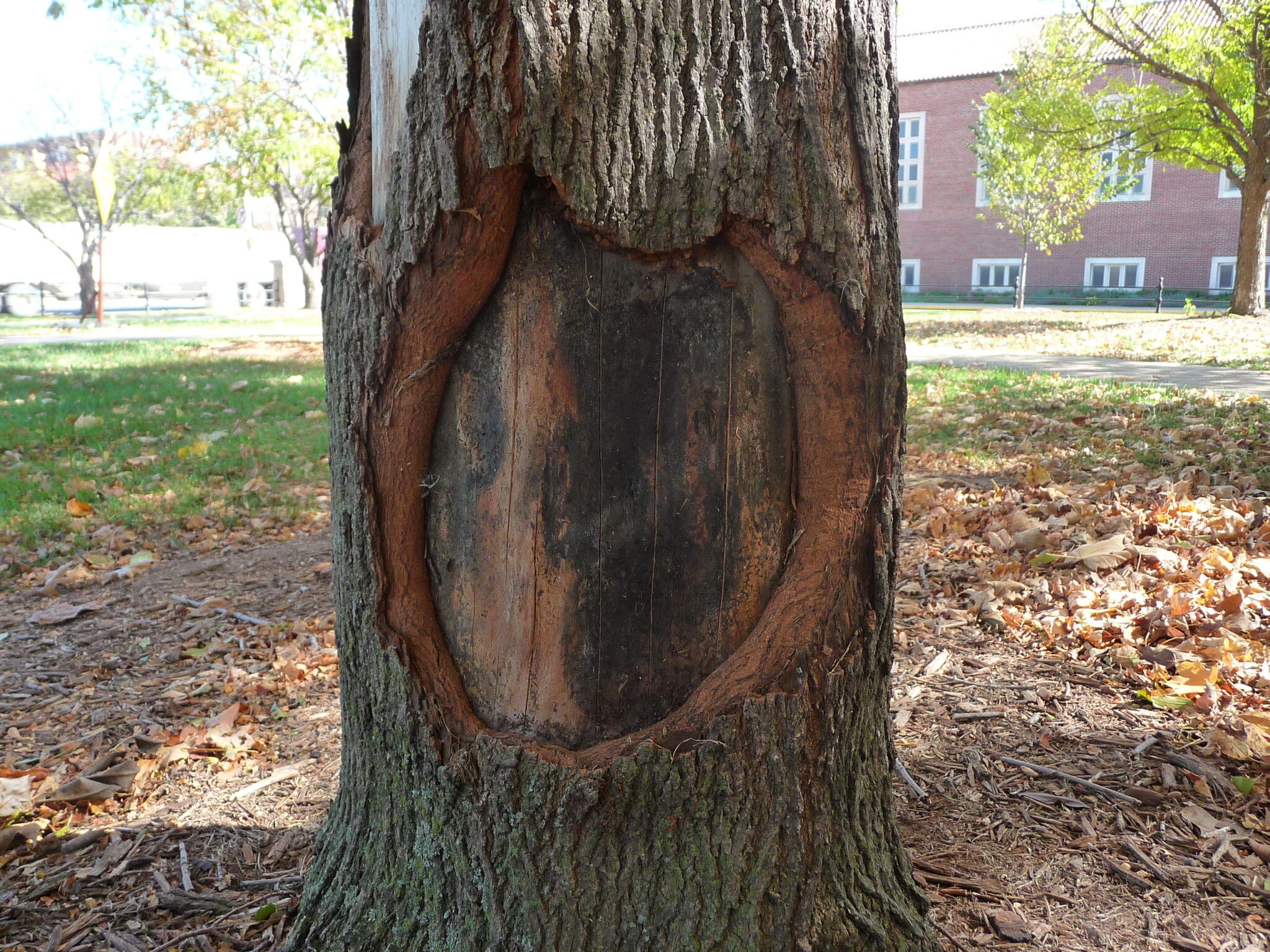
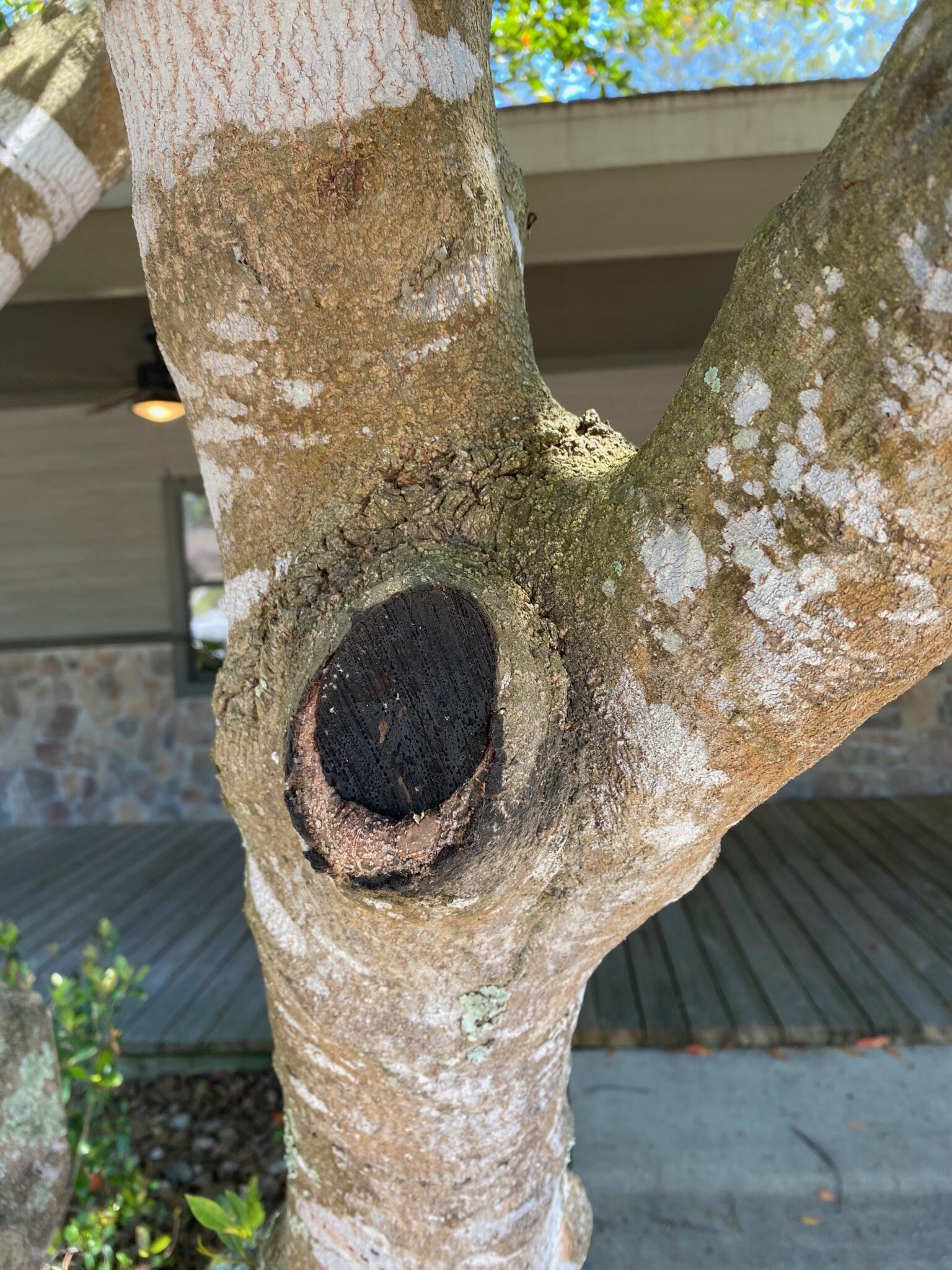
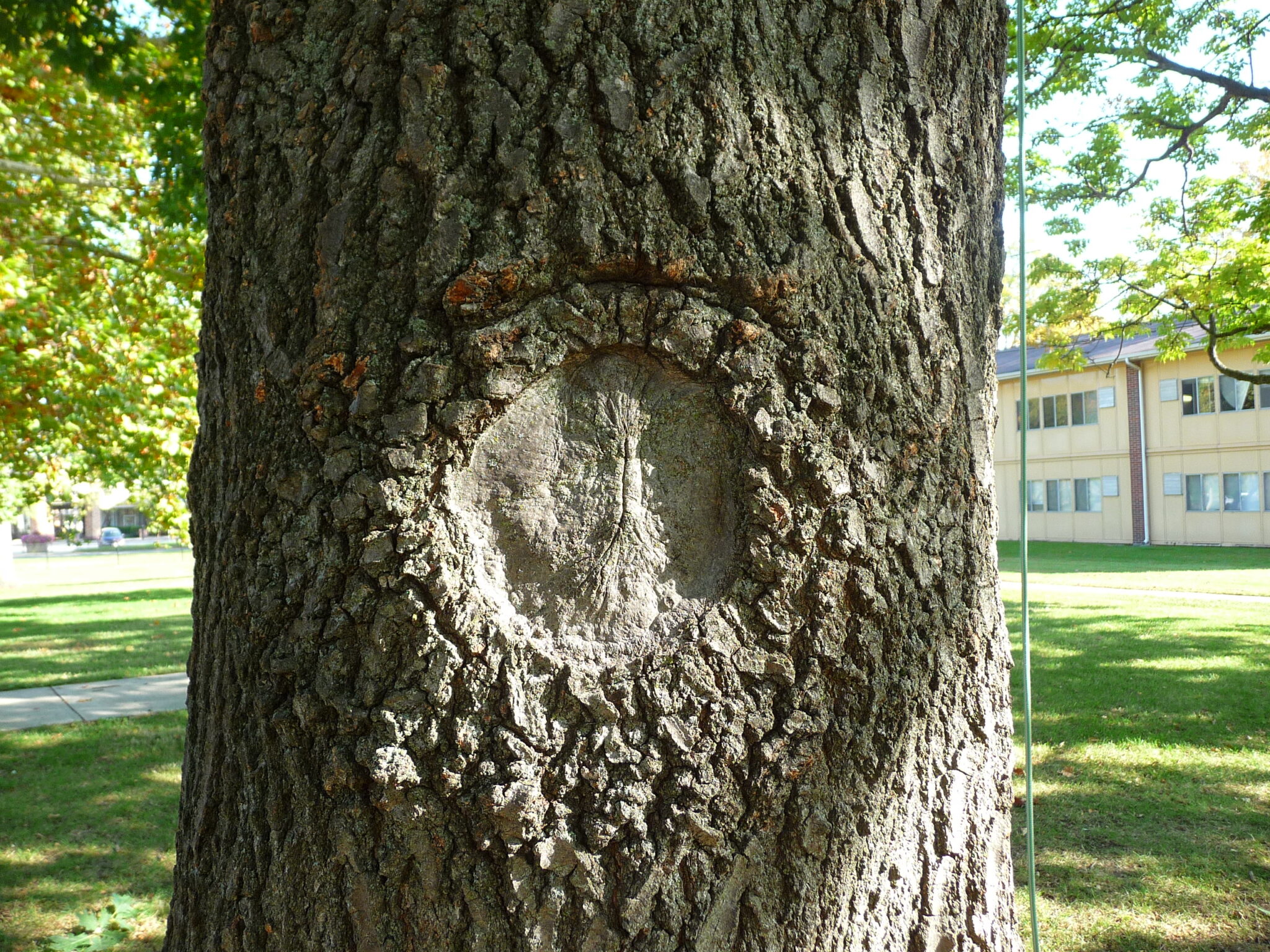
Wound wood Formation Trees attempt to close wounds by sealing or compartmentalizing the affected area, naturally.
Tree trunk damaged by construction equipment developing wound wood around the edges to eventually seal the wound.
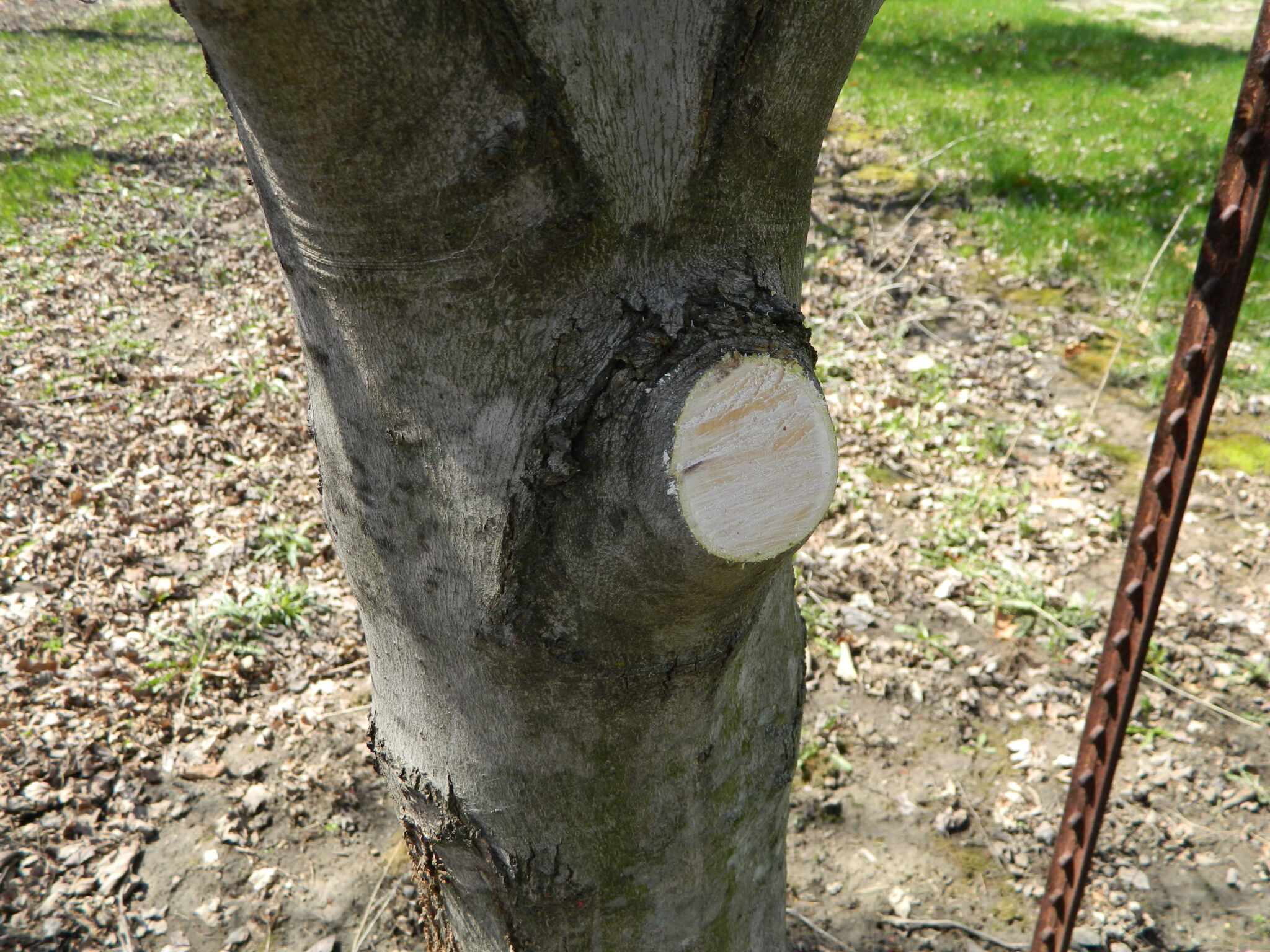
Pruning cuts will develop callus tissue on the exposed tissue giving rise to wound wood.
Wounding of trees during the growing season results in the formation of callus tissue which develops over the wound surface or parts of it. This callus tissue is an unorganized group of important parenchyma cells. As the callus develops and grows, wound wood develops which hopefully will cover the exposed tissue quickly and efficiently.
Wound recovery rates vary widely for different tree species. The speed of recuperation is greatly affected by developmental environmental conditions, vigor and health of the tree. Some trees may never completely close their wounds due to their genetic capacity or perhaps inadequate resources to keep the tree vigorous. However, numerous studies reveal that faster wound closure results in fewer health issues for the tree. Quick healing is always better!
A healthy tree will seal wounds faster and the same for younger trees as well. Trees that are planted in well-drained, quality soils, with good texture, structure, and containing adequate nutrition levels, grow in a way that favors the healing process. Thus, when planting trees, homeowners should be aware of the effects of site selection, soil quality, and other site factors that may impact tree growth.
Wound dressings slow closure and can prevent healing.
Complete wound closure improves tree health and slows decay.
Faster closure There are few ways wound closure can be hastened, or at least not inhibited. First, it is essential to avoid limiting oxygen availability to the wounded tissues. Oxygen is necessary for proper recovery. For example, painting a wound with any kind of material that interferes or impedes oxygen will slow or even prevent wound closure by poor callus formation. Wound treatment with petroleum-based products is not recommended. In fact, research indicates any type of wound dressing can slow the healing process. There is one exception for treating wounds. This is in areas where oak wilt disease occurs, wound paints may be useful in preventing insect spread of the oak wilt fungal pathogen.
Basically, the best way to help insure proper wound closure and quick and effective sealing of the tissue is a proper pruning cut and preventing damage whenever possible.
Find a professional Be sure to always hire an insured, tree care professional, preferably and ISA Certified Arborist with the experience, expertise, and equipment to provide proper tree care. Require proof of liability insurance to protect yourself as well.
Purdue Extension forester Lenny Farlee shares identifying characteristics of the black walnut tree, also known as the American black walnut or eastern black walnut, including pairs of leaflets running down each stem, long running ridges on the bark, and round nuts that have a very strong exterior. This sun-loving tree also needs high quality soil.
If you have any questions regarding trees, forests, wildlife, wood products or other natural resource topics, feel free to contact us by using our Ask an Expert web page.
Purdue Extension forester Lenny Farlee shares about the pecan, one of Indiana’s native hickories. Learn how to identify this species by more than just its nut production.
If you have any questions regarding trees, forests, wildlife, wood products or other natural resource topics, feel free to contact us by using our Ask an Expert web page.
Get to know one of our small Indiana trees, good for landscaping, that has purple flowers in the summer and pink fruit in the fall. Meet the American Burning Bush or Wahoo. Purdue Extension forester Lenny Farlee shares about where you can find this species, and more identifying characteristics.
The American Burning Bush is a native and desirable small tree found in our Indiana woodlands, not to be confused with winged burning bush, which is an exotic and invasive shrub that has escaped into woodlands from landscape plantings.
If you have any questions regarding trees, forests, wildlife, wood products or other natural resource topics, feel free to contact us by using our Ask an Expert web page.
Purdue Extension forester Lenny Farlee introduces you to one of the bright flowering stars of spring, the Redbud. This native tree is known for its pink and lavender flowers in early spring, its heart-shaped leaves and for its home along the edge of open fields and brushy areas.
If you have any questions regarding trees, forests, wildlife, wood products or other natural resource topics, feel free to contact us by using our Ask an Expert web page.
Unexpected Plants and Animals of Indiana: What is roughly the size of a potato, tastes like a banana and had its own dedicated month on the Native American Shawnee tribe’s calendar?
It’s not a riddle it’s the pawpaw fruit, borne by the pawpaw tree (Asimina triloba), a tree with close tropical relatives that is native to much of North America.
Known affectionately as the Hoosier banana (and to Kentuckians as the Kentucky banana, and so on), the pawpaw fruit is the largest native fruit in North America and has a rich cultural and culinary history throughout the Midwest. A staple of many Native American tribes’ diets, the pawpaw was also consumed by early settlers in the region and relied on during the Great Depression as a substitute to other, more expensive, fruits. Before the pawpaw became known as the Hoosier banana, it was called the poor man’s banana.
In recent decades, however, the pawpaw fell out of culinary vogue. While the trees can be found growing in the wild, usually in forested areas, or in backyards of the ambitious gardener, pawpaw is consumed and grown largely as a novelty.
“Not that many people grow pawpaws in their backyard,” Rosie Lerner, Extension consumer horticulturist, said. “It’s a native tree, has rather specific pollination requirements to be able to set fruit, is difficult to transplant and is not widely available at local nurseries.”
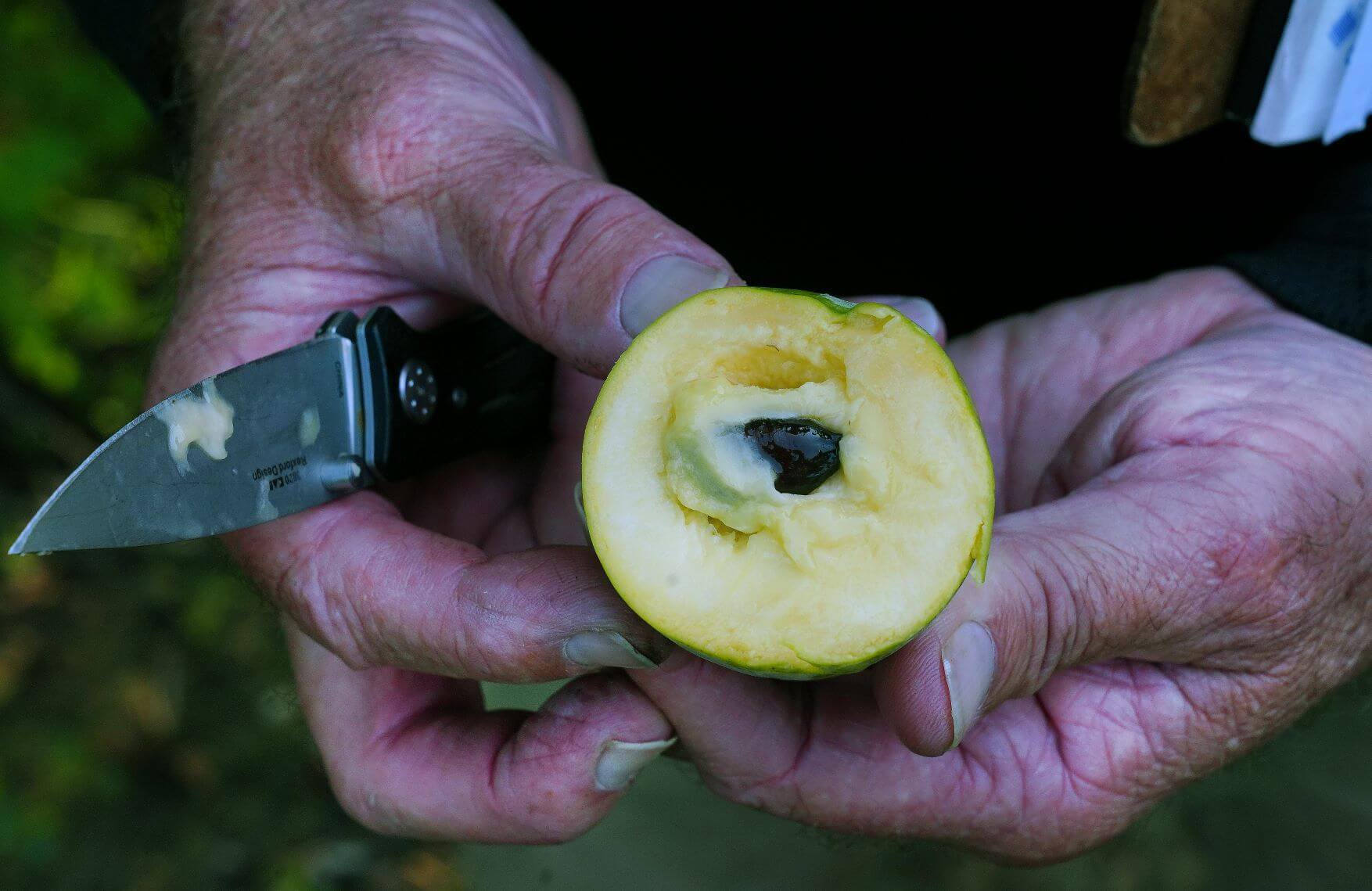
Bruce Bordelon, professor of horticulture, shows off the inside of a pawpaw fruit. Photos by Tom Campbell.
Emily Wendel, a freshman in horticulture and landscape architecture, grew up on an Indiana farm surrounded by naturally occurring pawpaw trees. While she doesn’t care for the fruit, her father has developed a passion for harvesting pawpaws, eating them raw or incorporating them into different recipes. He even delivers them regularly to Wendel’s grandmother who lives just down the road.
“My grandma and I don’t really like pawpaws raw but my dad kept bringing her buckets full,” Wendel said. “My grandmother used to be a home economics teacher. She didn’t want them to go to waste, so she started using them in different things. She makes this bread that we both really like.”
When Wendel’s grandmother heard her granddaughter recently discussed and tried pawpaws in her introductory botany class, she baked a batch of bread for Wendel to bring her peers.
“I grew up in a small town so it was normal to bring something grandma baked to class. People would get excited,” Wendel added. “In college I thought maybe people would wonder about the strange girl with the pawpaw bread. But most people were willing to try it and really enjoyed it. And it made my grandmother’s day.”
Wendel’s grandmother even wrote out the recipe below for her to share with others.
“Even though I don’t always like the taste, it’s really neat to have a fruit like pawpaws native to Indiana,” Wendel said. “I hope trying it in the bread has opened people’s eyes to its uses.”