 Purdue University - Extension - Forestry and Natural Resources
Got Nature? Blog
As winter comes swiftly upon us, there are precautions we need to take to ensure our plants, both indoor and outdoor, are well taken care of. Below are a few examples of how you can prevent certain problems that occur in the cold months ahead. View all of the steps you can take at the Purdue Extension Yard and Garden Calendar page.
HOME (Indoor plants and activities)
- Houseplants may not receive adequate light because days are short and gloomy. Move plants closer to windows, but avoid placing foliage against cold glass panes. Artificial lighting may be helpful.
- Because growth slows or stops in winter months, most plants will require less water and little, if any, fertilizer.
- Extend the lives of holiday plants such as poinsettias and Christmas cactus by placing them in a cool, brightly lit area that is free from warm or cold drafts.
YARD (Lawns, woody ornamentals and fruits)
- Prevent bark splitting of young and thin-barked trees, such as fruit and maple trees. Wrap trunks with tree wrap or paint them with white latex (not oil-based) paint, particularly on the south- and southwest-facing sides.
- Provide winter protection for roses by mounding soil approximately 12 inches high to insulate the graft union after plants are dormant and temperatures are cold. Additional organic mulch such as straw compost or chopped leaves can be placed on top.
GARDEN (Flowers, vegetables and small fruits)
- To protect newly planted or tender perennials and bulbs, mulch with straw, chopped leaves or other organic material after plants become dormant.
- Store leftover garden chemicals where they will stay dry, unfrozen and out of the reach of children, pets and unsuspecting adults.
- Once the plants are completely dormant and temperatures are consistently below freezing, apply winter mulch to protect strawberries and other tender perennials. In most cases, two to four inches of organic material such as straw, pine needles, hay or bark chips will provide adequate protection.
Resources
Winter Garden Calendar, The Education Store
Winter Storage of Geranium, Canna, Gladiolus, Caladium, and Begonia, The Education Store
Winterize Your Trees, The Education Store
 The Wildlife Habitat Education Program (WHEP) helps students understand wildlife ecology and management practices. In addition, students gain skills in teamwork, oral and written communication, decision-making and leadership. The WHEP career development event includes three activities: Wildlife Challenge, Wildlife Management Practices and Wildlife Management Plan. Each activity has an important role in teaching about the management of wildlife populations. The instructions in this publication can help leaders teach students to evaluate habitat for Wildlife Management Practices (WMPs).
Wildlife Habitat Education Program – Teaching and Learning Wildlife Management Practices is available at The Education Store today.
Resources
Wildlife Habitat Education Program (WHEP)
A Template for Your Wildlife Habitat Management Plan, The Education Store
Managing Forest and Wildlife Resources: An Integrated Approach, The Education Store
Teaching and Learning Wildlife Management Practices, The Education Store
Indiana’s State Wildlife Action Plan, Indiana DNR
Brian MacGowan, Extension Wildlife Specialist
Department of Forestry and Natural Resources
 In the aftermath of a natural disaster such as a hurricane or earthquake, victims could get more than temporary help if the structures erected to provide immediate relief could be easily converted into permanent structures. These converted repurposed buildings could become long-term housing, schools and clinics—or farm and light-industrial buildings. This six-page publication describes two different approaches to building canvas-covered, skeletal, light-timber frames to meet this need.
Light-Timber Frames for Transitional Disaster-Relief Housing is available as a free download at The Education Store.
Resources
First Steps to Flood Recovery, The Education Store
Disaster Recovery, IN.gov
Eva Haviarova, Associate Professor of Wood Products
Department of Forestry and Natural Resources
The Guardian has published an article in regards to the large loss of wildlife in the past 40 years. Due to humans’ rapid consumption practices and our ecological footprint, the Earth cannot replenish what we use fast enough. The WWF analyzed 10,000 different populations consisting of animals, fish and birds in the study to create a representative “Living Planet Index” (LPI). The study showed that freshwater ecosystems had the fastest declining population. While the biggest decline in animal numbers are in low income, developing nations, rich nations are “outsourcing” wildlife decline in developing countries by importing food and other goods produced through habitat destruction. What can you do to make a difference to help keep the Earth clean?
View the full article, Earth Has Lost Half of its Wildlife in the Past 40 Years, says WWF, at theguardian.com.
Resources
Living Planet Report 2014, WWF.panda.org
Land and Water Conservation Fund, Indiana DNR
Saving Energy in Your Home series, The Education Store
 Trees are cultivated in public and private landscapes in and around cities and towns. They are grown for the tremendous contributions they make both to the environment and the quality of people’s lives. In this urban forest, trees must be removed when they die or for reasons of health, safety or necessary changes in the landscape. The wood from these felled landscape trees could potentially be salvaged and used to manufacture wood products but not in the same way as forest-grown trees. This publication describes some key differences between wood products from traditional forests and those available from urban forests.
Urban Wood and Traditional Wood: A Comparison of Properties and Uses is available at The Education Store as a free download.
Resources
Lumber from Hardwood Trees, The Education Store
Winterize Your Trees, The Education Store
Lumber from Urban and Construction-Site Trees, The Education Store
Indiana’s Urban Woodlots, The Education Store
Dan Cassens, Professor of Wood Products and Extension Specialist
Department of Forestry and Natural Resources
Edith Makra, Chairman
Illinois Emerald Ash Borer Wood Utilization Team
 One of the most dangerous pests of trees is humans, especially humans with equipment. Lawn mowers and weed trimmers can cause injuries that can create a hazard when an injury leads to tree disease or death. This publication explains why the damage is so dangerous and suggests ways to protect your trees.
View Lindsey Purcell’s new publication, Mechanical Damage to Trees: Mowing and Maintenance Equipment, today at The Education Store.
Resources
Indiana’s Urban Woodlots, The Education Store
Tree Installation: Process and Practices, The Education Store
Lindsey Purcell, Urban Forestry Specialist
Department of Forestry and Natural Resources
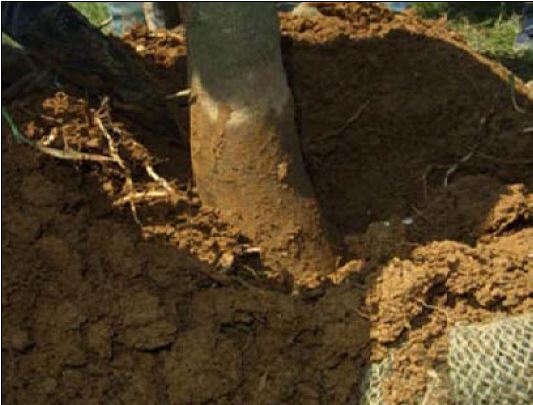 Full Question: I have removed six Silver Maple trees (12″ – 16″ diameter) from my yard because of root intrusion and roots surfacing. Can I treat the stumps by drilling and applying copper sulfate and not be concerned with the existing roots “leaching” to newly planted trees? If there is leaching from the existing roots, how long a period must I wait before replanting a better species of tree(s)? My plans are to replant from approx. 5-6′ from the stump location of the trees that were removed.
Answer: The best treatment for stump and roots left behind from removals is grinding and time. Treating with chemicals is typically not a good solution, nor does it really speed up the process. In fact, copper sulfate is a very caustic chemical. It can cause illness and injury if inhaled or if it comes in contact with your skin. Also do not use copper sulfate if your tree stump is near a water source or if you have children or domestic animals that may accidentally come into contact with the treated area. The copper sulfate that comes into contact with the surrounding landscape can also kill grass, plants and other trees. So caution should be used if you feel the need to use it. However, grinding the stumps and planting into good soil outside the area of the woody debris from the stump is the best course of action. The roots should not cause any issues except depressions in the lawn as they decompose.
Resources:
Tree Installation: Process and Practices, The Education Store, Purdue Extension’s resource center
Tree Pruning Essentials, The Education Store
Tree Appraisal, The Education Store
Tree Installation: Process and Practices, The Education Store
Debrushing, Indiana Department of Natural Resources
Find an Arborist, Trees are Good
Tree wounds and healing, Got Nature? Blog
Ask an Expert: Tree Selection and Planting, Purdue Extension – Forestry and Natural Resources (FNR) YouTube Channel
Planting Your Tree Part 1: Choosing Your Tree, Purdue Extension-FNR YouTube Channel
Subscribe to Purdue Extension-FNR YouTube Channel
Lindsey Purcell, Chapter Executive Director
Indiana Arborist Association

Lenny Farlee pointing out invasive Jet Bead at a Purdue Extension invasive plant training program.
If you have ever taken a walk through a forest, a woodland or a park, then you have likely encountered exotics plants. What may be difficult to distinguish, however, is whether or not those exotic plants are invasive. Unfortunately, most of us think that if it’s green, it’s good, but being green could be misleading. Invasive exotic plants are consuming growing space at an alarming rate and replacing our native species. These changes in plant species can have dramatic impacts, both economically and ecologically, to landowners and the ecosystem. Invasive species are such a problem that we are devoting an entire Podcast series to this topic.
In Part I of the Got Nature? Podcast mini-series on Invasive species, our host, Rod Williams, will be interviewing Lenny Farlee, an extension forester with the Hardwood Tree Improvement and Regeneration Center at Purdue University. Lenny will be the first expert in a series of podcasts devoted to the topic of invasive species, both terrestrial and aquatic. Lenny will be introducing our listeners to the topic of invasive species, identifying which species pose the greatest threats to the woodlands within Indiana and discussing the ecological and economic impacts that invasive plants pose to landowners. This podcast will also highlight methods that can be used to manage woodlands infested with invasive plants.
Resources
Midwest Invasive Plant Network
Indiana “Most Unwanted” Invasive Plant Pests
Purdue Extension Agriculture & Natural Resources
iTunes-Got Nature?
Got Nature? Podcasts
Lenny Farlee, Sustaining Hardwood Extension Specialist
Department of Forestry and Natural Resources, Purdue University
Rod Williams, Associate Professor of Wildlife Science
Department of Forestry and Natural Resources, Purdue University

Although fresh chips from tree pruning and removals look great for mulch and compost, there are some hidden issues. First, fresh wood chips can be very acidic (sometimes down around a pH of 4) which can be detrimental to plant growth. Also fresh chips have a high C:N (carbon to nitrogen ratio), and it must borrow nitrogen from the soil to help the decomposing process. So mixing the chips with the soil can actually reduce fertility for a while. Both of those can be problems for plants trying to grow in a bed mulched or mixed with fresh chips. Ideally, the newly ground chips should compost properly for a full year. If nitrogen fertilizer is added to the soil/mulch mix, it can speed up the process.
The effects of wood chips as mulch involve mainly the surface of the soil, which means it’s mainly shallow-rooted plants like perennial and annual flowers that would run into fresh wood chip trouble. This includes serious chlorosis and other health issues involving establishment and development. Deeper-rooted trees and shrubs are less likely to be affected as much; however, they are subject to the effects of the poor C:N ratio. I would suggest removing as much of the chips as possible, piling them for composting and replacing with proper soil for perennial growth unless you can wait for a full year to allow the decomposition cycle to be completed. This may help eliminate issues with new plants going into that location.
Resources
Mulching Conserves Soil Moisture, Department of Horticulture and Landscape Architecture
Growing Perennial Flowers, The Education Store (Search keywords to find the resources you need)
Collecting Soil Samples for Testing, The Education Store
Soil and Water Conservation Districts, Indiana State Department of Agriculture
Certified Soil Testing Laboratories, Purdue Department of Agronomy/Extension
Lindsey Purcell, Urban Forestry Specialist
Department of Forestry and Natural Resources
Many trees and plants in Indiana suffer from iron deficiency, chlorsis, induced by high (alkaline) soil pH. A symptom from the iron deficiency is the leaf yellowing. Plants suffering from iron chlorosis will often exhibit dieback and poor growth. Chlorosis is especially a problem with trees planted along streets and around homes where the original topsoil was removed or mixed with subsoil. The lime content of many of these subsoils is high. Most likely, the best course of action would be to conduct a soil test for mineral deficiencies and perhaps tissue analysis.
Resources
Iron Chlorosis of Trees and Shrubs, The Education Store
Collecting Soil Samples for Testing, The Education Store
Soil and Water Conservation Districts, Indiana State Department of Agriculture
Certified Soil Testing Laboratories, Purdue Department of Agronomy/Extension
Certified Arborists, International Society of Arboriculture (ISA)
Lindsey Purcell, Urban Forestry Specialist
Department of Forestry and Natural Resources, Purdue University

Recent Posts
- Celebrate Pollinator Week With Flowers of June Tour
Posted: June 15, 2026 in Forestry, Gardening, How To, Wildlife - Connecting Research to Practice: Natural Resources & Land Use Spring Training
Posted: June 5, 2026 in Forestry, Forests and Street Trees, How To, Invasive Animal Species, Invasive Plant Species, Land Use, Natural Resource Planning, Urban Forestry, Wildlife, Woodlands - Indiana Monarch and Pollinator Conservation
Posted: June 1, 2026 in Forestry, Forests and Street Trees, Gardening, How To, Natural Resource Planning, Plants, Urban Forestry, Wildlife - Spring Storms Are Coming: How to Reduce Tree Damage and Risk
Posted: May 1, 2026 in How To, Urban Forestry, Wildlife, Woodlands - It’s Timberdoodle Time!
Posted: April 3, 2026 in Got Nature for Kids, How To, Wildlife - When is the Peak Migration For Hummingbirds and How Can You Attract Them?
Posted: April 2, 2026 in How To, Wildlife - 2026 Winter Bat Survey In Progress, MyDNR
Posted: March 27, 2026 in How To, Wildlife - IN-PREPared: Essential Resources for Indiana’s Severe Weather Season
Posted: March 11, 2026 in How To, Safety - Getting Certified as an Indiana Certified Prescribed Burn Manager
Posted: March 2, 2026 in How To, Urban Forestry, Woodlands - Control Management of Poison Hemlock
Posted: February 24, 2026 in Ask the Expert, Forestry, How To, Invasive Plant Species
Archives
Categories
- Alert
- Aquaculture/Fish
- Aquatic/Aquaculture Resources
- Ask the Expert
- Christmas Trees
- Community Development
- Disease
- Drought
- Forestry
- Forests and Street Trees
- Gardening
- Got Nature for Kids
- Great Lakes
- How To
- Invasive Animal Species
- Invasive Insects
- Invasive Plant Species
- Land Use
- Natural Resource Planning
- Nature of Teaching
- Plants
- Podcasts
- Ponds
- Publication
- Safety
- Spiders
- Timber Marketing
- Urban Forestry
- Webinar
- Wildlife
- Wood Products/Manufacturing
- Woodland Management Moment
- Woodlands