 Purdue University - Extension - Forestry and Natural Resources
Got Nature? Blog
On this edition of ID That Tree, Purdue Extension forester Lenny Farlee introduces you to American beech. You can identify this shade-tolerant species by its simple leaves with veins running parallel out to small teeth on the edge of the leaf, as well as smooth gray bark.
If you have any questions regarding trees, forests, wildlife, wood products or other natural resource topics, feel free to contact us by using our Ask an Expert web page.
Resources
American Beech, Native Trees of Indiana River Walk, Purdue Fort Wayne
Beech, The Education Store, Purdue Extension resource center
American Beech, Purdue Arboretum Explorer
Investing in Indiana Woodlands, The Education Store
Tree Appraisal and the Value of Trees, The Education Store
Forest Improvement Handbook, The Education Store
ID That Tree, Playlist, Purdue Extension – Forestry and Natural Resources Youtube Channel
A Woodland Management Moment, Playlist
Lenny Farlee, Sustaining Hardwood Extension Specialist
Purdue University Department of Forestry and Natural Resources
 Purdue Extension: Sycamore and Tulip Poplar tree seeds orbited the Earth on the US space shuttle Atlantis STS more than 30 years ago, from December 2-6, 1988, as part of a Purdue Extension 4-H project with Astronaut Jerry Ross.
The seeds were grown into saplings on Purdue University’s campus and one was donated to each county Extension Office in Indiana in 1989 to celebrate the diamond anniversary of Purdue Extension Service. These trees continue to grow in many Indiana communities, today.
Kristi Whitacre, Purdue Extension Educator, and Daniel Walker, Purdue Community Planning Extension Specialist, have documented the story and gathered information on the remaining trees in an interactive story map.
Visit Space Tree Story Map (STS-M) to view the map, to learn about the history of the project, receive tips on harvesting the seeds and to learn more about astronaut Jerry Ross.
Resources
Purdue Extension
Sycamore, The Education Store, Purdue Extension resource center
Tree Planting Part 1: Choosing a Tree, video
Tree Planting Part 2: Planting Your Tree, video
State tree a popular landscape choice, Morning AgClips, Got Nature? Blog, Purdue Extension – Forestry and Natural Resources
The Tree from Space at Fox Island, Purdue Extension
Jesica Hollinger, Extension Communication Specialist
Purdue Extension
Several things come into play when it comes to determining the colors that we find on leaves of our trees. In this video, we will talk about the several pigments that are found in trees and what changes from summer to fall that brings us the bright colors on leaves.
If you have any questions regarding trees, forests, wildlife, wood products or other natural resource topics, feel free to contact us by using our Ask an Expert web page.
Resources
Why Leaves Change Color, The Education Store, Purdue Extension Resource Center
Native Trees of the Midwest, Purdue University Press
ID That Tree, Playlist, Purdue Extension – Forestry and Natural Resources Youtube Channel
Urban Forestry, Playlist
Lenny Farlee, Sustaining Hardwood Extension Specialist
Purdue University Department of Forestry and Natural Resources
 Illinois-Indiana Sea Grant (IISG): “I was 19 years old. I never even knew any of this stuff existed. I didn’t know I could be a scientist. I thought that was something way beyond what I could be,” said Susan Daniel, a Buffalo State College researcher who studies invertebrates that live at the bottom of the Great Lakes.
She was talking to students from Ellis Middle School in Elgin, Illinois, who had posed questions for her and a handful of other scientists taking part in a virtual session bringing these two groups together. These students in Holly Yee’s science classes had been studying the Great Lakes and the participating scientists are experts on the subject. They hail from the Environmental Protection Agency (EPA), universities and the Sea Grant program.
Illinois-Indiana Sea Grant (IISG) developed the Scientists to Students (S2S) program to connect students with Great Lakes scientists on board the EPA research ship, the Lake Guardian, via videocasts. While out on the lakes collecting samples, scientists visit classrooms virtually and talk with students about aquatic science, water quality monitoring, careers, and life on a ship. Since the program’s inception, over 25 scientists, 33 teachers, and more than 3400 students throughout the Great Lakes have participated.
This spring, due to COVID-19, as with most events, S2S videocasts needed to be rethought, if the program happened at all. Working with several teachers, IISG’s Kristin TePas and Allison Neubauer refashioned the get-togethers with everyone in their homes, both scientists and students alike.
“This has resulted in a fair amount of trial and error to find processes and platforms that work well,” said Neubauer, IISG Great Lakes outreach associate. “As it turns out, I think this has been beneficial in encouraging participation from different types of learners, ranging from those who feel comfortable unmuting themselves and directly asking the scientists questions to those who would prefer to type in a chat box.”
The interactions with scientists and the Elgin students included prerecorded videos created when convenient—introductory videos from scientists describing their work, students posing questions, and scientists’ recorded answers. Many of the questions focused on Great Lakes conditions and issues, but some were more personal in nature, such as what is your favorite thing about being a scientist?
For full article and the video >>>
Resources
New toolkit makes finding weather and climate lesson plans easy, Got Nature? Blog, Purdue Extension – Forestry and Natural Resources
Aquatics & Fisheries, Playlist, Purdue Extension – Forestry and Natural Resources Youtube channel
Best Practices Guide for Charter Fishing and COVID-19, The Education Store, Purdue Extension resource center
Diets of Lake Michigan Salmonids, The Education Store
Salmon and Trout of the Great Lakes: A Visual Identification Guide, The Education Store
Illinois-Indiana Sea Grant (IISG)
If you have any questions regarding trees, forests, wildlife, wood products or other natural resource topics, feel free to contact us by using our Ask an Expert web page.
Resources
Ask an Expert, Playlist, Purdue Extension – Forestry and Natural Resources Youtube Channel
Integrated Deer Management Project
Deer Exclosures, Video, Purdue Forestry and Natural Resources Youtube channel
Wildlife Habitat Hint: Trail Camera Tips and Tricks, Video, Purdue Extension – Forestry and Natural Resources Youtube channel
Wildlife Habitat Hint, Playlist
New Indiana Hunting & Trapping Guide, Got Nature? Blog, Purdue Extension – Forestry and Natural Resources
Trail camera survey for white-tailed deer, Got Nature? Blog
Handling Harvested Game: Episode 1, Field Dressing, Video
Handling Harvested Game: Episode 2, Hanging & Skinning, Video
Handling Harvested Game: Episode 3, Deboning, Video
Handling Harvested Game: Episode 4, Cutting, Grinding & Packaging, Video
Patrick McGovern, Project Coordinator
Purdue University, Department of Forestry and Natural Resources
In this edition of ID That Tree, Purdue Extension forester Lenny Farlee teaches you about the state tree of Indiana, the tulip tree. It is also known as the tulip poplar or yellow poplar, although it is more closely related to the magnolia. This tree is known for its simple tulip shaped leaves and colorful flowers in the spring, although they are often high up on the tree.
If you have any questions regarding trees, forests, wildlife, wood products or other natural resource topics, feel free to contact us by using our Ask an Expert web page.
Resources
Indiana’s State Tree is a Popular Landscape Choice, Purdue Extension
Tulip Tree Scale, Purdue Plant and Pest Diagnostic Laboratory
Finishing and Restoring Wood and Structures: Yellow-Poplar Lumber for Exterior Architectural Applications in New Construction and for Historical Restoration, The Education Store, Purdue Extension resource center
Investing in Indiana Woodlands, The Education Store
Tree Appraisal and the Value of Trees, The Education Store
Forest Improvement Handbook, The Education Store
ID That Tree, Playlist, Purdue Extension – Forestry and Natural Resources Youtube Channel
A Woodland Management Moment, Playlist, Purdue Extension – Forestry and Natural Resources Youtube Channel
Lenny Farlee, Sustaining Hardwood Extension Specialist
Purdue University Department of Forestry and Natural Resources
Join Purdue Extension urban forester Lindsey Purcell, exotic forest pest educator Elizabeth Barnes and entomology extension specialist Cliff Sadof as they share about how to inspect trees, what to look for, who to contact, etc., as well what invasive pests and diseases you should keep your eye out for.
If you have any questions regarding trees, forests, wildlife, wood products or other natural resource topics, feel free to contact us by using our Ask an Expert web page.
Resources
Ask an Expert, Playlist, Purdue Extension – Forestry and Natural Resources Youtube Channel
Tree Risk Management, The Education Store, Purdue Extension resource center
Tree Appraisal and the Value of Trees, The Educational Store
Surface Root Syndrome, The Education Store
Iron Chlorosis of Trees and Shrubs, The Education Store
Facebook Live – Ask The Expert: Pests in Your Woods, Got Nature? Blog, Purdue Extension – Forestry and Natural Resources
Fall webworms: Should you manage them, Got Nature? Blog
How to Identify Tree Defects and What to Do about It?, Got Nature? Blog
Lindsey Purcell, Urban Forestry Specialist
Purdue University, Department of Forestry and Natural Resources
Elizabeth Barnes, Exotic Forest Pest Educator
Purdue University, Department of Entomology
Cliff Sadof, Professor / Ornamental / Pest Management / Coordinator of Extension
Purdue University, Department of Entomology
Wildlife extension specialist Jarred Brooke explains why the shelterwood technique is one of his favorite ways to create food and cover in woodlands for wildlife. The benefits of creating this type of food source and cover increases a variety of wildlife species along with aiding the forest area with a healthy ground cover.
If you have any questions regarding wildlife, trees, forest management, wood products, natural resource planning or other natural resource topics, feel free to contact us by using our Ask an Expert web page.
Resources
Hardwood Ecosystem Experiment – Wildlife Responses to Timber Harvesting, Purdue Extension resource center
Hardwood Ecosystem Experiment – Sustaining Our Oak-Hickory Forests, Purdue Extension
Wildlife Habitat Hint, Playlist, Purdue Extension – Forestry and Natural Resources
Invasive Species, Playlist
A Woodland Management Moment, Playlist
Woodland Stewardship for Landowners, Playlist
Jarred Brooke, Wildlife Extension Specialist
Purdue Department of Forestry and Natural Resources
Purdue Landscape Report: Trees are incredible survivors in spite of the challenges from pests of all kinds, including us! They are vulnerable to injuries such as mechanical wounds from lawn equipment, vehicles and ice. Pruning results in an intentional wound which is of importance to consider. Tree owners and managers need to prune trees to maintain aesthetic characteristics, remove infected limbs, reduce risk, or improve structural stability. Proper pruning practice and understanding tree wounds can minimize the impact of creating wounds on trees.
Wounds attract pests due to the phytochemicals dispersed from exposed tissue. When tree tissue is damaged or wounded, the newly uncovered tissue is exposed and that is when to expect an attack. Insect pests are drawn to trees in distress, feeding on the tissue and weakening the tree. Diseases affecting trees will introduce enzymes into the cells, digesting living tissue responsible for food and water translocation (phloem and xylem) or structural support resulting in unhealthy, unsightly, or unsafe trees.
Wound wood Formation
Trees attempt to close wounds by sealing or compartmentalizing the affected area, naturally.
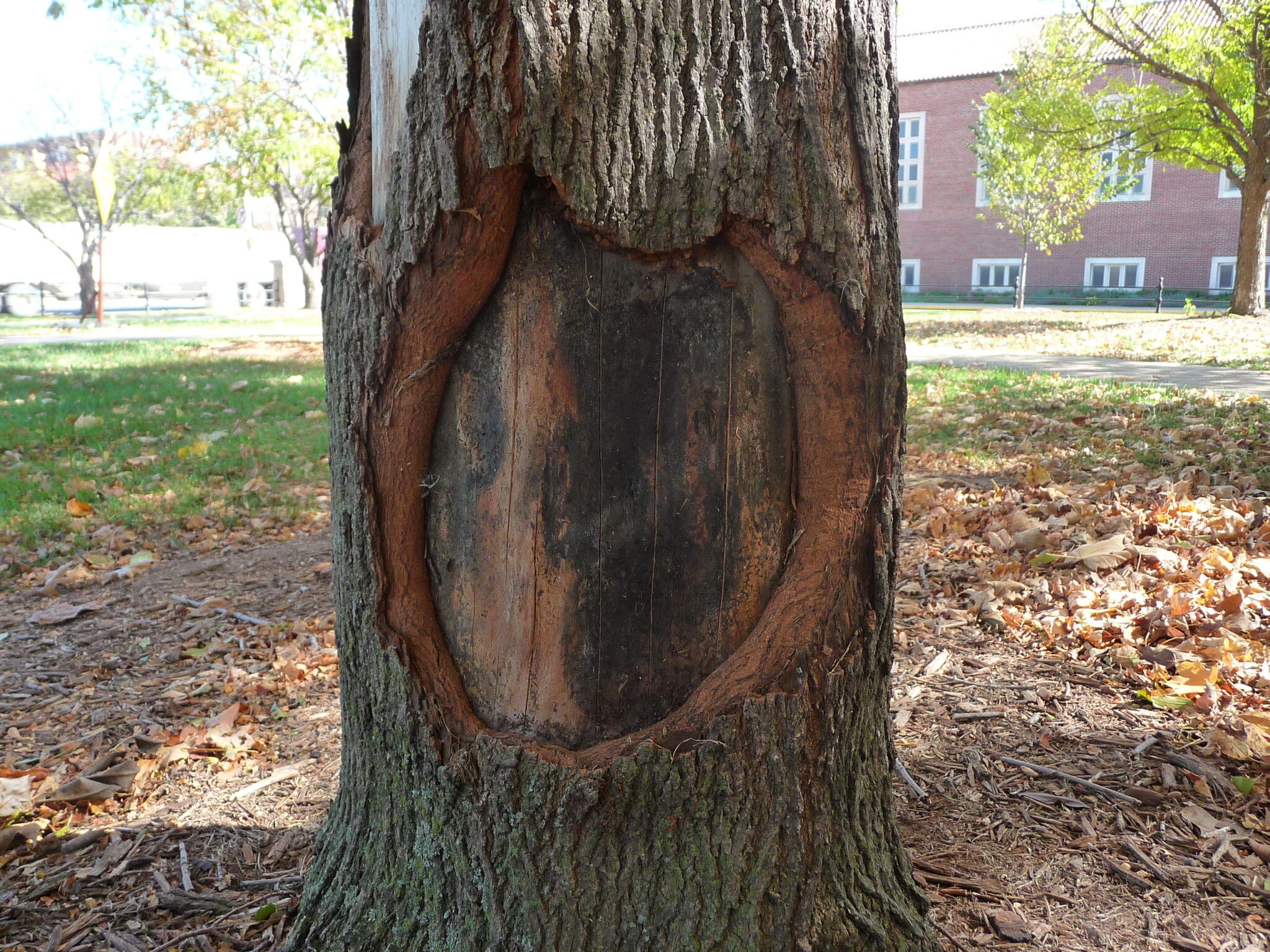
Tree trunk damaged by construction equipment developing wound wood around the edges to eventually seal the wound.
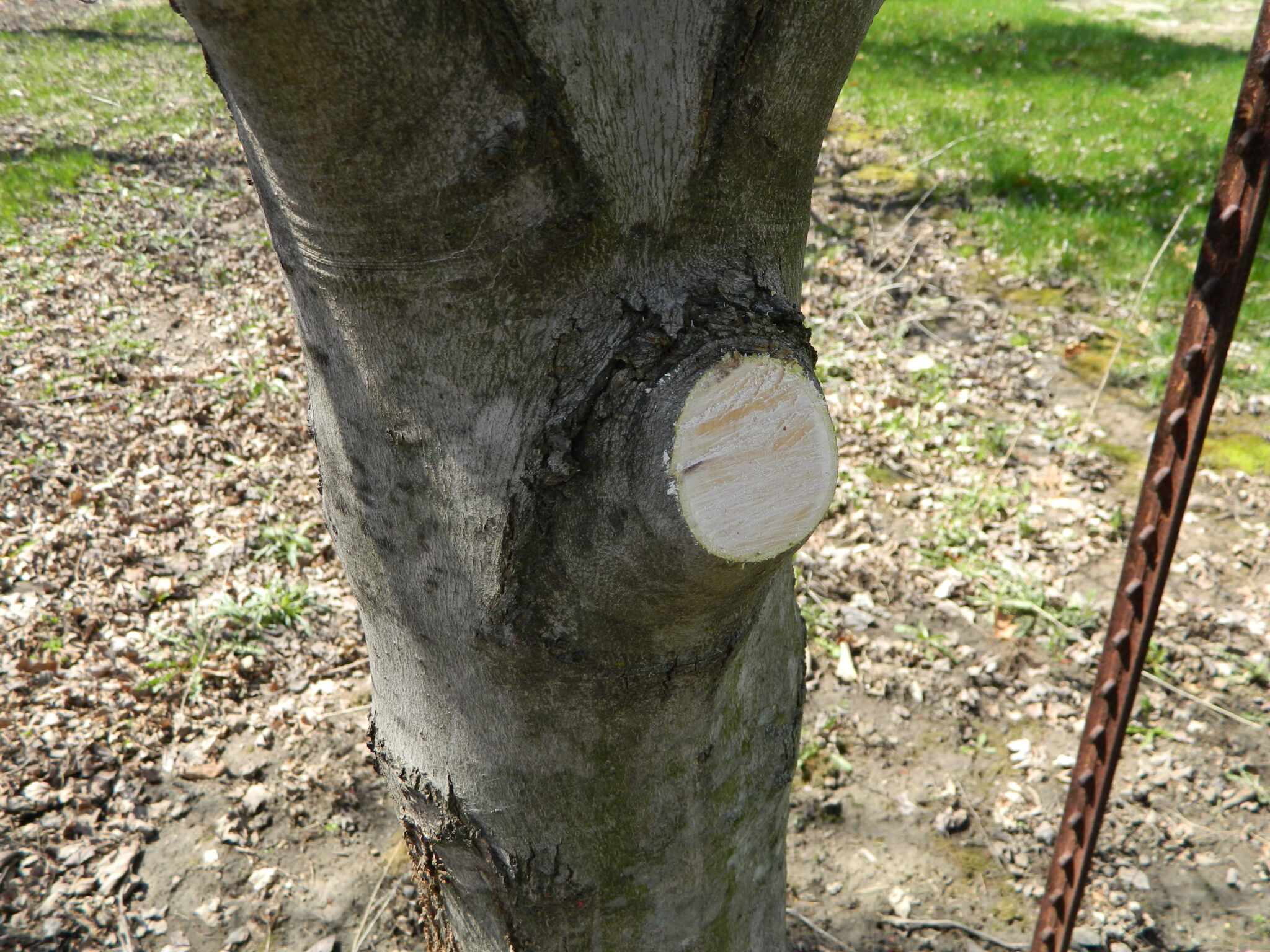
Pruning cuts will develop callus tissue on the exposed tissue giving rise to wound wood.
Wound recovery rates vary widely for different tree species. The speed of recuperation is greatly affected by developmental environmental conditions, vigor and health of the tree. Some trees may never completely close their wounds due to their genetic capacity or perhaps inadequate resources to keep the tree vigorous. However, numerous studies reveal that faster wound closure results in fewer health issues for the tree. Quick healing is always better!
A healthy tree will seal wounds faster and the same for younger trees as well. Trees that are planted in well-drained, quality soils, with good texture, structure, and containing adequate nutrition levels, grow in a way that favors the healing process. Thus, when planting trees, homeowners should be aware of the effects of site selection, soil quality, and other site factors that may impact tree growth.
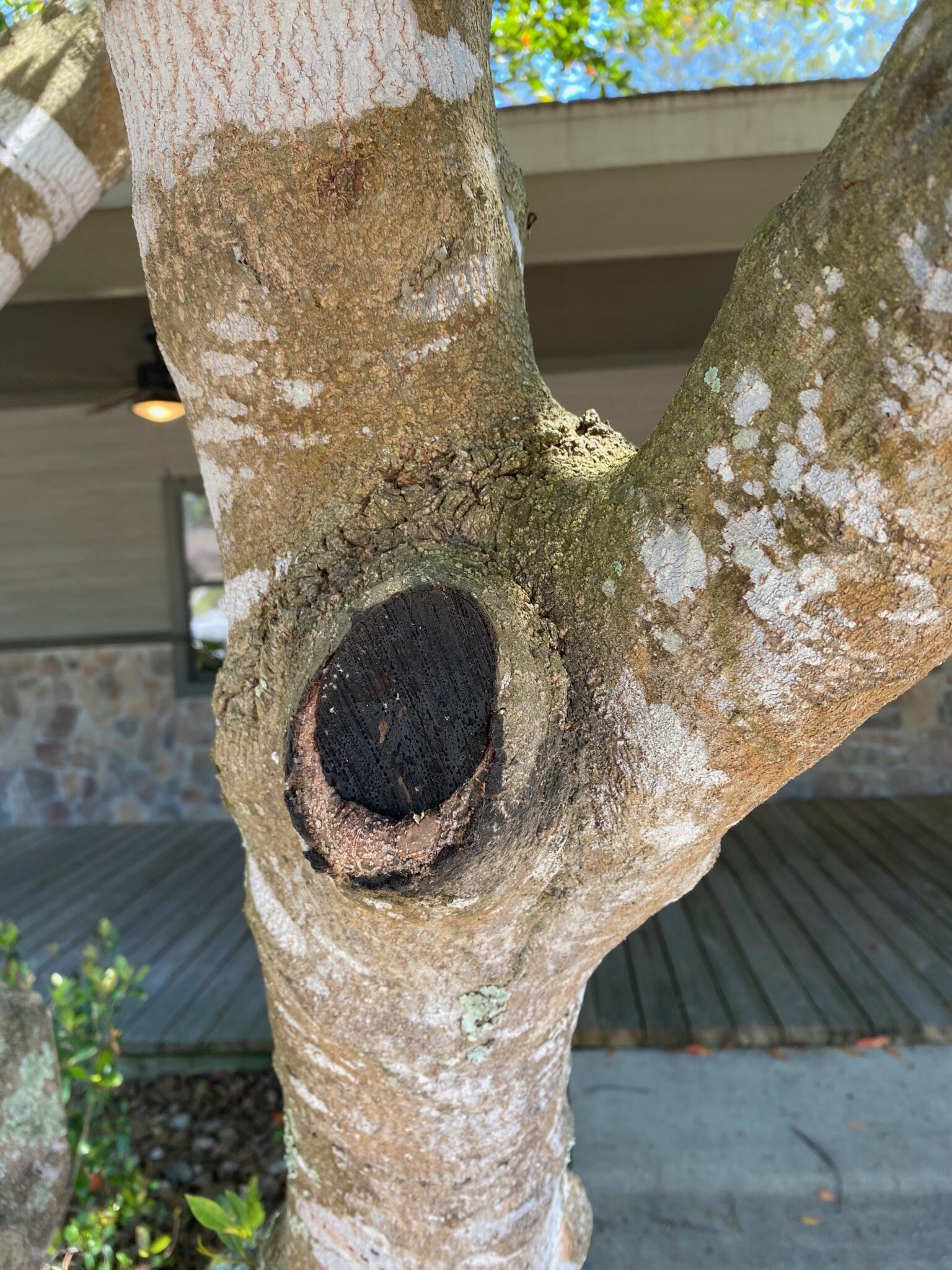
Wound dressings slow closure and can prevent healing.
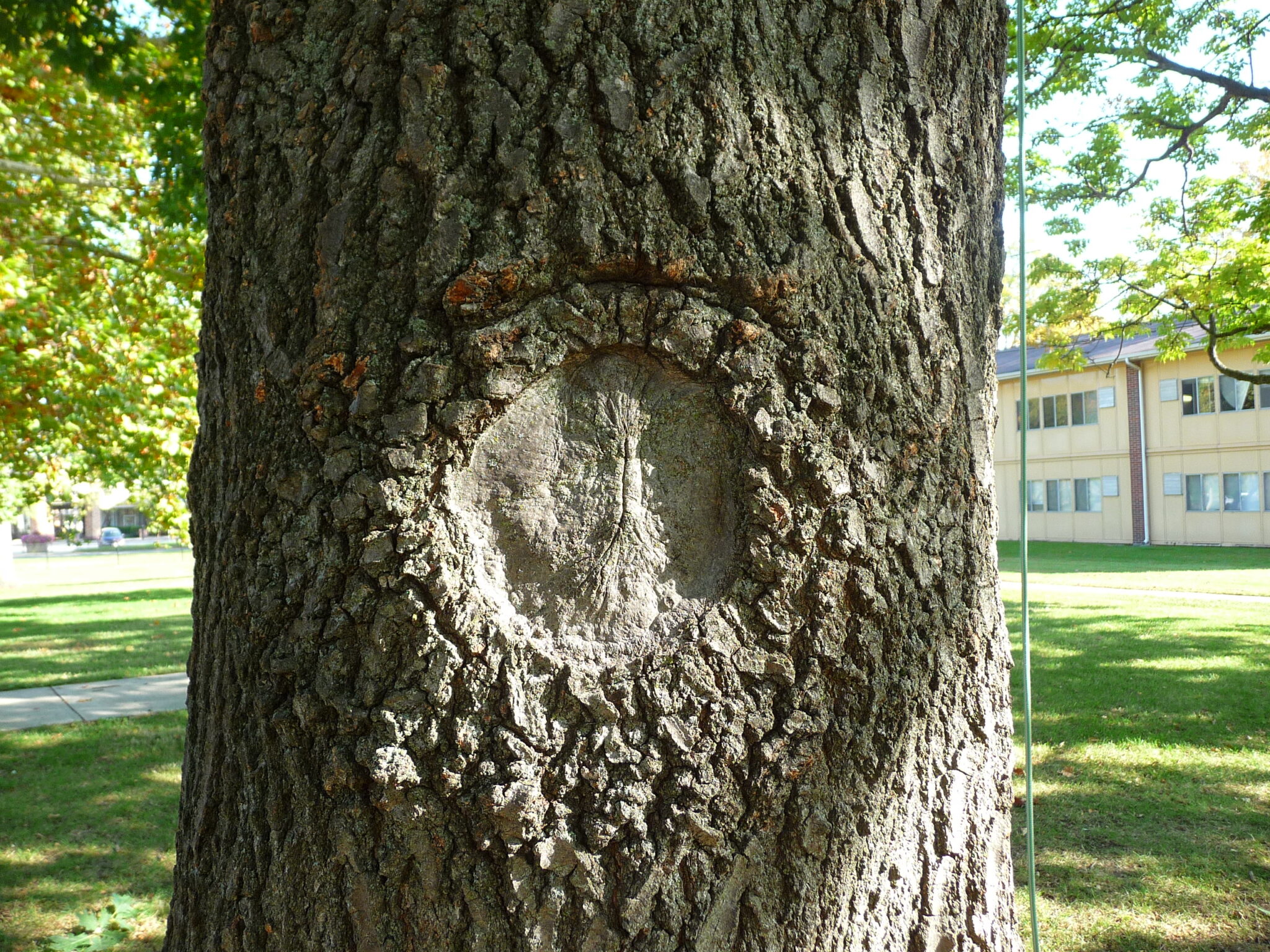
Complete wound closure improves tree health and slows decay.
There are few ways wound closure can be hastened, or at least not inhibited. First, it is essential to avoid limiting oxygen availability to the wounded tissues. Oxygen is necessary for proper recovery. For example, painting a wound with any kind of material that interferes or impedes oxygen will slow or even prevent wound closure by poor callus formation. Wound treatment with petroleum-based products is not recommended. In fact, research indicates any type of wound dressing can slow the healing process. There is one exception for treating wounds. This is in areas where oak wilt disease occurs, wound paints may be useful in preventing insect spread of the oak wilt fungal pathogen.
Basically, the best way to help insure proper wound closure and quick and effective sealing of the tissue is a proper pruning cut and preventing damage whenever possible.
Find a professional
Be sure to always hire an insured, tree care professional, preferably and ISA Certified Arborist with the experience, expertise, and equipment to provide proper tree care. Require proof of liability insurance to protect yourself as well.
Another easy way to find a tree care service provider in your area is to use the “Locate Your Local Tree Care Industry Association Member Companies” program. For more information refer to the publication Trees and Utilities at the Purdue Education Store.
Find an ISA Certified Arborist in your area by visiting the Trees Are Good website.
Resources
Tree Pruning Essentials, Publication & Video, The Education Store, Purdue Extension resource center
Tree Pruning: What Do Trees Think?, The Education Store
Mechanical Damage to Trees: Mowing and Maintenance Equipment, The Education Store
Tree Installation Process and Practices, The Education Store
Tree Pruning for the Landscape, Webinar, Purdue Extension – Forestry and Natural Resources Youtube channel
Lindsey Purcell, Chapter Executive Director
Indiana Arborist Association
Purdue Extension forester Lenny Farlee shares identifying characteristics of the black walnut tree, also known as the American black walnut or eastern black walnut, including pairs of leaflets running down each stem, long running ridges on the bark, and round nuts that have a very strong exterior. This sun-loving tree also needs high quality soil.
If you have any questions regarding trees, forests, wildlife, wood products or other natural resource topics, feel free to contact us by using our Ask an Expert web page.
Resources
Indiana Walnut Council, Industry Representatives include 45 states and 3 foreign countries
Why are my walnut trees dropping their leaves? Got Nature? Blog, Purdue Extension – Forestry and Natural Resources
Where can I buy Purdue’s patented black walnut trees? Got Nature? Blog
Pecan, Native Trees of Indiana River Park, Purdue Fort Wayne
Investing in Indiana Woodlands, The Education Store
Forest Improvement Handbook, The Education Store
ID That Tree, Playlist, Purdue Extension – Forestry and Natural Resources Youtube Channel
A Woodland Management Moment, Playlist
Wildlife Habitat Hint: Oak Shelterwood, Video
Lenny Farlee, Sustaining Hardwood Extension Specialist
Purdue University Department of Forestry and Natural Resources

Recent Posts
- Purdue Extension: Empowering Indiana Through Innovation, Education and Community Impact
Posted: January 28, 2026 in Community Development, How To, Invasive Insects, Invasive Plant Species, Natural Resource Planning, Woodlands - Forest Landowners: Share Your Experience with Regeneration and Restoration
Posted: January 27, 2026 in Forestry, How To, Timber Marketing, Woodlands - It’s Not Too Late to Order Trees for Spring Planting
Posted: January 13, 2026 in Forestry, How To, Plants - Now Is The Time To Control Non-Native Bush Honeysuckle
Posted: October 30, 2025 in Forestry, How To, Invasive Plant Species, Woodlands - October Is Firewood Month: Protect Indiana’s Forests by Making Smart Choices
Posted: October 13, 2025 in Forestry, Forests and Street Trees, How To, Invasive Insects, Urban Forestry - ID That Tree: Smooth Sumac
Posted: October 2, 2025 in Forestry, How To, Wildlife - ID That Tree: Wild Grape Vine
Posted: August 12, 2025 in Forestry, How To, Urban Forestry, Wildlife - Publication – Sericea Lespedeza Control
Posted: July 7, 2025 in Forestry, How To, Invasive Plant Species, Wildlife - How to ID Asian Jumping Worms, Purdue Landscape Report
Posted: July 2, 2025 in How To, Invasive Insects, Wildlife - Alert – Water Your Trees, Watch Video
Posted: June 20, 2025 in Alert, Drought, Forests and Street Trees, How To, Urban Forestry, Wildlife, Woodlands
Archives
Categories
- Alert
- Aquaculture/Fish
- Aquatic/Aquaculture Resources
- Ask the Expert
- Christmas Trees
- Community Development
- Disease
- Drought
- Forestry
- Forests and Street Trees
- Gardening
- Got Nature for Kids
- Great Lakes
- How To
- Invasive Animal Species
- Invasive Insects
- Invasive Plant Species
- Land Use
- Natural Resource Planning
- Nature of Teaching
- Plants
- Podcasts
- Ponds
- Publication
- Safety
- Spiders
- Timber Marketing
- Uncategorized
- Urban Forestry
- Webinar
- Wildlife
- Wood Products/Manufacturing
- Woodland Management Moment
- Woodlands