 Purdue University - Extension - Forestry and Natural Resources
Got Nature? Blog
On this winter edition of ID That Tree, Purdue Extension forester Lenny Farlee uses black walnut and eastern cottonwood twigs to show you tips on how to identify native Indiana trees with alternative leaf arrangement without help from the leaves.
If you have any questions regarding wildlife, trees, forest management, wood products, natural resource planning or other natural resource topics, feel free to contact us by using our Ask an Expert web page.
Resources
Black Walnut, The Education Store, Purdue Extension resource center
Facts About Black Walnut, The Education Store
Indiana Walnut Council, Industry Representatives include 45 states and 3 foreign countries
Cottonwood, The Education Store
Eastern Cottonwood, Native Trees of Indiana Riverwalk
FNR Hardwood – Eastern Cottonwood, The Purdue Arboretum Explorer
ID That Tree, Playlist
A Woodland Management Moment, Playlist, Purdue Extension-FNR YouTube Channel
Investing in Indiana Woodlands, The Education Store
Forest Improvement Handbook, The Education Store
Lenny Farlee, Sustaining Hardwood Extension Specialist
Purdue University Department of Forestry and Natural Resource
In this episode of ID That Tree, Purdue Extension forester Lenny Farlee continues to talk about the oak groups, this time focusing on the black oak species. Deep sinuses on the leaves and shinier coat, a dark blocky bark and acorns with loose shingle-like plates on the cap are some key identifiers to separate it from the red oak and others.
If you have any questions regarding wildlife, trees, forest management, wood products, natural resource planning or other natural resource topics, feel free to contact us by using our Ask an Expert web page.
Resources
Black Oak, Native Trees of Indiana Riverwalk, Purdue Fort Wayne
Black Oak, The Purdue Arboretum Explorer
ID That Tree, Playlist
A Woodland Management Moment, Playlist, Purdue Extension-FNR YouTube Channel
Investing in Indiana Woodlands, The Education Store
Forest Improvement Handbook, The Education Store
Lenny Farlee, Sustaining Hardwood Extension Specialist
Purdue University Department of Forestry and Natural Resource
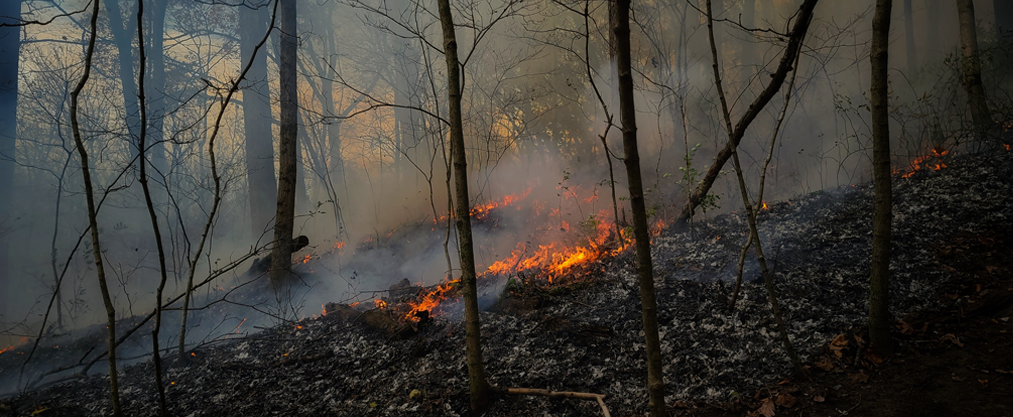 The goal of extension work is to provide practical solutions to local – and global – issues from agricultural production, environmental issues, natural resource conservation, land use and more.
Purdue Extension wildlife specialist Jarred Brooke’s work with prescribed fire is doing just that, as it is now being used to educate a new audience about various techniques of the habitat management method, the Wounaan indigenous community of Panama among others, thanks to the United States Forest Service.
Naomi Mills, a smokejumper squad leader for the Missoula Smokejumpers and fire specialist for USFS International Programs in the Latin America region, is utilizing Brooke’s Wildlife Habitat Hint series on prescribed fire techniques to illustrate various ignition techniques and methods as part of her virtual fire management training sessions.
Resources
Wildlife Habitat Hint: Prescribed Fire Techniques – Backing Fire, Video, Purdue Extension – Forestry and Natural Resources YouTube channel
Wildlife Habitat Hint: Prescribed Fire Techniques – Flanking Fire, Purdue Extension – FNR Video
Wildlife Habitat Hint: Prescribed Fire Techniques – Strip Head Fire, Purdue Extension – FNR Video
Wildlife Habitat Hints: Prescribed Fire Techniques – Ring Fire, Purdue Extension – FNR Video
Wildlife Habitat Hints: Prescribed Fire Techniques – Point Source Fire, Purdue Extension – FNR Video
Wildlife Habitat Hint: Late Growing Season Prescribed Fire, Purdue Extension – FNR Video
FNR Ask The Expert: Prescribed Fire with Jarred Brooke and Mike Saunders, Purdue Extension – FNR Video
Renovating Native Warm-Season Grass Stands for Wildlife: A Land Manager’s Guide, The Education Store, Purdue Extension resource center
Prescribed fire: 6 things to consider before you ignite, Got Nature? Blog, Purdue Extension – Forestry and Natural Resources
Indiana Prescribed Fire Council
Jarred Brooke, Wildlife Extension Specialist
Purdue Department of Forestry and Natural Resource
Each year, the Indiana DNR conducts its Turkey Brood Survey to determine wild turkey productivity. The DNR relies on Hoosier outdoor enthusiasts from across the state to report the number of hens and poults they see from July 1st to August 31st. This helps them calculate a Productive Index (number of poults per hen; figure 1) for counties across the state. Does this sound like something you are interested in? Here are four simple steps to be involved!
- Register for the turkey brood reporting system.
- Spend time outdoors from July 1st to August 31st.
- Count the number of hens and poults you see while spending time outdoors (figure 2).
- Report the number of hens and poults on the DNR’s online portal.
DNR biologists can’t collect brood observations across the state alone. In order to reach the goal of 3,000 observations this year, they need our help! If you’re interested in sharing your turkey brood observations with DNR, visit on.IN.gov/turkeybrood and register after June 10. Record observations any time from July 1 to August 31. Recording observations takes less than 5 minutes.
The DNR appreciates your help to document turkey broods around the state. Sharing observations is easy and critical to the management of wild turkey.
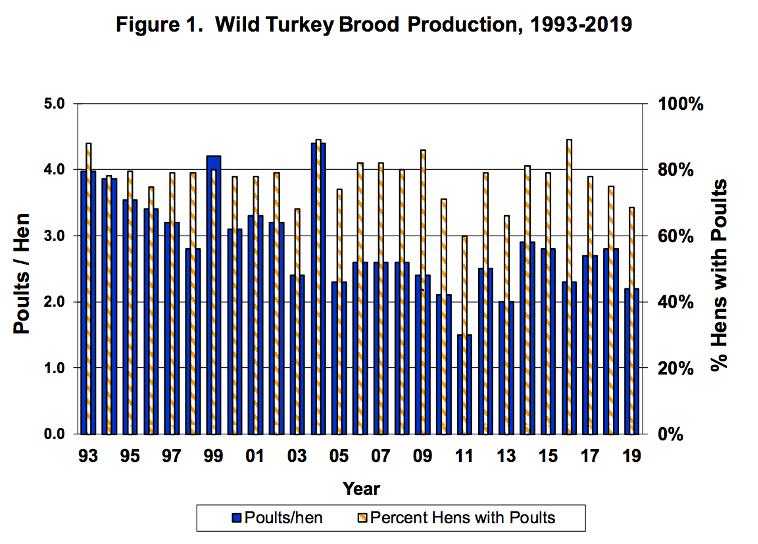
Figure 1. Wild turkey brood production from 1993 to 2019. Image is from the 2019 Wild Turkey Summer Brood Production Index.

Figure 2. Example of how to count and record turkey broods for the turkey brood survey. Image is from the Introduction to Documenting Turkey Brood Publication from the Indiana DNR.
As you enjoy the outdoors, whether it is for recreation or managing your property, we thank you in advance for helping with wildlife conservation.
Resources
Wild Turkey Hunting, Biology and Management, Indiana Department of Natural Resources (IDNR)
Wild Turkey, Indiana Department of Natural Resources (IDNR)
Truths and Myths about Wild Turkey, Purdue Extension
Forest Improvement Handbook, The Education Store
Jarred Brooke, Extension Wildlife Specialist
Purdue Department of Forestry and Natural Resources
Indiana Department of Natural Resources
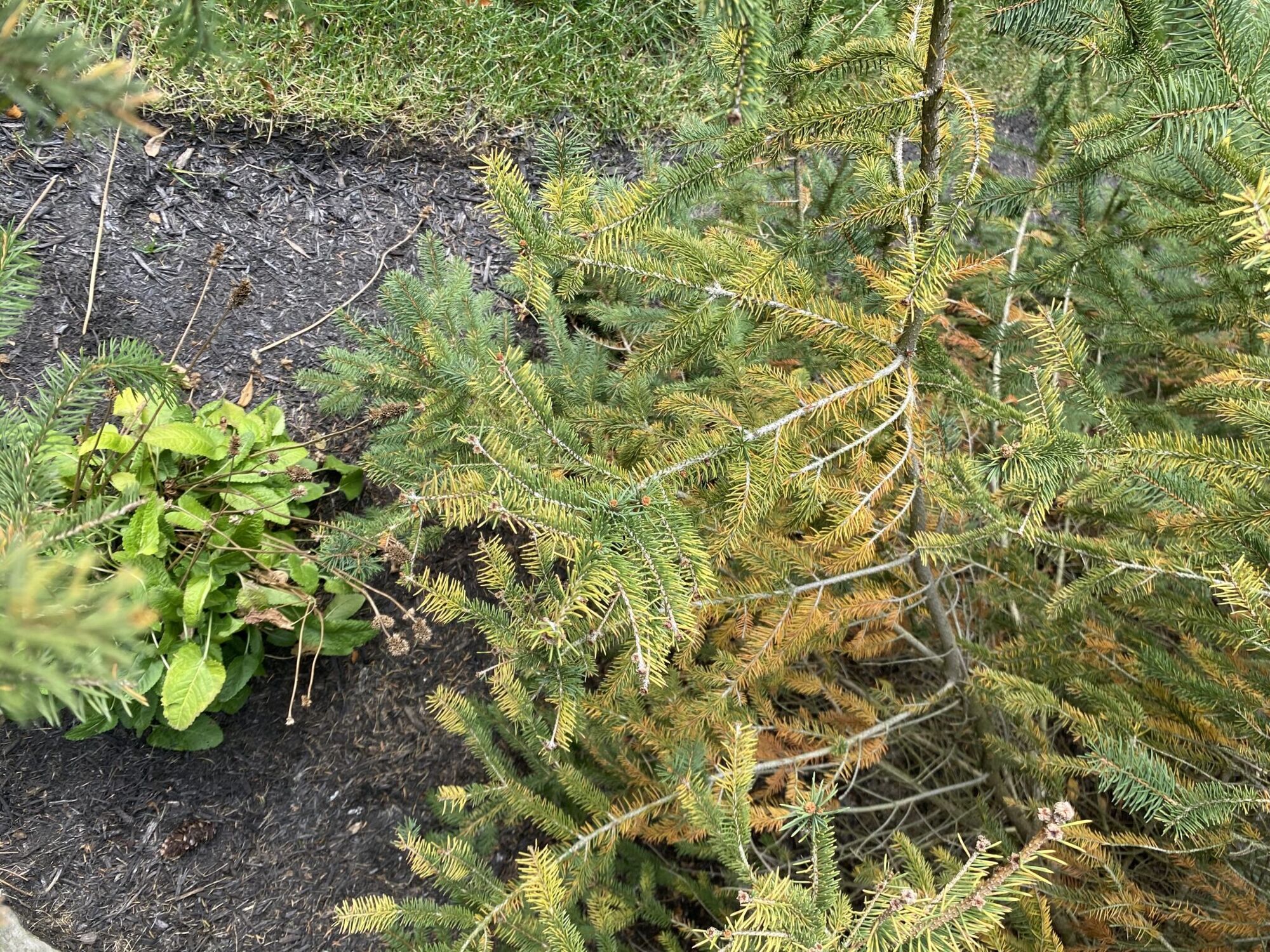
Figure 2: A young spruce tree under the effects of transplant and root stress.
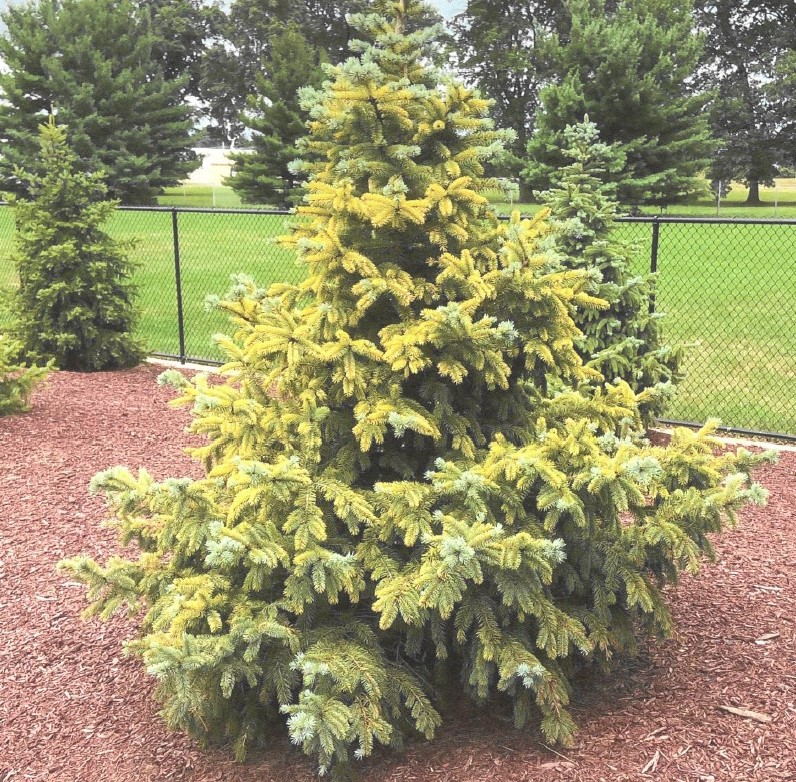
Figure 1: A spruce tree suffering from root damage and water stress.
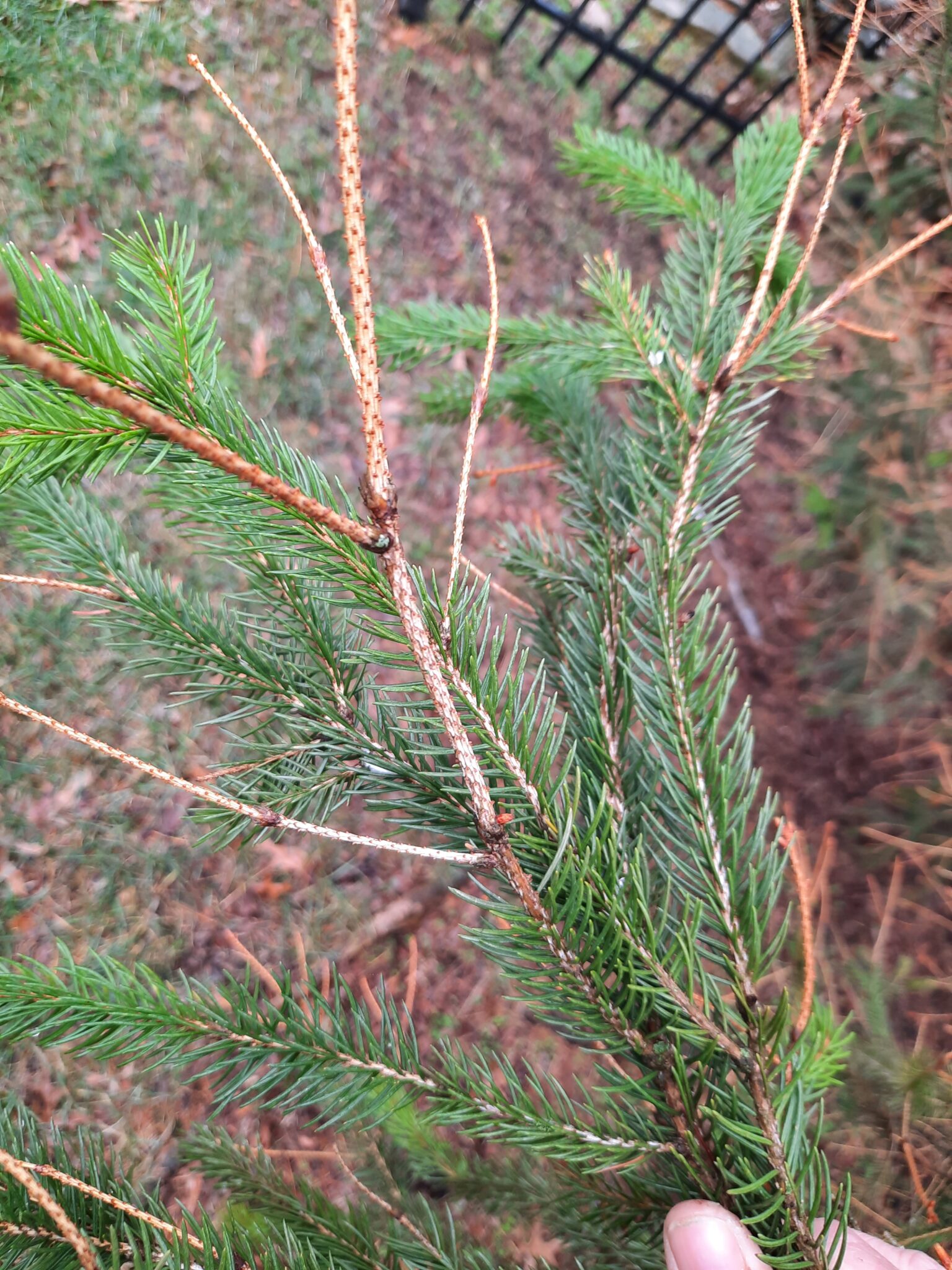
Figure 4: Phomopsis dieback with excessive needle loss on branch tips.
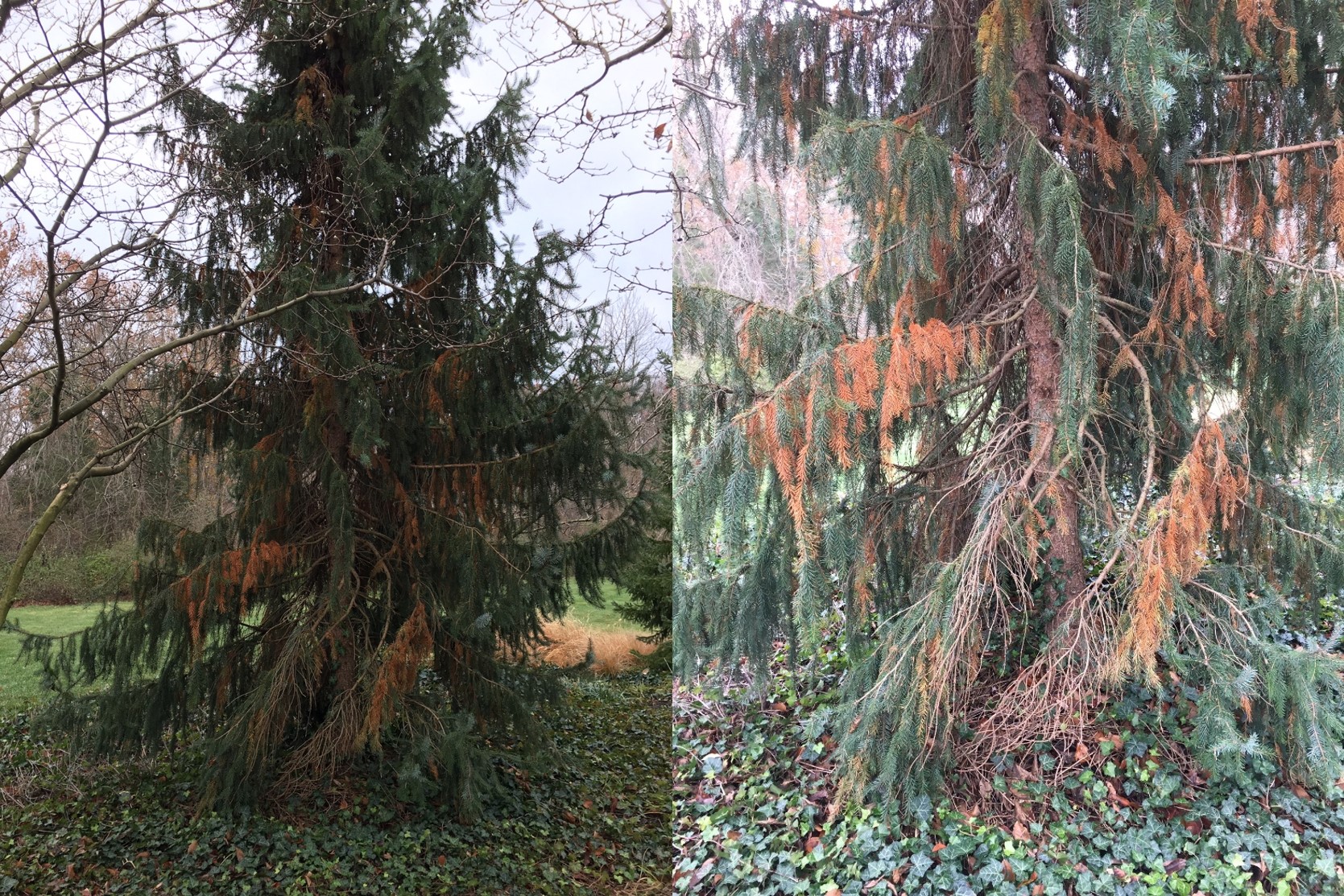
Figure 3: Dieback symptoms in a mature tree associated with Phomopsis infection.
Resources
Borers of Pines and Other Needle Bearing Evergreens in Landscapes, The Education Store, Purdue Extension resource center
Ask an Expert Question: Blue Spruce dying, what can I do?, Got Nature? Blog, Purdue Extension – Forestry and Natural Resources
Why Spruce Trees Lose Their Needles, Purdue Extension
Diseases Common in Blue Spruce, Purdue Extension
John Bonkowski, Plant Disease Diagnostician
Purdue Department of Botany and Plant Pathology
In this edition of ID That Tree, Purdue Extension forester Lenny Farlee gives tips on how to identify two species – honey locust and bur oak – from just the markings and scarring on leafless twigs.
If you have any questions regarding wildlife, trees, forest management, wood products, natural resource planning or other natural resource topics, feel free to contact us by using our Ask an Expert web page.
Resources
Honey Locust, The Education Store, Purdue Extension resource center
Bur Oak, The Purdue Arboretum Explorer
Bur Oak, Native Trees of Indiana Riverwalk, Purdue Fort Wayne
ID That Tree, Playlist, Purdue Extension-FNR YouTube Channel
A Woodland Management Moment, Purdue Extension – FNR Playlist
Investing in Indiana Woodlands, The Education Store
Forest Improvement Handbook, The Education Store
Lenny Farlee, Sustaining Hardwood Extension Specialist
Purdue University Department of Forestry and Natural Resource
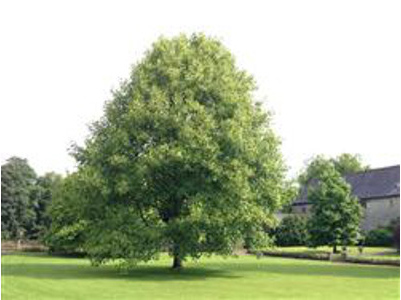
Question: We live in Tippecanoe county and need to transplant a tulip tree that is 2-3’ tall. Could you please tell me when the optimal time would be to transplant? I have read to transplant in the spring, but would like more specific information, so that it will have a good chance of surviving.
Answer: Early spring (before leaves emerge) and fall (after leaf drop) are the best times to transplant deciduous trees. Evergreens are most successfully transplanted in early spring and late summer (late August to mid-September).
Dig and move trees with the soil root mass adhering to portions of their root systems to minimize damage and improve chances of survival. The soil should be moist when the plant is dug. If the soil is dry, thoroughly water the area 3 to 4 days before digging. When digging trees, the radius of the root ball should be approximately 8 to 12 inches for each inch of trunk diameter at chest height. For example, a tree with a 1-inch-diameter trunk should have a soil ball that is 16 to 24 inches in diameter. Using a spade, dig a trench around the tree to a depth of 1½ to 2 feet. Then cut beneath the roots, rounding the bottom of the soil ball. Tip the soil ball to one side, place a piece of burlap or a small tarp in the trench on the opposite side, then carefully tip or roll the soil ball over onto the burlap. IMPORTANT! Manipulate the ball by the root/soil mass and NOT the tree trunk. Tightly secure the burlap or tarp around the soil ball to move it to its next home. Lift and carry the root ball rather than grasping the trunk. If transporting in a vehicle at speeds, be sure to cover the tender buds with a tarp to protect them from drying out.
If possible, replant the tree immediately. Dig a hole that is 2 times the width of the tree’s rootball. The depth of the hole should be 2 or 3 inches less than the height of the soil ball. Be sure the root flare is visible to get the exact depth. Carefully lower the tree into the hole, position it correctly, and begin to place soil back into the hole. Firm the soil around the tree’s rootball with your hands. Then complete the backfilling of the hole and water thoroughly.
Do not allow the soil ball to break during the digging, moving, and replanting process. Home gardeners should limit themselves to transplanting small trees. Trees with a trunk diameter greater than 2 inches should be left to nursery professionals.
Post-planting should include supplemental watering and no fertilization for the first year. Staking or guying may be necessary in vulnerable areas such as exposed or windy sites. Finish with mulch and monitor for pests and dry conditions.
Resources
Certified Arborist to come to your property: Find an Arborist, International Society of Arboriculture
Send in a sample/photos to help diagnose: Purdue Plant & Pest Diagnostic Lab, Botany & Plant Pathology
Contact Purdue Extension County Educator
Tree Installation: Process and Practices
Planting Forest Trees and Shrubs in Indiana
Instructional/training videos (planting tree tips, identifying trees, landscaping with trees and much more):
Purdue Extension – Forestry and Natural Resources YouTube Channel
Join Us LIVE and Ask an Expert: Virtual Live Workshops with Q&A
Invasive Pests:
Invasive Forest Pests in IN, Purdue Extension-Entomology
Indiana Invasive Species Council
Midwest Landscapes: Purdue Landscape Report, Purdue University
Workshops available for land and woodland owners: Purdue Extension-Forestry and Natural Resources Calendar
Lindsey Purcell, Urban Forestry Specialist
Purdue University, Department of Forestry and Natural Resources
On this edition of ID That Tree, Purdue Extension forester Lenny Farlee introduces you to the Black Gum, also known as bee gum. This simple leaved species can bring brilliant fall color and is best identified by its branches, which come out at nearly 90 degree angles to the stump, its alligator like bark and small berries.
If you have any questions regarding wildlife, trees, forest management, wood products, natural resource planning or other natural resource topics, feel free to contact us by using our Ask an Expert web page.
Resources
Black Gum and Tupelo, The Education Store, Purdue Extension resource center
ID That Tree Fall Color Edition: Black Gum, Got Nature? Blog, Purdue Extension – FNR
Black Gum/Tupelo, Native Trees of Indiana River Walk, Purdue Fort Wayne
Black Gum & Tupelo, Purdue Arboretum Explorer
ID That Tree, Playlist, Purdue Extension-FNR YouTube Channel
A Woodland Management Moment, Playlist, Purdue Extension-FNR YouTube Channel
Investing in Indiana Woodlands, The Education Store
Forest Improvement Handbook, The Education Store
Lenny Farlee, Sustaining Hardwood Extension Specialist
Purdue University Department of Forestry and Natural Resource
Spiky round fruiting structures which hold the seeds as well as star-shaped leaves are signature characteristics of the sweetgum, a tree native to southern Indiana and utilized ornamentally throughout the state. Learn more about the sweetgum from Purdue Extension forester Lenny Farlee on this edition of ID That Tree.
If you have any questions regarding wildlife, trees, forest management, wood products, natural resource planning or other natural resource topics, feel free to contact us by using our Ask an Expert web page.
Resources
Sweetgum, The Education Store, Purdue Extension resource center
Sweetgum, FNR-Hardwood, The Purdue Arboretum Explorer
Sweetgum, Native Trees of Indiana Riverwalk, Purdue Fort Wayne
ID That Tree, Playlist
A Woodland Management Moment, Playlist, Purdue Extension-FNR YouTube Channel
Investing in Indiana Woodlands, The Education Store
Forest Improvement Handbook, The Education Store
Lenny Farlee, Sustaining Hardwood Extension Specialist
Purdue University Department of Forestry and Natural Resource
In this episode of Ask an Expert, Illinois-Indiana Sea Grant‘s aquaculture marketing outreach associate Amy Shambach and Purdue Aquaculture Lab Manager Bob Rode share more about aquaculture, a growing method to increase the food supply.
If you have any questions regarding trees, forests, wildlife, wood products or other natural resource topics, feel free to contact us by using our Ask an Expert web page.
Resources
Aquaculture Research Lab, Purdue Forestry and Natural Resources
Local Farmers, Local Fish: Shrimp, Video, Purdue Extension YouTube channel
Aquaculture Industry in Indiana Growing, Video, Purdue Agriculture YouTube Channel
Aquaponics, Video, Purdue University YouTube channel
Aquaculture: Cage Culture, Video, Purdue University YouTube channel
Eat Midwest Fish
Indiana Department of Natural Resources Commercial Fish Suppliers Database
IN Fish Stocking, Indiana Department of Natural Resources (IDNR)
Fish & Wildlife Properties – State Fish Hatcheries, IN DNR
Indiana Aquaculture Association
North Central Regional Aquaculture Center (NCRAC)
Southern Regional Aquaculture Center (SRAC)
Commercial Fisher Suppliers, IN DNR
Indiana Fish Entry Requirements, Indiana State Board of Animal Health
Amy Shambach, Aquaculture Marketing Outreach Associate
Purdue Department of Forestry and Natural Resources/Illinois Indiana Sea Grant Program
Bob Rode, Extension Aquaculture Specialist
Department of Forestry and Natural Resources, Purdue University

Recent Posts
- Purdue Extension: Empowering Indiana Through Innovation, Education and Community Impact
Posted: January 28, 2026 in Community Development, How To, Invasive Insects, Invasive Plant Species, Natural Resource Planning, Woodlands - Forest Landowners: Share Your Experience with Regeneration and Restoration
Posted: January 27, 2026 in Forestry, How To, Timber Marketing, Woodlands - It’s Not Too Late to Order Trees for Spring Planting
Posted: January 13, 2026 in Forestry, How To, Plants - Now Is The Time To Control Non-Native Bush Honeysuckle
Posted: October 30, 2025 in Forestry, How To, Invasive Plant Species, Woodlands - October Is Firewood Month: Protect Indiana’s Forests by Making Smart Choices
Posted: October 13, 2025 in Forestry, Forests and Street Trees, How To, Invasive Insects, Urban Forestry - ID That Tree: Smooth Sumac
Posted: October 2, 2025 in Forestry, How To, Wildlife - ID That Tree: Wild Grape Vine
Posted: August 12, 2025 in Forestry, How To, Urban Forestry, Wildlife - Publication – Sericea Lespedeza Control
Posted: July 7, 2025 in Forestry, How To, Invasive Plant Species, Wildlife - How to ID Asian Jumping Worms, Purdue Landscape Report
Posted: July 2, 2025 in How To, Invasive Insects, Wildlife - Alert – Water Your Trees, Watch Video
Posted: June 20, 2025 in Alert, Drought, Forests and Street Trees, How To, Urban Forestry, Wildlife, Woodlands
Archives
Categories
- Alert
- Aquaculture/Fish
- Aquatic/Aquaculture Resources
- Ask the Expert
- Christmas Trees
- Community Development
- Disease
- Drought
- Forestry
- Forests and Street Trees
- Gardening
- Got Nature for Kids
- Great Lakes
- How To
- Invasive Animal Species
- Invasive Insects
- Invasive Plant Species
- Land Use
- Natural Resource Planning
- Nature of Teaching
- Plants
- Podcasts
- Ponds
- Publication
- Safety
- Spiders
- Timber Marketing
- Uncategorized
- Urban Forestry
- Webinar
- Wildlife
- Wood Products/Manufacturing
- Woodland Management Moment
- Woodlands