 Purdue University - Extension - Forestry and Natural Resources
Got Nature? Blog
The classic and trusted book “Fifty Common Trees of Indiana” by T.E. Shaw was published in 1956 as a user-friendly guide to local species. Nearly 70 years later, the publication has been updated through a joint effort by the Purdue Department of Forestry and Natural Resources, Indiana 4-H, and the Indiana Department of Natural Resources, and reintroduced as “An Introduction to Trees of Indiana.”
The full publication is available for download for $7 in the Purdue Extension Education Store. The field guide helps identify common Indiana woodlot trees.
Each week, the Intro to Trees of Indiana web series will offer a sneak peek at one species from the book, paired with an ID That Tree video from Purdue Extension forester Lenny Farlee to help visualize each species as it stands in the woods. Threats to species health as well as also insight into the wood provided by the species, will be provided through additional resources as well as the Hardwoods of the Central Midwest exhibit of the Purdue Arboretum, if available.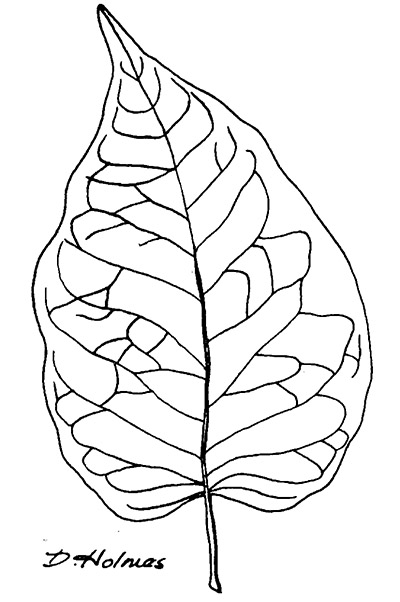
This week, we meet the Osage Orange or Maclura pomifera, also known as the hedge apple. While this species is not native to Indiana, it is found throughout the state, where it was planted for fence rows and fence post plantings due to its decay resistant wood.
The leaves of Osage orange are oval shaped with pointed tips held alternately on slender twigs. The dark, glossy green leaves have smooth margins and no lobes. The twigs will often have sharp thorns more than half an inch long that are found where the leaves emerge and where the buds are located.
The bark of this species has a light gray surface with an orange undercoloring, which is distinctly furrowed and has a somewhat fibrous appearance. Osage orange is often multi-stemmed and spreads out over a large area.
The fruit of Osage orange, produced by female trees, also is a key identifying characteristic, as it resembles a large yellow-green-colored bumpy orange or a bumpy green apple. The fruit is four to six inch in diameter and has many folds, bumps and crevices, which has led to the description of it looking like a brain. Osage oranges have a sticky, milky sap on the inside.
Osage orange trees, which grow to 20 to 40 feet tall, are found in moist, well-drained soils, but are tolerant of alkaline soil, clay, dry sites, occasional drought and flooding. The natural range of the Osage orange is Arkansas, Texas, Oklahoma and the region surrounding the Ozark mountains, although it has been planted in nearly every one of the lower 48 states.
For full article with additional photos view: Intro to Trees of Indiana: Osage Orange, Forestry and Natural Resources’ News.
If you have any questions regarding wildlife, trees, forest management, wood products, natural resource planning or other natural resource topics, feel free to contact us by using our Ask an Expert web page.
Other Resources:
Fruit Like a Brain and Wood Like Steel – Got Nature article
You Say Hedge-Apple, I Say Osage Orange!, Indiana Yard and Garden – Purdue Consumer Horticulture.
Osage Orange, The Wood Database
Hardwoods of the Central Midwest: Osage orange
ID That Tree: Osage orange
Morton Arboretum: Osage orange
The Woody Plant Seed Manual, U.S. Forest Service
Fifty Common Trees of Indiana
An Introduction to Trees of Indiana
Native Trees of the Midwest, The Education Store
Shrubs and Woody Vines of Indiana and the Midwest, The Education Store
Investing in Indiana Woodlands, The Education Store
Forest Improvement Handbook, The Education Store
ID That Tree, Purdue Extension-Forestry & Natural Resources (FNR) YouTube playlist
Woodland Management Moment , Purdue Extension-FNR YouTube playlist
Wendy Mayer, FNR Communications Coordinator
Purdue University Department of Forestry and Natural Resources
Lenny Farlee, Sustaining Hardwood Extension Specialist
Purdue University Department of Forestry and Natural Resources
The classic and trusted book “Fifty Common Trees of Indiana” by T.E. Shaw was published in 1956 as a user-friendly guide to local species. Nearly 70 years later, the publication has been updated through a joint effort by the Purdue Department of Forestry and Natural Resources, Indiana 4-H, and the Indiana Department of Natural Resources, and reintroduced as “An Introduction to Trees of Indiana.”
The full publication is available for download for $7 in the Purdue Extension Education Store. The field guide helps identify common Indiana woodlot trees.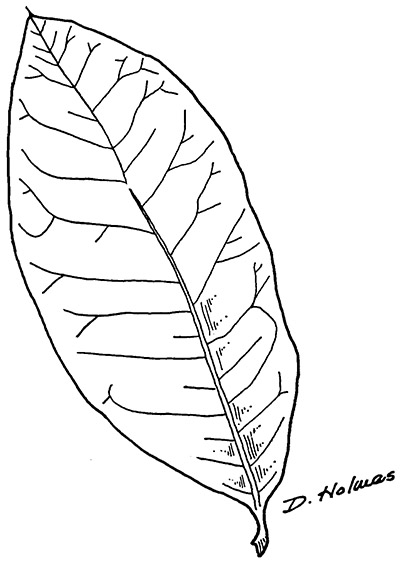
Each week, the Intro to Trees of Indiana web series will offer a sneak peek at one species from the book, paired with an ID That Tree video from Purdue Extension forester Lenny Farlee to help visualize each species as it stands in the woods. Threats to species health as well as also insight into the wood provided by the species, will be provided through additional resources as well as the Hardwoods of the Central Midwest exhibit of the Purdue Arboretum, if available.
This week, we take a look at the ninth and final of our featured oak varieties in Indiana, the Shingle Oak or Quercus imbricaria.
The leaves of shingle oak are oblong and have entire leaf margins, without lobes or teeth, unlike all other Indiana oaks. This species also retains its shiny, bristle-tipped leaves further into the winter than other oaks. The leaves turn from a dark green in the summer to yellow and brown in the fall.
The bark is dark gray and blocky, with long running ridges. Shingle oak tends to keep its lower dead limbs attached to the tree.
The fruit is a small, rounded acorn with a thin cap that covers a third to half of the acorn. The acorns turn dark in color before losing their caps, although some may drop off the tree with their caps in tact.
Shingle oaks, which grow to 50 to 60 feet tall and are found in moist, well-drained soil along streams and on hillsides, but can occasionally be found on dry sites. The natural range of the shingle oak is the midwestern United States, including the Appalachian mountain region, Ohio, and the central Mississippi River valley.
The Morton Arboretum states that shingle oak is fairly salt tolerant and tolerant of black walnut toxicity, and despite the fact that it has a taproot, this species can be easier to transplant than some other oaks.
Shingle oak, however, can be plagued with pests such as scale insects and two-lined chestnut borer. As with other oaks, the shingle oak should be pruned in the dormant season to avoid attracting beetles that may carry oak wilt, which can be a potential disease problem.
Shingle oaks get their name, because traditionally the species was sectioned out and made into wood shingles.
For full article with additional photos view: Intro to Trees of Indiana: Shingle Oak, Forestry and Natural Resources’ News.
If you have any questions regarding wildlife, trees, forest management, wood products, natural resource planning or other natural resource topics, feel free to contact us by using our Ask an Expert web page.
Other Resources:
ID That Tree: Shingle Oak
ID That Tree: Red Oak Group
Hardwood Lumber and Veneer Series: Red Oak Group
Morton Arboretum: Shingle Oak
Fifty Common Trees of Indiana
An Introduction to Trees of Indiana
Native Trees of the Midwest, The Education Store
Shrubs and Woody Vines of Indiana and the Midwest, The Education Store
Investing in Indiana Woodlands, The Education Store
Forest Improvement Handbook, The Education Store
ID That Tree, Purdue Extension-Forestry & Natural Resources (FNR) YouTube playlist
Woodland Management Moment , Purdue Extension-FNR YouTube playlist
Wendy Mayer, FNR Communications Coordinator
Purdue University Department of Forestry and Natural Resources
Lenny Farlee, Sustaining Hardwood Extension Specialist
Purdue University Department of Forestry and Natural Resources
The classic and trusted book “Fifty Common Trees of Indiana” by T.E. Shaw was published in 1956 as a user-friendly guide to local species. Nearly 70 years later, the publication has been updated through a joint effort by the Purdue Department of Forestry and Natural Resources, Indiana 4-H, and the Indiana Department of Natural Resources, and reintroduced as “An Introduction to Trees of Indiana.”
The full publication is available for download for $7 in the Purdue Extension Education Store. The field guide helps identify common Indiana woodlot trees.
Each week, the Intro to Trees of Indiana web series will offer a sneak peek at one species from the book, paired with an ID That Tree video from Purdue Extension forester Lenny Farlee to help visualize each species as it stands in the woods. Threats to species health as well as also insight into the wood provided by the species, will be provided through additional resources as well as the Hardwoods of the Central Midwest exhibit of the Purdue Arboretum, if available.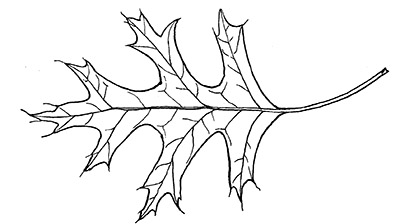
This week, we take a look at the eighth of our featured oak varieties in Indiana, the Pin Oak or Quercus palustris.
The leaves of pin oak are multi-lobed, with lobes coming out at nearly a 90-degree angle from the center of the leaves, and feature bristle tips like all members of the red/black oak family. On the pin oak, the alternately held leaves typically have less lobes than other members of the red/black oak group. In the fall, leaves change from medium green to a red to reddish brown color.
One key characteristic of pin oak are the branches, which angle downward especially on the lower part of the tree. The pin oak tends to keep its lower branches for a long period of time, which can create pin knots in the wood.
The trunk of pin oak is typically straight and single stemmed, while the bark is smooth and gray and may develop dark fissures with age.
The fruit is a rounded acorn with a relatively flat top with smooth scales, which covers only about one quarter of the nut.
Pin oaks, which grow to 60 to 70 feet tall and are relatively fast growing, are found mostly in moist to wet areas, such as streams, lakes and other wetlands, oftentimes in soils that have a medium to high acidity. Pin oaks also have been planted in many sites for landscape purposes.
The natural range of the pin oak is in bottomlands and imperfectly drained soils from New Jersey south to Virginia and west to Eastern Kansas and Oklahoma as well as south into North Carolina, Tennessee and Arkansas.
The Morton Arboretum states that pin oak suffers greatly from chlorosis or yellowing of the leaves in soils with high pH. As with other oaks, the pin oak should be pruned in the dormant season to avoid attracting beetles that may carry oak wilt, which can be a potential disease problem along with oak blister.
For full article with additional photos view: Intro to Trees of Indiana: Pin Oak, Forestry and Natural Resources’ News.
If you have any questions regarding wildlife, trees, forest management, wood products, natural resource planning or other natural resource topics, feel free to contact us by using our Ask an Expert web page.
Other Resources:
ID That Tree: Pin Oak
ID That Tree: Red Oak Group
Hardwood Lumber and Veneer Series: Red Oak Group
Morton Arboretum: Pin Oak
Pin Oak, Native Trees of Indiana River Walk, Purdue Fort Wayne
Fifty Common Trees of Indiana
An Introduction to Trees of Indiana
Native Trees of the Midwest, The Education Store
Shrubs and Woody Vines of Indiana and the Midwest, The Education Store
Investing in Indiana Woodlands, The Education Store
Forest Improvement Handbook, The Education Store
ID That Tree, Purdue Extension-Forestry & Natural Resources (FNR) YouTube playlist
Woodland Management Moment , Purdue Extension-FNR YouTube playlist
Wendy Mayer, FNR Communications Coordinator
Purdue University Department of Forestry and Natural Resources
Lenny Farlee, Sustaining Hardwood Extension Specialist
Purdue University Department of Forestry and Natural Resources
Wild Bulletin, IN DNR Fish and Wildlife: In September, DNR biologists found two species of salamander, the long-tailed salamander, and the southern two-lined salamander, in Knox County, marking the first time since the 1800s that either has been documented along the lower Wabash River.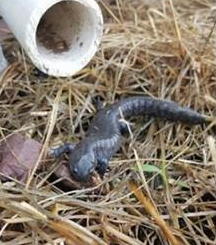
While both species are more widespread in other parts of southern Indiana, the small, rocky streams they inhabit are less common along the lower Wabash. Following this discovery, additional surveys conducted in parts of Knox, Posey, and Sullivan counties revealed more populations of southern two-lined salamanders; however, Knox County contains the only known location of a long-tailed salamander population in the region.
Salamanders and other amphibian surveys conducted by DNR biologists are supported by the Nongame Wildlife Fund. Contributions to this fund support a variety of rare and endangered wildlife.
Please visit Nongame and Endangered Wildlife to determine animals that are listed by the Indiana DNR as endangered or special concerns.
Resources:
Help the Hellbender, Purdue College of Agriculture
Question: Which salamander is this?, Got Nature? Blog, Purdue Extension – Forestry and Natural Resources
Is it a Hellbender or a Mudpuppy?, Got Nature? Blog
Amphibians: Frogs, Toads, and Salamanders, Purdue Nature of Teaching
A Moment in the Wild, Playlist, Purdue Extension – Forestry and Natural Resources
Help the Hellbender, Playlist & Website
The Nature of Teaching: Adaptations for Aquatic Amphibians, The Education Store, Purdue Extension resource center
Hellbenders Rock!, The Education Store
Help the Hellbender, North America’s Giant Salamander, The Education Store
Indiana Department of Natural Resources
Wild Bulletin, IN DNR Fish and Wildlife: Indiana hunters multiplied by all their harvest equals a lot of data. Keep track of DNR’s current harvest data and comparisons to previous seasons with our handy dashboard, which is updated daily throughout deer season. While the green bars indicate the season-to-date comparison to previous seasons, the blue bars illustrate the previous season counts after the current date. The numbers at the top show the harvest season totals.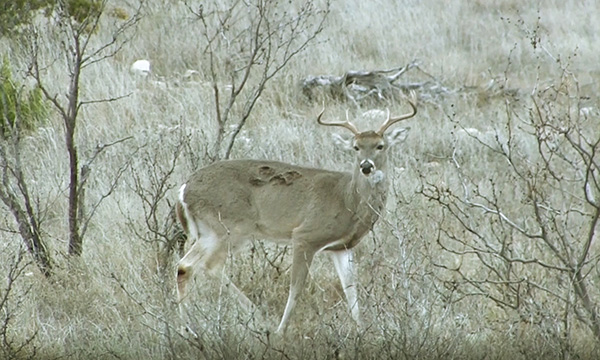
DNR’s online game check-in system was first offered in 2012 and made the primary system in 2015. The preliminary data reported on this page from this system are updated once per day during deer hunting seasons. To view the data collected, please view the Indiana Deer Harvest data.
Resources:
Indiana Hunting & Trapping Guide, Indiana Department of Natural Resources (IN DNR), Fish & Wildlife
Indiana 2022-2023 Hunting & Trapping Season (pdf) list, IN DNR, Fish & Wildlife
Indiana DNR Shares 2022-2023 Hunting Season, Got Nature? Blog, Purdue Extension-Forestry & Natural Resources
Wildlife Habitat Hint: Trail Camera Tips and Tricks, Got Nature? Blog
Bovine Tuberculosis in Wild White-tailed Deer, The Education Store, Purdue Extension’s resource center
Handling Harvested Game: Episode 1, Field Dressing, Video, Purdue Extension Youtube channel
Handling Harvested Game: Episode 2, Hanging & Skinning, Video
Handling Harvested Game: Episode 3, Deboning, Video
Handling Harvested Game: Episode 4, Cutting, Grinding & Packaging, Video
How to Score Your White-tailed Deer, video, The Education Store
White-Tailed Deer Post Harvest Collection, video, The Education Store
Age Determination in White-tailed Deer, video, The Education Store
Managing Your Woods for White-Tailed Deer, The Education Store
Bovine Tuberculosis in Wild White-tailed Deer, The Education Store
Indiana Department of Natural Resources
The classic and trusted book “Fifty Common Trees of Indiana” by T.E. Shaw was published in 1956 as a user-friendly guide to local species. Nearly 70 years later, the publication has been updated through a joint effort by the Purdue Department of Forestry and Natural Resources, Indiana 4-H, and the Indiana Department of Natural Resources, and reintroduced as “An Introduction to Trees of Indiana.”
The full publication is available for download for $7 in the Purdue Extension Education Store. The field guide helps identify common Indiana woodlot trees.
Each week, the Intro to Trees of Indiana web series will offer a sneak peek at one species from the book, paired with an ID That Tree video from Purdue Extension forester Lenny Farlee to help visualize each species as it stands in the woods. Threats to species health as well as also insight into the wood provided by the species, will be provided through additional resources as well as the Hardwoods of the Central Midwest exhibit of the Purdue Arboretum, if available. 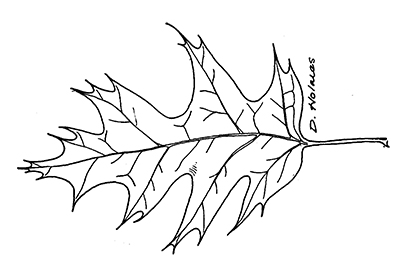
This week, we take a look at the sixth of our oak varieties in Indiana, the Northern Red Oak or Quercus rubra.
This native species is easily identified by its bark and its acorn. The bark looks like ski tracks or long running ridges that run up and down the sides of the tree, while the fruit is a large rounded acorn featuring a tight shallow cap with tight scales that resembles a beret sitting on top of a head.
Like other members of the red oak group, the leaves are multi-lobed and have bristle tips, including a sharp bristle tip on the terminal lobe. On the northern red oak, the alternately held leaves have veins that are palmate, or run out to the ends of the lobes from a single point in the middle. In the fall, the dark green leaves change to a bright red color.
The cluster of terminal buds at the end of northern red oak stems are smooth, shiny and reddish brown to brown in color. The twigs are somewhat angular in appearance.
Northern red oaks, which grow to 60 to 75 feet tall, are found mostly in upland areas. The natural range of northern red oak is the eastern United States and southern Canada, with the exception of the southern coastal plains. It grows well on moist, but well-drained soils.
The Morton Arboretum states that northern red oak has a high tolerance of salt and air pollution, making it a good tree for more exposed areas. This species prefers a well-drained, rich woodland site and it grows best in sandy, loam soil.
As with other oaks, the northern red oak should be pruned in the dormant season to avoid attracting beetles that may carry oak wilt. Galls and mites are common insect problems. This species can develop chlorosis symptoms in high pH soils.
For full article with additional photos view: Intro to Trees of Indiana: Northern Red Oak, Forestry and Natural Resources’ News.
If you have any questions regarding wildlife, trees, forest management, wood products, natural resource planning, or other natural resource topics, feel free to contact us by using our Ask an Expert web page.
Other Resources:
ID That Tree: Northern Red Oak
ID That Tree: Red Oak Group
Hardwood Lumber and Veneer Series: Red Oak Group
Morton Arboretum: Northern Red Oak
Red Oak, Native Trees of Indiana River Walk, Fort Wayne Purdue
Fifty Common Trees of Indiana
An Introduction to Trees of Indiana
Native Trees of the Midwest, The Education Store
Shrubs and Woody Vines of Indiana and the Midwest, The Education Store
Investing in Indiana Woodlands, The Education Store
Forest Improvement Handbook, The Education Store
ID That Tree, Purdue Extension-Forestry & Natural Resources (FNR) YouTube playlist
Woodland Management Moment, Purdue Extension-FNR YouTube playlist
Wendy Mayer, FNR Communications Coordinator
Purdue University Department of Forestry and Natural Resources
Lenny Farlee, Sustaining Hardwood Extension Specialist
Purdue University Department of Forestry and Natural Resources
The classic and trusted book “Fifty Common Trees of Indiana” by T.E. Shaw was published in 1956 as a user-friendly guide to local species. Nearly 70 years later, the publication has been updated through a joint effort by the Purdue Department of Forestry and Natural Resources, Indiana 4-H, and the Indiana Department of Natural Resources, and reintroduced as “An Introduction to Trees of Indiana.”
The full publication is available for download for $7 in the Purdue Extension Education Store. The field guide helps identify common Indiana woodlot trees. 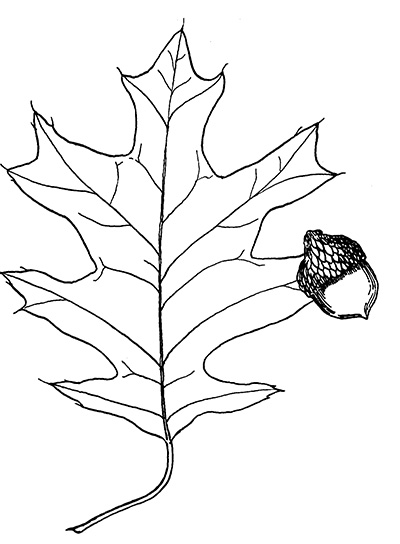
Each week, the Intro to Trees of Indiana web series will offer a sneak peek at one species from the book, paired with an ID That Tree video from Purdue Extension forester Lenny Farlee to help visualize each species as it stands in the woods. Threats to species health as well as also insight into the wood provided by the species, will be provided through additional resources as well as the Hardwoods of the Central Midwest exhibit of the Purdue Arboretum, if available.
This week, we take a look at the seventh of our featured oak varieties in Indiana, the Black Oak or Quercus velutina.
The leaves of black oak are multi-lobed, typically with seven lobes, with deep sinuses in between, and have bristle tips like all members of the red/black oak family. On the black oak, the alternately held leaves can be extremely variable in shape, but the tops of the leaves are dark and shiny and have a leathery appearance. Leaves change from dark green in summer to yellow or yellow-brown in fall.
One key characteristic of black oak are the terminal buds, which are angular and fuzzy, very large and light tan. Alternately, the cluster of terminal buds at the end of northern red oak stems are smooth, shiny and reddish brown to brown in color.
The bark is very dark in color with narrow, blocky ridges, and lacks the silvery running ridges that are found on northern red oak.
The fruit is a small rounded acorn with striping running up and down the sides and a fuzzy coating along the outside edge. The cap is deeper than northern red oak and the scales on the edge of the cap resemble loose, rough shingles.
Black oaks, which grow to 50 to 60 feet tall, are found mostly in dry, upland areas. The natural range of the black oak is nearly all of the eastern United States, from Nebraska, Iowa and Oklahoma to the west, dipping south into Texas, Louisiana, Mississippi, Alabama, Georgia and even a bit of the panhandle of Florida, extending along the eastern coastline, and northward into southern Ontario, Canada.
The Morton Arboretum states that black oak has a high tolerance of alkaline soils and dry sites, although it prefers acidic and dry soil. This species cannot withstand severe drought. It can also be difficult to transplant due to a deep taproot.
As with other oaks, the black oak should be pruned in the dormant season to avoid attracting beetles that may carry oak wilt, which can be a potential disease problem. Galls on leaves caused by mites or insects are common, but not harmful.
For full article with additional photos view: Intro to Trees of Indiana: Black Oak, Forestry and Natural Resources’ News.
If you have any questions regarding wildlife, trees, forest management, wood products, natural resource planning or other natural resource topics, feel free to contact us by using our Ask an Expert web page.
Other Resources:
ID That Tree: Black Oak
ID That Tree: Red Oak Group
Hardwood Lumber and Veneer Series: Red Oak Group
Morton Arboretum: Black Oak
Black Oak, Native Trees of Indiana River Walk, Fort Wayne Purdue
Fifty Common Trees of Indiana
An Introduction to Trees of Indiana
Native Trees of the Midwest, The Education Store
Shrubs and Woody Vines of Indiana and the Midwest, The Education Store
Investing in Indiana Woodlands, The Education Store
Forest Improvement Handbook, The Education Store
ID That Tree, Purdue Extension-Forestry & Natural Resources (FNR) YouTube playlist
Woodland Management Moment , Purdue Extension-FNR YouTube playlist
Wendy Mayer, FNR Communications Coordinator
Purdue University Department of Forestry and Natural Resources
Lenny Farlee, Sustaining Hardwood Extension Specialist
Purdue University Department of Forestry and Natural Resources
The classic and trusted book “Fifty Common Trees of Indiana” by T.E. Shaw was published in 1956 as a user-friendly guide to local species. Nearly 70 years later, the publication has been updated through a joint effort by the Purdue Department of Forestry and Natural Resources, Indiana 4-H, and the Indiana Department of Natural Resources, and reintroduced as “An Introduction to Trees of Indiana.”
The full publication is available for download for $7 in the Purdue Extension Education Store. The field guide helps identify common Indiana woodlot trees.
Each week, the Intro to Trees of Indiana web series will offer a sneak peek at one species from the book, paired with an ID That Tree video from Purdue Extension forester Lenny Farlee to help visualize each species as it stands in the woods. Threats to species health as well as also insight into the wood provided by the species, will be provided through additional resources as well as the Hardwoods of the Central Midwest exhibit of the Purdue Arboretum, if available.
This week, we take a look at the fifth of our oak varieties in Indiana, the Chinkapin Oak or Quercus muehlenbergii.
Also known as the Chinquapin Oak, the leaves of this species feature shallow, evenly lobed margins, but appear to have sharp-pointed teeth at the end resembling red or black oaks. This sharp point, however, is due to a gland at the end of the leaves, and there is no bristle tip as are typically found on red and black oaks. The shape of the leaves can be either broad like chestnut oak, or narrower.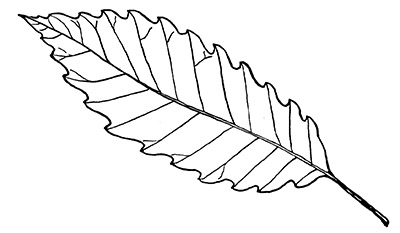
Like other members of the white oak group, the bark of chinkapin oak is light gray and ashy, however it has a flaky appearance.
The fruit of the chinkapin oak is a small acorn that is dark brown or almost black in color. It has a cap that resembles a stocking cap, covering a third or half of the acorn, that features loose knobby scales. Under the cap, the acorn has a large white spot similar to that of a buckeye.
Chinkapin oaks, which grow to 50 to 80 feet tall, are found in both upland and bottomland areas. The natural range of chinkapin oak is the eastern United States, with the exception of the Atlantic coast and the immediate gulf coastal plains.
The Morton Arboretum states that chinkapin oak is best grown in rich, deep soils, but that it is often found in the wild on dry, limestone outcrops in low slopes and wooded hillsides. It notes that this species is one of the best oaks for alkaline soils. As with other oaks, this chinkapin oaks should be pruned in the dormant season to avoid attracting beetles that may carry oak wilt. This species also can be affected by anthracnose, oak wilt and two-lined chestnut borers.
For full article with additional photos view: Intro to Trees of Indiana: Chinkapin Oak, Forestry and Natural Resources’ News.
If you have any questions regarding wildlife, trees, forest management, wood products, natural resource planning, or other natural resource topics, feel free to contact us by using our Ask an Expert web page.
Other Resources:
ID That Tree: Chinkapin Oak
ID That Tree: White Oak Group
Hardwood Lumber and Veneer Series: White Oak Group
Morton Arboretum: Chinkapin Oak
Chinkapin Oak, Native Trees of Indiana River Walk, Fort Wayne Purdue
Fifty Common Trees of Indiana
An Introduction to Trees of Indiana
Native Trees of the Midwest, The Education Store
Shrubs and Woody Vines of Indiana and the Midwest, The Education Store
Investing in Indiana Woodlands, The Education Store
Forest Improvement Handbook, The Education Store
ID That Tree, Purdue Extension-Forestry & Natural Resources (FNR) YouTube playlist
Woodland Management Moment, Purdue Extension-FNR YouTube playlist
Wendy Mayer, FNR Communications Coordinator
Purdue University Department of Forestry and Natural Resources
Lenny Farlee, Sustaining Hardwood Extension Specialist
Purdue University Department of Forestry and Natural Resources
The classic and trusted book “Fifty Common Trees of Indiana” by T.E. Shaw was published in 1956 as a user-friendly guide to local species. Nearly 70 years later, the publication has been updated through a joint effort by the Purdue Department of Forestry and Natural Resources, Indiana 4-H, and the Indiana Department of Natural Resources, and reintroduced as “An Introduction to Trees of Indiana.”
The full publication is available for download for $7 in the Purdue Extension Education Store. The field guide helps identify common Indiana woodlot trees.
Each week, the Intro to Trees of Indiana web series will offer a sneak peek at one species from the book, paired with an ID That Tree video from Purdue Extension forester Lenny Farlee to help visualize each species as it stands in the woods. Threats to species health as well as also insight into the wood provided by the species, will be provided through additional resources as well as the Hardwoods of the Central Midwest exhibit of the Purdue Arboretum, if available. 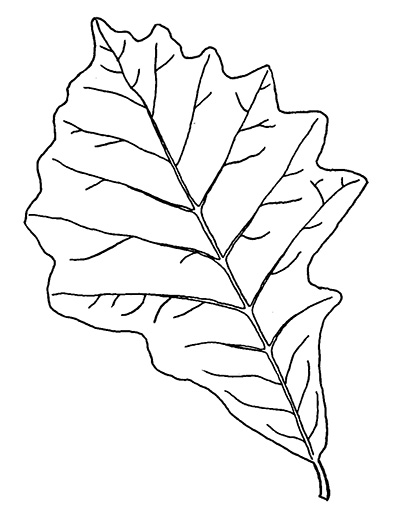
This week, we take a look at the third of our oak varieties in Indiana, the Swamp White Oak or Quercus bicolor.
The swamp white oak has leaves with wavy, uneven lobed margins with blunt teeth, which are wider toward the tip than at the base. The alternately-held leaves are typically dark green on top with a silvery-white underside, which turn orange, gold and yellow in the fall.
The bark on swamp white oak is similar to that of white oak and often peels back especially on younger trees. Mature bark is dark gray-brown with flaky/shreddy bark or blocky ridges that are consistent up and down the tree.
The fruit of the swamp white oak is an acorn held on a long stalk, typically an inch or inch and a half long, called a peduncle.
Swamp white oaks, which grow to 50 to 60 feet tall, are named for the fact that they often grow in wet places, such as line drawing of swamp white oak acorns and peduncle. upland swamps and lowlands. This species also can tolerate well-drained upland sites, making it a good option for landscape plantings. The natural range of swamp white oak is the northern half of the eastern United States, reaching as far south as Missouri, southern Illinois and Kentucky, and north into Wisconsin, Michigan and Pennsylvania.
The Morton Arboretum warns to plant swamp white oak in full sun and shares that the species is one of the easiest oaks to transplant and is more tolerant of poor drainage than other oaks. It also notes that oaks should be pruned in the dormant season to avoid attracting beetles that may carry oak wilt. Swamp white oak can be affected by pests such as anthracnose, powdery mildew, chlorosis in high pH soils, insect galls and oak wilt.
In general, lumber from the white oak group is among the heaviest next to hickory, weighing in at 47 pounds per cubic foot. It is very resistant to decay and is one of the best woods for steam bending.
White oak lumber has been used for a variety of purposes including log cabins, ships, wagon wheels and furniture. It also is preferred for indoor decorative applications ranging from furniture, especially in churches, to cabinets, interior trim, millwork and hardwood flooring and veneers. It also may be used for barrel making.
Its density and durability make white oak a favorite for industrial applications such as railroad ties, mine timbers, sill plates, fence posts and boards, pallets, and blocking, as well as industrial, agricultural and truck flooring.
For full article with additional photos view: Intro to Trees of Indiana: Swamp White Oak, Forestry and Natural Resources’ News.
If you have any questions regarding wildlife, trees, forest management, wood products, natural resource planning or other natural resource topics, feel free to contact us by using our Ask an Expert web page.
Other Resources:
ID That Tree: Swamp White Oak
ID That Tree: White Oak Group
Hardwood Lumber and Veneer Series: White Oak Group
Morton Arboretum: Swamp White Oak
Fifty Common Trees of Indiana
An Introduction to Trees of Indiana
Native Trees of the Midwest, The Education Store
Shrubs and Woody Vines of Indiana and the Midwest, The Education Store
Investing in Indiana Woodlands, The Education Store
Forest Improvement Handbook, The Education Store
ID That Tree, Purdue Extension-Forestry & Natural Resources (FNR) YouTube playlist
Woodland Management Moment , Purdue Extension-FNR YouTube playlist
Wendy Mayer, FNR Communications Coordinator
Purdue University Department of Forestry and Natural Resources
Lenny Farlee, Sustaining Hardwood Extension Specialist
Purdue University Department of Forestry and Natural Resources
The classic and trusted book “Fifty Common Trees of Indiana” by T.E. Shaw was published in 1956 as a user-friendly guide to local species. Nearly 70 years later, the publication has been updated through a joint effort by the Purdue Department of Forestry and Natural Resources, Indiana 4-H, and the Indiana Department of Natural Resources, and reintroduced as “An Introduction to Trees of Indiana.”
The full publication is available for download for $7 in the Purdue Extension Education Store. The field guide helps identify common Indiana woodlot trees.
Each week, the Intro to Trees of Indiana web series will offer a sneak peek at one species from the book, paired with an ID That Tree video from Purdue Extension forester Lenny Farlee to help visualize each species as it stands in the woods. Threats to species health as well as also insight into the wood provided by the species, will be provided through additional resources as well as the Hardwoods of the Central Midwest exhibit of the Purdue Arboretum, if available. 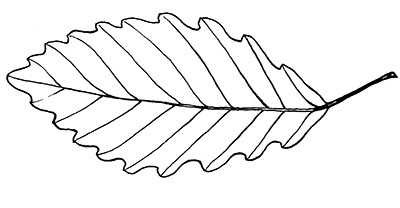
This week, we take a look at the fourth of our oak varieties in Indiana, the Chestnut Oak or Quercus montana.
The leaves of the chestnut oak have small, evenly lobed rounded margins. The upper leaf surface is leathery in appearance and is dark green in color, while the lower surface is a duller green. In the fall, the leaves can range from red and orange to yellow and brown.
The bark may be its tell-tale characteristic. Unlike other members of the white oak group, the bark of Chestnut oak bark chestnut oak is dark and deeply ridged.
The fruit of the chestnut oak is a relatively-large dark brown acorn with a smooth edge on the outer margin of the cap.
Chestnut oaks, which grow to 60 to 70 feet tall, are often found on high, dry sites in Indiana. The natural range of chestnut oak is across the northeastern United States, extending south to the northern parts of Alabama and Georgia and west to the southern tip of Illinois.
The Morton Arboretum warns that chestnut oak is a difficult to transplant due to a deep taproot, but that it can tolerate most soils except those that drain poorly. It also notes that oaks should be pruned in the dormant season to avoid attracting beetles that may carry oak wilt. Chestnut oak can be affected by pests such as scale insects and two-lined chestnut borer. Chestnut oak acorns
In general, lumber from the white oak group is among the heaviest next to hickory, weighing in at 47 pounds per cubic foot. It is very resistant to decay and is one of the best woods for steam bending. Chestnut oak, however, is considered a poor lumber species.
White oak lumber has been used for a variety of purposes including log cabins, ships, wagon wheels and furniture. It also is preferred for indoor decorative applications ranging from furniture, especially in churches, to cabinets, interior trim, millwork and hardwood flooring and veneers. It also may be used for barrel making.
Its density and durability make white oak a favorite for industrial applications such as railroad ties, mine timbers, sill plates, fence posts and boards, pallets, and blocking, as well as industrial, agricultural and truck flooring.
For full article with additional photos view: Intro to Trees of Indiana: Chestnut Oak, Forestry and Natural Resources’ News.
If you have any questions regarding wildlife, trees, forest management, wood products, natural resource planning or other natural resource topics, feel free to contact us by using our Ask an Expert web page.
Other Resources:
ID That Tree: Chestnut Oak
ID That Tree: White Oak Group
Hardwood Lumber and Veneer Series: White Oak Group
Morton Arboretum: Chestnut Oak
Fifty Common Trees of Indiana
An Introduction to Trees of Indiana
Native Trees of the Midwest, The Education Store
Shrubs and Woody Vines of Indiana and the Midwest, The Education Store
Investing in Indiana Woodlands, The Education Store
Forest Improvement Handbook, The Education Store
ID That Tree, Purdue Extension-Forestry & Natural Resources (FNR) YouTube playlist
Woodland Management Moment , Purdue Extension-FNR YouTube playlist
Chestnut Oak, Native Trees of Indiana River Walk, Purdue-Fort Wayne
Wendy Mayer, FNR Communications Coordinator
Purdue University Department of Forestry and Natural Resources
Lenny Farlee, Sustaining Hardwood Extension Specialist
Purdue University Department of Forestry and Natural Resources

Recent Posts
- Purdue Extension: Empowering Indiana Through Innovation, Education and Community Impact
Posted: January 28, 2026 in Community Development, How To, Invasive Insects, Invasive Plant Species, Natural Resource Planning, Woodlands - Forest Landowners: Share Your Experience with Regeneration and Restoration
Posted: January 27, 2026 in Forestry, How To, Timber Marketing, Woodlands - It’s Not Too Late to Order Trees for Spring Planting
Posted: January 13, 2026 in Forestry, How To, Plants - Now Is The Time To Control Non-Native Bush Honeysuckle
Posted: October 30, 2025 in Forestry, How To, Invasive Plant Species, Woodlands - October Is Firewood Month: Protect Indiana’s Forests by Making Smart Choices
Posted: October 13, 2025 in Forestry, Forests and Street Trees, How To, Invasive Insects, Urban Forestry - ID That Tree: Smooth Sumac
Posted: October 2, 2025 in Forestry, How To, Wildlife - ID That Tree: Wild Grape Vine
Posted: August 12, 2025 in Forestry, How To, Urban Forestry, Wildlife - Publication – Sericea Lespedeza Control
Posted: July 7, 2025 in Forestry, How To, Invasive Plant Species, Wildlife - How to ID Asian Jumping Worms, Purdue Landscape Report
Posted: July 2, 2025 in How To, Invasive Insects, Wildlife - Alert – Water Your Trees, Watch Video
Posted: June 20, 2025 in Alert, Drought, Forests and Street Trees, How To, Urban Forestry, Wildlife, Woodlands
Archives
Categories
- Alert
- Aquaculture/Fish
- Aquatic/Aquaculture Resources
- Ask the Expert
- Christmas Trees
- Community Development
- Disease
- Drought
- Forestry
- Forests and Street Trees
- Gardening
- Got Nature for Kids
- Great Lakes
- How To
- Invasive Animal Species
- Invasive Insects
- Invasive Plant Species
- Land Use
- Natural Resource Planning
- Nature of Teaching
- Plants
- Podcasts
- Ponds
- Publication
- Safety
- Spiders
- Timber Marketing
- Uncategorized
- Urban Forestry
- Webinar
- Wildlife
- Wood Products/Manufacturing
- Woodland Management Moment
- Woodlands