 Purdue University - Extension - Forestry and Natural Resources
Got Nature? Blog
USDA – U.S. Forest Service: There’s a new resource for teachers and kids in this month’s National Research Digest from USDA Forest Service Research. Read how Woodsy Owl and agency scientists lend a hand and care for the land with a journal for learners of all ages.
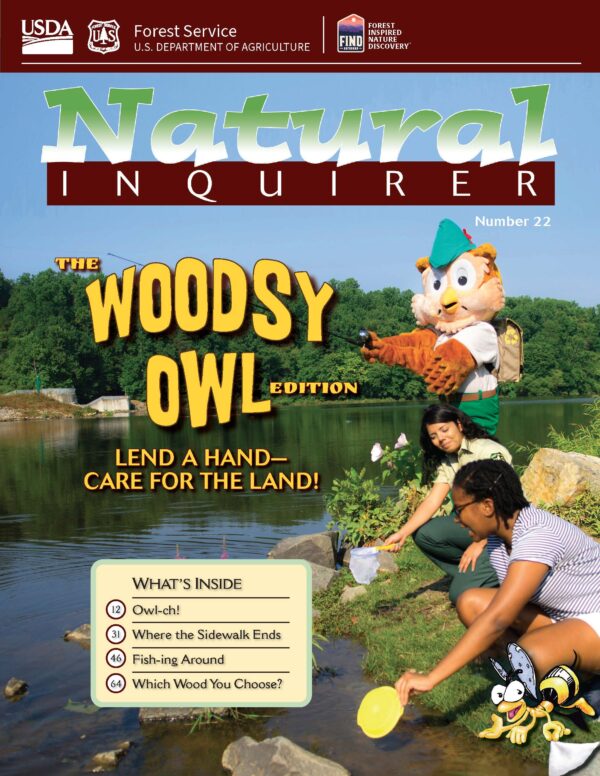
Photo from USDA Forest Service
The Woodsy Owl edition examines research on a variety of topics including how climate change affects owls in the Southwest, research on visitors to natural and landscaped areas in urban parks, how scientists identify characteristics of fisher habitats, and how forest planting decisions affect wildlife habitat for certain species. This journal also features sections where Woodsy Owl will share some ways that you can “Lend a Hand” and “Care for the Land.” You and your students can be a part of conserving our natural resources, protecting our environment, and enjoying all that nature has to offer!
This is a valuable educational tool that’s an engaging way for educators to use in teaching, making environmental research accessible to all ages and learning practical ways to make a difference.
Keep up with more research and news by subscribing to the USDA Forest Service National Research Digest.
Resources:
Creating a Wildlife Habitat Management Plan for Landowners, The Education Store, Purdue Extension’s resource center
A Template for Your Wildlife Habitat Management Plan, The Education Store
What a Waste of Food!, lesson plans, The Education Store, Purdue Extension’s resource center
Common Indiana Mammals: Natural History and Identification Sneak Peak Video, Nature of Teaching
Food Waste Lesson Plans, Nature of Teaching
The Nature of Teaching, YouTube channel
Conservation Tree Planting: Steps to Success – webinar, Purdue Extension-Forestry & Natural Resources (FNR) YouTube Channel
Planting Forest Trees and Shrubs in Indiana (pdf), located on The Education Store, Purdue Extension’s resource center
Planting and Care of Fine Hardwood Seedlings (pdf), located on The Education Store, Purdue Extension’s resource center
Managing Woodlands for Birds Video, Purdue Extension-Forestry and Natural Resources (FNR) YouTube Channel
Developing a Wildlife Habitat Management Plan, The Education Store
Subscribe to Purdue Extension-Forestry & Natural Resources YouTube Channel, Wildlife Playlist
Diana Evans, Extension & Web Communications Specialist
Purdue University Department of Forestry and Natural Resources
U.S. Department of Agriculture – Forest Service Research & Development
Purdue College of Agriculture News: An armored mammal, once limited to the swamps and forests of the Deep South, is now burrowing its way through the backyards and woodlands of Indiana. The nine-banded armadillo—a 10 to 15 pound mammal often associated with Texas or Louisiana—has become an increasingly common sight in the Hoosier state.
Brian MacGowan, Purdue Extension wildlife specialist and coordinator in Purdue University’s Department of Forestry and Natural Resources, explains that while this isn’t a brand-new arrival, the armadillo population and range have grown steadily and moved north in recent years.
“The nine-banded armadillo was first discovered living in Indiana around 2003,” MacGowan said. “Since then, they have been found throughout most of the state, even into the far northeast corner of Steuben County.”
MacGowan explains that armadillos are known to establish themselves in woodland areas in search of their food source. “Their diet is generally ground insects,” he said. “If an animal wants to find loads of insects, they will find an abundance in decaying wood.”
Another distinct characteristic of the nine-banded armadillo is their burrowing tactics.
“In some studies, these armadillos have been known to use multiple burrows, sometimes over 30 in a single year,” MacGowan said. “If they run into trouble, their first response is often to jump up and run into their burrow as fast as they can.”
As a nocturnal animal with many burrows to call home, their chances of being seen by humans are diminished. However, occasionally homeowners and farmers will find signs of armadillos on their property, such as where they dig up insects and grubs or burrow under a deck.
While armadillos are not known to be dangerous, there is a risk of humans or animals stepping into their open burrows. MacGowan compares this concern with the challenge farmers face with groundhogs and ground squirrels.
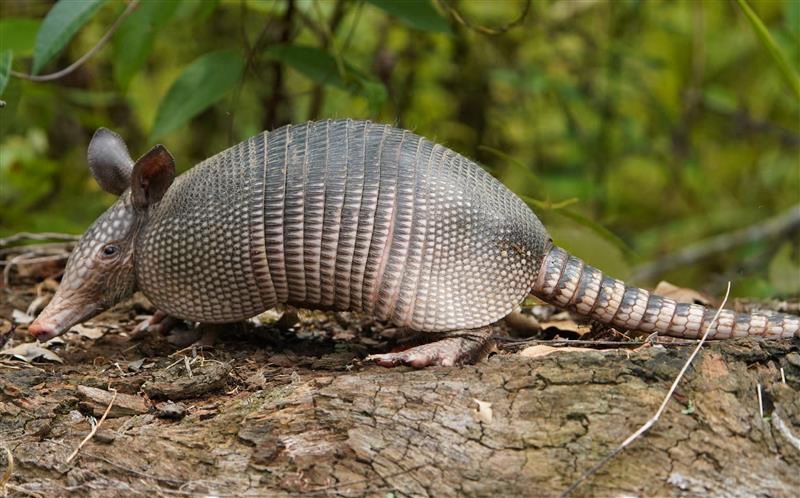 Rather than navigating by sight or sound, the nine-banded armadillos rely on smell, which could lead them to roadways while searching for food, MacGowan explains.
“The nine-banded armadillos also cannot curl up in a ball and protect their soft underbelly like other armadillo species can, so they’re vulnerable to predation by coyotes and other predators, said MacGowan.
Armadillo sightings are also influenced by the temperatures and moisture in an area. “If there’s a drought, it can kill off a lot of armadillos because the ground gets so hard and a lot of the insects and things they eat move below ground,” MacGowan said.
Typically, when it is cold out, the nine-banded armadillo adjusts its behavior to be more active during the day, partly because that helps them warm up. Also, some of the things they eat are more likely to be active when it’s warmer. MacGowan encourages people who encounter these animals to let them be.
“Armadillos are susceptible to a variety of diseases just like any wild animal,” he said. “You might have heard talk that armadillos can carry leprosy. That is generally an endemic issue for those animals specifically found in some regions in the south. While leprosy is quite deadly to armadillos, there is absolutely no evidence of transmission to people. However, they are wild animals, and the DNR will always caution people to keep their distance from any wild animal.”
The next time you spot this rare visitor in your backyard or scurrying across a Hoosier road, remember that you are witnessing history in motion. Reporting unusual animal sightings, like the nine-banded armadillo, not only helps the DNR track these shifts, but also deepens our understanding of a continually evolving ecosystem. After all, you never know what remarkable creature might be unexpectedly making its home in Indiana.
You can help the Indiana Division of Fish & Wildlife by submitting reports of certain mammals of interest. These mammals can potentially be seen from the comfort of your home, on your way to work, or while out biking, hiking, or camping. Reports can be made to the DNR here.
To view this article along with other news and stories posted on the Purdue College of Agriculture website view: Unexpected Plants and Animals of Indiana: The nine-banded armadillo.
Resources:
A Template for Your Wildlife Habitat Management Plan, The Education Store, Purdue Extension resource center
Wildlife Habitat Hint, Purdue Extension – Forestry & Natural Resources (FNR) YouTube Playlist
Woodland Stewardship for Landowners, Purdue Extension – FNR YouTube Playlist
Woodland Management Moment, Purdue Extension – FNR YouTube Playlist
Invasive Species, Playlist, Purdue Extension – FNR Youtube Channel
Invasive Plant Species Identification, Video, Purdue Extension – FNR Youtube Channel
Invasive plants: impact on environment and people, The Education Store, Purdue Extension’s resource center
Woodland Invaders, Got Nature? Blog, Purdue Extension – FNR
Preventing Wildlife Damage – Do You Need a Permit? – The Education Store, Purdue Extension resource center
Selecting a Nuisance Wildlife Control Professional, The Education Store
How to Construct a Scent Station, The Education Store
Question: How do I properly relocate raccoons from my attic?, Got Nature? Blog, Purdue Extension FNR
Nuisance Wildlife – Indiana Department of Natural Resources
Subscribe to our FNR Extension YouTube Channel with over 250 videos which include: aquatic, forestry, urban forestry, wildlife, community planning videos and much more.
Ericka Bethel, Digital Content Specialist
Purdue University Department of Forestry and Natural Resources
Dr. Brian MacGowan, Extension Wildlife Specialist
Department of Forestry & Natural Resources, Purdue University
 Question: Is it recommended to feed birds during the summer? Could this effect migration?
Answer: Continuing to feed birds in the spring and summer comes down to personal preference and is not a problem for birds. Many things drive migration including daylength. The only difference is some foods (e.g., suet) can become rancid. Even bird seed (especially wet seed) can spoil quicker. You can fix this by changing out your food regularly, or by not filling the feeders as full so that birds empty the feeder more quickly.
Resources:
The Basics of Bird Migration: How, Why and Where, Cornell Lab
Feeding Birds, Cornell Lab
Bird Feeding Tips, Audubon.org
More Resources:
Virtual Tour Brings Forest Management for Birds to Life, Purdue Extension – Forestry and Natural Resources (FNR) Got Nature? Blog
Breeding Bird Atlas, Indiana Department of Natural Resources
IN DNR Shares How to Keep Your Backyard Birds Healthy, Purdue Extension – FNR Got Nature? Blog
Question: Is there any risk of becoming infected with avian influenza virus by feeding backyard birds?, Purdue Extension – FNR Got Nature? Blog
Breeding Birds and Forest Management: the Hardwood Ecosystem Experiment and the Central Hardwoods Region, The Education Store, Purdue Extension resource center
Forest Birds, The Education Store
Managing Woodlands for Birds, The Education Store
Managing Woodlands for Birds Video, Purdue Extension – FNR YouTube Channel
The Birders’ Dozen, Profile: Baltimore Oriole, Indiana Woodland Steward
Ask An Expert, Playlist, Purdue Extension – FNR YouTube channel
Birds and Residential Window Strikes: Tips for Prevention, The Education Store
No Room at the Inn: Suburban Backyards and Migratory Birds, Education Store
Putting a Little Wildlife in Your Backyard This Spring, The Education Store
Subscribe, Purdue Extension – FNR YouTube Channel
Dr. Brian MacGowan, Extension Wildlife Specialist & Certified Wildlife Biologist
Department of Forestry & Natural Resources, Purdue University
The summer issue of the Purdue Alumnus magazine highlights Gabrielle Sjoberg, FNR 2008, and the Nature of Teaching. The section titled “The Nature of Well-Being” shares how Boilermakers are making connections regarding the power of nature to improve our health, moods and thinking.
For Gabrielle Sjoberg (A’08), connecting people to nature has become her life’s work.
The wildlife science alumna, whose master’s degree in biology from Miami University focused on outdoor programming, has helped kids discover nature at the Indiana Dunes National Park, ran nature programs and camps at the Natural History Museum of Los Angeles County, and led youth conservation corps programs in Angoon, Alaska.
“I’m working with kids who, even though they’ve grown up in these remote wilderness areas, have not necessarily done much exploring in the bays and rivers,” says Gabrielle Sjoberg, FNR 2008.
The rural and Indigenous youths in the program work on projects such as clearing trails and fallen trees with program partners, including the United States Forest Service, and also help with the traditional seasonal harvesting, preservation, and distribution of foodstuffs that are crucial for locals: salmon, clams, moose, deer, herring eggs, blueberries, and beach asparagus.
For full article view, For Gabrielle Sjoberg (A’08), connecting people to nature has become her life’s work.
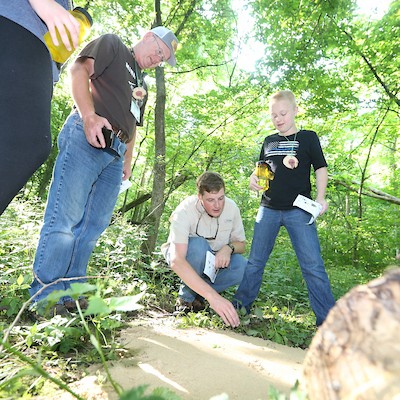
The Nature of Teaching
In 2005, when journalist Richard Louv published his groundbreaking book Last Child in the Woods: Saving Our Children from Nature-Deficit Disorder, research on the ways natural environments can benefit humans was just getting started.
The program’s three areas of focus—wildlife, food waste, and health and wellness—provide standards-based curricula along with suggestions for informal “field day” activities, all centered around getting kids outside.
The teachers said they needed training, good science-based lesson plans, and a repository of natural resource–related information they could easily access. In response, Dr. Rod Williams created a comprehensive professional development program for teachers called the Nature of Teaching, housed in the College of Agriculture’s Extension program.
Williams recently left Purdue for Texas Tech, where he serves as vice provost for outreach and engagement, but his legacy lives on in the Nature of Teaching program, which is now codirected by Veronica (Yager) Bullock (A’17) and Jarred Brooke (A’12), who is also an Extension wildlife specialist.
According to Bullock, who has taught many of the Nature of Teaching units as well as workshops for teachers, the lesson plans have been downloaded 400,000 times since the program’s launch. “That shows there’s a real interest in this,” she says.
For full article view, The Nature of Teaching.
The Nature of Teaching includes formal standards-based curricula and informal activity-based curricula all centered around getting youth outside. The three program areas of the formal curricula include: Wildlife, Health and Wellness, and Food Waste. Each program area provides standards-based lesson plans, available as free downloadable PDFs, which are classroom ready for grades K-12.
The Purdue Alumnus magazine, referred to as “Bulletin of the Purdue Alumni Association” in its early years, is the flagship publication of the Purdue for Life Foundation. It aims to inform, inspire and entertain readers through stories that provide insight into Purdue University and its initiatives, alumni, students, faculty and staff.
Resources:
Nature of Teaching, Connecting Youth With Nature for Health and Education, Agriculture Natural Resources, Got Nature? Blog Post
Virtual Workshops, Nature of Teaching
Nature of Teaching, Website, Purdue College of Agriculture
The Nature of Teaching, YouTube channel
Transporting Food Waste, The Education Store, Purdue Extension resource center
Benefits of Connecting with Nature, The Education Store
Nature of Teaching: Common Mammals of Indiana, The Education Store
The Nature of Teaching: Food Waste Solutions, The Education Store
The Nature of Teaching: Food Waste and the Environment, The Education Store
The Nature of Teaching: Trees of the Midwest, The Education Store
The Nature of Teaching: Adaptations for Aquatic Amphibians, The Education Store
Trees of the Midwest Webinar, Nature of Teaching YouTube channel
Adaptations For Aquatic Amphibians Webinar, Nature of Teaching YouTube channel
Agriculture & Natural Resources (ANR)
Diana Evans, Extension and Web Communication Specialist
Purdue University Department of Forestry and Natural Resources
Jarred Brooke, Wildlife Extension Specialist
Purdue Department of Forestry and Natural Resources
Veronica Bullock, ANR Extension Educator
Purdue Extension Franklin County
Join Indiana Forestry & Woodland Owners Association (IFWOA) as they celebrate the state’s natural beauty by sharing photos and stories from Carroll Ritter’s book of “Magnificent Trees of Indiana.” They discuss the changes that have occurred over the last two centuries in Indiana’s forests, including the landscape geology and physiography.
Check out the Indiana Forestry & Woodland Association YouTube Channel for videos including: What is IFWOA?; A New Carbon Program for Hardwood Landowners Webinar, Indiana’s Native Orchids, Magnificent Trees of Indiana, Be Tick Aware and much more.
The Indiana Forestry & Woodland Owners Association (IFWOA) was founded in 1977 and is a non-profit organization dedicated to conservation and sustainable management of woodlands in Indiana. IFWOA advocates for scientific best practices for management to achieve objectives of clean water, wildlife habitat, soil protection, native species diversity, timber production, recreation, carbon sequestration and many others.
IFWOA is an affiliate of the National Woodland Owners Association. IFWOA is a partner, collaborator or is represented on leading National and State organizations. These memberships or collaborations are selected to advance Indiana Woodland owner’s interests. IFWOA monitors and influences legislation and economic trends impacting Indiana woodlands and landowners for our members. Membership in IFWOA provides a valuable network linkage to information and resources at the leading edge of science, industry and politics impacting Indiana woodlands.
Resources:
Magnificent Trees of Indiana, Purdue University Press
Forest Improvement Handbook, The Education Store, Purdue Extension’s resource center
Planting Hardwood Seedlings – The Education Store
Ordering Seedlings from the State Forest Nursery System, Got Nature? – Purdue Extension-FNR
Importance of Hardwood Tree Planting – The Education Store, Purdue Extension Resource Center
Forest Improvement Handbook – The Education Store
Designing Hardwood Tree Plantings for Wildlife – The Education Store
ID That Tree – YouTube Playlist
Forest Management for Reptiles and Amphibians: A Technical Guide for the Midwest, The Education Store
Hardwood Ecosystem Experiment – Forest Birds , Purdue Extension – FNR YouTube Channel
Managing Woodlands for Birds , Purdue Extension – FNR YouTube Channel
Sustaining Our Oak-Hickory Forests , Purdue Extension – FNR YouTube Channel
Ask the Expert: Hardwood Ecosystem Experiment – Birds and Salamander Research, Purdue Extension – FNR
Subscribe to Purdue Extension-FNR YouTube Channel
Liz Jackson, Engagement Lead
Indiana Forestry & Woodland Association
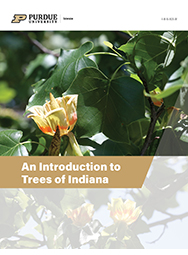
Trees are one of Indiana’s great natural resources. Professor T.E. Shaw, one of the first Indiana Extension foresters, wanted to make sure young Hoosiers, beginners in the field of forestry and tree enthusiasts alike had an educational resource to help them learn the names and identify local trees.
Shaw updated Charles C. Deam’s highly technical Trees of Indiana, which was first published in 1911, putting out an update for the 4-H forestry handbook in 1949. A second edition came out in 1950 and another revision was completed just before Shaw’s death in 1956 and published as “Fifty Common Trees of Indiana” through the Indiana Department of Conservation.
The publication, which utilizes simple methods and user-friendly language, has become a common resource many place in their backpacks before beginning an outdoor adventure.
The 1956 publication has been used for decades by 4-H, FFA and many other classroom and outdoor education programs as an introduction to tree identification for Indiana youth. Nearly 70 years later, the publication will be reintroduced as “An Introduction to Trees of Indiana,” with additional trees added to the resource along with updates of the original species. An Introduction to Trees of Indiana was a collaboration of experts from the Purdue Department of Forestry and Natural Resources (FNR), Indiana 4-H Youth Development and the Indiana Department of Natural Resources.
Add your copy of this new book to your library by visiting the Purdue Extension resource center, The Education Store: An Introduction to Trees of Indiana, product code: 4-H-15-80A.
Other resources:
Fifty Common Trees of Indiana
Native Trees of the Midwest, The Education Store
Shrubs and Woody Vines of Indiana and the Midwest, The Education Store
ID That Tree, Playlist, Subscribe to Purdue Extension – Forestry and Natural Resources YouTube Channel
A Woodland Management Moment, Playlist, Purdue Extension – FNR YouTube Channel
Investing in Indiana Woodlands, The Education Store
Forest Improvement Handbook, The Education Store
Tony Carrell, 4-H Youth Development Extension Specialist
Purdue Extension 4-H Youth Development
Lenny Farlee, Sustaining Hardwood Extension Specialist
Purdue University Department of Forestry and Natural Resources
Lindsey Purcell, Urban Forestry Specialist
Purdue University Department of Forestry and Natural Resources
 Calling all teachers and parents: Do you need some new ideas on how to get students out in nature or teach them science lessons?
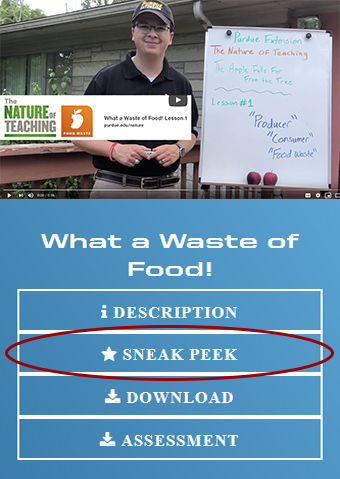
We’ve got you covered with our Nature of Teaching program. We’ve created more than 40 sneak peek videos that introduce you to our lesson plans, offering a quick way for teachers and other K-12 leaders to view the lessons as well as the related activities.
Many of the lesson plans meet state specifications for Next Generation Science Standards and/or Core Standards, while also offering informal curriculum items and fun activities for all K-12 leaders.
The Nature of Teaching program offers three areas of formal and informal activity-based curricula centered around getting youth outside: wildlife, health and wellness, and food waste.
Sneak Peeks videos include topics ranging from producers, consumers and natural resources and food waste from farm to fork, to exploring nature with your senses and emotional vocabulary exploration, to trees of the Midwest and healthy water/happy home.
Subscribe to the Nature of Teaching YouTube Channel for more Wildlife, Food Waste, and Health and Wellness information.
Resources
Nature of Teaching Website
Nature of Teaching YouTube Channel
Nature of Teaching Program Receives Environmental Education Award, College of Agriculture, Purdue University
Resourceful Animal Relationships, The Education Store, Purdue Extension resource center
The Nature of Teaching: Food Waste Solutions, The Education Store
Benefits of Connecting with Nature, The Education Store
Rod N Williams, Professor of Wildlife Science
Purdue University Department of Forestry and Natural Resources
The Nature of Teaching, a Purdue Extension signature program, was honored as the third place finisher in the central region for the Environmental Education Award presented by the National Extension Association of Family and Consumer Science (NEAFCS).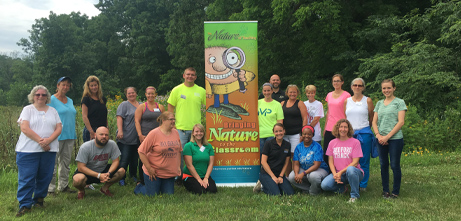 The Nature of Teaching team includes:
- Deb Arseneau, HHS Educator, Newton County
- Jarred Brooke, extension wildlife specialist
- Jay Christiansen, health and human sciences extension educator for Vigo County
- Robert Cordes, Maine Department of Inland Fisheries and Wildlife (MDIFW) wildlife special projects coordinator
- Molly Hoag, health and human sciences extension educator for Wells County
- Molly Hunt, health and human sciences extension educator for Delaware County
- Rebecca Koetz, urban ag/home horticulture extension educator for Lake County
- Tami Mosier, 4-H youth development extension educator
- Kelsie Muller, health and human sciences extension educator for Benton County
- Dr. Rod Williams, professor of wildlife science
- Brad Zitske, Maine Department of Inland Fisheries and Wildlife (MDIFW) assistant regional wildlife biologist
Nature of Teaching
Nature of Teaching YouTube Channel
Transporting Food Waste, The Education Store, Purdue Extension resource center
Resourceful Animal Relationships, The Education Store
Benefits of Connecting with Nature, The Education Store
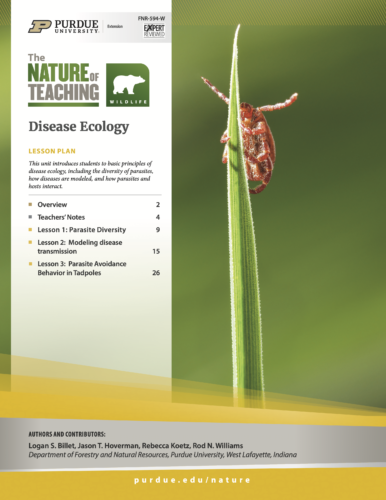 The Nature of Teaching: Disease Ecology is one unit in a series available from The Nature of Teaching – the place to go for teaching resources that focus on wildlife, food waste, health and wellness. In this series teachers can find free lesson plans, printables, posters, a photo library, information on upcoming workshops and more.
This unit introduces students to basic principles of disease ecology, including the diversity of parasites, how diseases are modeled, and how parasites and hosts interact. It includes three lessons with colorful animal cards to print along with worksheets and presentation.
Lesson 1: Parasite Diversity Activity
Lesson 2: Modeling Disease Transmission
Lesson 3: Parasite Avoidance Behavior in Tadpoles
This 33-page download PDF is written by Dr. Jason Hoverman; Logan Billet, Rebecca Koetz and Dr. Rod Williams.
For more resources, please check the Education Store.
Resources
Benefits of Connecting with Nature, The Education Store, Purdue Extension resource center
The Nature of Teaching: Ecotoxicology and Environmental Health, The Education Store
Resourceful Animal Relationships, The Education Store
The Nature of Teaching: Food Waste and the Environment, The Education Store
Rod Williams, Professor of Wildlife Science
Purdue University Department of Forestry and Natural Resources
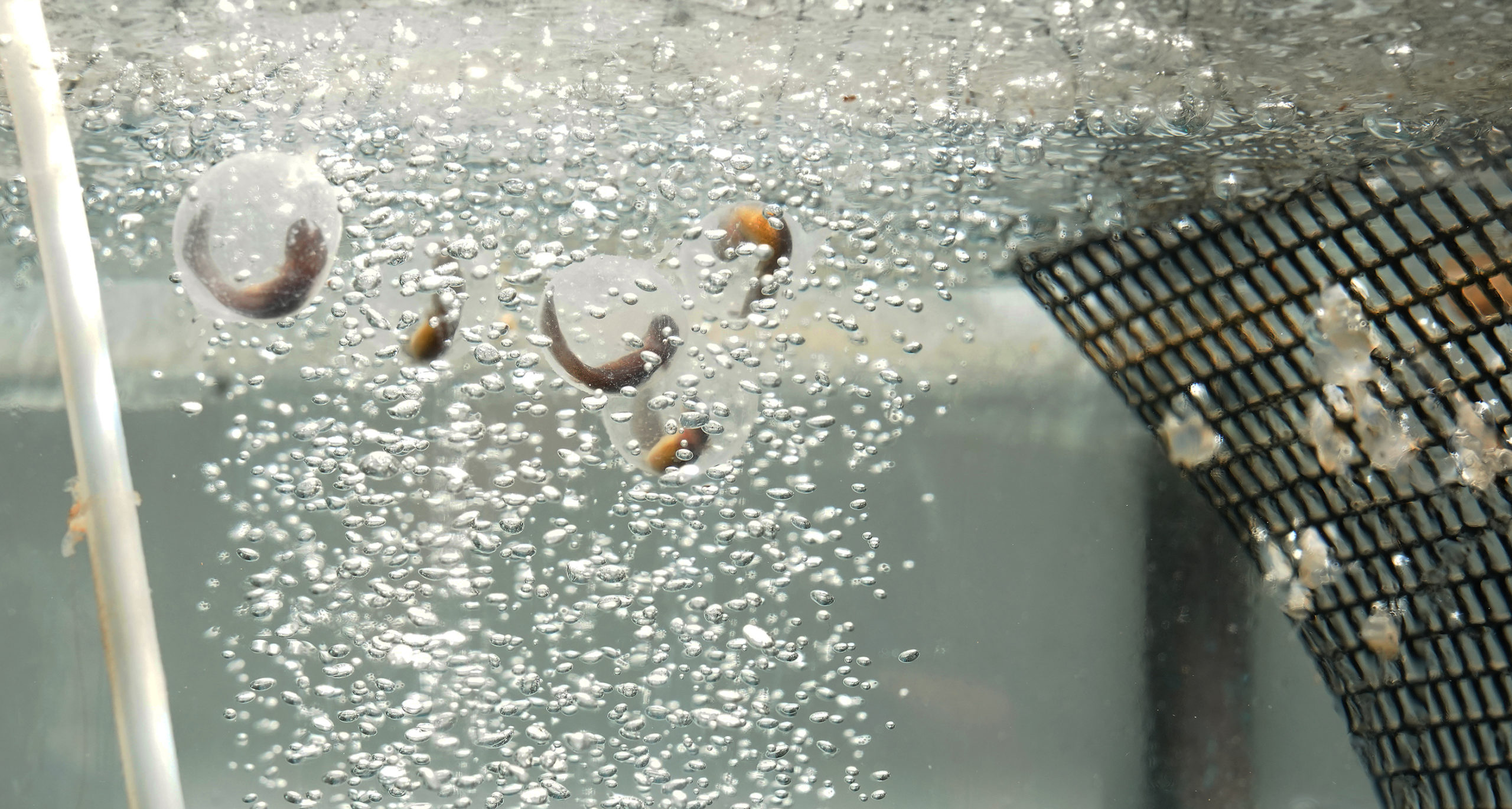 Have you heard of a Hellbender? No? Have you been living under a rock?
Eastern hellbenders are the largest salamander in North America, a rare species that has been getting a lot of conservation attention over the past two decades. If you would like to learn about Hellbenders, how you can help protect aquatic wildlife, and have the opportunity to ask Purdue biologists questions about Hellbender conservation, then please join us on our Help the Hellbender-Facebook Live question and answer time, www.facebook.com/HelpTheHellbender/.
Thursday, April 23rd
3:00 pm ET
We hope to see you there and please bring your questions!
Resources:
Help the Hellbender website, Purdue Extension-Forestry and Natural Resources
Hellbender Decline, The Education Store, Purdue Extension resource center
Zoos Work with Purdue University for Hellbender Conservation Efforts, Got Nature? Blog, FNR
The Nature of Teaching: Adaptations for Aquatic Amphibians, The Education Store
Nick Burgmeier, Project Coordinator, Research Biologist & Wildlife Extension Specialist
Purdue Department of Forestry and Natural Resources
Shelby Royal, Husbandry Lab Coordinator
Purdue Department of Forestry and Natural Resources
Rod N Williams, Professor of Wildlife Science
Purdue University Department of Forestry and Natural Resources

Recent Posts
- Woodsy Owl Edition for Educational Learning, USDA – U.S. Forest Service
Posted: January 21, 2026 in Forestry, Forests and Street Trees, Got Nature for Kids, Urban Forestry, Wildlife - Unexpected Plants and Animals of Indiana: Nine-Banded Armadillo
Posted: October 27, 2025 in Got Nature for Kids, Wildlife - Question: Should You Feed Birds in Summer? Understanding the Impact on Migration
Posted: May 13, 2025 in Ask the Expert, Got Nature for Kids, Wildlife - Purdue Alumnus Magazine Highlights FNR Graduate and Nature of Teaching Program
Posted: September 13, 2024 in Got Nature for Kids, Nature of Teaching, Wildlife - Magnificent Trees of Indiana Webinar
Posted: May 12, 2023 in Forestry, Forests and Street Trees, Gardening, Got Nature for Kids, Urban Forestry, Webinar, Woodlands - “Fifty Trees of Indiana” Now Has New Name and New Additional Trees
Posted: January 13, 2022 in Forestry, Forests and Street Trees, Got Nature for Kids, How To, Urban Forestry, Woodlands - Introduction to Nature of Teaching Sneak Peek Videos
Posted: November 2, 2020 in Aquaculture/Fish, Aquatic/Aquaculture Resources, Gardening, Got Nature for Kids, How To, Land Use, Nature of Teaching, Plants, Ponds, Urban Forestry, Wildlife, Woodlands - Nature of Teaching Program Receives Environmental Education Award
Posted: October 30, 2020 in Aquaculture/Fish, Aquatic/Aquaculture Resources, Disease, Drought, Forestry, Forests and Street Trees, Gardening, Got Nature for Kids, How To, Invasive Animal Species, Invasive Insects, Land Use, Natural Resource Planning, Nature of Teaching, Plants, Ponds, Safety, Wildlife - New Publication – The Nature of Teaching: Disease Ecology
Posted: May 20, 2020 in Disease, Forestry, Got Nature for Kids, How To, Nature of Teaching, Plants, Ponds, Publication, Wildlife - Join us on Facebook LIVE – Hellbender Virtual Tour
Posted: April 20, 2020 in Forestry, Got Nature for Kids, Wildlife, Woodlands
Archives
Categories
- Alert
- Aquaculture/Fish
- Aquatic/Aquaculture Resources
- Ask the Expert
- Christmas Trees
- Community Development
- Disease
- Drought
- Forestry
- Forests and Street Trees
- Gardening
- Got Nature for Kids
- Great Lakes
- How To
- Invasive Animal Species
- Invasive Insects
- Invasive Plant Species
- Land Use
- Natural Resource Planning
- Nature of Teaching
- Plants
- Podcasts
- Ponds
- Publication
- Safety
- Spiders
- Timber Marketing
- Uncategorized
- Urban Forestry
- Webinar
- Wildlife
- Wood Products/Manufacturing
- Woodland Management Moment
- Woodlands