 Purdue University - Extension - Forestry and Natural Resources
Got Nature? Blog
Wild animals have a dispersal period where young move on to new ground to establish their own home range. This is nature’s way of mixing the gene pool. It also allows for species to reoccupy small, isolated habitat patches. Late summer and early fall is a common time to see juvenile snakes because of dispersal.
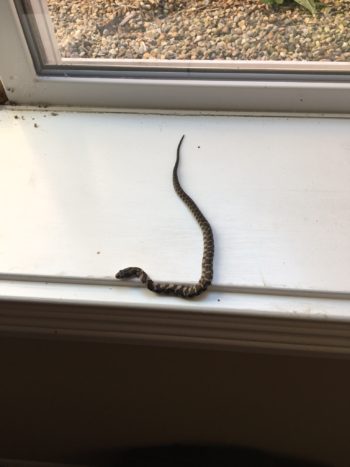
Northern Watersnake (Photo provided by R. Dearing)
Snake identification questions are one of my most common that I receive from the public. Usually, people want to know if the snake is venomous or not. Most snakes in Indiana are not venomous. In fact, there are only four venomous species in Indiana. Their distributions are generally limited.
The snake pictured here to the right is a Northern Watersnake (Nerodia sipedon). Photo and identification request was submitted to our “Ask an Expert” web submission by Mr. R. Dearing. While only about a foot long here, adults can reach several feet in length. Coloration in them is variable, but they typically have dark bands on a lighter tan or brown background. The bands are complete towards the head and fragment towards the tail. This little snake found its way into Mr. Dearing’s house. Fortunately, he was able to catch it and return it to the creek behind their house—which explains why it was there in the first place.
Resources:
Snakes and Lizards of Indiana, The Education Store, Purdue Extension
How can I tell if a snake is venomous, FAQs, Purdue Extension-Forestry and Natural Resources
Indiana Amphibian and Reptile ID Package, The Education Store, Purdue Extension
Ask An Expert, Purdue Extension-Forestry and Natural Resources
Brian MacGowan, Extension Wildlife Specialist
Department of Forestry & Natural Resources, Purdue University
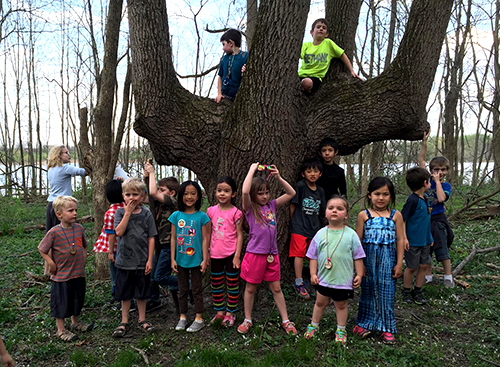
Students in Forestry and Natural Resources (FNR) continue to volunteer for Hands of the Future, Inc., a non-profit program whose mission is to help educate children about the outdoors and natural resources. As this program continues to grow, one of their dreams has been to find woods to create a children’s forest. To have a natural site that has been embellished upon with children’s needs in mind and to encourage outdoor play and adventures.
The students plan on transforming 18.8 acres of idle woods into Zonda’s Children’s Forest. The children’s forest will be composed of six main areas:
- A children’s garden, equipped with a greenhouse and kitchen, that’ll allow children to learn how to properly grow and cook food.
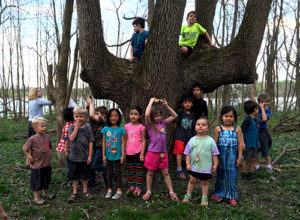
- An enclosed area dedicated to allowing children having fun and safe adventures.
- A viewing area for butterflies, birds and other organisms of the wild, allowing children to easily enjoy the life of the forest.
- A maze designed by sunflowers, where children can have fun and do problem-solving, while close to nature.
- A walk dedicated to viewing the owls and other organisms composing the forest.
- Another enclosed area of the woods for adventures; However, it’ll also contain tree houses, bridges and other fun additions for the children.
Donations:
Donations to help make Zonda’s Children’s Forest a reality can be made here. They have six months to raise $235,000 in order to purchase the woods.
Volunteers & Interns:
Older students and adults can apply to be a volunteer. Volunteers are always appreciated, no past experience necessary. If you love nature and kids you will enjoy this program. Internships are available for college students, contact Zonda Bryant.
Resources:
Family Nature Clubs in Indiana – Indiana Children and Nature Network
Zonda Bryant, Director
765.366.9126
director@hands-future.org
 If you or someone you know loves to learn about wildlife, especially reptiles and amphibians, then you will be interested in our new special offer package. We are offering our complete collection of reptile and amphibian field guides (4 softcover books) for 10% of the price of each individual book. These books cover all of the reptiles and amphibians that are found in the state of Indiana. They include detailed physical descriptions, distribution maps, and interesting information about the ecology of each species. All of the included books have been peer-reviewed by experts in the field of herpetology.
The Indiana Amphibian and Reptile ID Package can be purchased from the Purdue Education Store for $36.00.
Additional Resources, The Education Store, Purdue Extension:
Frogs and Toads of Indiana
Salamanders of Indiana
Snakes and Lizards of Indiana
Turtles of Indiana
More Resources Available:
Help the Hellbender, Purdue Extension
The Nature of Teaching, Lesson Plans K-12, Purdue Extension
Nick Burgmeier, Research Biologist and Extension Wildlife Specialist
Purdue Department of Forestry and Natural Resources
‘Twas the day before Arbor Day, when all through the park
Not a creature was stirring, no chirp, squeak, or bark;
The birds were perched on the utility wires with care,
In hopes that many trees soon would be there;
All types of squirrels, gray, fox, and red;
Had visions of oak trees dancing in their head;
And mamma with her overalls, and I my work jeans,
Were prepared and ready to make the park green,
When out in the park there arose such a clatter,
I sprang to my window to see what was the matter.
Away out my door I flew like a flash,
Running to the crowd that was gathered ‘round the ash.
The dead looking tree with no leaves to show,
Gave a glimmer of midday through its branches to objects below,
When what to my wondering eyes came ‘round the corner with ease,
But a miniature truck and in the bed, eight tiny trees,
With a little old driver so lively and quick,
I knew in a moment it must be Mayor Nick.
The trees looking so healthy and flourishing as they came,
He whistled, and shouted, and called them by name:
“White Oak! Red Cedar! Silver Maple and Black Cherry!
Cottonwood, Black Walnut, American Beech and Hackberry!
It is time to grab your gloves, shovels, and spades!” He did call,
“Now plant away! Plant away! Plant away all!”
With his blueprints out he started to show,
Where in the park each tree would go;
So excited and anxious with all my gear I flew
To the truck full of trees, and Mayor Nicolas too.
And then, in a moment, I heard on the road
The roaring of more trucks with trees overflowed.
As I lifted my head, and was turning around,
The city forester and many arborists came with a bound.
Mayor Nick had called in the professionals to help us out,
So we all would understand what this project was all about.
“Before we start planting, I want to explain
the benefits from these trees the city will gain!
Trees increase property value and improve living conditions.
They also relieve stress and help with CO2 emissions.
Better air and water quality, and sound barriers, too,
And the best part is the beautiful new view!”
After Mayor Nick’s speech, the city forester stepped in
“Whose ready to plant some trees?” He said with a grin.
The crowd cheered and the project was now on its way
Making the park beautiful and green in honor of Arbor Day.
First thing we had to do, was remove the dead trees.
The park was originally filled with ash, which was a feast for EAB.
The arborists cut all the trees down one by one.
There was so much help, in no time the cleanup was done.
As we finally started planting, the professionals came around
Making sure we were putting the trees properly into the ground.
I learned that you cut and remove only 1/3-1/2 of the B&B,
Then, you check the roots, the most important part of the tree.
If the tree has spiraling roots, all four sides must be sawed,
So the tree’s way of nutrient uptake and anchorage is not flawed.
It is also important that the root flare is not below the soil line,
Many people tend to bury it, thinking their tree will be fine.
Before planting your tree, consider the tree’s full-grown size.
Improper planting can cause the tree to die otherwise.
I’m so glad I decided to volunteer today
I learned so much about planting trees the right way!
After countless hours of hard work and sweat,
Mayor Nick’s goals for the park were finally met.
He thanked everyone, and as he drove out of sight,
He shouted “Happy Arbor Day to all, and to all a good night!”
Arbor Day Paper, FNR-445 Urban Forestry Topics
Author: Erin Hipskind, BS 2016
Arbor Day is an annual observance that celebrates the role of trees in our lives and promotes tree planting and care. As a formal holiday, it was first observed in 1872, in Nebraska, but tree planting festivals are as old as civilization. The tree has appeared throughout history and literature as the symbol of life. Arbor Day celebrations for 2017 is on Saturday, April 29th. Check out activities around your area: Purdue Extension County Offices, Indiana Department of Natural Resources or Tippecanoe Soil & Water Conservation District.
Other resources:
Tree Installation: Process and Practices, The Education Store-Purdue Extension resource center
Tree Planting Part 1: Choosing a Tree – video, The Education Store
Tree Planting Part 2: Planting Your Tree – video, The Education Store
Lindsey Purcell, Urban Forestry Specialist
Purdue University, Department of Forestry and Natural Resources

Issue:
Professional arborists, horticulturists, including lawn and tree care companies, garden centers, and landscapers, require training in proper management techniques and pest control to better serve their customers and protect the environment.
What Has Been Done:
The Professional Landscape Management School is a two-day workshop offered every winter to local commercial lawn and tree care companies, landscapers, nurseries, grounds managers, and garden centers. The topics chosen for the program are based on current trends and needs. I located speakers, created the program schedule and brochure, and advertised it to over 1000 professionals, using both print mail and email.
Results:
- Over 160 professional horticulturists attended the Professional Landscape Management School in 2015. Out of this number, 49 returned completed surveys. Some of the notable results:
- Did you get your money’s worth from attending this year’s school? All forty-nine attendees replied – Yes.
- Do you think that you as an individual will benefit in the coming year because of your attending the 2015 Professional Landscape Management School? 100% said yes.
- Do you think that your company will benefit in the coming year because of your attending the 2015 Professional Landscape Management? 100% said yes.
- What horticultural practices do you think you will change in the coming year, based on what you learned at the 2015 Professional Landscape Management School?
- Plan on adding more native plants to my installations and designs.
- Will be more aware of honeybees when selecting and using pesticides.
- Tree Risk Assessment process can save lives and reduce my liability. Will definitely take further training in this subject.
- Will use information from Landscape Plants to Save Time and Money topic to reduce our campus manpower needs and budget requests.
- My staff and I have more knowledge to better serve our customers.
Purdue Commercial Nursery & Professional Landscape
This comprehensive written abstract titled Tools for Staging and Managing Emerald Ash Borer in the Urban Forest shares research gathered in an eight-year period with a variety of management strategies.
Advances in control can help municipal foresters save ash trees from emerald ash borer (EAB) [Agrilus planipennis (Fairmaire)]
in urban forests. Although ash trees of any size can be protected from this pest, cities often do not implement programs because they fail to recognize and act o incipient populations of EAB. In this study, researchers develop a model for predicting ash mortality over an eight-year period, and validated with data from the removal of >14,000 ash trees killed by EAB in Fort Wayne, Indiana, U.S. researchers then developed a sampling scheme to help foresters map their ash trees along the expected progression of ash decline. This model was then used to modify a web-based EAB cost calculator that compares discounted annual and cumulative costs of implementing a variety of management strategies. It was determined that strategies that most heavily relied on saving ash trees were less expensive and produced a larger forest than those strategies that mostly removed and replaced ash trees. Ratios of total discounted costs to discounted cumulative benefits of strategies that saved most ash trees were over two-thirds lower than strategies of proactive tree removal and replacement. Delaying implementation of an ash management program until damage would be visible and more obvious to the community (Year 5 of the model) decreased the cost–benefit ratio by <5%. Thus, delays that rely on the abundance of locally damaged trees to bolster community support do not necessarily diminish the utility of implementing a control strategy.
For full article: Tools for Staging and Managing Emerald Ash Borer
Resources:
Tree Doctor App, The App Store
Invasive Species – Indiana Department of Natural Resources (IDNR)
Ask an Expert – Purdue Extension-Forestry and Natural Resources
Indiana Invasive Species Council – Includes: IDNR, Purdue Department of Entomology and Professional Partners
Great Lakes Early Detection Network App (GLEDN) – The Center for Invasive Species & Ecosystem Health
National Invasive Species Awareness Week: February 27-March 3, 2017
Invasive Species Week a reminder to watch for destructive pests, Purdue entomologist says – Purdue Agriculture News
Cliff Sadof, Professor
Purdue University Department of Entomology
Matt Ginzel, Associate Professor
Purdue University Department of Forestry and Natural Resources & Department of Entomology
Issue:
Woodlands provide a multitude of environmental (e.g., carbon sequestration, enhance water quality, wildlife habitat), economic (e.g., timber, wood products manufacturing, tourism), and social (e.g., recreation, aesthetics) benefits to Indiana residents. The sustainability of these benefits is strongly tied to stability of the resource. In Indiana, 75 percent of the 4.65 million acres of forestland is owned by families. Actions they take on their property can impact the benefits woodlands provide all Indiana residents. However, many do not understand available options or sources of assistance.
What Has Been Done:
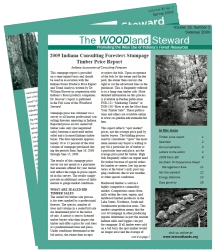 The Department of Forestry and Natural Resources, in partnership with many other organizations, helps produce and mail over 31,000 copies of the Indiana Woodland Steward to woodland owners three times each year. This 16-page, two-color publication includes in-depth articles on forest stewardship and health, invasive species and pests, wildlife habitat management, economics, and more.
Results:
Subscribers owned more woods (71.6 ac) for a longer tenure (33 years) than the average woodland owner in Indiana based on data from the National Woodland Owner Survey. As a group, they were also more active managers based on the proportion enrolled in assistance programs and who had a written stewardship plan. Fifty-four percent regularly utilized information from the Woodland Steward. In addition, 51 percent of respondents have implemented at least one practice they read about from The Woodland Steward, potentially impacting an estimated 1.2 million acres of forestland. His use of print media to communicate with woodland owners could be considered expensive, but clearly a large number of woodland owners regularly read and utilize the information making the average investment per landowner much lower.
 Forest farming in North America is becoming a popular practice that provides short-term income for owners of new forest plantations while their trees reach maturity. This income diversification is particularly relevant for many of the Indiana hardwood plantations planted in the last decade, but will not fulfill their economic potential until 60–70 years from establishment. This free download publication titled Costs and Returns of Producing Wild-Simulated Ginseng in Established Tree Plantations, FNR-530-W, is the second in a two-part series aimed at analyzing economic opportunities in forest farming for Indiana forest plantation owners. The first study explores growing hops along the tree line of newly established forest stands, while this second study investigates producing American ginseng in older (20- to 30-year-old) forest plantations.
Resources:
Costs and Returns of Producing Wild-Simulated Ginseng in Established Tree Plantations, The Education Store, Purdue Extension’s resource center
Energy Requirements for Various Tillage-Planting Systems, The Education Store
Home Gardner’s Guide, The Education Store
Planting Forest Trees and Shrubs in Indiana, The Education Store
Kim Ha, Research Assistant
Purdue Agricultural Economics
Lenny Farlee, Sustaining Hardwood Extension Specialist
Purdue Department of Forestry and Natural Resources
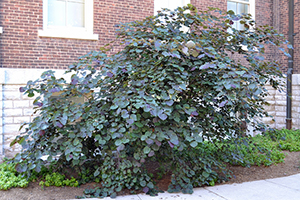
Photo credit: Purdue Arboretum
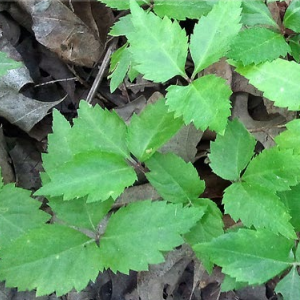
In July’s column of Purdue Yard & Garden News, Purdue Extension Consumer Horticulturist B. Rosie Lerner discusses several types of purple plants that could spice up your landscape, from small shrubs like Weigela and Ninebark to larger trees like Purple-leaf European Beech and Redbud Forest Pansy.
Resources
The Purple Landscape, Purdue Yard & Garden News
News Archive, Purdue Yard & Garden News
Purdue Master Gardener Program, Purdue Horticulture
B. Rosie Lerner
Extension Consumer Horticulturist, Purdue Extension
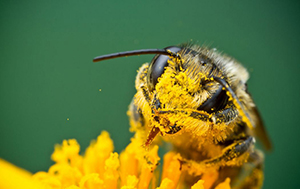
Photo credit: Colin Hutton
An often overlooked part of the ecosystem responsible for our food and environmental health are the pollinators. This group of animals move pollen from flower to flower, fertilizing seeds, fruits and vegetables. Pollinators include honey bees, native bees, moths, beetles, birds and bats, and they are struggling. 40% of honey bee colonies have been lost in the last year, and in the past two decades, over 90% of Monarch butterflies have disappeared.
After noticing this sharp decline, large efforts are starting to take place to restore the pollinator population. The Pollinator Partnership has created a Pollinator Week every year from June 15-21 where the pollinator’s importance is highlighted through local events. The White House has announced a National Strategy to Promote Pollinator Health in hopes to return the pollinator population to a sustainable level. In Norway, a connected network of honeybee habitats dubbed the Bee Highway was created. At the large scale, many initiatives are starting to form, but it is important to know that we can also be helpful on an individual level.
Our gardens and landscapes are the homes of many pollinators, providing the food, water and shelter that they need. When planting a garden or landscape, it is important to take this into consideration and follow a few simple guidelines. For an adequate food supply, aim for at least three flower species in bloom at a time. For shelter, pollinators can benefit from a break from the wind and sun provided by plants, fences and other structures. Finally, pesticides should be limited and used in a controlled way. Pick spray instead of dust-based pesticide. Try to use it only when necessary, follow all label directions and spray only in the early morning or at dusk when pollinators are less active. Keep these guidelines in mind, and your garden or landscape will be an attractive home for pollinators!
For more information, please check out the June column of Purdue Yard & Garden News.
Resources
Gardening for Pollinators, Purdue Yard & Garden News
News Columns & Podcasts, Purdue Agriculture
How to Minimize Pesticide Damage of Honey Bees, The Education Store
Honey Bees, Indiana Department of Natural Resources
Pollinator Partnership
B. Rosie Lerner
Extension Consumer Horticulturist, Purdue Extension

Recent Posts
- Woodland Flowers of Late Summer
Posted: September 19, 2025 in Forestry, Gardening, Wildlife - Celebrate Pollinator Week With Flowers of June Tour
Posted: June 10, 2025 in Forestry, Gardening, How To, Wildlife - Top 10 Spring Flowering Shrubs, Purdue Landscape Report
Posted: April 28, 2025 in Gardening, Plants, Urban Forestry - Leaving Leaves Benefits Wildlife – Wild Bulletin
Posted: November 11, 2024 in Forestry, Forests and Street Trees, Gardening, Urban Forestry, Wildlife - Purdue Extension’s Showcase, Impacting Indiana
Posted: November 8, 2024 in Community Development, Forestry, Forests and Street Trees, Gardening, Land Use, Natural Resource Planning, Timber Marketing, Urban Forestry, Wildlife, Wood Products/Manufacturing, Woodlands - When Roundup Isn’t Roundup – Purdue Landscape Report
Posted: October 17, 2024 in Forestry, Gardening, Plants, Urban Forestry - Ask An Expert: What’s Buzzing or Not Buzzing About Pollinators, Webinar
Posted: July 4, 2023 in Forestry, Gardening, How To, Plants, Wildlife - Magnificent Trees of Indiana Webinar
Posted: May 12, 2023 in Forestry, Forests and Street Trees, Gardening, Got Nature for Kids, Urban Forestry, Webinar, Woodlands - Be Tick Aware: Lyme Disease & Prevention Strategies Webinar
Posted: May 11, 2023 in Alert, Forestry, Forests and Street Trees, Gardening, How To, Urban Forestry, Webinar, Wildlife, Woodlands - Illinois Groundwork provides a rich supply of green infrastructure resources – IISG
Posted: in Gardening, Land Use, Plants, Wildlife
Archives
Categories
- Alert
- Aquaculture/Fish
- Aquatic/Aquaculture Resources
- Ask the Expert
- Christmas Trees
- Community Development
- Disease
- Drought
- Forestry
- Forests and Street Trees
- Gardening
- Got Nature for Kids
- Great Lakes
- How To
- Invasive Animal Species
- Invasive Insects
- Invasive Plant Species
- Land Use
- Natural Resource Planning
- Nature of Teaching
- Plants
- Podcasts
- Ponds
- Publication
- Safety
- Spiders
- Timber Marketing
- Uncategorized
- Urban Forestry
- Webinar
- Wildlife
- Wood Products/Manufacturing
- Woodland Management Moment
- Woodlands