 Purdue University - Extension - Forestry and Natural Resources
Got Nature? Blog
In this edition of ID That Tree, Purdue Extension forester Lenny Farlee teaches you about the state tree of Indiana, the tulip tree. It is also known as the tulip poplar or yellow poplar, although it is more closely related to the magnolia. This tree is known for its simple tulip shaped leaves and colorful flowers in the spring, although they are often high up on the tree.
If you have any questions regarding trees, forests, wildlife, wood products or other natural resource topics, feel free to contact us by using our Ask an Expert web page.
Resources
Indiana’s State Tree is a Popular Landscape Choice, Purdue Extension
Tulip Tree Scale, Purdue Plant and Pest Diagnostic Laboratory
Finishing and Restoring Wood and Structures: Yellow-Poplar Lumber for Exterior Architectural Applications in New Construction and for Historical Restoration, The Education Store, Purdue Extension resource center
Investing in Indiana Woodlands, The Education Store
Tree Appraisal and the Value of Trees, The Education Store
Forest Improvement Handbook, The Education Store
ID That Tree, Playlist, Purdue Extension – Forestry and Natural Resources Youtube Channel
A Woodland Management Moment, Playlist, Purdue Extension – Forestry and Natural Resources Youtube Channel
Lenny Farlee, Sustaining Hardwood Extension Specialist
Purdue University Department of Forestry and Natural Resources
In this edition of Wildlife Habitat Hint, Purdue wildlife extension specialist Jarred Brooke shares methods to control the invasive sericea lespedeza. This plant species, though was once used for erosion control and mineland reclamation, is too invasive and of little wildlife value.
If you have any questions regarding wildlife, trees, forest management, wood products, natural resource planning or other natural resource topics, feel free to contact us by using our Ask an Expert web page.
Resources
Sericea Lespedeza: Plague on the Prairie, Purdue Extension
Wildlife Habitat Hint, Playlist, Purdue Extension – Forestry and Natural Resouces
Invasive Species, Playlist
A Woodland Management Moment, Playlist
Woodland Stewardship for Landowners, Playlist
Habitat Help LIVE Q&A – Native Grasses and Forbs for Wildlife, Video, Purdue Extension – Forestry and Natural Resources Youtube channel
Renovating Native Warm-Season Grass Stands for Wildlife: A Land Manager’s Guide, The Education Store, Purdue Extension resource center
Jarred Brooke, Wildlife Extension Specialist
Purdue Department of Forestry and Natural Resources
Purdue Extension forester Lenny Farlee introduces you to one of Indiana’s most common trees, the sugar maple. This species, which is often used to produce maple syrup, is easily identifiable by its five-lobed leaves, opposite leaf and branch arrangement, and ability to thrive in the understory.
If you have any questions regarding trees, forests, wildlife, wood products or other natural resource topics, feel free to contact us by using our Ask an Expert web page.
Resources
The Story Behind a Sugar Maple Scar, Purdue Extension
Sugar Maple, The Purdue Arboretum
Hard or Sugar Maple, The Education Store, Purdue Extension resource center
Investing in Indiana Woodlands, The Education Store
Tree Appraisal and the Value of Trees, The Education Store
Forest Improvement Handbook, The Education Store
ID That Tree, Playlist, Purdue Extension – Forestry and Natural Resources Youtube Channel
A Woodland Management Moment, Playlist, Purdue Extension – Forestry and Natural Resources Youtube Channel
Lenny Farlee, Sustaining Hardwood Extension Specialist
Purdue University Department of Forestry and Natural Resources
Purdue Extension forester Lenny Farlee tells you where to find and how to identify a species that clings to many of our trees, poison ivy. Protect yourself from the itch by recognizing this species before it is a problem.
If you have any questions regarding trees, forests, wildlife, wood products or other natural resource topics, feel free to contact us by using our Ask an Expert web page.
Resources
Poison Ivy, Purdue Landscape Report
Poison Ivy, Purdue Extension
Poison Ivy, The Education Store, Purdue Extension resource center
Investing in Indiana Woodlands, The Education Store
Tree Appraisal and the Value of Trees, The Education Store
Forest Improvement Handbook, The Education Store
ID That Tree, Playlist, Purdue Extension – Forestry and Natural Resources Youtube Channel
A Woodland Management Moment, Playlist, Purdue Extension – Forestry and Natural Resources Youtube Channel
Lenny Farlee, Sustaining Hardwood Extension Specialist
Purdue University Department of Forestry and Natural Resources
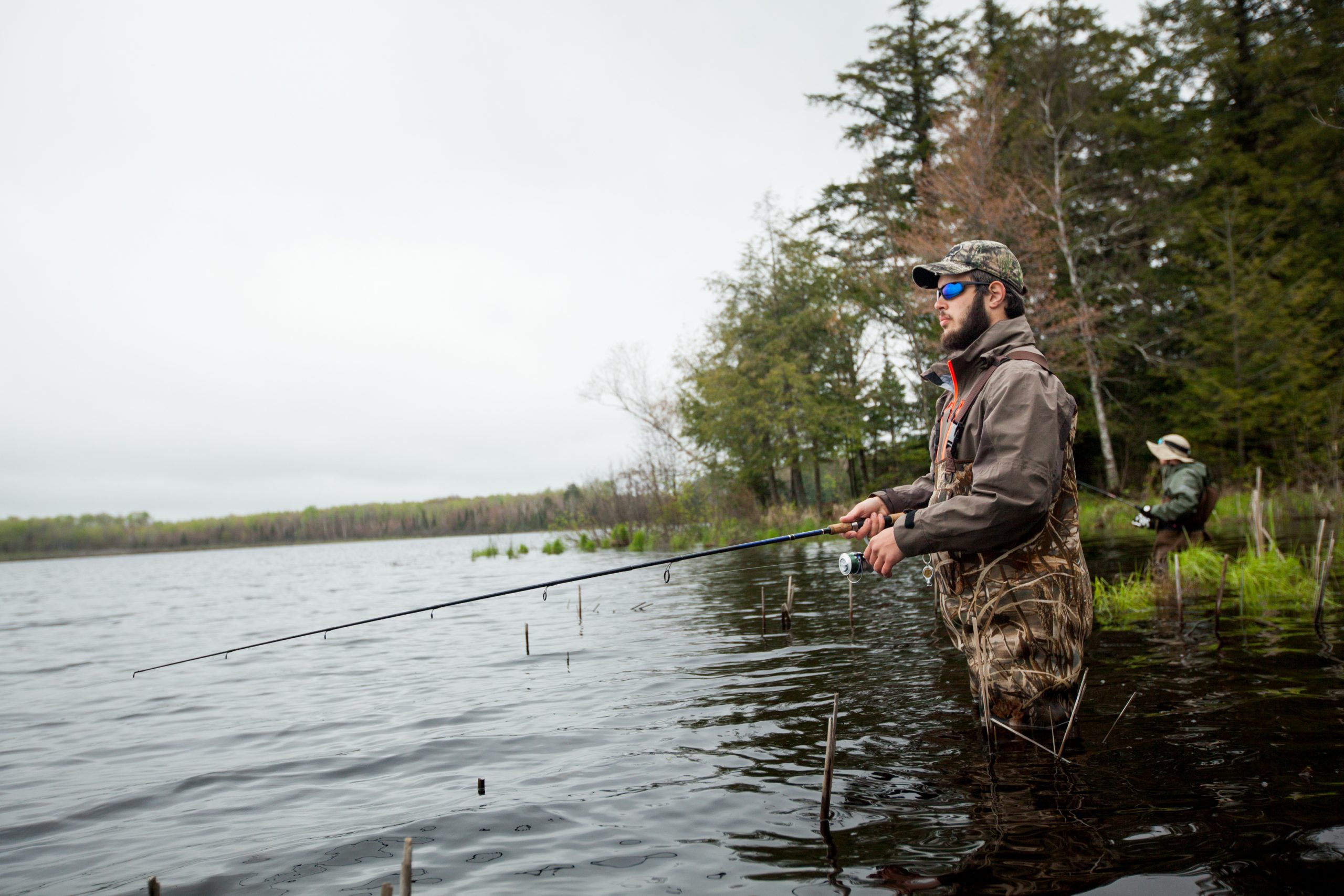 August IDNR Wildlife Bulletin Newsletter: Fascinated with the natural world? Tag along with an Indiana DNR biologist on one of their upcoming excursions to learn more about wildlife and their habitats. Hone your identification skills while enjoying the outdoors.
Aug. 8 – Bike with a Biologist, Amo
For those who are new to hunting and fishing, DNR also hosts workshops through the Learn to Fish and the Learn to Hunt, Shoot, & Trap programs. Find more upcoming educational events.
Aug. 7 – Learn to Hunt: Frogs, Martinsville
Sept. 12 – Learn to Stream Fish, Atterbury Fish & Wildlife Area
Sept. 26 – Family Learn to Fish, Cicero
Resources
Ask an Expert: Wildlife Mythbusters, Video, Purdue Extension – Forestry and Natural Resources Youtube channel
Best Practices Guide for Charter Fishing and COVID-19, The Education Store, Purdue Extension resource center
Resourceful Animal Relationships, The Education Store
Considerations for Trapping Nuisance Wildlife with Box Traps, The Education Store
Handling Harvested Game From Field to Table, Got Nature? Blog, Purdue Extension – Forestry and Natural Resources
Indiana Department of Natural Resources (IN DNR)
 Purdue Landscape Report: The Purdue Landscape Report Team will begin a new, free online series that will start every two weeks on Wednesdays at noon Eastern time zone. The topics and speakers will vary each session, so check out the newsletter every two weeks to find out what follows the next day. You’ll have three ways to attend each session, which you can find below. During each session you’ll be able to ask questions to the speakers on Zoom and Facebook Live. Hope you will join us!
To join the chat on Zoom:
https://purdueextension.zoom.us/j/98937266342
To join the chat via telephone:
US: +1 312 626 6799
To join the chat on Facebook:
https://www.facebook.com/PurdueLandscapeReport
Resources
Purdue Landscape Report
A Woodland Management Moment, Playlist, Purdue Extension – Forestry and Natural Resources Youtube Channel
Invasive Species, Playlist
Woodland Stewardship for Landowners, Playlist
Ask The Expert, Playlist
Surface Root Syndrome, The Education Store, Purdue Extension resource center
Tree Pruning Essentials, The Education Store
Kyle M Daniel, Nursery & Landscape Outreach Specialist
Purdue Horticulture and Landscape Architecture
In this edition of ID That Tree, Purdue Extension forester Lenny Farlee introduces you to the American Sycamore, one of Indiana’s largest deciduous trees. You can identify the tree from the upper part of the canopy, which glows with smooth white/light green bark.
If you have any questions regarding trees/forests, or other natural resource topics, feel free to contact us by using our Ask an Expert web page.
Resources
Sycamore, The Education Store, Purdue Extension resource center
Investing in Indiana Woodlands, The Education Store
Tree Appraisal and the Value of Trees, The Education Store
Forest Improvement Handbook, The Education Store
American Sycamore, The Purdue Arboretum
What is happening to the local sycamore trees?, Purdue Extension
Sycamore Anthracnose, Purdue Extension
ID That Tree, Playlist, Purdue Extension – Forestry and Natural Resources Youtube Channel
A Woodland Management Moment, Playlist, Purdue Extension – Forestry and Natural Resources Youtube Channel
Lenny Farlee, Sustaining Hardwood Extension Specialist
Purdue University Department of Forestry and Natural Resources
Receive tips and tricks about establishing native grasses and forbs for wildlife. Don’t miss the question and answer time with our Purdue Extension Wildlife experts.
If you have any questions regarding wildlife, or other natural resource topics, feel free to contact us by using our Ask an Expert web page.
Resources
Natural Resources Conservation Service Indiana
Pheasant Forever
Quail Forever
Pure Live Seed: Calculations and Considerations for Wildlife Food Plots, Purdue Extension – Forestry and Natural Resources
Seed Fillers and Carriers for Planting Native Warm-season Grasses and Forbs, Purdue Extension – Forestry and Natural Resources
Calibrating a No-Till Drill for Conservation Plantings and Wildlife Food Plots, Purdue Extension
Purdue Extension – Forestry and Natural Resources Youtube channel
Jarred Brooke, Extension Wildlife Specialist
Purdue Department of Forestry and Natural Resources
It’s time for another dendrology lesson from Lenny Farlee. This time, he introduces you to one of the native coniferous trees in Indiana, the Eastern Red Cedar.
If you have any questions regarding trees/forests, or other natural resource topics, feel free to contact us by using our Ask an Expert web page.
Resources
Eastern Red Cedars Volunteer Way Too Often, Purdue Garden Articles
Orange ‘Koosh’ Galls on Eastern Red Cedar, Purdue Landscape Report
Investing in Indiana Woodlands, The Education Store
Tree Appraisal and the Value of Trees, The Education Store
Forest Improvement Handbook, The Education Store
ID That Tree, Playlist, Purdue Extension – Forestry and Natural Resources Youtube Channel
A Woodland Management Moment, Playlist, Purdue Extension – Forestry and Natural Resources Youtube Channel
Lenny Farlee, Sustaining Hardwood Extension Specialist
Purdue University Department of Forestry and Natural Resources
Purdue Landscape Report: Now that we’ve reach midsummer, many people tending to small plants and bushes may notice small odd round grey objects attached to their plants that are made by potter wasps. Do you need to do anything about them? Do these nests help or harm your plants? And are they dangerous to people?
What do they look like?
You are more likely to notice the nests of potter wasps than the adults. Potter wasp nests often look, like the name suggests, like a small grey pot (figure 1). They are rounded with a small opening that looks like the neck of a vase and are about the size of a cherry tomato. These wasps will attach their nests to many different surfaces but tend to prefer plant and bush stems. Potter wasp nests are often found hidden behind foliage in bushes.
Potter wasp adults come in a variety of colors but all of them look like small hornets. The most common species found in Indiana are mostly black with pale yellow bands around their abdomen (figure 2).
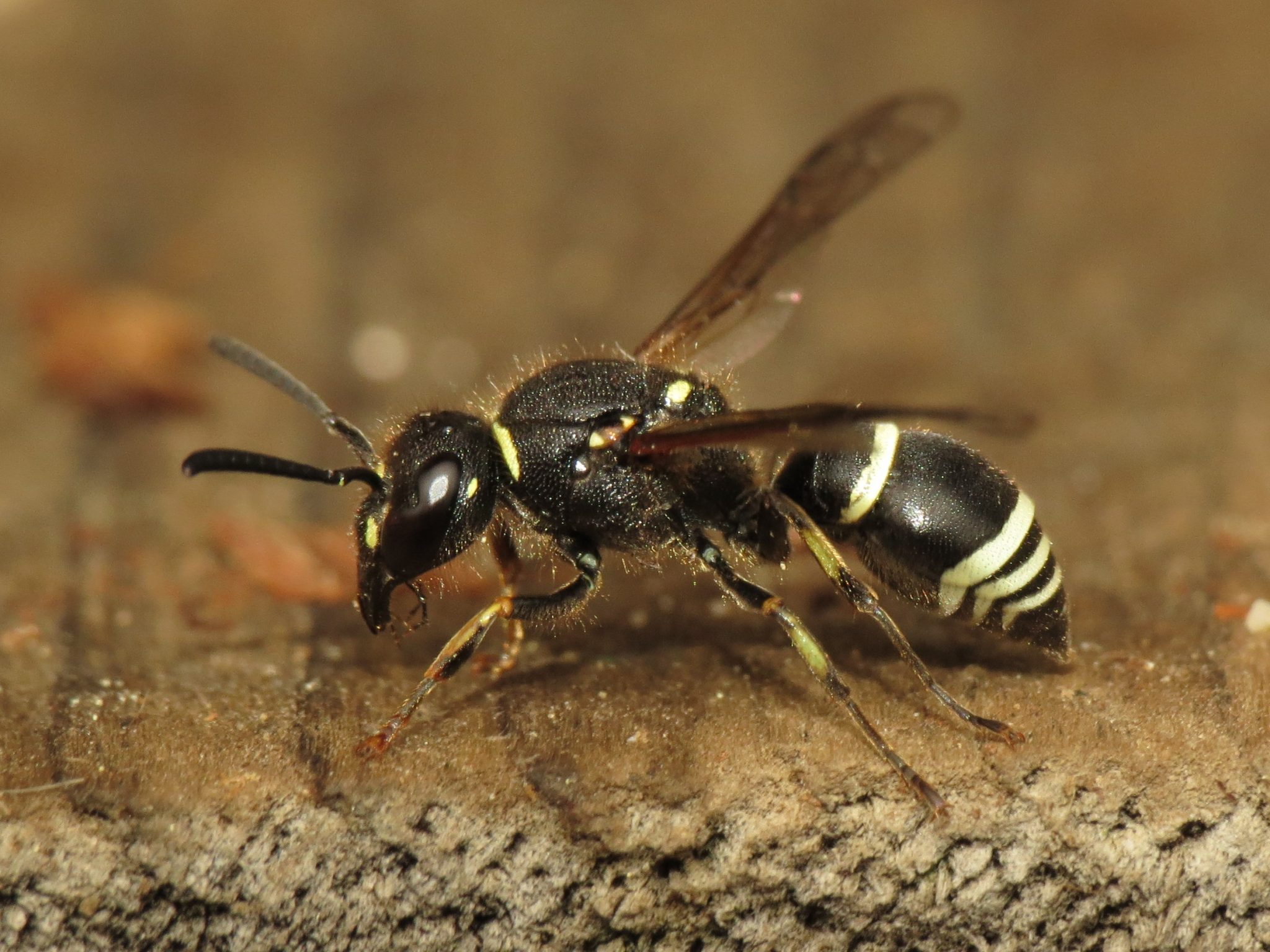
Figure 2. An adult potter wasp resting. This is just one of many different species of potter wasps. Photo by Fyn Kynd on flickr
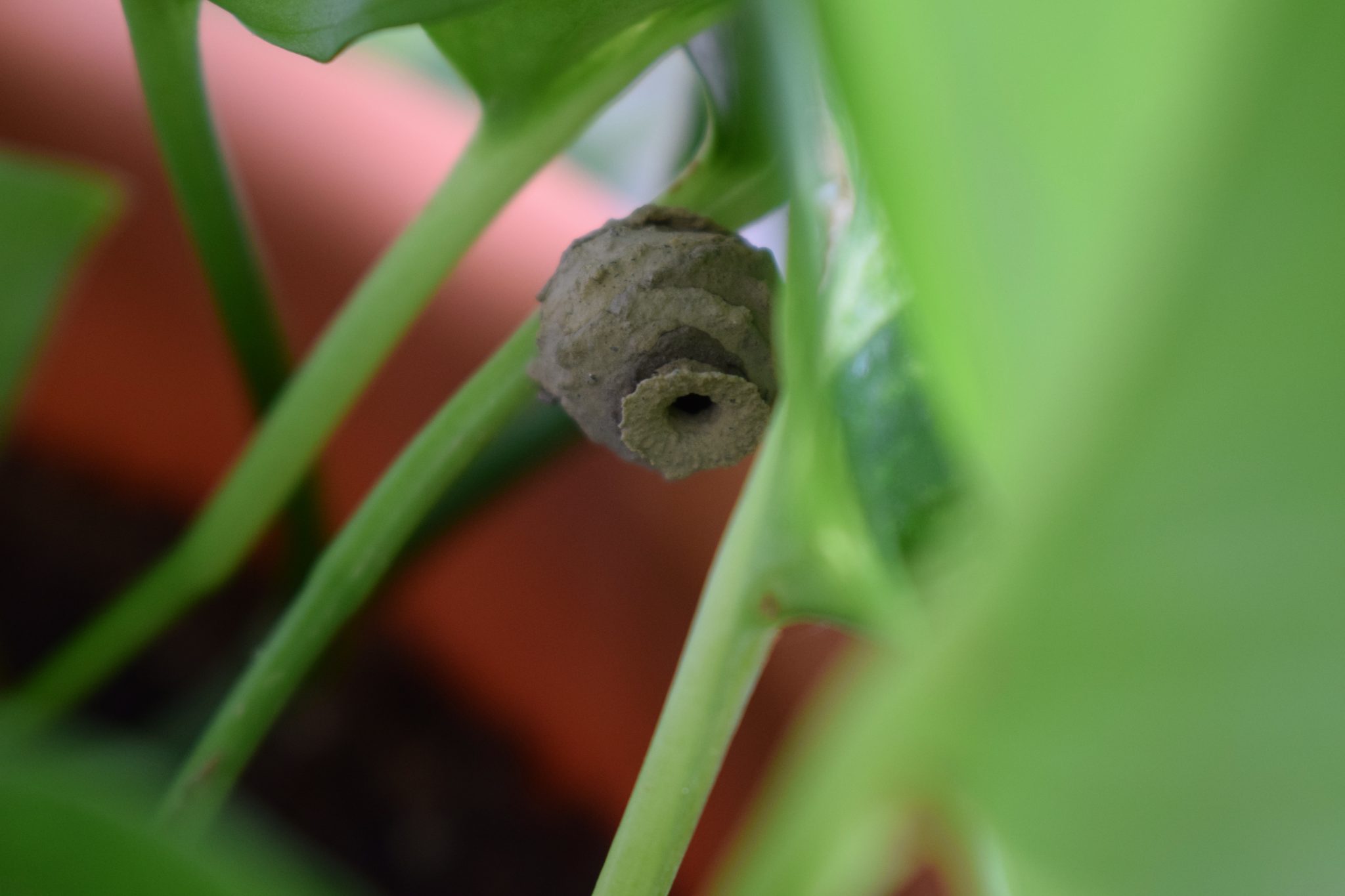
Figure 1. Close up of a potter wasp nest attached to the stem of a house plant. Photo by Elizabeth Barnes, Department of Entomology, Purdue University.
How do they help plants?
Each “pot” that the wasps build is a tiny nursery for a single wasp. Adult potter wasps lay a single egg in each “pot” and then fill it with paralyzed caterpillars and small beetle larvae. When the wasp egg hatches it has all the food it needs to develop into an adult contained in the pot. Each wasp does a small part to keep down the number of caterpillars in the landscape which can reduce the amount of leaf damage on nearby plants.
Will they hurt me?
Probably not! Potter wasps don’t defend their nests and are generally not aggressive. Unless you actively try to bother them they will probably not bother you. If you need to remove one of their nests, you can simply pull it off the plant or object that it’s attached to. However, since they help with pest control, you may want to either leave the nest be or relocate it to a different section of the landscape.
Does anything else look like the “pots”?
Although the “pots” have a very distinct shape there are a few other things that could be confused with them at first glance. Mantis egg masses (ootheca) and some types of galls are both about the same size as potter wasp nests and also often grey. However, they both lack the vase neck-like opening that potter wasp nests have.
What should I do if I see one?
Let it be! Since these wasps rarely sting and help keep caterpillar populations down leave them alone so that they can continue to act as biocontrol agents. If you think you’ve seen a potter wasp or one of their nests and would like help identifying it, take a picture and either upload it to a community science project like iNaturalist or send a picture to the author of this article.
Resources
Social Bees and Wasps, The Education Store, Purdue Extension resource center
Parasitic Wasps, The Education Store
Mud Daubers, The Education Store
Cicada Killers, The Education Store
Industrial, Institutional, Structural and Health-Related Pest Management, The Education Store
Elizabeth E Barnes, Exotic Forest Pest Educator
Purdue University Department of Entomology

Recent Posts
- Woodland Flowers of Late Summer
Posted: September 19, 2025 in Forestry, Gardening, Wildlife - Celebrate Pollinator Week With Flowers of June Tour
Posted: June 10, 2025 in Forestry, Gardening, How To, Wildlife - Top 10 Spring Flowering Shrubs, Purdue Landscape Report
Posted: April 28, 2025 in Gardening, Plants, Urban Forestry - Leaving Leaves Benefits Wildlife – Wild Bulletin
Posted: November 11, 2024 in Forestry, Forests and Street Trees, Gardening, Urban Forestry, Wildlife - Purdue Extension’s Showcase, Impacting Indiana
Posted: November 8, 2024 in Community Development, Forestry, Forests and Street Trees, Gardening, Land Use, Natural Resource Planning, Timber Marketing, Urban Forestry, Wildlife, Wood Products/Manufacturing, Woodlands - When Roundup Isn’t Roundup – Purdue Landscape Report
Posted: October 17, 2024 in Forestry, Gardening, Plants, Urban Forestry - Ask An Expert: What’s Buzzing or Not Buzzing About Pollinators, Webinar
Posted: July 4, 2023 in Forestry, Gardening, How To, Plants, Wildlife - Magnificent Trees of Indiana Webinar
Posted: May 12, 2023 in Forestry, Forests and Street Trees, Gardening, Got Nature for Kids, Urban Forestry, Webinar, Woodlands - Be Tick Aware: Lyme Disease & Prevention Strategies Webinar
Posted: May 11, 2023 in Alert, Forestry, Forests and Street Trees, Gardening, How To, Urban Forestry, Webinar, Wildlife, Woodlands - Illinois Groundwork provides a rich supply of green infrastructure resources – IISG
Posted: in Gardening, Land Use, Plants, Wildlife
Archives
Categories
- Alert
- Aquaculture/Fish
- Aquatic/Aquaculture Resources
- Ask the Expert
- Christmas Trees
- Community Development
- Disease
- Drought
- Forestry
- Forests and Street Trees
- Gardening
- Got Nature for Kids
- Great Lakes
- How To
- Invasive Animal Species
- Invasive Insects
- Invasive Plant Species
- Land Use
- Natural Resource Planning
- Nature of Teaching
- Plants
- Podcasts
- Ponds
- Publication
- Safety
- Spiders
- Timber Marketing
- Uncategorized
- Urban Forestry
- Webinar
- Wildlife
- Wood Products/Manufacturing
- Woodland Management Moment
- Woodlands