 Purdue University - Extension - Forestry and Natural Resources
Got Nature? Blog
In this edition of ID That Tree, Purdue Extension Forester Lenny Farlee showcases the unique features of prickly ash. The northeast member of the Citrus family (not the Ash family!) is a shrub with stout, paired thorns, reddish-brown buds and also has other traits shared in the video that makes it easy to spot out in the wild. This video contains nice close-up shots so you can identify this plant, which is native to Indiana and an important part of the habitat.
If you have any questions regarding wildlife, trees, forest management, wood products, natural resource planning or other natural resource topics, feel free to contact us by using our Ask an Expert web page.
Resources:
ID That Tree: Firs and Spruces, Video Playlist, Purdue Extension – Forestry and Natural Resources (FNR) YouTube Channel
ID That Tree – Jack Pine, Scotch Pine, Red Pine, Virginia Pine, Eastern White Pine, Video Playlist, Purdue Extension – Forestry and Natural Resources (FNR) YouTube Channel
Beat Back Borers Attacking Pines and Other Cone Bearing Trees, Purdue Landscape Report
Tree Diseases: White Pine Decline in Indiana, The Education Store, Purdue Extension Resource Center
Purdue Arboretum Explorer
Conservation Tree Planting: Steps to Success, Purdue Extension – FNR YouTube Channel
A Woodland Management Moment, Playlist, Purdue Extension – FNR YouTube Channel
Woodland Stewardship for Landowners, Playlist, Purdue Extension – FNR YouTube Channel
Indiana Department of Natural Resources: Invasive Species
Indiana Invasive Species Council
Cooperative Invasive Species Management Area (CISMA)
Report Invasive, Purdue Extension
Episode 11 – Exploring the challenges of Invasive Species, Habitat University-Natural Resource University
Shrubs and Woody Vines of Indiana and the Midwest, The Education Store
Native Trees of the Midwest, The Education Store
Professional Forester, Indiana Forestry Woodland Owners Association
Forest Improvement Handbook, The Education Store
Find an Arborist, International Society of Arboriculture
Lenny Farlee, Extension Forester
Hardwood Tree Improvement and Regeneration Center
Purdue Department of Forestry & Natural Resources
Join Purdue Extension forester Lenny Farlee and wildlife specialist Brian MacGowan as they help you prepare for the holidays while keeping your family and local wildlife safe. This video discusses everything from how to choose and care for a real Christmas tree as well as what to do with it after the season and also how to make wildlife/nature-friendly decorations.
Topics Include:
– What can I do with my tree after Christmas that would benefit wildlife?
– Are artificial structures legal in Indiana lakes?
– What types of items can I collect from the wild for holiday decorations?
– How do I do it in an environmentally responsible way?
– Are there some things I shouldn’t or can’t collect?
– What outdoor holiday decorations can benefit wildlife?
– How do I make it last longer?
– Can I avoid problems with non-target wildlife?
If you have any questions regarding trees, forest management, wildlife, wood products or other natural resource topics, feel free to contact us by using our Ask an Expert web page.
Resources
Selecting an Indiana-Grown Christmas Tree, The Education Store, Purdue Extension resource center
Tips for First-Time Buyers of Real Christmas Trees, The Education Store
Indiana Christmas Tree Growers Association
Purdue University Invasive Species resources
Indiana DNR Division of Fish and Wildlife for wildlife possession rules
Feed the birds with a DIY wreath, Audubon
Dan Cassens: Tips for First-Time Christmas Tree Buyers, Video, Purdue Agriculture
Dan Cassens: Starting Your Own Christmas Tree Farm, Video
Lenny Farlee, Sustaining Hardwood Extension Specialist
Purdue University Department of Forestry and Natural Resource
Brian MacGowan, Extension Wildlife Specialist
Department of Forestry & Natural Resources, Purdue University
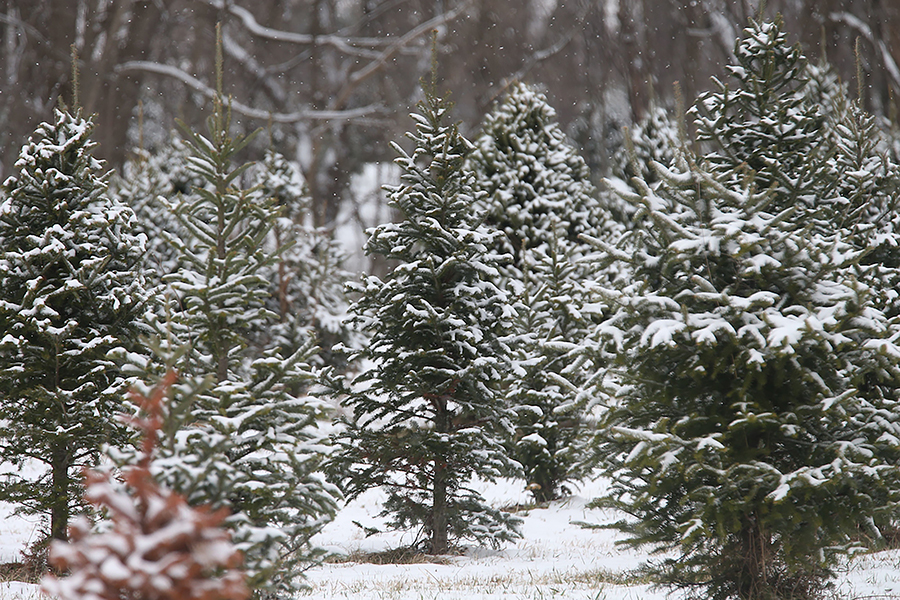 A real Christmas tree is an important part of a holiday celebration for many Hoosier households. Consumers have several choices for purchasing a real tree, including pre-cut trees at retail outlets or seasonal sales locations, choose-and-cut trees at Christmas tree farms, or even live trees that can be replanted after the holidays. Purdue Extension offers two publications that can help you select and care for your tree: Tips for First-Time Buyers of Christmas Trees provides advice and direction on how to set up and care for your tree to improve safety and enjoyment. Selecting an Indiana-Grown Christmas Tree provides details on the characteristics of different species of real Christmas trees available in Indiana, as well as care instructions for cut and live Christmas trees.
Pre-cut real Christmas trees are available at many retail outlets like garden centers, supermarkets, or seasonal sales locations. If you are looking for local choose-and-cut Christmas tree farms you can consult local media and advertising outlets or the Indiana Christmas Tree Growers Association. Some garden centers and Christmas tree farms may also offer live trees for sale.
If you are considering growing your own Christmas trees for personal use or sale, the Extension publications Growing Christmas Trees and A Choose-and-Cut Pine and Fir Christmas Tree Case Study outline economic and management considerations for growing Christmas trees.
Check out the Ask an Expert: Holidays in the Wild as the experts answer questions regarding Christmas trees along with wildlife you may see while you walk in the woods this winter. In this Ask an Expert video they share resources about picking a real Christmas tree and how to access real trees locally in Indiana as well as collecting decoration materials like cones, seed pods and nuts form the wild for crafting and decorating. They also discuss how you can provide habitat and supplemental food for wildlife using Christmas trees and wreaths before, during and after the holiday season.
Resources:
A Choose-and-Cut Pine and Fir Christmas Tree Case Study, The Education Store, Purdue Extension’s resource center
Living Christmas Trees For The Holidays and Beyond, IN Yard & Garden, Purdue Consumer Horticulture
Tips for First-Time Buyers of Real Christmas Trees, The Education Store
Growing Christmas Trees, The Education Store
Selecting an Indiana-Grown Christmas Tree, The Education Store
Winterize Your Trees, The Education Store
Tree Installation: Process and Practices, The Education Store
What do Treed Do in the Winter?, Got Nature? Blog, Purdue Extension – Forestry and Natural Resources (FNR)
Forest/Timber Playlist, subscribe to Purdue Extension – Forestry and Natural Resources (FNR) YouTube Channel
Ask the Expert: Holidays in the Wild, Purdue Extension – FNR YouTube Channel
ID That Tree: Balsam Fir, Purdue Extension – FNR YouTube Channel
ID That Tree: Scotch Pine, Purdue Extension – FNR YouTube Channel
To identify other pine trees view ID That Tree, Purdue Extension – FNR YouTube Channel
Lenny Farlee, Extension Forester
Hardwood Tree Improvement and Regeneration Center
Purdue Department of Forestry & Natural Resources
In this episode of A Woodland Management Moment, Purdue Extension forester Lenny Farlee discusses the benefits of maintaining certain areas of your forest land with alternative types of cover rather than traditional forest. It’s a good idea to keep some areas open not only for recreational purposes but also for future timber harvesting and to provide habitat for many wildlife. By allowing some of your land to be open, you help maintain the natural habitat around you and can even get some interesting plants that will grow on their own.
If you have any questions regarding trees, forests, wildlife, wood products or other natural resource topics, feel free to contact us by using our Ask an Expert web page.
Resources:
A Woodland Management Moment, Playlist, Purdue Extension – Forestry and Natural Resources (FNR) YouTube Channel
Learn How to Support Oak-Hickory Ecosystems, Purdue Extension – FNR Got Nature? Blog
The Nature of Oaks Webinar, Purdue Extension-FNR YouTube Channel, Shared from Indiana Forestry & Woodland Owners Association
Oak Leaf Tatters, Purdue Landscape Report
Inonotus Dryadeus, Butt and Root Rot of Oaks, Purdue Extension – FNR Got Nature? Blog
Predicting the Height Growth of Oak Species Reproduction Over a 23-year Period Following Clearcutting, Hardwood Tree Improvement & Regeneration Center (HTIRC)
Conservation Tree Planting: Steps to Success, Purdue Extension – FNR YouTube Channel
Shrubs and Woody Vines of Indiana and the Midwest, The Education Store, Purdue Extension Resource Center
Native Trees of the Midwest, The Education Store
ID That Tree, Playlist, Purdue Extension – FNR YouTube Channel
Investing in Indiana Woodlands, The Education Store
Woodland Stewardship for Landowners Video Series, Playlist, Indiana Department of Natural Resources YouTube Channel
Ask an Expert: Tree Selection and Planting, Purdue Extension – FNR YouTube Channel
Forest Improvement Handbook, The Education Store
Find an Indiana Professional Forester, Indiana Forestry & Woodland Owners Association (IFWOA)
Purdue Arboretum Explorer
Lenny Farlee, Extension Forester
Hardwood Tree Improvement and Regeneration Center
Purdue Department of Forestry & Natural Resources
Agricultural & Natural Resources (ANR) Newsletter: Since joining the faculty at Purdue in 1997, Rado Gazo, a professor of wood processing and industrial engineering, has educated students, industry professionals and the general public about the possibilities of the wood products industry.
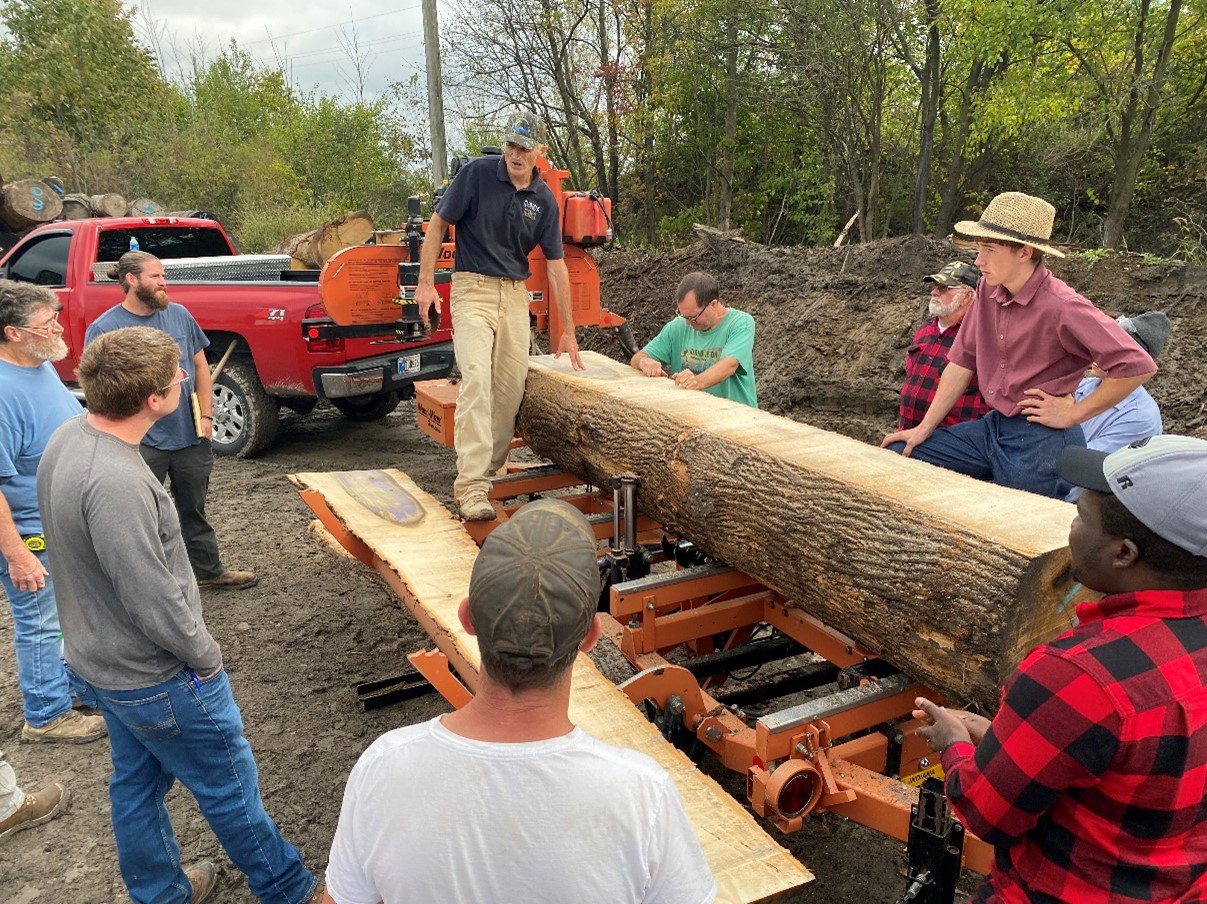
Prof. Gazo demonstrates hardwood log grade-sawing process on a portable Wood-Mizer sawmill.
In addition to teaching undergraduate courses in Properties of Wood, Wood Products Manufacturing and Furniture Design for CNC Manufacturing, Gazo conducts research focused on evaluating tree, log and lumber quality using CT (X-ray computed tomography), laser and image scanning and related manufacturing. He also investigates the competitiveness of furniture manufacturers as well as the application of industrial engineering techniques to value-added wood products manufacturing.
In 2020, Gazo created Hardwood University, a self-sustaining collaborative program with the Indiana Hardwood Lumbermen’s Association, which aims to provide hardwood industry professionals and landowners in the Central Hardwood region with cutting-edge information and training. Gazo is one of the primary instructors for the program.
Hardwood University, which consists of 10 sessions annually, is intended for new employees in the hardwood industry as well as those preparing for advancement or cross-training. The program, which takes place monthly at various Indiana hardwood plants and Purdue agricultural centers, offers informational and technical sessions on topics ranging from forest taxation to tree and log scaling and grading; log bucking; marketing hardwood veneer, stave and sawlogs; grade-sawing lumber; air drying and kiln drying lumber; hardwood lumber grading; lean manufacturing and logistics; and sawmill efficiency and quality control.
In addition, Gazo has worked with nearly 300 companies, providing technical assistance, troubleshooting and consulting services as well as implementation of manufacturing best practices.
To learn more about Rado Gazo’s work view: Rado Gazo, Forestry and Natural Resources profile page.
To read the rest of the newsletter and view the original article, see the ANR November 2024 Newsletter.
Resources:
Wood Products Manufacturing Technology Minor, FNR Minor
Hardwoods of the Central Midwest, The Purdue Arboretum
Wood Products, Purdue Extension – Forestry & Natural Resources (FNR)
Wood is Best Video, Forestry and Natural Resources YouTube Channel, Woodisbest.org
An Introduction to Trees of Indiana, The Education Store, Purdue Extension resource center
Native Trees of the Midwest, The Education Store
Shrubs and Woody Vines of Indiana and the Midwest, The Education Store
ID That Tree, Playlist, Subscribe to Purdue Extension – Forestry and Natural Resources YouTube Channel
A Woodland Management Moment, Playlist, Purdue Extension – FNR YouTube Channel
Investing in Indiana Woodlands, The Education Store
Forest Improvement Handbook, The Education Store
Finding help from a professional forester, Indiana Forestry & Woodland Owners Association
District Foresters for 10 plus acres, Indiana Department of Natural Resources
Hardwood Tree Improvement & Regeneration Center (HTIRC)
Agricultural & Natural Resources (ANR), Purdue Extension
Wild Bulletin, Indiana Department of Natural Resources (DNR) Fish and Wildlife: Interested in processing your own deer? Head over to our new webpage to view instructional videos from our partners at the International Hunter Education Association (IHEA) and National Deer Association (NDA). They’ll guide you through each step, including grinding and preserving the meat. Plus, you can download our printable PDF that includes step-by-step instructions for skinning and processing your own deer.
To learn more, view the Deer Processing page on the official Indiana DNR website. This is where you can find the instructional PDF along with training videos and other resources!
Subscribe to the Indiana Department of Natural Resources YouTube Channel.
Resources:
Ask an Expert, Playlist, Purdue Extension – FNR YouTube Channel
Handling Harvested Game: Episode 1, Field Dressing, video, Purdue Extension – FNR YouTube Channel
Handling Harvested Game: Episode 2, Hanging & Skinning, video, Purdue Extension – FNR YouTube Channel
Handling Harvested Game: Episode 3, Deboning, video, Purdue Extension – FNR YouTube Channel
Handling Harvested Game: Episode 4, Cutting, Grinding & Packaging, video, Purdue Extension – FNR YouTube Channel
Introduction to White-tailed Deer Impacts on Indiana Woodlands, Got Nature? Blog & The Education Store
Purdue Extension Pond and Wildlife Management
Understanding White-tailed Deer and Their Impact on Indiana Woodlands, The Education Store
Monitoring White-tailed Deer and Their Impact on Indiana Woodlands, The Education Store
Managing White-tailed Deer Impacts on Indiana Woodlands, The Education Store
How to Build a Plastic Mesh Deer Exclusion Fence, The Education Store
Managing Your Woods for White-Tailed Deer, The Education Store
Deer Harvest Data Collection, Got Nature? Blog, Purdue Extension – FNR
Handling Harvested Deer Ask an Expert? video, Purdue Extension – FNR YouTube Channel
Subscribe to Purdue Extension-Forestry & Natural Resources YouTube Channel, Wildlife Playlist
A Woodland Management Moment – Deer Fencing, Purdue Extension – FNR YouTube Video
Indiana Department of Natural Resources – Division of Fish & Wildlife
 Wild Bulletin, Indiana Department of Natural Resources (DNR) Fish and Wildlife: Instead of raking and bagging leaves this fall, consider allowing them to stay and naturally decay. Fallen leaves, plant stems, flower heads, twigs, and logs provide crucial winter habitat for Indiana’s wildlife.
The warmth and cover of leaves provide shelter for Eastern box turtles, salamanders and frogs, as well as insulation for butterflies and moths. Leaf piles can even benefit landscaping, as they can suppress weeds, retain moisture, and add nutrients to the soil as they decay. Leaves don’t have to be left exactly where they fall—you can rake them into flower beds and around tree bases.
For more information about creating habitat for wildlife in your backyard, visit the DNR website and the Wildlife Habitat Fact Sheet.
Resources:
Frost Seeding to Establish Wildlife Food Plots and Native Grass and Forb Plantings – The Education Store, Purdue Extension’s resource center
Wildlife Habitat Hint: Tips for Evaluating a First Year Native Grass and Forb Plantings, Purdue Extension – FNR YouTube Channel
Drone Seeding Native Grasses and Forbs: Project Overview & Drone Setup, Purdue Extension – FNR YouTube channel
Forest Improvement Handbook, The Education Store
Ordering Seedlings from the State Forest Nursery System, Got Nature? – Purdue Extension-Forestry & Natural Resources (FNR)
Designing Hardwood Tree Plantings for Wildlife – The Education Store
ID That Tree – YouTube Playlist
Forest Management for Reptiles and Amphibians: A Technical Guide for the Midwest, The Education Store
Ask the Expert: Hardwood Ecosystem Experiment – Birds and Salamander Research, Purdue Extension – FNR
A Template for Your Wildlife Habitat Management Plan, The Education Store
Managing Your Woods for White-Tailed Deer, The Education Store
Woodland Stewardship for Landowners, Playlist, Purdue Extension – FNR YouTube channel
Nature of Teaching Unit 1: Animal Diversity and Tracking, The Education Store
Subscribe Purdue Extension – Forestry and Natural Resources YouTube Channel, Playlists include wildlife, Nature of Teaching, Moments in the Wild and much more.
Indiana Department of Natural Resources – Division of Fish & Wildlife

Sandhill cranes at Jasper-Pulaski Fish & Wildlife Area. Photo by Indiana DNR.
Wild Bulletin, Division of Fish & Wildlife, IN DNR: Each fall, thousands of sandhill cranes visit the marsh at Jasper-Pulaski Fish & Wildlife Area (FWA) as they migrate, and their visits make for a prime wildlife viewing opportunity from its observation deck. To spot the flocks of cranes, visit at sunrise or sunset until mid-December. The observation deck has a few stationary viewing scopes, but bringing your own spotting scope or binoculars may enhance your viewing experience.
If you can’t make it to the area, you can follow along with our sandhill crane counts, which we update weekly during the migratory season.
Jasper-Pulaski Fish & Wildlife Area provides quality outdoor recreational opportunities while maintaining 8,179 acres of wetland, upland, and woodland game habitat. It provides an ideal stopover for migratory birds. More than 15,000 sandhill cranes stop during fall migration.
Best time to view:
- Sunrise: Gigantic flocks rise and fly from their roosting marshes to feed in surrounding private land (agricultural fields). On their way to feed some birds stop in the open grassland areas of the refuge.
- Sunset: Beginning about one hour before sunset, flocks of cranes kite into the refuge near the observation area from all directions. They gab and socialize again before returning to roosting marshes at dusk.
While this is the cranes’ usual routine, it is important to remember they are wild animals and are not always predictable.
Best location to view
The crane spectacle is best seen from the observation platform at the Sandhill Crane Observation Area (view map). During the day, cranes can be spotted feeding and dancing in nearby harvested farm fields. Roosting marshes in the Waterfowl Resting Area are closed to the public so that migrating birds can rest without human disturbance.
Viewing tips
While cranes may gather close to the observation platform, they are usually several hundred yards away. A few stationary viewing scopes are available but bringing your own spotting scope or binoculars is recommended. If you are photographing cranes, your most powerful zoom lens will be handy, as trying to get too close to these birds will easily spook them.
Learn more about the fall sandhill crane migration at Jasper-Pulaski FWA.
Sign up to receive the Wild Bulletin E-Newsletter.
Resources:
International Crane Foundation
Birds and Residential Window Strikes: Tips for Prevention, The Education Store, Purdue Extension resource center
Breeding Birds and Forest Management: the Hardwood Ecosystem Experiment and the Central Hardwoods Region, The Education Store
Managing Woodlands for Birds Video, Purdue Extension-Forestry and Natural Resources (FNR) YouTube Channel
Ask An Expert, Playlist, Purdue Extension – FNR YouTube channel
No Room at the Inn: Suburban Backyards and Migratory Birds, Education Store, Purdue Extension resource center
Subscribe, Purdue Extension – FNR YouTube Channel
Indiana Department of Natural Resources
In this edition of ID That Tree, Purdue Extension forester Lenny Farlee takes us through the different characteristics of Hoptree, a relatively common shrub here in Indiana. This is a unique native plant with three-part leaves and hop-like seed pods. Also called Wafer Ash due to its distinctive wafer-shaped seeds, this shrub can often be confused with Poison Ivy or Bladdernut, so be sure to pay attention to key differences in the video. Features include trifoliate leaves and the temperate areas in which it grows.
If you have any questions regarding wildlife, trees, forest management, wood products, natural resource planning or other natural resource topics, feel free to contact us by using our Ask an Expert web page.
Resources:
ID That Tree: Firs and Spruces, Video Playlist, Purdue Extension – Forestry and Natural Resources (FNR) YouTube Channel
ID That Tree – Jack Pine, Scotch Pine, Red Pine, Virginia Pine, Eastern White Pine, Video Playlist, Purdue Extension – Forestry and Natural Resources (FNR) YouTube Channel
Beat Back Borers Attacking Pines and Other Cone Bearing Trees, Purdue Landscape Report
Tree Diseases: White Pine Decline in Indiana, The Education Store, Purdue Extension Resource Center
Purdue Arboretum Explorer
Conservation Tree Planting: Steps to Success, Purdue Extension – FNR YouTube Channel
A Woodland Management Moment, Playlist, Purdue Extension – FNR YouTube Channel
Woodland Stewardship for Landowners, Playlist, Purdue Extension – FNR YouTube Channel
Indiana Department of Natural Resources: Invasive Species
Indiana Invasive Species Council
Cooperative Invasive Species Management Area (CISMA)
Report Invasive, Purdue Extension
Episode 11 – Exploring the challenges of Invasive Species, Habitat University-Natural Resource University
Shrubs and Woody Vines of Indiana and the Midwest, The Education Store
Native Trees of the Midwest, The Education Store
Professional Forester, Indiana Forestry Woodland Owners Association
Forest Improvement Handbook, The Education Store
Find an Arborist, International Society of Arboriculture
Lenny Farlee, Extension Forester
Hardwood Tree Improvement and Regeneration Center
Purdue Department of Forestry & Natural Resources
Purdue Landscape Report: In the last newsletter, an article on triclopyr brought up much discussion on the Roundup brands now containing multiple active ingredients other than glyphosate. Professionals in the industry may encounter a client with herbicide damage symptoms that mimic growth-regulator injury instead of typical glyphosate damage symptoms. While the client may have used Roundup, they didn’t necessarily use glyphosate. Going forward, it’s important to keep in mind that Roundup no longer means glyphosate in the consumer market.
Roundup has been one of the most used herbicides for many different weed control applications. Roundup, with the active ingredient glyphosate, was first registered with the EPA in 1974. When Roundup went off patent in 2000, glyphosate started being sold under many different names. According to the National Pesticide Information Center there are currently over 750 products containing glyphosate. Formulations may differ with salt carriers, adjuvants, concentrations, and mixed with other herbicides.
Recently, Bayer announced glyphosate would be phased out of consumer Roundup products. In its place, consumer Roundup products include other active ingredients. This can lead to confusion in the consumer market. It’s important to note that professional-use Roundup (turf and ornamental, agronomic crops, etc.) still contains glyphosate.
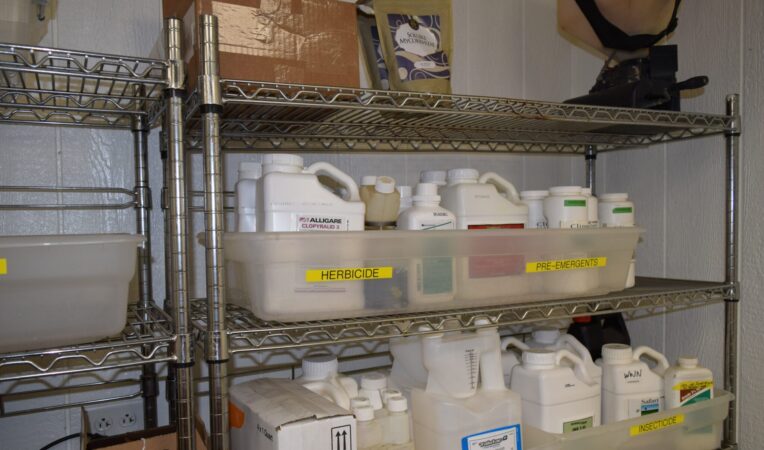
Figure 1. Consumer versions of Roundup are no longer glyphosate. Pay close attention to the active ingredients on labels to prevent unwanted plant injury.
Within the consumer Roundup product line, there are many different formulations designed for specific purposes, which include Roundup Weed and Grass Killer, Roundup for Lawns, Roundup for Lawns: Crabgrass Destroyer, Roundup Dual Action Weed and Grass Killer, Roundup Poison Ivy and Tough Brush Killer, among others. Each of these products contains distinct active ingredients that target different types of weeds.
Roundup Weed and Grass Killer: Glyphosate as the Active Ingredient
The original Roundup herbicide contains glyphosate as its primary active ingredient. Glyphosate is a systemic, non-selective herbicide, meaning it is absorbed by the plant and translocated throughout the vascular system, ultimately leading to the plant’s death. Glyphosate works by inhibiting the enzyme 5-enolpyruvylshikimate-3-phosphate synthase (EPSPS), which is a key component of the shikimic acid pathway—a pathway critical for the synthesis of aromatic amino acids in plants.
Active Ingredient:
- Glyphosate: The ‘traditional’ version of Roundup that controls many different weeds. Can take 10-14 days to kill weeds.
- Pelargonic Acid: A contact herbicide that quickly breaks down cell walls. This is added to provide a quick burndown of the weed.
Roundup Dual Action Weed and Grass Killer Plus 4 Month Preventer: Multiple modes of action
Round Dual Action is a formulation that includes four very different herbicides that is intended for use in areas with limited vegetation (i.e. sidewalks, driveways, mulched beds). In addition to postemergence herbicides, this product includes two preemergence active ingredients.
Active Ingredients:
- Triclopyr: Systemic herbicide that mimics auxins. Very effective herbicide for woody plants, which is used frequently in invasive species treatments.
- Fluazifop: Grass-specific herbicide (graminicide) that controls several annual and perennial grasses.
- Diquat: Contact herbicide that exhibit symptoms rapidly. Good for annual weeds.
- Imazapic: Pre- and Postemergence control of several grasses and broadleaf weeds.
Roundup for Lawns: A Combination of Selective Herbicides
Roundup for Lawns is a specialized formulation designed for residential use, particularly for controlling broadleaf weeds in lawns. Unlike traditional Roundup, which contains glyphosate, Roundup for Lawns contains a combination of selective herbicides, including MCPA, quinclorac, dicamba, and sulfentrazone. These ingredients are chosen for their ability to target broadleaf weeds and grassy weeds without harming most turfgrass species. This product is similar to the traditional ‘three-way’ herbicides that are commonly used in turf.
Active Ingredients:
- MCPA: MCPA is a selective herbicide that mimics the action of natural plant hormones known as auxins. When absorbed by broadleaf weeds, it causes uncontrolled growth, leading to the plant’s death.
- Quinclorac: Quinclorac is effective against grassy weeds, primarily used for crabgrass control in turf. It can be similar to auxin herbicides, causing epinasty, curling, and a change of color.
- Dicamba: Similar to MCPA, dicamba disrupts the growth of broadleaf weeds by mimicking natural plant hormones.
- Sulfentrazone: Pre- and postemergence activity in turf. Very effective on nutsedge.
Roundup for Lawns: Crabgrass Destroyer
Roundup for Lawns: Crabgrass Destroyer is a product designed to control grassy weeds and several broadleaf weeds in cool-season turf. In addition to crabgrass, other grassy weeds and some broadleaves can be controlled.
Active Ingredients:
- Topramezone: Very effective herbicide for several annual and perennial grassy weeds and some common broadleaf weeds.
Roundup Poison Ivy and Tough Brush Killer: Triclopyr for Tough Woody Plants
Roundup Brush Killer is formulated to tackle tough, woody plants, such as brush, brambles, and small trees. The active ingredient in this product is triclopyr, a selective herbicide that targets broadleaf plants with less damage to grasses. This product can be effective on invasive woody plants.

Figure 2. Glyphosate damage to sycamore.
Active Ingredients:
- Triclopyr: Systemic herbicide that mimics auxins. Very effective herbicide for woody plants, which is used frequently in invasive species treatments.
- Glyphosate: The ‘traditional’ version of Roundup that controls many different weeds. Can take 10-14 days to kill weeds.
Conclusion
All of the consumer Roundup products contain unique active ingredients tailored to specific weed control needs. There can be understandable confusion around these products due to the historical uses of glyphosate. The Green Industry needs to be aware of the confusion around these products to better inform their clients. Understanding the active ingredients and mechanisms of action of these herbicides is crucial for their effective and safe use in various settings.
View the original article here: When Roundup Isn’t Roundup: Clearing up the confusion between products
Subscribe and receive the newsletter: Purdue Landscape Report Newsletter.
Resources:
Beyond Roundup: Alternatives to consider adding to your weed management plan, Purdue Landscape Report
Diagnosing Herbicide Injury on Garden and Landscape Plants, The Education Store, Purdue Extension’s resource center
Herbicide Injury, Purdue Plant Doctor
Find an Arborist video, Trees are Good-International Society of Arboriculture (ISA)
ID That Tree, Playlist, Purdue Extension – FNR YouTube Channel
Invasive Species Playlist, Playlist, Purdue Extension – FNR YouTube Channel
A Woodland Management Moment, Playlist, Purdue Extension – FNR YouTube Channel (Against Invasives, Garlic Mustard, Autumn Olive)
Woodland Stewardship for Landowners, Playlist, Purdue Extension – FNR YouTube Channel (Common Buckthorn, Japanese Barberry)
Report Invasive Species, Purdue Invasive Species
The GLEDN Phone App – Great Lakes Early Detection Network
EDDMaps – Early Detection and Distribution Mapping System
Episode 11 – Exploring the challenges of Invasive Species, Habitat University-Natural Resource University
What Are Invasive Species and Why Should I Care?, Purdue Extension-FNR Got Nature? Blog
Emerald Ash Borer Information Network, Purdue University and Partners
Aquatic Invasive Species, Illinois-Indiana Sea Grant (IISG)
Invasive plants: impact on environment and people, The Education Store
Subscribe Purdue Extension-Forestry and Natural Resources YouTube Channel
Kyle Daniel, Commercial Landscape and Nursery Crops Extension Specialist
Purdue Horticulture & Landscape Architecture

Recent Posts
- Popular Landscape Shrub is Invasive
Posted: October 15, 2026 in Alert, Forestry, Forests and Street Trees, Invasive Plant Species, Plants, Woodlands - Purdue Extension’s Regional Teams Are Here: Connecting Communities with Expertise and Opportunity
Posted: October 14, 2026 in Community Development, Forestry, Forests and Street Trees, Gardening, How To, Timber Marketing, Urban Forestry, Wildlife, Woodlands - Why Do Our Trees Go From Green Leaves to Different Colors?
Posted: in Forestry, Forests and Street Trees, Urban Forestry, Woodlands - Distinguishing Dogwoods
Posted: October 13, 2026 in Forestry, Urban Forestry, Wildlife, Woodlands - It’s Not Too Early To Start Planning For Spring Tree Planting
Posted: in Forestry, How To - Can I Plant Trees in the Fall?
Posted: October 12, 2026 in Forestry, How To, Land Use, Plants, Urban Forestry, Wildlife - Burning for Benefits: Why Fire Belongs in Indiana
Posted: in Forestry, Safety, Woodlands - Disease May Cause Wilting and Eventual Death of Certain Trees and Shrubs, Purdue Landscape Report
Posted: October 5, 2026 in Disease, Forestry, Plants - October Is Firewood Month: Protect Indiana’s Forests by Making Smart Choices
Posted: October 1, 2026 in Forestry, Forests and Street Trees, How To, Invasive Insects, Urban Forestry - Woodland Flowers of Late Summer
Posted: September 14, 2026 in Forestry, Gardening, Wildlife, Woodlands
Archives
Categories
- Alert
- Aquaculture/Fish
- Aquatic/Aquaculture Resources
- Ask the Expert
- Christmas Trees
- Community Development
- Disease
- Drought
- Forestry
- Forests and Street Trees
- Gardening
- Got Nature for Kids
- Great Lakes
- How To
- Invasive Animal Species
- Invasive Insects
- Invasive Plant Species
- Land Use
- Natural Resource Planning
- Nature of Teaching
- Plants
- Podcasts
- Ponds
- Publication
- Safety
- Spiders
- Timber Marketing
- Urban Forestry
- Webinar
- Wildlife
- Wood Products/Manufacturing
- Woodland Management Moment
- Woodlands