 Purdue University - Extension - Forestry and Natural Resources
Got Nature? Blog

It’s a tough neighborhood for trees in the built environment. It is an ecosystem unlike any other, because it is dynamic, fragmented, high-pressure, and constantly under siege. There are continual extremes and challenges in this “un-natural” area as opposed to the environment in a more natural woodland. It’s a place where trees die young, without proper selection, planting, and care. Successful tree selection requires us to think backwards—beginning with the end in mind— to get the right tree in the right place…in the right way. This publication, Tree Selection for the “Un-natural” Environment, takes a look at some important components of the decision-making process for tree selection. There is both a publication and a video resource on this topic, both of which can be found below.
The video can be watched here:
Planting Your Tree Part 1: Choosing Your Tree
Resources:
Tree Selection for the “Un-natural” Environment, The Education Store, Purdue Extension’s resource center
Tree Installation: Process and Practices, The Education Store
Construction and Trees: Guidelines for Protection, The Education Store
Diseases in Hardwood Tree Plantings, The Education Store
The eastern hellbender is an endangered salamander found in the Blue River in southern Indiana. It requires cool, clean rivers and streams with high water quality in order to thrive. Water quality in the Blue River is affected by many factors. One relatively unknown contributor to poor water quality is pollution entering sinkholes. Many landowners have sinkholes on their properties and treat them like outdoor waste sites without knowing that these sinkholes have a direct link to our water supplies. In this video, Purdue biologists interview a local cave expert and a local conservationist about how sinkholes are connected to our rivers, streams, and water supplies and how we can help protect them.
Resources:
Improving Water Quality by Protecting Sinkholes on Your Property, The Education Store, Purdue Extension’s resource center
A Landowner’s Guide to Sustainable Forestry: Part 5: Forests and Water, The Education Store
Improving Water Quality Around Your Farm, The Education Store, YouTube
Animal Agriculture’s Effect on Water Quality: Pastures and Feedlots, The Education Store
Improving Water Quality At Your Livestock Operation, The Education Store, YouTube
Nick Burgmeier, Research Biologist & Extension Wildlife Specialist
Purdue Department of Forestry and Natural Resources
Dr. Rod Williams, Professor of Wildlife Science
Purdue Department of Forestry and Natural Resources
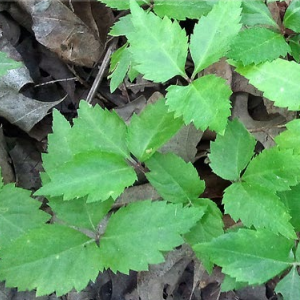 Forest farming in North America is becoming a popular practice that provides short-term income for owners of new forest plantations while their trees reach maturity. This income diversification is particularly relevant for many of the Indiana hardwood plantations planted in the last decade, but will not fulfill their economic potential until 60–70 years from establishment. This free download publication titled Costs and Returns of Producing Wild-Simulated Ginseng in Established Tree Plantations, FNR-530-W, is the second in a two-part series aimed at analyzing economic opportunities in forest farming for Indiana forest plantation owners. The first study explores growing hops along the tree line of newly established forest stands, while this second study investigates producing American ginseng in older (20- to 30-year-old) forest plantations.
Resources:
Costs and Returns of Producing Wild-Simulated Ginseng in Established Tree Plantations, The Education Store, Purdue Extension’s resource center
Energy Requirements for Various Tillage-Planting Systems, The Education Store
Home Gardner’s Guide, The Education Store
Planting Forest Trees and Shrubs in Indiana, The Education Store
Kim Ha, Research Assistant
Purdue Agricultural Economics
Lenny Farlee, Sustaining Hardwood Extension Specialist
Purdue Department of Forestry and Natural Resources

Photo from www.flickr.com
An article published on June 8th, 2016 by the University of Cambridge noted that a new record-holder for the tallest tree in the tropics is the same species as a tree used in the extremely popular game Minecraft. The trees in Minecraft proceed to follow standard growth patterns from saplings to mature trees. Care has been taken by game designers to adjust leaf color and the colors of the surrounding foliage to depict a certain setting. There are even provisions for dying or fallen trees which in the game are often covered in mushrooms and vines. Some of these decomposing trees will actually resprout and begin growth again as saplings. Trees available for planting are grouped into Acacia (Acacia spp.), Birch (Betula spp.), Oak (Quercus spp.) and Dark Oak (Q. spp), Jungle (no specific species), and Spruce (Picea spp.) species and can each be found and grown in a unique biome environment. Several of these tree species (i.e. Acacia, Oak) are also researched here at Purdue.

Photo from www.flickr.com
In the game, a Yellow meranti (Shorea faguetiana or Shorea acuminatissima); also known as the Philippine mahogany, is one of the selections available for use. This species is native to Indonesia, Malaysia, the Philippines, and Thailand but is severely threatened by habitat loss and destruction. Yellow meranti can grow upwards of 200 ft tall and greater than 6 ft in diameter. The wood from the tree is lightweight, durable, and has been used for everything from light furniture to crates. The wood more often than not also contains figure which makes it a valuable commodity in the veneer industry as well.
The spotlight has been put on Minecraft after the recent discovery of a 294 ft tall Yellow meranti tree growing in the Maliau Basin Conservation Area in Malaysia. This area is one of the few regions on earth where pristine rainforest ecosystems are being actively monitored and protected. This tree is actually growing on a downhill slope thus its actual height has been recorded as 299 ft. This tree is slightly taller than the previous record and makes it the “unofficial” tallest tree in the Tropics.
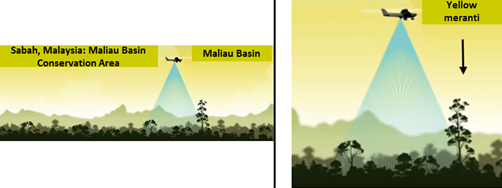
The use of actual tree species that require maintenance in a game that has player numbers in the millions to help inform the young and old alike about the value of trees and some of the different species is genius.
More than 12 million people play Minecraft on the PC, 9 million people play on Xbox, and 6 million people play it on the iPad, iPod, or Android. More than 20,000 people buy the game daily, 3.2 million people log on and play it each day (on all of the versions), and 5 people per second buy the game. Thus, nearly 28 million people own the game and more than 1 million are logged in at any given time day or night. All of these individuals are being taught about trees and how to maintain them without even realizing how much they have learned. With news of a movie version of Minecraft being scripted, untold numbers of movie goers will likely buy the game beforehand and learn even more about trees.
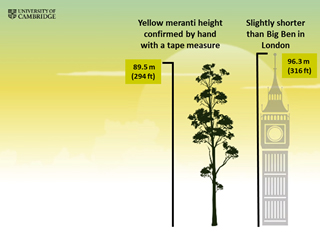
The Malaysian government is extremely proud of the potential world record discovery within their forests and seek to highlight the importance of maintaining the biodiversity within the country. Their collaboration with the Natural Environment Research Council (NERC), Cambridge University, the Sabah Forestry Department, the South-East Asia Rainforest Research Partnership and the NERC Airborne Remote Sensing Facility has been extremely fortuitous. Future plans are to protect and restore a huge tract of heavily logged forest east of where this Yellow meranti tree was found.
For more information on Malaysia’s potentially record-breaking tree, check out Cambridge University’s article Minecraft tree “probably” the tallest tree in the Tropics.
Resources:
Minecraft tree “probably” the tallest tree in the Tropics Research Article- Cambridge University
Tree – Foliage colors – Minecraft Wiki
Sale Stats – Minecraft
Getting Started With Minecraft – Minecraft101
Yellow Meranti – The Wood Database
Dr. Shaneka Lawson, USDA Forest Service/HTIRC Research Plant Physiologist/Adjunct Assistant Professor
Purdue University Department of Forestry and Natural Resources
 Question: I have noticed that a lot of very mature (> 80 ft) sycamore trees look ill. They don’t seem to have as many leaves, or as large as they usually get and some have already turned brown and died. There are at least 2 in my 5 acres of woods and have noticed the same with other sycamores while driving from Mooresville to Indianapolis. Is there a certain blight/canker/pest that is damaging sycamores this year?
Answer: I have also noticed that many sycamores appear relatively bare and may have brown or wilted leaves on the stems and littering the ground around the trees. The culprit is sycamore anthracnose, a fungal disease that causes damage and death of leaves as well as stem cankers. Sycamore anthracnose symptoms can be severe when we have cool, moist spring weather at the time of bud-break and leaf emergence, but healthy trees generally recover and put on new leaf area once the environmental conditions that favor the disease change to the warmer, drier conditions of late spring and summer.
Normally, the best management practices for sycamore anthracnose are patience and maintaining good tree health. The disease cycle is dependent on cool, moist spring weather, so it will run its course by late spring or summer when the average temperatures rise. Trees that are repeatedly defoliated could be reduced in vigor and be more susceptible to other problems, so steps to promote good tree health can be used as a preventative measure.
Resources:
Purdue Plant Doctor – Purdue Extension
Fertilizing Woody Plants – The Education Store, Purdue Extension’s resource center
Anthracnose of Shade Trees or Wind Injury: Look Alike Symptoms Can be Perplexing, Purdue Plant & Pest Diagnostic Laboratory
Sycamore – The Education Store
Native Trees of the Midwest, The Education Store
Shrubs and Woody Vines of Indiana and the Midwest, The Education Store
Investing in Indiana Woodlands, The Education Store
Forest Improvement Handbook, The Education Store
ID That Tree, Purdue Extension-Forestry & Natural Resources (FNR) YouTube playlist
Woodland Management Moment, Purdue Extension-FNR YouTube playlist
Lenny Farlee, Extension Forester
Purdue University Department of Forestry and Natural Resources
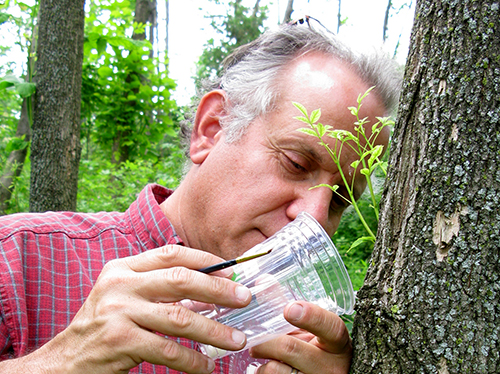 Cities and towns with “urban forests” such as parks and streets lined with trees could spend less money by taking steps to save emerald ash borer-infested trees early rather than wait until they can only replace them, Purdue University researchers concluded in a study.
Cliff Sadof, professor of Entomology and Matt Ginzel, associate professor in the Department of Entomology and Department of Forestry and Natural Resources, developed a model to help foresters predict the progression of ash decline over time. This model helps them use early reports of damaged trees to alert the community to the imminent threat posed by EAB. The percentage of damaged ash trees in a city typically doubles every year.
Owners of ash trees in Indiana, as well as all around the country, are encouraged to check out the full article provided by Purdue Agriculture News EAB research: Saving trees early less costly than replacing them. You will find several resources on what we can do to aid the ash trees.
Resources:
EAB research: Saving trees early less costly than replacing them – Purdue Agriculture News
Purdue Tree Doctor – Purdue Botany and Plant Pathology
Emerald Ash Borer in Indiana – Purdue Extension
Emerald Ash Borer Cost Calculator – Purdue Extension Entomology
Emerald Ash Borer – Purdue Extension Entomology
Cliff Sadof, Professor of Ornamental and Pest Management
Purdue University Department of Entomology
Matt Ginzel, Associate Professor
Department of Entomology and Department of Forestry & Natural Resources
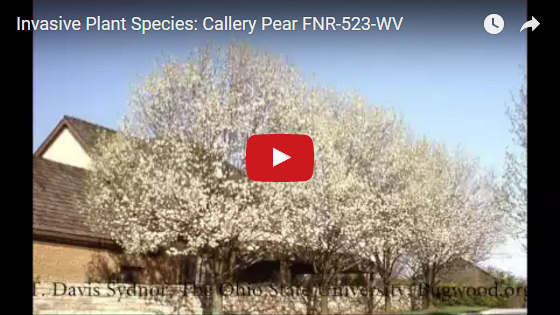 Purdue Extension-FNR now has another expert-reviewed video to help spread awareness of invasive plant species in Indiana. This video discusses the callery pear, an exotic tree from East Asia that is moving from ornamental plantings to fields and woodlands.
Check out Invasive Plant Species: Callery Pear to learn how to identify the callery pear and how you can join the fight to stop it from spreading further. To learn more about invasive plant species, check out the videos covering oriental bittersweet and wintercreeper, or visit the Invasive Species section of the Purdue Extension website.
Resources:
Invasive Plant Species: Callery Pear – The Education Store, Purdue Extension Resource Center
Invasive Plant Species: Oriental Bittersweet – The Education Store
Invasive Plant Species: Wintercreeper – The Education Store
Invasive Species – Purdue Extension
Indiana’s “Most Unwanted” Invasive Plant Pest List – Indiana Cooperative Agricultural Pest Survey (CAPS) Program
Danny Thomas, Purdue Extension-FNR intern
Purdue University Department of Forestry and Natural Resources
Lenny Farlee, Sustaining Hardwood Extension Specialist
Purdue University Department of Forestry and Natural Resources
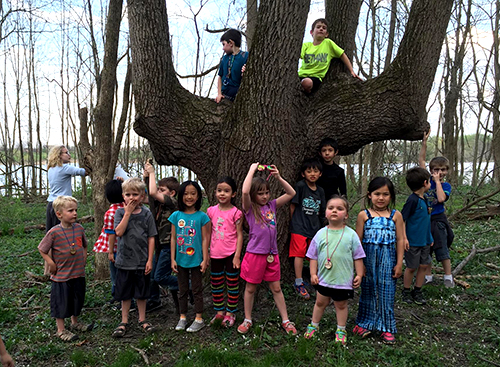 Children today spend an average of 20 minutes outside. Since the dawn of television, video games, and other indoor activities, children are spending more and more of their time indoors and missing out on the many benefits of interacting with nature. Various studies have shown that engaging with nature improves concentration, coordination, creativity, and more. Hands of the Future, Inc. is a nonprofit organization started to educate children about the beauty of nature and help them connect with it.
Hands of the Future, Inc. has several programs for kids to get involved with. The Junior Nature Club is a free after school program for children in pre-kindergarten through the eighth grade that meets every three weeks to learn about nature through games, crafts, and other activities. The Living Schoolyard Program is a partnership with Indiana schools bringing bits of nature to schools in the forms of “outdoor classrooms” like butterfly gardens and raised bed veggie gardens. A Children’s Forest is even being discussed as Hands of the Future, Inc. becomes more and more successful.
For summer fun sign up for Hands of the Future program! Registration is free.
Volunteers & Interns:
Older students and adults can apply to be a volunteer. Volunteers are always appreciated, no past experience necessary. If you love nature and kids you will enjoy this program. Internships are available for college students, contact Zonda Bryant.
This month’s Junior Nature Club theme is soil, and is taking place on June 21st for pre-kindergarteners to second graders, June 23rd for third to fifth graders, and June 28th for sixth to eighth graders at the Lilly Nature Center at Celery Bog. Look forward to upcoming themes including “Monarch Madness” and “Floating on Air!”
For more information, please check out the Hands of Future, Inc. and Junior Nature Club websites listed below.
Resources:
PK-12 Programs – Purdue FNR Extension
Zonda Bryant, Director
765.366.9126
director@hands-future.org
Purdue Extension Contact:
Rebecca Busse, Extension Associate
Purdue Department of Forestry and Natural Resources
busser@purdue.edu
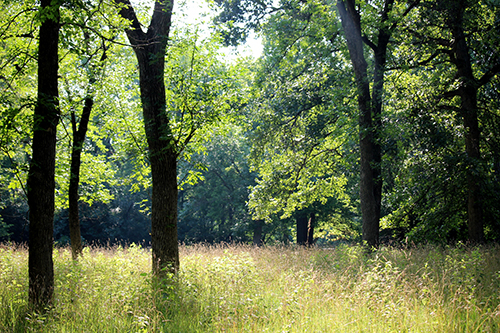 What you do on your property is your choice first and foremost. I commonly get questions or comments related to the need to manage one’s property rather than setting the land aside and let nature take its course. One is not necessarily better than the other, but the outcomes will likely be very different. Certainly keeping land in a more ‘natural’ state provides better habitat for wildlife compared to a parking lot – both scenarios above achieve this. However, there are several reasons why you should at least consider a more active management approach.
The way our landscape is configured now is different from long ago so we can’t expect processes to function the same way as they once did. Setting land aside for preservation often has the goal of letting the land return to pre-settlement conditions. While looking into our past can help inform management decisions, it doesn’t make much sense biologically to completely rely on this approach. At what point in time should it be? Remember, part of the Indiana was covered by glaciers and flocks of passenger pigeons (now extinct) numbering in the billions used to call Indiana home. Just think about what your car looks like after parking under a tree occupied by a few dozen starlings – imagine what billions of birds roosting do to tree limbs and the soil nutrient levels. Moreover, natural processes, or wildlife responses to them, may not be desirable. For example, having too many deer or raccoon may be problematic.
Invasive species have also completely changed the way we view habitat management. Their control requires regular monitoring and appropriate control measures, preferably before they become overabundant. Simply letting nature take its course can have unintended, and undesirable, consequences. Setting land aside is certainly one option to consider. Just don’t be mistaken that approach is best for wildlife and our natural resources.
I would argue it is better to inventory what you have on your property, identify what you want out of your land out of potential options, and then determine the approach that meets these objectives.
To learn more about this active style of property management, read Wildlife Extension Specialist Brian MacGowan‘s publication “Assessing Your Land’s Potential for Wildlife.”
Resources:
Assessing Your Land’s Potential for Wildlife – The Education Store, Purdue Extension Resource Center
Woodland Wildlife Management – The Education Store
Managing Forest & Wildlife Resources: An Integrated Approach – The Education Store
Forest Management for Reptiles and Amphibians: A Technical Guide for the Midwest – The Education Store
How to Construct a Scent Station – Purdue FNR Extension
Brian MacGowan, Extension Wildlife Specialist
Purdue Department of Forestry and Natural Resources
When you hear about endangered species, most of us think about the plights of our furry or feathered friends.
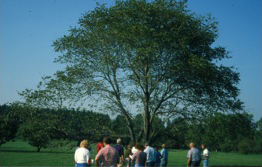
Surviving butternut tree. Photo: Richard Webb, Bugwood.org (Reproduced with permission)
This article describes the plight of some of the less cuddly members of the endangered species list.
Indiana is home to a number of endangered and threatened tree species. In this multi-part series, we will identify some of these tree species and describe some of their unique characteristics.
Our second species is the Butternut (Juglans cinerea), known also by lemon-nut, oil nut, or white walnut. It is a close relative of the more common black walnut. Butternut is a small/medium sized tree that most often reaches a maximum height of 60 to 90 ft., although some trees as tall as 120 ft. have been reported. This short-lived tree often has a forked or crooked trunk and wide-spreading branches, although it can grow straight in forest settings. It rarely reaches 75 years of age or greater than 24 in dbh. Butternut trees are easily grown and have quickly developing fibrous root systems. Butternuts produce both male and female flowers on the same tree and have bright green compound pinnate leaves (alternate) that extend to between 15 and 25 inches.
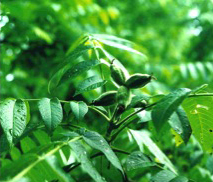
Young butternut tree with nuts. Photo: Dr. Keith Woeste, USDA Forest Service, Purdue FNR
Butternut trees are more valued for their nuts than for lumber as the nuts are sweet and prized as a food source by both humans and wildlife. In fact, these trees served as one of the primary mast species for numerous woodland species prior to its sudden population decline. The average seed-bearing age for butternut is 20 and becomes optimal between 30 and 60 years. Heavy crops occur every 2 to 3 years but nuts are produced each year after seed-bearing age is reached. Butternut is able to naturally hybridize with several other walnut (Juglans) species. The nuts collected from most Juglans spp. including butternut can vary in size and shape however, distinctive differences among species can be noted.
Similar to black walnut, the roots of butternut trees release a chemical known as juglone. Juglone (5 hydroxy-1, 4 naphthoquinone) is toxic to a number of plant species. Planting ornamental plants such as azaleas, lilacs, peonies, and rhododendrons, or fruits and vegetables like blueberries, eggplants, peppers, potatoes, and tomatoes near butternut trees is discouraged, as juglone from the butternut roots may kill them or stunt their growth. The toxic zone around walnuts extends 60 to 80 ft. from the base of the trunk, or about twice the size of the crown, and it is likely the same for butternut. Juglone has never been shown to harm humans, but butternut husks exude a strong dye that stains clothing and skin.

Japanese walnut tree with nuts. Photo: Rob Routledge, Sault College, Bugwood.org (Reproduced with permission)
Butternut was once a common tree in North America. Its range was expansive; in Canada from Manitoba east to Quebec, south to Georgia and west to Arkansas. In the past, the states with the most robust butternut timber trades were West Virginia, Wisconsin, Indiana, and Tennessee. Butternut trees are found almost exclusively in mixed hardwood forests composed primarily of basswood (Tilia spp.), black cherry (Prunus serotina), beech (Fagus grandifolia), black walnut (Juglans nigra), elm (Ulmus spp.), hemlock (Tsuga canadensis), hickory (Carya spp.), Oak (Quercus spp.), red maple (Acer rubrum), sugar maple (A. saccharum), yellow-poplar (Liriodendron tulipifera), white ash (Fraxinus americana), and yellow birch (Betula alleghaniensis), although in the northernmost portions of its range it can also be found with sweet birch (Betula lenta) or white pine (Pinus strobus). Typically, a stand only contains a few butternut trees as they thrive best among mixed forests.
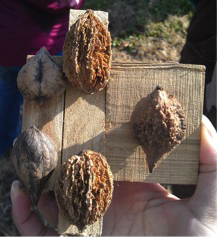
Comparison of nuts. (Left to right) Heartnuts (Juglans ailantifolia var. cordiformis), Butternuts (J. cinerea), and a Hybrid butternut. Photo: Dr. Shaneka Lawson, USDA Forest Service, Purdue FNR
The ranges of butternut and black walnut (Juglans nigra) are similar, however butternut is found farther north and at higher elevations (1500 m) than black walnut. Unfortunately, butternut tree populations have declined significantly throughout the majority of its former range. Conservative estimates have indicated that roughly 13,000 trees remain in Ontario and between 7,000 and 17,000 in New Brunswick. The Forest Service estimated that greater than 77 percent of butternut populations in the southeastern United States had succumbed to the fungus twenty years ago. Today, those estimates approach 90 percent nationwide. A subset of these remaining trees are nearly dead and carrying heavy infection loads, while most of the remaining trees are not reproducing.
A fungal disease known as butternut canker has decimated populations of butternut trees throughout their native range. The causal agent of butternut canker is Ophiognomonia clavigignenti-juglandacearum. The speed at which butternut populations have disappeared has led many to believe that butternut canker was yet another introduced pathogen. The primary hallmarks of butternut canker disease are numerous branch and stem cankers. These lesions are typically elliptical in shape and have sunken centers with a dark brown or black exudate stain that can be easily seen against butternut’s ashy grey bark.
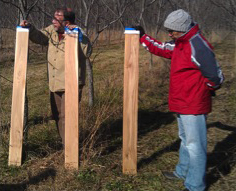
Comparison of timber. Hybrid butternut, Butternut, and Black walnut (left to right). Photo: Dr. Shaneka Lawson, USDA Forest Service, Purdue FNR
Aside from butternut canker disease, butternuts are also in danger from a host of insect pests such as bark beetles, the butternut curculio, defoliators, husk flies, lace bugs, nut weevils, and wood borers. Unlike the American chestnut (Castanea dentata), the tree described in our first blog entry on trees at risk, the great majority of butternut do not sprout after stem death. Butternut is now rare everywhere, but most of the few populations that still exist are found in riparian areas. At present, insufficient knowledge about management of butternut and how to regenerate butternut seedlings in natural forest stands has hindered strategies for conservation. Some butternut trees have survived; these paltry few trees may show some resistance to butternut canker, but that is still being evaluated. A Japanese Juglans species, Japanese walnut (Juglans ailantifolia), appears more resistant to butternut canker than is butternut, so researchers in Tennessee have begun butternut restoration using hybrids between Japanese walnut and butternut. A breeding strategy using these hybrids, known by the common name buartnut or buarts, may be a promising avenue for the restoration of a butternut-type tree to the eastern forest. Backcrossing buarts to butternuts and development of a disease screening technique could be a step towards restoring this species, however progress towards this goal has been slow.
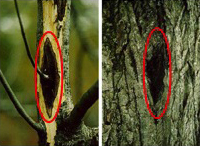
Butternut cankers. Elliptical staining (left) and sunken bark (right). Photo courtesy: USDA Forest Service (modified)
Resources:
Surviving Butternut Trees Benefit From Better Sites Rather than Disease Resistance – USDA Forest Service
A Forest Manger’s Guide to Butternut – USDA Forest Service
Butternut Profile – USDA Forest Service
Endangered Trees of Indiana: Part 1 – American Chestnut (Castanea dentata) – Got Nature?
The Morton Arboretum
Shaneka Lawson, USDA Forest Service and HTIRC Research Plant Physiologist & Adjunct Assistant Professor
Purdue University Department of Forestry and Natural Resources
Keith Woeste, Adjunct Professor Emeritus, USDA Forest Service and HTIRC Research Plant Physiologist
Purdue University Department of Forestry and Natural Resources

Recent Posts
- Popular Landscape Shrub is Invasive
Posted: October 15, 2026 in Alert, Forestry, Forests and Street Trees, Invasive Plant Species, Plants, Woodlands - Purdue Extension’s Regional Teams Are Here: Connecting Communities with Expertise and Opportunity
Posted: October 14, 2026 in Community Development, Forestry, Forests and Street Trees, Gardening, How To, Timber Marketing, Urban Forestry, Wildlife, Woodlands - Why Do Our Trees Go From Green Leaves to Different Colors?
Posted: in Forestry, Forests and Street Trees, Urban Forestry, Woodlands - Distinguishing Dogwoods
Posted: October 13, 2026 in Forestry, Urban Forestry, Wildlife, Woodlands - It’s Not Too Early To Start Planning For Spring Tree Planting
Posted: in Forestry, How To - Can I Plant Trees in the Fall?
Posted: October 12, 2026 in Forestry, How To, Land Use, Plants, Urban Forestry, Wildlife - Burning for Benefits: Why Fire Belongs in Indiana
Posted: in Forestry, Safety, Woodlands - Disease May Cause Wilting and Eventual Death of Certain Trees and Shrubs, Purdue Landscape Report
Posted: October 5, 2026 in Disease, Forestry, Plants - October Is Firewood Month: Protect Indiana’s Forests by Making Smart Choices
Posted: October 1, 2026 in Forestry, Forests and Street Trees, How To, Invasive Insects, Urban Forestry - Woodland Flowers of Late Summer
Posted: September 14, 2026 in Forestry, Gardening, Wildlife, Woodlands
Archives
Categories
- Alert
- Aquaculture/Fish
- Aquatic/Aquaculture Resources
- Ask the Expert
- Christmas Trees
- Community Development
- Disease
- Drought
- Forestry
- Forests and Street Trees
- Gardening
- Got Nature for Kids
- Great Lakes
- How To
- Invasive Animal Species
- Invasive Insects
- Invasive Plant Species
- Land Use
- Natural Resource Planning
- Nature of Teaching
- Plants
- Podcasts
- Ponds
- Publication
- Safety
- Spiders
- Timber Marketing
- Urban Forestry
- Webinar
- Wildlife
- Wood Products/Manufacturing
- Woodland Management Moment
- Woodlands