 Purdue University - Extension - Forestry and Natural Resources
Got Nature? Blog
Just because the winter days are cold and dreary doesn’t mean the work to improve wildlife habitat on your property has to stop. In fact, now is a perfect time for a wide range of habitat projects. One such project is frost seeding native grasses and forbs. Here’s why you should brave the cold and consider sowing your seeds this winter.
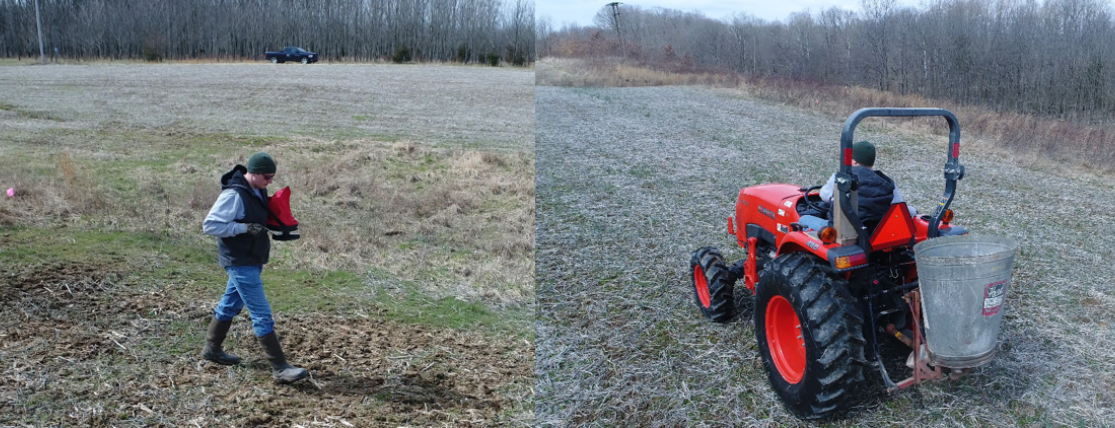
Picture 3. Smaller fields can be established with just a hand seed spreader (left), whereas an ATV or tractor-mounted spreader is better for larger fields (right).
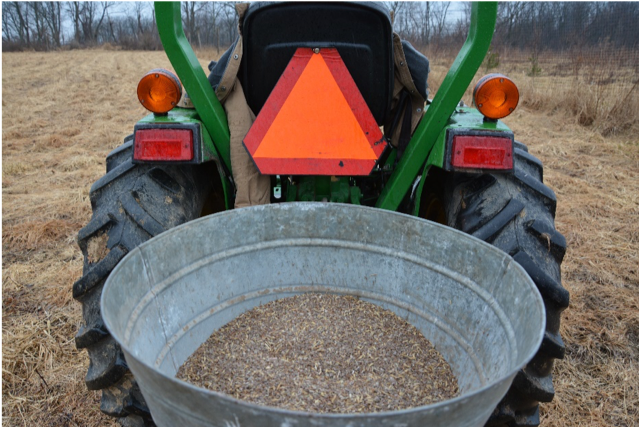
Picture 2. When broadcasting native seed, it should be mixed with a carrier (pelletized lime here) to help the seed flow through the spreader.
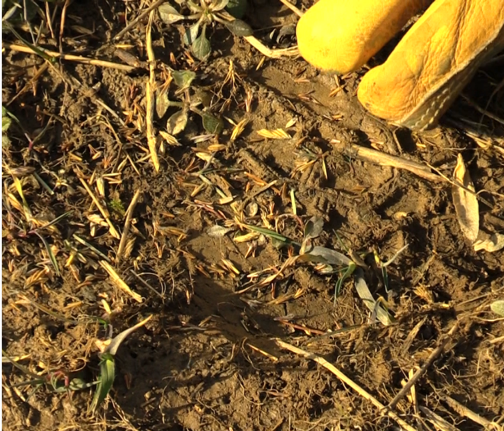
Picture 1. After frost seeding, the native grass and forb seed is visible on the ground, but the freezing and thawing of the soil will ensure good seed-to-soil contact.
Its natural
If you think about how a native prairie works, many of the seeds ripen in the late summer and early fall and drop to the ground throughout the fall and winter. So, sowing seeds from January through March or frost seeding is mimicking what would have occurred naturally. By doing such, you are taking advantage of the freezing and thawing cycles of the soil. The helps with a couple things.
First, many native plant seeds – forbs (wildflowers) especially – need that natural freezing and thawing cycles to break their dormancy. Thus, frost seeding can help increase the germination of many of these species. Second, the freezing and thawing of the soil helps to work the seed into the soil, which can improve seed-to-soil contact, an important factor in planting success (picture 1).
Less time to waste
Dormant seeding or seeding once the soil dips below a certain temperature (as early as November) is another viable option to establish a native grass and forb stand. But with frost seeding, the seed remains on the soil for less time before germination. Which may reduce the seeds’ exposure to soil pathogens, rodents, birds, or other critters that may eat the seed or reduce germination.
Minimalist-style
Frost seeding native grasses and forbs can be done will minimal equipment. All you need to frost seed is a hand or mechanical seed spreader, the seed, and a carrier (picture 2). Using a hand seed spreader works great for small fields, but you may consider using an ATV or tractor-mounted mechanical spreader for larger fields (picture 3).
Another option is to use a no-till seed drill. Of course, this will require more specialized equipment, but many Soil and Water Conservation Districts or Pheasants and Quail Forever Chapters have no-till drills that you can borrow or rent to help complete your project.
When it comes to establishing native grasses and forbs, there is more than one way to plant a field. But, frost seeding might be the option that is best suited for you and your site.
For a How-To on frost seeding, check out our Frost Seeding Video below:
Resources
Frost Seeding to Establish Wildlife Food Plots & Native Grass and Forb Plantings, video, The Education Store, Purdue Extension Resource Center
Calibrating a No-Till Drill for Conservation Plantings and Wildlife Food Plots, video, The Education Store
Renovating native warm-season grass stands for wildlife: a land manager’s guide, The Education Store
Purdue Extension Pond and Wildlife Management Website, Purdue Extension
Jarred Brooke, Wildlife Extension Specialist
Department of Forestry & Natural Resource, Purdue University
 Winged burning bush, winged euonymus, or simply burning bush (Euonymus alatus) is a medium-sized deciduous shrub native to China, Japan and Korea but is widely planted in the United States. Winged burning bush has been planted in the US since the 1860s, primarily as an ornamental shrub due to its bright red fall foliage. Reports of this species escaping cultivation and establishing in natural areas, such as woodlands, prairies and other uncultivated areas, emerged in the 1970s in the Northeast and Midwest US. The species is now considered invasive in most of the eastern US, including Indiana.
Invasive Plant Series: Winged Burning Bush is an 8-page publication written by experts Brian Beheler, farm manager, Don Carlson, forester, Lenny Farlee, sustaining hardwood extension specialist and Ron Rathfon, regional extension forester SIPAC. In this publication, you can learn about the identification, distribution, impact, management and control of this deciduous shrub found in Indiana hardwood forests. For more information check out the Burning Bush Video.
Resources
Report Invasive Species, Purdue Agriculture & Indiana Invasive Species Council
The GLEDN Phone App – Great Lakes Early Detection Network
EDDMaps – Early Detection and Distribution Mapping System (Report Invasives)
Cooperative Invasive Species Management Area (CISMA)
Indiana Department of Natural Resources: Invasive Species
Indiana Invasive Species Council
Burning Bush Video, video, The Education Store, Purdue Extension resource center
What Nurseries Need to Know About the Invasive Species Regulation, The Education Store
Invasive plants: impact on environment and people, The Education Store
Invasive Plant Species: Oriental Bittersweet, The Education Store
Invasive Plant Species: Callery Pear, The Education Store
Invasive Plant Species: Wintercreeper, The Education Store
Lenny Farlee, Extension Forester
Purdue University Department of Forestry and Natural Resources
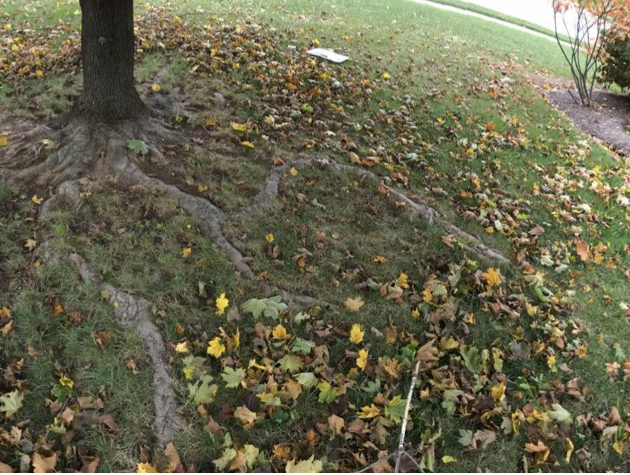 Trees in the landscape are highly prized and provide many benefits to you and your home. However, those shallow roots that appear on the surface of our lawns can create real headaches, especially when trying to grow lush turfgrass. This free download Surface Root Syndrome publication will help you learn what surface roots are, common approaches to address the problem, and best practices to management.
Resources
Find an Arborist video, Trees are Good-International Society of Arboriculture (ISA)
Caring for storm-damaged trees/How to Acidify Soil in the Yard – In the Grow, Purdue Extension
Tree Appraisal and the Value of Trees, The Education Store, Purdue Extension resource center
Tree Support System, The Education Store
Why Is My Tree Dying? – Got Nature? Blog, Purdue Extension – Forestry and Natural Resources
Tree Risk Management – Got Nature? Blog, Purdue Extension – FNR
Mechanical Damage to Trees: Mowing and Maintenance Equipment – The Education Store
Trees and Electric Lines – The Education Store
Urban Forestry Playlist, Purdue Extension-Forestry and Natural Resources YouTube Channel
Lindsey Purcell, Chapter Administrator & Master Arborist
Indiana Arborist Association
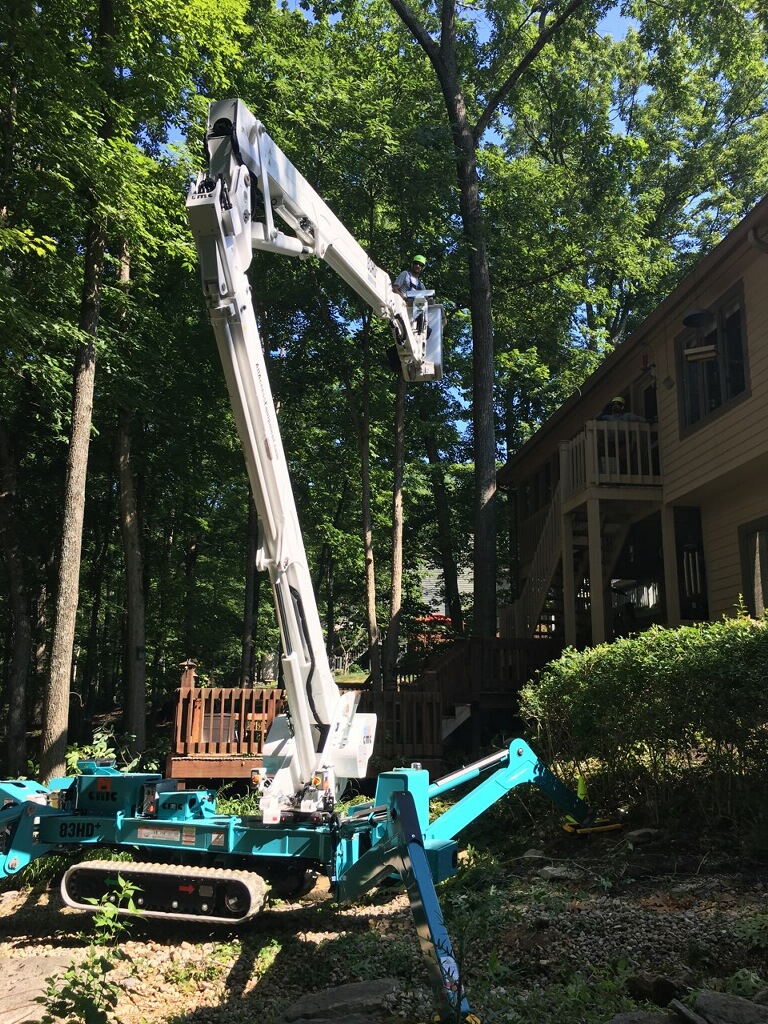
Purdue Landscape Report: There are many different aspects of tree work which include a wide range of costs, but let’s start with the most common expense: tree removal. It can be difficult to understand why removing a tree can cost so much when the whole process seems as simple as “just cutting it down.” In reality, the work is usually much more involved than making a few cuts with a chain saw and then hauling it all away.
Complexity – Trees being removed often need to be cut apart in sections to avoid dropping the whole tree or large pieces onto the lawn or landscape or into the street. This is a safer approach and also prevents serious damage to the turf and landscape below. News reports are full of accidents involving untrained tree workers, or homeowners, attempting to cut down a tree without the knowledge of how the tree reacts to being cut. Usually, specialized equipment is needed, such as aerial lifts or cranes to access the tree safely. This equipment is costly to acquire and maintain. Some of the typical equipment such as these mentioned can cost more than some homes! Often, the use of this equipment involves setting up traffic control in busy streets where permits and additional flagging support are needed.
Difficult and dangerous – 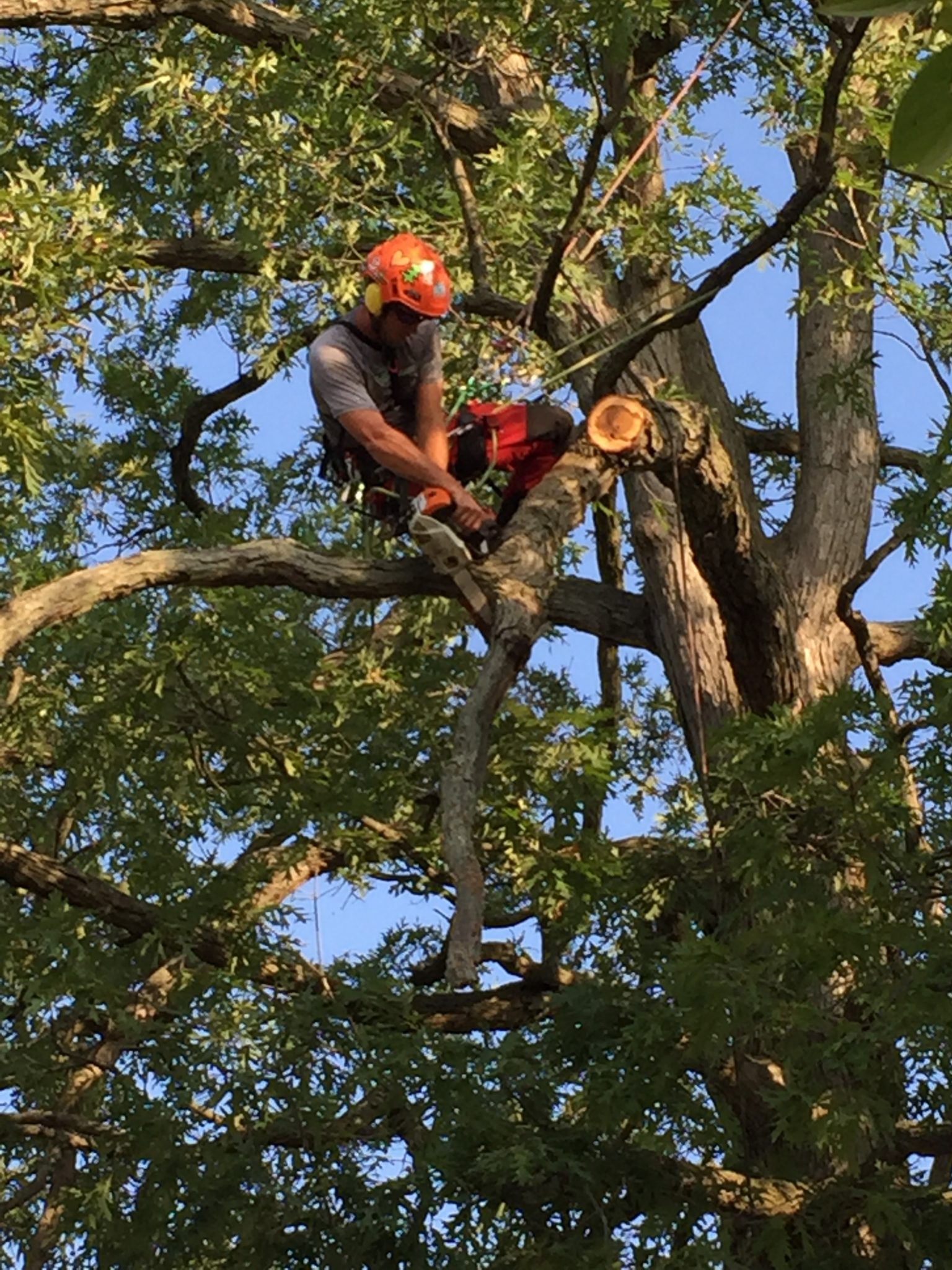 Tree pruning and tree removal, is difficult and dangerous work. Also, there is a reason why the tree is being removed. Often it has been deemed high risk or presents a danger on the site. Tree crews are regularly asked to work on trees with compromised structure from storm damage or years of neglect. These compromised trees are often dead trees, which are particularly dangerous. A tree that has been dead for several years usually becomes brittle and inflexible. When you try to cut it down, controlling the direction of fall is a challenge and it will often shatter, throwing broken branches in an uncontrolled manner. Often, tree workers are in trees that have electrical conductors running through the branches. That risky situation should speak for itself.
Insurance, Licensing – Because tree work can be hazardous, qualified companies will have expensive liability insurance to protect the homeowner’s property, as well as workers’ compensation insurance to help cover injuries sustained by the crew, should they occur. You get what you pay for and this includes tree care as well! If you select a company that is less expensive, they may not carry insurance which leaves the tree owner at a high risk of having to pay damages several times the original job estimate, if something goes wrong. Always check with your tree care company to be sure they can validate proper insurance before starting tree work. This applies to any service company which may be used in and around your home or property.
Trained and Certified Workers – Its best to choose a tree care company where the crew has current industry credentials 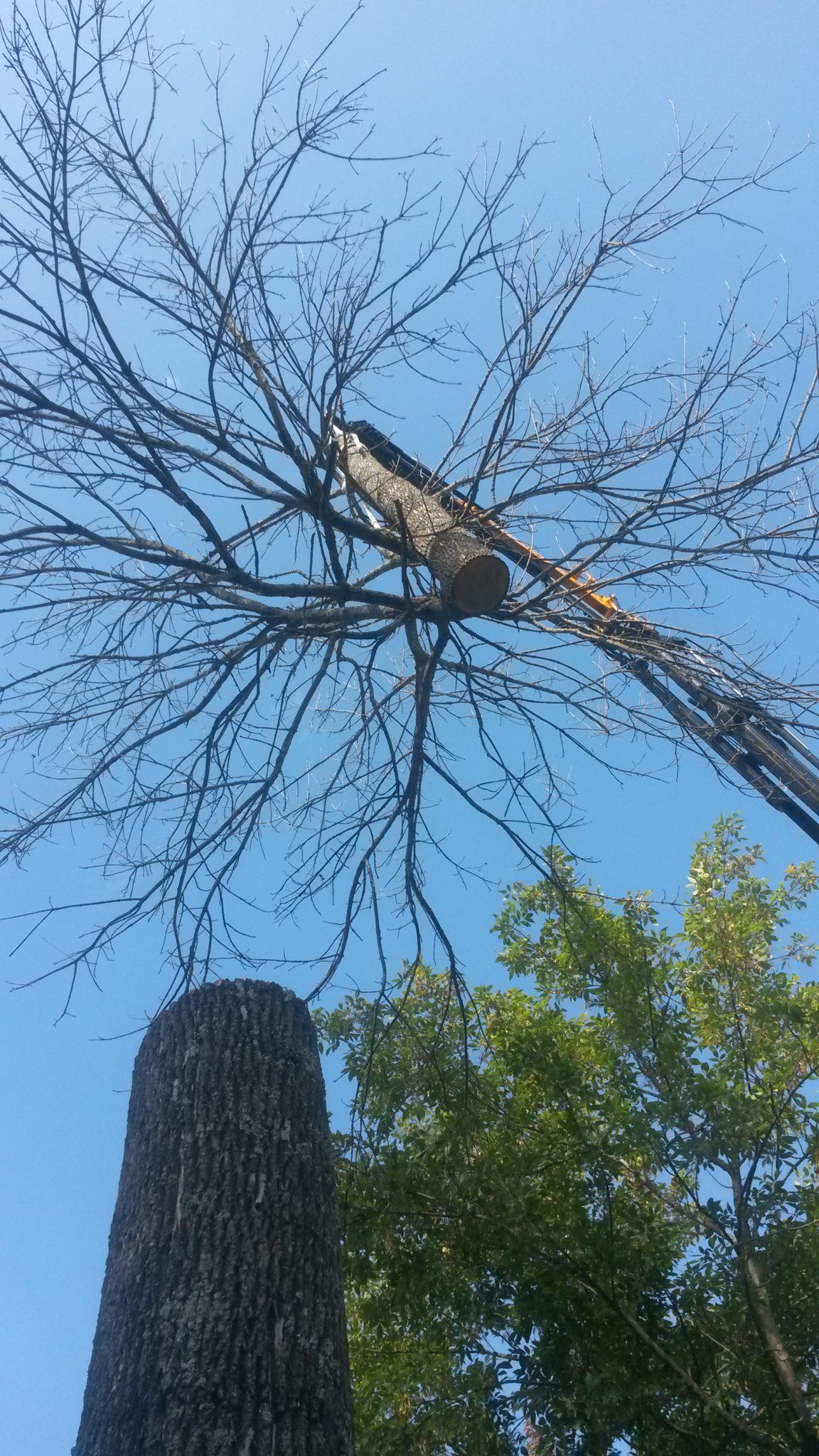 and a history of training and experience. How do you know if a company’s staff is trained and experienced? Ask to see their credentials and look for programs such as the International Society of Arboriculture (ISA) Certified Arborist, or the Tree Care Industry Association (TCIA) Certified Treecare Safety Professional which are indicators of a professional business with the expertise to perform the work. Tree owners and managers have the option to interview two or three tree care companies before deciding about tree removal or other critical practices such as pruning. Ask to see a copy of the current insurance certificate as well as copies of the crew’s competency credentials. If a company representative hesitates to provide these documents or insists, they don’t need to “prove” themselves, find another company to perform the work. Ask for references. This is easy since often all that is needed is to drive by a location to see the quality of the pruning work or removal work completed.
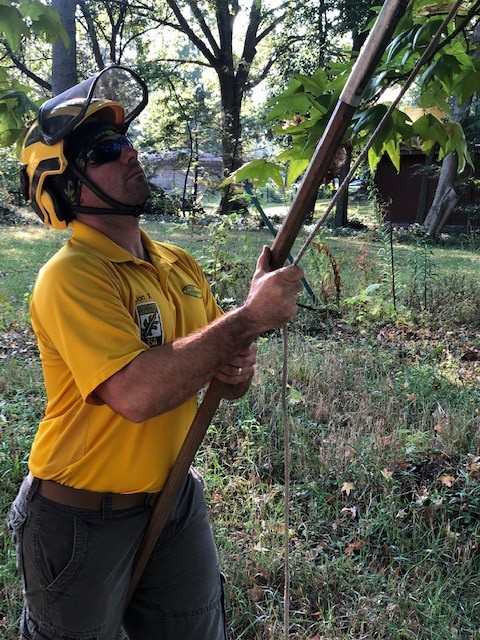
Find a professional – Also, to check for an ISA Certified Arborist in your area, visit the website www.treesaregood.org then click on the link “Find an Arborist”. By entering your zip code, a list of credentialed arborists can be found nearest your location.
Tree care performed properly will be an investment in your property that, when done correctly, will give you valued returns for decades.
Resources
Mechanical Damage to Trees: Mowing and Maintenance Equipment, The Education Store, Purdue Extension’s resource center
Tree Appraisal and the Value of Trees, The Educational Store
Tree Pruning Essentials, video, The Education Store
Tree Pruning Essentials, The Education Store
Tree Selection for the “Un-natural” Environment, The Education Store
Lindsey Purcell, Chapter Executive Director
Indiana Arborist Association

December IDNR Wildlife Bulletin Newsletter: DNR has recently launched a new interactive website allowing deer hunters to access white-tailed deer harvest data. Hunters have asked for detailed harvest data and comparisons between years. This new website is a direct result of that feedback. Harvest data is updated daily. For full article and more information >>>
Resources
How to Score Your White-tailed Deer, video, The Education Store, Purdue Extension Resource Center
White-Tailed Deer Post Harvest Collection, video, The Education Store
Age Determination in White-tailed Deer, video, The Education Store
How to Build a Plastic Mesh Deer Exclusion Fence, The Education Store
Bovine Tuberculosis in Wild White-tailed Deer, The Education Store
Maine Hunting License and Rules, Maine Department of Inland Fisheries & Wildlife
Indiana Deer Hunting, Biology and Management Safe Food Handling and Preparation, IDNR
Indiana Department of Natural Resources, Department of Fish & Wildlife
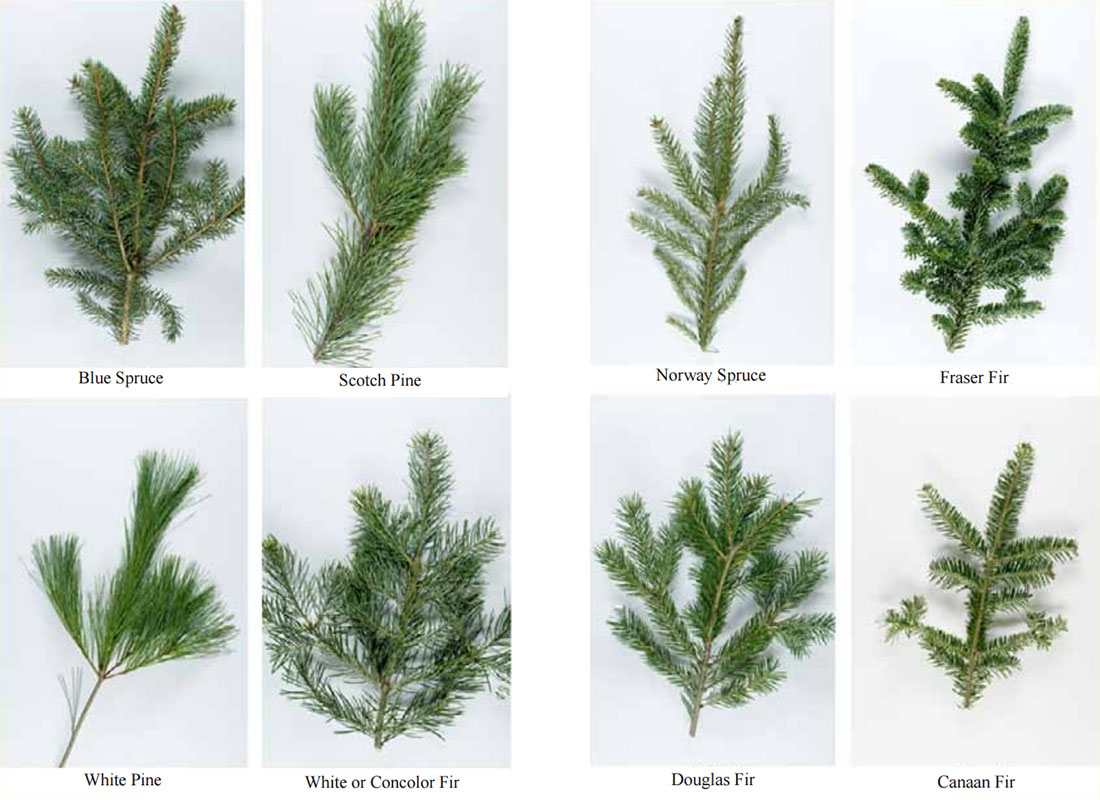 So you are off to select a real Christmas tree this year? The tree characteristics that influence a family’s decision on what species to select can vary greatly. First, many families just want the experience of cutting their own tree. In this case, any appropriately priced and correct sized tree will do. Other consumers may be more demanding in terms of different tree characteristics. These include fragrance of the tree, rather the tree is cone or more globose shaped, needle length, and of course expected needle retention. Color is also to be considered, as well as branch stiffness and cost. These factors all come into play rather the purchaser is aware of them or not. They all interact in one way or another to define the perfect Christmas tree and to create great Christmas memories.
There are about 200 real Christmas Tree Farms producing trees on over 2,500 acres in Indiana. Each year about 90,000 Christmas trees are harvested in Indiana and over a billion dollars in sales are made throughout the U.S. Based on number of trees harvested, Indiana ranks seventh among all states. Most of the farms are choose and cut operations but some wholesale farms, particularly in Northern Indiana, also exist. Real Christmas trees are also sold at retail outlets.
Scotch pine, consisting of several varieties, remains the most commonly grown Christmas tree in Indiana. However, as transportation and communications improved the desire for other species such as the firs and spruces increased. Because climate and soil conditions vary substantially from one end of Indiana to the other, not all species will be found in one area and probably not all on one farm. However, most Indiana farms will have three or four species available.
Scotch pine and white pine are usually the least expensive trees whereas the true fir, are more costly. Douglas fir (not a true fir) and spruce are usually intermediate in cost. The pines will grow on most soils in Indiana and do not require fertilization. Fraser-fir and Canaan fir will only grow on well to moderately well drained soils, require fertilization, and are in relatively short supply as choose and cut trees, especially in southern Indiana. Some farms do not have true firs available in the field. Douglas-fir and spruce trees are intermediate in the care they require while in the field and thus usually intermediate in price. However, growers may have a surplus of a certain species or size of trees and reduce the price to assure that the trees will be sold.
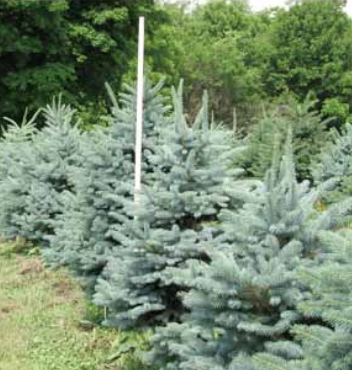
Blue Spruce
To view the table that presents the common characteristics which help to determine a consumer’s preference for a certain species, as well as read the full article, view the Selecting an Indiana-Grown Christmas Tree publication. However, in the end, it comes down to a family’s preference. The preferred species can also be determined by memories of past Christmases.
In addition to the most commonly produced Indiana species described in the publication, other species may be available. Noble fir and grand fir are shipped in from the west coast and balsam fir from the Lake States and Canada. Balsam fir has been a fairly popular species in the past. Some growers are experimenting with other species such as Korean fir, Turkish fir, and Nordman fir. These are beautiful trees but since it can take at least seven years for these trees to reach Christmas tree size, don’t expect to find many choose and cut trees available just yet.
For more information about Christmas trees or to locate a choose-and-cut tree farm near you, please visit the Indiana Christmas Tree Growers’ Association website or the National Christmas Tree Association website.
Resources:
A Choose-and-Cut Pine and Fir Christmas Tree Case Study, The Education Store, Purdue Agriculture’s resource center
Living Christmas Trees For The Holidays and Beyond, The Education Store
Tips for First-Time Buyers of Real Christmas Trees, The Education Store
Growing Christmas Trees, The Education Store
Daniel Cassens, Professor Emeritus
Purdue Department of Forestry and Natural Resources
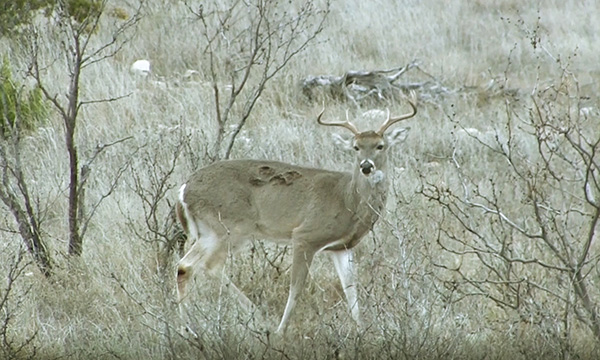 Hunting is an outdoor sport many enjoy while learning new skills, receiving fitness benefits, and bringing healthy food options to their table. The U.S. Fish and Wildlife Service, Wildlife & Sport Fish Restoration Program, reported 36,825 licenses for 2017 as hunting continues to be a recognized and respected sport.
Purdue Extension-Forestry and Natural Resources has recently increased their resources for handling harvested game. This new video series shares step by step instructions starting with field dressing and continuing all the way through to packaging.
Video Series:
Handling Harvested Game: Episode 1, Field Dressing
Handling Harvested Game: Episode 2, Hanging & Skinning
Handling Harvested Game: Episode 3, Deboning
Handling Harvested Game: Episode 4, Cutting, Grinding & Packaging
Free handling harvested game workshops are held every year in September by Purdue Extension. If you would like to attend any of the available workshops please contact Jonathan Ferris, Wayne County Extension Director, or Dave Osborne, Ripley County Extension Director. Feel free to view the Purdue Extension Calendar or the Purdue Extension-Forestry and Natural Resources’ Calendar for future scheduled workshops.
Other resources:
How to Score Your White-tailed Deer, video, The Education Store, Purdue Extension Resource Center
White-Tailed Deer Post Harvest Collection, video, The Education Store
Age Determination in White-tailed Deer, video, The Education Store,
How to Build a Plastic Mesh Deer Exclusion Fence, The Education Store,
Bovine Tuberculosis in Wild White-tailed Deer, The Education Store,
Maine Hunting License and Rules, Maine Department of Inland Fisheries & Wildlife
Safe Food Handling and Preparation
Deer Tips 1: Scouting
Deer Tips 2: Practice
Deer Tips 3: Clothing
Deer Tips 4: Hunting Private Lands
Deer Tips 6: Etiquette
Deer Tips 7: Tracking
Deer Tips 8: After the Harvest
Deer Tips 9: Final Thoughts
Deer Processing 1: Skinning
Bob Cordes, Wildlife Biologist
Maine Department of Inland Fisheries and Wildlife
Brandon Fields, Meat Science Manager
Pig Improvement Company (PIC)
Rod N Williams, Professor of Wildlife Science
Purdue University Department of Forestry and Natural Resources
Six pieces of data to collect from deer you harvest this year
Deer season is upon us in Indiana! If you are a serious hunter and deer manager, here are some things you should consider collecting from deer you harvest. This data provides valuable insights to the deer herd condition, and when combined with hunter observation data and habitat data, like browse transects, you can get a clear picture of the deer herd and habitat quality on your property. However, one year of harvest data is unlikely to be much of value, but collecting data over multiple years can help you track trends in the herd and habitat quality.
What to collect
When you harvest a deer on your property you should consider collecting the following pieces of biological information:
- Sex
- Age
- Weight
- Lactation status
- Antler measurements
- Rumen contents
*Each deer you harvest should be assigned a unique ID number to be sure all the following data is assigned to the right deer.
Sex and Age
Collecting deer sex and age (based on tooth replacement and wear) can help you divide the rest of the data you collect into sex and age classes. Find out how to determine age by viewing Age Determination in White-Tailed Deer video. You do not 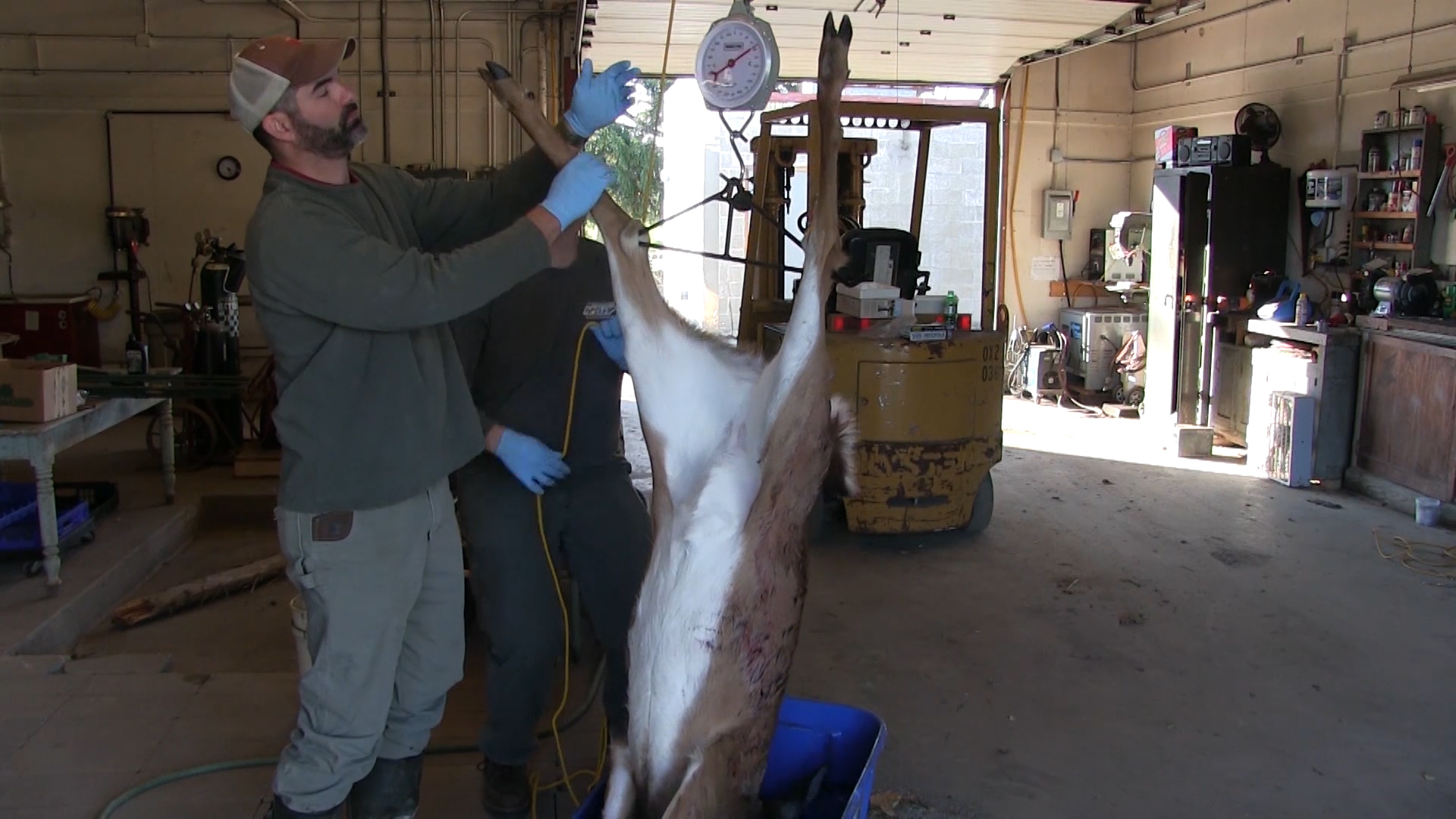 necessarily have to age a deer to the exact year, but you should separate ages into at least 3 age classes; fawns, yearlings, and >= 2.5 years old. This can be important for tracking changes to the average weight per age class or average antler measurements per age class over time.
Weight
You can collect either live weights or dressed weights, but you should pick one or the other and collect all weights consistently. Be sure to test your scales for accuracy before weighing deer. Tracking changes to the average weight per age class can provide 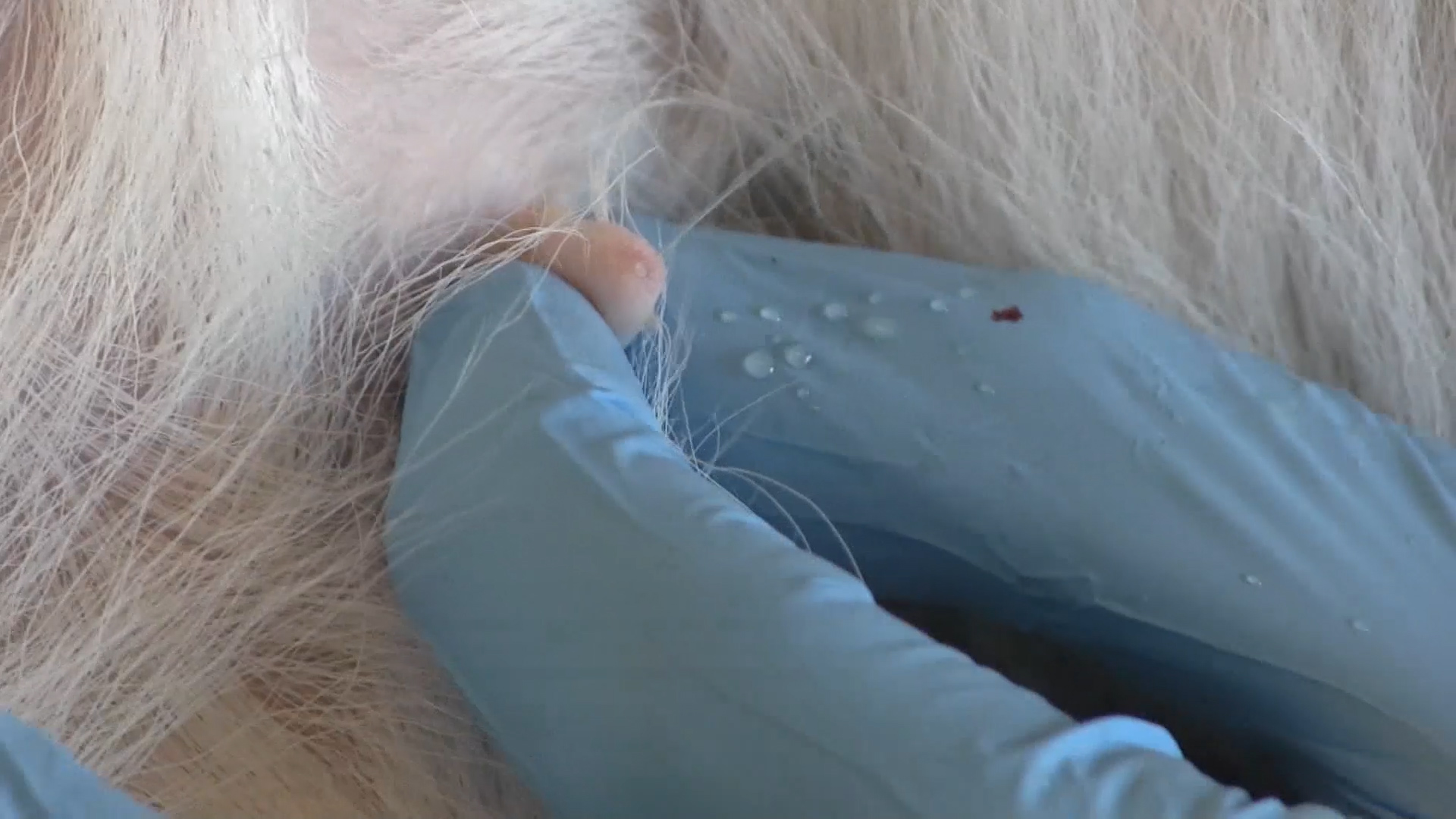 information about the nutritional status of the herd.
Lactation Status
Lactation status of does is often used as an index of fawn recruitment and can help determine if a doe had a fawn the summer preceding the hunting season. Lactation status for does harvested early in the season can be checked by squeezing the teats to produce milk you may need to cut into the mammary gland on does harvested later in the season to check lactation status.
Antler measurements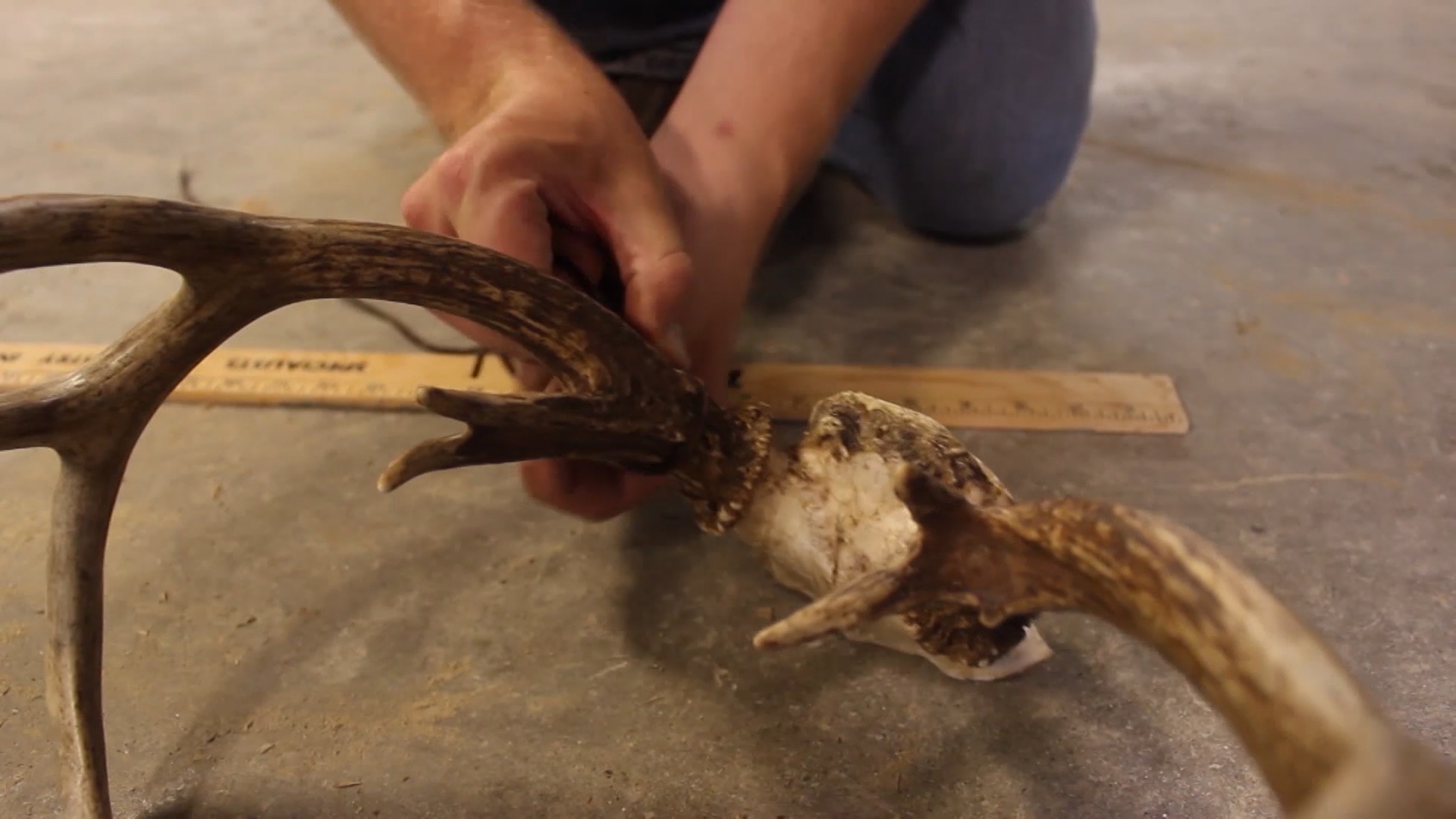
Antler measurements should be collected from bucks harvested on your property, including yearlings. Find out how to measure the antlers by viewing How to Score Your White-Tailed Deer video. At a minimum, you should collect the number of points on each antler and the basal circumference of the main beams. You may also consider collecting the inside spread of the antlers and the main beam lengths. Additionally, you can collect the gross Boone & Crockett Score.
Rumen contents
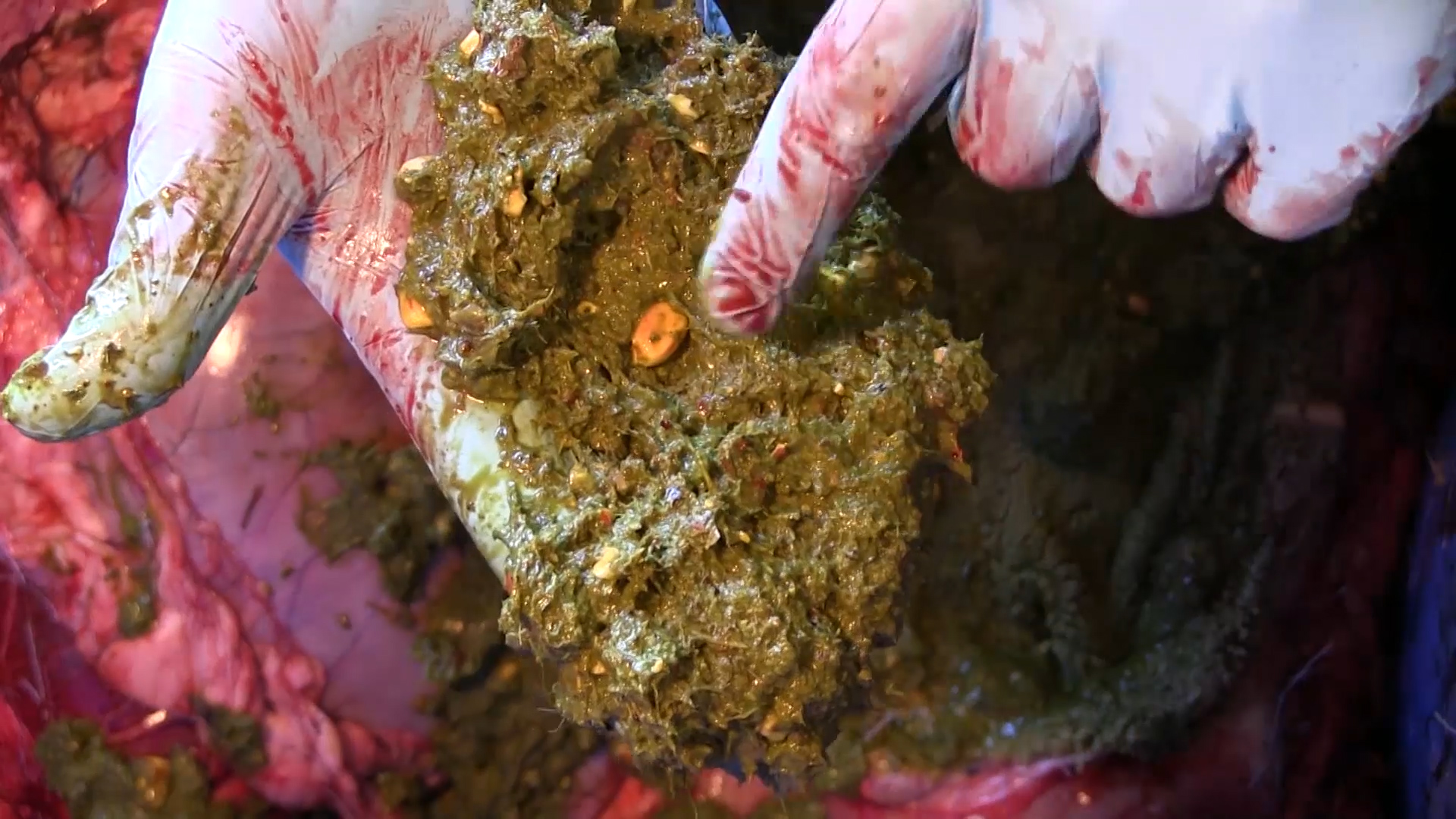 This piece of data can be helpful from a scouting and hunting aspect. Looking into the rumen of a deer can help you determine what deer may be eating during the portion of the year the deer was harvested. You may find green material (which can be hard to identify), corn, acorns, or whatever else deer may be consuming.
Things you need to collect harvest data
Here is a list of items you might need to collect data from harvested deer.
- Jawbone extractor
- Knife
- Loppers
- Scale
- Jawbone tag or permanent marker
- Flexible measuring tape
- White-tailed deer harvest datasheet (if you need any further information please contact fnrextension@purdue.edu)
Putting all of this data together can give you a picture into the condition of the deer herd on your property. Collecting this data only takes a small amount of time and effort and the information you gather is well worth it! For more information of how to collect biological data from harvested deer, check out this video from Purdue Extension.
Help the Indiana Department of Natural Resources (IDNR) collect biological data from harvested deer
Most of the data we discussed in this blog post and that is covered in the White-Tailed Deer Post Harvest Collection video, are data the Indiana DNR is collecting through an online post-harvest survey. This is a great opportunity for hunters to help the DNR collect data that will be used to manage the deer herd throughout the state. More information about the after the hunt survey can be found by visiting the Indiana DNR Deer After Hunt Survey page. If you are successful in harvesting a deer in Indiana this year, be sure to check your email for a link to the survey.
Additional Resources:
Age Determination in White-Tailed Deer video, Purdue Extension – FNR YouTube Playlist
How to Score Your White-Tailed Deer video, Purdue Extension – FNR YouTube Playlist
White-Tailed Deer Post Harvest Collection video, Purdue Extension – FNR YouTube Playlist
White-Tailed Deer Harvest Log (pdf), Purdue Extension-FNR
Indiana Deer Hunting, Biology and Management, Indiana Department of Natural Resources (IDNR)
Indiana Hunting and Trapping Guide, Indiana Department of Natural Resources (IDNR)
Managing White-Tailed Deer: Collecting Data from Harvested Deer, Alabama Cooperative Extension System
Jarred Brooke, Wildlife Extension Specialist
Department of Forestry & Natural Resource, Purdue University
Purdue Landscape Report: Just as sure as you try to predict the weather, it is likely to change. But going out on a limb, I predict that we will have a bit of a dud for fall color display this year. Not a very risky prediction, considering that many plants already are starting to turn color and/or drop leaves in some areas of the state.
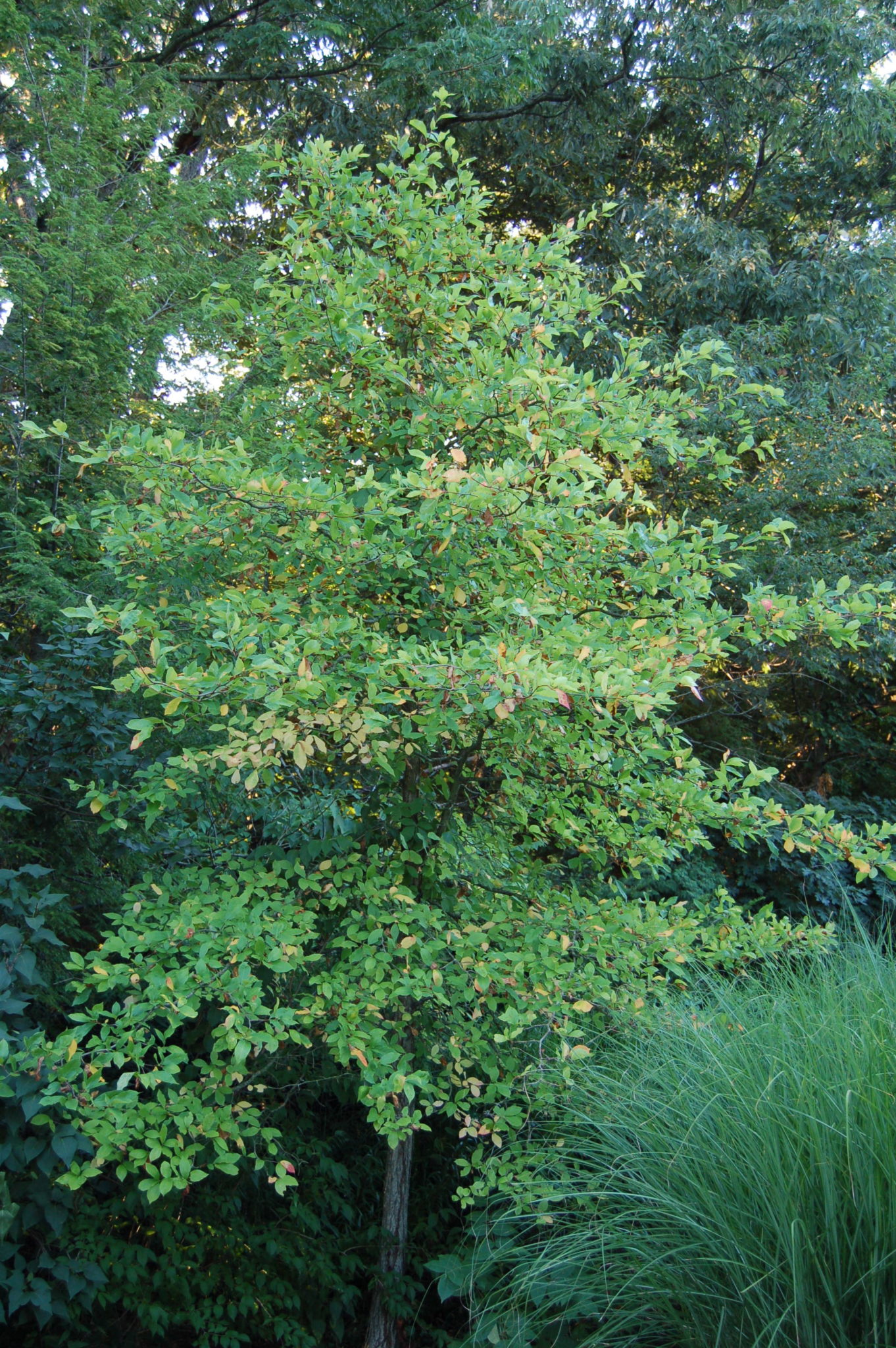
Nyssa sylvatica (black gum) showing early fall color due to drought stress. Source
So why would the colors be early and/or a bit duller than usual? Certainly, some of the reason why plants display fall colors has to do with the genetic makeup of the plant. That doesn’t change from year to year. But the timing and intensity of fall colors do vary, depending on factors such as availability of soil moisture and plant nutrients, as well as environmental signals such as temperature, sunlight, length of day, and cool nighttime temperatures.
The droughty conditions experienced during much of the second half of summer are likely to have decreased the amount of fall color pigment. Southern Indiana has been particularly parched. Despite recent rains in some areas, much of the state remains designated as abnormally dry to moderate drought. You can check your area’s conditions at the US Drought Monitor for Indiana. Additional maps and data is available at the Midwest Regional Climate Center.
Growing conditions throughout the season affect fall color as does current weather. Colors such as orange and yellow, which we see in the fall, are actually present in the leaf all summer. However, those colors are masked by the presence of chlorophyll, the substance responsible for green color in plants during the summer. Chlorophyll allows the plant to use sunlight and carbon dioxide from the air to produce carbohydrates (sugars and starch). Trees continually replenish their supply of chlorophyll during the growing season.
As the days grow shorter and (usually) temperatures cooler, the trees use chlorophyll faster than they can replace it. The green color fades as the level of chlorophyll decreases, allowing the other colored pigments to show through. Plants that are under stress–from conditions like prolonged dry spells–often will display early fall color because they are unable to produce as much chlorophyll.
Yellow, brown and orange colors, common to such trees as birch, some maples, hickory and aspen, come from pigments called carotenoids, the same pigments that are responsible for the color of carrots, corn and bananas.
Red and purple colors common to sweet gum, dogwoods and some maples and oaks are produced by another type of pigment called anthocyanin, the pigment responsible for the color of cherries, grapes, apples and blueberries. Unlike chlorophyll and carotenoids, anthocyanins are not always present in the leaf but are produced in late summer when environmental signals occur. Anthocyanins also combine with carotenoids to produce the fiery red, orange, and bronze colors found in sumac, oaks, and dogwoods.
Red colors tend to be most intense when days are warm and sunny, but nights are cool–below 45º F. The color intensifies because more sugars are produced during warm, sunny days; cool night temperatures cause the sugars to remain in the leaves. Pigments are formed from these sugars, so the more sugar in the leaf, the more pigment, and, thus, more intense colors. Warm, rainy fall weather decreases the amount of sugar and pigment production. Warm nights cause what sugars that are made to move out of the leaves, so that leaf colors are muted.
Leaf color also can vary from tree to tree and even from one side of a tree to another. Leaves that are more exposed to the sun tend to show more red coloration while those in the shade turn yellow. Stress such as drought, poor fertility, disease or insects may cause fall color to come on earlier, but usually results in less intense coloration, too. And stress or an abrupt hard freeze can cause leaves to drop before they have a chance to change color.
So far, weather conditions lead me to think this will be one of those not so showy fall color years. I hope I am proven wrong!
Resources
Fifty Common Trees of Indiana
An Introduction to Trees of Indiana
Native Trees of the Midwest, Purdue University Press
Why Leaves Change Color, USDA Forest Service, Northeastern Area
B. Rosie Lerner, Retired Extension Consumer Horticulturist
Purdue Horticulture and Landscape Architecture
Cities and towns in the U.S. contain more than 130 million acres of forests. These forests vary extensively in size and locale. An urban forest can describe an urban park such as Central Park in New York City, NY, street trees, nature preserves, extensive gardens, or any trees collectively growing within a suburb, city, or town. Urban forestry is the name given to the care and maintenance of those ecosystem areas that remain after urbanization. Data from the 2010 census indicated more than 80% of Americans live in urban centers with a population increase greater than 12%. The population of Indiana represents only 2.1% of the nation. In the last 8 years, IN has had an influx of 200,000 people which represents a population increase of 3.0%!
Urban forests, which help filter air and water, control storm water runoff, help conserve energy and provide shade and animal habitat must be maintained. As our nation becomes more urbanized, appreciate those urban foresters working to ensure we have save urban forest spaces to enjoy. These precious resources add more than curb appeal and economic value, they improve our quality of life.
What does an urban forester do? Here’s a quick answer:
References:
Purdue Urban Forestry & Arboriculture, Purdue Forestry and Natural Resources
USDA Forest Service Urban Forests, United States Department of Agriculture
US Census Bureau, United States Census Bureau
Interested in Purdue Urban Forestry? Contact:
Lindsey Purcell, Chapter Executive Director
Indiana Arborist Association
Ben McCallister, Urban Forestry Specialist
Forestry and Natural Resources
Resources:
Tree Support Systems, The Education Store, Purdue Extension Resource Center
Corrective Pruning for Deciduous Trees, The Education Store
Tree Installation: Process and Practices, The Education Store
What plants can I landscape with in area that floods with hard rain?, Got Nature? Blog, Purdue University Forestry and Natural Resources Extension

Recent Posts
- Popular Landscape Shrub is Invasive
Posted: October 15, 2026 in Alert, Forestry, Forests and Street Trees, Invasive Plant Species, Plants, Woodlands - Purdue Extension’s Regional Teams Are Here: Connecting Communities with Expertise and Opportunity
Posted: October 14, 2026 in Community Development, Forestry, Forests and Street Trees, Gardening, How To, Timber Marketing, Urban Forestry, Wildlife, Woodlands - Why Do Our Trees Go From Green Leaves to Different Colors?
Posted: in Forestry, Forests and Street Trees, Urban Forestry, Woodlands - Distinguishing Dogwoods
Posted: October 13, 2026 in Forestry, Urban Forestry, Wildlife, Woodlands - It’s Not Too Early To Start Planning For Spring Tree Planting
Posted: in Forestry, How To - Can I Plant Trees in the Fall?
Posted: October 12, 2026 in Forestry, How To, Land Use, Plants, Urban Forestry, Wildlife - Burning for Benefits: Why Fire Belongs in Indiana
Posted: in Forestry, Safety, Woodlands - Disease May Cause Wilting and Eventual Death of Certain Trees and Shrubs, Purdue Landscape Report
Posted: October 5, 2026 in Disease, Forestry, Plants - October Is Firewood Month: Protect Indiana’s Forests by Making Smart Choices
Posted: October 1, 2026 in Forestry, Forests and Street Trees, How To, Invasive Insects, Urban Forestry - Woodland Flowers of Late Summer
Posted: September 14, 2026 in Forestry, Gardening, Wildlife, Woodlands
Archives
Categories
- Alert
- Aquaculture/Fish
- Aquatic/Aquaculture Resources
- Ask the Expert
- Christmas Trees
- Community Development
- Disease
- Drought
- Forestry
- Forests and Street Trees
- Gardening
- Got Nature for Kids
- Great Lakes
- How To
- Invasive Animal Species
- Invasive Insects
- Invasive Plant Species
- Land Use
- Natural Resource Planning
- Nature of Teaching
- Plants
- Podcasts
- Ponds
- Publication
- Safety
- Spiders
- Timber Marketing
- Urban Forestry
- Webinar
- Wildlife
- Wood Products/Manufacturing
- Woodland Management Moment
- Woodlands