 Purdue University - Extension - Forestry and Natural Resources
Got Nature? Blog
Question:
Are these pretty green flower shaped growth spots lichens? It just appeared on my tree this year. With this type of fungus should I be worried that it could damage the tree?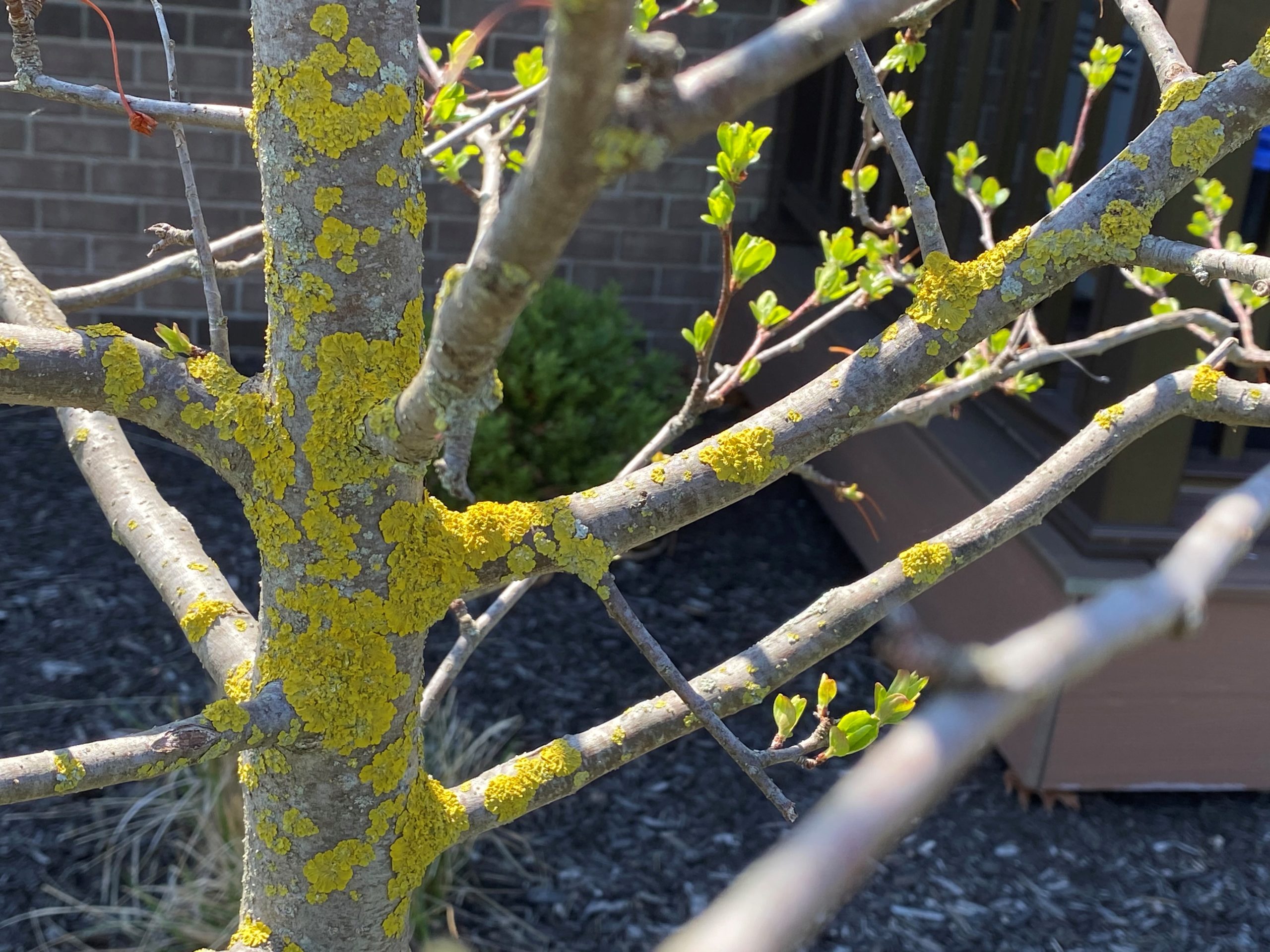
Answer:
Lichen is common on trees and not bad either. Those grayish-green patches, come in all sizes and shapes and sometimes covering much of the tree, are not feeding on your woody plants. Lichens grow on the surface of the tree, and do not penetrate any tissue. Instead, they make use of the trunk or branches for support. They can be aesthetically pleasing for many. Lichens play a very significant role as a bio-indicator. They only grow where the air quality is good and have a favorable growing environment. They help filter the air as well… so, don’t worry, be happy!
Resources:
Lichens, Purdue Botany & Plant Pathology
Purdue Plant & Pest Diagnostic Lab, Purdue Botany & Plant Pathology
Diseases of Landscape Plants: Leaf Diseases, The Education Store, Purdue Extension resource center
Surface Root Syndrome, The Education Store
Tree Installation: Process and Practices, The Education Store
Purdue Landscape Report, Purdue University
Lindsey Purcell, Urban Forestry Specialist
Purdue University, Department of Forestry and Natural Resources
 Mark your calendar for four upcoming Facebook LIVE events from Purdue FNR Extension specialists.
On April 30, tune in at 3 p.m. to expand your knowledge about the Hellbender husbandry program as Dr. Rod Williams chats live with Dr. Stephen Spear from The Wilds, who is going to talk about captive rearing, different age groups of hellbenders and some of their research using EDNA to sample for hellbenders across the country. This Facebook LIVE event will take place on the Help the Hellbender page. https://www.facebook.com/HelpTheHellbender
Check back in a few hours later at 6 p.m. for a live Q&A with extension wildlife specialist Jarred Brooke. He will offering habitat help and offering tips and tricks about establishing native grasses and forbs for wildlife. Tune in on the Purdue FNR Facebook page. https://www.facebook.com/PurdueFNR/
On May 5, a host of Purdue extension specialists will be available to answer your questions on a variety of topics during a noon ET Ask the Expert session on the Purdue FNR Facebook page . Have a question about woodlands, wildlife, fish, or ponds you want to ask a Forestry and Natural Resource Specialist? We will be discussing wildlife habitat management, prescribed fire, forest management, invasive plants, wildlife conflict management, wildlife damage, amphibian and reptile identification, wildlife ecology, pond management and fish ecology. This Q&A session will put you in touch with:
- Jarred Brooke, Extension Wildlife Specialist, wildlife habitat management, prescribed fire
- Lenny Farlee, Extension Forestry Specialist, forest management, invasive plants
- Brian MacGowan, Extension Wildlife Specialist, wildlife conflict management, wildlife damage
- Rod Williams, Extension Wildlife Specialist, amphibian and reptile identification, wildlife ecology
- Mitch Zischke, Extension Fisheries Specialist, pond management and fish ecology
On May 7 at 3 p.m., in Episode 3 of our Help the Hellbenders Facebook LIVE series, Dr. Rod Williams will talk with the keepers at the Mesker Park Zoo and Botanical Gardens about their efforts to breed hellbenders in captivity. Viewers will also have a tour of the facility and see interactive exhibits.
All Facebook LIVE sessions will be archived on Facebook. Go back and watch Episode 1 of the Help the Hellbender series.
To access a Facebook live feed, go to the page at the established time. When the event is live, a LIVE icon will show up next to the word video on the left hand side of the page. Click the video link and a new page will open. The video that is live will be the first video in the list. Click that to begin watching.
Resources:
Report Invasive, Purdue Extension
Effective Firebreaks for Safe Use of Prescribed Fire, Got Nature? Blog, Purdue University Forestry and Natural Resources Extension
Renovating native warm-season grass stands for wildlife: A Land Manager’s Guide, The Education Store, Purdue Extension resource center
Invasive plants: impact on environment and people, The Education Store
Pond and Wildlife Management, Purdue Extension
Forest Improvement Handbook, The Education Store, Purdue Extension resource center
Wendy Mayer, FNR Communications Coordinator
Purdue University Department of Forestry and Natural Resources
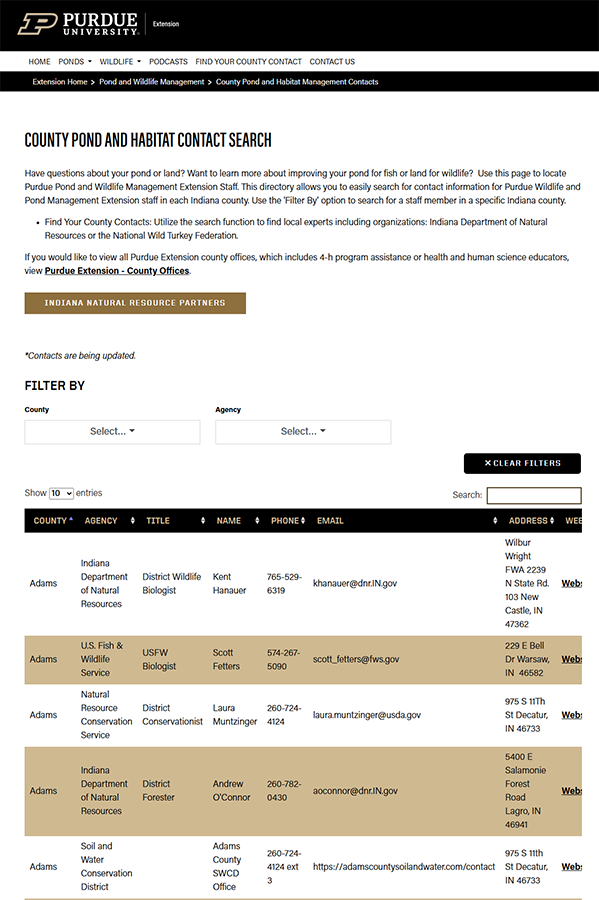 The Purdue Extension Pond and Wildlife Management website has been updated with a contact search function to better help you find the right professional biologist or conservationist in your county to serve your needs.
The newly created County and Habitat Management Contacts page allows individuals to search for experts within their county by simply selecting it from a dropdown menu. Within each individual county is a listing of Indiana Department of Natural Resources contacts, extension specialists and more.
In addition, the contacts page lists various agencies and services that can also help with questions about pond or habitat management. These resources include the Indiana DNR, the National Wild Turkey Federation, the Natural Resources Conservation Service (NRCS), Pheasants and Quail Forever, Purdue Extension, the U.S. Fish and Wildlife Service (USFWS), the Soil and Water Conservation Districts and event private consultants.
As fishing, hunting and other wildlife recreation continues to be popular in Indiana, Purdue Extension has developed this new program to help Indiana landowners manage their ponds and wildlife.
Along with the search features to help you find professional contacts, you will also find these topics and resources on the website:
- The Pond Ecosystem
- Fish Population Management
- Pond Construction and Maintenance
- Aquatic Vegetation Management
- Evaluating Your Property
- Forest Management
- Grassland Management
- Habitat Management Planning
To better understand and manage pond ecosystems in Indiana for fishing and wildlife habitat this website provides detailed information to help you reach your goals.
Resources:
Salmon and Trout of the Great Lakes: A Visual Identification Guide, The Education Store, Purdue Extension Resource Center
Pond Management: Stocking Fish in Indiana Ponds, The Education Store
The Nature of Teaching: Adaptations for Aquatic Amphibians, The Education Store
Illinois & Indiana Sea Grant, using research, outreach, and education to bring the latest science to communities and their residents
How to Score Your White-tailed Deer, Video, The Education Store
How to Build a Plastic Mesh Deer Exclusion Fence, The Education Store
Assessing Your Land’s Potential for Wildlife, The Education Store
Jarred Brooke, Extension Wildlife Specialist
Purdue Department of Forestry and Natural Resources
While our FNR Purdue Extension specialists can’t be with you in person at workshops, meetings or in the field right now, they are still here to assist you. Don’t hesitate to reach out.
Purdue Extension – Forestry and Natural Resources, purdue.edu/fnr/extension
Ask An Expert
Wendy Mayer, Communications Coordinator
Purdue University Department of Forestry and Natural Resources
Diana Evans, Extension & Web Communications Specialist
Purdue University Department of Forestry and Natural Resources
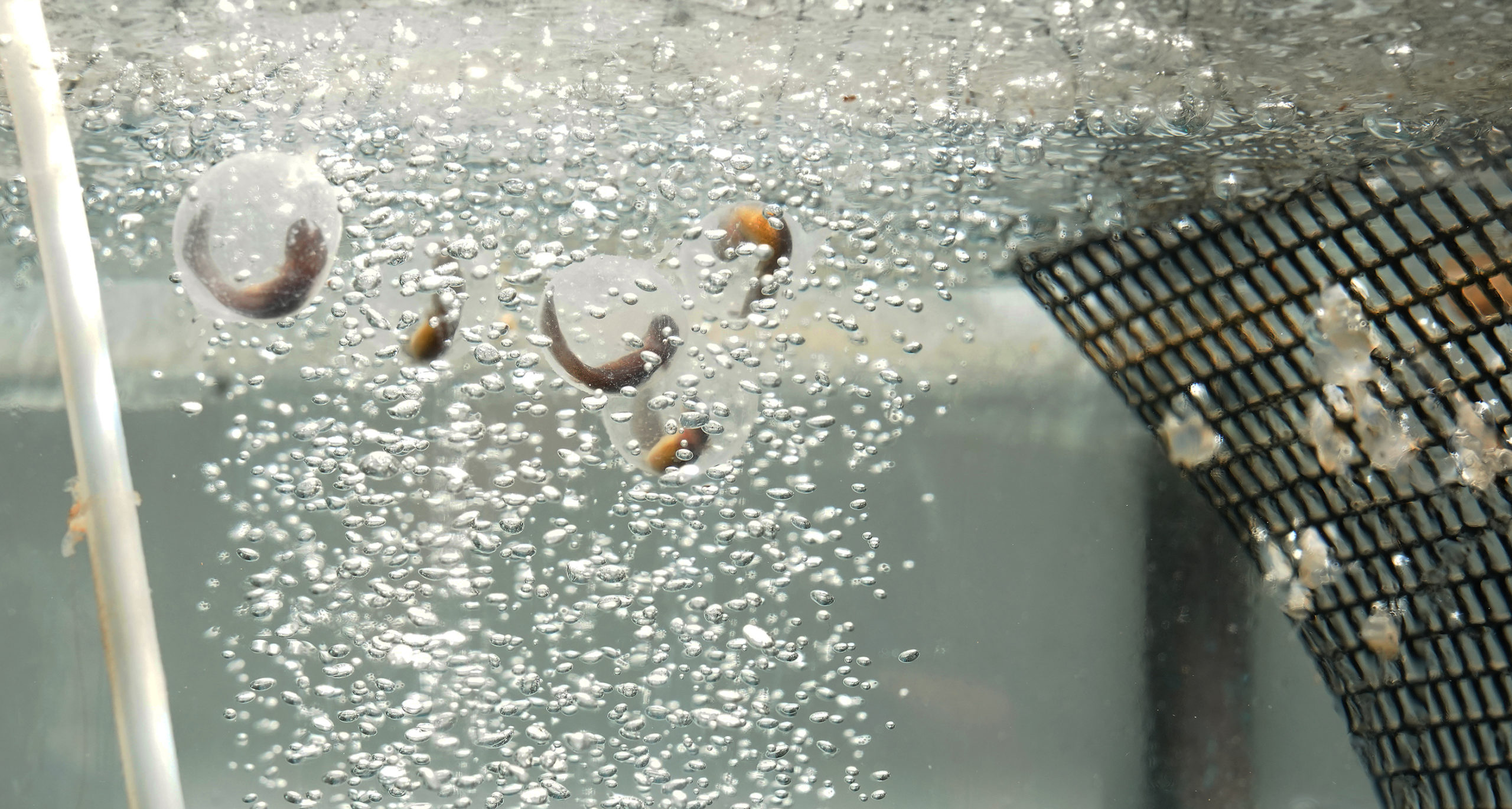 Have you heard of a Hellbender? No? Have you been living under a rock?
Eastern hellbenders are the largest salamander in North America, a rare species that has been getting a lot of conservation attention over the past two decades. If you would like to learn about Hellbenders, how you can help protect aquatic wildlife, and have the opportunity to ask Purdue biologists questions about Hellbender conservation, then please join us on our Help the Hellbender-Facebook Live question and answer time, www.facebook.com/HelpTheHellbender/.
Thursday, April 23rd
3:00 pm ET
We hope to see you there and please bring your questions!
Resources:
Help the Hellbender website, Purdue Extension-Forestry and Natural Resources
Hellbender Decline, The Education Store, Purdue Extension resource center
Zoos Work with Purdue University for Hellbender Conservation Efforts, Got Nature? Blog, FNR
The Nature of Teaching: Adaptations for Aquatic Amphibians, The Education Store
Nick Burgmeier, Project Coordinator, Research Biologist & Wildlife Extension Specialist
Purdue Department of Forestry and Natural Resources
Shelby Royal, Husbandry Lab Coordinator
Purdue Department of Forestry and Natural Resources
Rod N Williams, Professor of Wildlife Science
Purdue University Department of Forestry and Natural Resources
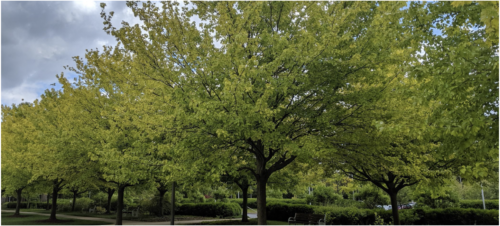 Many trees, shrubs, and other ornamental plantings in Indiana and throughout the Midwest suffer from iron deficiency caused by high pH (alkaline) soil. Soil pH affects plant growth directly and indirectly by affecting the availability of essential nutrients and microbial activity. One of these nutrients is iron, an essential plant nutrient that is required for the production of chlorophyll. Chlorophyll is necessary for photosynthesis and gives plants their green color. Iron (and manganese) deficiency results in leaf yellowing (chlorosis); over time, scorching of foliage, dieback and even death of the tree or shrub can result.
Iron Chlorosis of Trees and Shrubs talks about the symptoms, the cause and the managing of iron chlorosis. One of the authors is Lindsey Purcell, an urban forestry specialist from the Department of Forestry and Natural Resources at Purdue University.
This 5-page publication is part of the Plant Pathology in the Landscape Series and is a free download from the Purdue Extension resource center, The Education Store. View other tree disease publications and video resources as you place keywords in the search field located on The Education Store website.
Resources
Tree Diseases: Oak Wilt in Indiana, The Education Store, Purdue Extension resource center
Tree Diseases: White Pine Decline in Indiana, The Education Store, Purdue Extension resource center
Mechanical Damage to Trees: Mowing and Maintenance Equipment, The Education Store, Purdue Extension resource center
Surface Root Syndrome, The Education Store, Purdue Extension resource center
Tree Appraisal and the Value of Trees, The Education Store, Purdue Extension resource center
Lindsey Purcell, Urban Forestry Specialist
Purdue University, Department of Forestry and Natural Resources
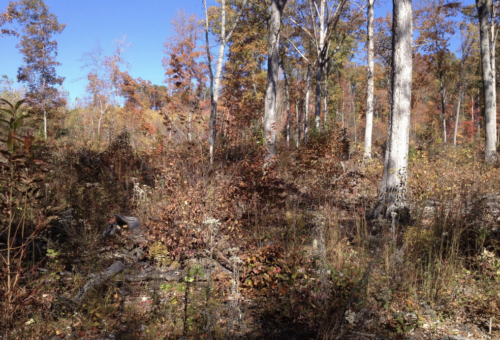
Many woodland landowners are interested in improving their properties for one of Indiana’s most abundant game animals, white-tailed deer. This publication titled Managing Your Woods for White-Tailed Deer outlines different options landowners have to enhance white-tailed deer habitat in their woodlands. Learn the pros and cons of mature forests vs. young forest stands along with finding answers to these and other questions you may have:
- Can mature forests cause less forage?
- What does lacking oak trees mean for managing deer?
- Which plants do deer eat?
This 16-page publication filled with plants and forest photos is a free download from the Purdue Extension resource center, The Education Store. View other deer publications and video resources as you place keywords in the search field located on The Education Store website.
Resources
Renovating native warm-season grass stands for wildlife: A Land Manager’s Guide, The Education Store, Purdue University
Bovine Tuberculosis in Wild White-tailed Deer, The Education Store
How to Score Your White-tailed Deer, Video, The Education Store
How to Build a Plastic Mesh Deer Exclusion Fence, The Education Store
Frost Seeding to Establish Wildlife Food Plots and Native Grass and Forb Plantings, Video
Jarred Brooke, Extension Wildlife Specialist
Purdue Department of Forestry and Natural Resources
Purdue Landscape Report: We all have heard about dormancy and the restful time of woody plants in our landscapes. That “chill-out” time is nearing the end and it’s time to think about tree maintenance. Trees and shrubs have actually been growing for quite some time, we just can’t see it… yet. Woody plants begin growth after the chilling requirements have been filled. These requirements are different for every plant. Chilling units are hours of time spent above freezing. The number of hours required for chilling varies for different plants from less than 500 to 1,500 hours or more. Many people think the plant is tracking hours below freezing, but in actuality, hours below freezing has no effect on chilling but does increase cold hardiness. Our mild winter and early spring arrival is playing a role in this process.
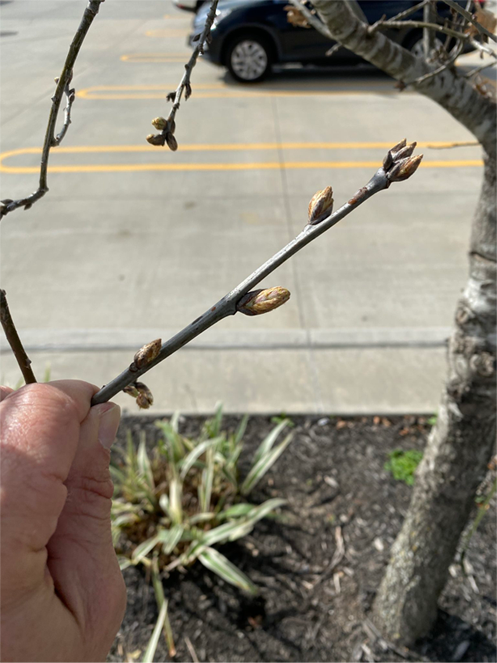
Figure 1. These oak tree buds may look dormant but have completed their chilling requirement and are ready to break. Source
An important maintenance task is supplemental fertilization during early spring weather, especially if there wasn’t any type of fall fertilization. Let’s take a look at how a tree uses and gains energy during the year to understand why and when trees need good nutrition. After the leaves have fallen there is no way to generate food because without leaves, there is no photosynthesis. There are huge demands on the carbohydrate reserves due to increased metabolic functions to support new leaves, flowers and fruit. Supplemental nutrition can help if storage levels are low or depleted until the new photosynthates are available. That’s a huge demand on its reserves! The tree must rely on stored carbohydrate reserves in its woody parts such as stems and branches to grow. Hopefully, the tree was healthy and developing those reserves going into fall or supplemental nutrition was offered with fall fertilization. If not, then the tree exhausts much of its energy and is in need of new resources. In some situations, it may be considered safer for the tree to apply fertilizer in the spring. Fall applications, if applied too early in the fall season, can create the risk of forcing the plant into becoming metabolically active right when cold weather hits, creating growth susceptible to freeze damage.
Many woody plants begin the new year’s growth with stored food from the year before. An application of fertilizer in the spring gives an additional boost to this new growth. It is important to note that not all trees and shrubs need fertilization, however, most can benefit from this application, especially the younger actively growing trees. In forests, soils have an abundance of nutrients, but in our landscapes and urban forest areas, that’s not often the case. As we sweep away leaves, twigs and fallen bark, we’re removing potential recycling of nutrients for the soil. Additionally, the grass around our trees is unnatural and often outcompetes trees for available nutrients and water. That’s why we need to fertilize our trees, spring or fall. Look for signs that your tree is lacking nutrients in the soil. If you see these signs, fertilization may be necessary.

Figure 2. The graph shows the starch loss or energy used during various growing stages for the tree during the year. Most energy is depleted after leaf emergence and then regained as leaves begin photosynthesizing new resources. Source
- Shorter than normal annual twig growth
- Undersized leaves that are fewer in number
- Dead branches and branch tips
- Leaf veins darker than leaf margins
- Leaves any other color than dark green, such as yellow or red
However, never fertilize without getting a soil test. If your trees are experiencing any of the above symptoms, have your local arborist inspect the tree to determine the best treatment. Also, Review Consumer Horticulture: Fertilizing Woody Plants (pdf) for more details on fertilizer application techniques and rates.
Now for just a little about tree pruning. All of that new tree growth is going to prompt the pruning activities… be patient! Once trees start budding and blooming in the spring hold off until after the flush. Pruning in the spring can limit bloom potential and remove newly expanding leaves that will be needed to produce new food products for energy.
Generally, the best time to prune is several weeks after the spring flush or during the summer months. Early spring pruning should focus primarily on pruning for safety to remove any dead, dying or decayed branches. Aesthetic or structural pruning can be completed much later and when the tree is better prepared to seal those pruning wounds with energy reserves. For more information refer to the publication Tree Pruning Essentials from the Education Store on pruning topics.
Resources
Consumer Horticulture: Fertilizing Woody Plants, The Education Store, Purdue University
Tree Planting Part 1: Choosing a Tree, Video, The Education Store
Tree Installation: Process and Practices, The Education Store
Tree Pruning Essentials, Video
Corrective Pruning for Deciduous Trees, The Education Store
Tree Pruning: What Do Trees Think?, The Education Store
Lindsey Purcell, Urban Forestry Specialist
Purdue University, Department of Forestry and Natural Resources
Purdue Landscape Report: Yes, we need trees and here’s why…
Trees have presented as more than just a pretty face as research has indicated that trees are even more valuable for their function as much as their form. Currently, more than 50 percent of the world’s population now lives in towns and cities. In the Hoosier state, the last census indicated that 72% of our population lives in an urban area and this statistic is increasing annually.
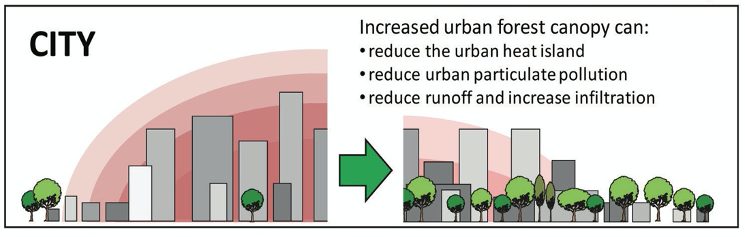
Properly planted trees improve living conditions in downtown and suburban areas. Sources
For the most part, the rapid expansion of cities takes place with little consideration to land use planning strategy. The resulting human pressure has highly damaging effects on our urban trees and green spaces. The environmental impacts of climate change are intensified by urbanization such as increased pollution, increased temperatures, and larger demands on infrastructure such as stormwater systems.
Urban trees can help to mitigate some of the negative impacts and social consequences of urban sprawl and make cities more resilient to these changes. These important functions are called ecosystem services. This is the way urban foresters measure the benefits that trees provide other than just their beauty. Ecosystems services are the many benefits that trees and plants provide to the community. They improve our quality of life by providing food, cleaner air and water, regulating temperatures, supporting pollination and providing recreational, health and spiritual benefits.
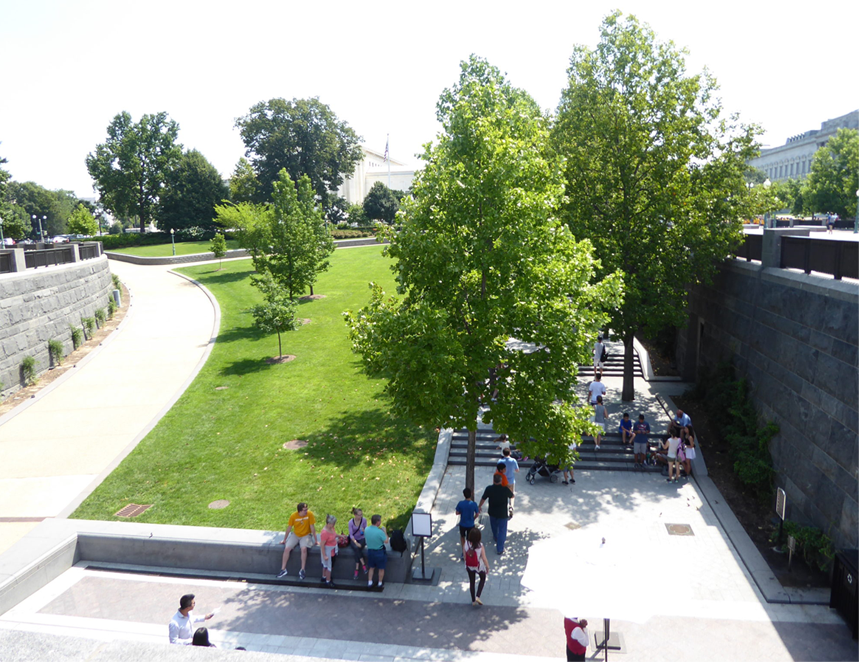
People will stay longer and enjoy urban economy more with tree-lined streets. Sources
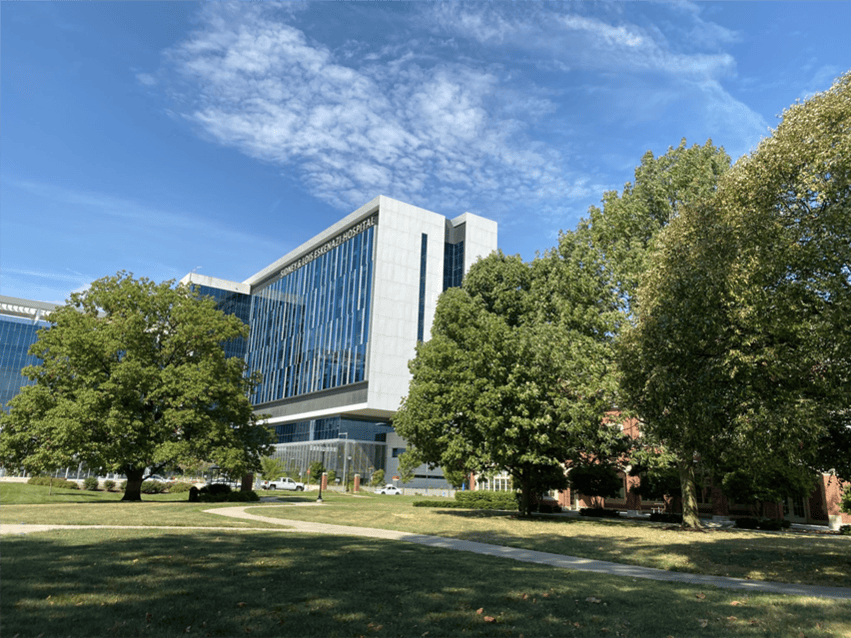
Trees are proven to reduce length of hospital stays and improve birth outcomes. Sources
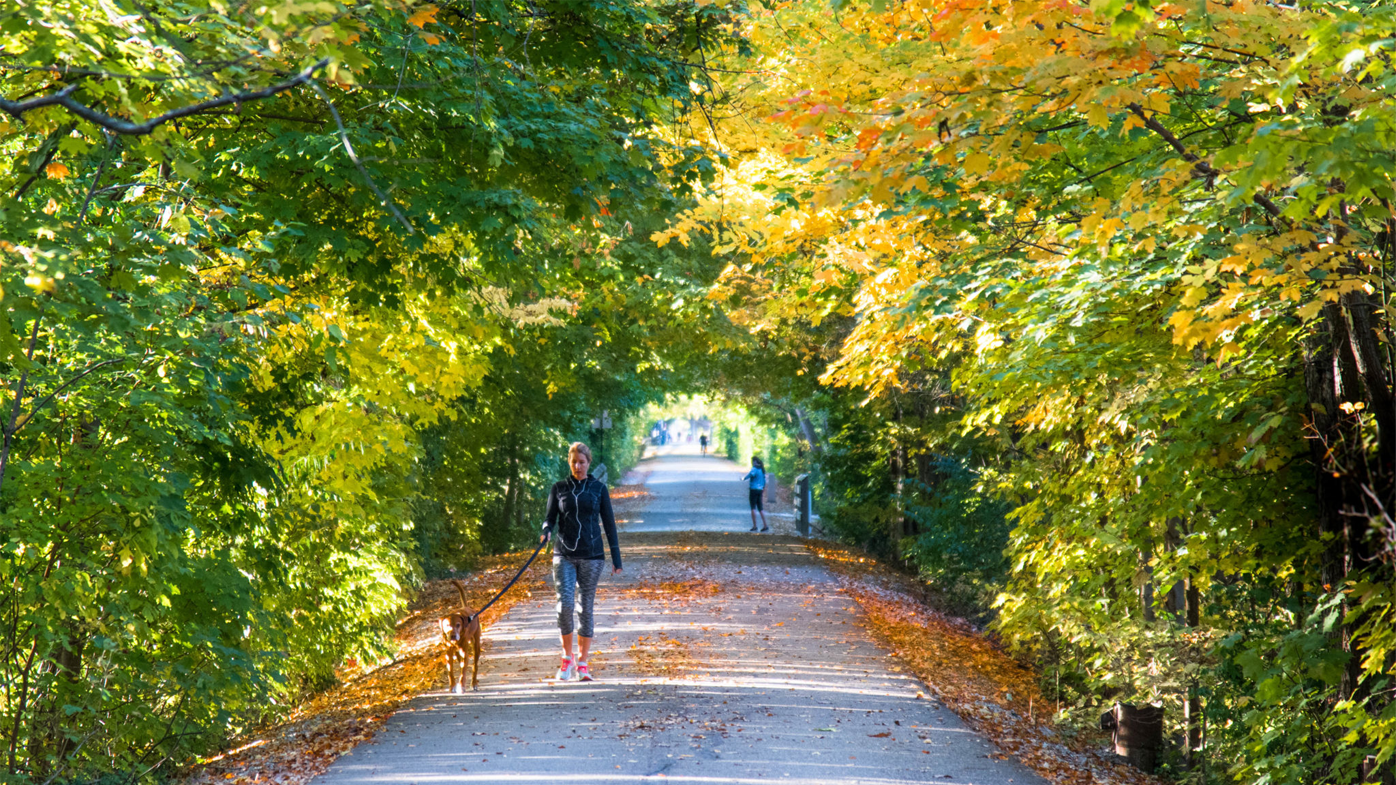
Recreational areas are critical to community well-being. Sources
Here are some easy ways in which urban trees and woodlots contribute to making cities more environmentally sustainable and livable:
- Trees can contribute to the increase of local food and nutrition security, providing food such as fruits and nuts for wildlife and human consumption.
- Trees play an important role in increasing urban biodiversity, providing plants and animals with a proper habitat, food and protection.
- A mature tree can absorb up to 350 lbs. of CO2 per year. As a result, trees play an important role in climate change mitigation. In cities with high levels of pollution, trees can improve air quality making cities healthier places to live in.
- Strategic placement of trees in cities can help to cool the air between 30-40o F, thus reducing the urban “heat island” effect, helping reduce extreme heat conditions in summer weather.
- Large trees are great biological filters for urban pollutants and particulate pollution. They absorb pollutant gases (such as carbon monoxide, nitrogen oxides, ozone and Sulphur oxides) and filter fine particulates such as dust, dirt, or smoke out of the air by trapping them on leaves and bark.
- Research shows that living in close proximity of urban green spaces and having access to them, can improve physical and mental health, for example by decreasing high blood pressure and stress. Also, research indicates greatly improved neo-natal health as well. This, in turn, contributes to the well-being of urban communities.
- Mature trees regulate water flow and play a key role in preventing floods and reducing the risk of sewer overflow. Stormwater management is a crucial city infrastructure issue and trees help. A mature tree, for instance, can intercept more than 5,000 gallons of water per year and without trees, every rain would contribute floods.
- Trees also help to reduce carbon emissions by helping to conserve energy. For example, the correct placement of trees around buildings can reduce the need for air conditioning by 30 percent and reduce winter heating bills by 20-50 percent.
- Planning urban landscapes with trees can increase property value, by up to 15 percent, and attract tourism and business.
These are just a few examples of the functional benefits that trees provide to our everyday life. A community or neighborhood with well-planned and well-managed green infrastructure becomes more resilient, sustainable and equitable in terms of livelihood improvement, climate change mitigation and adaptation, disaster risk reduction and ecosystems conservation. Throughout their lifetime, trees can thus provide a benefit package worth two to three times more than the investment made in planting and caring for them. Trees aren’t the answer, but they are part of the equation. Planting trees is important, but their maintenance is as equally important.
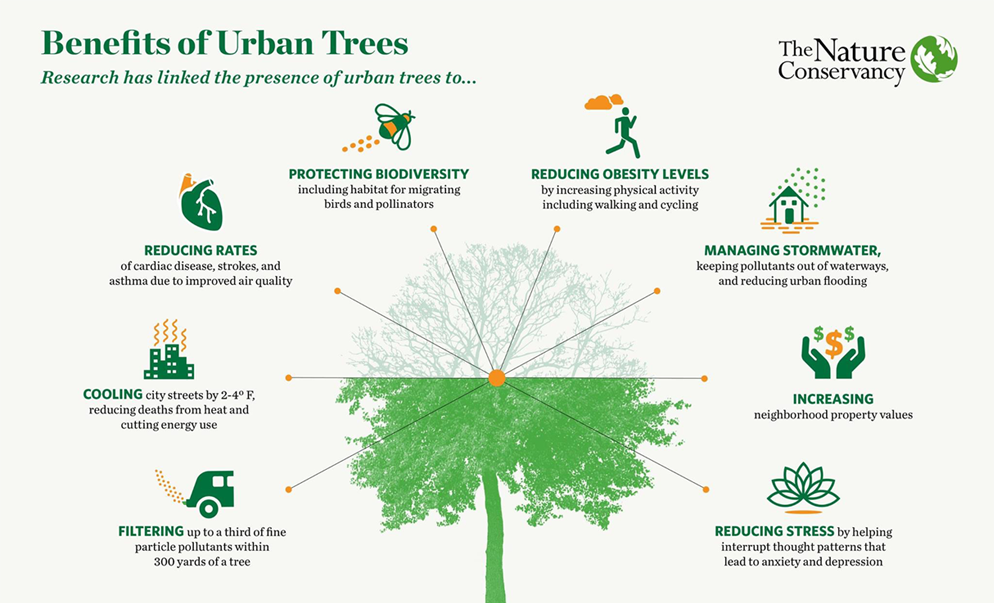
Trees make life better. Sources
For more information on urban tree care, visit the Purdue Education Store for tree care tips and suggestions.
Resources
Tree Appraisal and the Value of Trees, The Education Store, Purdue Extension’s resource center
Tree Pruning Essentials, Publication & Video, The Education Store
Tree Installation: Process and Practices, The Education Store
Tree Selection for the “Un-natural” Environment, The Education Store
The Nature of Teaching: Trees of the Midwest, The Education Store
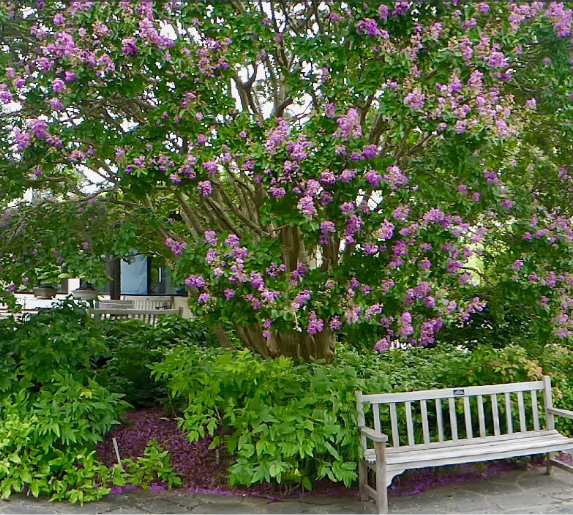 Trees provide many benefits and value to property owners in functional, aesthetic, social, environmental, and even economic ways. Functional benefits include mitigating climate change by storing carbon, removing pollution from the atmosphere, managing stormwater runoff, and improving air quality. Trees provide oxygen and many other benefits – such as shade, which can impact home cooling costs.
The collective value of trees makes a difference in people’s health and quality of life in cities and towns everywhere. This updated Purdue Extension publication Tree Appraisal and the Value of Trees describes methods used to appraise trees and landscapes that can determine their value and worth, reasons why a tree should be appraised, the factors that go into tree appraisal, what appraisal ratings mean, and sample scenarios.
Resources
The Nature of Teaching: Trees of the Midwest, The Education Store, Purdue Education Resource Center
Corrective Pruning for Deciduous Trees, The Education Store
Resources and Assistance Available for Planting Hardwood Seedlings, The Education Store
Tree Support Systems, The Education Store
Purdue University, Department of Forestry and Natural Resources

Recent Posts
- Popular Landscape Shrub is Invasive
Posted: October 15, 2026 in Alert, Forestry, Forests and Street Trees, Invasive Plant Species, Plants, Woodlands - Purdue Extension’s Regional Teams Are Here: Connecting Communities with Expertise and Opportunity
Posted: October 14, 2026 in Community Development, Forestry, Forests and Street Trees, Gardening, How To, Timber Marketing, Urban Forestry, Wildlife, Woodlands - Why Do Our Trees Go From Green Leaves to Different Colors?
Posted: in Forestry, Forests and Street Trees, Urban Forestry, Woodlands - Distinguishing Dogwoods
Posted: October 13, 2026 in Forestry, Urban Forestry, Wildlife, Woodlands - It’s Not Too Early To Start Planning For Spring Tree Planting
Posted: in Forestry, How To - Can I Plant Trees in the Fall?
Posted: October 12, 2026 in Forestry, How To, Land Use, Plants, Urban Forestry, Wildlife - Burning for Benefits: Why Fire Belongs in Indiana
Posted: in Forestry, Safety, Woodlands - Disease May Cause Wilting and Eventual Death of Certain Trees and Shrubs, Purdue Landscape Report
Posted: October 5, 2026 in Disease, Forestry, Plants - October Is Firewood Month: Protect Indiana’s Forests by Making Smart Choices
Posted: October 1, 2026 in Forestry, Forests and Street Trees, How To, Invasive Insects, Urban Forestry - Woodland Flowers of Late Summer
Posted: September 14, 2026 in Forestry, Gardening, Wildlife, Woodlands
Archives
Categories
- Alert
- Aquaculture/Fish
- Aquatic/Aquaculture Resources
- Ask the Expert
- Christmas Trees
- Community Development
- Disease
- Drought
- Forestry
- Forests and Street Trees
- Gardening
- Got Nature for Kids
- Great Lakes
- How To
- Invasive Animal Species
- Invasive Insects
- Invasive Plant Species
- Land Use
- Natural Resource Planning
- Nature of Teaching
- Plants
- Podcasts
- Ponds
- Publication
- Safety
- Spiders
- Timber Marketing
- Urban Forestry
- Webinar
- Wildlife
- Wood Products/Manufacturing
- Woodland Management Moment
- Woodlands