 Purdue University - Extension - Forestry and Natural Resources
Got Nature? Blog
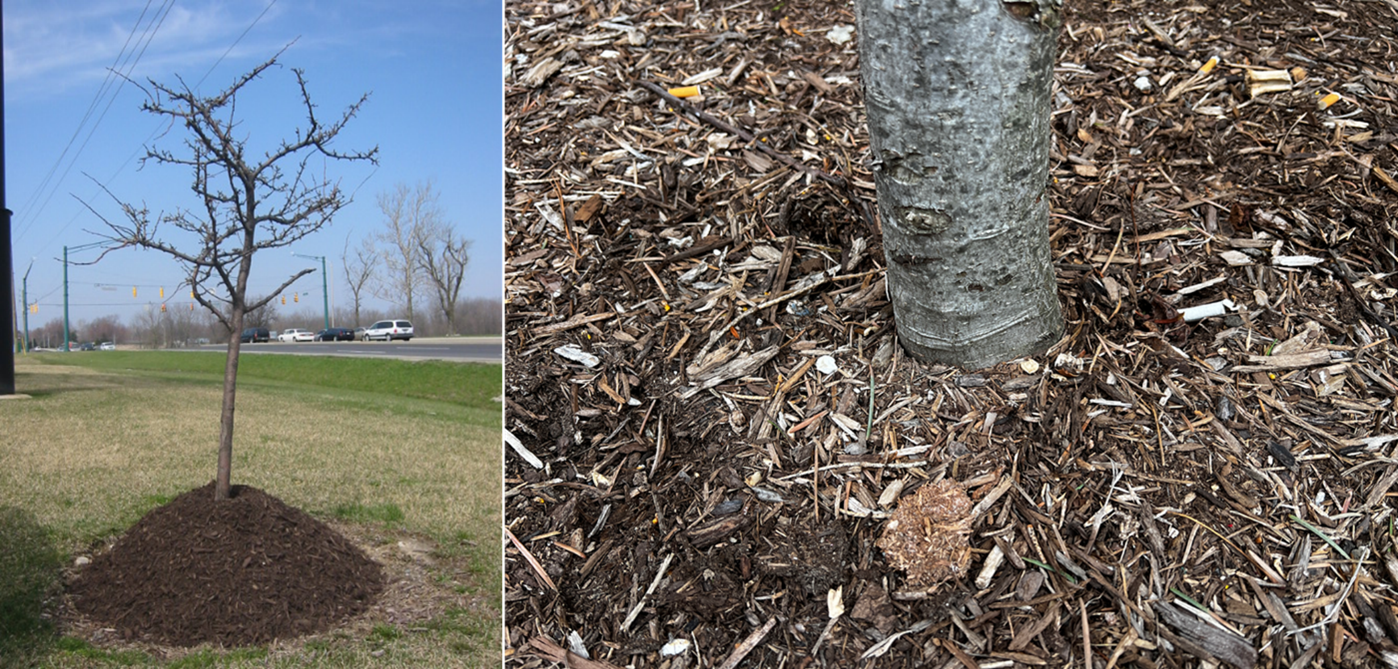
Figure 1: Examples of volcano mulching (PLR)
Purdue Landscape Report: Tree care, in many cases, can be expensive if you require the assistance of an arborist for pruning or removals. Extreme weather events, characterized by extensive rain and wind, can cause damage to the canopy or, in worst-case scenarios, lead to tree failure. In cases of failures, weather is often the final push to already existing issues. One cause that can lead to decay, decline, and failure if applied incorrectly can also extend the life of your tree with proper application.
Mulch is the double-edged sword that can promote healthy growth by maintaining soil moisture and temperature through extreme heat, cold, and drought, enrich the soil in the critical root zone, maintain a safety area from mechanical damage from lawn care tools, and add a nice aesthetic.
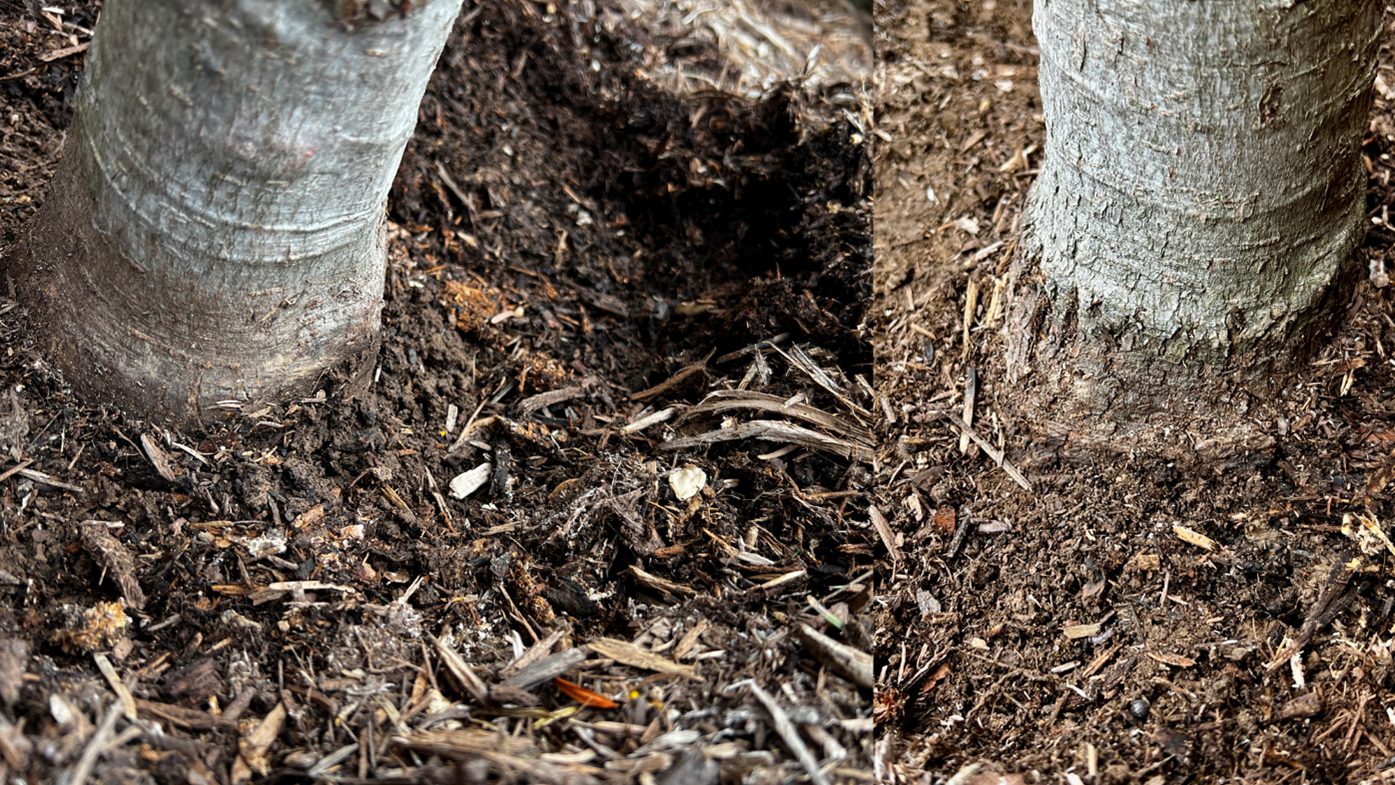
Figure 2: Digging out and exposing the root flare (PLR)
But it can also cause decay through excess moisture to the root flare, damage from pests like mice and insects that can live in mulch, expose the tree to pathogens, and promote unnecessary root growth and/or stem girdling roots that cut off nutrient supply between the root system and the rest of the tree.
The application is the same if it’s the first time mulching a tree or a re-application. Add enough mulch so there is a 2–3-inch layer sloping away from the tree with at least a 3–5-foot radius around the stem (older, larger trees can benefit from larger mulch rings). No volcano mulching, make sure you also have around a 1-2-inch gap between the stem and the start of the mulch ring.
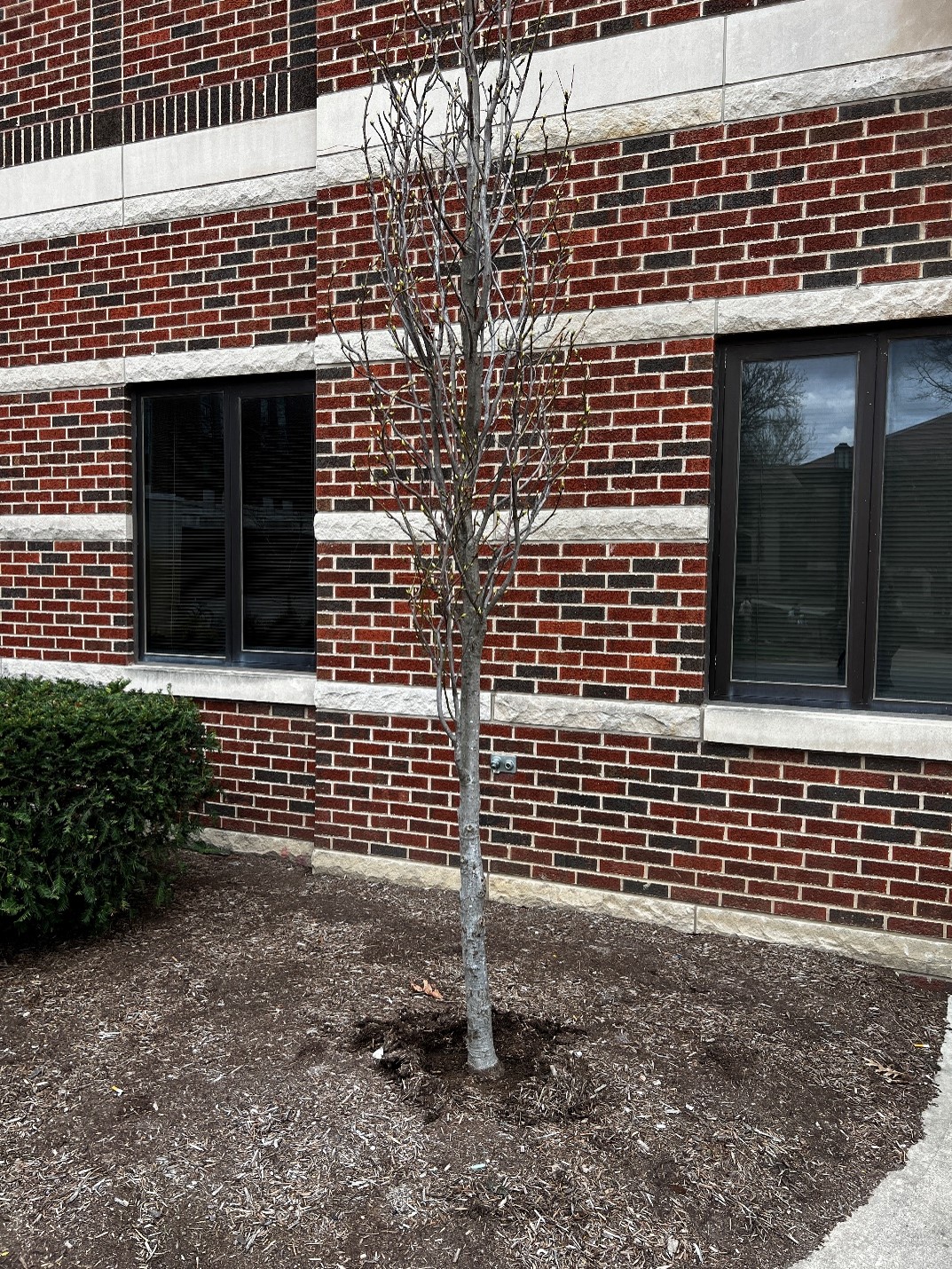
Figure 3: Creating a 1–2-inch space between the root flare and the mulch.
If you are reapplying mulch, first rake the old mulch to even the layer and mix some into the soil if possible. If your tree has already been mulched and has been volcano mulched, simply dig out the excess, exposing the root flare and creating that 1-2-inch gap between the stem and the mulch.
This simple act is relatively inexpensive, does not require a lot of time, and will help keep your tree healthy, extending its life. If you notice any other issues with your trees, hiring an ISA Certified arborist is the next step in managing your trees’ health. To find an arborist near you and verify credentials, use the link at Find an Arborist, Trees are Good, International Society of Arboriculture (ISA).
View the original article on the Purdue Landscape Report website: Simple Steps to Care for Your Tree: Mulching.
Subscribe and receive the newsletter: Purdue Landscape Report Newsletter.
Resources:
Re-mulch Your Trees, Purdue Landscape Report
Find an Arborist video, Trees are Good-International Society of Arboriculture (ISA)
Trees and Storms – The Education Store, Purdue Education’s resource center
Moist soil and rotten roots makes it easy for trees to come crashing down – Fox 59 News
Expert: Some storm damage can be easily prevented – Fox 59
Why Is My Tree Dying? – The Education Store
Tree Risk Management – The Education Store
Tree Pruning Essentials, Publication & Video, The Education Store
Mechanical Damage to Trees: Mowing and Maintenance Equipment – The Education Store
Trees and Electric Lines – The Education Store
Tree Defect Identification, The Education Store
Planting Your Tree, video, Purdue Extension
Tree Installation, The Education Store
Tree Wound and Healing, Got Nature? Blog, Purdue Extension – Forestry and Natural Resources
Subscribe – Purdue Extension-FNR YouTube Channel
Ben McCallister, Urban Forestry Specialist
Purdue Forestry & Natural Resources
 Discover the importance of thinning dense native warm-season grasses in conservation plantings to improve diversity. This guide explains methods to reduce tall native warm-season grasses to improve habitat for wildlife. Essential reading for conservationists and land managers interested in grassland ecosystems.
Learn when and how to thin these grasses effectively, and explore strategies that balance ecological health with long-term land management goals: Thinning Native Warm-Season Grasses
This publication is part of a seven publication series The Managing Conservation Plantings Series which include details on how to control invasive species and other problematic plants in Conservation Reserve Program (CRP) plantings and native warm-season grass and wildflower conservation plantings.
Publications in this series include:
- Golden Rod Control
- Thinning Native Warm-Season Grasses
- Sericea Lespedeza Control
- Woody Encroachment and Woody Invasives
- Johnson Grass Control
- Reed Canarygrass Control
- Teasel Control (Common and Cut Leaved)
- Controlling Introduced Cool-season Grasses
- Crownvetch, Sweetclover and Birdsfoot Trefoil Control
Resources:
Deer Impact Toolbox & Grassland Management, Purdue Extension Pond and Wildlife Management
Pond and Wildlife Management, Purdue Extension
Forestry for the Birds Virtual Tour and Pocket Guide, Got Nature? Blog, Purdue Extension – FNR
Frost Seeding to Establish Wildlife Food Plots and Native Grass and Forb Plantings – Purdue Extension – FNR YouTube channel
Wildlife Habitat Hint: Tips for Evaluating a First Year Native Grass and Forb Plantings, Purdue Extension – FNR YouTube Channel
Drone Seeding Native Grasses and Forbs: Project Overview & Drone Setup, Purdue Extension – FNR YouTube channel
Ask an Expert: Wildlife Food Plots, video, Purdue Extension – FNR YouTube Channel
Handling Harvested Game: Episode 1, Field Dressing, video, Purdue Extension – FNR YouTube Channel
Managing Your Woods for White-Tailed Deer, The Education Store
Forest Improvement Handbook, The Education Store
Forest Management for Reptiles and Amphibians: A Technical Guide for the Midwest, The Education Store
A Template for Your Wildlife Habitat Management Plan, The Education Store
Woodland Stewardship for Landowners, Playlist, Purdue Extension – FNR YouTube channel
Nature of Teaching Unit 1: Animal Diversity and Tracking, The Education Store
Nature of Teaching, Purdue College of Agriculture
Invasive Species Playlist, Playlist, Purdue Extension – FNR YouTube Channel
Report Invasive, Purdue Extension
Subscribe Purdue Extension – Forestry and Natural Resources YouTube Channel
Jarred Brooke, Wildlife Extension Specialist
Purdue Department of Forestry and Natural Resources
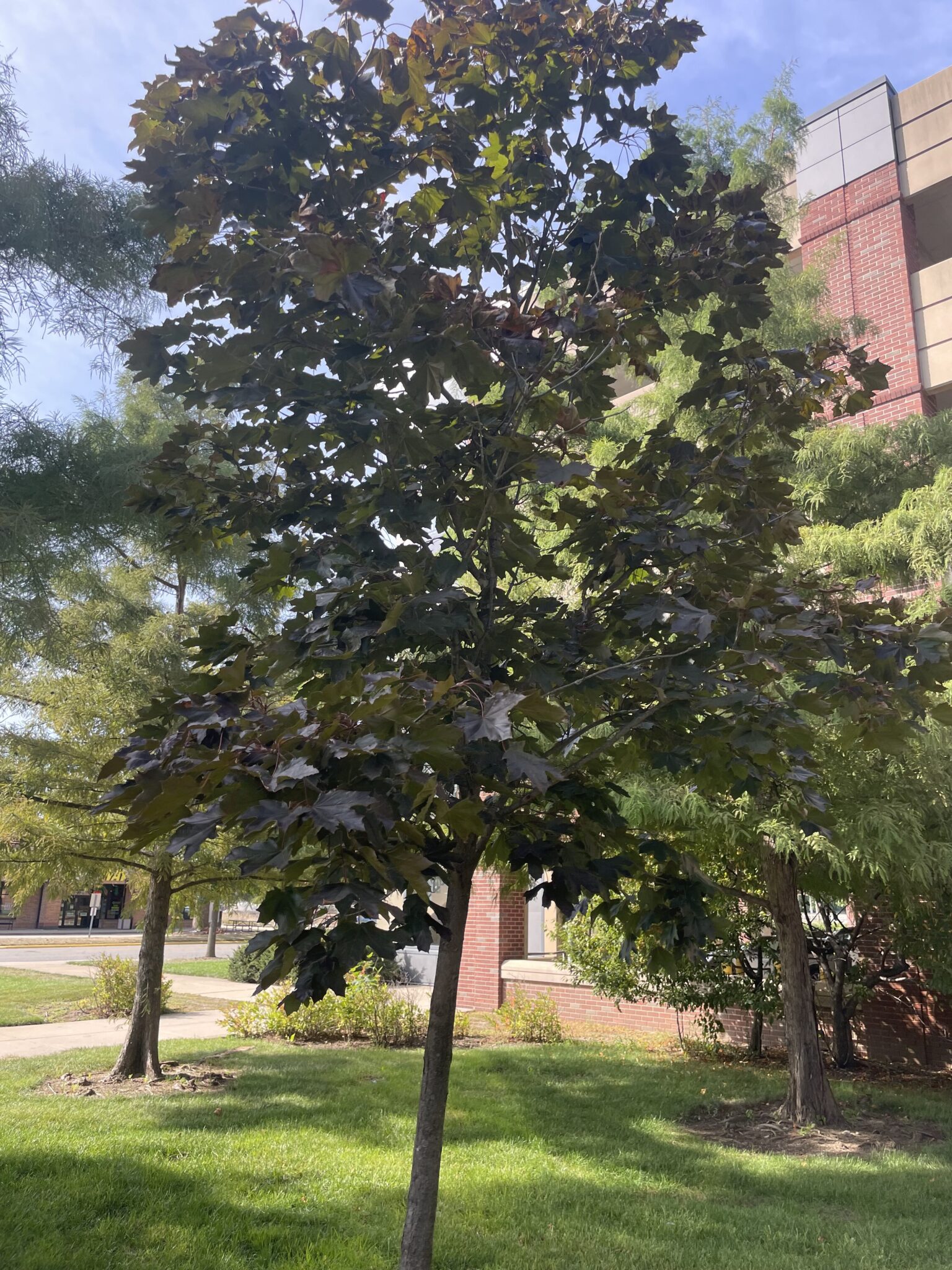
Figure 1. Norway maple is an invasive species that can resemble black and sugar maple. Photo by Purdue Arboretum.
Purdue Landscape Report: These three maples have somewhat similar-looking leaves. On the surface, you may think this is simply an academic exercise. But if you care about invasive plants and local ecology, this distinction is an important one.
Norway maple is an invasive tree species, while sugar and black maples are native tree species (sometimes called hard maples). Sugar and black maples are even more beloved for their gift of delicious sugary sap that can be made into maple syrup and similar products. They also make great shade trees. Note that there are other native and non-native maple species.
One way to distinguish between Norway (Acer platanoides), sugar (Acer saccharum), and black (Acer nigrum) maples is to count the number of lobes on the leaves. Lobes are large areas of the leaf that stick out, like an ear lobe, although that is not the clearest analogy. Norway maples typically have 5-7 lobes (commonly 7), sugar maples typically have 5, and black maples typically have 3-5. Black maple’s bottom two lobes are so much less prominent than sugar maple that it often looks like 3 main lobes. Additionally, black maple leaves droop on the sides, almost like they are starting to wilt from lack of water.
Another way to distinguish Norway maples from native maples (sugar and black) is to look at the winged seeds, called samaras. Children may call these “helicopters,” as they twirl on their way to the ground. The Norway maple has paired samaras arranged like a handlebar mustache. Sugar and black maple samara pairs look more like a Fu Manchu mustache, pointing downward rather than the near horizontal arrangement of Norway maple samaras.

Figure 2c. Black maple leaf. Photo by Purdue Arboretum.
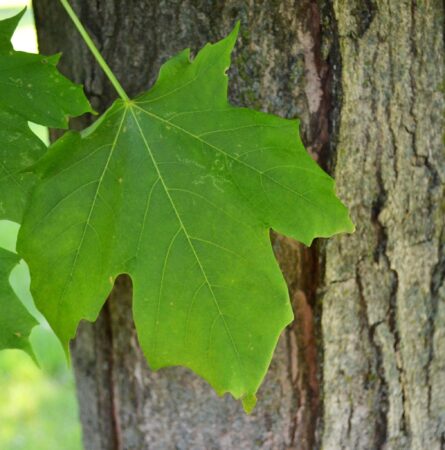
Figure 2b. Sugar maple leaf. Photo by Purdue Arboretum.

Figure 2a. Norway maple leaf. Photo by Purdue Arboretum.
A third way to distinguish Norway maples from native maples is to snap off the long leaf stem (petiole). Norway maples have a milky latex sap that exudes if you squeeze or pinch a petiole, while native maples have clear sap.
There are a few other identification nuances between these species. For example, black maples have stipules (leaf-like growths) at the base of their petioles (absent on sugar maple). They also have pubescence or hairiness on the underside of the leaves. Norway maple has hairs in the axils of leaf veins. Norway maple’s leaves are generally broader than long. Other differences may be seen in the bark, twigs, buds, and fall coloring.
Although Norway maple is an invasive species, it has been a long-time landscaping favorite of homeowners, especially cultivars like ‘Crimson King’ that retain their deep red color all year. This attribute has made Norway maple a popular choice because few other options exist to offer that color feature for the landscape. Other varieties or cultivars exhibit the normal green leaf color. Native to northern Europe, the tree was introduced in America in the late 1700s. George Washington reportedly purchased two trees in 1792 to plant at Mount Vernon.
For full article: Distinguishing Between Norway, Sugar, and Black Maples, Purdue Landscape Report.
Resources:
ReportINvasive, Purdue College of Agriculture
What are Invasive Species and Why Should I Care?, Got Nature? Blog, Purdue Extension – Forestry and Natural Resources
Large Spots on Maple Leaves that Look Like Tar, Purdue Extension News
Find an Arborist, International Society of Arboriculture
Fifty Common Trees of Indiana
An Introduction to Trees of Indiana
Native Trees of the Midwest, The Education Store
Shrubs and Woody Vines of Indiana and the Midwest, The Education Store
Tree Installation: Process and Practices, The Education Store
Planting Your Tree Part 1: Choosing Your Tree, Video, Purdue Extension – Forestry & Natural Resource (FNR) YouTube Channel
Investing in Indiana Woodlands, The Education Store
Forest Improvement Handbook, The Education Store
ID That Tree, Purdue Extension-FNR YouTube playlist
Purdue Plant and Pest Diagnostic Laboratory
John E. Woodmansee, Extension Educator – Agriculture and Natural Resources (ANR)
Purdue Extension – Whitely County
The Purdue Hardwood Tree Improvement and Regeneration Center has signed a commercial partnership agreement with Tree Pro to distribute select hardwood seedlings from its breeding program beginning in March 2025.
The partnership, which will mark the HTIRC’s first commercial release of seedlings in its 25-year history, will see West Lafayette, Ind., based Tree Pro distribute bare root seedlings of six species across its timber select, conservation and wildlife lines. Timber select varieties will include black walnut, black cherry, northern red oak, white oak and pure and hybrid butternut. Conservation species include pure butternut and American chestnut. The wildlife line will feature select precocious white oak.
The HTIRC collection is available for purchase now on the Tree Pro website. Delivery of the seedlings is set for March 2025.
For over five decades, Purdue University and the HTIRC have assembled, tested and selected populations of Indiana’s most valuable hardwood tree species (black cherry, black walnut, northern red oak and white oak) for deployment across the Midwest’s Central Hardwood Forest region. Populations of all four species have been selected for stem straightness and growth rate and are under continuous improvement as breeders remove underperforming clones and seedlings from seed production areas.
Today, as a product of the HTIRC’s efforts, numerous progeny tests, grafted clone banks and orchards exist at Purdue properties across Indiana and are now producing commercial quantities of seed for distribution. A commercial partnership with Tree Pro now gives the HTIRC an outlet to distribute its hardwood trees to landowners throughout the Central Hardwood Forest Region.
“Tree Pro’s established reputation with conservation groups, private landowners and foresters makes them an ideal distributor of the HTIRC’s select material,” said Matt Ginzel, director of the HTIRC. “We want to make it clear that this partnership will not take away from our existing relationship to provide seeds and seedlings to the Indiana Department of Natural Resources. This simply gives us another avenue to get our material into the hands of the public and to achieve our goal of increasing the value and resilience of woodlands by enriching the diversity of seedlings available for reforestation efforts.”
Tree Pro has been in business for 37 years and is known for its tree protection products (Miracle Tube) and lines of fruit and nut trees oriented to hunters and wildlife enthusiasts.
“When we were approached about the opportunity to distribute genetically diverse select hardwood seedlings from the HTIRC, we were instantly excited,” said Tommy Mills, co-owner of Tree Pro. “It brings our start as a company with black walnuts full circle.”
In addition to making selections on four major hardwood species, the HTIRC has been working to preserve and develop disease-resistant populations of two endangered native fine hardwood species – butternut and American chestnut.
After more than 20 years of work, the HTIRC now possesses the most diverse collection of butternut in the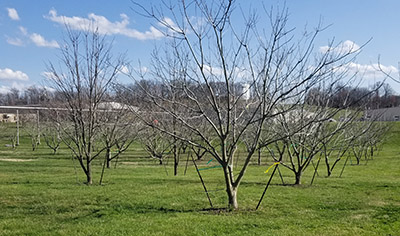 United States, and has made significant advances in breeding butternuts resistant to the deadly butternut canker fungus. The HTIRC’s canker-resistant butternut program utilizes both pure butternut and hybrids between the butternut (Juglans cinerea) and the Japanese walnut (Juglans ailantifolia), with a program goal of decreasing the proportion of Japanese walnut genetics in the population while increasing overall canker resistance. A collection of pure, disease susceptible butternuts also is maintained for research purposes, and provides valuable seed for organizations and individuals that prefer pure butternut over hybrid butternut.
The American chestnut, once the backbone of timber production for all uses in the eastern United States and a prolific producer of nuts for animals and humans alike, is now functionally extinct due to the accidental introduction of the chestnut blight fungus in 1904. In collaboration with the American Chestnut Foundation and other entities, the HTIRC has assembled an American chestnut collection that represents pure American chestnuts from Indiana and neighboring states. It stands as one of the few grafted American chestnut collections in the country. While currently unavailable for public release, the HTIRC’s ongoing efforts to breed a blight-resistant American chestnut encompasses the use of both interspecific hybrid breeding and biotechnology to restore a long-lost forest species.
“The mother trees for HTIRC’s Timber Select lines were all selected for straight stems with few defects like low forks that can negatively impact standing timber value, while the Timber Select butternuts were selected for their resistance to butternut canker disease,” said Caleb Kell, operational tree breeder for the HTIRC. “Landowners have a good chance of getting similar characteristics out of their seedlings if they are planted on suitable soils with deer protection, which is one of Tree Pro’s specialties.”
Here is a quick list of what is available for purchase:
- HTIRC Timber Select Black Walnut
- HTIRC Timber Select Black Cherry
- HTIRC Timber Select Northern Red Oak
- HTIRC Timber Select White Oak
- HTIRC Timber Select Pure and Hybrid Butternut
- HTIRC Conservation Pure Butternut
- HTIRC Conservation American Chestnut
- HTIRC Wildlife Select Precocious White Oak
View full article with descriptions of seedlings available along with additional photos, Purdue Forestry and Natural Resources News & Stories: HTIRC Partners with Tree Pro to Distribute Hardwood Seedlings.
Other resources:
Forestry & Natural Resources
Tropical HTIRC
An Introduction to Trees of Indiana, The Education Store, Purdue Extension resource center
Native Trees of the Midwest, Purdue University Press
Shrubs and Woody Vines of Indiana and the Midwest, Purdue University Press
ID That Tree, Playlist, Subscribe to Purdue Extension – Forestry and Natural Resources YouTube Channel
A Woodland Management Moment, Playlist, Purdue Extension – FNR YouTube Channel
Investing in Indiana Woodlands, The Education Store
Forest Improvement Handbook, The Education Store
Finding help from a professional forester, Indiana Forestry & Woodland Owners Association
District Forester, Indiana DNR Division of Forestry, for over 10 acres of woodlands
Directory of Professional Foresters, Indiana Forestry & Woodland Owners Association (IFWOA)
Wendy Mayer, FNR Communications Coordinator
Purdue University Department of Forestry and Natural Resources
Welcome to ID That Tree! In this edition, Purdue Extension Forester Lenny Farlee highlights a native bramble species—black raspberry. A member of the Rubus family, black raspberry is commonly found throughout Indiana, making it useful to recognize its key features. Tune in to learn how to identify this plant by its unique leaf pattern (and how it’s different from autumn olive), understand its role in wildlife habitats and explore its many uses and benefits!
If you have any questions regarding wildlife, trees, forest management, wood products, natural resource planning or other natural resource topics, feel free to contact us by using our Ask an Expert web page.
Resources:
ID That Tree – Video Playlist, Purdue Extension – Forestry and Natural Resources (FNR) YouTube Channel
Purdue Arboretum Explorer
Conservation Tree Planting: Steps to Success, Purdue Extension – FNR YouTube Channel
A Woodland Management Moment, Playlist, Purdue Extension – FNR YouTube Channel
Woodland Stewardship for Landowners, Playlist, Purdue Extension – FNR YouTube Channel
Indiana Department of Natural Resources: Invasive Species
Indiana Invasive Species Council
Cooperative Invasive Species Management Area (CISMA)
Report Invasive, Purdue Extension
Fifty Common Trees of Indiana, Purdue Extension – FNR
Habitat University, Episode 12 – Exploring the challenges of Invasive Species, Habitat University-Natural Resource University
Shrubs and Woody Vines of Indiana and the Midwest, The Education Store
Native Trees of the Midwest, The Education Store
Professional Forester, Indiana Forestry Woodland Owners Association
Forest Improvement Handbook, The Education Store
Find an Arborist, International Society of Arboriculture
Lenny Farlee, Extension Forester
Hardwood Tree Improvement and Regeneration Center
Purdue Department of Forestry & Natural Resources
Explore the dual nature of goldenrods in conservation plantings. While goldenrods like tall and Canada goldenrod benefit pollinators and wildlife, their aggressive growth can outcompete other plants, reducing diversity. This guide offers insights into managing goldenrods to maintain a balanced and thriving ecosystem. It is essential reading for land managers and conservationists committed to maintaining a diverse grassland ecosystem.

Check out the Managing Conservation Plantings series which include details on how to control invasive species and other problematic plants in Conservation Reserve Program (CRP) plantings and native warm-season grass and wildflower conservation plantings.
Plant Facts
- Herbaceous broadleaf, typically 3-5 feet tall (can range from 1 to 7 feet)
- Perennial warm-season forb
- Growing period: April to October
- Flowering: late July through October
- Reproduction: by seed and rhizome
Whether you’re managing a pasture, wildlife area, or prairie restoration, this resource provides science-based strategies to control goldenrod effectively. Learn more about managing goldenrod species in grasslands and wildlife habitats, enhancing your land’s ecological health by reading the full publication: Managing Conservation Plantings: Goldenrod Control, (330kb, pdf).
This publication is part of a seven publication series The Managing Conservation Plantings Series. Publications in this series include:
- Golden Rod Control
- Thinning Native Warm-Season Grasses
- Sericea Lespedeza Control
- Woody Encroachment and Woody Invasives
- Johnson Grass Control
- Reed Canarygrass Control
- Teasel Control (Common and Cut Leaved)
- Controlling Introduced Cool-season Grasses
- Crownvetch, Sweetclover and Birdsfoot Trefoil Control
Resources:
Deer Impact Toolbox & Grassland Management, Purdue Extension Pond and Wildlife Management
Pond and Wildlife Management, Purdue Extension
Forestry for the Birds Virtual Tour and Pocket Guide, Got Nature? Blog, Purdue Extension – FNR
Frost Seeding to Establish Wildlife Food Plots and Native Grass and Forb Plantings – Purdue Extension – FNR YouTube channel
Wildlife Habitat Hint: Tips for Evaluating a First Year Native Grass and Forb Plantings, Purdue Extension – FNR YouTube Channel
Drone Seeding Native Grasses and Forbs: Project Overview & Drone Setup, Purdue Extension – FNR YouTube channel
Ask an Expert: Wildlife Food Plots, video, Purdue Extension – FNR YouTube Channel
Handling Harvested Game: Episode 1, Field Dressing, video, Purdue Extension – FNR YouTube Channel
Managing Your Woods for White-Tailed Deer, The Education Store
Forest Improvement Handbook, The Education Store
Forest Management for Reptiles and Amphibians: A Technical Guide for the Midwest, The Education Store
A Template for Your Wildlife Habitat Management Plan, The Education Store
Woodland Stewardship for Landowners, Playlist, Purdue Extension – FNR YouTube channel
Nature of Teaching Unit 1: Animal Diversity and Tracking, The Education Store
Nature of Teaching, Purdue College of Agriculture
Invasive Species Playlist, Playlist, Purdue Extension – FNR YouTube Channel
Report Invasive, Purdue Extension
Subscribe Purdue Extension – Forestry and Natural Resources YouTube Channel
Jarred Brooke, Wildlife Extension Specialist
Purdue Department of Forestry and Natural Resources
The Hardwood Tree Improvement & Regeneration Center (HTIRC) continues to share top forest research as scientists, experts and partners further the mission of tree improvement, management, and protection of hardwood forests. The most recent HTIRC Annual Report is now available and includes research, personnel and outreach news: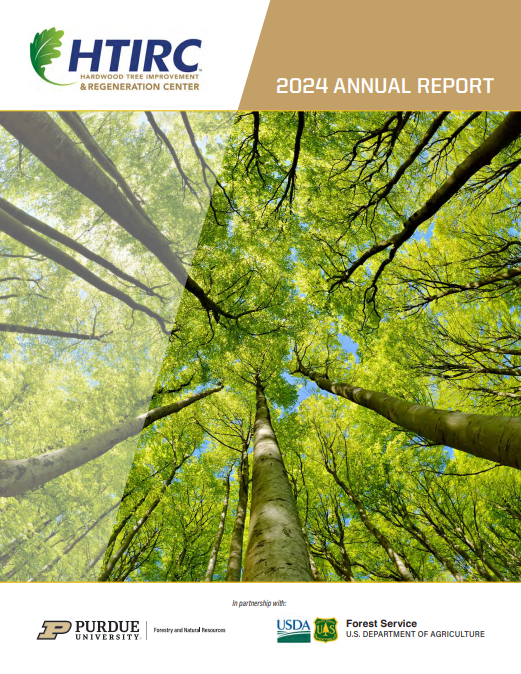
- NSF Center for Advanced Forestry System Updates, the only forestry-based National Science Foundation (NSF) Industry/University Cooperative Research Center (I/UCRC)
- Funded Research Grants which includes Backpack System for High Resolution Forest Inventory, Testing Efficacy of Enrichment Plantings for Stand Regeneration in Hardwood Forests, Better Black Walnut by Breeding Without Breeding and much more.
- Creating a Directory, Depository and Database for Historical Genetic and Tree Improvement Trials
- HTIRC Partners with Tree Pro to Distribute Hardwood Seedlings
- Institute of Digital Forestry
- 2024 Tree Improvement Report
If you would like to subscribe and receive the e-newsletter visit HTIRC e-Newsletter.
The mission of the HTIRC is to advance the science and application of tree improvement, management, and protection of hardwood forests, with emphasis in the Central Hardwood Forest Region (CHFR). They seek to develop research and technology-transfer programs that provide knowledge focused on the establishment and maintenance of sustainable, genetically diverse native forests and the development of highly productive woodlands that provide a wide array of products and services.
Other resources:
Forestry & Natural Resources
Tropical HTIRC
An Introduction to Trees of Indiana, The Education Store, Purdue Extension resource center
Native Trees of the Midwest, The Education Store
Shrubs and Woody Vines of Indiana and the Midwest, The Education Store
ID That Tree, Playlist, Subscribe to Purdue Extension – Forestry and Natural Resources YouTube Channel
A Woodland Management Moment, Playlist, Purdue Extension – FNR YouTube Channel
Investing in Indiana Woodlands, The Education Store
Forest Improvement Handbook, The Education Store
Finding help from a professional forester, Indiana Forestry & Woodland Owners Association
District Forester, Indiana DNR Division of Forestry, for over 10 acres of woodlands
Directory of Professional Foresters, Indiana Forestry & Woodland Owners Association (IFWOA)
Matthew Ginzel, Professor and Director of HTIRC
Purdue Entomology
Purdue University Department of Forestry and Natural Resources
Hardwood Tree Improvement and Regeneration Center (HTIRC)
Congratulations to Liz Jackson, FNR Extension Specialist, on receiving the 2025 Indiana Hardwood Lumbermen’s Association (IHLA) President’s Award. This award is given for exceptional contribution to the forest products industry and to members of IHL. We are proud to celebrate her achievements along with seeing her featured in the April 2025 edition of the Agriculture & Natural Resources (ANR) newsletter.

Liz presenting an award plaque at a Walnut Council national conference.
Agricultural & Natural Resources (ANR) Newsletter: Liz has worked as an Extension specialist associated with three forestry organizations since March 2004. Liz obtained her BS in forest products (’82) from Purdue’s Forestry & Natural Resources Department and MS in business management (’84) from Krannert School of Business under a special forestry/business master’s program.
Before coming to Purdue Extension, Liz spent 15 years in wood products manufacturing as a plant manager at Aristokraft cabinets (now MasterBrand) and purchasing and inventory control manager at Lafayette Venetian Blind.
Liz’s Extension role is to provide programs and products on sustainable forest management and forest stewardship to address woodland owners’ concerns and needs. While representing the Department of Forestry and Natural Resources, she works on behalf of three organizations.
The Hardwood Tree Improvement and Regeneration Center (HTIRC) is a research partnership between Purdue FNR and the USDA Forest Service focusing on management, protection and improvement of fine hardwood species. For the HTIRC she coordinates annual meetings, research conferences and educational programs.
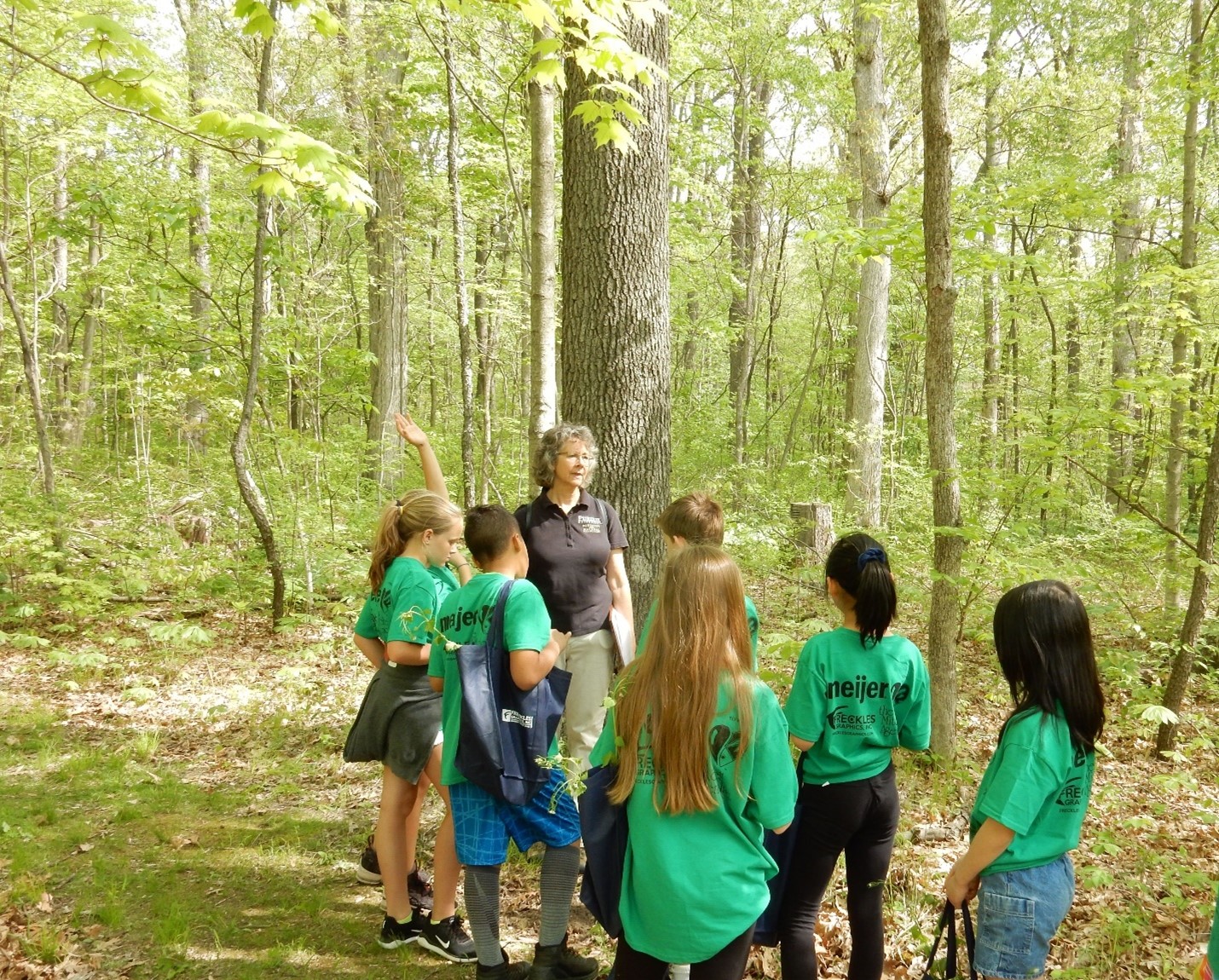
Liz presents on forest management to a group of schoolchildren at Martell Forest.
For the Indiana Forestry & Woodland Owners Association (IFWOA) and National Walnut Council, she represents the interests of the members and manages all business of the associations, including board meetings, annual conferences and education programs, membership and finances, and communications, including newsletters, websites and social media.
Liz is involved in many partnerships around the state, including as a member of the Extension Invasive Species Working Group, on the editorial board for Indiana Woodland Steward newsletter, member of NRCS state technical committee, and advisory partner with Indiana DNR Division of Forestry Forest Stewardship Committee, Sentinel Landscapes, and Let the Sun Shine In Indiana programs.
A highlight of her career was traveling to Washington, D.C., in 2005 to see Sen. Richard Lugar of Indiana and representatives from HTIRC and Indiana forestry plant an Indiana walnut tree on the U.S. Capitol grounds. Ten years later she returned to the site and was thrilled to find the tree and see it was thriving.
Resources:
Indiana Forestry & Woodland Owners Association (IFWOA) YouTube Channel
Observing Seasonal Changes in Nature Webinar with Amanda Wanless, IFWOA YouTube Channel
Magnificent Trees of Indiana Webinar with Author Carroll Ritter, IFWOA YouTube Channel
Ask the FNR Expert: Pests in your Woods, Purdue Extension – Forestry and Natural Resources (FNR) YouTube Channel
Woodland Stewardship for Landowners, Playlist, Purdue Extension – FNR YouTube Channel
Directory of Professional Foresters, Indiana Forestry & Woodland Owners Association (IFWOA)
Indiana Woodland Steward E-newsletters, Eleven Member Organization
Invasive Species, Playlist, Purdue Extension – FNR YouTube Channel
Invasive Plant Species Identification, Video, Purdue Extension – FNR YouTube Channel
Subscribe – Purdue Extension-FNR YouTube Channel
Agricultural & Natural Resources (ANR), Purdue Extension
Purdue Landscape Report: The bitter winter cold has finally passed us (or has it? It’s hard to tell in the Midwest)! The days are getting warmer and longer, and that means the insects are coming out of their overwintering stages. As you prepare for your landscaping and gardening this year, are you implementing preventative measures for pests? Now is the time to think about those strategies to minimize the damage to your plants.
Preventing pest issues is foundational to integrated pest management. The first step is always to start with healthy and clean plants. Don’t be afraid to bring a hand lens to the store and check for those hard-to-see pests! You don’t want to bring a problem home. Next, remember that many pests will thrive due to improper watering, light conditions, or fertilization. Avoid these issues by reviewing the recommendations for your plants and consulting a soil test. (Read more about why soil tests are essential!)
Finally, which pests/diseases do you anticipate? What are the most common pests on the plants in your landscape? Perhaps you have had issues in past years and know what to expect. Review the biology of these pests and consider implementing preventative measures now. Let’s look at a couple of examples of frequent landscape pests and some management options you can add to your list of spring preparations.
Spider Mites
Spider mites overwinter on the host plant or in leaf litter. Around this time of year, cool season mites such as spruce mites and boxwood mites are the dominant issue. Check your plants now for these spider mites, and scout regularly to make sure populations aren’t getting out of control. A rainy spring will help keep the pressure low. If you have to spray, avoid chemicals that will harm natural enemies, which are vital to spider mite management. (Learn more about spider mite management: Spider Mites on Ornamentals; and check out the Purdue Plant Doctor Quick Guide: Managing Spider Mite Mayhem)

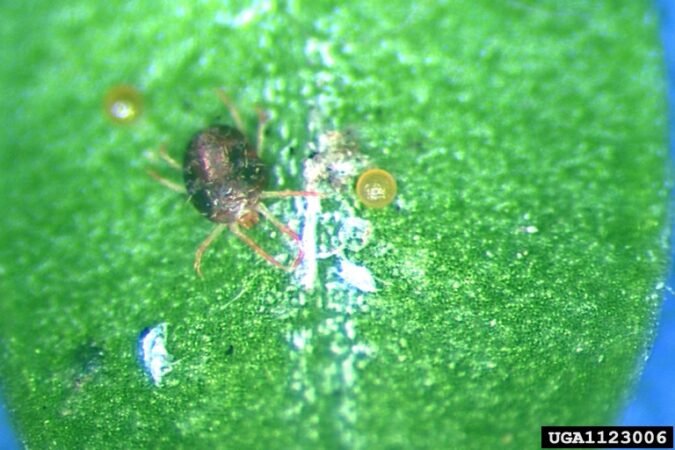
Bagworms
Bagworms overwinter as eggs in the bags left on the tree. They’re frequent pests of arborvitae, junipers, and several other trees and shrubs. Take action now to prevent an infestation in the summer that requires costly pesticides. Manually remove the bags from your tree and drown them in soapy water. (Learn more about bagworm management: Bagworms).

Lace Bugs
Lace bugs may overwinter as eggs or adults, depending on the species. They become active again in the spring, so now is a good time to check for these pests. Focus on the undersides of the leaves where the pests are found. Lace bugs prefer hosts planted in sunny areas with a lack of plant diversity, so consider including some flowering plants in your landscape to provide pollen and nectar to beneficials. (Learn more about Lace bug management from the Purdue Plant Doctor Quick Guide: Managing Lace bugs).

What pests do you encounter in the landscape? Take a moment to review their biology and your options for preventative management. Be proactive now and reduce your pest problems for the season ahead. Read the original article, Insects are waking up – are you prepared?
ID That Tree, Playlist, Purdue Extension – FNR YouTube Channel
A Woodland Management Moment, Playlist, Purdue Extension – FNR YouTube Channel
Woodland Stewardship for Landowners, Playlist, Purdue Extension – FNR YouTube Channel
Native Trees of the Midwest, Purdue University Press
Investing in Indiana Woodlands, The Education Store
Indiana Department of Natural Resources: Invasive Species
Indiana Invasive Species Council
Cooperative Invasive Species Management Area (CISMA)
Report Invasive, Purdue Extension
Episode 11 – Exploring the challenges of Invasive Species, Habitat University-Natural Resource University
What are invasive species and why should I care?, Got Nature? Blog, Purdue Extension – FNR
Spotted Lanternfly Found in Indiana, Purdue Landscape Report
Alicia Kelley, Cooperative Agricultural Pest Survey (CAPS) Coordinator
Purdue Extension – Entomology
Welcome to “ID That Tree.” In this edition, Purdue Extension Forester Lenny Farlee introduces us to an autumn olive shrub found across Indiana. This dense shrub requires extensive control and management due to its effects on the habitat. Watch the video to learn about its aggressive growth, wildlife impact, leaf pattern, and other features!
If you have any questions regarding wildlife, trees, forest management, wood products, natural resource planning or other natural resource topics, feel free to contact us by using our Ask an Expert web page.
Resources:
ID That Tree – Video Playlist, Purdue Extension – Forestry and Natural Resources (FNR) YouTube Channel
Purdue Arboretum Explorer
Conservation Tree Planting: Steps to Success, Purdue Extension – FNR YouTube Channel
A Woodland Management Moment, Playlist, Purdue Extension – FNR YouTube Channel
Woodland Stewardship for Landowners, Playlist, Purdue Extension – FNR YouTube Channel
Indiana Department of Natural Resources: Invasive Species
Indiana Invasive Species Council
Cooperative Invasive Species Management Area (CISMA)
Report Invasive, Purdue Extension
Fifty Common Trees of Indiana, Purdue Extension – FNR
Episode 11 – Exploring the challenges of Invasive Species, Habitat University-Natural Resource University
Shrubs and Woody Vines of Indiana and the Midwest, The Education Store
Native Trees of the Midwest, The Education Store
Professional Forester, Indiana Forestry Woodland Owners Association
Forest Improvement Handbook, The Education Store
Find an Arborist, International Society of Arboriculture
Lenny Farlee, Extension Forester
Hardwood Tree Improvement and Regeneration Center
Purdue Department of Forestry & Natural Resources

Recent Posts
- ID That Tree: Dwarf Chinkapin Oak
Posted: March 20, 2026 in Forestry, Urban Forestry, Wildlife, Woodlands - A Woodland Management Moment: Windbreak Around Walnut Plantings
Posted: March 3, 2026 in Forestry, Urban Forestry, Woodland Management Moment - Register for Natural Resources Teacher Institute’s Class of 2026
Posted: February 19, 2026 in Forestry, Wildlife, Woodlands - Southwest Damage, Scalding or Frost Cracking
Posted: January 30, 2026 in Forestry, Urban Forestry - Forest Landowners: Share Your Experience with Regeneration and Restoration
Posted: January 27, 2026 in Forestry, How To, Timber Marketing, Woodlands - Woodsy Owl Edition for Educational Learning, USDA – U.S. Forest Service
Posted: January 21, 2026 in Forestry, Forests and Street Trees, Got Nature for Kids, Urban Forestry, Wildlife - It’s Not Too Late to Order Trees for Spring Planting
Posted: January 13, 2026 in Forestry, How To, Plants - Opt-in to the Deer Management Survey, MyDNR
Posted: January 12, 2026 in Forestry, Wildlife - FNR Extension Offering Forest Management for the Private Woodland Owner Course in Spring 2026
Posted: January 5, 2026 in Forestry, Urban Forestry, Wildlife, Woodlands - A Woodland Management Moment: Black Walnut in Pine Plantation
Posted: December 19, 2025 in Forestry, Forests and Street Trees, Urban Forestry, Woodlands
Archives
Categories
- Alert
- Aquaculture/Fish
- Aquatic/Aquaculture Resources
- Ask the Expert
- Christmas Trees
- Community Development
- Disease
- Drought
- Forestry
- Forests and Street Trees
- Gardening
- Got Nature for Kids
- Great Lakes
- How To
- Invasive Animal Species
- Invasive Insects
- Invasive Plant Species
- Land Use
- Natural Resource Planning
- Nature of Teaching
- Plants
- Podcasts
- Ponds
- Publication
- Safety
- Spiders
- Timber Marketing
- Uncategorized
- Urban Forestry
- Webinar
- Wildlife
- Wood Products/Manufacturing
- Woodland Management Moment
- Woodlands