 Purdue University - Extension - Forestry and Natural Resources
Got Nature? Blog
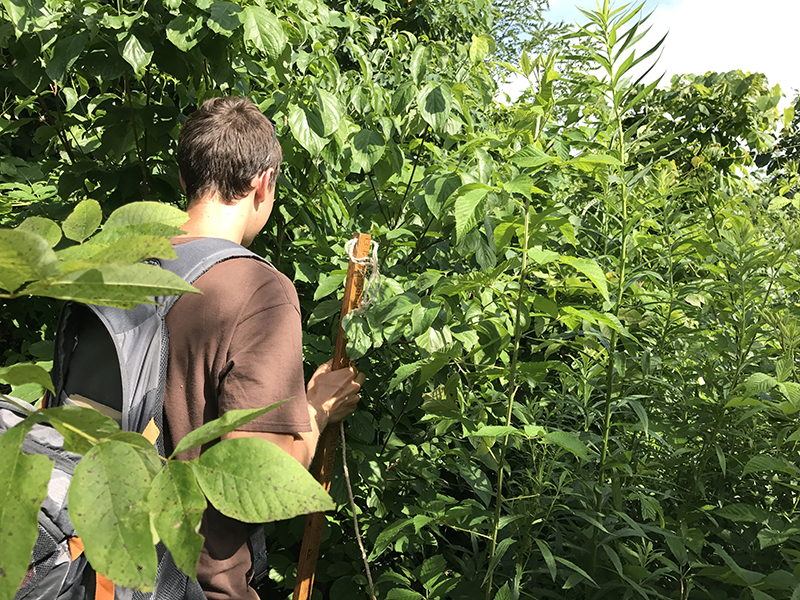
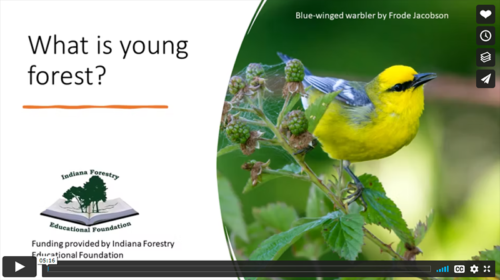
 What do whip-poor-wills, woodcock, bobcats, and box turtles have in common? All these species make their home in young forests. But, what is a young forest? And what do young forests look like?
This new video series from the Hoosier National Forest helps shed some light on these questions and more.
Specialists representing a diversity of organizations (American Bird Conservancy, Purdue Extension, National Wild Turkey Federation, Indiana Department of Natural Resources, U.S. Forest Service) discuss the importance of young forest as habitat for a wide variety of wildlife, managing young forests and misconceptions about young forest.
 U.S. Forest Service Vimeo Young Forest Videos:
- Hoosier National Forest – What is young forest?
- Who Needs Young Forest?
- What Does Young Forest Management Look Like?
- Misconceptions About Young Forest
Other resources:
Harvesting our forests, the wildlife debate, Purdue Extension – Forestry and Natural Resources (FNR) Got Nature? Blog
Wildlife Responses to Timber Harvesting, The Education Store, Purdue Extension’s resource center
Breeding Birds and Forest Management: the Hardwood Ecosystem Experiment and the Central Hardwoods Region, The Education Store
 Forest Management for Reptiles and Amphibians: A Technical Guide for the Midwest, The Education Store
Hardwood Ecosystem Experiment – Forest Birds , Purdue Extension – FNR YouTube Channel
Managing Woodlands for Birds , Purdue Extension – FNR YouTube Channel
Sustaining Our Oak-Hickory Forests , Purdue Extension – FNR YouTube Channel
Ask the Expert: Hardwood Ecosystem Experiment – Birds and Salamander Research, Purdue Extension – FNR YouTube Channel
Hardwood Ecosystem Experiment Highlights: Breeding Birds, Purdue Extension – FNR YouTube Channel
Hardwood Ecosystem Experiment Highlights: Small Mammals, Purdue Extension – FNR YouTube Channel
Hardwood Ecosystem Experiment Highlights: Salamanders, Purdue Extension – FNR YouTube Channel
Hardwood Ecosystem Experiment Highlights: Moths, Purdue Extension – FNR YouTube Channel
Hardwood Ecosystem Experiment Highlights: Bats, Purdue Extension – FNR YouTube Channel
Hardwood Ecosystem Experiment: How the HEE Came to Be, Purdue Extension – FNR YouTube Channel
Hardwood Ecosystem Experiment publications , Hardwood Ecosystem Experiment (HEE) website
New Videos Stress Importance of Young Forests, Purdue News – Forestry and Natural Resources
Jarred Brooke, Wildlife Extension Specialist
Purdue Forestry and Natural Resources
In this episode of ID That Tree, Purdue Extension forester Lenny Farlee introduces you to a native Indiana conifer typically found in sandy soils near Lake Michigan, the Jack pine. This tree is differentiated from other Indiana conifers by its short two-needle clusters often found in a V formation, as well its closed cones, and open crown.
If you have any questions regarding wildlife, trees, forest management, wood products, natural resource planning or other natural resource topics, feel free to contact us by using our Ask an Expert web page.
Resources:
ID That Tree, Playlist, Purdue Extension – Forestry and Natural Resources YouTube Channel
A Woodland Management Moment, Playlist, Purdue Extension – FNR YouTube Channel
Shrubs and Woody Vines of Indiana and the Midwest, The Education Store, Purdue Extension Resource Center
Native Trees of the Midwest, The Education Store
Investing in Indiana Woodlands, The Education Store
Forest Improvement Handbook, The Education Store
Jack Pine, Native Trees of Indiana River Walk, Fort Wayne, Purdue University
Lenny Farlee, Sustaining Hardwood Extension Specialist
Purdue University Department of Forestry and Natural Resources
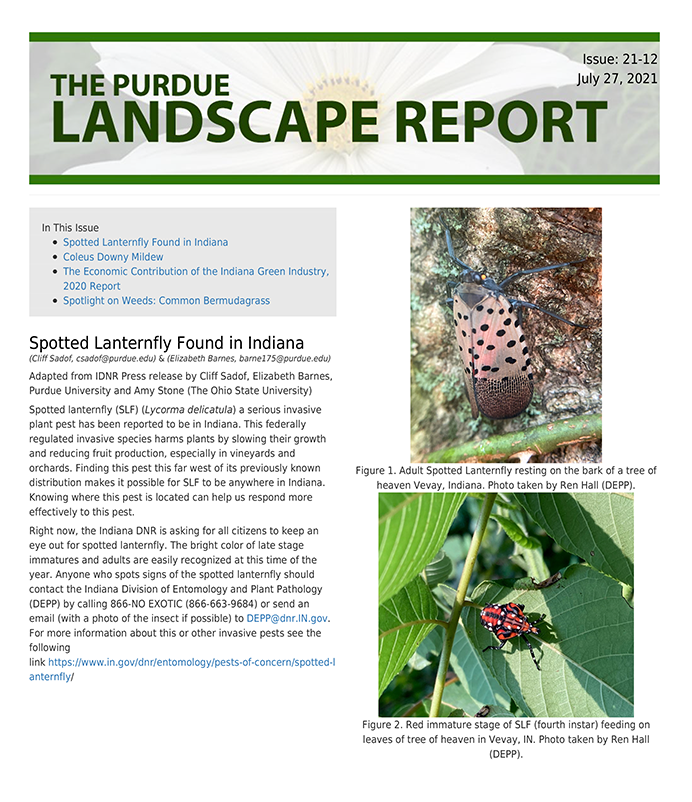 The interdisciplinary faculty and staff behind the Purdue Landscape Report, which provides science-based, timely information regarding Midwest landscapes to commercial growers, garden centers, landscapers, arborists and the general public, has been named as the recipient of the Purdue Agriculture TEAM Award, which was created in 1995 to recognize interdisciplinary team achievements of faculty and staff.
Led by Kyle Daniel, nursery and landscape outreach specialist in the Department of Horticulture and Landscape Architecture, the Purdue Landscape Report is a collaborative effort between Purdue Extension specialists and diagnosticians in the departments of Botany and Plant Pathology, Entomology, Forestry and Natural Resources, and Horticulture and Landscape Architecture. Articles cover everything from urban forestry and tree maintenance to pest and disease problems and management to plant selection and turf science. In addition to an email newsletter and online blog, PLR staff also provide live interactive webinars in order to highlight content and respond to questions from the audience.
In response to the pandemic, the Purdue Landscape Report staff also began a live, to addresses articles and hot topics. That series garnered more than 2,000 views.
In a January 2021 survey sent to PLR subscribers, 88% of respondents said they believed that the newsletter improved their ability to diagnose a problem, while 76% said that PLR has had a positive economic impact on their business.
A local professional shared that “Sometimes when I open up the PLR, it is like you have been reading my mind. The problem I have been seeing or thinking about is there in your headlines.”
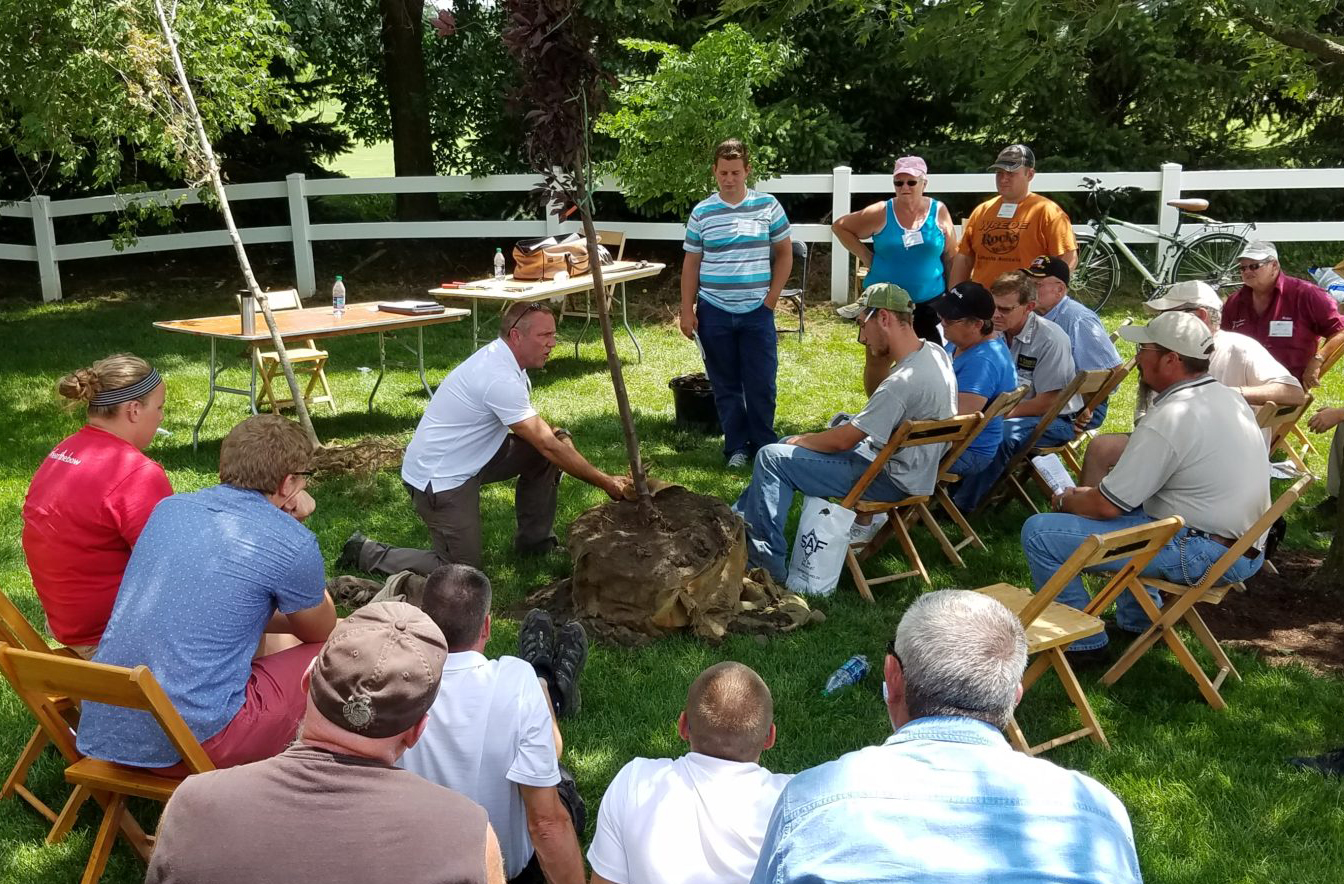 One PLR subscriber said “The Purdue Landscape Report is a great resource for myself and my team members. Within each issue is one or more topics that our team has encountered or discussed recently and the information provided by a very reputable source gives us the material needed to provide the best service to our clients and increase our knowledge base. The virtual sessions are another great resource provided that give an opportunity to have specific questions answered by experts.”
The impact extends from landowners to industry professionals and beyond.
“Often we take for granted the information produced in the PLR and we forget the countless dollars we have saved from information in the PLR,” said Rick Haggard, Indiana Nursery and Landscape Association Executive Director.
“The Purdue Landscape Report provides timely information to the Indiana Arborist Association members and associated parties in a format that is easily accessed and understood,” Associate Executive Director of IAA Ashley Mulis said. “The collaboration that goes into providing this product demonstrates the cohesive nature of several departments within Purdue University and the open sharing and comparison of information. The Purdue Landscape Report is an excellent addition to the many publications offered within Purdue Extension in helping resource professionals manage the ever-changing landscape of pests, diseases and best management practices.”
Resources:
Purdue University Department of Forestry and Natural Resources
Indiana Arborist Association
The Society of Wood Science and Technology (SWST), an international association of over 500 wood science professionals from 44 countries, is committed to the field of wood science for the future. The association is pleased to acknowledge “Women Ambassadors Creating the Future of Wood Science,” a SWST-sponsored traveling exhibition designed to celebrate women ambassadors over time.
 Dr. Eva Haviarova, professor of wood products in the Purdue Department of Forestry and Natural Resources, is among 16 ambassadors that were announced on February 11, 2022, as part of the International Day of Women and Girls in Science celebration.
The first exhibition of Women Ambassadors will take place during the 2022 SWST International Convention in Kingscliff, Australia, July 10-16. The display will be unveiled at the convention’s opening ceremony and reception and will continue to be highlighted during the week. The exhibition will then travel around the world, including a stop at the 2023 SWST International Convention in Asheville, North Carolina. Information from the display also will be available for downloading and printing at individual institutions.
“Being recognized and selected as an ambassador for the wood science field among other very accomplished women on a global scale is a great honor,” Haviarova said. “I am at a point in my career where I feel that I can inspire others and fulfill an important mentor role. A career in wood science was a great choice I made and I wish that more women/girls would see the same potential as I did when I chose to dedicate my life to work with wood, one of the most versatile, inspiring, and sustainable materials out there.”
Resources:
How to Build a Simple Chair for Schools or Homes in Disadvantaged Areas of the World Using Local Resources and Low-End Technology, The Education Store, Purdue Extension’s resource center
Light-Timber Frames for Transitional Disaster-Relief Housing, The Education Store
Who Does That Job?: A Forestry and Natural Resources Coloring Book, The Education Store
How Baby Bear’s Chair Was Made, The Education Store
Purdue Forestry & Natural Resources Undergraduate Degrees and Minors
Purdue Extension – Forestry & Natural Resources Area/Wood Products
Wendy Mayer, FNR Communications Coordinator
Purdue University Department of Forestry and Natural Resources
In this edition of ID That Tree, meet a rarely found native tree that is closely related to the black walnut, the butternut. The butternut has been plagued by fungal disease, but can be identified by large lemon-shaped nuts, very sharp ridges on the nut inside the husk, a “hairy eyebrow” above the leaf scar/below the buds, and long compound leaves with a terminal leaflet intact.
If you have any questions regarding wildlife, trees, forest management, wood products, natural resource planning or other natural resource topics, feel free to contact us by using our Ask an Expert web page.
Resources:
ID That Tree, Playlist, Purdue Extension – Forestry and Natural Resources YouTube Channel
A Woodland Management Moment, Playlist, Purdue Extension – FNR YouTube Channel
Shrubs and Woody Vines of Indiana and the Midwest, The Education Store, Purdue Extension Resource Center
Native Trees of the Midwest, The Education Store
Investing in Indiana Woodlands, The Education Store
Forest Improvement Handbook, The Education Store
Butternut, Native Trees of Indiana River Walk, Purdue Fort Wayne
Indiana Walnut Council, Industry Representatives include 45 states and 3 foreign countries
Lenny Farlee, Sustaining Hardwood Extension Specialist
Purdue University Department of Forestry and Natural Resources
On this edition of ID That Tree, meet the black locust, which is recognizable by its small, rounded pinnate leaflets; gray bark with rough, long running ridges with orange undertones; and paired thorns where the buds and leaves originate.
If you have any questions regarding wildlife, trees, forest management, wood products, natural resource planning or other natural resource topics, feel free to contact us by using our Ask an Expert web page.
Resources:
ID That Tree, Playlist, Purdue Extension – Forestry and Natural Resources YouTube Channel
A Woodland Management Moment, Playlist, Purdue Extension – FNR YouTube Channel
Shrubs and Woody Vines of Indiana and the Midwest, The Education Store, Purdue Extension Resource Center
Native Trees of the Midwest, The Education Store
Investing in Indiana Woodlands, The Education Store
Forest Improvement Handbook, The Education Store
Black Locust, Native Trees of Indiana River Walk, Purdue Fort Wayne
Lenny Farlee, Sustaining Hardwood Extension Specialist
Purdue University Department of Forestry and Natural Resources
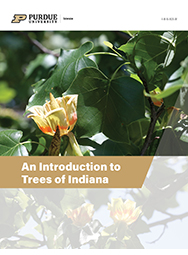
Trees are one of Indiana’s great natural resources. Professor T.E. Shaw, one of the first Indiana Extension foresters, wanted to make sure young Hoosiers, beginners in the field of forestry and tree enthusiasts alike had an educational resource to help them learn the names and identify local trees.
Shaw updated Charles C. Deam’s highly technical Trees of Indiana, which was first published in 1911, putting out an update for the 4-H forestry handbook in 1949. A second edition came out in 1950 and another revision was completed just before Shaw’s death in 1956 and published as “Fifty Common Trees of Indiana” through the Indiana Department of Conservation.
The publication, which utilizes simple methods and user-friendly language, has become a common resource many place in their backpacks before beginning an outdoor adventure.
The 1956 publication has been used for decades by 4-H, FFA and many other classroom and outdoor education programs as an introduction to tree identification for Indiana youth. Nearly 70 years later, the publication will be reintroduced as “An Introduction to Trees of Indiana,” with additional trees added to the resource along with updates of the original species. An Introduction to Trees of Indiana was a collaboration of experts from the Purdue Department of Forestry and Natural Resources (FNR), Indiana 4-H Youth Development and the Indiana Department of Natural Resources.
Add your copy of this new book to your library by visiting the Purdue Extension resource center, The Education Store: An Introduction to Trees of Indiana, product code: 4-H-15-80A.
Other resources:
Fifty Common Trees of Indiana
Native Trees of the Midwest, The Education Store
Shrubs and Woody Vines of Indiana and the Midwest, The Education Store
ID That Tree, Playlist, Subscribe to Purdue Extension – Forestry and Natural Resources YouTube Channel
A Woodland Management Moment, Playlist, Purdue Extension – FNR YouTube Channel
Investing in Indiana Woodlands, The Education Store
Forest Improvement Handbook, The Education Store
Tony Carrell, 4-H Youth Development Extension Specialist
Purdue Extension 4-H Youth Development
Lenny Farlee, Sustaining Hardwood Extension Specialist
Purdue University Department of Forestry and Natural Resources
Lindsey Purcell, Urban Forestry Specialist
Purdue University Department of Forestry and Natural Resources
On this edition of ID That Tree, Purdue Extension forester Lenny Farlee shows you the differences between two non-native species commonly found in Indiana in decorative capacities, and especially during the holiday season, firs and spruces. Learn the differences in needles, cones and twigs so you can tell these species apart.
If you have any questions regarding wildlife, trees, forest management, wood products, natural resource planning or other natural resource topics, feel free to contact us by using our Ask an Expert web page.
Resources:
ID That Tree, Playlist, Purdue Extension – Forestry and Natural Resources YouTube Channel
A Woodland Management Moment, Playlist, Purdue Extension – FNR YouTube Channel
Shrubs and Woody Vines of Indiana and the Midwest, The Education Store, Purdue Extension Resource Center
Native Trees of the Midwest, The Education Store
Investing in Indiana Woodlands, The Education Store
Forest Improvement Handbook, The Education Store
Pin Oak, Native Trees of Indiana River Walk, Purdue Fort Wayne
Lenny Farlee, Sustaining Hardwood Extension Specialist
Purdue University Department of Forestry and Natural Resources
It’s not holly, but it will help you keep holiday cheer long into the winter, meet Winterberry. On this edition of ID That Tree, Purdue Extension forester Lenny Farlee explains the difference between winterberry and holly, as well as how to identify this deciduous plant.
If you have any questions regarding wildlife, trees, forest management, wood products, natural resource planning or other natural resource topics, feel free to contact us by using our Ask an Expert web page.
Resources:
ID That Tree, Playlist, Purdue Extension – Forestry and Natural Resources YouTube Channel
A Woodland Management Moment, Playlist, Purdue Extension – FNR YouTube Channel
Shrubs and Woody Vines of Indiana and the Midwest, The Education Store, Purdue Extension Resource Center
Native Trees of the Midwest, The Education Store
Investing in Indiana Woodlands, The Education Store
Forest Improvement Handbook, The Education Store
Pin Oak, Native Trees of Indiana River Walk, Purdue Fort Wayne
Lenny Farlee, Sustaining Hardwood Extension Specialist
Purdue University Department of Forestry and Natural Resources
On this edition of ID That Tree, meet umbrella magnolia, a small tree easily identified by the clusters of long simple leaves at the end of the twigs, which form an umbrella shape, and by its beautiful white blossoms in the spring.
If you have any questions regarding wildlife, trees, forest management, wood products, natural resource planning or other natural resource topics, feel free to contact us by using our Ask an Expert web page.
Resources:
ID That Tree, Playlist, Purdue Extension – Forestry and Natural Resources YouTube Channel
A Woodland Management Moment, Playlist, Purdue Extension – FNR YouTube Channel
Shrubs and Woody Vines of Indiana and the Midwest, The Education Store, Purdue Extension Resource Center
Native Trees of the Midwest, The Education Store
Investing in Indiana Woodlands, The Education Store
Forest Improvement Handbook, The Education Store
Pin Oak, Native Trees of Indiana River Walk, Purdue Fort Wayne
Lenny Farlee, Sustaining Hardwood Extension Specialist
Purdue University Department of Forestry and Natural Resources

Recent Posts
- Popular Landscape Shrub is Invasive
Posted: October 15, 2026 in Alert, Forestry, Forests and Street Trees, Invasive Plant Species, Plants, Woodlands - Purdue Extension’s Regional Teams Are Here: Connecting Communities with Expertise and Opportunity
Posted: October 14, 2026 in Community Development, Forestry, Forests and Street Trees, Gardening, How To, Timber Marketing, Urban Forestry, Wildlife, Woodlands - Why Do Our Trees Go From Green Leaves to Different Colors?
Posted: in Forestry, Forests and Street Trees, Urban Forestry, Woodlands - Distinguishing Dogwoods
Posted: October 13, 2026 in Forestry, Urban Forestry, Wildlife, Woodlands - It’s Not Too Early To Start Planning For Spring Tree Planting
Posted: in Forestry, How To - Can I Plant Trees in the Fall?
Posted: October 12, 2026 in Forestry, How To, Land Use, Plants, Urban Forestry, Wildlife - Burning for Benefits: Why Fire Belongs in Indiana
Posted: in Forestry, Safety, Woodlands - Disease May Cause Wilting and Eventual Death of Certain Trees and Shrubs, Purdue Landscape Report
Posted: October 5, 2026 in Disease, Forestry, Plants - October Is Firewood Month: Protect Indiana’s Forests by Making Smart Choices
Posted: October 1, 2026 in Forestry, Forests and Street Trees, How To, Invasive Insects, Urban Forestry - Woodland Flowers of Late Summer
Posted: September 14, 2026 in Forestry, Gardening, Wildlife, Woodlands
Archives
Categories
- Alert
- Aquaculture/Fish
- Aquatic/Aquaculture Resources
- Ask the Expert
- Christmas Trees
- Community Development
- Disease
- Drought
- Forestry
- Forests and Street Trees
- Gardening
- Got Nature for Kids
- Great Lakes
- How To
- Invasive Animal Species
- Invasive Insects
- Invasive Plant Species
- Land Use
- Natural Resource Planning
- Nature of Teaching
- Plants
- Podcasts
- Ponds
- Publication
- Safety
- Spiders
- Timber Marketing
- Urban Forestry
- Webinar
- Wildlife
- Wood Products/Manufacturing
- Woodland Management Moment
- Woodlands