 Purdue University - Extension - Forestry and Natural Resources
Got Nature? Blog
On this edition of ID That Tree, meet the black locust, which is recognizable by its small, rounded pinnate leaflets; gray bark with rough, long running ridges with orange undertones; and paired thorns where the buds and leaves originate.
If you have any questions regarding wildlife, trees, forest management, wood products, natural resource planning or other natural resource topics, feel free to contact us by using our Ask an Expert web page.
Resources:
ID That Tree, Playlist, Purdue Extension – Forestry and Natural Resources YouTube Channel
A Woodland Management Moment, Playlist, Purdue Extension – FNR YouTube Channel
Shrubs and Woody Vines of Indiana and the Midwest, The Education Store, Purdue Extension Resource Center
Native Trees of the Midwest, The Education Store
Investing in Indiana Woodlands, The Education Store
Forest Improvement Handbook, The Education Store
Black Locust, Native Trees of Indiana River Walk, Purdue Fort Wayne
Lenny Farlee, Sustaining Hardwood Extension Specialist
Purdue University Department of Forestry and Natural Resources
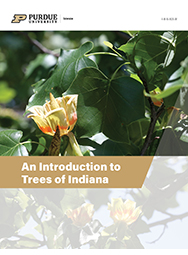
Trees are one of Indiana’s great natural resources. Professor T.E. Shaw, one of the first Indiana Extension foresters, wanted to make sure young Hoosiers, beginners in the field of forestry and tree enthusiasts alike had an educational resource to help them learn the names and identify local trees.
Shaw updated Charles C. Deam’s highly technical Trees of Indiana, which was first published in 1911, putting out an update for the 4-H forestry handbook in 1949. A second edition came out in 1950 and another revision was completed just before Shaw’s death in 1956 and published as “Fifty Common Trees of Indiana” through the Indiana Department of Conservation.
The publication, which utilizes simple methods and user-friendly language, has become a common resource many place in their backpacks before beginning an outdoor adventure.
The 1956 publication has been used for decades by 4-H, FFA and many other classroom and outdoor education programs as an introduction to tree identification for Indiana youth. Nearly 70 years later, the publication will be reintroduced as “An Introduction to Trees of Indiana,” with additional trees added to the resource along with updates of the original species. An Introduction to Trees of Indiana was a collaboration of experts from the Purdue Department of Forestry and Natural Resources (FNR), Indiana 4-H Youth Development and the Indiana Department of Natural Resources.
Add your copy of this new book to your library by visiting the Purdue Extension resource center, The Education Store: An Introduction to Trees of Indiana, product code: 4-H-15-80A.
Other resources:
Fifty Common Trees of Indiana
Native Trees of the Midwest, The Education Store
Shrubs and Woody Vines of Indiana and the Midwest, The Education Store
ID That Tree, Playlist, Subscribe to Purdue Extension – Forestry and Natural Resources YouTube Channel
A Woodland Management Moment, Playlist, Purdue Extension – FNR YouTube Channel
Investing in Indiana Woodlands, The Education Store
Forest Improvement Handbook, The Education Store
Tony Carrell, 4-H Youth Development Extension Specialist
Purdue Extension 4-H Youth Development
Lenny Farlee, Sustaining Hardwood Extension Specialist
Purdue University Department of Forestry and Natural Resources
Lindsey Purcell, Urban Forestry Specialist
Purdue University Department of Forestry and Natural Resources
On this edition of ID That Tree, Purdue Extension forester Lenny Farlee shows you the differences between two non-native species commonly found in Indiana in decorative capacities, and especially during the holiday season, firs and spruces. Learn the differences in needles, cones and twigs so you can tell these species apart.
If you have any questions regarding wildlife, trees, forest management, wood products, natural resource planning or other natural resource topics, feel free to contact us by using our Ask an Expert web page.
Resources:
ID That Tree, Playlist, Purdue Extension – Forestry and Natural Resources YouTube Channel
A Woodland Management Moment, Playlist, Purdue Extension – FNR YouTube Channel
Shrubs and Woody Vines of Indiana and the Midwest, The Education Store, Purdue Extension Resource Center
Native Trees of the Midwest, The Education Store
Investing in Indiana Woodlands, The Education Store
Forest Improvement Handbook, The Education Store
Pin Oak, Native Trees of Indiana River Walk, Purdue Fort Wayne
Lenny Farlee, Sustaining Hardwood Extension Specialist
Purdue University Department of Forestry and Natural Resources
It’s not holly, but it will help you keep holiday cheer long into the winter, meet Winterberry. On this edition of ID That Tree, Purdue Extension forester Lenny Farlee explains the difference between winterberry and holly, as well as how to identify this deciduous plant.
If you have any questions regarding wildlife, trees, forest management, wood products, natural resource planning or other natural resource topics, feel free to contact us by using our Ask an Expert web page.
Resources:
ID That Tree, Playlist, Purdue Extension – Forestry and Natural Resources YouTube Channel
A Woodland Management Moment, Playlist, Purdue Extension – FNR YouTube Channel
Shrubs and Woody Vines of Indiana and the Midwest, The Education Store, Purdue Extension Resource Center
Native Trees of the Midwest, The Education Store
Investing in Indiana Woodlands, The Education Store
Forest Improvement Handbook, The Education Store
Pin Oak, Native Trees of Indiana River Walk, Purdue Fort Wayne
Lenny Farlee, Sustaining Hardwood Extension Specialist
Purdue University Department of Forestry and Natural Resources
On this edition of ID That Tree, meet umbrella magnolia, a small tree easily identified by the clusters of long simple leaves at the end of the twigs, which form an umbrella shape, and by its beautiful white blossoms in the spring.
If you have any questions regarding wildlife, trees, forest management, wood products, natural resource planning or other natural resource topics, feel free to contact us by using our Ask an Expert web page.
Resources:
ID That Tree, Playlist, Purdue Extension – Forestry and Natural Resources YouTube Channel
A Woodland Management Moment, Playlist, Purdue Extension – FNR YouTube Channel
Shrubs and Woody Vines of Indiana and the Midwest, The Education Store, Purdue Extension Resource Center
Native Trees of the Midwest, The Education Store
Investing in Indiana Woodlands, The Education Store
Forest Improvement Handbook, The Education Store
Pin Oak, Native Trees of Indiana River Walk, Purdue Fort Wayne
Lenny Farlee, Sustaining Hardwood Extension Specialist
Purdue University Department of Forestry and Natural Resources
On this edition of ID That Tree, meet a species of native Indiana oak from the broad red/black oak family, which is found in bottomlands and areas with imperfectly drained soil, the Pin Oak. This species is recognizable by round acorns with flat scales, bristle-tipped leaves with deep 90-degree angled lobes, and lower branches that angle downward.
If you have any questions regarding wildlife, trees, forest management, wood products, natural resource planning or other natural resource topics, feel free to contact us by using our Ask an Expert web page.
Resources:
ID That Tree, Playlist, Purdue Extension – Forestry and Natural Resources YouTube Channel
A Woodland Management Moment, Playlist, Purdue Extension – FNR YouTube Channel
Shrubs and Woody Vines of Indiana and the Midwest, The Education Store, Purdue Extension Resource Center
Native Trees of the Midwest, The Education Store
Investing in Indiana Woodlands, The Education Store
Forest Improvement Handbook, The Education Store
Pin Oak, Native Trees of Indiana River Walk, Purdue Fort Wayne
Lenny Farlee, Sustaining Hardwood Extension Specialist
Purdue University Department of Forestry and Natural Resources
In this episode of ID That Tree, Purdue Extension forester Lenny Farlee introduces a native Indiana species found in dry sites in Northern and Southern Indiana, the scarlet oak. Identify this member of the red oak family by its terminal buds with hairs and a red coloration, leaves with deep C-shaped sinuses, dark smooth bark and acorns with caps that cover half the acorn.
If you have any questions regarding wildlife, trees, forest management, wood products, natural resource planning or other natural resource topics, feel free to contact us by using our Ask an Expert web page.
Resources:
ID That Tree, Playlist, Purdue Extension – Forestry and Natural Resources YouTube Channel
A Woodland Management Moment, Playlist, Purdue Extension – FNR YouTube Channel
Shrubs and Woody Vines of Indiana and the Midwest, The Education Store, Purdue Extension Resource Center
Native Trees of the Midwest, The Education Store
Scarlet Oak, Native Trees of Indiana Riverwalk Purdue Fort Wayne
Investing in Indiana Woodlands, The Education Store
Forest Improvement Handbook, The Education Store
Lenny Farlee, Sustaining Hardwood Extension Specialist
Purdue University Department of Forestry and Natural Resources
Question: Often ginkgo trees will drop all of their leaves on a single day after a cold night. I thought that was going to be Monday at Purdue (left: leaves falling). But no, we’re at Wednesday now (right) and this one changed its mind. Anyone know how common that is?
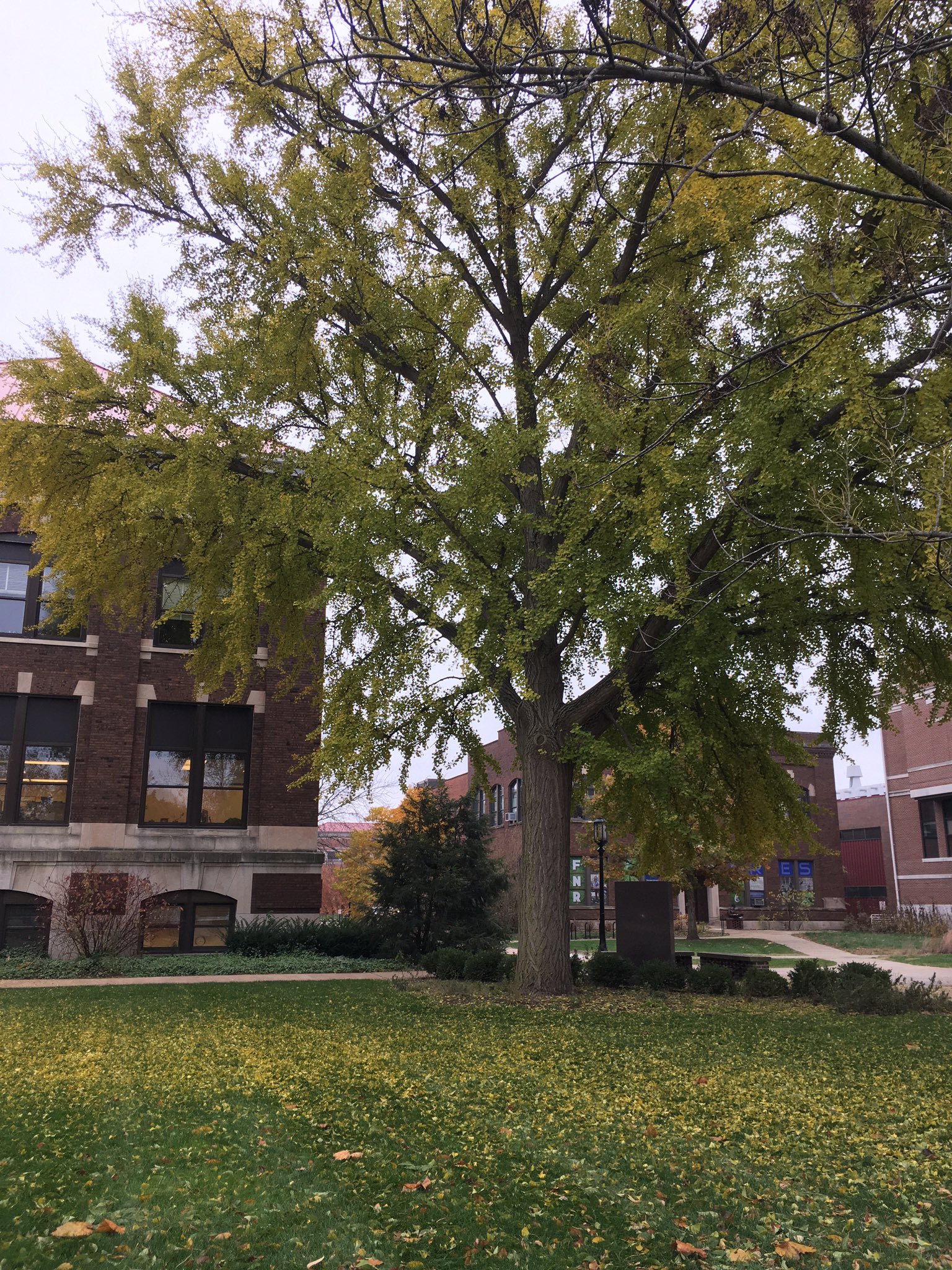
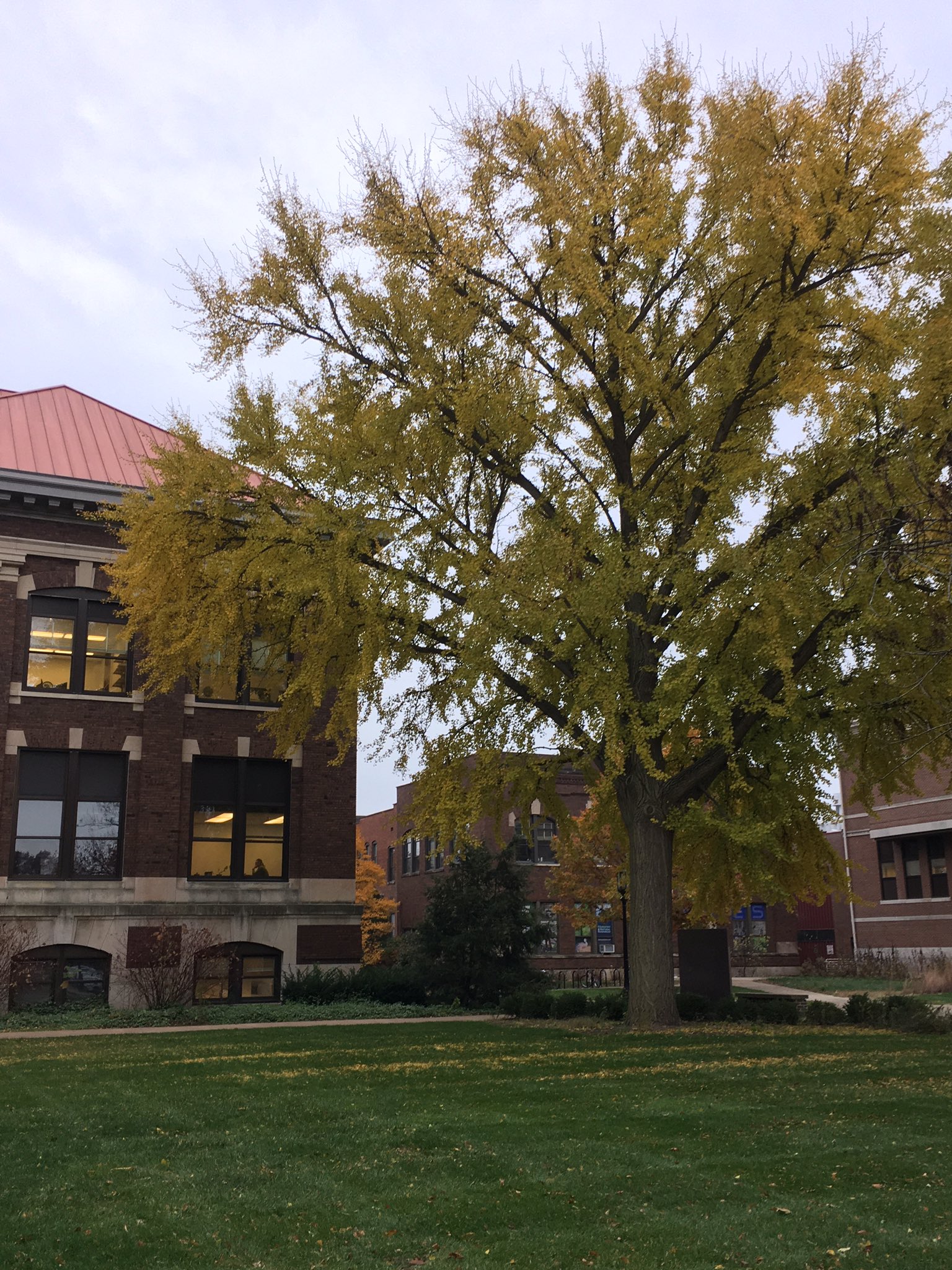
Answer: It was a very peculiar fall. The overall leaf drop was one to two weeks later than normal at least. An October with weather more like September has likely had some impact on this. Individual trees will vary some on their leaf drop timing, probably due to their geographic origin (for planted trees) and individual genetic variation. The severity and timing of frost/freeze also influences strongly. As you can see, lots of variables!
Leaf drop is not solely dependent on temperatures. There is a process of dormancy the tree follows to properly acclimate in preparation for winter. One of these is leaf drop, but it must go through the process of developing an abscission layer between the petiole base and branch. Most likely, the tree didn’t drop leaves yet because this separation layer of chemicals hasn’t fully responded yet. We often see frozen leaves on a tree and later they fall, but this is the result of sudden extreme cold ahead of proper dormancy routines.
Resources:
Fall Color Pigments, Purdue Extension YouTube Channel
Why Leaves Change Color – The Physiological Basis,
Oak Wilt in Indiana, Purdue Landscape Report
Dog Days of Summer Barking Early This Year, Purdue Landscape Report
Tulip Poplar Summer Leaf Drop, Purdue Landscape Report
Be on the Lookout for Defoliated Viburnums and Viburnum Leaf Beetle, Purdue Landscape Report
Will my Trees Recover After Losing Their Leaves?, Purdue Landscape Report
What Do Trees Do in the Winter?, Purdue Landscape Report
Why Fall Color is Sometimes a Dud, Purdue Landscape Report
Alternatives to Burning Bush For Fall Color, Purdue Landscape Report
Start Preparing Trees for Winter and Next Year, Purdue Landscape Report
ID That Tree Winter Edition: Opposite Leaf Arrangement – Ohio buckeye, Red Maple, Purdue Extension YouTube Channel
ID That Tree Winter Edition: Alternate Leaf Arrangement – Black Walnut, Eastern Cottonwood, Purdue Extension YouTube Channel
ID That Tree Winter Edition: Alternate Leaf Arrangement – Honey Locust, Burr Oak, Purdue Extension YouTube Channel
Lenny Farlee, Sustaining Hardwood Extension Specialist
Purdue University Department of Forestry and Natural Resources
Lindsey Purcell, Urban Forestry Specialist
Purdue University Department of Forestry and Natural Resources
Meet overcup oak, a species found on swampy ground and soils in southwestern Indiana. It is identifiable by its deeply sinused alternately arranged leaves as well as its acorns, which have a cap which encases nearly the entire acorn and typically don’t let go easily.
If you have any questions regarding wildlife, trees, forest management, wood products, natural resource planning or other natural resource topics, feel free to contact us by using our Ask an Expert web page.
Resources:
ID That Tree, Playlist, Purdue Extension – Forestry and Natural Resources YouTube Channel
A Woodland Management Moment, Playlist, Purdue Extension – FNR YouTube Channel
Shrubs and Woody Vines of Indiana and the Midwest, The Education Store, Purdue Extension Resource Center
Native Trees of the Midwest, The Education Store
Overcup Oak, Native Trees of Indiana Riverwalk Purdue Fort Wayne
Investing in Indiana Woodlands, The Education Store
Forest Improvement Handbook, The Education Store
Lenny Farlee, Sustaining Hardwood Extension Specialist
Purdue University Department of Forestry and Natural Resources
 Hardwood Tree Improvement & Regeneration Center (HTIRC) Newsletter: USDA conservation programs provide technical and financial incentives for landowners to install and maintain conservation practices, including tree plantations. They are an important tool to help encourage landowners to make an investment in long-term activities like planting hardwood trees. Research across the eastern US, including work done by the HTIRC, demonstrates that deer browse can be one of the most significant barriers to establishment of a successful tree plantings. Deer may increase mortality, but more often they are preventing planted or naturally regenerating trees from growing in height due to repeated browsing. This damage can also deform trees, resulting in poor stem form and lower potential log quality. Plantations where deer selectively browse desirable species may lose important species like oaks due to overtopping by less favored, and therefore less browsed, species that become free to grow. Reducing the damage done by deer browse is an important, and in many locations the most critical step in successful tree planting establishment in many areas across the eastern US.
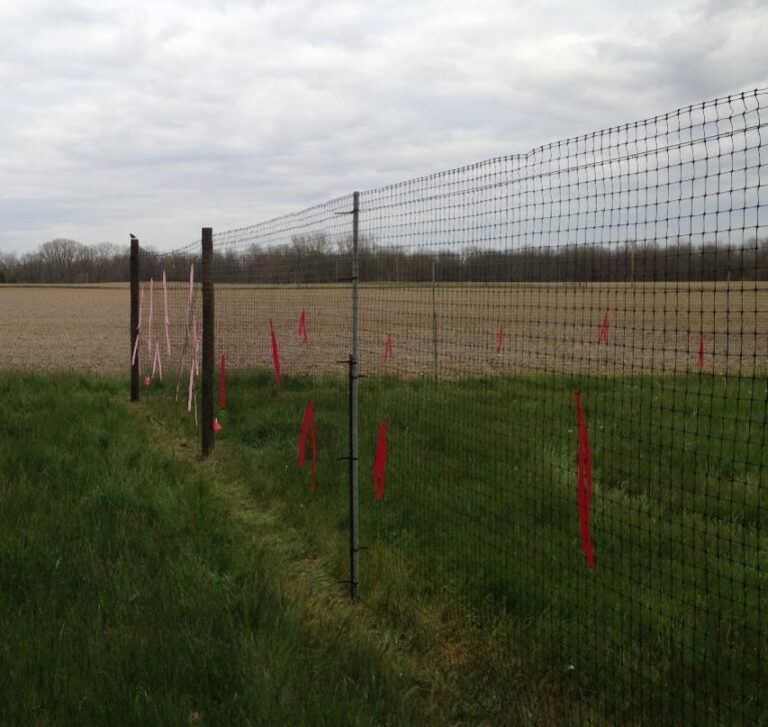
One of the primary purposes for these conservation tree plantings is developing forest wildlife habitat, but to successfully establish that habitat may require excluding deer for a few years, until the trees are tall enough to continue growing past the deer browse damage. Fortunately, many state Natural Resource Conservation Service offices are recognizing the impact that deer browse is having on establishing successful conservation tree plantings. To address this barrier to successfully establishing tree plantings and natural regeneration, new scenarios are being added to the Tree and Shrub Establishment practice:
-
- The “Planted Area with Protection” scenario provides cost assistance for tree and shrub planting and placement of a temporary perimeter fence to exclude deer until trees have grown above the height of deer browsing.
- The “Regeneration Area with Protection” scenario provides cost assistance for placement of a temporary fence to protect natural regeneration of tree and shrub species.
- Increased cost assistance payments may be available to help offset some of the additional cost a deer exclusion fence adds to a planting project. States may have differing cost assistance rates and practice requirements. These and other additions to the NRCS tree planting practices provide landowners and natural resource managers effective tools to establish tree plantings that can produce high quality hardwood trees in the future. Check with your local foresters and NRCS offices to see if this practice is available in your area and details on payment rates and requirements. If the practice is not available, work with your local resource management contacts to request addition of this practice for your area in the future.
The HTIRC has supported this fencing practice through research and demonstration plantings that have showcased the benefits deer exclusion fencing can provide for timely establishment and timber quality development in hardwood plantings.
Resources:
Woodland Stewardship For Landowners, Playlist, Purdue Extension – Forestry and Natural Resources YouTube Channel
Woodland Management Moment, Purdue Extension – FNR Playlist
A Woodland Management Moment – Deer Fencing, Purdue Extension – FNR Video
Wildlife Habitat Hint: Exclusion Cage, Purdue Extension – FNR Video
How to Build a Plastic Mesh Deer Exclusion Fence, The Education Store, Purdue Extension resource center
Ask An Expert: Handling Harvested Deer, Purdue Extension – FNR YouTube Channel
Forest Improvement Handbook, The Education Store
Finding help from a professional forester, Indiana Forestry & Woodland Owners Association
Lenny Farlee, Sustaining Hardwood Extension Specialist
Hardwood Tree Improvement & Regeneration Center (HTIRC)
Purdue University Department of Forestry and Natural Resources

Recent Posts
- Opportunities for Prescribed and Wildland Fire Training
Posted: November 4, 2026 in Forestry, How To, Wildlife, Woodlands - Wildlife Issues and Solutions: A New Online Series
Posted: in Forestry, How To, Wildlife, Woodlands - Burning for Benefits: Where Fire Belongs in Indiana
Posted: in Forestry, Safety, Wildlife, Woodlands - Residents, Alumni Invited to Share Indiana Natural Resource, Spaces, Species Memories
Posted: in Forestry, Forests and Street Trees, Gardening, Urban Forestry, Wildlife - Now Is The Time To Control Non-Native Bush Honeysuckle
Posted: October 30, 2026 in Forestry, How To, Invasive Plant Species, Woodlands - Help Strengthen the Future of Indiana Maple Syrup
Posted: October 29, 2026 in Forestry, How To, Woodlands - Popular Landscape Shrub is Invasive
Posted: October 15, 2026 in Alert, Forestry, Forests and Street Trees, Invasive Plant Species, Plants, Woodlands - Purdue Extension’s Regional Teams Are Here: Connecting Communities with Expertise and Opportunity
Posted: October 14, 2026 in Community Development, Forestry, Forests and Street Trees, Gardening, How To, Timber Marketing, Urban Forestry, Wildlife, Woodlands - Why Do Our Trees Go From Green Leaves to Different Colors?
Posted: in Forestry, Forests and Street Trees, Urban Forestry, Woodlands - Distinguishing Dogwoods
Posted: October 13, 2026 in Forestry, Urban Forestry, Wildlife, Woodlands
Archives
Categories
- Alert
- Aquaculture/Fish
- Aquatic/Aquaculture Resources
- Ask the Expert
- Christmas Trees
- Community Development
- Disease
- Drought
- Forestry
- Forests and Street Trees
- Gardening
- Got Nature for Kids
- Great Lakes
- How To
- Invasive Animal Species
- Invasive Insects
- Invasive Plant Species
- Land Use
- Natural Resource Planning
- Nature of Teaching
- Plants
- Podcasts
- Ponds
- Publication
- Safety
- Spiders
- Timber Marketing
- Urban Forestry
- Webinar
- Wildlife
- Wood Products/Manufacturing
- Woodland Management Moment
- Woodlands