 Purdue University - Extension - Forestry and Natural Resources
Got Nature? Blog
Purdue Landscape Report: While fungi are responsible for many of our foliar disease problems, different fungal pathogens present as problems throughout the country, depending upon the host plant grown and the environmental conditions. This is a brief overview of several common types of fungal leaf diseases that occur in Indiana and throughout North America (and Europe). Recognizing the symptoms and signs is an important first step to diagnose a disease problem, followed by how to manage these diseases by combining cultural and chemical controls.
Common fungal leaf diseases of deciduous trees and shrubs
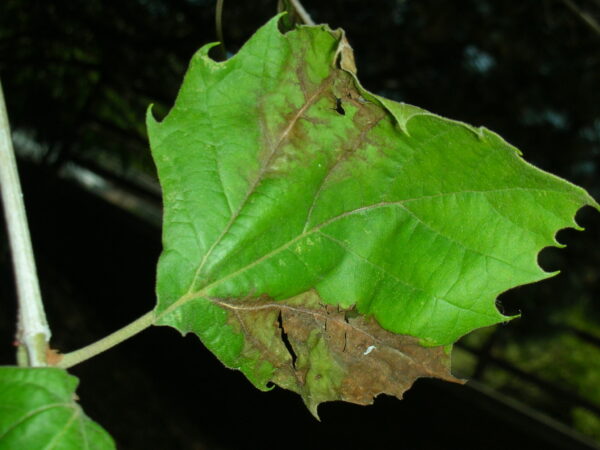
Figure 1. Anthracnose is a yearly problem on sycamore in the Midwest. Photo by Janna Beckerman.
Anthracnose. Anthracnose diseases probably are the best-known foliar fungal diseases of deciduous trees. They affect many ornamental trees including major shade-tree genera such as sycamore (Platanus spp.), oak (Quercus spp.), maple (Acer spp.), elm (Ulmus spp.) and ash (Fraxinus spp.) (Fig. 1). Anthracnose actually is a general term describing symptoms such as dead irregular areas that form along and between the main vein of the leaf. The leaves may also become curled and distorted and twigs may die back. The fungus overwinters in infected twigs and the petioles of fallen leaves, and the spores disseminate in the spring by wind and splashing rain. The disease, while unsightly, rarely results in the tree’s death. Sycamores and other trees often withstand many years of partial defoliation. However, one anthracnose disease is more serious. Dogwood anthracnose (Discula destructiva) is a devastating problem on the Eastern seaboard, but has not been a significant issue here in Indiana.
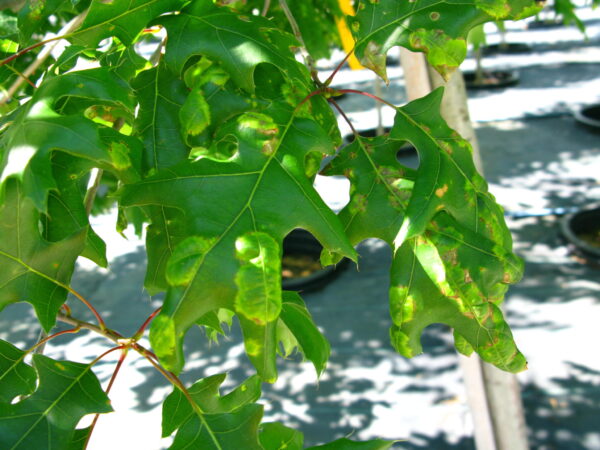
Figure 2. Leaf blister on oak. Photo by Janna Beckerman
Leaf blisters result in the blistering, curling and puckering of leaf tissue. Oak leaf blister (Taphrina caerulescens) is a common blister disease of oaks (Fig. 2)., particularly the red oak subgenus, which includes Northern red oak (Q. rubra) and pin oak (Q. palustris) among others. The symptoms begin as a slight yellowing of the infected leaf followed by round, raised blisters. These turn brown, and the infected leaves fall prematurely. This fungus overwinters as spores on the buds.
Leaf spot is a general symptom caused by a multitude of pathogens and infect all deciduous trees and shrubs, and include dead spots with a defined boundary between living and dead tissue. The dead tissue often separates from the surrounding living tissue creating a “shot-hole” appearance on the infected leaves. Common hosts include dogwood, maples, hydrangea, rose, holly, and Indian-hawthorn.
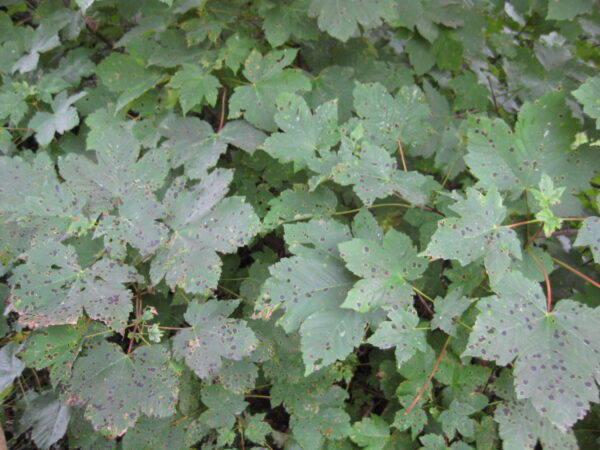
Figure 3. Tar spot is increasing in incidence and severity in Indiana. Photo by Janna Beckerman.
Tar spot (Rhytisma spp.) is a leaf disease with initial symptoms similar to leaf spot. The disease is most common on red (Acer rubrum) and silver maple (A. saccharinum) (Fig.3), but it can occur on a wide range of maple species from sugar (A. saccharum) and Norway (A. platanoides) to bigleaf maple (A. macrophyllum). The symptoms begin in the spring as small greenish-yellow spots on the upper leaf surface that, by mid-summer, progress to black tar-like spots about 0.5 inch in size. The disease is not fatal to the tree, but the appearance of the tar spots alarms some tree owners. A major outbreak in New York about 10 years ago left many maples completely defoliated by mid-August.
Resources:
Diplodia Tip Blight of Two-Needle Pines, The Education Store, Purdue Extension resource center
Boxwood Blight, The Education Store
Disease of Landscape Plants: Cedar Apple and Related Rusts on Landscape Plants, The Education Store
Planting Your Tree Part 1: Choosing Your Tree, Purdue Extension – Forestry & Natural Resources (FNR) YouTube Channel
Tree Planting Part 2: Planting a Tree, Purdue Extension – FNR YouTube Channel
Find a Certified Arborist, Trees are Good-International Society of Arboriculture (ISA)
Video: Step by Step to Find an Arborist, Trees are Good-International Society of Arboriculture (ISA)
Professional Forester, Indiana Forestry Woodland Owners Association
District Forester, Indiana Department of Natural Resources, 10+ acres
Trees and Storms – The Education Store
Why Is My Tree Dying? – The Education Store
Tree Risk Management – The Education Store
Tree Pruning Essentials, Publication & Video, The Education Store
Tree Wound and Healing, Got Nature? Blog, Purdue Extension – FNR
What are Invasives Species and Why Should I Care?, Got Nature? Blog, Purdue Extension – FNR
Subscribe – Purdue Extension-FNR YouTube Channel
Janna Beckerman, Professor of Plant Pathology
Purdue Department of Botany and Plant Pathology
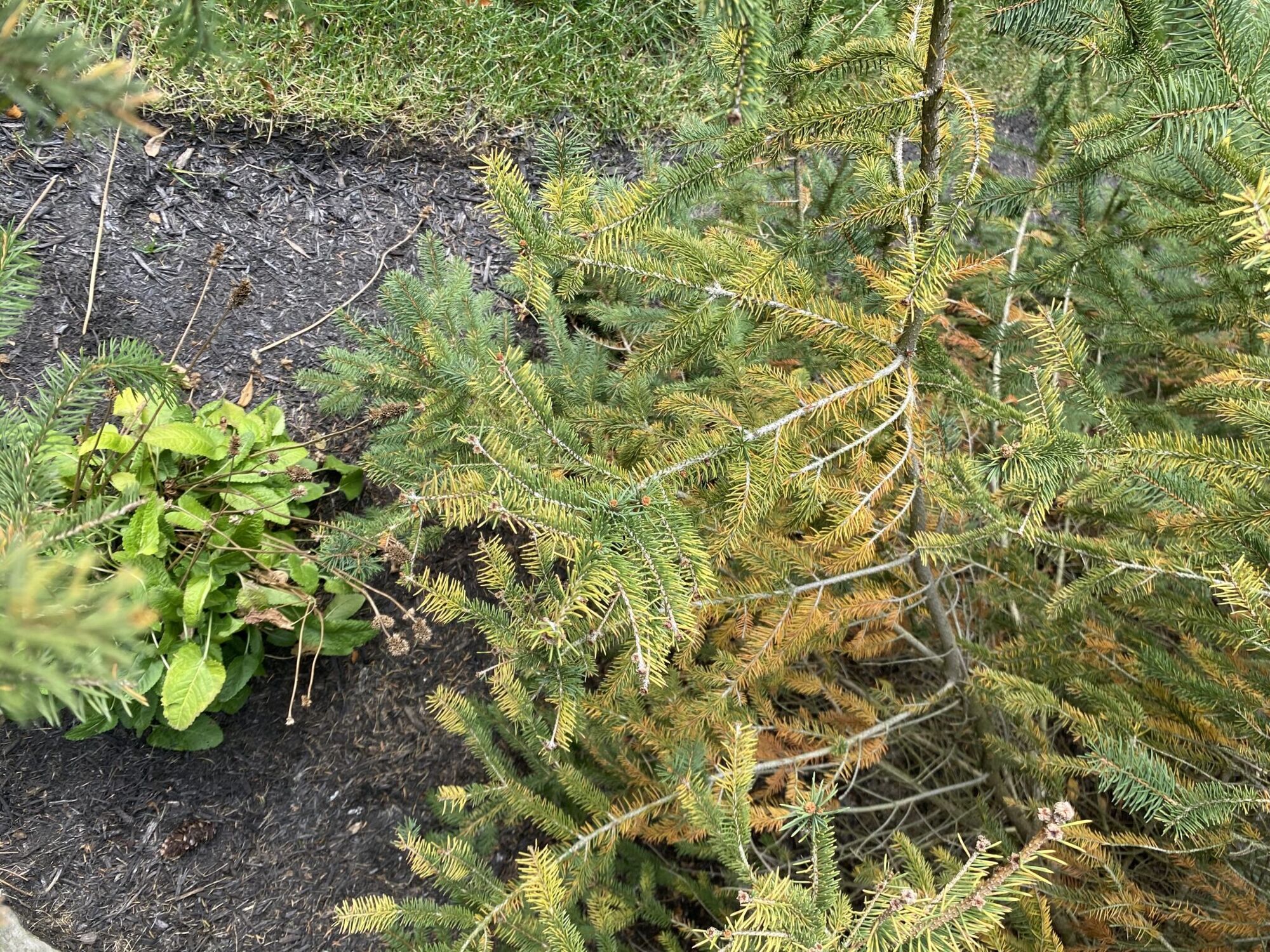
Figure 2: A young spruce tree under the effects of transplant and root stress.
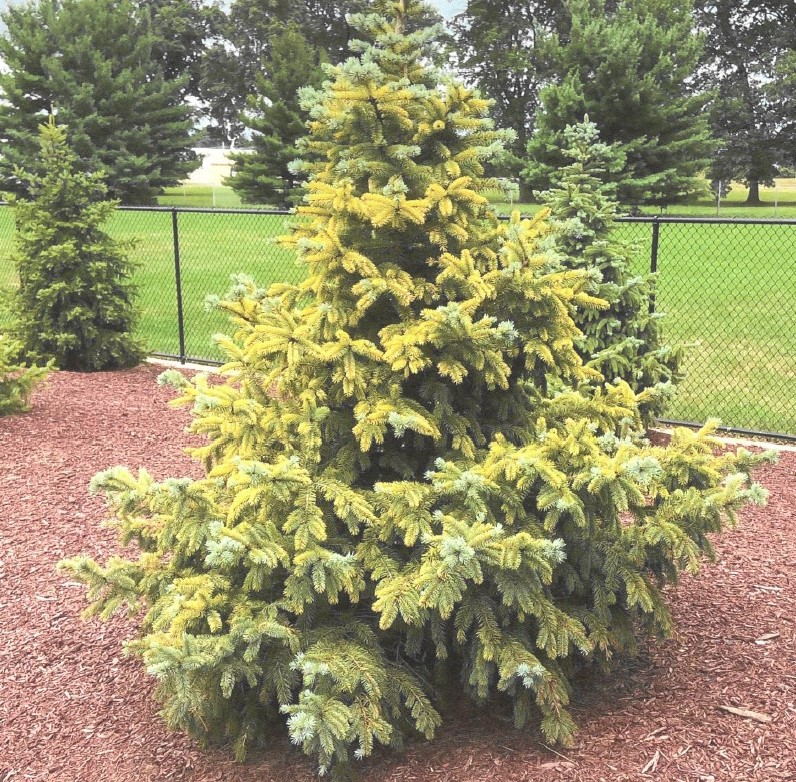
Figure 1: A spruce tree suffering from root damage and water stress.
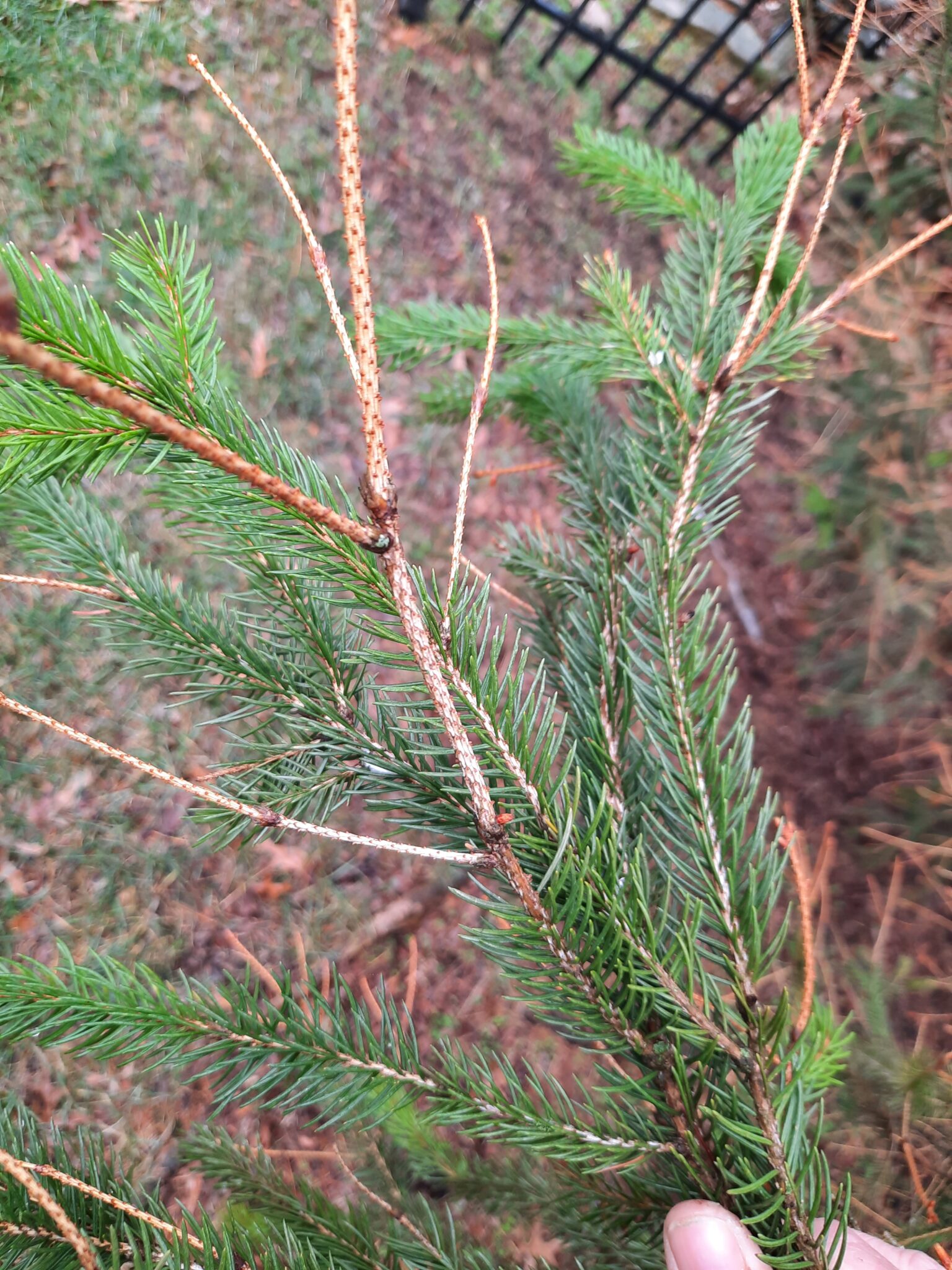
Figure 4: Phomopsis dieback with excessive needle loss on branch tips.
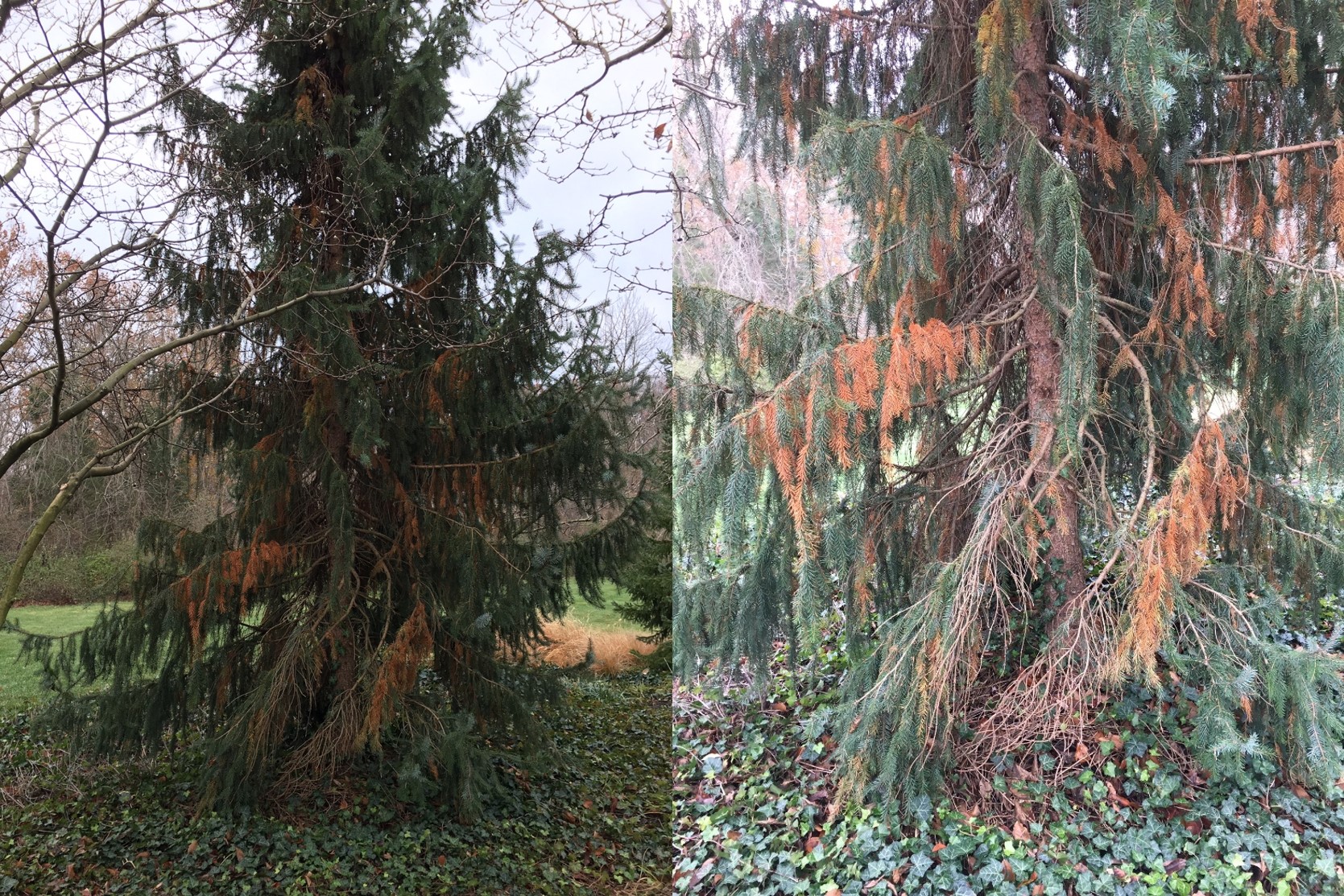
Figure 3: Dieback symptoms in a mature tree associated with Phomopsis infection.
Resources
Borers of Pines and Other Needle Bearing Evergreens in Landscapes, The Education Store, Purdue Extension resource center
Ask an Expert Question: Blue Spruce dying, what can I do?, Got Nature? Blog, Purdue Extension – Forestry and Natural Resources
Why Spruce Trees Lose Their Needles, Purdue Extension
Diseases Common in Blue Spruce, Purdue Extension
John Bonkowski, Plant Disease Diagnostician
Purdue Department of Botany and Plant Pathology
 Well-maintained trees provide many benefits including increased property values, improved air quality and curb appeal. Trees are living organisms making them vulnerable to pests and environmental extremes resulting in health issues which result in defects. This publication will help guide you on where and how to identify tree defects and a better understanding of when to contact an arborist for assistance.
Resources
Tree wounds and healing, Got Nature? Blog, Purdue Extension – Forestry and Natural Resources
How to Identify Tree Defects and What to Do About It?, Got Nature? Blog
Iron Chlorosis of Trees and Shrubs, The Education Store, Purdue Extension resource center
Surface Root Syndrome, The Education store
Tree Appraisal and the Value of Trees, The Education Store
Lindsey Purcell, Urban Forestry Specialist
Purdue University, Department of Forestry and Natural Resources
Purdue Landscape Report: Tubakia leaf spot, caused by the fungus Tubakia, is the disease we find more commonly on oak than any other. Throughout the world, there are 11 species of Tubakia known to infect oak, with Tubakia dryina (previously known as Actinopelte dryina) being the most commonly encountered species in our landscapes. Apple, ash, black gum, chestnut, elm, maple, and redbud are all reported as hosts of Tubakia species, but oaks are the most frequently and severely affected. Among the oaks, the red oak group, specifically red, pin, and black oaks, are reported to be more susceptible to infection compared to those in the white oak group.

Figure 2: Oak leaf with circular shaped Tubakia leaf spots along with extensive veinal necrosis.
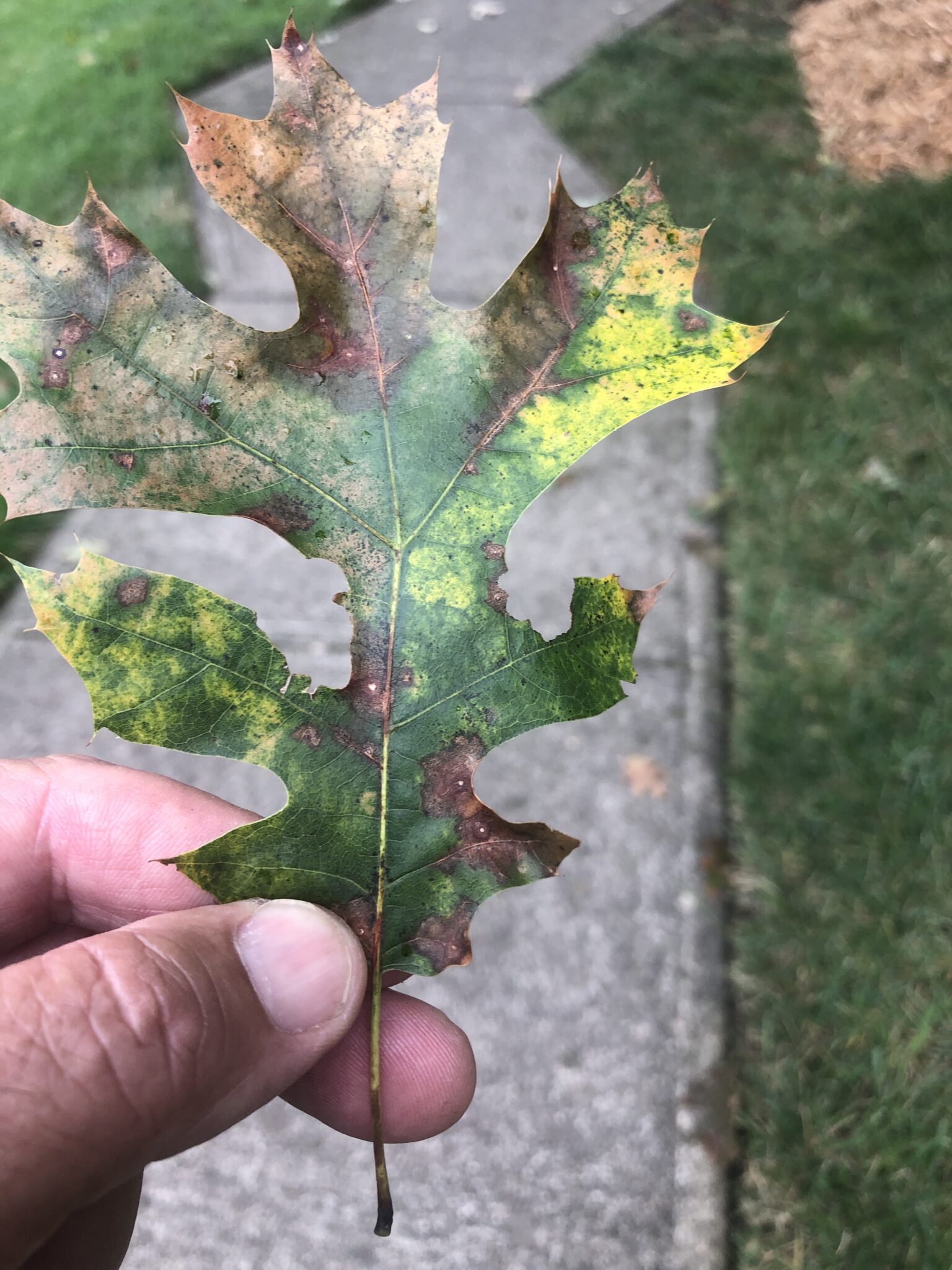
Figure 1: Oak leaf with irregularly shaped Tubakia leaf spots and veinal necrosis.
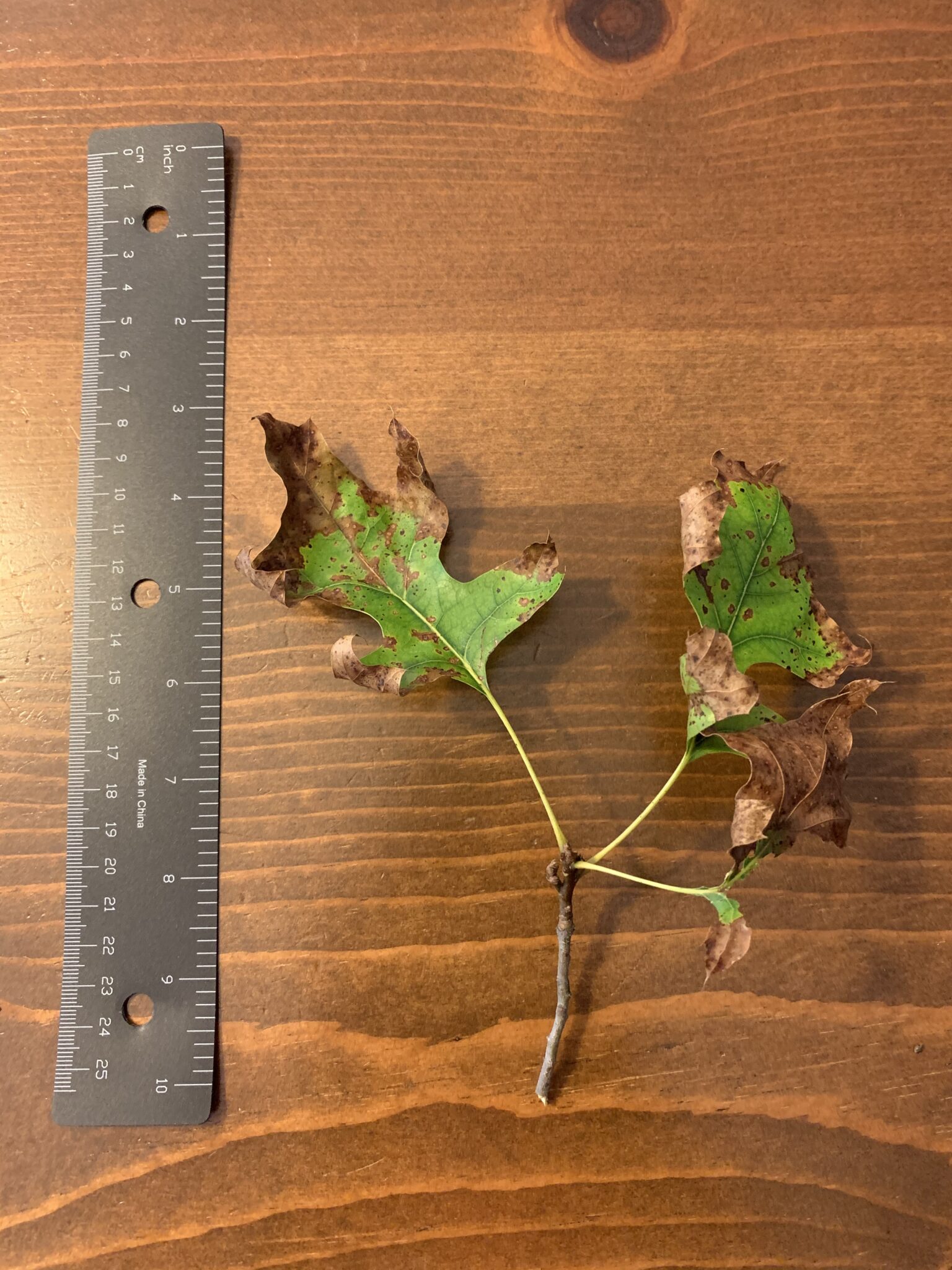
Figure 3: Marginal blighting due to coalescing spots and veinal necrosis.

Figure 5: Blighting of large leaf area caused by veinal infection by Tubakia.

Figure 4: Typical Tubakia leaf spot symptoms illustrating how the fungus spreads along leaf veins.
The pathogen produces conidia within shield shaped structures called pycniothyria (Figure 6) which can be found on both the top or bottom surface of the leaf and along veins (Figure 7). These structures are very small and can only be seen with a 40x or stronger hand lens. The fungus overwinters on fallen leaves and on dead stems which act as the source of inoculum for the next year. During early spring, spores are spread by wind and water splash dispersal (rain) to healthy new foliage. However, it takes time for symptoms to develop throughout the season, depending on tree stress and environmental conditions (warm wet weather favors spread).
For full article view: Purdue Landscape Report, Purdue Landscape Report.
Diseases of Landscape Plants: Leaf Diseases, The Education Store, Purdue Extension resource center
Consumer Horticulture: Fertilizing Woody Plants, The Education Store
Tree Disease; Oak Wilt in Indiana, The Education Store
Diseases of Soybean: Frogeye Leaf Spot, The Education Store
Bur Oak, Purdue Arboretum Explorer
Bur Oak, Native Trees of Indiana River Walk, Purdue Fort Wayne
Find an Arborist, TreesAreGood.org
John Bonkowski, Plant Disease Diagnostician
Purdue Department of Botany and Plant Pathology
Tom C Creswell, Clinical Engagement Professor – PPDL
Purdue Department of Botany and Plant Pathology
 The Nature of Teaching, a Purdue Extension signature program, was honored as the third place finisher in the central region for the Environmental Education Award presented by the National Extension Association of Family and Consumer Science (NEAFCS).
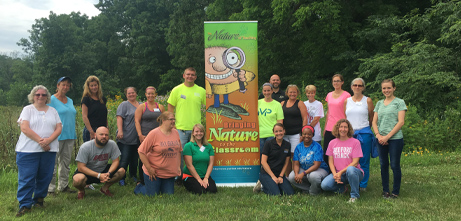 The Nature of Teaching team includes:
- Deb Arseneau, HHS Educator, Newton County
- Jarred Brooke, extension wildlife specialist
- Jay Christiansen, health and human sciences extension educator for Vigo County
- Robert Cordes, Maine Department of Inland Fisheries and Wildlife (MDIFW) wildlife special projects coordinator
- Molly Hoag, health and human sciences extension educator for Wells County
- Molly Hunt, health and human sciences extension educator for Delaware County
- Rebecca Koetz, urban ag/home horticulture extension educator for Lake County
- Tami Mosier, 4-H youth development extension educator
- Kelsie Muller, health and human sciences extension educator for Benton County
- Dr. Rod Williams, professor of wildlife science
- Brad Zitske, Maine Department of Inland Fisheries and Wildlife (MDIFW) assistant regional wildlife biologist
Nature of Teaching
Nature of Teaching YouTube Channel
Transporting Food Waste, The Education Store, Purdue Extension resource center
Resourceful Animal Relationships, The Education Store
Benefits of Connecting with Nature, The Education Store
Join Purdue Extension urban forester Lindsey Purcell, exotic forest pest educator Elizabeth Barnes and entomology extension specialist Cliff Sadof as they share about how to inspect trees, what to look for, who to contact, etc., as well what invasive pests and diseases you should keep your eye out for.
If you have any questions regarding trees, forests, wildlife, wood products or other natural resource topics, feel free to contact us by using our Ask an Expert web page.
Resources
Ask an Expert, Playlist, Purdue Extension – Forestry and Natural Resources Youtube Channel
Tree Risk Management, The Education Store, Purdue Extension resource center
Tree Appraisal and the Value of Trees, The Educational Store
Surface Root Syndrome, The Education Store
Iron Chlorosis of Trees and Shrubs, The Education Store
Facebook Live – Ask The Expert: Pests in Your Woods, Got Nature? Blog, Purdue Extension – Forestry and Natural Resources
Fall webworms: Should you manage them, Got Nature? Blog
How to Identify Tree Defects and What to Do about It?, Got Nature? Blog
Lindsey Purcell, Urban Forestry Specialist
Purdue University, Department of Forestry and Natural Resources
Elizabeth Barnes, Exotic Forest Pest Educator
Purdue University, Department of Entomology
Cliff Sadof, Professor / Ornamental / Pest Management / Coordinator of Extension
Purdue University, Department of Entomology
Purdue Landscape Report: Trees are incredible survivors in spite of the challenges from pests of all kinds, including us! They are vulnerable to injuries such as mechanical wounds from lawn equipment, vehicles and ice. Pruning results in an intentional wound which is of importance to consider. Tree owners and managers need to prune trees to maintain aesthetic characteristics, remove infected limbs, reduce risk, or improve structural stability. Proper pruning practice and understanding tree wounds can minimize the impact of creating wounds on trees.
Wounds attract pests due to the phytochemicals dispersed from exposed tissue. When tree tissue is damaged or wounded, the newly uncovered tissue is exposed and that is when to expect an attack. Insect pests are drawn to trees in distress, feeding on the tissue and weakening the tree. Diseases affecting trees will introduce enzymes into the cells, digesting living tissue responsible for food and water translocation (phloem and xylem) or structural support resulting in unhealthy, unsightly, or unsafe trees.
Wound wood Formation
Trees attempt to close wounds by sealing or compartmentalizing the affected area, naturally.
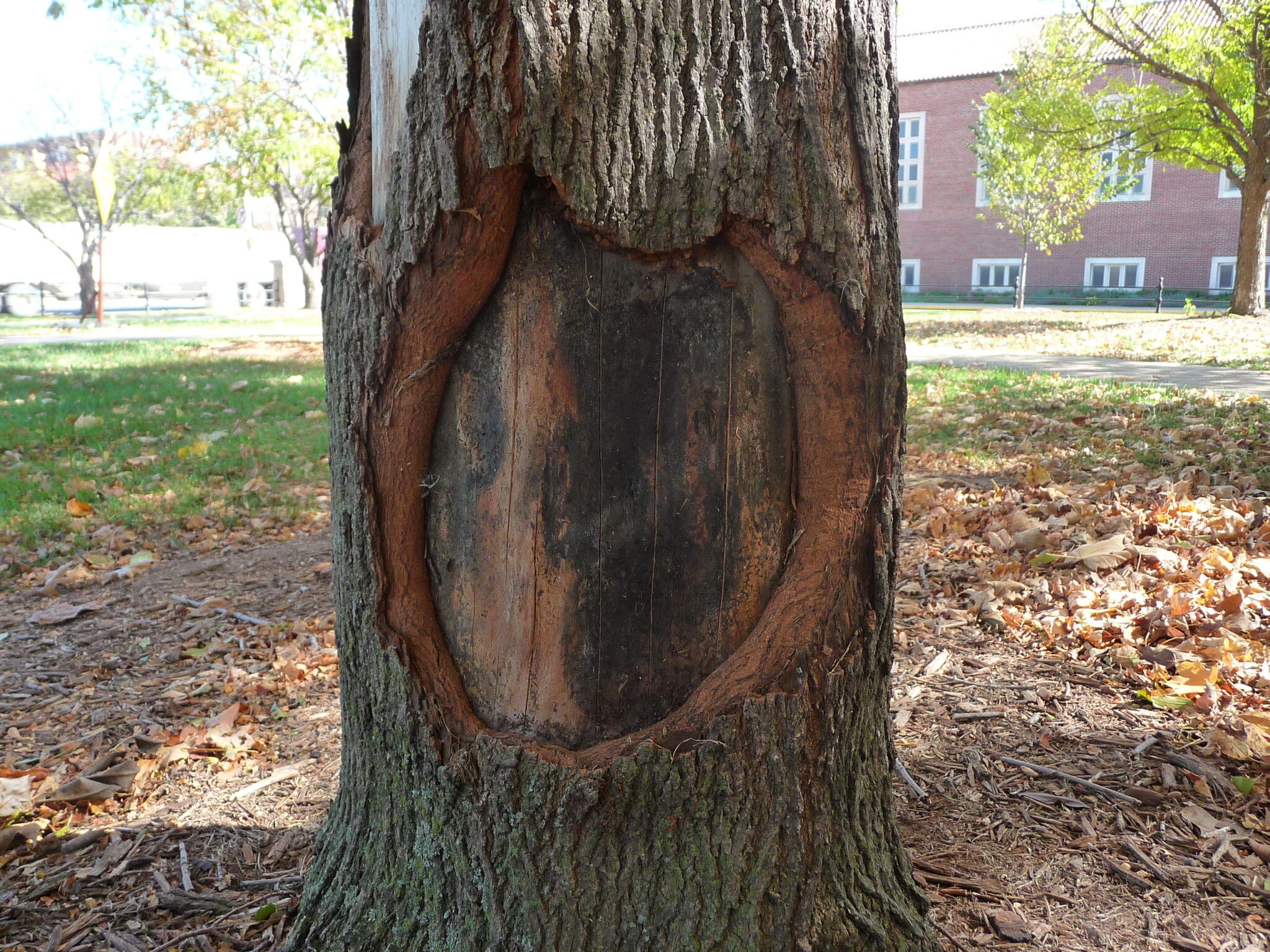
Tree trunk damaged by construction equipment developing wound wood around the edges to eventually seal the wound.
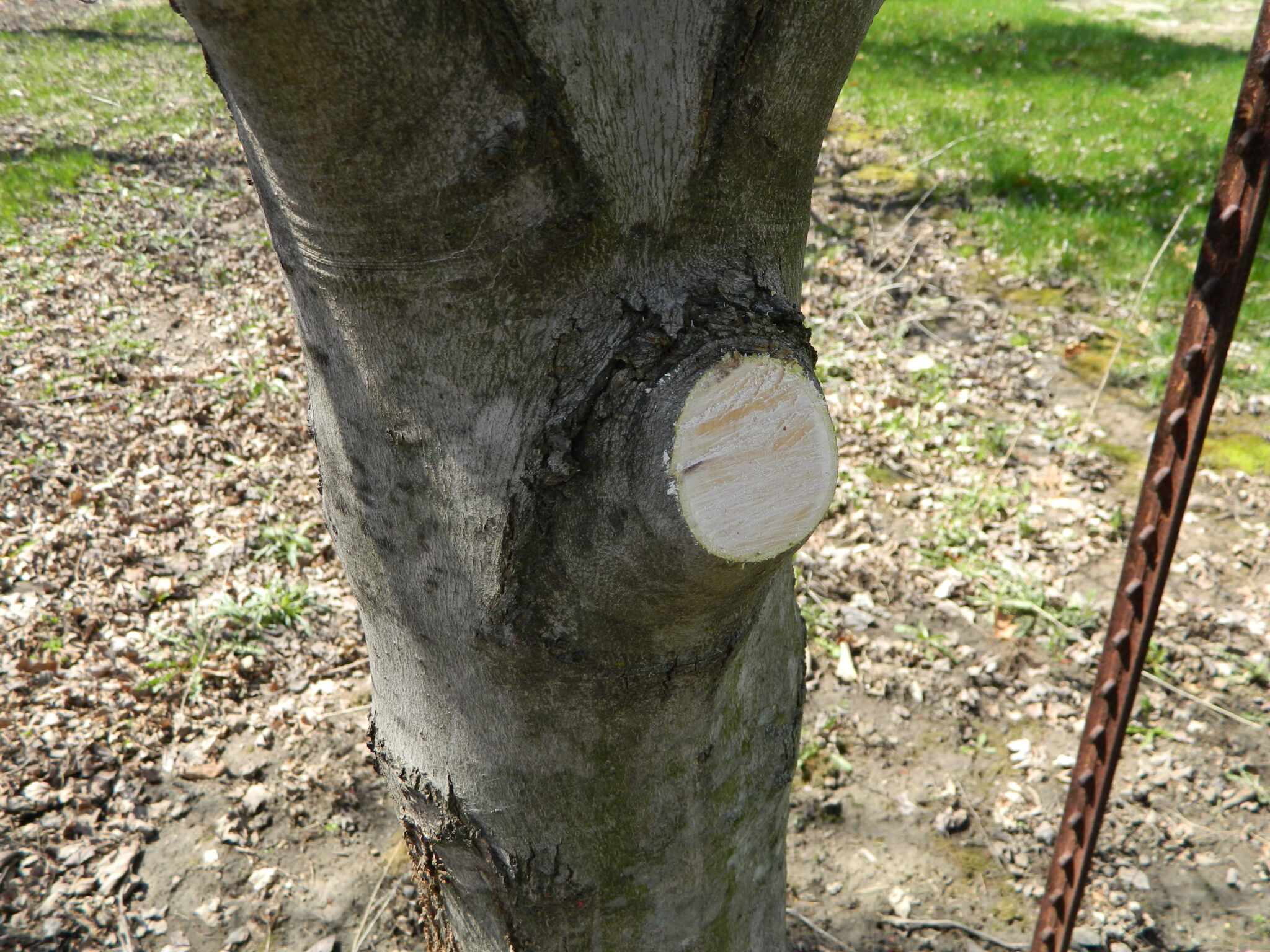
Pruning cuts will develop callus tissue on the exposed tissue giving rise to wound wood.
Wound recovery rates vary widely for different tree species. The speed of recuperation is greatly affected by developmental environmental conditions, vigor and health of the tree. Some trees may never completely close their wounds due to their genetic capacity or perhaps inadequate resources to keep the tree vigorous. However, numerous studies reveal that faster wound closure results in fewer health issues for the tree. Quick healing is always better!
A healthy tree will seal wounds faster and the same for younger trees as well. Trees that are planted in well-drained, quality soils, with good texture, structure, and containing adequate nutrition levels, grow in a way that favors the healing process. Thus, when planting trees, homeowners should be aware of the effects of site selection, soil quality, and other site factors that may impact tree growth.
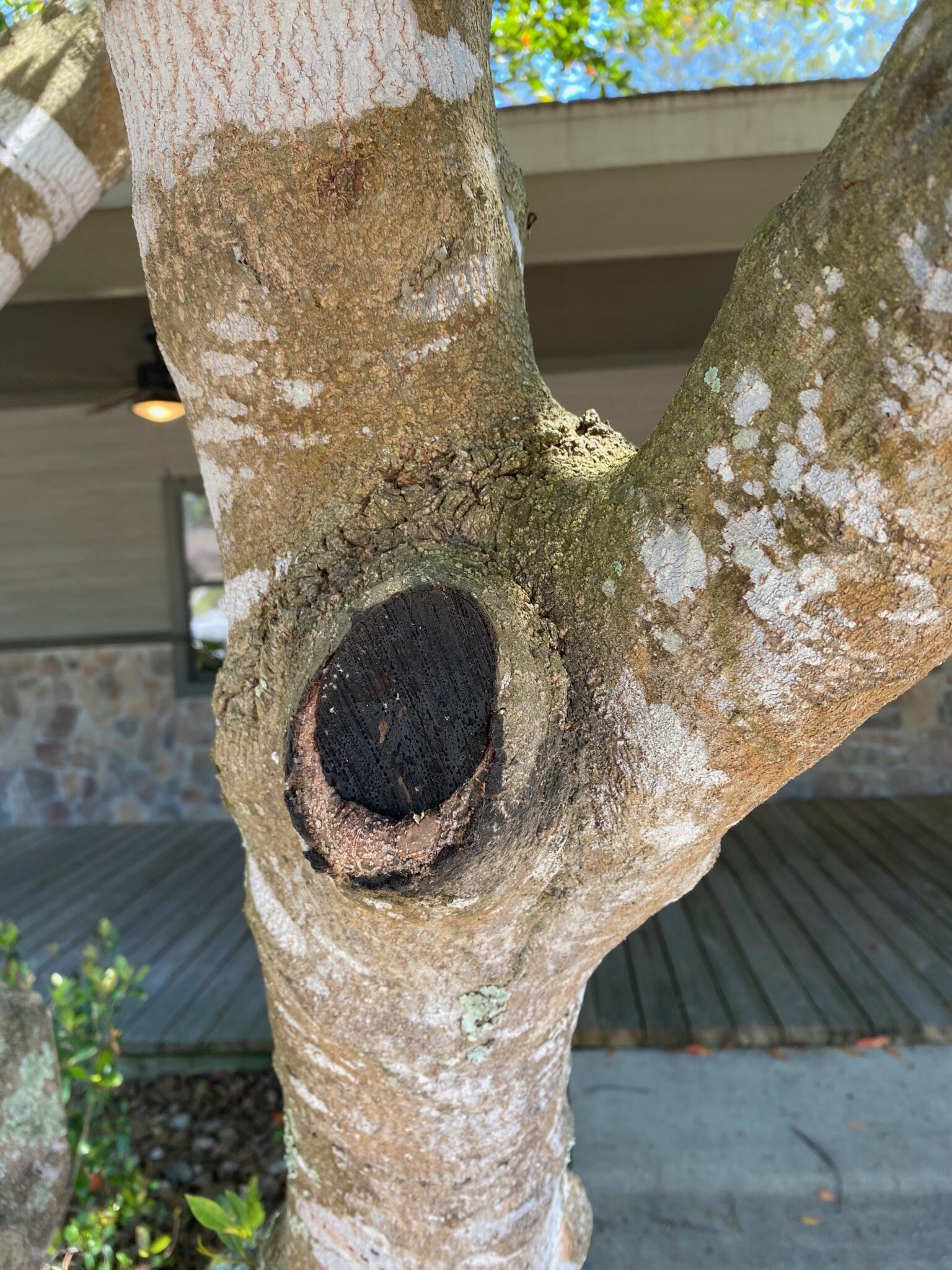
Wound dressings slow closure and can prevent healing.
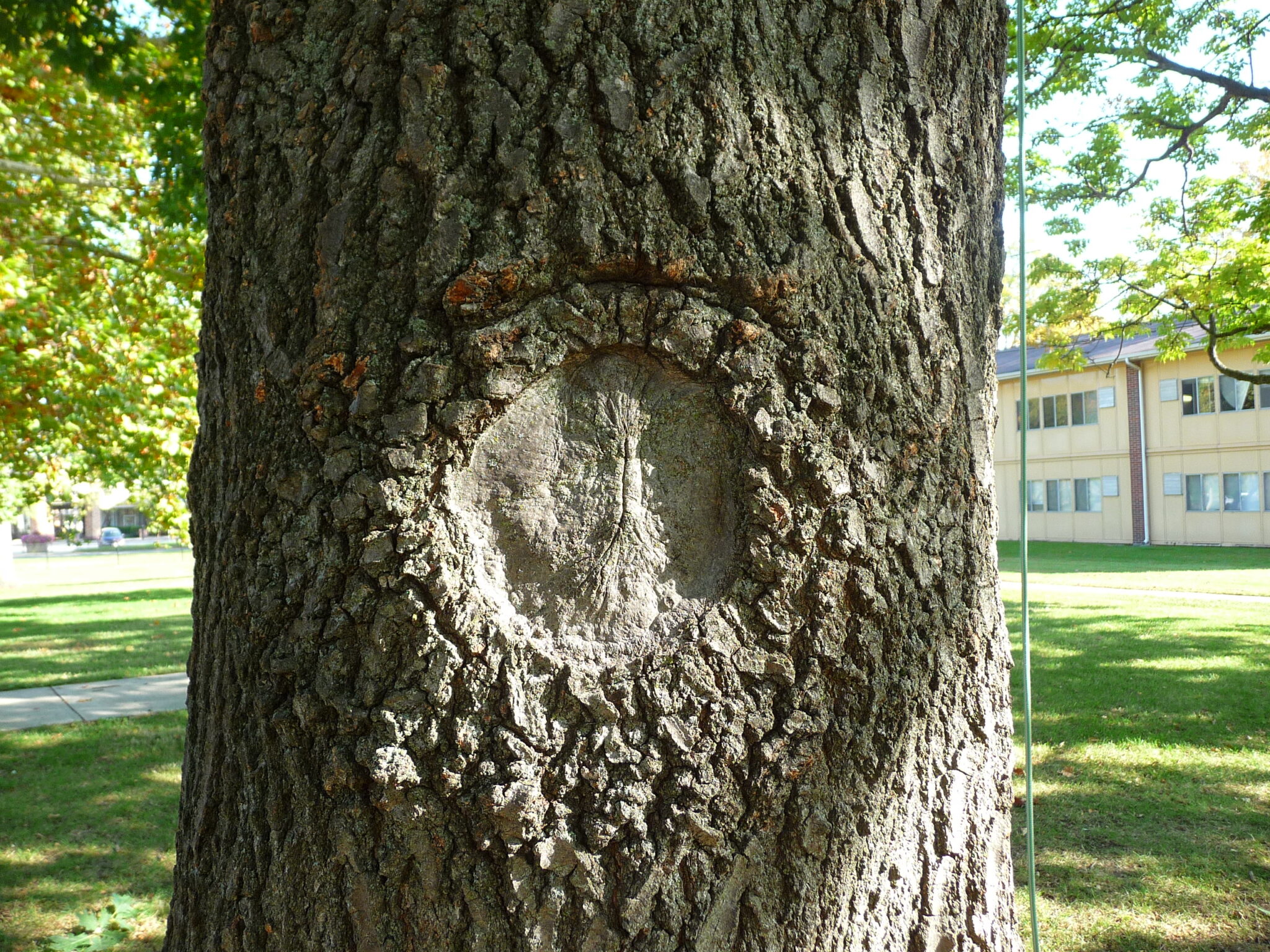
Complete wound closure improves tree health and slows decay.
There are few ways wound closure can be hastened, or at least not inhibited. First, it is essential to avoid limiting oxygen availability to the wounded tissues. Oxygen is necessary for proper recovery. For example, painting a wound with any kind of material that interferes or impedes oxygen will slow or even prevent wound closure by poor callus formation. Wound treatment with petroleum-based products is not recommended. In fact, research indicates any type of wound dressing can slow the healing process. There is one exception for treating wounds. This is in areas where oak wilt disease occurs, wound paints may be useful in preventing insect spread of the oak wilt fungal pathogen.
Basically, the best way to help insure proper wound closure and quick and effective sealing of the tissue is a proper pruning cut and preventing damage whenever possible.
Find a professional
Be sure to always hire an insured, tree care professional, preferably and ISA Certified Arborist with the experience, expertise, and equipment to provide proper tree care. Require proof of liability insurance to protect yourself as well.
Another easy way to find a tree care service provider in your area is to use the “Locate Your Local Tree Care Industry Association Member Companies” program. For more information refer to the publication Trees and Utilities at the Purdue Education Store.
Find an ISA Certified Arborist in your area by visiting the Trees Are Good website.
Resources
Tree Pruning Essentials, Publication & Video, The Education Store, Purdue Extension resource center
Tree Pruning: What Do Trees Think?, The Education Store
Mechanical Damage to Trees: Mowing and Maintenance Equipment, The Education Store
Tree Installation Process and Practices, The Education Store
Tree Pruning for the Landscape, Webinar, Purdue Extension – Forestry and Natural Resources Youtube channel
Lindsey Purcell, Chapter Executive Director
Indiana Arborist Association
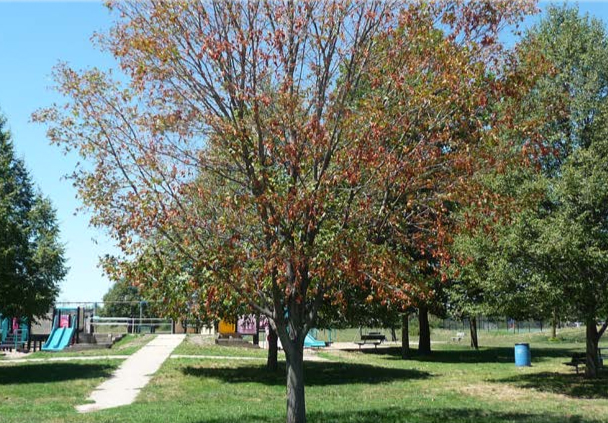 Many homeowners are finding their trees with dry and wilted leaves and no rain in sight. This publication describes how homeowners can deal with these drought-stressed trees, Drought? Don’t Forget the Trees!
Drought can have a major impact on tree health and survival. Water is the most limiting ecological resource for a tree, and without adequate moisture, decline and death are imminent. It reduces carbohydrate production, significantly lowering energy reserves and production of defense chemicals in the tree.
Trees in a weakened state from drought are more susceptible to pests, which can further weaken the tree, and even kill part or all of it. Although there is nothing we can do to prevent drought, it is important to know what can be done to reduce long-term effects of prolonged dry conditions.
Resources:
Water Your Trees, Video, Purdue Extension – Forestry and Natural Resources (FNR) YouTube Channel
Trees in Times of Drought, Video, Purdue Agriculture
INPREPared, Purdue Extension
Drought Information, Indiana Department of Natural Resources
Tree Planting Part 1: Choosing a Tree video, Purdue Extension-FNR YouTube Channel
Lindsey Purcell, Chapter Executive Director
Indiana Arborist Association
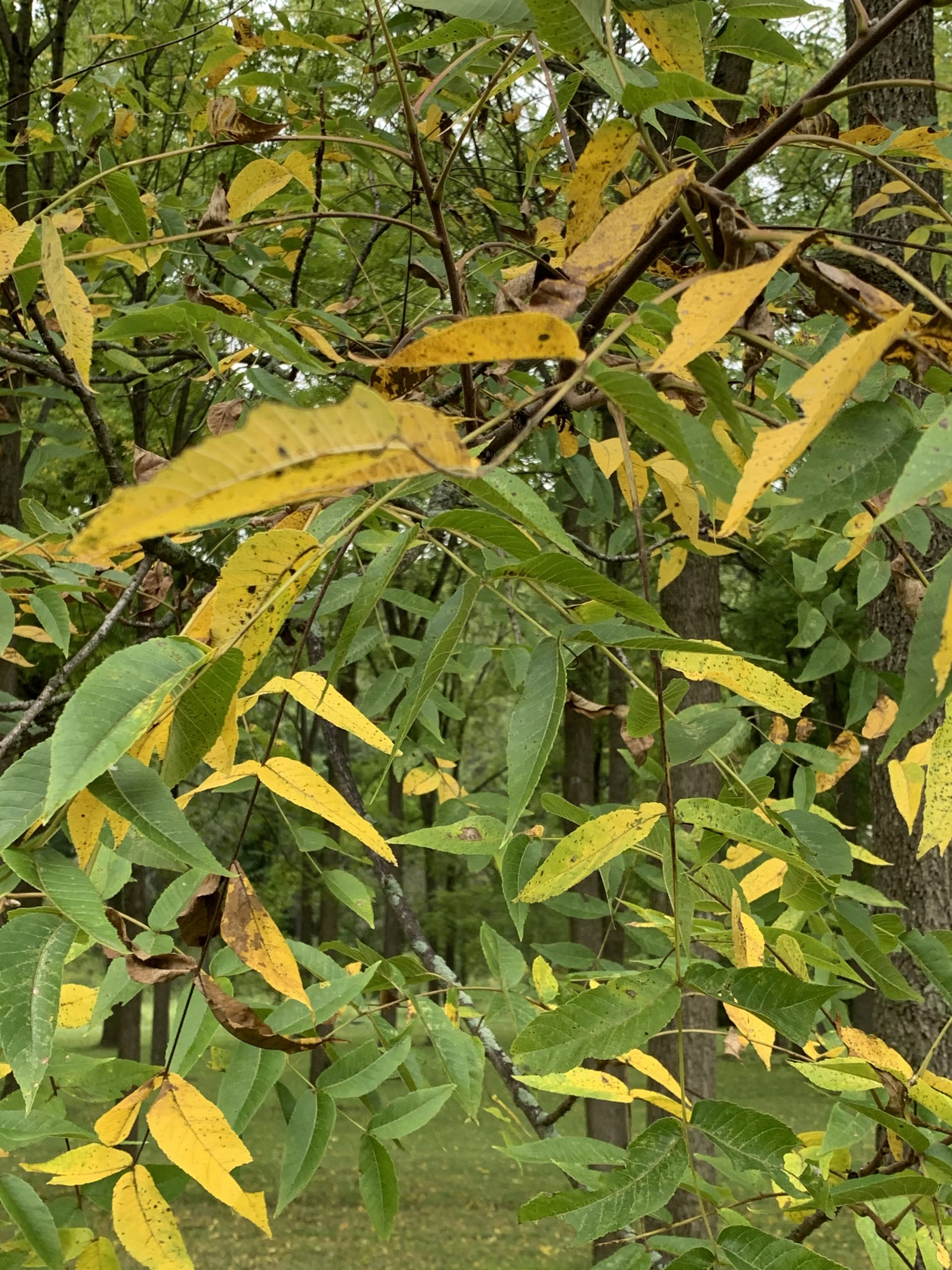
Brown or black spots with yellowing are signs of anthracnose.
This time of year, many black walnut trees’ leaves may have black spots, turn yellow and begin to drop. This is commonly known as anthracnose, a fungal disease that causes trees to drop their leaves prematurely.
Anthracnose is worsened by wet weather, and some trees are more genetically susceptible to anthracnose than others. It is not fatal but can look like a serious problem. The absence of leaves can slow a tree’s growth and can reduce the nut crop, although by this time of year growth may have slowed or stopped for the season.
Anthracnose generally begins as small circular brown to black areas on the leaflets. Over the season those spots expand and cause leaf drop. There are a few other leaf spot diseases of black walnut, see the references below for descriptions of those diseases.
Although unsightly, there is no need for further action if you are growing timber and have anthracnose in a plantation or woods. It can be an issue if you are growing walnuts for a nut crop, and there are resources and spray products to help manage the fungus in those situations.
If you have individual landscaping trees and want to limit anthracnose spread there are few things you can do:
- Gather fallen leaves and compost or remove them from the site.
- Control weeds which could carry the fungus.
- Plant walnut trees where there is good air circulation.
- Keep the trees healthy and vigorous by managing soil fertility and thinning competition as needed.
Resources
Walnut Anthracnose, Walnut Notes, U.S. Department of Agriculture, Forest Service, North Central Forest Experiment Station
Indiana Walnut Council, Industry Representatives include 45 states and 3 foreign countries
Diseases in Hardwood Tree Plantings, The Education Store, Purdue Extension resource center
Study: Fungus Behind Deadly Disease in Walnut Trees Mutates Easily, Complicating Control, Purdue Agriculture News
Indiana Walnut Council
Diseases in Hardwood Tree Plantings, The Education Store, Purdue Extension resource center
Why are my walnut trees dropping their leaves?, Purdue Extension – Forestry & Natural Resources (FNR) Got Nature? Blog
Invasive Species Walnut Twig Beetle Detected in Indiana, Purdue Extension – FNR Got Nature? Blog
Intro to Trees of Indiana: Black Walnut, Purdue Extension – FNR Got Nature? Blog
Planting Hardwood Seedlings in the Central Hardwood Region, The Education Store
Regenerating Hardwoods in the Central Hardwood Region: Soils, The Education Store
Fertilizing, Pruning, and Thinning Hardwood Plantations, The Education Store
Resources and Assistance Available for Planting Hardwood Seedlings, The Education Store
Liz Jackson, Manager Walnut Council / IN Forestry Woodland Owners Association (IFWOA) & Engagement Specialist
Purdue University Department of Forestry and Natural Resources
Purdue Extension forester Lenny Farlee tells you where to find and how to identify a species that clings to many of our trees, poison ivy. Protect yourself from the itch by recognizing this species before it is a problem.
If you have any questions regarding trees, forests, wildlife, wood products or other natural resource topics, feel free to contact us by using our Ask an Expert web page.
Resources
Poison Ivy, Purdue Landscape Report
Poison Ivy, Purdue Extension
Poison Ivy, The Education Store, Purdue Extension resource center
Investing in Indiana Woodlands, The Education Store
Tree Appraisal and the Value of Trees, The Education Store
Forest Improvement Handbook, The Education Store
ID That Tree, Playlist, Purdue Extension – Forestry and Natural Resources Youtube Channel
A Woodland Management Moment, Playlist, Purdue Extension – Forestry and Natural Resources Youtube Channel
Lenny Farlee, Sustaining Hardwood Extension Specialist
Purdue University Department of Forestry and Natural Resources

Recent Posts
- Deer Season Special – MyDNR
Posted: November 4, 2025 in Disease, Wildlife - Avian Flu in Birds, IN-PREPared
Posted: October 21, 2025 in Disease, Wildlife - Fungal Decay of Ash Trees, Purdue Landscape Report
Posted: October 9, 2025 in Disease, Forestry, Urban Forestry, Woodlands - Marssonina Leaf Spot and Blotch of Poplar, Purdue Landscape Report
Posted: October 1, 2025 in Disease, Forests and Street Trees, Urban Forestry, Woodlands - IN DNR Deer Updates – Epizootic Hemorrhagic Disease Detected in Several Areas in Indiana
Posted: October 16, 2024 in Alert, Disease, Forestry, How To, Wildlife, Woodlands - The Summer of Triclopyr – Purdue Landscape Report
Posted: August 21, 2024 in Disease, Forestry, Forests and Street Trees, Invasive Plant Species, Urban Forestry, Wildlife - Septorioides Needle Blight of Pine – Purdue Landscape Report
Posted: July 31, 2024 in Disease, Forestry, Plants, Wildlife - Wild Deer in Chronic Wasting Disease Positive Areas – MyDNR
Posted: July 29, 2024 in Disease, Forestry, Urban Forestry, Wildlife - Case Study: Maple Tree Pests – Purdue Landscape Report
Posted: June 26, 2024 in Disease, Forests and Street Trees, Plants, Spiders, Urban Forestry, Wildlife, Woodlands - MyDNR – First positive case of chronic wasting disease in Indiana
Posted: April 29, 2024 in Alert, Disease, How To, Safety, Wildlife
Archives
Categories
- Alert
- Aquaculture/Fish
- Aquatic/Aquaculture Resources
- Ask the Expert
- Christmas Trees
- Community Development
- Disease
- Drought
- Forestry
- Forests and Street Trees
- Gardening
- Got Nature for Kids
- Great Lakes
- How To
- Invasive Animal Species
- Invasive Insects
- Invasive Plant Species
- Land Use
- Natural Resource Planning
- Nature of Teaching
- Plants
- Podcasts
- Ponds
- Publication
- Safety
- Spiders
- Timber Marketing
- Uncategorized
- Urban Forestry
- Webinar
- Wildlife
- Wood Products/Manufacturing
- Woodland Management Moment
- Woodlands