 Purdue University - Extension - Forestry and Natural Resources
Got Nature? Blog
Human changes to the environment, like urbanization and climate change, have caused and will cause many wildlife extinctions. Efforts to conserve species occur all over the world, but not all species are seen as equal. In the animal conservation world, charismatic species play the lead roles in a show, while lesser-known or less-attractive species act as stage crew: we all know they are present, but we’re largely uncertain of what they do or how they play into the whole picture. As a result, we tend to see less conservation funding for these species.
Charismatic species are often large, fluffy, or cute: polar bears, narwhals, pandas, and koalas are excellent examples. They dominate news stories, children’s books, and most forms of media. In contrast, non-charismatic species are more difficult for humans to relate with: mussels, mice, and small fish fall into this category.
Societal bias towards charismatic species starts young: if you ask any child what their favorite animal is, chances are high that the species will be either cute and cuddly like a rabbits and foxes, or big and fearsome like bears or sharks. Chances are low that it will be a something slimy, small, or otherwise unattractive like a fish, reptile or bug.
Why is funding so low, or non-existing, for the not so furry, not so cute endangered species?
According to a study in the U.K., adults are more likely to donate money to causes represented by photos of charismatic species than non-charismatic species. This bias appeal results in the majority of research and conservation funding being dedicated to a small group of about 80 well-known, charismatic species. These species have what Dr. Hugh Possingham of the National Environmental Research Program (NERP) refers to as “donor appeal”. The remaining, non-charismatic species, tend to fall by the wayside, receive less funding and research interest. As a result, they tend to go extinct at higher rates. As Dr. Possingham says, “…if you’re an obscure animal or plant in a remote place, you have next to no hope of getting conservation resources.”
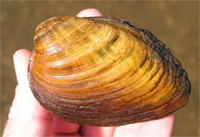
Clubshell mussel.

Results showing that the public are not excited to conserve non-charismatic wildlife is not surprising to Belyna Bentlage, a Purdue University outreach specialist, who specializes in research and outreach related to mussels. “People like to protect species that they feel they can relate to, that they can imagine owning as pets, like bear cubs or playful monkeys. It’s difficult to feel a connection to a hellbender or mussel. These animals don’t move as much, aren’t very interactive, and are not very cute. People just can’t relate to them in the same way as more charismatic species,” says Bentlage.
The lack of relate-ability of non-charismatics can spell disaster for many species. Belyna says, “When people don’t feel connected to a species, they won’t give money to fund research or protect the species. Lawmakers aren’t interested because the public isn’t interested, so it’s left up to researchers. So little is known about the ecological role of many of these species, that it’s difficult for researchers to justify why they should be studied. With the competitive funding climate in research, less charismatic species loose out.”
With a tight funding climate, uninterested lawmakers, and a fickle, how can we protect these threatened non-charismatic species?
One solution might just be in making non-charismatic species charismatic. Outreach coordinators like Belyna Bentlage are working cooperatively with biologists to change the way humans perceive of slimy, spiny, gross or otherwise unattractive species.
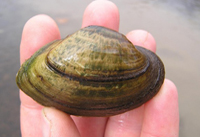
Snuffbox mussel.
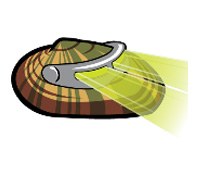
The project Belyna works on, with Purdue FNR Professor Linda Prokopy and Associate Professor Rod Williams gives super-hero personalities to non-charismatic mussels. Each mussel species has a special power that reflects something about its innate characteristics, like the snuffbox and clubshell mussel images shared in this blog.
“Making these animals more relatable and fun allows both children and adults to better understand their importance. People consciously pick their favorites, compare the drawings, and then get excited when they see these species in the wild. It creates a public that is really interested in protecting the species,” Bentlage explained.
Erin Kenison, a PhD student at Purdue University, has helped use similar tactics to promote conservation of hellbenders. The poorly named species is actually a giant salamander that used to inhabit all Indiana rivers, but is now restricted to the Blue River giant salamander that used to inhabit all Indiana rivers, but is now restricted to the Blue River.
The large, green, slimy creature is aptly nicknamed “old lasagna sides” because of its flappy skin that bunches at its sides. The Help the Hellbender project uses costumes, cartoons, coloring pages and games to generate public attention for the species.
“Historically, its been believed that hellbenders had evil powers and could even cause the death of babies,” says Kenison. “Making the hellbender more relatable dismantles a lot of these beliefs, making it more likely that river-users won’t try to harm them.”
Are we willing to learn more about the non-charismatic species and help with conservation efforts?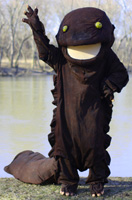
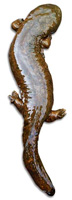
While there are many challenges for the conservation of non-charismatic species, Belyna Bentlage also says that the public’s lack of familiarity with these species may be a strength. “When people don’t know much, they are often willing to learn and adapt their actions. They are not as set in their ways, so it’s more likely that we can introduce new behaviors to protect a species. Overall, people generally want to help threatened species, not hurt them.”
Non- charismatic wildlife, as slimy or spiny or unattractive as they may be, are an important part of the natural ecosystem. Next time you see a mussel, hellbender, or similar creature, take a photo, but leave it be. These species need your help and support to survive, even if their beauty is mainly on the inside.
If you would like to find out how you can help or learn more about these endangered species, see the resources listed below:
Help the Hellbender
DNR: Nature Preserves: Endangered Threatened & Rare Species, Indiana Department of Natural Resources (IDNR)
Zoe Glas, Graduate Research Assistant
Purdue Department of Forestry and Natural Resources
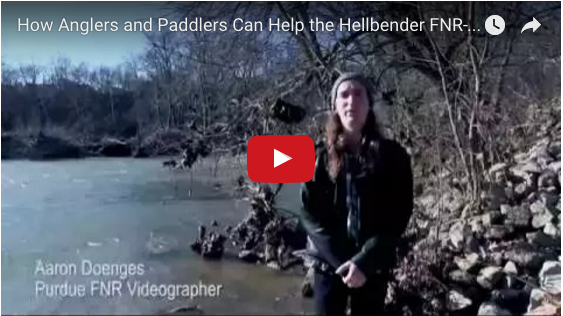 Paddling and fishing are great ways to enjoy our rivers and streams. However, these seemingly harmless activities can actually be harmful to the eastern hellbender and other aquatic wildlife if the proper precautions are not followed.
In this video, Purdue videographer Aaron Doenges speaks with Tom Waters and Ranger Bob Sawtelle, two professionals around Indiana’s Blue River, to learn more about safe ways to paddle and fish. By following a few simple tips, paddlers and anglers can still enjoy these aquatic activities without harming the local wildlife.
If we all do our part to help the hellbender, this at-risk species can survive and grow. Anglers and paddlers aren’t the only people that can help. Farmers can also check out the video Improving Water Quality Around Your Farm to learn healthy farming practices to improve water quality for the hellbender and other aquatic wildlife, and landowners are encouraged to check out Improving Water Quality At Your Livestock Operation to learn about how to manage livestock without polluting nearby rivers and streams.
To stay current with the latest news and research on the eastern hellbender, please visit the Help the Hellbender website.
Resources:
How Anglers and Paddlers Can Help the Hellbender – The Education Store, Purdue Extension Resource Center
Improving Water Quality Around Your Farm – The Education Store
Improving Water Quality At Your Livestock Operation – The Education Store
Eastern Hellbender ID Video – The Education Store
Help the Hellbender – Purdue Extension
Rod Williams, Associate Head of Extension and Associate Professor of Wildlife Science
Purdue University Department of Forestry and Natural Resources
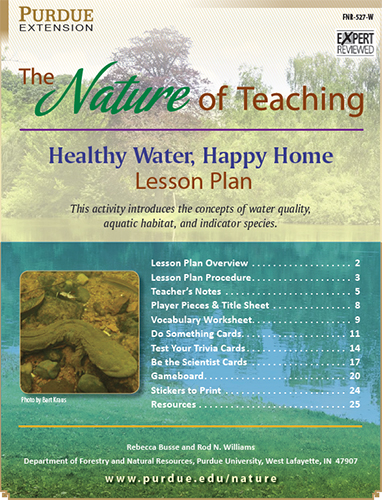 Many choices we make in our daily lives can have an impact on the water quality of rivers and streams around us. Animals like the eastern hellbender need clean water for their habitats, and they depend on us to make environmentally friendly choices whenever possible. Small changes to our daily routines such as sweeping sidewalks and driveways instead of hosing them off can improve water quality around us.
The new lesson plan from The Nature of Teaching titled Healthy Water, Happy Home offers a fun way for 4th and 5th grade students to learn about healthy water choices they can make in their home and community, along with learning how to identify aquatic animal species like the eastern hellbender. Healthy Water, Happy Home is available as a free download in The Education Store which includes a board game, vocabulary worksheet, accompanying lesson notes and power point slides for the teacher. It can be used as a 60-90 interactive classroom lesson on water quality. The board game allows students to choose an aquatic species like the northern water snake or water strider as their player piece, travel along the riverbed answering questions along with completing fun and educational tasks about positive water quality choices. The first group to make it to the hellbender, indicating the highest level of water quality, wins the game.
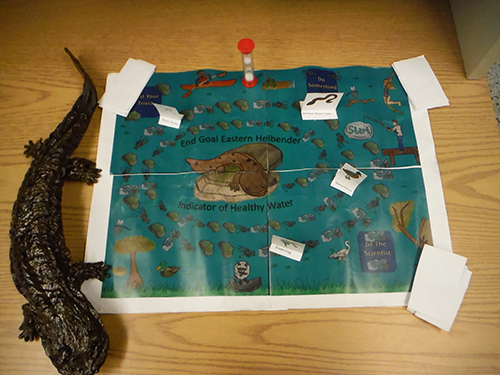 Teachers are highly encouraged to check out Healthy Water, Happy Home as well as the rest of The Nature of Teaching lesson plans for educational wildlife activities for the classroom. To keep updated on resources involving the eastern hellbender conservation efforts, please visit HelpTheHellbender.org.
Resources:
Healthy Water, Happy Home – Lesson Plan – The Education Store, Purdue Extension Resource Center
The Nature of Teaching – Purdue Extension
Lesson Plans – Help the Hellbender
Kids Resources – Help the Hellbender
Hellbender Havoc video game – Google Play Store
Rebecca Busse, Extension Associate
Purdue Department of Forestry and Natural Resources
Rod Williams, Associate Professor of Wildlife Science
Purdue Department of Forestry and Natural Resources
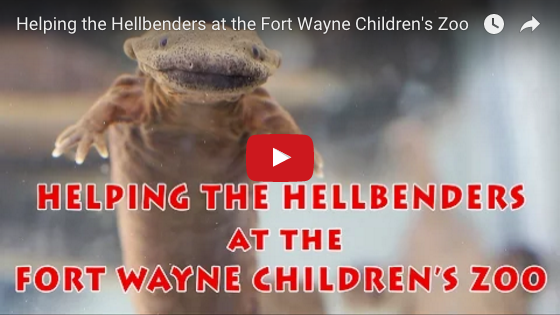 The Fort Wayne Children’s Zoo is one of three Indiana zoos working with Purdue University to study and raise hellbenders in captivity until they are ready to be released into the wild in an effort to grow their native population. Last spring, Rod Williams and his team at the Aquaculture Research Lab transferred young hellbenders to the zoo, where they will be reared for the next couple years. The zoo also puts on an outreach program called Kids4Nature where hellbenders were featured as one of the animals children could vote for with their quarters, collecting money for the hellbenders and other conservation projects.
In this new video, former Education and Communications Director Cheryl Piropato explains more about the zoo’s outreach process with the hellbenders, and Hellbender Keeper Dave Messmann offers a behind-the-scenes look at the hellbenders themselves. Check out “Helping the Hellbenders at the Fort Wayne Children’s Zoo” to see for yourself and learn more about the Fort Wayne Children’s Zoo’s involvement in the Help the Hellbender initiative.
The other two Indiana zoos are also doing great things to help the hellbenders. Columbian Park Zoo in Lafayette held a “Help the Hellbender Day” last summer with educational games and activities for the whole family to learn more about this at-risk species. Mesker Park Zoo in Evansville is preparing a public hellbender exhibit that will be available later this spring. To stay updated in the world of hellbender outreach, check out HelpTheHellbender.org.
Resources:
Helping the Hellbenders at the Fort Wayne Children’s Zoo – Purdue Extension
HelpTheHellbender.org – Purdue Extension
Help the Hellbender Day at Columbian Park Zoo a Great Success – Got Nature?
Purdue partners with Indiana zoos for hellbender conservation – Purdue Agriculture News
Rod Williams, Associate Head for Extension and Associate Professor of Wildlife Science
Purdue University Department of Forestry and Natural Resources
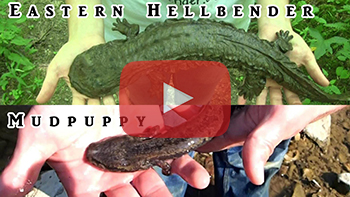 One of the main problems facing eastern hellbender (Cryptobranchus alleganiensis) conservation is that many people mistake this endangered salamander for another common species called a mudpuppy (Necturus maculosus). Conservationists and researchers encourage any outdoor enthusiasts to report eastern hellbender sightings by going to helpthehellbender.org or by reporting to a conservation officer. Unfortunately, many hellbender sightings are actually mudpuppy sightings. This can cause confusion in conservation efforts, so the need for public education on hellbender identification is strong.
We have created the “Eastern Hellbender ID Video” to teach people:
- How to identify an eastern hellbender
- How to tell the difference between a hellbender and a mudpuppy
- What to do if they see an eastern hellbender
Help the Hellbender Day at Columbian Park Zoo a Great Success – Got Nature?
Purdue partners with Indiana zoos for hellbender conservation – Purdue Agriculture News
The Nature of Teaching: Discovering the Watershed – The Education Store, Purdue Extension Resource Center
Purdue Department of Forestry and Natural Resources
 Information from Grist.org:
If you’re like many other Americans, at some point this week unless you are a vegetarian, you will probably be eating some sort of red meat like beef or pork. In fact, you might be having it for dinner later this evening. However, a significantly smaller amount of the people reading this might have recently had a meal of seafood. As of 2012, the average American consumed 71.2 pounds of red meat a year, compared to only 14.4 pounds of fish and shellfish, according to the annual report Fisheries of the United States 2012.
This might not seem like a huge deal today, but something to consider is our planet’s growing population. Over the next 40 years, we will have 2.3 billion extra people, 2.3 billion extra mouths to feed and not a whole lot of extra space for producing food. Looking to the future, it is crucial that we think about efficiency and sustainability to maximize the amount of food we can produce with the resources we have. And we have to start thinking about the idea that the amount of red meat currently being produced might not be the most effective way to do that.
To feed a cow, it needs to be supplied with grass to graze on. A lot of grass, actually. A cow needs calories not only to grow but to produce heat and stay upright. Pound for pound, a cow needs 8.7 pounds of feed for every pound of meat it provides. Pigs, while a little more efficient, still need 5.9 pounds of feed per pound of pork. A large percentage of our crops grown go straight into feed for animals that provide much less than they take. This sounds pretty inefficient compared to just eating the plants and vegetables ourselves and skipping the energy-burning middle man. However, this is not to say that livestock is a bad thing – they provide many benefits to agriculture like consuming resources not edible to humans and providing natural fertilizer in the form of manure. Non-edible parts of the animals are used in many things from food glue to train brakes. Eliminating livestock is not the answer, but perhaps switching our focus to farmed fish is.
Farmed fish is not to be confused with fisheries. Both are highly inspected and provide us with food with great health benefits as discussed in our blog post “The Benefits of Seafood Consumption.” However, there is a distinct difference between the two. Farmed fish are grown in cages or monitored areas and fed regularly, similar to livestock on land. Fisheries catch fish in the wild and use a little more energy in the process. There are likely very few new areas for fishing left to be discovered, and already there is a limit to how many fish we can catch so that the fish population can keep up. So while fisheries are also important, a focus on fish farming, where we can still grow, is important.
Unlike a cow or any other warm-blooded livestock, a fish does not need to spend energy to keep warm and stay upright. In fact, a farmed fish can provide a 1 to 1 ratio of feed to weight. This feed comes from other low-value fish, and research is being conducted for even cheaper alternatives such as insects or flax. Shellfish actually don’t require feeding at all, taking their nutrients through filtering and cleaning the water. Some people have a negative view on farmed fish after some pretty unregulated and chemical-infused fish farms of the 1980s showed the practice in an unflattering light. However, practices have changed dramatically since then, and as the industry evolves, newer and cleaner methods are being developed every day. Salmon, once the face of “bad fish farming,” are now being certified sustainable for the first time.
Using fish for a larger amount of our protein is key to sustaining our food supply to meet a growing need. Farmed fish provide a very efficient source of protein that could lessen the demand for much less-efficient red meats, freeing up more resources and allowing us to feed more people. It might take a conscious effort at first; a salmon might not be a desirable replacement for a steak dinner for some, especially in our country. We’re already making progress; as of 2012, more farmed fish was produced than beef. With enough people on board, we can begin making the change today and help to feed the people of the future.
Resources
Aquaculture and Aquatic Resources Purdue Forestry and Natural Resources Extension
The Benefits of Seafood Consumption The Education Store, Purdue Extension Resource Center
A Fish Farmer’s Guide to Understanding Water Quality, Koi Organization International
Everything You Always Wanted to Know About Fish Farming But Were Afraid to Ask, Grist.org
Aquaculture, National Oceanic and Atmospheric Administration Fisheries
Aaron Doenges, Assistant Web Designer/Videographer
Purdue FNR Extension
Photo credit: Dan Annarino
Hopefully no one is reading this after a catastrophic loss of their pond. This very wet summer has tested some ponds’ ability to hold and safely release excess water. I would like to quickly review the overflow structures ponds should have and also some management necessary to ensure the safety of ponds levees/dams.
For recreational ponds, there should be one or perhaps two means of releasing water from the pond. Most of these ponds are built on sloping land in order to capture rainwater to fill the pond. In this case, it is necessary to have an emergency spillway that will divert excess water once the pond is full away from the dam to prevent erosion and save the integrity of the structure. Usually they is just an earthen channel that runs around the end of the dam with an initial elevation 1-2 feet below the top of the dam. Water only runs through the spillway when the pond is full. An emergency spillway should have vegetation to prevent erosion but not to the extent that water is blocked from passing through efficiently.
A distinct advantage can be gained by having a drain structure installed through the dam when ponds are initially constructed. Drains such as this typically have a valve or swivel pipe which can regulate water level to whatever height the owner would like. With a wet summer such as we have had, the pond water level could be proactively lowered to save massive amounts of water passing through the spillway.
Additionally you can remove stagnant low oxygen water from the bottom of the pond. If a drain structure is releasing water from the bottom of the pond, it is a good idea to flush this valve two to three times per year to remove debris from around the structure which may plug it up if used infrequently. With these structures, it is a good idea to use the 6/12 rule. Water levels are kept six inches below maximum in order to catch any rain water event without overflowing. Evaporation and seepage will reduce the level back down over time. The 12 refers to the level the inches below maximum where you would add well water if you have the capacity. Generally this is only used with aquaculture ponds.
Control structures to maintain water levels will ensure the integrity of your ponds dams and levees. By controlling the amount of water flushing through a pond, the owner can also manage the productivity of the pond ecosystem by releasing/maintaining nutrients in the pond.
Resources
Commercial Greenhouse and Nursery Production: Controlling Algae in Irrigation Ponds, The Education Store, Purdue Extension Resource Center
Indiana Ponds, The Education Store
Indiana Ponds Q&A, The Education Store
Management of Ponds, Wetlands, and Other Water Reservoirs to Minimize Mosquitoes, The Education Store
Indiana Pond Management, Indiana Department of Natural Resources (IDNR), Fish & Pond Management
Ponds – Planning, Design, Construction, USDA Natural Resources Conservation Service (NRCS)
Bob Rode, Extension Aquaculture Specialist
Department of Forestry and Natural Resources, Purdue University
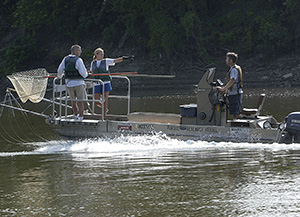
Photo credit: Tom Campbell
As boats enter and exit public bodies of water, they risk transferring aquatic plants, mussels or invertebrates that attach themselves to the bottom of the boat. While this might seem pretty harmless at first, this spreading of aquatic species runs the risk of introducing invasive species into new environments.
Invasive species cause harm to local ecosystems by reproducing exponentially when they are outside of their usual habitat and the organisms that keep their populations in check. They can then cause great damage by feeding on local species and the food they depend on. Once an invasive species is detected, it is oftentimes very expensive and difficult to control. For example, around 1991, the U.S. and Canada spent an estimated $20 million per year to control invasive sea lampreys and restore the trout populations that were damaged by them. In Indiana alone, we spend around $800,000 a year to attempt to control the growth of Eurasian watermilfoil, another nuisance invasive species.
In an attempt to avoid more cases like this in the future, the Indiana Department of Natural Resources (INDNR) is looking for help. Volunteers can sign up to record information about boats and their potential aquatic hitchhikers entering and leaving lakes during times of heavy use. The DNR Division of Fish and Wildlife can take this data and use it for public outreach and planning species management.
Those interested are highly encouraged to sign up on INDNR’s Volunteer Program page.
Resources
Aquatic Invasive Species (AIS), Indiana Department of Natural Resources
DNR Seeks Help Gathering Info on Spread of Aquatic Species, WFYI
Indiana Invasive Species Council, Purdue Entomology Extension
Invasive Plants, Purdue Agriculture Weed Science
The Education Store, Purdue Extension Resource Center (search “invasive”)
Indiana Department of Natural Resources
 A new sing-along music video has been added to the Help the Hellbender website. This provides a fun and catchy way for teachers and students to learn about hellbenders and see the researchers hard at work helping add to their numbers.
The Help the Hellbender website also has other resources for teachers and students including lesson plans, coloring pages and a Hellbender Havoc video game. Check out the site and sing along with the hellbenders!
Resources
Help the Hellbender, Purdue Extension
Purdue Partners With Indiana Zoos for Hellbender Conservation, Purdue Agriculture News
The Nature of Teaching: Discovering the Watershed, The Education Store, Purdue Extension Resource Center
Amphibians & Reptiles, Indiana Department of Natural Resources
Purdue Extension-Forestry and Natural Resources
 Mussels are a critical part of the ecosystem and work hard to keep our rivers clean. The Tippecanoe River hosts over 45 species of mussels, including six endangered ones. Mussel populations are in decline after being harvested by the millions in the 19th and 20th centuries. In an effort to restore the mussel population and keep the Tippecanoe River clean for wildlife populations as well as recreational activity, Purdue Extension has launched a new website about mussels called Heart of the Tippy.
This site provides detailed information on mussels and what we can do to help them. For example, carrying your canoe instead of dragging it over rocky-bottomed shallow water can save mussels from being crushed. It also offers an area where visitors can take a pledge to improve the Tippecanoe’s water quality and protect its mussel habitat.
Take the pledge today and help to protect the mussels and keep the Tippecanoe clean!
Resources
Extension Website Presents Ways to Help Protect Indiana’s Endangered Mussels, Purdue Agriculture News
Tippecanoe River, Indiana Department of Natural Resources

Recent Posts
- Discover the Great Lakes, The 2025 Helm Magazine is Available
Posted: November 17, 2025 in Aquaculture/Fish, Aquatic/Aquaculture Resources, Wildlife - Illinois-Indiana Sea Grant Newsletter Shares New Resources
Posted: November 13, 2025 in Aquaculture/Fish, Aquatic/Aquaculture Resources, Wildlife - Publication – Fish Muscle Hydrolysate
Posted: September 15, 2025 in Aquaculture/Fish, Aquatic/Aquaculture Resources - Publication – Direct Marketing Guidebook for Small/Medium-Scale Aquaculture Businesses
Posted: March 7, 2025 in Aquaculture/Fish, Aquatic/Aquaculture Resources, Publication - Conservationists Unite for Snuffbox Mussels – Wild Bulletin
Posted: February 20, 2025 in Aquaculture/Fish, Aquatic/Aquaculture Resources, Wildlife - Publication – Handbook on Processing Fish for Small-Scale Fish Farmers
Posted: October 17, 2024 in Aquaculture/Fish, Aquatic/Aquaculture Resources, How To, Publication, Wildlife - IISG Adds New Water Safety Videos
Posted: May 8, 2024 in Aquaculture/Fish, Aquatic/Aquaculture Resources, Community Development, Great Lakes, Wildlife - Farmers Helping Hellbenders RCPP Program Accepting Applications
Posted: May 1, 2024 in Aquaculture/Fish, Forestry, How To, Wildlife, Woodlands - 2024-25 Fishing Guide now available – Wild Bulletin
Posted: April 4, 2024 in Alert, Aquaculture/Fish, Aquatic/Aquaculture Resources, How To, Ponds, Wildlife - Look Out for Invasive Carp in Your Bait Bucket – Wild Bulletin
Posted: March 31, 2024 in Alert, Aquaculture/Fish, Aquatic/Aquaculture Resources, Invasive Animal Species, Wildlife
Archives
Categories
- Alert
- Aquaculture/Fish
- Aquatic/Aquaculture Resources
- Ask the Expert
- Christmas Trees
- Community Development
- Disease
- Drought
- Forestry
- Forests and Street Trees
- Gardening
- Got Nature for Kids
- Great Lakes
- How To
- Invasive Animal Species
- Invasive Insects
- Invasive Plant Species
- Land Use
- Natural Resource Planning
- Nature of Teaching
- Plants
- Podcasts
- Ponds
- Publication
- Safety
- Spiders
- Timber Marketing
- Uncategorized
- Urban Forestry
- Webinar
- Wildlife
- Wood Products/Manufacturing
- Woodland Management Moment
- Woodlands