 Purdue University - Extension - Forestry and Natural Resources
Got Nature? Blog
Issue:
There continues to be significant interest in rearing marine shrimp in Indiana and the Midwest. Two issues of interest to existing and potential producers are supply of shrimp larvae and information on Best Management Practices for rearing shrimp here in Indiana.
What Has Been Done:
The Indiana Soybean Alliance sponsored a demonstration project to see whether shrimp larvae could be raised using commercial feedstuffs (Live feeds are traditionally used). The theory being producers would not have to rely on shipments of larvae from tropical regions with significant risks. By using commercial feedstuffs, the footprint of operations could be reduced.
A one day meeting for producers is planned for February 10, 2016, bringing together shrimp rearing experts from Texas A & M and Kentucky State Universities along with Purdue experts in marketing, economics and environmental controls. This program will encompass almost all phases of production through sales.
Results:
Although the larval demonstration project was unsuccessful, with shrimp mortalities within one day of arrival, future research may be undertaken using different protocols by bringing in brood shrimp (parental stocks) instead of shrimp eggs.
Marine Shrimp Biofloc Systems: Basic Management Practices publication, The Education Store, Purdue Extension
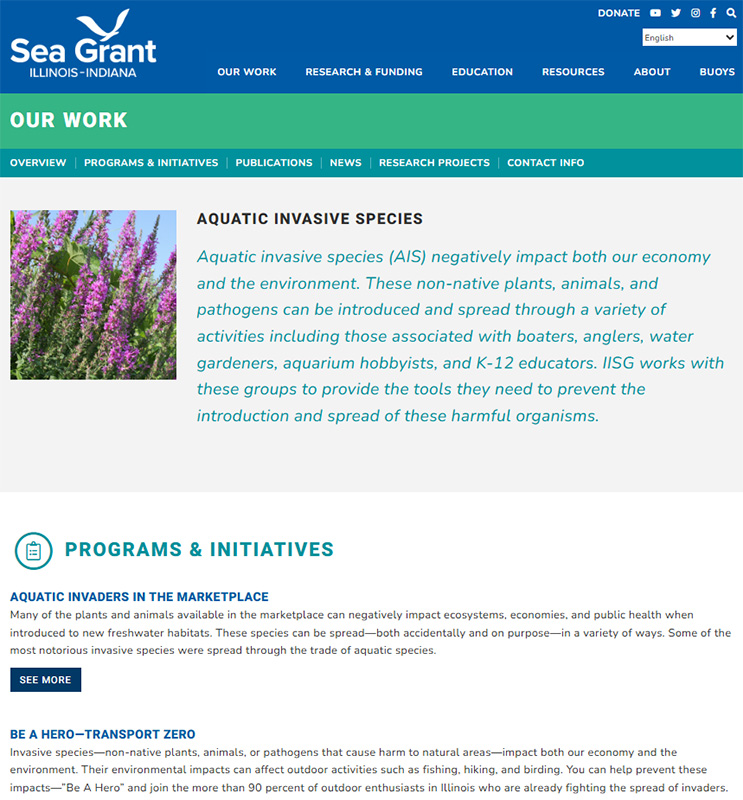
Once aquatic invasive species (AIS) are established in a new environment, typically, they are difficult or impossible to remove. Even if they are removed, their impacts are often irreversible. It is much more environmentally and economically sound to prevent the introduction of new AIS through thoughtful purchasing and proper care of organisms. Check out Illinois-Indiana Sea Grant’s web page the Aquatic Invasive Species and find resources for teachers, water garden hobbyists, aquatic landscaping designers and to aquatic enthusiasts. The video titled Beauty Contained: Preventing Invasive Species from Escaping Water Gardens is also available which contains guidelines that were adopted from the Pet Industry Joint Advisory Council and the Aquatic Nuisance Species Task Force along with addressing the care and selection of plants and animals for water gardens.
Resources:
Aquatic Invaders in the Marketplace, Illinois-Indiana Sea Grant (IISG)
Great Lakes Sea Grant Network (GLERL), NOAA – Great Lakes Environmental Research Laboratory
Indiana Bans 28 Invasive Aquatic Plants, Illinois-Indiana Sea Grant (IISG), Newsroom
A Field Guide to Fish Invaders of the Great Lake Regions, Illinois-Indiana Sea Grant (IISG)
Purdue Researchers Get to the Bottom of Another Quagga Mussel Impact, Illinois-Indiana Sea Grant (IISG)
Protect Your Waters, U.S. Fish and Wildlife Service & U.S. Coast Guard
Clean Boat Programs, Illinois-Indiana Sea Grant
Illinois-Indiana Sea Grant (IISG)
University of Illinois Extension and Purdue University Extension
 Quagga mussels, which arrived in Lake Michigan in the 1990s via ballast water discharged from ships, have colonized vast expanses of the Lake Michigan bottom, reaching densities as high as roughly 35,000 quagga mussels per square meter. The invasive species that can have major economic impacts filters up to 4 liters of water per day, and so far seems unaffected by any means of population control. It is also a constant threat to other systems, as it is readily transported between water bodies.
Researchers have long known that these voracious filter feeders impact water quality in the lake, but their influence on water movement had remained largely a mystery.
“Although Lake Michigan is already infested with these mussels, an accurate filtration model would be imperative for determining the fate of substances like nutrients and plankton in the water,” Purdue University PhD candidate David Cannon said. “In other quagga mussel-threatened systems, like Lake Mead, this could be used to determine the potential impact of mussels on the lake, which could in turn be used to develop policy and push for funding to keep mussels out of the lakes.”
For full article and video view Purdue Researchers Get to the Bottom of Another Quagga Mussel Impact.
Resources:
A Field Guide to Fish Invaders of the Great Lake Regions, Illinois-Indiana Sea Grant (IISG)
Protect Your Waters, U.S. Fish and Wildlife Service & U.S. Coast Guard
Profitability of Hybrid Striped Bass Cage Aquaculture in the Midwest, The Education Store, Purdue Extension resource center
A Guide to Marketing for Small-Scale Aquaculture Producers, The Education Store
Aquaculture Industry in Indiana Growing, Purdue Today
Sustainable Aquaculture: What does it mean to you?, The Education Store
Pond and Wildlife Management website, Purdue Extension
Fish Cleaning with Purdue Extension County Extension Director, Got Nature? Blog, Purdue Extension – Forestry and Natural Resources
Aquaponics: What to consider before starting your business, YouTube, Purdue Ag Economics
Aquatics & Fisheries, Playlist, YouTube, Purdue Extension – Forestry and Natural Resources
Illinois-Indiana Sea Grant (IISG)
University of Illinois Extension and Purdue University Extension
You’ve heard about all the traditional careers. But what about being an outdoor scientist? Introducing the world to The Familiar Faces Project which shares careers in fisheries, aquatic sciences, forestry, wildlife and sustainable biomaterials. This video will show by example what it’s like to be an outdoor scientist, walking you through a typical work day of Megan Gunn. For more information about The Familiar Faces Project, contact thefamiliarfacesproject@gmail.com.
Resources:
Aquatic Ecology Research Lab, Forestry and Natural Resources
Megan Gunn, Aquatic Ecology Research Scientist
Purdue University Department of Forestry and Natural Resources
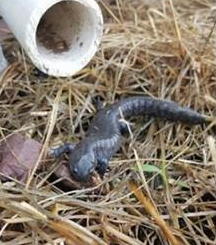 Question from Josh L Lady: Which salamander is this?
Answer:
The picture posted is one of our mole salamanders (family Ambystomatidae). This common family name comes from their habit of staying underground and in burrows of other creatures, except when breeding. Species in this family can be difficult to tell apart at times. Adding to the confusion, there is a species called the Mole salamander (Ambystoma talpoideum) which in Indiana is only found in the extreme southwestern part of the state.
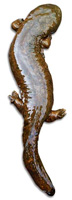
The species below is likely a Small-mouthed Salamander (Ambystoma texanum). It can be found throughout Indiana except the extreme northwestern and southeastern portions of the state. The Small-mouthed Salamander is a moderate sized salamander characterized by its slender head and small mouth. Most individuals are dark gray to grayish brown with light gray speckles (often resembling lichen-like markings), particularly on the lower sides of the body. Adults usually reach 11-19 cm in length and have an average of 15 costal grooves (i.e., the “wrinkles” on the sides of the body; range 13-15).
I say it is likely a Small-mouthed Salamander because they are nearly identical to in appearance to the Streamside Salamander (Ambystoma barbouri). There are minor differences in the teeth and premaxillary bones between the two species; however, these structures are not readily observable in the field. Geographic location and habitat type are the best ways to distinguish these two species. Streamside Salamanders are restricted to extreme southeastern Indiana, occupy hilly areas, and breed in streams. Small-mouthed Salamanders exist nearly statewide, occur in wooded floodplains, and breed in ephemeral wetlands.
Resources:
Salamanders of Indiana, The Education Store, Purdue Extension resource center.
Appreciating Reptiles and Amphibians, The Education Store
Forest Management for Reptiles and Amphibians: A Technical Guide for the Midwest, The Education Store
Ranavirus: Emerging Threat to Amphibians, The Education Store
Brian MacGowan, Wildlife Extension Specialist
Purdue Forestry and Natural Resources
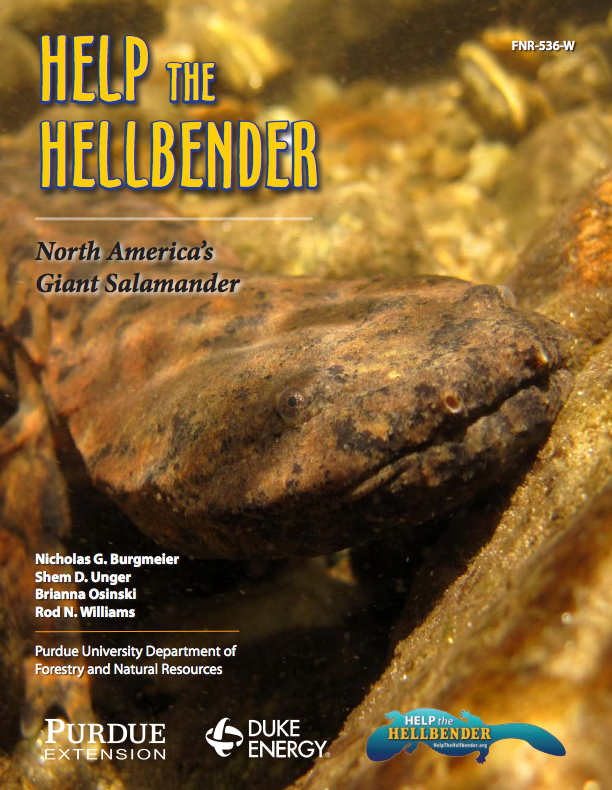 The eastern hellbender is a large, fully aquatic salamander that requires cool, well-oxygenated rivers and streams. Because they require high-quality water and habitat, they are thought to be indicators of healthy stream ecosystems. While individuals may live up to 29 years, possibly longer, many populations of this unique salamander are in decline across their geographic range. It is the largest salamander in North America, found in and around rivers and streams in 17 states from New York to Missouri. Many hellbender populations are in decline within their geographic range. This publication provides information on identifying and preserving this important aquatic animal. You can find Help the Hellbender, FNR-536-W, as well as other great resources that can be found at The Purdue Education Store.
Resources:
How Anglers and Paddlers Can Help the Hellbender, The Education Store
Hellbender ID, The Education Store
Improving Water Quality by Protecting Sinkholes on Your Property, The Education Store
Improving Water Quality at Your Livestock Operation, The Education Store
Healthy Water, Happy Home – Lesson Plan, The Education Store
Nick Burgmeier, Research Biologist and Extension Wildlife Specialist
Purdue Department of Forestry and Natural Resources
Dr. Rod Williams, Associate Head of Extension and Associate Professor of Wildlife Science
Purdue Department of Forestry and Natural Resources
The Eastern hellbenders are the largest salamander in North America and have survived unchanged for nearly 2 million years. Hellbender populations are declining across their range, from Missouri to New York. This decline is likely caused by human influences such as habitat degradation and destruction. Many states are developing conservation programs to help the hellbender. To find out what you can do visit helpthehellbender.org.
Resources:
How Anglers and Paddlers Can Help the Hellbender, The Education Store
Hellbender ID, The Education Store
Improving Water Quality by Protecting Sinkholes on Your Property, The Education Store
Improving Water Quality at Your Livestock Operation, The Education Store
Healthy Water, Happy Home – Lesson Plan, The Education Store
Nick Burgmeier, Project Coordinator, Research Biologist & Wildlife Extension Specialist
Purdue Department of Forestry and Natural Resources
Dr. Rod Williams, Associate Head of Extension and Associate Professor of Wildlife Science
Purdue Department of Forestry and Natural Resources
Human changes to the environment, like urbanization and climate change, have caused and will cause many wildlife extinctions. Efforts to conserve species occur all over the world, but not all species are seen as equal. In the animal conservation world, charismatic species play the lead roles in a show, while lesser-known or less-attractive species act as stage crew: we all know they are present, but we’re largely uncertain of what they do or how they play into the whole picture. As a result, we tend to see less conservation funding for these species.
Charismatic species are often large, fluffy, or cute: polar bears, narwhals, pandas, and koalas are excellent examples. They dominate news stories, children’s books, and most forms of media. In contrast, non-charismatic species are more difficult for humans to relate with: mussels, mice, and small fish fall into this category.
Societal bias towards charismatic species starts young: if you ask any child what their favorite animal is, chances are high that the species will be either cute and cuddly like a rabbits and foxes, or big and fearsome like bears or sharks. Chances are low that it will be a something slimy, small, or otherwise unattractive like a fish, reptile or bug.
Why is funding so low, or non-existing, for the not so furry, not so cute endangered species?
According to a study in the U.K., adults are more likely to donate money to causes represented by photos of charismatic species than non-charismatic species. This bias appeal results in the majority of research and conservation funding being dedicated to a small group of about 80 well-known, charismatic species. These species have what Dr. Hugh Possingham of the National Environmental Research Program (NERP) refers to as “donor appeal”. The remaining, non-charismatic species, tend to fall by the wayside, receive less funding and research interest. As a result, they tend to go extinct at higher rates. As Dr. Possingham says, “…if you’re an obscure animal or plant in a remote place, you have next to no hope of getting conservation resources.”
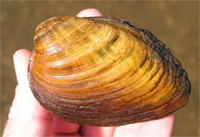
Clubshell mussel.

Results showing that the public are not excited to conserve non-charismatic wildlife is not surprising to Belyna Bentlage, a Purdue University outreach specialist, who specializes in research and outreach related to mussels. “People like to protect species that they feel they can relate to, that they can imagine owning as pets, like bear cubs or playful monkeys. It’s difficult to feel a connection to a hellbender or mussel. These animals don’t move as much, aren’t very interactive, and are not very cute. People just can’t relate to them in the same way as more charismatic species,” says Bentlage.
The lack of relate-ability of non-charismatics can spell disaster for many species. Belyna says, “When people don’t feel connected to a species, they won’t give money to fund research or protect the species. Lawmakers aren’t interested because the public isn’t interested, so it’s left up to researchers. So little is known about the ecological role of many of these species, that it’s difficult for researchers to justify why they should be studied. With the competitive funding climate in research, less charismatic species loose out.”
With a tight funding climate, uninterested lawmakers, and a fickle, how can we protect these threatened non-charismatic species?
One solution might just be in making non-charismatic species charismatic. Outreach coordinators like Belyna Bentlage are working cooperatively with biologists to change the way humans perceive of slimy, spiny, gross or otherwise unattractive species.
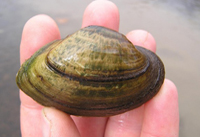
Snuffbox mussel.
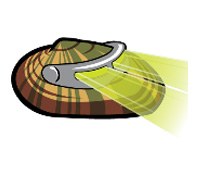
The project Belyna works on, with Purdue FNR Professor Linda Prokopy and Associate Professor Rod Williams gives super-hero personalities to non-charismatic mussels. Each mussel species has a special power that reflects something about its innate characteristics, like the snuffbox and clubshell mussel images shared in this blog.
“Making these animals more relatable and fun allows both children and adults to better understand their importance. People consciously pick their favorites, compare the drawings, and then get excited when they see these species in the wild. It creates a public that is really interested in protecting the species,” Bentlage explained.
Erin Kenison, a PhD student at Purdue University, has helped use similar tactics to promote conservation of hellbenders. The poorly named species is actually a giant salamander that used to inhabit all Indiana rivers, but is now restricted to the Blue River giant salamander that used to inhabit all Indiana rivers, but is now restricted to the Blue River.
The large, green, slimy creature is aptly nicknamed “old lasagna sides” because of its flappy skin that bunches at its sides. The Help the Hellbender project uses costumes, cartoons, coloring pages and games to generate public attention for the species.
“Historically, its been believed that hellbenders had evil powers and could even cause the death of babies,” says Kenison. “Making the hellbender more relatable dismantles a lot of these beliefs, making it more likely that river-users won’t try to harm them.”
Are we willing to learn more about the non-charismatic species and help with conservation efforts?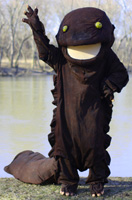
While there are many challenges for the conservation of non-charismatic species, Belyna Bentlage also says that the public’s lack of familiarity with these species may be a strength. “When people don’t know much, they are often willing to learn and adapt their actions. They are not as set in their ways, so it’s more likely that we can introduce new behaviors to protect a species. Overall, people generally want to help threatened species, not hurt them.”
Non- charismatic wildlife, as slimy or spiny or unattractive as they may be, are an important part of the natural ecosystem. Next time you see a mussel, hellbender, or similar creature, take a photo, but leave it be. These species need your help and support to survive, even if their beauty is mainly on the inside.
If you would like to find out how you can help or learn more about these endangered species, see the resources listed below:
Help the Hellbender
DNR: Nature Preserves: Endangered Threatened & Rare Species, Indiana Department of Natural Resources (IDNR)
Zoe Glas, Graduate Research Assistant
Purdue Department of Forestry and Natural Resources
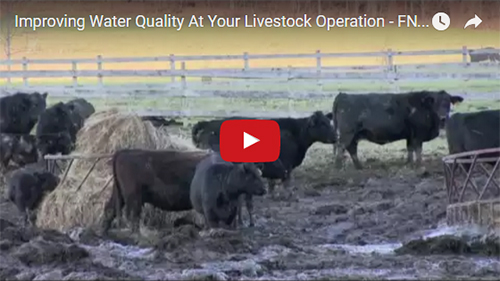 Hellbenders have been rapidly declining since the 1980s due to various factors, including poor water quality. Many ecological issues contribute to poor water quality, and one important issue we can focus on is how we use the land around rivers and streams. Livestock operations produce a lot of nutrients – largely in the form of manure. When next to a river, this can flow into the water, which reduces water quality through the high nutrient input and added sedimentation. However, livestock owners can greatly reduce the impact of their operations on water quality using a number of different management practices.
In this new video “Improving Water Quality at Your Livestock Operation,” we focus on how livestock owners can use management practices on their farm that improve water quality while still meeting their production goals. Bob Sawtelle, a livestock owner along the Blue River, uses a forested riparian buffer to filter out runoff from his cattle pen, resulting in cleaner water and healthier wildlife. In this video, he discusses the ecological and economic benefits to this practice in further detail.
Please visit the Help the Hellbender website for more information about other management practices that improve water quality, and also check out the National Resource Conservation Services website (NRCS) for news and other information related to soil and resource conservation.
Resources:
Improving Water Quality At Your Livestock Operation – The Education Store, Purdue Extension Resource Center
Improving Water Quality Around Your Farm – The Education Store
Options for Farmers – Help the Hellbender
Identifying Benefits and Barriers Associated with Reforesting Riparian Corridors – Purdue Engineering
Riparian Area Management – United States Environmental Protection Agency
Megan Kuechle, Undergraduate Extension Intern
Purdue Department of Forestry and Natural Resources
Dr. Rod Williams, Associate Head of FNR Extension and Associate Professor of Wildlife Science
Purdue Department of Forestry and Natural Resources
 Hellbenders have been rapidly declining since the 1980s due to various factors, including poor water quality. Poor water quality is caused by a variety of ecological issues, one of which is land use along the river. Farmers can reduce the impact of their farming practices on water quality using a number of different management practices.
In this new video “Improving Water Quality Around Your Farm,” we focus on how farmers can use management practices on their farm that improves water quality while still meeting their production goals. Todd Armstrong, a farmer on the Blue River, uses cover crops and no till farming to reduce soil erosion and describes the ecological and economic benefits to these practices in this video.
Please visit the Help the Hellbender website for more information regarding other management practices that improve water quality, and also check out the National Resource Conservation Services website (NRCS) for news and other information related to soil and resource conservation.
Resources:
Improving Water Quality Around Your Farm – The Education Store, Purdue Extension Resource Center
Options for Farmers – Help the Hellbender
Water Quality – National Resource Conservation Service (NRCS)
Managing Cover Crops: An Introduction to Integrating Cover Crops Into a Corn-Soybean Rotation – The Education Store
Adoption of Agricultural Conservation Practices: Insights from Research and Practice – The Education Store
Megan Kuechle, Undergraduate Extension Intern
Purdue Department of Forestry and Natural Resources
Dr. Rod Williams, Associate Head of FNR Extension and Associate Professor of Wildlife Science
Purdue Department of Forestry and Natural Resources

Recent Posts
- Applications Open for the 2026 Lake Guardian Shipboard Science Immersion
Posted: February 19, 2026 in Aquatic/Aquaculture Resources, Great Lakes, Wildlife - Discover the Great Lakes, The 2025 Helm Magazine is Available
Posted: November 17, 2025 in Aquaculture/Fish, Aquatic/Aquaculture Resources, Wildlife - Illinois-Indiana Sea Grant Newsletter Shares New Resources
Posted: November 13, 2025 in Aquaculture/Fish, Aquatic/Aquaculture Resources, Wildlife - Publication – Fish Muscle Hydrolysate
Posted: September 15, 2025 in Aquaculture/Fish, Aquatic/Aquaculture Resources - Publication – Direct Marketing Guidebook for Small/Medium-Scale Aquaculture Businesses
Posted: March 7, 2025 in Aquaculture/Fish, Aquatic/Aquaculture Resources, Publication - Conservationists Unite for Snuffbox Mussels – Wild Bulletin
Posted: February 20, 2025 in Aquaculture/Fish, Aquatic/Aquaculture Resources, Wildlife - Learn to Process Your Own Deer – Wild Bulletin
Posted: November 11, 2024 in Aquatic/Aquaculture Resources, Forestry, How To, Wildlife - Publication – Handbook on Processing Fish for Small-Scale Fish Farmers
Posted: October 17, 2024 in Aquaculture/Fish, Aquatic/Aquaculture Resources, How To, Publication, Wildlife - Economics and Aquaculture Expert Kwamena Quagrainie is Featured Specialist in ANR Newsletter
Posted: October 15, 2024 in Aquatic/Aquaculture Resources, Great Lakes - Buoys Keep Eye on Great Lake Conditions
Posted: July 11, 2024 in Aquatic/Aquaculture Resources, Great Lakes, How To
Archives
Categories
- Alert
- Aquaculture/Fish
- Aquatic/Aquaculture Resources
- Ask the Expert
- Christmas Trees
- Community Development
- Disease
- Drought
- Forestry
- Forests and Street Trees
- Gardening
- Got Nature for Kids
- Great Lakes
- How To
- Invasive Animal Species
- Invasive Insects
- Invasive Plant Species
- Land Use
- Natural Resource Planning
- Nature of Teaching
- Plants
- Podcasts
- Ponds
- Publication
- Safety
- Spiders
- Timber Marketing
- Uncategorized
- Urban Forestry
- Webinar
- Wildlife
- Wood Products/Manufacturing
- Woodland Management Moment
- Woodlands